Sumba: megalithic villages and the Pasola
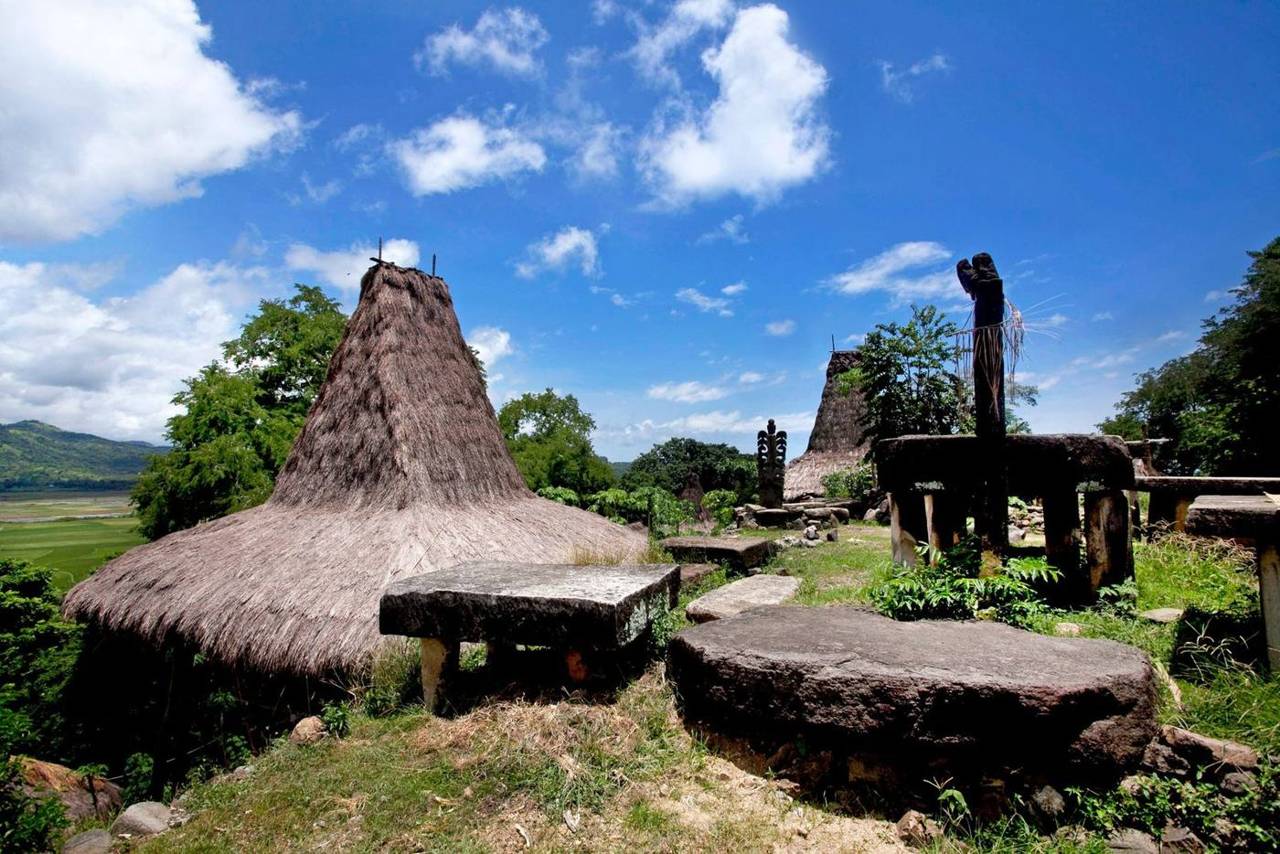
An island outside time, where the Marapu religion is still practised: villages with tall pointed roofs and stone tombs, ikat weavers, wild beaches such as Weekuri and Mandorak and, between February and March, the Pasola, a ritual battle on horseback with wooden spears.
- Waingapu
- Prailiu
- Waikabubak
- Ratenggaro
- Weekuri
- Tambolaka
Day by day
- Day 1
Waingapu and the weaving village of Prailiu
This trip goes to Sumba, an island in eastern Indonesia south of Flores, one of the country's least touched by tourism. Here one of the archipelago's most living traditional cultures survives, the marapu religion of ancestor worship, with villages of houses with towering roofs, megalithic stone tombs in front of the houses, hand dyed ikat textiles and, early in the year, the Pasola, a ritual battle on horseback with wooden spears. The island is made of savanna, hills, empty beaches and cliffs above the Indian Ocean.
On arrival in Indonesia you pay the visa on arrival, which costs 500,000 rupiah.
You reach Sumba on a domestic flight from Bali, about an hour, landing at Waingapu, the main town in the east of the island, or at Tambolaka in the west. You need a car with a driver to get around.
On the first day visit Prailiu, a village on the edge of Waingapu famous for Sumba ikat weaving. The women dye the threads before weaving them, tying them in sections and dipping them in natural dyes from roots and leaves, such as indigo for blue and morinda root for red. A single cloth can take months of work. The designs show horses, crocodiles, roosters and ancestor figures.
In the village you also see the first megalithic tombs, large stone slabs supported on pillars.
At sunset go to Purukambera hill, in the savanna near town, with wild horses grazing.
Spend the night in Waingapu.
Practical tip: Sumba is poor and little equipped for tourism. Bring cash, patience and respect. Before entering a village always ask permission, sign the visitors' book and leave an offering.
- Day 2
The eastern hills and Tanggedu waterfall
Today discover the landscape of eastern Sumba, very different from the rest of Indonesia: instead of tropical forest there are rolling hills covered in yellow grass, savanna and small woods, like Africa or Australia. The dry season is long and the land is arid.
In the morning go to the Wairinding hills, about an hour from Waingapu, a series of hills green or golden depending on the season, changing colour with the light. Early in the morning children from nearby villages climb the hills and herders bring horses to graze.
Then continue to Tanggedu waterfall, about two and a half hours north east of Waingapu, the last part on a dirt road, followed by a walk of about half an hour across fields. The waterfall drops into a series of natural pools carved into the rock, with turquoise water, in the middle of a gorge. You swim in the pools and slide between the rocks.
On the way back stop at the traditional villages of the east, such as Rende or Pau, with large stone tombs carved with animal and ancestor figures, belonging to the families of the raja, the old chiefs.
In the evening return to Waingapu.
Spend the night in Waingapu.
Practical tip: the road to Tanggedu is long and unpaved in the last section. Start early and bring water and food. In the rainy season the waterfall can be murky and the road difficult.
- Day 3
To Waikabubak: the villages of Tarung and Praijing
Today cross the island westwards to Waikabubak, about four or five hours from Waingapu. The landscape changes: western Sumba is greener and wetter, with rice fields, palms and forests.
Waikabubak is a small town in the island's centre west, and the base for discovering the region's traditional villages.
In the afternoon visit the village of Tarung, built on a hill right in the town. It is one of the most important villages for the marapu religion: ceremonies, animal sacrifices and, in the sacred month of Wulla Poddu, new year rites take place here. The village was partly destroyed by fire in 2017 and then rebuilt.
Then go to the village of Praijing, a few kilometres away, one of Sumba's most beautiful and photographed, laid out on several terraces on a hill, with rows of traditional houses with very tall, pointed thatched roofs, the uma mbatangu, and stone tombs in the centre of the square.
Sumba's traditional houses have three levels: animals live below, people in the middle, and at the top, under the roof, food and sacred objects are kept and the ancestor spirits dwell. In front of the houses you often see buffalo horns and pig jaws, remains of ceremonial sacrifices.
Spend the night in Waikabubak.
Practical tip: in the villages children and sellers can be insistent. Respond kindly. Do not photograph tombs or ceremonies without permission.
- Day 4
West Sumba: Ratenggaro and the tombs by the sea
Today go to the far west of Sumba, to the Kodi region, about two hours from Waikabubak.
The first stop is the village of Ratenggaro, one of the island's most spectacular, built on a headland near the sea, with traditional houses with the tallest roofs in Sumba, up to fifteen metres, and large megalithic stone tombs, some very old, in front of the houses. Some tombs stand right on the beach, with the sea behind.
Opposite the village, at a river mouth, you see the village of Wainyapu on the far bank, with more traditional houses and tombs.
In the afternoon go to Mandorak beach, a small cove of white sand enclosed by two rock cliffs, with blue water and Indian Ocean waves. It is one of the finest spots on the coast.
Along the Kodi coast there are other beaches too, such as Pero, with a fishing village, and the places where the Pasola is held.
At sunset head back inland or stay near the coast.
Spend the night in the Kodi area or Tambolaka.
Practical tip: the Indian Ocean off Sumba has very strong currents. Swim only in sheltered coves and always ask locals whether it is safe.
- Day 5
The Pasola, if in season, and village life
Today is devoted to the Pasola, if your trip coincides with the season, or to a slower day in the western villages.
The Pasola is a ritual battle on horseback held once a year, between February and March, in the regions of Kodi, Lamboya, Wanokaka and Gaura. Two teams of riders in traditional dress and colourful headgear gallop bareback and throw blunt tipped wooden spears at each other. The aim is to ensure a good harvest: according to marapu tradition, the blood spilled fertilises the land. It is an intense, noisy and sometimes dangerous spectacle watched by thousands of people.
The exact date is not fixed: it is set by the rato, the marapu priests, according to the moon and the arrival on the beach of nyale, colourful sea worms that appear once a year. At dawn on Pasola day people gather the nyale on the beach to read the signs for the harvest.
If it is not Pasola season, spend the day in a lesser known traditional village with a local guide, to understand daily life, weaving, the preparation of sirih pinang, the betel nut chewed across the island, and the role of the ancestors in family life.
Spend the night in the Kodi area or Tambolaka.
Practical tip: Pasola dates are known only a few weeks in advance. Check and arrange it with a local guide. During the battle stay well away from the field, where horses and spears pass very close to spectators.
- Day 6
The saltwater lagoon of Weekuri
Today go to Weekuri lagoon, in the island's north west, about an hour from Tambolaka.
Weekuri lagoon is a saltwater lake separated from the ocean by a barrier of limestone rock. Sea water seeps through the rocks and forms a calm, clear natural pool of pale turquoise, surrounded by rocks and trees. Small wooden platforms on the rocks are used for jumping in. On the other side of the rocks you hear ocean waves crashing.
Spend the morning swimming, floating in the salt water and resting in the shade.
In the afternoon explore the nearby coast. A short distance away is Bawana beach, with a large rock arch over the sea, reached by a steep path. At sunset the light shines through the arch, one of the island's finest moments.
Alternatively, visit one of the traditional villages near Tambolaka, such as Waitabar. Ask your driver to arrange the visit, as he usually knows the families.
In the evening have a last dinner on Sumba, with grilled fish, rice and vegetables, and Sumba coffee.
Spend the night in Tambolaka.
Practical tip: there are few facilities at Weekuri. Bring water, sunscreen and reef shoes to enter the water from the rocks. The path to the Bawana arch is steep and slippery: take care.
- Day 7
Flight from Tambolaka to Bali
On the last day go to Tambolaka airport, in the island's north west, for the flight to Bali, about an hour.
If your flight is in the afternoon, you can make a last visit in the morning. One option is Tambolaka market, where villagers come to sell fruit, vegetables, betel nuts, fish and animals, and where you can buy ikat textiles directly from the weavers.
Another option is a weaving cooperative, where you watch women at work on traditional looms and can buy a cloth knowing who made it. Sumba textiles, called hinggi for men and lau for women, are considered among the most beautiful in Indonesia. They also have ceremonial value: they are given at weddings and funerals and accompany the dead into the tomb.
Before leaving buy some souvenirs: an ikat cloth, carved wooden objects, traditional metal jewellery or Sumba coffee.
From Bali you continue to Europe or to other Indonesian islands.
Practical tip: flights between Sumba and Bali are few and may change times or be cancelled. Leave at least a day's margin before an international flight. A quality ikat, handmade with natural dyes, is expensive: be wary of very cheap ones, often made with chemical dyes.
For travellers interested in traditional cultures, with a driver and local guide. The Pasola dates are set each year by Marapu priests, watching the moon and the arrival of sea worms: they are known only shortly before. During the Pasola there are injuries and sometimes brawls: watch from a distance. In villages bring a small gift and ask before taking photos. Italian citizens need a visa on arrival (500,000 rupiah, best requested online beforehand as an e-VOA); an increase has been proposed: check the amount before leaving.
Before you go
- Documents and visa
- Passport with at least six months' validity. Visa on arrival 500,000 rupiah for 30 days, extendable once, or online on the official immigration website. In Bali you also pay the 150,000 rupiah tourist levy.
- Health and vaccines
- No compulsory vaccines arriving from Europe. Protect yourself against mosquitoes because of dengue; Bali has rabies, so keep away from dogs and monkeys. The eastern regions carry malaria risk: ask your doctor. Emergencies: 110 police, 112 general number.
- Money and payments
- Indonesian rupiah. Cards work in hotels and shops in tourist areas; QR payments are widespread; markets and villages need cash.
- Power sockets
- Types C and F, 230 volts: the same round-pin sockets as much of Europe.
- Time zone
- The country has three time zones. Java is UTC+7, Bali UTC+8, with no daylight saving time.
- Safety
- Tourist areas are generally calm. The United States rates Indonesia level 2 and the Papua regions level 4. Active volcanoes may close on alert. Very severe drug penalties. Official advice: GOV.UK.
Information checked in November 2026 for Italian and EU citizens. Rules change: always check before you travel.
Variations
In 4 days: West Sumba only, with Tarung, Praijing, Ratenggaro and Weekuri.
In 10 days: add Flores and Komodo National Park, or a few days in Bali before leaving.
Frequently asked questions
When is the Pasola held?
Once a year, between February and March. The dates are set by the marapu priests and known only a few weeks ahead.
Do I need a visa?
Yes, the visa on arrival, which costs 500,000 rupiah. Check the current rules before leaving.
Do I need a guide?
It is very useful, to enter villages respectfully, understand marapu culture and get around the island's roads.
Indicative itinerary written by World Atlas. Before booking, check timetables, seasonal openings, documents and safety.
 7 daysModerate
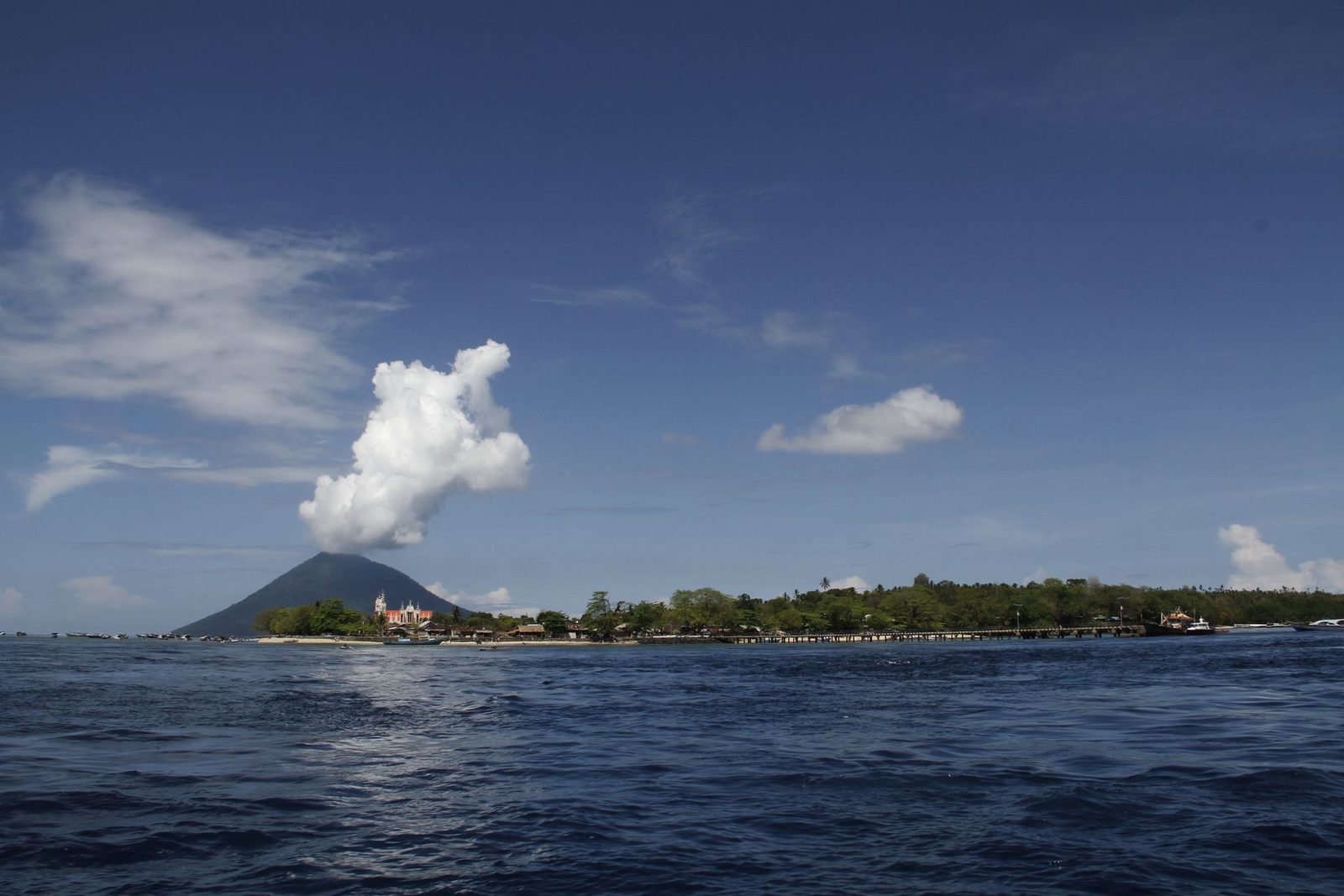
North Sulawesi: Bunaken and Lembeh
Two different kinds of diving in a week: the vertical walls of Bunaken marine park, full of turtles and fish, and the Lembeh Strait, the world capital of muck diving, with strange creatures on black sand; on land, the tarsiers and black macaques of Tangkoko reserve.
 6 daysModerate
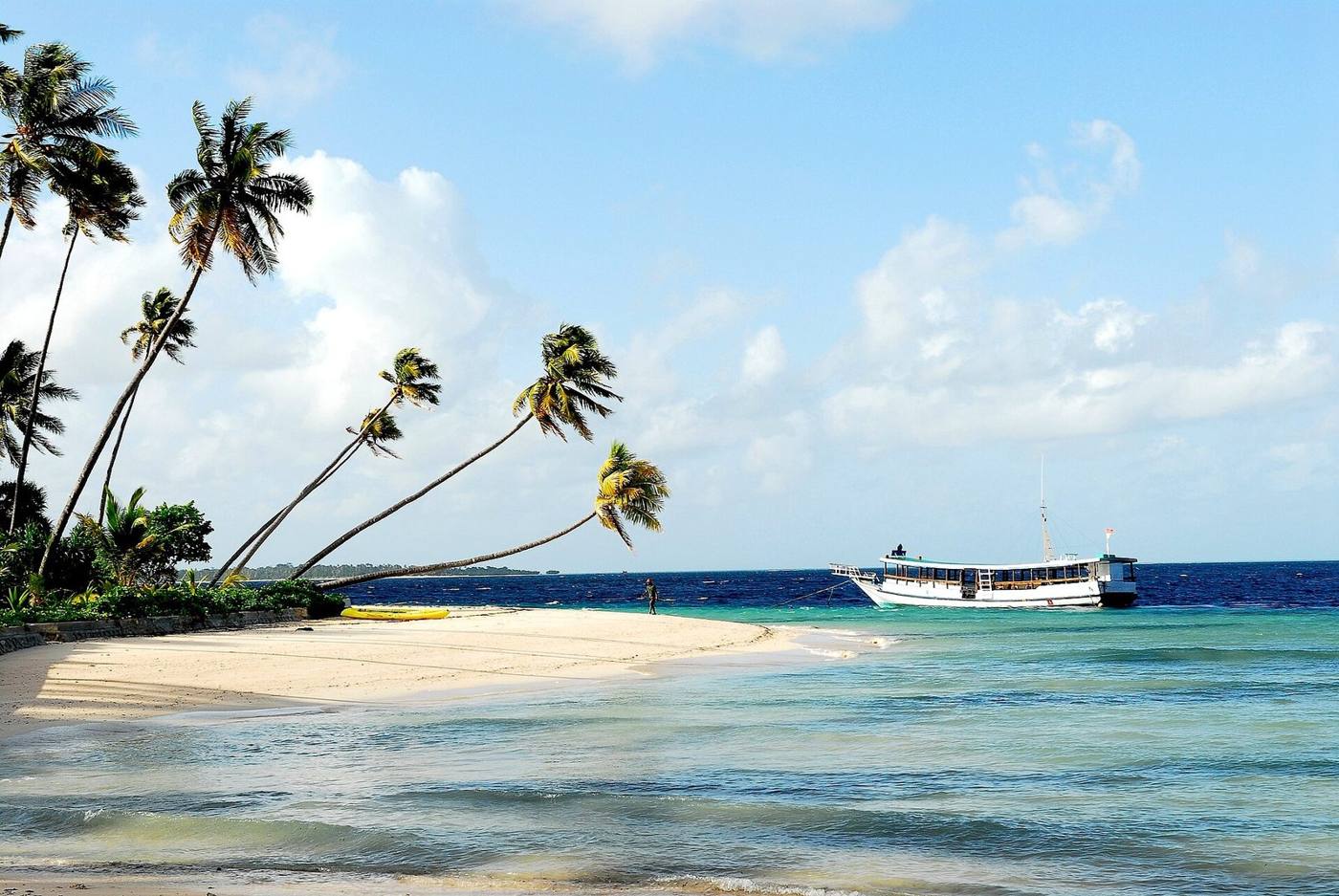
Wakatobi
An archipelago in south-east Sulawesi, a national marine park and UNESCO biosphere reserve: some of Indonesia's most pristine coral reefs, clear water, Bajau villages built over the sea and almost empty beaches.
 6 daysEasy
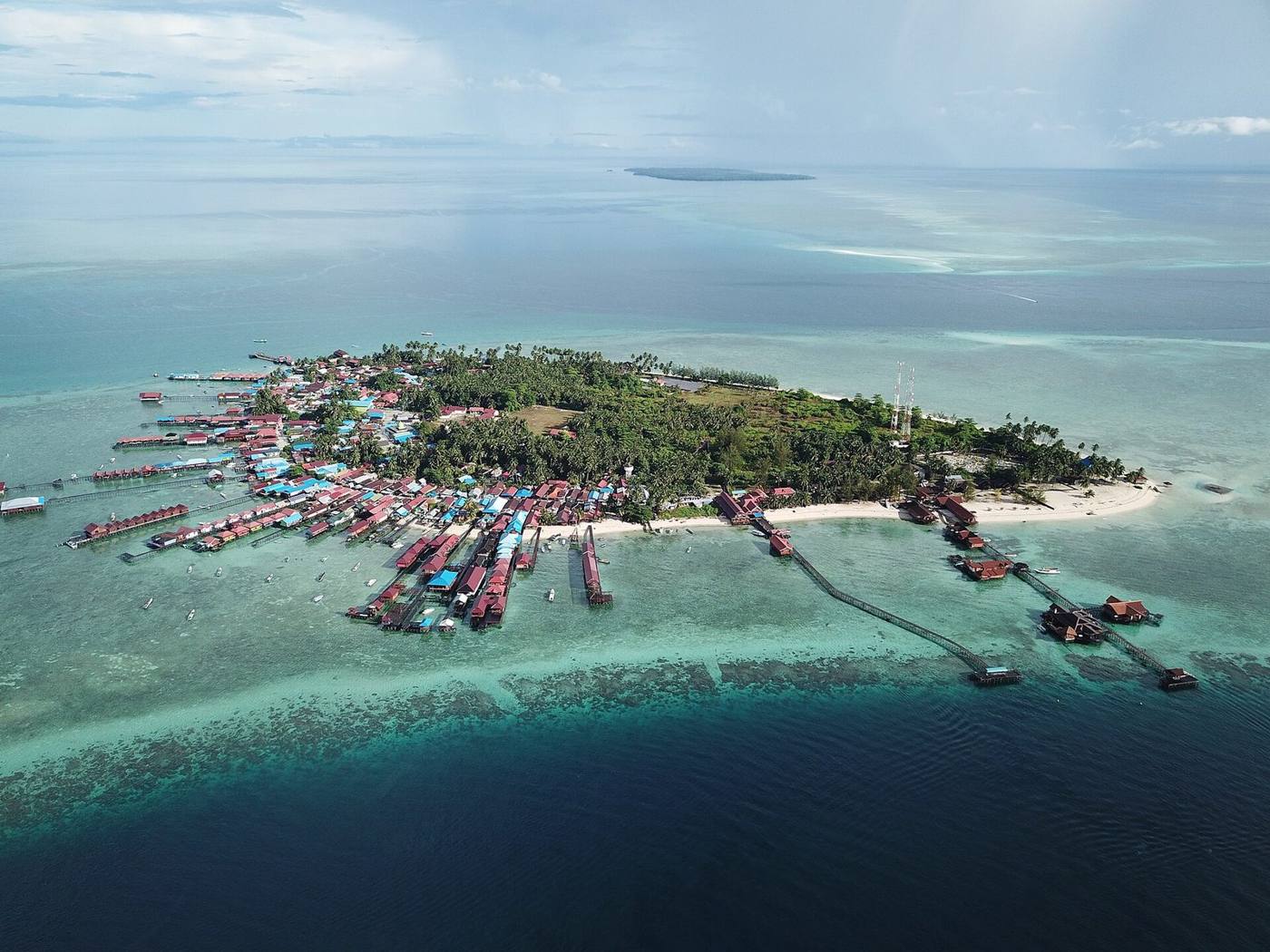
Derawan and Kakaban
The islands off eastern Borneo: green turtles grazing seagrass a few metres from the Derawan jetties, the inland lake of Kakaban with stingless jellyfish you can swim among, the manta rays of Sangalaki and the Maratua lagoon.