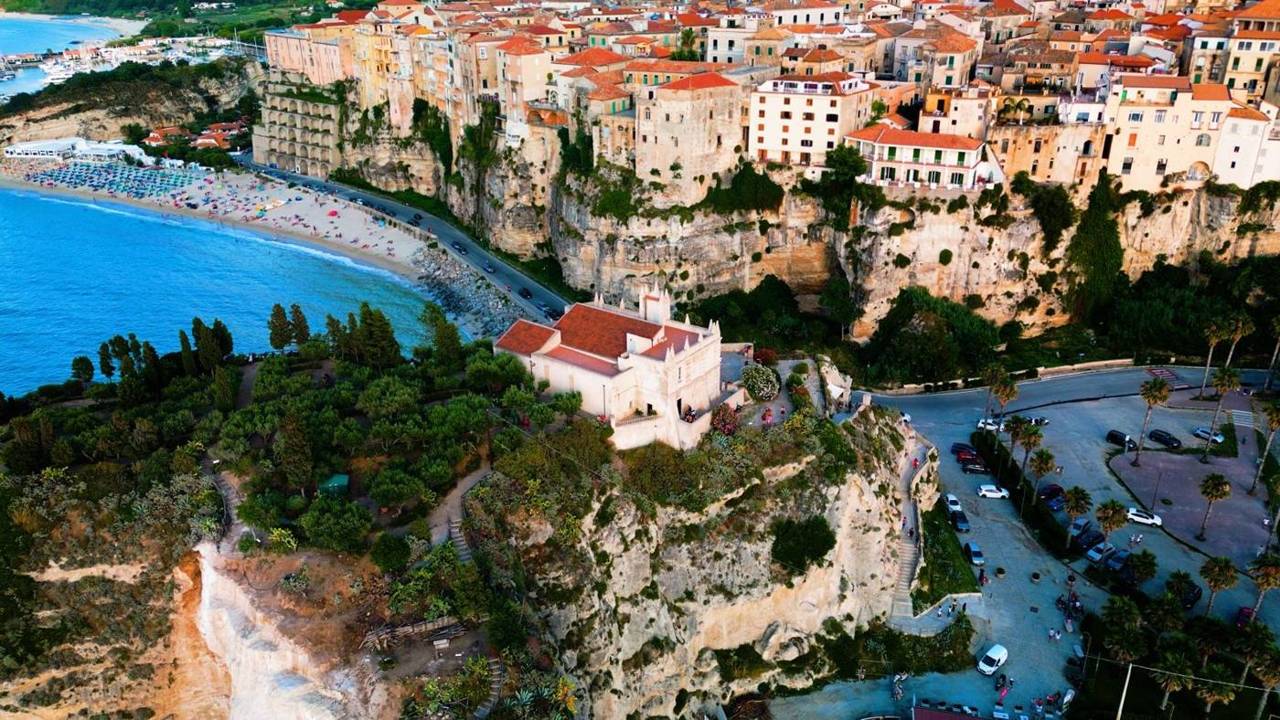
Calabria: Tropea, Scilla and the Sila
The Coast of the Gods with Tropea and Capo Vaticano, the fishing quarter of Chianalea in Scilla, the Riace Bronzes in Reggio Calabria and the wooded plateaus of the Sila with their lakes and larch pines.
- Lamezia Terme
- Pizzo
- Tropea
- Capo Vaticano
- Scilla
- Reggio Calabria
- Camigliatello Silano
Day by day
- Day 1
Pizzo: the castle, the tartufo and the Piedigrotta church
This trip takes you to Calabria's Tyrrhenian coast and its mountainous interior: seaside villages, white sand beaches and clear water on the Costa degli Dei, the Strait of Messina, the Riace Bronzes and the ancient forests of the Sila. Over seven days you alternate sea, history, food and mountains.
The most convenient airport is Lamezia Terme, with flights from many Italian and European cities. Pizzo is about half an hour from there. A hire car is best for the whole trip.
Pizzo is a town perched on a cliff above the sea, with a square full of cafés and a wide view over the Gulf of Sant'Eufemia. The Aragonese castle on the edge of the cliff is famous because in 1815 Joachim Murat, Napoleon's brother in law and former king of Naples, was imprisoned and executed here. Inside, some rooms recreate the last days of his life.
Pizzo is also the home of tartufo, a ball shaped ice cream with a molten chocolate heart, dusted with cocoa. Try it in the square, perhaps at sunset.
In the afternoon go down to the Piedigrotta church, just outside town, carved into the tufa rock on the beach. Tradition says it was begun in the seventeenth century by Neapolitan sailors who survived a shipwreck. Later, local artists carved statues of saints, religious scenes and even figures of famous people into the rock.
Spend the night in Pizzo.
Practical tip: Italy is in the Schengen area and EU citizens can travel with a valid national identity card. In summer Calabria's coast roads are very busy and seaside car parks fill up early. Set off early and use car parks outside the historic centres.
- Day 2
Tropea: the clifftop town and Santa Maria dell'Isola
Today you go to Tropea, about half an hour south, Calabria's best known resort. The old town is built on a cliff high above the sea, with noble mansions, churches, stone alleys and balconies overlooking a sea of extraordinary colours, from green to deep blue.
In the morning walk around the centre: the Norman cathedral, with an ancient icon of the Madonna, mansions with stone doorways, small shops selling local produce such as Tropea red onions, sweet and famous throughout Italy, and 'nduja, a soft, spicy spreadable salami from Spilinga, a nearby village.
From the viewpoints in the centre you see Santa Maria dell'Isola, a sanctuary built on a rock that was once an island and is now joined to the beach. A stairway cut into the rock climbs to the church and its surrounding garden, with a splendid view of the coast and Tropea.
The afternoon is for the sea. The beaches below the cliff are pale sand and the water is clear and calm on windless days. On clear days you see Stromboli on the horizon, with its plume of smoke.
In the evening return to the old town, which fills with people, and dine on traditional dishes: pasta with 'nduja, swordfish, aubergines and peppers.
Spend the night in Tropea.
Practical tip: Tropea is very crowded in August and prices rise. June and September are the best months to enjoy the sea at a calmer pace.
- Day 3
Capo Vaticano and Grotticelle beach
Today you discover the Capo Vaticano headland, south of Tropea, about twenty minutes away. It is one of the most beautiful stretches of coast in Italy, with granite cliffs, hidden coves and turquoise water.
In the morning go to the lighthouse viewpoint at Capo Vaticano. From this natural terrace you see the jagged coast, the beaches below the cliff and, on clear days, the Aeolian Islands and Stromboli. According to a popular explanation, the cape's name comes from the vaticini, the prophecies of a sibyl who lived in a cave nearby.
Then go down to one of the headland's beaches. The best known is Grotticelle, divided into small coves of white sand and rocks, with very clear water. You reach it by a narrow road and then on foot. Other nearby beaches, such as Praia di Fuoco and the bay of Riaci, are reached by steep paths or by boat.
In the afternoon snorkel among the rocks, where you see fish, sea urchins and small underwater caves. The water here is among the clearest in the Tyrrhenian Sea.
At sunset go back up to Capo Vaticano or to Tropea to watch the sun go down behind Stromboli.
Spend the night in Tropea.
Practical tip: some Capo Vaticano beaches have limited access in summer and small car parks, sometimes paid. Arrive early and take water, food and a parasol if you choose the more isolated coves.
- Day 4
By boat along the Costa degli Dei
Today you see the coast from the sea. Boat trips leave Tropea harbour along the Costa degli Dei, the coast of the gods, between Pizzo and Nicotera, with cliffs, caves and beaches reachable only from the water.
The boat follows the cliffs of Tropea, then passes below Capo Vaticano, entering small sea caves where the water shines blue and green. There are stops for swimming and snorkelling in deserted coves, with white sand and granite rocks. On board you often eat something simple, such as bread, tomatoes, cured meats and fruit.
Trips last half a day or a full day. Some boats go as far as Briatico or Zambrone, north of Tropea, with more beaches and unusual rocks.
Alternatively, if you want more freedom, you can hire a dinghy or small motorboat that requires no licence, within legal limits, and follow the coast yourself, always checking the weather and wind.
In the afternoon, back in harbour, relax on the beach or stroll through the lanes of Tropea.
In the evening have dinner by the sea and enjoy your last night on the Costa degli Dei.
Spend the night in Tropea.
Practical tip: if you hire a boat without a licence, ask for a clear briefing on where you may go, distances from shore and swimming areas, and return before the wind picks up, usually in the afternoon.
- Day 5
Scilla: Ruffo castle and the village of Chianalea
Today you head south along the coast and then on the motorway to Scilla, about an hour and a half from Tropea. Scilla looks out over the Strait of Messina, facing Sicily, and is one of Calabria's loveliest villages.
In Greek myth, this was the home of the monster Scylla, who with Charybdis on the other side of the strait threatened passing ships, as Homer tells in the Odyssey. Today the village is peaceful, with a long beach, a fishermen's quarter and a castle on a rocky spur.
Ruffo castle dominates the village and the strait. It has ancient origins and has been altered in many periods. From its terraces the view over the strait, Sicily and the Calabrian coast is magnificent.
Below the castle lies Chianalea, the old fishermen's quarter, with houses built directly on the rocks, separated by narrow alleys that end in the sea. Boats are tied up outside the doors. You walk along the main lane between colourful houses, small balconies and the sound of the waves.
In the evening dine in Chianalea on swordfish, Scilla's speciality. In spring and early summer fishermen still hunt it from traditional boats with a tall lookout tower.
Spend the night in Scilla.
Practical tip: parking is scarce in Scilla, especially near Chianalea. Leave the car in the upper part of the village and walk down.
- Day 6
Reggio Calabria: the Riace Bronzes and the seafront
Today you go to Reggio Calabria, about twenty kilometres from Scilla, the largest city in the region, at the toe of Italy.
The key visit is the national archaeological museum, home to the Riace Bronzes, two large Greek bronze statues of nude warriors from the fifth century BC. They were found by chance by a diver in 1972, in the sea off Riace on the Ionian coast. They are among the most important works of Greek art to have survived, with very precise detail in the muscles, hair and eyes. They are displayed in a dedicated room with controlled temperature and humidity.
The museum also has a rich collection from Magna Graecia, the part of southern Italy colonised by the Greeks, with statues, vases, coins and objects from the ancient cities of Calabria.
In the afternoon walk along Reggio's seafront, often called the most beautiful kilometre in Italy, with palm trees, Art Nouveau villas, remains of the Greek walls and a wide view of Sicily and Etna. On hot summer days you may see the Fata Morgana, a mirage that makes the Sicilian coast seem closer and suspended in the air.
In the evening try artisan ice cream or granita on the seafront.
Spend the night in Reggio Calabria.
Practical tip: for the archaeological museum it is best to book online, especially in summer and at weekends. Check opening hours and closing days.
- Day 7
The Sila plateau: Camigliatello, the Giants and Lake Arvo
The last day brings a completely different landscape. From the coast you climb to the Sila plateau in the heart of Calabria, about two and a half to three hours north of Reggio by motorway. The Sila is a large plateau of forests, lakes and pastures above a thousand metres, cool even in summer. Much of it is a national park.
The first stop is Camigliatello Silano, a mountain village of wood and stone houses, with shops selling mushrooms, cheeses, cured meats and the highly prized Sila potatoes.
Nearby is the Giants of the Sila reserve at Fallistro, a small wood of very old larch pines, some more than three hundred years old, over forty metres tall and with enormous trunks. An easy path winds among the trees in almost total silence.
In the afternoon go to Lake Arvo, one of the Sila's man made lakes, surrounded by pine and beech forest, with small beaches and the village of Lorica on its shore. Take a walk along the lake before leaving.
From the Sila you reach Lamezia Terme airport in about an hour and a half, driving down towards the Tyrrhenian Sea.
Practical tip: evenings in the Sila are cool, even in summer: bring a sweater. If your flight is in the afternoon, plan your timing carefully, as mountain roads are slow. Alternatively, add a night in the Sila and leave the next day.
For those who want beautiful sea and lower prices than the rest of the South. In August the Coast of the Gods is very crowded: June or September is better. A car is needed; from the Sila to Lamezia it is about two hours. 'Nduja from Spilinga and Tropea red onions can be bought directly in the villages.
Before you go
- Documents and visa
- EU citizens only need a valid identity card or passport; hotels and guesthouses must register it on arrival. Other nationalities should check the visa rules for the Schengen area.
- Health and vaccines
- No vaccines required. EU citizens should bring their European Health Insurance Card (EHIC). Emergency number: 112.
- Money and payments
- Euro. Cards are accepted almost everywhere; many cities charge a tourist tax per night, paid directly at your accommodation.
- Power sockets
- Types C, F and L, 230 volts.
- Time zone
- Central European Time (UTC+1), summer time (UTC+2) from the last Sunday of March to the last Sunday of October.
- Safety
- A safe country. In big cities and on crowded public transport watch out for pickpockets. Emergencies: 112. Official advice: GOV.UK.
Information checked in November 2026 for Italian and EU citizens. Rules change: always check before you travel.
Variations
In 4 days: Pizzo, Tropea and Capo Vaticano, with the boat trip along the Costa degli Dei.
In 10 days: add a boat trip to the Aeolian Islands from Tropea and the village of Gerace on the Ionian coast.
Frequently asked questions
When is the best time to go?
June and September for the sea, with fewer people. The Sila is lovely in autumn too, with forest colours and mushrooms.
Do I need a car?
Yes, it is the most convenient option. Trains link the coast, but for Capo Vaticano and the Sila a car is almost essential.
Is the sea suitable for children?
Yes, in Tropea and many Costa degli Dei beaches the water is calm with a sandy bottom. Some coves can only be reached by steep paths.
Indicative itinerary written by World Atlas. Before booking, check timetables, seasonal openings, documents and safety.
 7 daysModerate
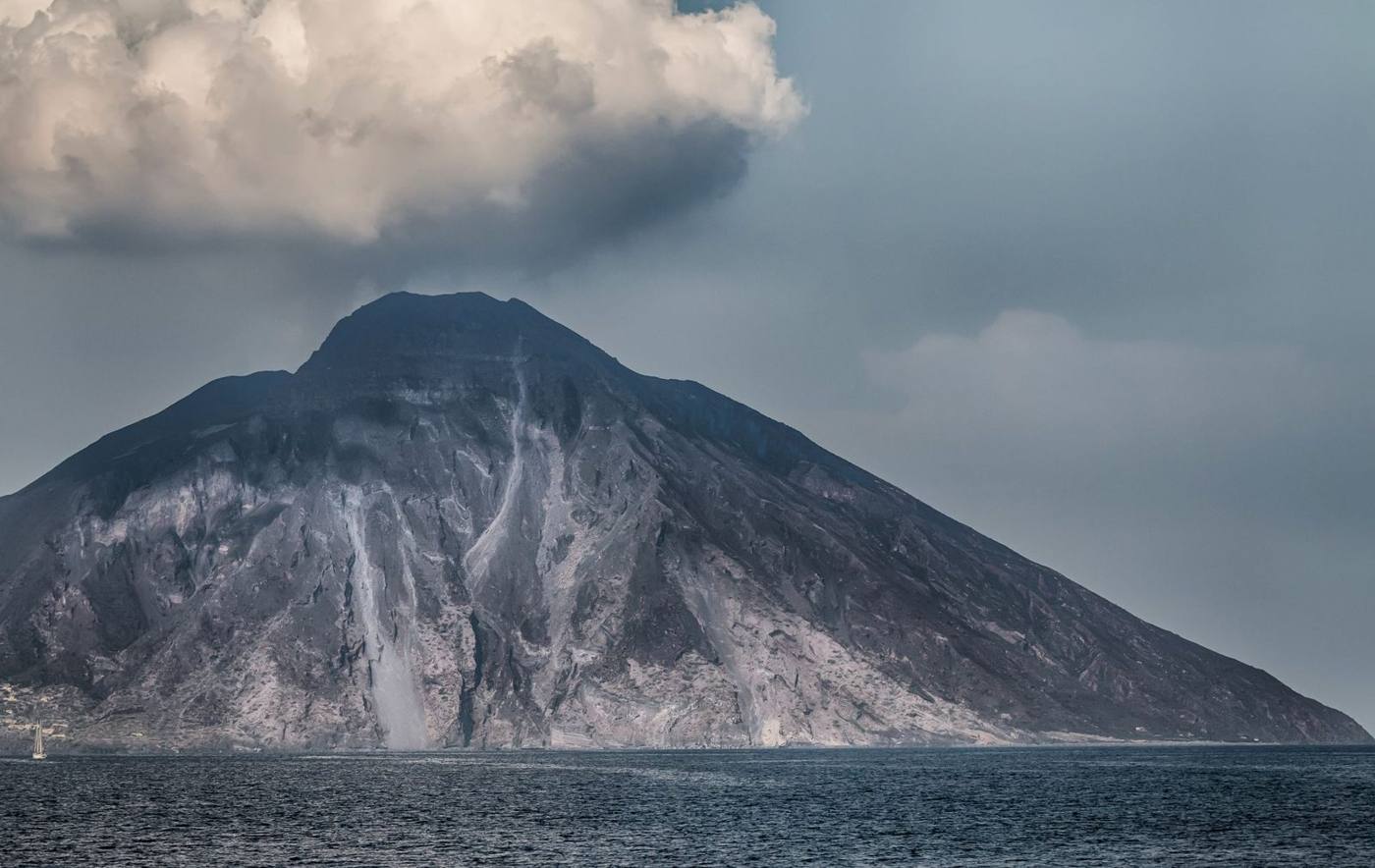
Aeolian Islands: Lipari, Salina and Stromboli
Seven volcanic islands in the Tyrrhenian Sea, a UNESCO World Heritage site: the pumice quarries of Lipari, the mud baths and crater of Vulcano, the Malvasia vineyards of Salina, Panarea and the eruptions of Stromboli seen at sunset.
 7 daysEasy
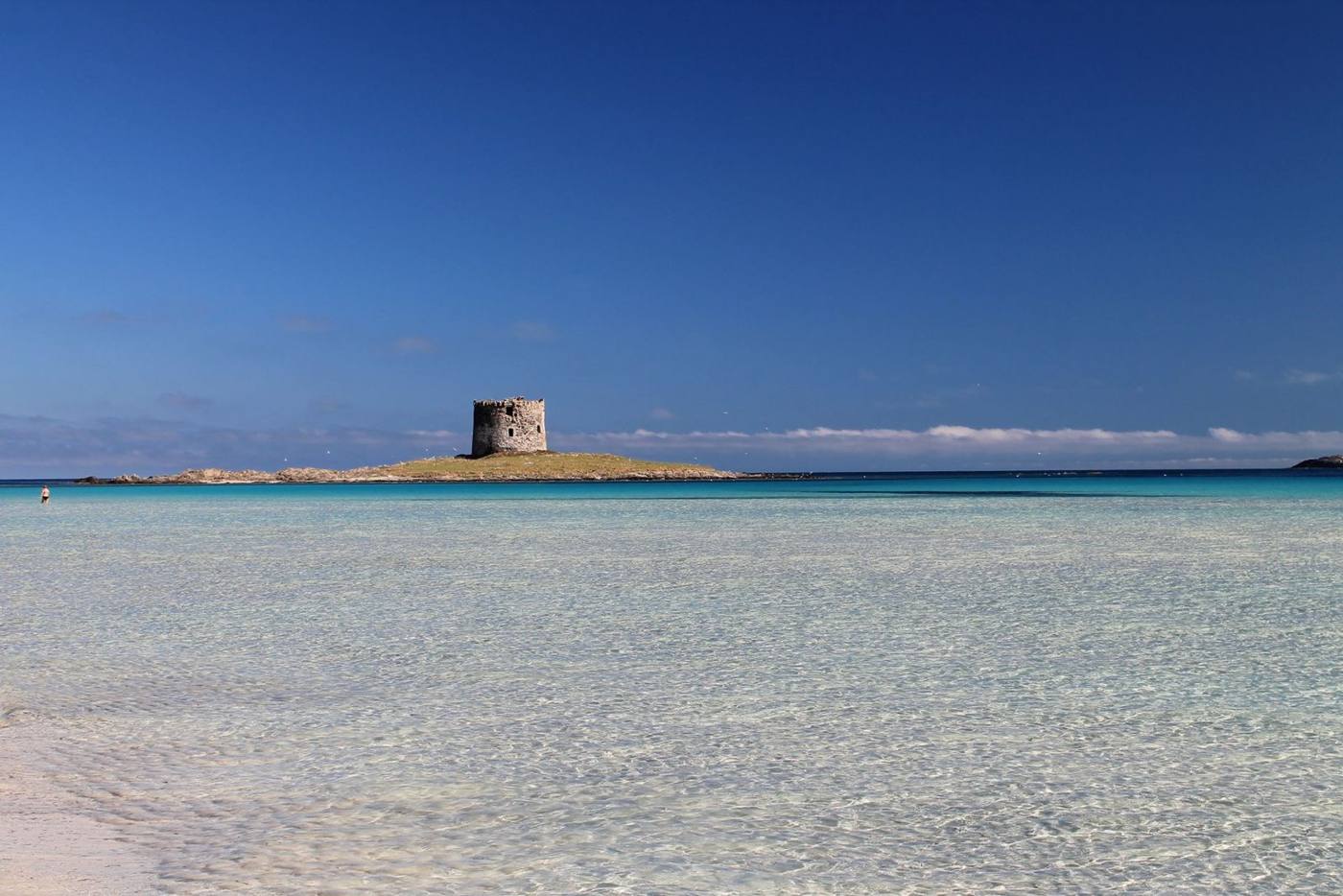
Northern Sardinia: Alghero, Stintino and La Maddalena
The Catalan town of Alghero and Capo Caccia with Neptune's Grotto, La Pelosa beach at Stintino, the granite of Gallura and the La Maddalena archipelago by boat, with the coves of Caprera.
 5 daysModerate
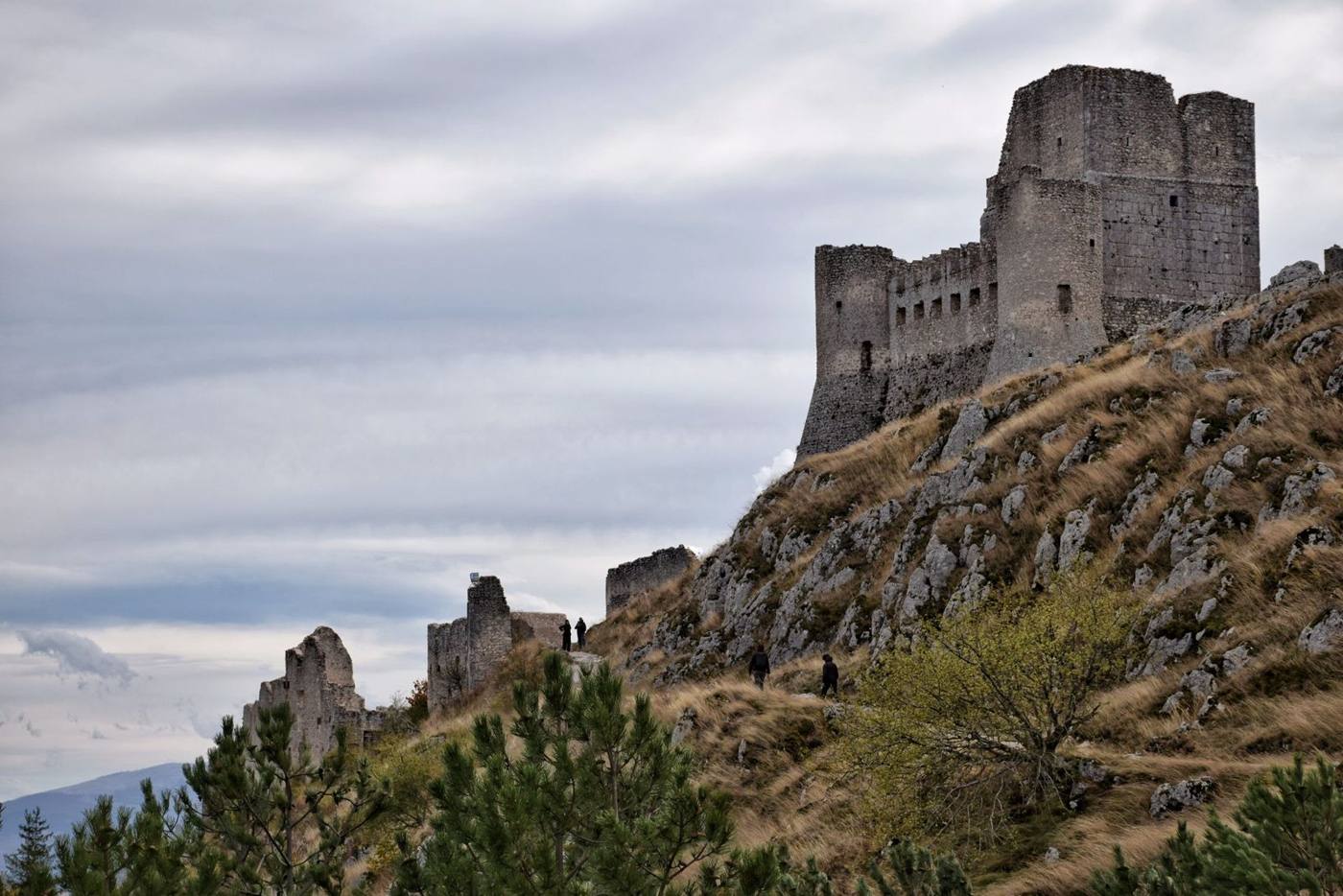
Abruzzo: Gran Sasso and the national park
Wild Abruzzo two hours from Rome: the Campo Imperatore plateau beneath Corno Grande, Rocca Calascio, the villages of Santo Stefano di Sessanio and Scanno, Sulmona and Abruzzo National Park with the Marsican bear and the Apennine chamois.