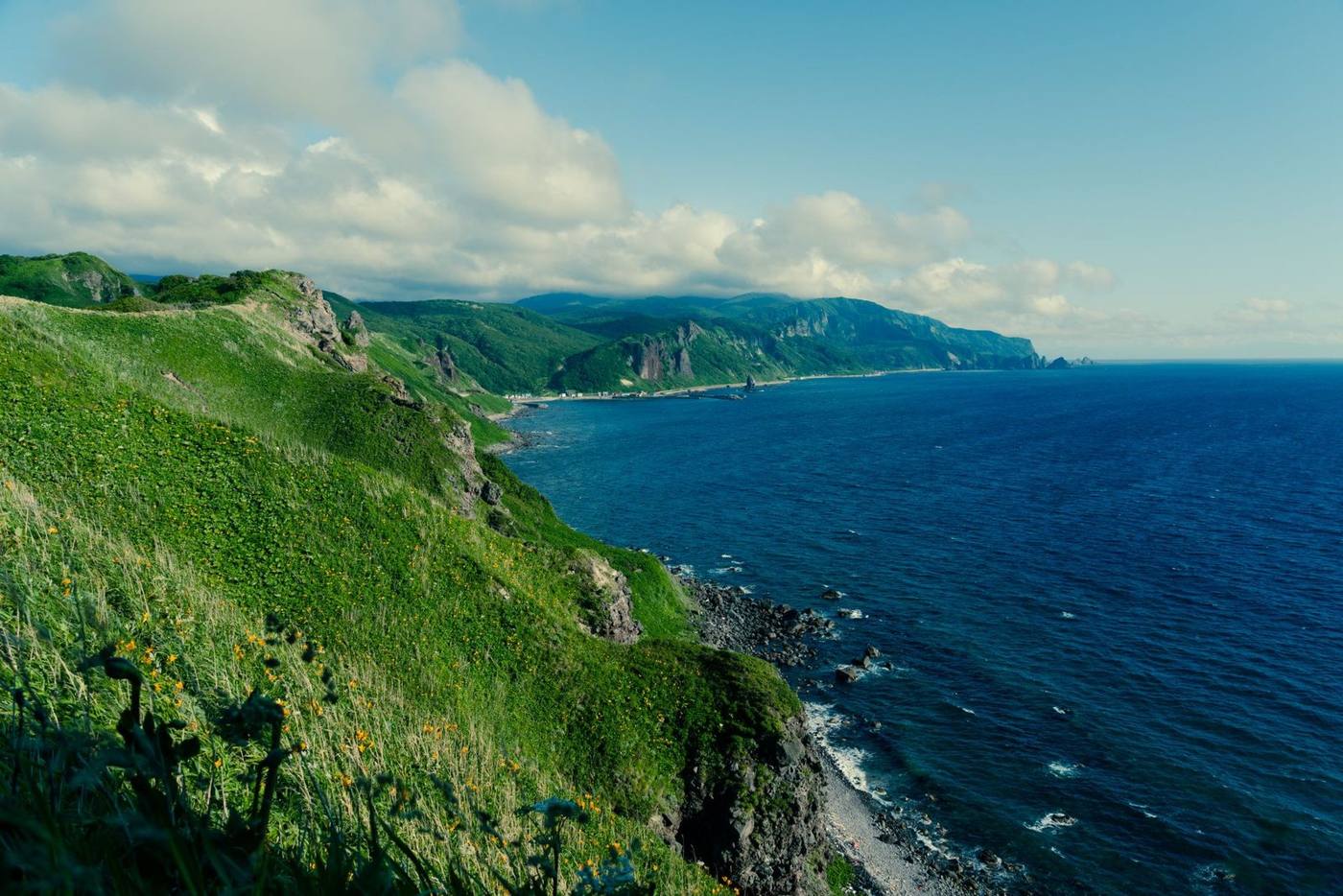
Hokkaido, Volcanoes, Lakes and Bears of the North
Japan's wildest island by train and bus: the volcanic lakes of Tōya, Mashū and Akan, the Sōunkyō gorge, the Shiretoko peninsula and the crane marshes.
- Tokyo
- Morioka
- Hakodate
- Lake Tōya
- Sapporo
- Otaru
- Sōunkyō
- Shiretoko
- Lake Mashū
- Kushiro
Day by day
- Day 1
The flight to Tokyo
This trip takes you to northern Japan, the wildest and least known: from Tokyo by high-speed train to Tōhoku, then under the sea to Hokkaido, the island of volcanoes, caldera lakes, the brown bears of Shiretoko, red-crowned cranes and Ainu culture. You travel almost entirely by train, with some buses and a rental car in the east of the island.
Before you go: Italian citizens enter Japan without a visa for tourist stays of up to 90 days, with a passport valid for the whole stay. Other nationalities should check their own rules. Since 1 July 2026 the departure tax from Japan is 3,000 yen, usually already included in the air ticket.
Today you leave Italy for Tokyo, with a direct flight or a connection in Europe, the Gulf or Asia. The journey usually takes between twelve and sixteen hours, and Japan is eight hours ahead of Italy in winter and seven in summer.
During the flight, try to sleep according to Japanese time: if you arrive in the morning, rest on the night flight; if you arrive in the evening, stay awake longer.
Before you leave, prepare a few useful things: a prepaid card for trains and shops, which can also be loaded on your phone, an adapter for Japanese sockets, with two flat pins, and a SIM card or an app for internet.
Also think about train tickets: for this trip, with many long journeys, it is worth comparing the price of single tickets with the regional rail passes of JR East and Hokkaido, which last a few days. Check prices and conditions on the official website.
Overnight on the plane.
Practical tip: in Japan cash is still widely used in some small restaurants and villages. Withdraw some yen at the airport or at convenience store cash machines, which accept foreign cards.
- Day 2
Arrival in Tokyo
Today you arrive in the largest city in the world.
You land at Narita or Haneda airport. From Haneda the centre of Tokyo is about half an hour by train or monorail; from Narita about an hour by express train. Check times and prices.
Tokyo, with its surrounding area, has over thirty million inhabitants, yet it is orderly, clean and safe. It is a city made up of many different districts, each with its own character: skyscrapers, temples, gardens, alleys with small restaurants and huge stations.
In the afternoon, to fight tiredness, walk in the open air. Go to Asakusa, the most traditional district, and visit Sensō-ji temple, the oldest in Tokyo, founded in the seventh century, with the great red lantern of the Thunder Gate and Nakamise street, full of stalls selling sweets and traditional items. Then cross the Sumida River to see the Tokyo Skytree, the tallest tower in Japan, over 600 metres high.
In the evening, have ramen, noodle soup in broth, in one of the small places where you order from a machine at the entrance, or sushi.
Go to bed early to adjust to the new time zone.
Overnight in Tokyo, for two nights.
Practical tip: in Japan you do not leave tips: in restaurants and taxis it could cause embarrassment. On public transport people do not talk on the phone and keep their voices low.
In temples, before entering, purify your hands and mouth at the fountain with the wooden ladle, following the local people.
- Day 3
Tokyo: Ueno and Shinjuku
Today you spend a full day in Tokyo to recover from the journey.
In the morning, go to Ueno, with its large park, temples, lotus ponds and museums. Visit the Tokyo National Museum, the oldest and largest museum in Japan, with samurai swords, armour, Buddhist statues, kimonos and prints. Check prices and times; the museum is closed on Mondays. Then walk through Ameyoko market, under the railway, with stalls of fish, dried fruit and spices.
At midday, go to Harajuku and visit Meiji Shrine, dedicated to the Emperor Meiji, in the heart of a large forest in the middle of the city, with great wooden gates called torii. Then walk along Takeshita street, the street of youth fashion, and the tree-lined Omotesando avenue.
In the afternoon, cross the Shibuya crossing, one of the busiest pedestrian crossings in the world, where at every green light thousands of people cross in all directions. Near the station is the statue of the dog Hachikō.
In the evening, go to Shinjuku. Go up to the observatory of the Metropolitan Government Building for the view over the illuminated city and, on clear days, Mount Fuji. Check times. Then walk through the alleys of Omoide Yokocho and Golden Gai, with tiny bars of a few seats and yakitori grills, chicken skewers.
Overnight in Tokyo.
Practical tip: pack your small backpack for the coming days and, if you can, send your large suitcase straight to Sapporo with the luggage delivery service, very common in Japan. Check prices and timings.
- Day 4
The Shinkansen to Morioka
Today you head north on the high-speed train.
In the morning, take the Shinkansen from Tokyo station north, on the Tōhoku line, to Morioka, about two and a quarter hours. The train runs at over 300 kilometres an hour across plains, rice fields and mountains. Buy a bento, a lunch box with rice, fish and vegetables, in the station shops: eating on the train is a typically Japanese pleasure.
Tōhoku is the north-eastern region of the main island, with mountains, volcanoes, hot springs and country villages, little visited by foreign tourists.
Morioka is a quiet city among the mountains, on the banks of the Kitakami and Nakatsu rivers, with views of Mount Iwate, a cone-shaped volcano. Walk in the Morioka castle park, where the stone walls of the old castle remain, and along the river, with old merchant houses and wooden storehouses.
In the afternoon, visit a Nanbu cast iron workshop, the local craft tradition, famous for its iron teapots. Check times and prices.
In the evening, try Morioka's food, famous for three kinds of noodles: wanko soba, small portions of soba served one after another in little bowls until you close the bowl with its lid, reimen, cold noodles of Korean origin, and jajamen, noodles with miso and meat sauce.
Overnight in Morioka.
Practical tip: on the Shinkansen book your seat in advance, especially during Japanese holidays, such as Golden Week in early May, the mid-August festival and New Year.
- Day 5
Under the strait to Hokkaido
Today you cross the sea to reach Hokkaido.
In the morning, take the Shinkansen again from Morioka north. The train passes Shin-Aomori and then enters the Seikan Tunnel, one of the longest undersea rail tunnels in the world, about 54 kilometres, running beneath the Tsugaru Strait and linking the main island to Hokkaido. The train reaches Shin-Hakodate-Hokuto in about two hours from Morioka. From here a local train takes you to Hakodate, about twenty minutes.
Hokkaido is the second largest island in Japan and the furthest north, with a fifth of the country's area but few inhabitants. It was settled by the Japanese only at the end of the nineteenth century; before that it was the land of the Ainu people. It has a cooler climate, with mild summers and long, snowy winters.
In Hakodate, visit the morning market, with crabs, sea urchins, salmon and squid, and the Motomachi district, on the hill, with churches and Western-style houses from the end of the nineteenth century, when Hakodate was one of the first ports opened to foreigners. Then visit the star-shaped fort of Goryōkaku, built in European style, where in 1869 the last battle of the Boshin civil war was fought.
In the afternoon, take the express train north to Tōya, about an hour and three quarters, and then the bus to Lake Tōya.
In the evening, bathe in an onsen, a hot spring, with a view of the lake.
Overnight at Lake Tōya.
Practical tip: if you want to see the night view of Hakodate, one of the most famous in Japan, from Mount Hakodate, spend a night in Hakodate and leave for Lake Tōya the next day.
- Day 6
Lake Tōya and the Usu volcano
Today you explore a volcanic caldera and a volcano that is still active.
Lake Tōya is a caldera, a great crater formed by the collapse of a volcano about a hundred thousand years ago, later filled with water, almost round, with an island in the centre, Nakajima, covered in forest. It is part of Shikotsu-Tōya National Park and the Tōya-Usu UNESCO Global Geopark.
In the morning, take a boat trip on the lake to Nakajima island, where deer live, with a trail through the forest. Check prices and times.
Then go to the Usu volcano, on the south shore of the lake, one of the most active volcanoes in Japan, with eruptions in 1977 and 2000. Take the cable car to the viewpoint near the crater, with views over the lake, the sea and Shōwa-shinzan. Check prices and times.
Shōwa-shinzan, the new mountain of the Shōwa era, is a mountain born during the Second World War, between 1943 and 1945, in a wheat field: the ground slowly rose because of the lava beneath the surface, until it formed a red dome about 400 metres high, which still smokes. A village postmaster measured its growth day by day. Along the trails you also see roads and buildings destroyed by the 2000 eruption, left as a memorial.
In the afternoon, continue by train to Sapporo, about two hours.
In the evening, in Sapporo, have miso ramen, the city's speciality, in one of the ramen alleys.
Overnight in Sapporo, for two nights.
Practical tip: at Lake Tōya, from late April to late October, there are fireworks over the lake every evening. Check the dates.
- Day 7
A day in Otaru
Today you visit a seaside town near Sapporo.
In the morning, take the train from Sapporo to Otaru, about forty minutes, along the coast of the Sea of Japan. Between the end of the nineteenth and the start of the twentieth century Otaru was a very rich port, with the trade in herring, coal and timber, and banks and shipping companies built great stone buildings here.
Walk along the Otaru canal, with its old stone warehouses turned into shops and restaurants, and gas lamps that light up at sunset. Then walk along Sakaimachi street, the glass street, full of glassblowing workshops making lamps, glasses and fishing net floats, and music boxes, with the music box museum, one of the largest in Japan. You can also try blowing glass in a workshop. Check prices and times.
At midday, have harbour sushi, with freshly caught fish such as sea urchin, scallops and salmon, on sushi street or at the market near the station.
In the afternoon, take the cable car up Mount Tengu, above the town, for the view over the harbour and the sea. Check prices and times.
In the evening, return to Sapporo and walk in Ōdōri Park, the great boulevard with gardens in the centre of the city, where the famous snow festival with ice sculptures is held in February.
Overnight in Sapporo.
Practical tip: Otaru is very busy in the middle of the day. Arrive early in the morning or stay until evening, when the canal is lit up and quieter.
- Day 8
Sōunkyō Gorge
Today you enter the largest national park in Japan.
In the morning, take the express train from Sapporo east to Asahikawa, about an hour and a half, then continue by train to Kamikawa and by bus to Sōunkyō, about half an hour. Check times and connections.
Sōunkyō is a deep gorge in Daisetsuzan National Park, known as the roof of Hokkaido, the largest national park in Japan, with a group of volcanoes and mountains over two thousand metres high, called by the Ainu the playground of the gods. The gorge, about 24 kilometres long, is carved by the Ishikari River between columnar basalt walls up to 150 metres high, with waterfalls dropping from the rocks, such as the Silver Star and Shooting Star falls, seen together from the viewpoint.
In the afternoon, those who wish can take the cable car and then the chairlift towards Kurodake, one of the Daisetsuzan peaks. From the upper chairlift station, at about 1,500 metres, you walk to the summit, about an hour and a half of climbing, among alpine flowers in summer and red leaves in autumn. Daisetsuzan is one of the first places in Japan where autumn colours arrive, as early as mid-September. Check prices, times and trail conditions.
In the evening, bathe in one of the village's onsen, with hot water coming from the mountain springs, and have mountain food for dinner.
Overnight in Sōunkyō.
Practical tip: brown bears live in Daisetsuzan. On the trails carry a bear bell, walk in a group, do not leave food and follow the rangers' instructions.
- Day 9
To the Sea of Okhotsk
Today you cross Hokkaido to the north-eastern sea.
In the morning, take the bus to Kamikawa and the express train east, through the mountains and forests, to Abashiri, about three and a half hours. The train crosses one of the least inhabited areas of Japan, with birch forests, fields and farms.
Abashiri is a town on the Sea of Okhotsk, a cold sea between Hokkaido, Russia and the Kamchatka peninsula. In winter, from late January to March, drift ice called ryūhyō arrives here and covers the sea to the horizon: Abashiri is the southernmost point in the world where the sea freezes in this way.
In the afternoon, visit the Abashiri Prison Museum, the old northern prison built at the end of the nineteenth century, where prisoners were sent to build Hokkaido's roads, with wooden cells arranged like the spokes of a wheel. Check prices and times. Alternatively, visit the Museum of Northern Peoples, dedicated to the indigenous cultures of Hokkaido, Siberia, Alaska and Canada, or the drift ice museum on Mount Tento. Check prices and times.
In the late afternoon, continue by train along the coast to Shiretoko-Shari, about an hour, and pick up a rental car for the coming days, or continue by bus to Utoro.
In the evening, have fish from the Sea of Okhotsk, such as crab and sea urchin.
Overnight in Shari or Utoro, for one night.
Practical tip: in eastern Hokkaido trains and buses are few. Renting a car makes everything simpler: you need an international driving permit together with your Italian licence.
- Day 10
Shiretoko, the end of the earth
Today you visit the wildest peninsula in Japan.
Shiretoko, a UNESCO World Heritage Site, is a long, narrow peninsula reaching into the Sea of Okhotsk, with volcanic mountains, ancient forests, waterfalls falling from cliffs into the sea and one of the largest brown bear populations in the world. The name comes from the Ainu language and means the place where the land ends. It is one of Japan's most protected natural areas, and many parts can only be reached by boat.
In the morning, go to the Five Lakes of Shiretoko, near Utoro, five small lakes in the forest, with the mountains reflected in the water. You walk on the elevated boardwalk, about a kilometre, protected by an electric fence against bears, accessible to everyone. To walk the ground trails around the lakes, in the months when bears are active, you need a licensed guide. Check prices and rules.
Then go to Furepe Falls, which drop from a high cliff into the sea, along an easy trail across meadows, where deer are often seen.
In the afternoon, if the sea allows, take the boat trip from Utoro along the western coast of the peninsula, past cliffs and waterfalls such as Kamuiwakka. On the beaches, especially from June to September, it is common to see brown bears looking for food. Choose a licensed operator and check prices, safety and sea conditions.
In the evening, sleep in Utoro and watch the sunset over the Sea of Okhotsk.
Overnight in Utoro.
Practical tip: the Shiretoko bears come very close to the roads. Never get out of the car to photograph them and never feed them.
- Day 11
Lake Mashū and Kushiro
Today you cross the parks of volcanoes and lakes.
In the morning, leave Utoro heading south, through forests and mountains, to Akan-Mashū National Park, about two hours.
Lake Mashū is a volcanic caldera with extremely clear water, one of the most transparent lakes in the world, an intense blue known as Mashū blue. The lake is surrounded by steep walls up to two hundred metres high, and has no rivers flowing in or out. It is often covered in fog, so much so that local people say that whoever sees it without fog will have bad luck in love, or, according to others, good luck. From the viewpoints on the caldera rim you look down on the lake; you cannot go down to the shore.
Then visit Mount Iō, called Atosanupuri in the Ainu language, an active volcano with yellow sulphur fumaroles coming out of the rocks, a few steps from the car park. Then stop at Lake Kussharo, a great caldera with beaches where digging in the sand reveals hot water.
In the afternoon, continue south to Kushiro, about an hour and a half, a port city on the Pacific Ocean, often wrapped in fog in summer, famous for its sunsets over the harbour.
In the evening, have dinner at Washō market, where you choose fish from the stalls and put it on a bowl of rice, katte-don, and try robatayaki, grilling over charcoal.
Overnight in Kushiro, for two nights.
Practical tip: fog on Lake Mashū comes mostly in summer. Go early in the morning, when you are more likely to see it clear.
- Day 12
Lake Akan, the marimo and the Ainu
Today you discover the lake of the marimo and the culture of the Ainu people.
In the morning, leave Kushiro heading north to Lake Akan, about an hour and a half, in Akan-Mashū National Park, surrounded by forests and the Oakan and Meakan volcanoes.
Lake Akan is famous for marimo, round green algae shaped like balls, which grow slowly to about twenty centimetres, rolling on the lake bed with the currents. They are very rare and protected, and Lake Akan is one of the few places in the world where they form large colonies. Take the boat trip on the lake to Churui island, where a small centre shows the marimo in tanks. Check prices and times.
Then visit the Ainu Kotan, the Ainu village on Lake Akan, one of the largest in Hokkaido. The Ainu are the indigenous people of the island, with their own language, religion and culture, legally recognised as an indigenous people only in 2019. In the village there are workshops of craftsmen carving wood and embroidering textiles, the museum and the theatre, where you see the traditional dances, UNESCO intangible heritage. Check prices and times.
In the afternoon, return towards Kushiro and visit the Akan crane centre or the viewpoint over the great Kushiro marsh, the largest marsh in Japan, home to red-crowned cranes, a symbol of long life, saved from extinction in the 1950s. Check prices and times.
Overnight in Kushiro.
Practical tip: the cranes are seen mostly in winter, when they gather in the fields to feed.
- Day 13
Train to Sapporo
Today you return to Sapporo across Hokkaido.
In the morning, if you have a car, return it in Kushiro. Then take the express train from Kushiro to Sapporo, about four hours, across the plains, the Hidaka mountains and the fields of the island's interior. From the window you see farms, birch woods and sometimes deer near the railway.
In the afternoon, you arrive in Sapporo, Japan's fifth largest city, built at the end of the nineteenth century with straight streets on a grid, modelled on American cities. Visit the old clock tower, one of the city's first Western-style buildings, and the former Hokkaido government office, known as the red brick building.
Then visit the Sapporo Beer Museum, in the old brick brewery, with the story of one of Japan's first breweries, founded in 1876. Check prices and times.
At sunset, take the cable car up Mount Moiwa, above the city, for the view of Sapporo lit up, one of the finest in Japan. Check prices and times.
In the evening, have your last dinner in Hokkaido with jingisukan, lamb grilled on a dome-shaped hotplate, named after Genghis Khan, and a Sapporo beer. Alternatively, try soup curry, another speciality of the city.
Overnight in Sapporo.
Practical tip: in Sapporo the Susukino district is the centre of nightlife, with restaurants, bars and lights. It is safe, but some places charge very high service fees: always ask the price before sitting down.
- Day 14
Train from Sapporo to Tokyo
Today you return to Tokyo on a long day by train.
In the morning, take the express train from Sapporo to Shin-Hakodate-Hokuto, about three and a half hours, along the coast and Lake Tōya. Then take the Shinkansen to Tokyo, about four hours, passing again through the Seikan Tunnel under the strait. In all the day takes about eight hours. Alternatively, you can take a flight from Sapporo to Tokyo, about an hour and a half, and save time. Check prices and times.
The train journey is a fine way to say goodbye to the north: from the window you see the sea, the volcanoes, the rice fields of Tōhoku and, if the weather is clear, Mount Iwate.
Buy an ekiben at the station, a train lunch with regional specialities, such as Hokkaido salmon and salmon roe or Tōhoku beef.
In the evening, you arrive in Tokyo. Take a last walk in Ginza, the elegant district, with its department stores and illuminated streets, or in Akihabara, with its electronics and comic shops.
In the evening, have one last Japanese meal, such as tempura, tonkatsu, breaded pork cutlet, or sukiyaki.
Overnight in Tokyo.
Practical tip: if you sent your suitcase ahead, make sure it is delivered to your Tokyo hotel or directly to the airport.
In the last days, if you want to take something home, department stores have food halls with packaged Japanese sweets, green tea and kitchen knives.
- Day 15
The flight home
Today you leave Japan.
In the morning, if your flight leaves late, take a last walk in Tokyo. You can visit Tsukiji outer market, with fish stalls, knives and sushi for breakfast, or Hamarikyū garden, a traditional garden by the sea with a teahouse, where you drink matcha, powdered green tea. Check times and prices.
Then go to Haneda or Narita airport, allowing plenty of time for checks. Remember that since 1 July 2026 the departure tax from Japan is 3,000 yen, usually already included in the air ticket.
Take your flight home, direct or with a connection.
In these days you have seen northern Japan: the temples of Asakusa, the skyscrapers of Shinjuku, the Shinkansen through Tōhoku, the tunnel under the strait, the port of Hakodate, Lake Tōya and the volcano born in a wheat field, the canal of Otaru, Sōunkyō Gorge, the Sea of Okhotsk, the bears of Shiretoko, lakes Mashū and Akan, Ainu culture and the cranes of Kushiro.
When to go: the best months for this trip are from June to September, with cool weather, flowers in the fields and open roads. In July the lavender fields bloom in Furano. In late September and October the autumn colours arrive. In winter Hokkaido is covered in snow, with the Sapporo snow festival and the drift ice of Abashiri, but many roads and trails are closed.
Practical tip: keep your train tickets and receipts until the end of the trip.
- Day 16
Arrival in Italy
Today you arrive in Italy.
The return flight from Japan to Europe usually takes between thirteen and sixteen hours, and you often arrive on the same day you left, because you go back in time with the time difference. With a connection, arrival can be the next day.
To adjust again to Italian time, in the first days get daylight in the morning, try not to sleep in the afternoon and go to bed at your usual time. It usually takes a few days to feel well again.
Looking back on the trip, Hokkaido is the Japan most different from the classic image of the country: not temples and big cities, but smoking volcanoes, caldera lakes, birch forests, bears, deer and cranes, cold seas full of fish, and the culture of the Ainu people, long forgotten and now rediscovered. It is a Japan of open spaces, long train journeys among the mountains and hot springs in the evening.
If you want to return to Japan, there are many other possible trips: classic Japan with Kyoto, Nara and Osaka, the Japanese Alps with Takayama and Shirakawa-go, the island of Shikoku with the pilgrimage of eighty-eight temples, or the islands of Okinawa with their tropical sea.
Practical tip: keep the receipts for gifts and products bought in Japan. Remember that meat, milk and some food products of animal origin cannot be brought into Italy: they may be confiscated at customs.
Look through your photos calmly and write a few notes on the trip while the memories are fresh: the names of villages, lakes and dishes are quickly forgotten.
This is Japan for those who love nature and wildlife more than temples: volcanoes, caldera lakes, bears in Shiretoko, cranes and deer in the east. The honest drawback is distance, with long hours on trains, infrequent lines in the east of the island and two full days simply travelling to and from Tokyo by rail. A domestic Tokyo-Sapporo flight would save nearly two days, and allow a spare day in Shiretoko, since boats do not sail in rough seas.
Before you go
- Documents and visa
- Passport valid for the whole stay; many nationalities, including EU citizens, enter without a visa for up to 90 days for tourism. An electronic travel authorisation (JESTA) has been announced but is not yet in force: check before you go.
- Health and vaccines
- No vaccines required. Healthcare is excellent but expensive: travel insurance with high medical cover is essential. Some common medicines, such as certain codeine painkillers, are banned or restricted. Emergencies: 119 ambulance, 110 police.
- Money and payments
- Yen. Cards are increasingly accepted, but temples, small restaurants and rural areas need cash: convenience-store ATMs accept foreign cards. Tipping is not customary.
- Power sockets
- Type A, 100 volts: you need a flat-pin adapter; phone and laptop chargers work, European hairdryers often do not.
- Time zone
- UTC+9, no daylight saving time.
- Safety
- One of the safest countries in the world. The risks are natural: earthquakes, typhoons from July to October, extreme summer heat. Download an English-language alert app. Official advice: GOV.UK.
Information checked in November 2026 for Italian and EU citizens. Rules change: always check before you travel.
Variations
In 10 days: Tokyo, the Shinkansen to Hakodate, Lake Tōya, Sapporo and Otaru, and a flight back from Sapporo, without eastern Hokkaido.
In 20 days: add Furano and Biei, with their flower fields and hills, after Sōunkyō, and Rishiri and Rebun, the northern flower islands, before Abashiri.
Frequently asked questions
What document do I need for Japan?
Italian citizens enter without a visa for tourist stays of up to 90 days, with a passport valid for the whole stay. Since 1 July 2026 the departure tax is 3,000 yen, usually included in the air ticket. Other nationalities should check their own rules.
How do you get around Hokkaido?
By express trains between the main cities, by bus to the parks and by rental car in the east of the island, where transport is limited. To drive you need an international driving permit with your Italian licence.
Are bears a danger?
Yes, many brown bears live in Hokkaido, especially in Shiretoko and Daisetsuzan. On the trails carry a bell, walk in a group, do not leave food and follow the rangers' rules. Never get out of the car to photograph them.
Indicative itinerary written by World Atlas. Before booking, check timetables, seasonal openings, documents and safety.
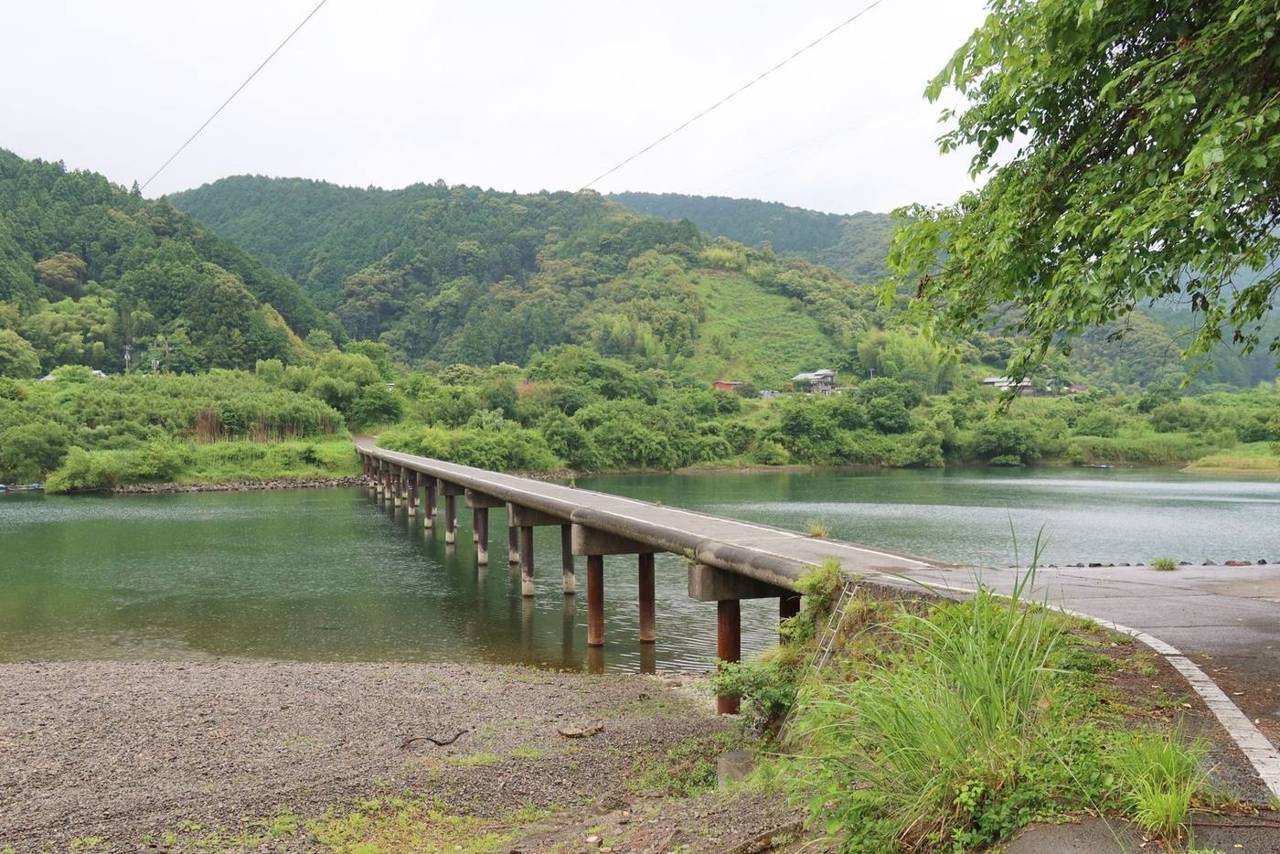 14 daysModerate
Shikoku on Foot, in the Pilgrims' Footsteps
A loop around the least visited of the four main islands, with sections of the 88 Temple pilgrimage, the Iya Valley, the Pacific capes and the Dōgo hot springs.
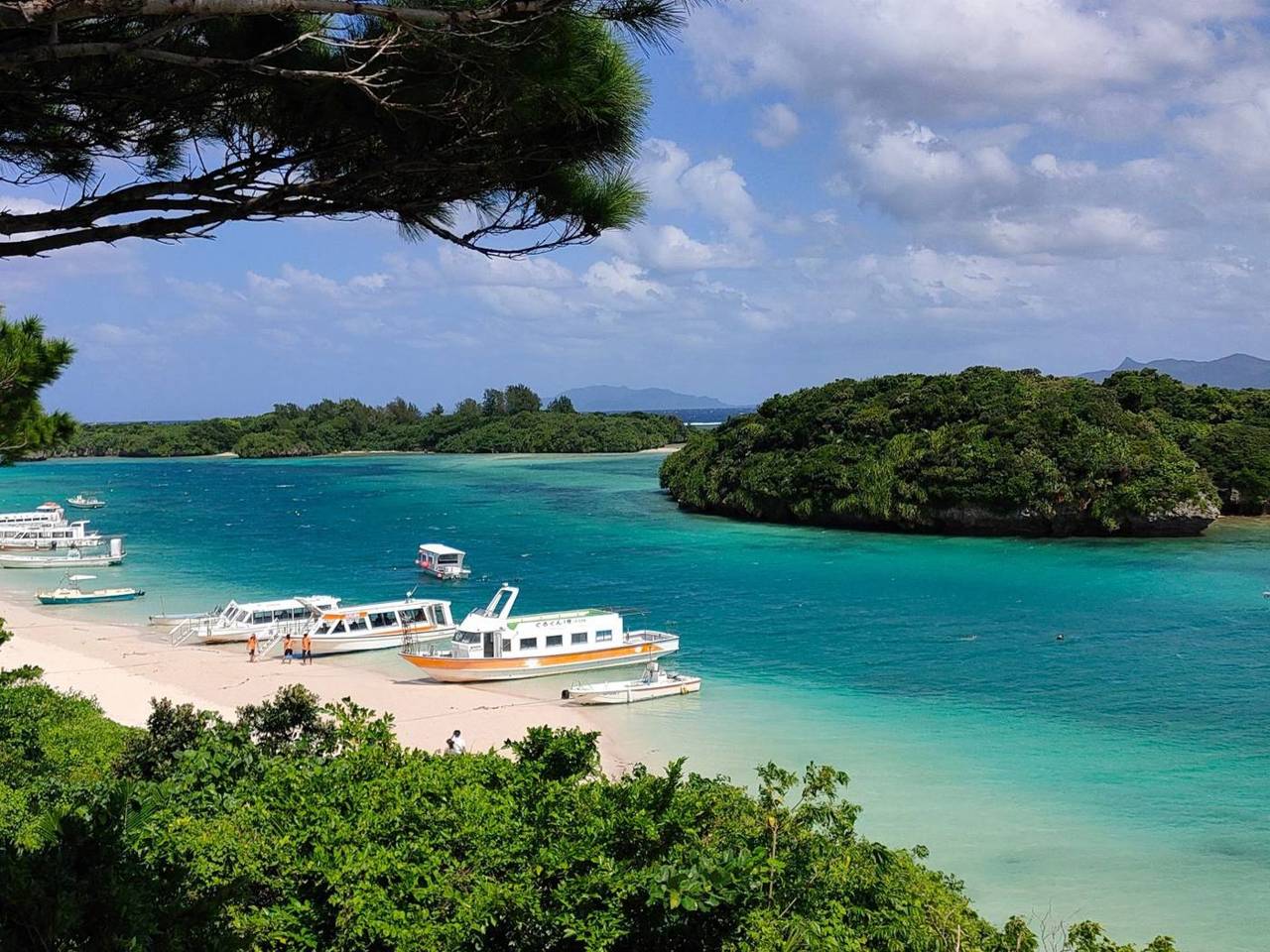 16 daysEasy
Okinawa and the Yaeyama Islands
Subtropical Japan: Naha and Ryūkyū culture, the coral reef of Ishigaki, the village of Taketomi and the jungle of Iriomote, finishing in Kyoto and Tokyo.
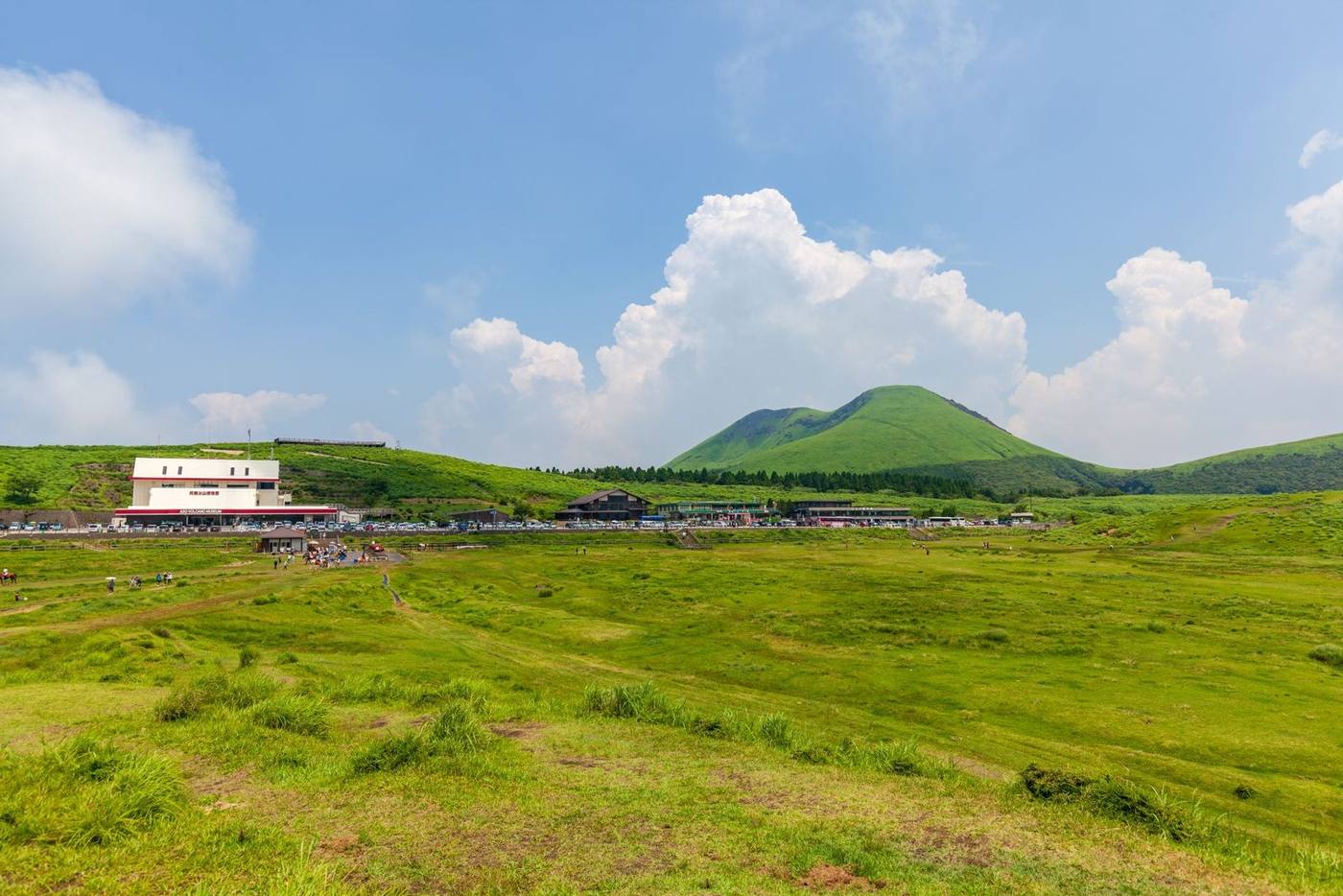 12 daysModerate
Kyushu: volcanoes, hot springs and Nagasaki
The southern island away from the classic circuit: the active Aso crater, the hot springs of Kurokawa and Beppu, Nagasaki and the Sakurajima volcano.