Shikoku on Foot, in the Pilgrims' Footsteps
A loop around the least visited of the four main islands, with sections of the 88 Temple pilgrimage, the Iya Valley, the Pacific capes and the Dōgo hot springs.
- Osaka
- Tokushima
- Iya Valley
- Kōchi
- Cape Muroto
- Cape Ashizuri
- Uwajima
- Matsuyama
- Takamatsu
Day by day
- Day 1
Departure from Italy
This trip takes you to Shikoku, the smallest of Japan's four main islands and the least visited, following the pilgrimage of the 88 temples, a route of about 1,200 kilometres around the island linked to the monk Kūkai, founder of Shingon Buddhism. In two weeks you do not walk it all: you walk some stretches between the temples and visit the island's finest places, such as the Iya valley, the capes on the Pacific, the castles and the hot springs. You get around by train, bus and hire car.
Before you go: Italian citizens enter Japan without a visa for tourist stays of up to 90 days, with a passport valid for the whole stay. Other nationalities should check their own rules. Since 1 July 2026 the departure tax from Japan is 3,000 yen, usually already included in the air ticket.
Today you fly from Italy to Osaka, almost always with a stop. The journey takes between 14 and 18 hours. Japan is eight hours ahead of Italy in winter and seven in summer.
On the plane try to sleep according to Japanese time: it helps you get over the jet lag.
Sleep on the plane.
Practical tip: on Shikoku many inns and some temples that host pilgrims accept only cash, and few people speak English. Book accommodation in advance, bring enough yen and download a translation app on your phone.
- Day 2
Osaka, the Naruto bridge and Tokushima
Today you arrive in Japan and reach Shikoku.
At Kansai airport buy a prepaid transport card, such as ICOCA, and withdraw cash in yen. Then take the direct bus to Tokushima, about two and a half hours. The bus crosses Awaji Island and then the Ōnaruto Bridge, over the Naruto Strait.
Below the bridge, with the tide, the Naruto whirlpools form, eddies of water that can exceed twenty metres across, among the largest in the world. If you arrive in time, get off at Naruto and watch them from the glass floored walkway under the bridge or from a boat. Check the tide times, because the largest whirlpools appear only at certain times of day.
In the afternoon you reach Tokushima, a quiet riverside city, famous throughout Japan for the Awa Odori, the great dance festival held every year in mid August, with thousands of dancers in the streets.
In the evening take the ropeway up Mount Bizan, the hill above the city, for the view of Tokushima lit up and the sea. Then have Tokushima ramen for dinner, with dark soy broth and sweet pork.
Sleep in Tokushima, for two nights.
Practical tip: if you arrive in Japan tired, you can spend the first night near Kansai airport and leave for Shikoku the next morning, without rushing. The bus to Tokushima runs throughout the day.
- Day 3
Pilgrim for a day: temples 1 to 5
Today you become a pilgrim and walk between the first five temples.
In the morning take the local train from Tokushima to Bandō, about twenty minutes, and walk to Ryōzen-ji, temple number 1 of the pilgrimage. Here pilgrims, called henro, buy the white vest, the wooden staff, which represents Kūkai walking beside them, and the stamp book, in which the monks of each temple write the temple's name with a brush and add the red seal.
At every temple pilgrims follow the same ritual: they bow at the gate, wash their hands and mouth at the fountain, ring the bell, light a candle and incense, recite the Heart Sutra in front of the main hall and Kūkai's hall, and then receive the stamp.
From here walk along the old pilgrims' road, among country houses, rice paddies and small shrines, to temples 2, 3, 4 and 5. About 15 kilometres in all, five or six hours with stops. The route is marked by small red signs showing a pilgrim.
In the afternoon, from temple 5, Jizō-ji, return to Tokushima by train.
In the evening relax in a public bath, called a sento, and have udon for dinner.
Sleep in Tokushima.
Practical tip: along the way local people often offer pilgrims a small gift, such as a piece of fruit, a tea or a sweet. It is called osettai: always accept it with a bow and a thank you, arigatō gozaimasu.
- Day 4
The Iya valley and the vine bridges
Today you head into the mountains of the island's interior.
In the morning collect the hire car and drive west for about two hours to the Ōboke gorge, where the Yoshino river flows between walls of schist. Take a boat ride through the gorge, about half an hour, among smooth rocks and emerald green water. Check times and prices.
Then climb into the Iya valley, one of the most remote areas of Japan, with forested mountains, villages clinging to steep slopes and narrow roads above the gorges. According to legend, the last warriors of the Taira clan hid here after their defeat in 1185.
In the afternoon cross the Iya vine bridge, the Kazurabashi, about 45 metres long and suspended above the river, made of woven branches and vines and rebuilt every three years. Between the vines you see the water beneath your feet, and the bridge sways with every step. Check times and prices. Then stop at the statue of the peeing boy, on a rock above the gorge, the symbol of the valley.
In the evening stay at an inn in the valley and bathe in an open air pool above the river.
Sleep in the Iya valley.
Practical tip: the roads in Iya are narrow and winding, often single lane. Drive slowly, sound your horn on blind bends and use the passing places to let other cars by. Allow extra time, as the short distances on the map take much longer to drive.
- Day 5
Inner Iya and Kōchi
Today you explore the wildest part of the valley and head down to the Pacific.
In the morning drive east into the innermost part of the valley, called Oku-Iya. Here there are two more vine bridges, smaller and quieter, side by side, called the husband and wife bridges, with a small hanging cart for crossing the river by pulling a rope. Check times and opening.
Then visit the village of Ochiai, a scattering of old farmhouses with thatched roofs on a very steep slope among terraced fields. From the viewpoint on the road opposite you see the whole village. Some houses have been restored and welcome visitors.
Also stop at the scarecrow village of Nagoro, where a resident has made hundreds of life size dolls to remember the people who left, as the village emptied.
In the afternoon drive south for about two and a half hours to Kōchi, on the Pacific coast.
In the evening go to Hirome Market, a covered market with food stalls and long shared tables, and try katsuo no tataki, bonito seared over a straw flame, Kōchi's speciality.
Sleep in Kōchi, for two nights.
Practical tip: only a few elderly people still live in Nagoro and Ochiai. Move around with respect, do not enter private houses and greet the people you meet. Keep your voice low and take your rubbish with you.
- Day 6
Cape Muroto, where Kūkai meditated
Today you reach the place where, according to tradition, Kūkai attained enlightenment.
In the morning, before leaving, visit Kōchi Castle, one of twelve Japanese castles that still have their original keep, built in the eighteenth century after a fire. From the top you see the whole city and the sea. Check opening times and tickets.
Then drive east along the coast for about two hours to Cape Muroto, the south eastern tip of Shikoku, on the open Pacific, an area of black rocks shaped by waves and earthquakes, now a UNESCO Global Geopark.
Here is the Mikurodo cave, where, according to tradition, the young Kūkai meditated for days. From the cave he could see only sky and sea, and from this he took the name Kūkai, meaning sky and sea. Check whether the cave is open: it sometimes closes because of the risk of rockfalls.
In the afternoon walk the clifftop path, among rocks and tropical vegetation, and climb to temple 24, Hotsumisaki-ji, on the hill above the cape, with the white lighthouse nearby. The ocean wind here is very strong.
In the evening return to Kōchi.
Sleep in Kōchi.
Practical tip: Shikoku's Pacific coast is exposed to typhoons, especially from August to October. Always check the forecast and warnings, and do not go near the sea when the waves are high.
- Day 7
To Cape Ashizuri
Today you cross the south coast to the island's other great cape.
It is a long driving day, about three and a half hours without stops. In the morning leave Kōchi heading south west. Stop at Katsurahama beach, a bay with pines on the rocks and the statue of Sakamoto Ryōma, a samurai from Kōchi who played an important role in the modernisation of Japan in the mid nineteenth century.
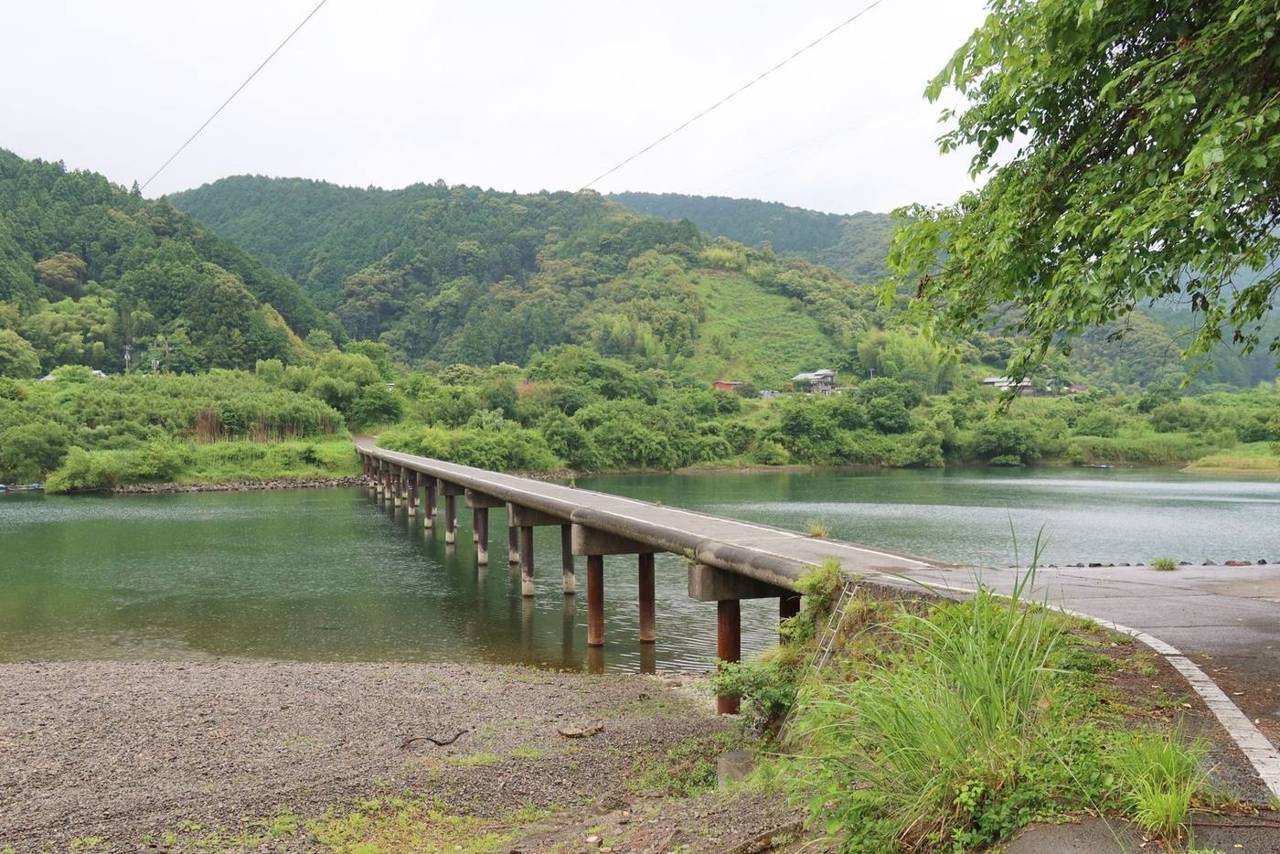
Then continue along the coast, across the Shimanto river, called the last clear river in Japan, because it has no large dams. On the river there are low bridges, the chinkabashi, without railings, built to let the water flow over them during floods.
In the afternoon you reach Cape Ashizuri, the southernmost point of Shikoku, with high cliffs above the ocean, a white lighthouse and a forest of wild camellias, which flower in winter.
Visit temple 38, Kongōfuku-ji, with its pond and rock garden, and walk the paths among the camellias to the viewpoints over the cliffs.
In the evening stay at an inn on the cape and have Pacific fish for dinner.
Sleep at Cape Ashizuri.
Practical tip: between the Shimanto river and Cape Ashizuri there are few petrol stations and shops. Fill up beforehand and buy something to eat for the road at the konbini, the small supermarkets open day and night.
- Day 8
The coast to Uwajima
Today you travel up Shikoku's west coast.
In the morning, before leaving, watch the sunrise from the cape's viewpoint, as the sun rises over the ocean.
Then drive north for about two and a half hours along the west coast, among deep bays, islets and fishing villages. Stop at the Tatsukushi marine park, with rocks eroded by the sea into the shapes of mushrooms and honeycombs, and at Kashiwajima bay, with its transparent water.
In the afternoon you reach Uwajima, a small port town. Climb to Uwajima Castle, on the hill in the middle of the town: it is small but original, one of the twelve that remain as they were, with a woodland path leading to the white wooden keep. Check opening times and tickets.
Then visit the Tensha-en garden, a garden of the lords of Uwajima, with a pond and a bamboo grove.
In the evening try Uwajima tai-meshi, raw sea bream with rice and a sauce of egg and soy, the town's speciality.
Sleep in Uwajima.
Practical tip: in the Uwajima area bullfights are held, an ancient tradition in which two bulls push against each other until one gives way. Check the days if you are interested in seeing one. The bulls are not harmed, and the event is a local festival rather than a show for tourists.
- Day 9
Matsuyama and its castle
Today you reach the largest city on Shikoku.
In the morning drive north for about an hour and a half to Uchiko, a small nineteenth century merchant town that grew rich on vegetable wax, with a street of white houses and an old wooden kabuki theatre, still in use. Check opening times and tickets.
Then continue for about an hour to Matsuyama and return the car: in the city you get around by tram.
In the afternoon go up to Matsuyama Castle, one of the finest in Japan, on the hill in the centre of the city, by ropeway or chairlift, or on foot in about twenty minutes. It is an original castle, with its keep, towers and stone walls, and from the top you see the whole city as far as the Seto Inland Sea. Check opening times and tickets.
In the evening take the tram to Dōgo Onsen, one of the oldest hot springs in Japan, mentioned in texts more than a thousand years old. The great wooden building of 1894, Dōgo Onsen Honkan, with its multi tiered roofs, is the symbol of the city. Bathe in the spring water and then stroll along the shopping street in a yukata, the light cotton kimono.
Sleep in Matsuyama, for two nights.
Practical tip: in Japanese hot springs you wash carefully before getting into the bath, you go in without a swimsuit and tattoos are sometimes not allowed. Check the rules of each spring.
- Day 10
The temples of Matsuyama on foot
Today you walk among the temples around Matsuyama.
In the morning take the tram or bus to temple 51, Ishite-ji, one of the most famous temples on the pilgrimage, with a fourteenth century gate that is a national treasure, a three storey pagoda and a narrow, dark cave full of statues, to be walked through with a torch. The name means temple of the stone hand, from a legend linked to Kūkai.
Then walk among the nearby temples, from 46 to 50, scattered in the countryside south east of the city, among rice paddies, citrus orchards and small villages. The route is about 15 kilometres, five or six hours with stops. Here the Ehime region is famous for mandarins, sold along the road.
In the afternoon return to the city and visit the castle gardens, or the museum of the writer Masaoka Shiki, the poet who renewed haiku at the end of the nineteenth century, born in Matsuyama.
In the evening, if you have energy, return to Dōgo Onsen, or have Matsuyama tai-meshi for dinner, sea bream cooked with rice, different from the Uwajima version.
Sleep in Matsuyama.
Practical tip: pilgrims on foot leave a small slip of paper with their name at the temples, the osamefuda. If someone gives you a gift, you can give them one of these slips in thanks.
- Day 11
Takamatsu and Ritsurin garden
Today you reach the north eastern part of the island.
In the morning take the limited express from Matsuyama to Takamatsu, about two and a half hours along the coast of the Seto Inland Sea, with islands in the background.
Takamatsu is a port city, Shikoku's gateway for those arriving from the rest of Japan and the starting point for the art islands of the Inland Sea, such as Naoshima.
In the afternoon visit Ritsurin garden, one of the most beautiful landscape gardens in Japan, created in the seventeenth century by the local lords at the foot of Mount Shiun. It has six ponds, thirteen artificial hills, wooden and stone bridges, pines carefully pruned for centuries and a teahouse, where you can drink green tea with a sweet while looking at the pond. Check opening times and tickets.
Then try Sanuki udon, the speciality of the Kagawa region: thick, springy wheat noodles, served hot or cold with broth or soy sauce. Kagawa has hundreds of small udon places, often self service, where you eat in a few minutes for little money.
In the evening walk around the harbour and look at the red glass lighthouse, lit up at night.
Sleep in Takamatsu.
Practical tip: if you have an extra day, take the ferry to Naoshima, the island of contemporary art, with museums designed by Tadao Andō. Check times and museum bookings.
- Day 12
The last three temples and Ōkubo-ji
Today you complete the pilgrimage, as real pilgrims do.
In the morning take the train to Shido, near temple 86, Shido-ji, with a large five storey pagoda and a garden of stones and moss. Then walk to temple 87, Nagao-ji, among fields and villages, about seven kilometres.
From here the path climbs into the mountains to temple 88, Ōkubo-ji, the temple where pilgrims finish the circuit. The path is steep, through woodland, about 12 kilometres with a demanding climb: it takes four or five hours. Alternatively there are buses and taxis.
At Ōkubo-ji pilgrims leave the wooden staff that has accompanied them throughout the journey, in a hall where thousands are kept. It is a very moving moment for those who have walked for weeks. Many then return to temple 1 to close the circle, or go to Mount Kōya, where Kūkai is buried, to thank him.
In the afternoon return by bus and train towards Tokushima, about two hours.
In the evening, in Tokushima, have one last dish of Shikoku cooking.
Sleep in Tokushima.
Practical tip: even if you have walked only a few stretches, ask for the stamp at the temples: the book with the monks' stamps and brush calligraphy is a unique souvenir.
- Day 13
The flight home
Today you leave Shikoku.
In the morning, if your flight leaves late, take a last walk in Tokushima along the Shinmachi river, or visit the Awa Odori hall, where you can watch a performance of the traditional dance and try a few steps. Check times and tickets.
Then take the bus or a flight to Kansai airport, and from there the flight to Italy. Arrive at the airport at least three hours before an international flight.
At the airport spend your last yen in the shops selling sweets, tea and traditional objects.
Over these days you have seen the quietest and least known Japan: the pilgrimage temples, the mountains of the Iya valley, the capes on the Pacific, the original castles, the Dōgo hot springs and Ritsurin garden, and you have met the kindness of the people of Shikoku towards pilgrims.
When to go: the best months are March, April and May, with cherry blossom and mild weather, and October and November, with clear skies and autumn colours. June and July bring the rainy season; August and September are very hot and humid and typhoons can arrive.
Sleep on the plane.
Practical tip: on Shikoku pilgrims on foot are respected and helped by everyone. If in future you want to do the whole route, it takes about 40 to 50 days on foot.
- Day 14
Arrival in Italy
Today you arrive in Italy.
Thanks to the time difference, if you leave Japan in the evening or at night, you reach Europe the morning of the same day or the next, depending on the stopover. In the first few days your body has to readjust to European time: get out in the daylight and go to bed at the normal hour.
The Shikoku pilgrimage is different from the other great routes of the world: it is a circle, with no fixed start or end, and you can begin at any temple. Many Japanese do it in stages, one section a year, sometimes over a whole lifetime.
If you enjoyed it, there are other routes to discover in Japan: the Kumano Kodo on the Kii Peninsula, Mount Kōya, where you sleep in monasteries, or the Nakasendō, the old mountain road between Kyoto and Edo.
Keep the stamp book and, if you like, the staff and white vest: in Japan it is said that those who have made the pilgrimage carry Kūkai's protection with them.
Practical tip: if you want to come back to do the whole route, learn a few words of Japanese and the Heart Sutra. It is not compulsory, but people greatly appreciate the effort, and the journey becomes a deeper experience. Train your legs too with long walks in the months before you leave.
It suits those who have already been to Japan and want a slow island, few foreign tourists, plenty of coastline and a pilgrimage culture that is still alive. The drawback is that you do not walk the whole route, which runs to about 1,200 km: these are tasters, and the Pacific coast days are mostly long transfers on infrequent transport. To reach the capes, consider a rental car, with an international driving permit.
Before you go
- Documents and visa
- Passport valid for the whole stay; many nationalities, including EU citizens, enter without a visa for up to 90 days for tourism. An electronic travel authorisation (JESTA) has been announced but is not yet in force: check before you go.
- Health and vaccines
- No vaccines required. Healthcare is excellent but expensive: travel insurance with high medical cover is essential. Some common medicines, such as certain codeine painkillers, are banned or restricted. Emergencies: 119 ambulance, 110 police.
- Money and payments
- Yen. Cards are increasingly accepted, but temples, small restaurants and rural areas need cash: convenience-store ATMs accept foreign cards. Tipping is not customary.
- Power sockets
- Type A, 100 volts: you need a flat-pin adapter; phone and laptop chargers work, European hairdryers often do not.
- Time zone
- UTC+9, no daylight saving time.
- Safety
- One of the safest countries in the world. The risks are natural: earthquakes, typhoons from July to October, extreme summer heat. Download an English-language alert app. Official advice: GOV.UK.
Information checked in November 2026 for Italian and EU citizens. Rules change: always check before you travel.
Variations
In 9 days: Tokushima with temples 1 to 5, the Iya valley, Kōchi, Matsuyama with the castle and Dōgo Onsen, returning from Matsuyama.
In 18 days: add two nights on Mount Kōya and two days on Naoshima and Teshima, the art islands of the Seto Inland Sea.
Frequently asked questions
What document do I need for Japan?
Italian citizens enter without a visa for tourist stays of up to 90 days, with a passport valid for the whole stay. Since 1 July 2026 the departure tax is 3,000 yen. Other nationalities should check their own rules.
Do you need to be Buddhist to do the pilgrimage?
No. The pilgrimage is open to everyone, of any religion or none. You only need to respect the rituals and rules of the temples, dress modestly and behave calmly.
How hard is walking between the temples?
Many stretches are on country roads and easy paths, 10 to 15 kilometres a day. Some mountain sections, such as the climb to Ōkubo-ji, are steep and need good fitness.
Indicative itinerary written by World Atlas. Before booking, check timetables, seasonal openings, documents and safety.
 16 daysEasy
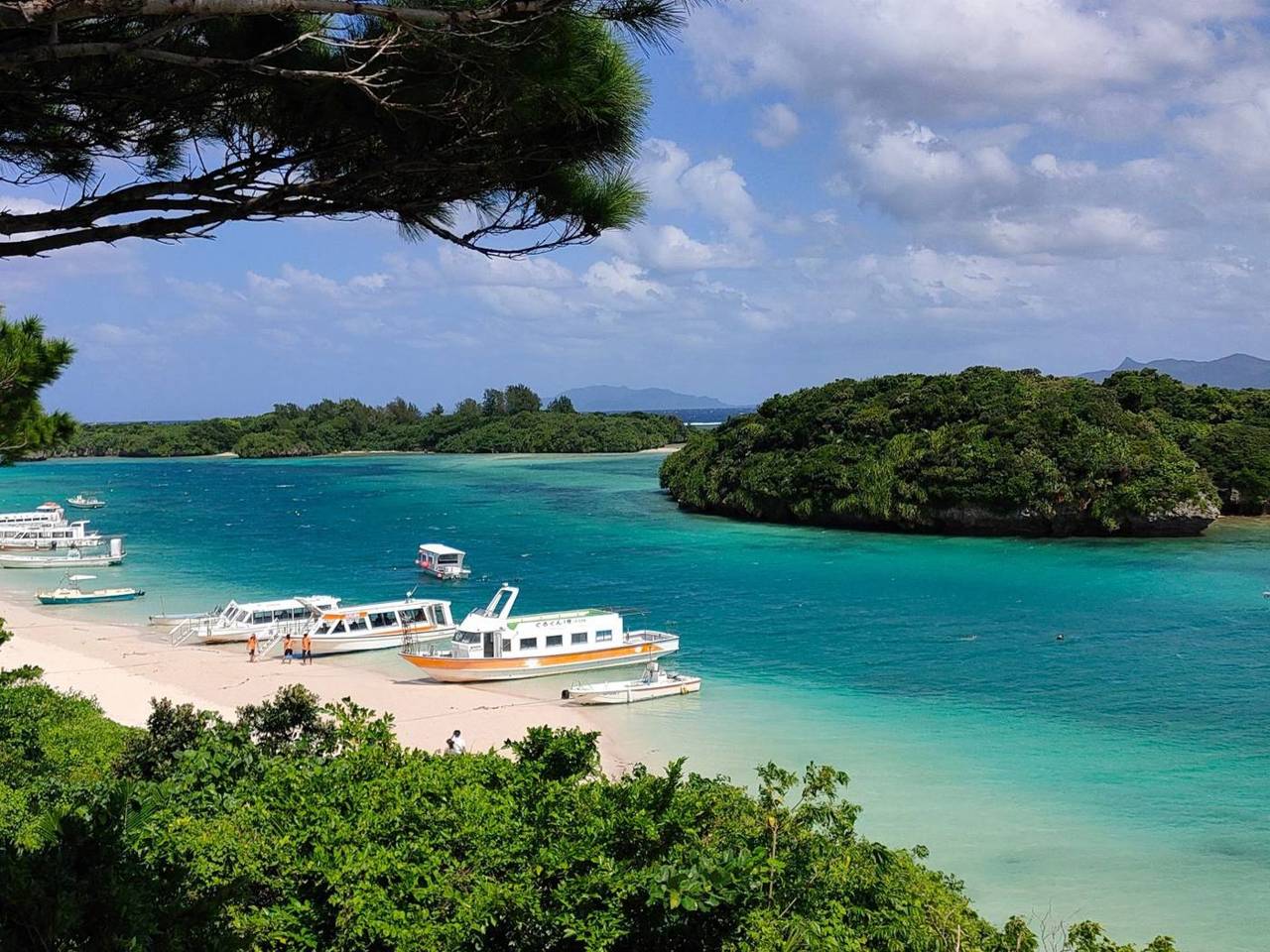
Okinawa and the Yaeyama Islands
Subtropical Japan: Naha and Ryūkyū culture, the coral reef of Ishigaki, the village of Taketomi and the jungle of Iriomote, finishing in Kyoto and Tokyo.
 12 daysModerate
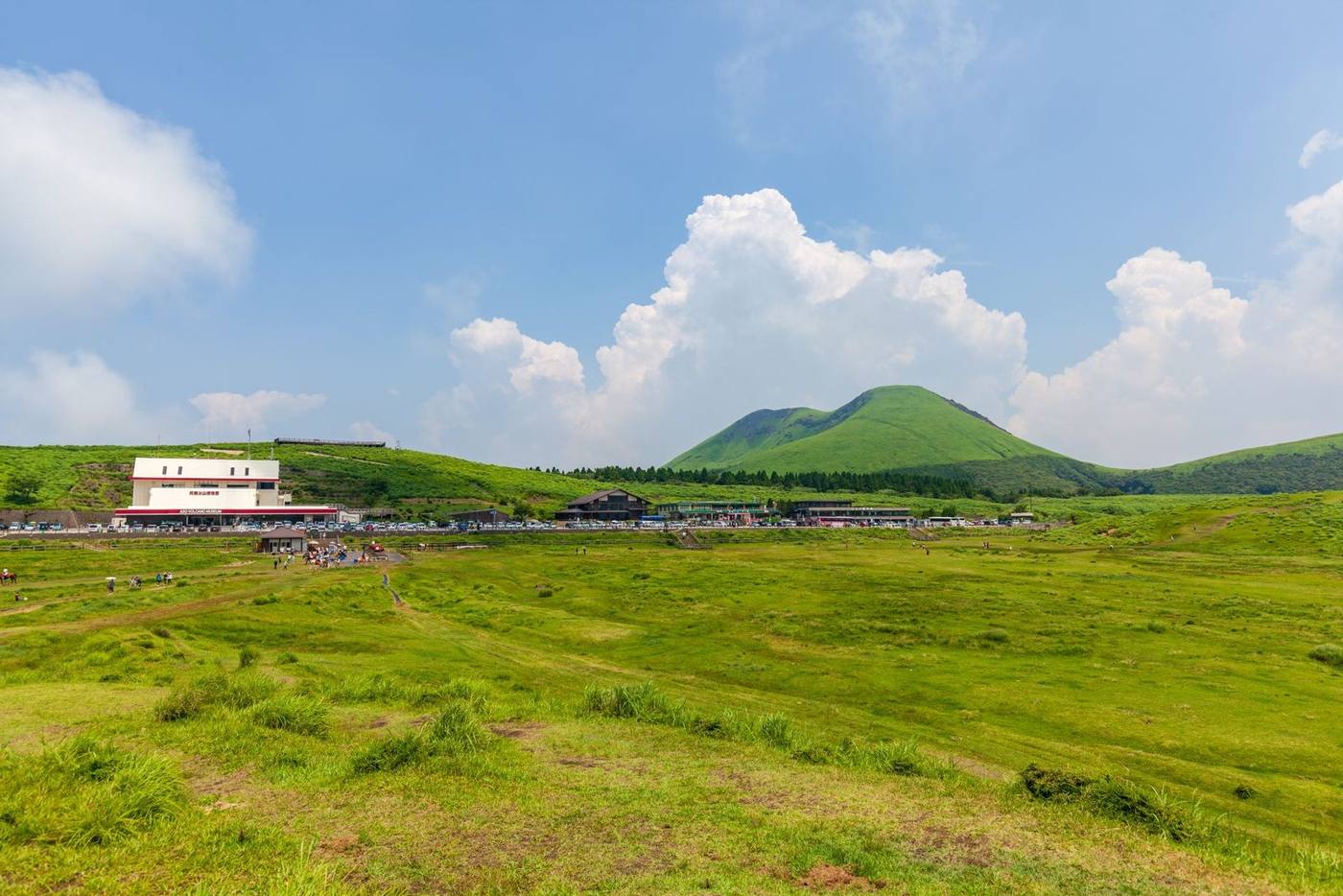
Kyushu: volcanoes, hot springs and Nagasaki
The southern island away from the classic circuit: the active Aso crater, the hot springs of Kurokawa and Beppu, Nagasaki and the Sakurajima volcano.
 7 daysEasy
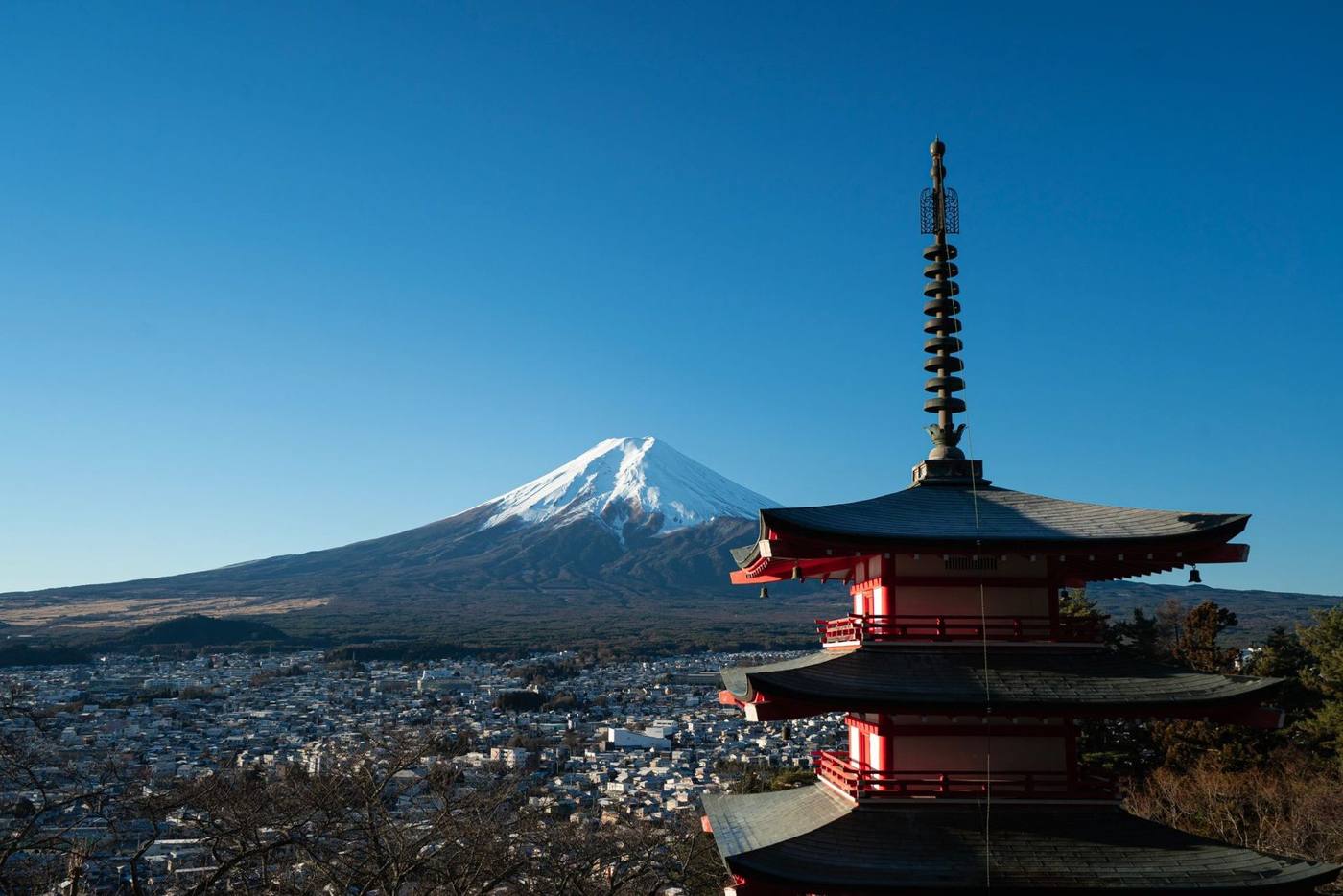
Mount Fuji, Hakone and Kamakura
A week around Tokyo: the Great Buddha of Kamakura, the hot springs of Hakone and Mount Fuji reflected in the lakes.