Kiritimati
The world's largest coral atoll: fly fishing on the sand flats, seabird colonies and the first inhabited place where each new day begins.
- London
- Laguna
- Cook Island
- Paris
Day by day
- Day 1
The flight to Kiritimati
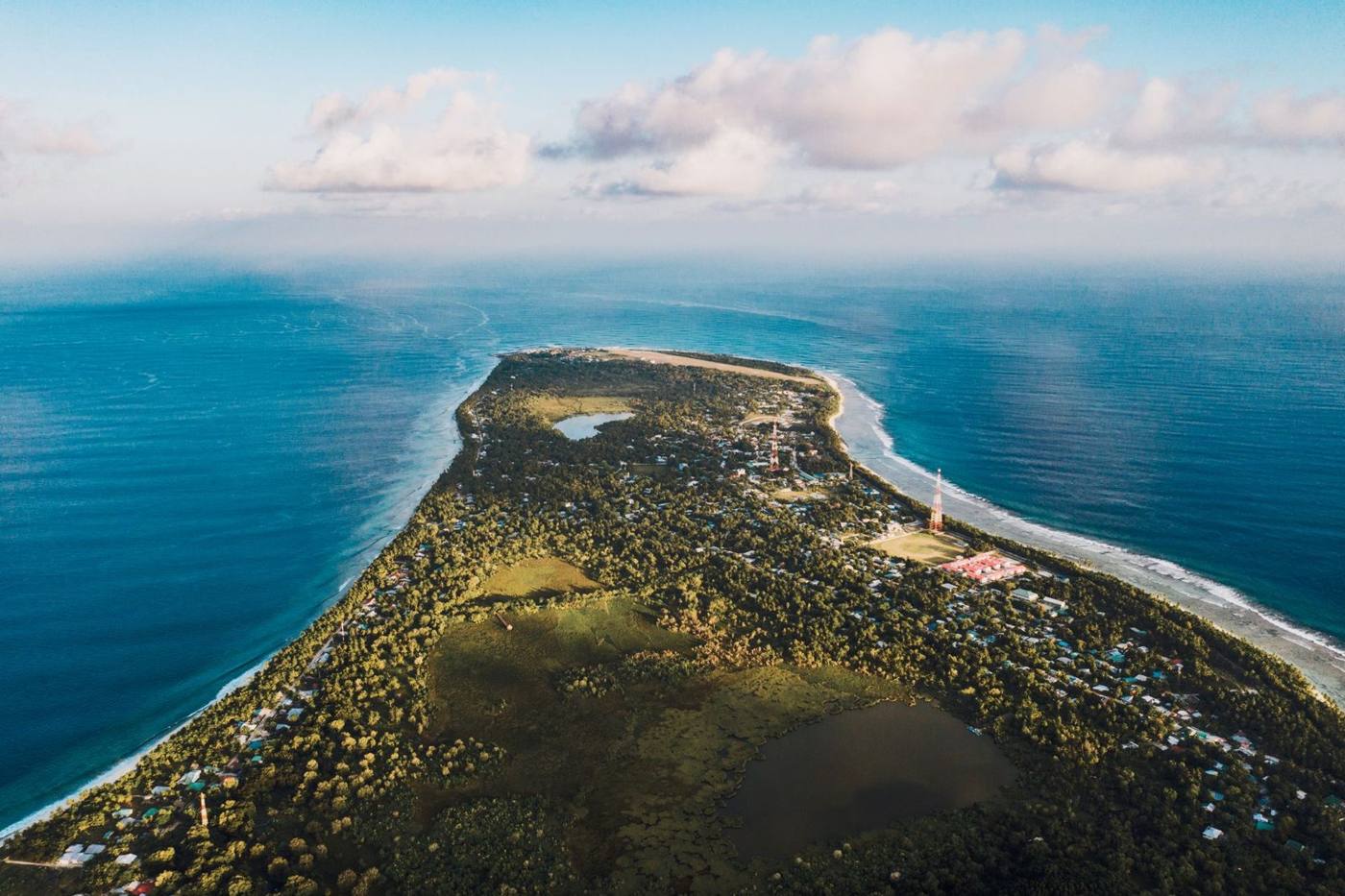
This seven-day trip takes you to Kiritimati, Christmas Island in Kiribati, the largest coral atoll in the world by land area: fly fishing on the sand flats of the lagoon, seabird colonies and the first inhabited place on Earth where the new day begins.
Before you go: Italian citizens enter without a visa for up to 90 days in a 12-month period, with a passport valid for at least six months, a return ticket and enough funds for the stay. Other nationalities should check their own rules. The British government does not advise against any part of the country. Flights to Kiritimati leave from Nadi, in Fiji, or Honolulu, in Hawaii, and there are only one or two a week: always check up-to-date schedules, because a delay can stop the whole trip.
You arrive at Cassidy airport, in the north of the atoll. Kiritimati lies in the Line Islands, near the equator, and is in the most advanced time zone in the world: fourteen hours ahead of Greenwich. Here the sun of the new day rises earlier than in any other town.
The English navigator James Cook landed here on Christmas Eve 1777, and for this reason named it Christmas Island.
In the afternoon, settle into your simple accommodation near the village of London, the main port, and rest after the long journey.
In the evening, watch the sunset over the lagoon.
Overnight on Kiritimati, for six nights.
Practical tip: bring cash in Australian dollars and all the medicines you need, because there is very little to buy on the island.
- Day 2
Fly fishing on the flats
Today you discover the reason most visitors come to Kiritimati: fly fishing on the flats, the great stretches of white sand and shallow water in the lagoon.
In the morning, set off with a local fishing guide by boat or pick-up to one of the flats. You wade in knee-deep water, wearing polarised glasses, looking for the grey shadows of bonefish, very fast silver fish that feed on crabs and shrimps on the bottom. When you see one, you cast the fly in front of its nose, gently, without scaring it. The guide tells you the direction and distance.
On Kiritimati fishing is almost always catch and release: the fish is photographed and returned to the water at once.
At midday, have lunch on the boat or in the shade of a bush on the beach, and drink plenty: the sun at the equator is very strong and the glare from the white water burns your skin and eyes.
In the afternoon, try another flat, depending on the tide. The guide knows where the fish move as the water rises and falls.
In the evening, when you get back, rinse your gear with fresh water to remove the salt.
Overnight on Kiritimati.
Practical tip: bring your complete gear and plenty of spare flies, because there are no specialist shops on the island.
- Day 3
The lagoon and the birds of Cook Island
Today you explore the lagoon and visit one of the most important seabird colonies in the Pacific.
In the morning, go out by boat on the great lagoon, with its channels, islets and water in countless shades of blue and green. Kiritimati's lagoon is very large, with very shallow areas and deeper zones where manta rays and turtles pass.
Then reach Cook Island, an islet at the entrance to the lagoon, protected as a bird reserve. Terns, frigatebirds, boobies and other seabirds nest here. Frigatebirds, black with very long wings, fly above you, and in the breeding season the males inflate the red pouch under their throats. Small white terns perch on the branches, almost without fear.
Walk only on the paths your guide shows you and do not go near the nests: many species nest on the ground and the eggs are almost invisible on the sand. Some islets can only be visited with permission from the local authorities.
In the afternoon, snorkel in the nearby channel with your guide, where ocean water enters the lagoon and brings reef fish.
Overnight on Kiritimati.
Practical tip: bring binoculars and a telephoto lens, but always keep your distance from the birds: disturbance can make them abandon their nests.
- Day 4
Paris and the salt flats
Today you discover the wildest and strangest side of the atoll, far from the villages and the busiest fishing areas.
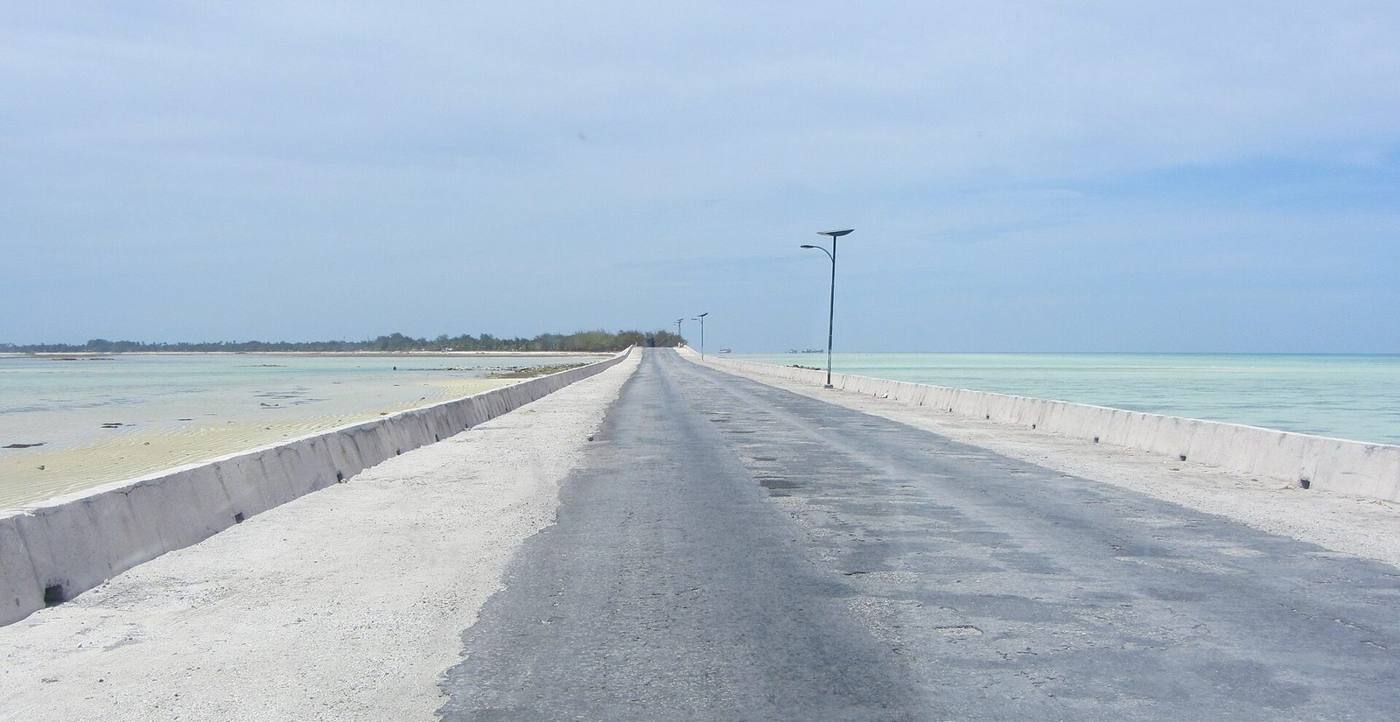
In the morning, go with your guide to Paris, on the other side of the lagoon entrance from London. Today it is an almost deserted place, with coconut palms planted by the settlers and a windswept beach. The names of Kiritimati's villages, such as London, Paris, Banana and Poland, date from the era of the coconut plantations.
Then cross the interior of the atoll: a flat landscape of low shrubs, palms, salt lakes and white salt flats. In many places the water of the inland lakes has incredible colours, from pink to green, because of algae and minerals.
In the 1950s and 1960s Kiritimati was used by the United Kingdom and the United States for nuclear tests. The areas linked to those tests are known and marked: follow your guide's instructions and do not pick up metal objects.
In the afternoon, go back to the flats for another fishing session, or rest in the shade.
At sunset, watch the frigatebirds flying back to the lagoon islands.
Overnight on Kiritimati.
Practical tip: always carry water, a hat and sun cream on the inland roads too: there are very few trees and nowhere to buy anything.
- Day 5
Giant trevally on the reef
Today you change style of fishing and go after giant trevally, the fish fly fishers most want to catch on Kiritimati.
In the morning, set off with your guide to the edges of the lagoon and the outer reef, where the water is deeper and the currents stronger. Giant trevally are huge and very powerful fish that hunt small fish in small groups and sometimes even birds. They are caught with heavy rods and large flies. When a trevally takes the fly, the fight can last a long time: the guide helps you keep it away from the coral, which cuts the line.
These fish are also released straight away, after a quick photo in the water.
If you prefer, you can try deep-sea fishing by boat beyond the reef, where tuna and wahoo pass.
At midday, rest in the shade and drink plenty of water.
In the afternoon, swim only where your guide says it is safe: near the reef there are strong currents and sometimes sharks.
In the evening, share the day with the other anglers: there are few visitors on the island and almost everyone knows each other.
Overnight on Kiritimati.
Practical tip: use fishing gloves and good finger tape, because a line pulled tight by a big fish cuts the skin.
- Day 6
The villages and life on the atoll
Today is your last full day and you spend it on the life of the people of the atoll.
In the morning, visit the main villages, such as London, Tabwakea and Banana. The inhabitants live from fishing, copra, dried coconut flesh, and seaweed farmed in the lagoon. You see simple houses, churches, schools and maneaba, the great meeting houses where the village gathers. You enter a maneaba only when invited, without shoes. Always ask before taking photos.
Stop at the port of London and watch the fishing boats coming back with their catch, unloaded straight onto the quay and sold to families.
In the afternoon, look with your guide for the bokikokiko, a small bird that lives only on a few of the Line Islands, in the shrubs of the interior.
Then go out one last time on the flats or have a last swim in the shallow water of the lagoon.
In the evening, watch the sunset and think that, while the day ends here, in Europe the morning of the same day has only just begun: Kiritimati is among the first inhabited places to see each new day.
Overnight on Kiritimati.
Practical tip: confirm your return flight the day before and check for any schedule changes, because there are very few alternatives if you miss it.
- Day 7
Departure from Kiritimati
Today you leave Kiritimati.
In the morning, if your flight leaves late, take a last walk on the beach and watch the seabirds over the lagoon. Then go to the airport in good time: the checks are simple, but there is only one flight and it does not wait.
Remember that on the flight to Honolulu you cross the International Date Line and arrive on the previous day: check the dates of your connections carefully.
Trip summary: in seven days you have seen Kiritimati, the largest coral atoll in the world, with fly fishing for bonefish on the flats and giant trevally on the reef, the tern and frigatebird colonies of Cook Island, Paris and the salt flats of the interior, and the villages of London and Banana. It is a niche destination, above all for fly fishing and birdwatching, with very simple facilities and rare flights.
When to go: the best period is from April to October, with the most stable weather. From November to April strong winds and swells can arrive. Fishing is possible all year round.
Practical tip: book a spare day in Nadi or Honolulu on the way back, because if the flight from Kiritimati is late you risk missing your long-haul connection.
A niche destination, mainly for fly fishing and birdwatching. Flights run once or twice a week: one delay blocks the whole trip. Facilities are very basic; the 1950s nuclear test areas are known and marked.
Before you go
- Documents and visa
- Passport with at least six months' validity from your departure date. Italian citizens enter without a visa for up to 90 days in a 12-month period, with a return ticket and enough funds for the stay.
- Health and vaccines
- Health facilities are limited and often paid in cash: you need insurance covering medical costs and repatriation. Drink only bottled water, use repellent and do not swim in the South Tarawa lagoon, which is highly polluted. Emergencies: 199 (police 192, ambulance 194).
- Money and payments
- Australian dollar. Cards are accepted in very few places and ATMs are only at some bank branches on Tarawa: bring cash.
- Power sockets
- Type I, 240 volts, as in Australia: you need an adapter.
- Time zone
- Tarawa: UTC+12. Kiritimati: UTC+14.
- Safety
- The British government does not advise against any area. There is some petty crime. From November to April strong winds, swells and flooding can disrupt services; at sea squalls can arise suddenly. International flights are very few: always check up-to-date schedules. Official advice: GOV.UK.
Information checked in November 2026 for Italian and EU citizens. Rules change: always check before you travel.
Variations
Shorter version: five days, if flight schedules allow, with three days of fishing and the visit to Cook Island.
Longer version: ten days or two weeks, as many anglers do, following the rhythm of the weekly flights.
Frequently asked questions
How do you get to Kiritimati?
By flights from Nadi, in Fiji, or Honolulu, in Hawaii, which run once or twice a week. Always check up-to-date schedules before booking.
Do you need to know how to fly fish?
No, but it helps. Local guides teach the basics, although bonefishing needs some casting practice.
Are the nuclear test areas dangerous?
The areas linked to the tests of the 1950s and 1960s are known and marked. Follow your guide's instructions and do not pick up metal objects.
Indicative itinerary written by World Atlas. Before booking, check timetables, seasonal openings, documents and safety.