Kaunas and the Hill of Crosses
Kaunas with its UNESCO modernist architecture and street art, the Ninth Fort, the Rumšiškės open-air museum and the Hill of Crosses near Šiauliai.
- Vilnius
- Rumšiškės
- Kaunas
- IX forte
- Šiauliai
- Hill of Crosses
Day by day
- Day 1
From Vilnius to Rumšiškės and Kaunas
This trip takes you into the heart of Lithuania, through history and memory: the open-air museum of Rumšiškės, Kaunas with its modernist architecture on the UNESCO list and its street art, the Ninth Fort and the Hill of Crosses near Šiauliai. You get around by car.
Before you go: Italian citizens only need an electronic identity card valid for travel abroad or a passport, with no visa: Lithuania is in the European Union and the Schengen area. Other nationalities should check their own rules. The country is safe. The crossings with Belarus have been closed several times, sometimes at short notice, and Italy's foreign ministry advises against travel to Russia: this route stays well away from the border and does not cross it.
In the morning leave Vilnius on the motorway to Kaunas. After about an hour turn off for Rumšiškės, home to the Open Air Museum of Lithuania, one of the largest in Europe, on the hills above the Kaunas Lagoon.
Spend the day among farms, windmills, wooden churches and peasant houses brought here from every region of the country. Each area has its own style: the houses of Samogitia, those of Dzūkija, the villages of Aukštaitija. In some houses you see craftspeople at work, such as the blacksmith or the potter. Check prices and times.
In the late afternoon you reach Kaunas, about twenty minutes away, and settle in near the centre.
In the evening walk through the Old Town to Town Hall Square, with the white building known as the white swan, and on to the confluence of the Neris and the Nemunas at sunset.
Practical tip: the Rumšiškės museum is very large and you explore it on foot along dirt paths; wear comfortable shoes and allow at least three hours.
- Day 2
Modernist Kaunas and the Ninth Fort
Today you discover the Kaunas of the 1920s and 1930s, when it was the temporary capital of Lithuania, and you visit one of the most painful places in the country.
In the morning walk along Laisvės alėja, Freedom Avenue, a long pedestrian street lined with lime trees, which ends in front of the Church of Saint Michael the Archangel, with its blue domes. All around you see the modernist buildings, added to the UNESCO list in 2023: the central post office, banks, cinemas and blocks with smooth facades and round windows. They are the symbol of a young nation that wanted to look modern.
Go up to the terrace of the Church of the Resurrection, white and very tall, to see the whole city from above. Check prices and times.
Then look for the street art: Kaunas is full of murals on courtyard walls and old buildings. The most famous is the huge bearded wise old man, painted on a house in the Old Town.
In the afternoon go to the Ninth Fort, on the northern edge of the city. It was a nineteenth century fortress; during the Nazi occupation tens of thousands of people were killed here, most of them Jews from Kaunas and from other countries. The museum also tells the story of the Soviet deportations. A huge concrete monument rises above the site. It is a heavy visit, to be made slowly and quietly. Check prices and times.
In the evening go back to the centre for a relaxed dinner, perhaps with cepelinai or a cold beetroot soup.
Practical tip: young children may be upset at the Ninth Fort; prepare them beforehand or visit only the outdoor area with them.
- Day 3
The Hill of Crosses and Šiauliai
Today you head north to one of the most famous and moving places in Lithuania.
In the morning drive from Kaunas towards Šiauliai: it takes about two hours on the motorway, through fields and woods. About a dozen kilometres before the town you reach the Hill of Crosses.
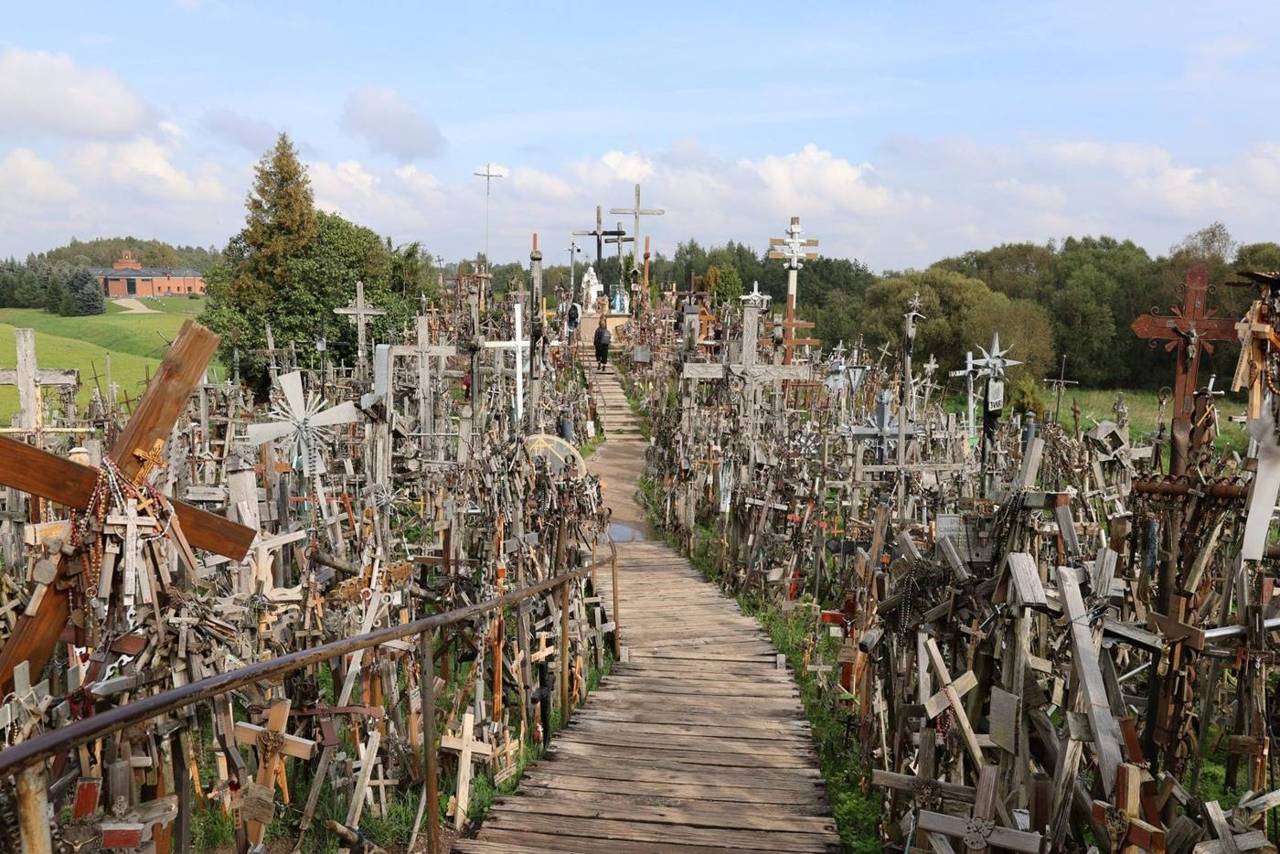
It is a small hill covered with tens of thousands of crosses of every size, in wood, metal and stone, with rosaries, holy pictures and small objects hanging from them. The first crosses date from the nineteenth century, after the uprisings against the Russian Empire. In Soviet times the hill was bulldozed several times, but each time people came back at night to put up new crosses. In 1993 Pope John Paul II visited it.
Walk along the narrow paths of the hill and listen to the sound of crosses and rosaries moving in the wind. If you like, buy a small cross at the stalls near the car park and leave one yourself.
At midday drive into Šiauliai, the country's fourth city. Walk along the pedestrian boulevard and into the square with the sundial, a tall column with a golden archer on top. The town has some curious museums, such as the bicycle museum and the cat museum.
In the afternoon return to Kaunas.
Practical tip: go to the Hill of Crosses early in the morning or towards evening, when there are fewer groups and the light is better for photos; wear closed shoes, because the paths are earth tracks.
- Day 4
Back to Vilnius
On the last day you see a little more of Kaunas and return to the capital.
In the morning visit Kaunas Castle, a round red brick tower at the confluence of the two rivers, one of the oldest castles in the country. Then walk through the Old Town among the cathedral, the Gothic churches and the merchants' houses.
If you are interested in twentieth century history, visit the house of Chiune Sugihara, the Japanese consul who in 1940 signed thousands of visas to save Jewish refugees. It is a small and moving museum. Check prices and times.
At midday, before leaving, stop at Pažaislis Monastery, on the eastern edge of the city, a large Baroque complex with a domed church, near the lagoon.
In the afternoon drive back to Vilnius, about an hour and a half on the motorway.
Trip summary: in four days you have seen the open-air museum of Rumšiškės with peasant houses from all over Lithuania, modernist Kaunas on the UNESCO list with Laisvės alėja and its street art, the Ninth Fort and its memory, the Hill of Crosses and Šiauliai. It is a trip of history, faith and architecture that explains a great deal about the country.
When to go: from May to October. In summer the days are long and the Rumšiškės museum is livelier; in autumn the colours are beautiful and there are fewer people.
Practical tip: without a car, the train between Vilnius and Kaunas is comfortable and frequent, but for Rumšiškės and the Hill of Crosses you need a car or a taxi from the nearest station.
A trip of history and memory, with Kaunas surprising lovers of 1920s and 1930s architecture. The Ninth Fort tells of the murder of Lithuania's Jews and is a heavy visit. The Hill of Crosses is two hours from Kaunas: doable in a day, but a car is needed.
Before you go
- Documents and visa
- EU citizens need a valid identity card or passport: Lithuania is in the EU and the Schengen area. Other nationalities should check the Schengen rules and the Entry/Exit System.
- Health and vaccines
- No vaccines required. EU citizens should bring their EHIC, plus insurance covering medical costs and repatriation. From spring to autumn the forests and meadows have ticks that can carry encephalitis: ask your doctor about the vaccine. Emergencies: 112.
- Money and payments
- Euro. Cards and phone payments are accepted almost everywhere; carry some cash for markets and villages.
- Power sockets
- Types C and F, 230 volts.
- Time zone
- Eastern European Time (UTC+2, summer UTC+3).
- Safety
- A safe country, with pickpockets in busy places in Vilnius and on public transport. Lithuania closed its border with Belarus in autumn 2025 after balloons crossed from Belarus, which also closed Vilnius airport several times; crossings can close again at short notice. Do not cross into Belarus or into the Russian region of Kaliningrad. The UK reports that some Ukrainian drones aimed at Russia have entered Lithuanian airspace: follow official guidance. Official advice: GOV.UK.
Information checked in November 2026 for Italian and EU citizens. Rules change: always check before you travel.
Variations
Shorter: three days, with Kaunas and the Hill of Crosses, skipping Rumšiškės.
Longer: add two days in Samogitia, with Lake Plateliai and the Cold War museum at Plokštinė.
Frequently asked questions
Can you visit the Hill of Crosses as a day trip from Vilnius?
Yes, but it is about three hours each way by car. From Kaunas the journey is shorter, about two hours.
Is the Ninth Fort suitable for everyone?
It is a memorial to the Holocaust and the deportations, with harrowing stories. With young children it is better to stay in the outdoor area.
What is Kaunas modernism?
It is the architecture of the 1920s and 1930s, when Kaunas was the temporary capital. It has been on the UNESCO list since 2023.
Indicative itinerary written by World Atlas. Before booking, check timetables, seasonal openings, documents and safety.
 4 daysEasy
Druskininkai and Dzūkija
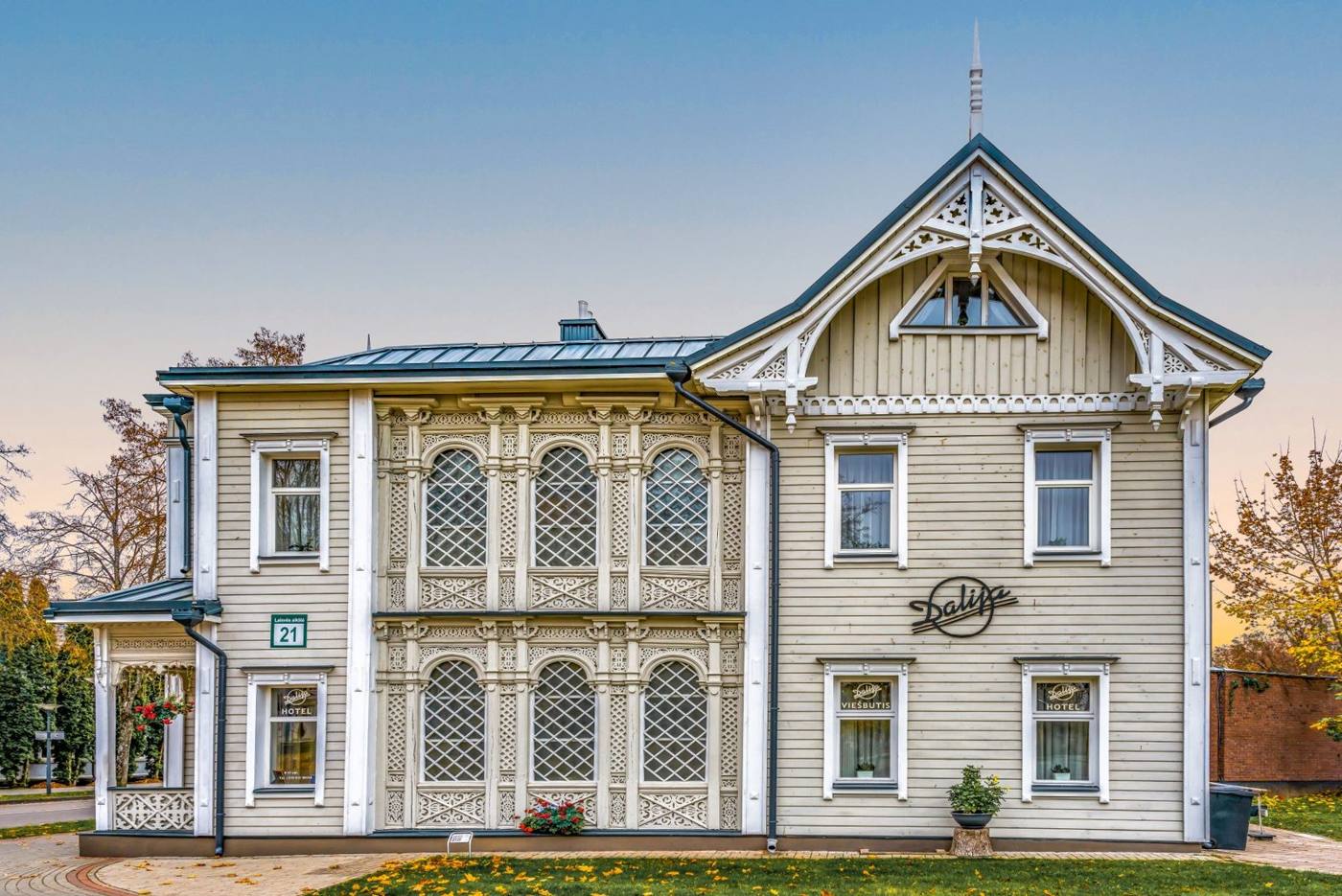
The spa town of Druskininkai, Grūtas Park with its Soviet statues, the pine forests of Dzūkija and the village of Zervynos with its wooden houses.
 4 daysEasy
Aukštaitija and the lakes
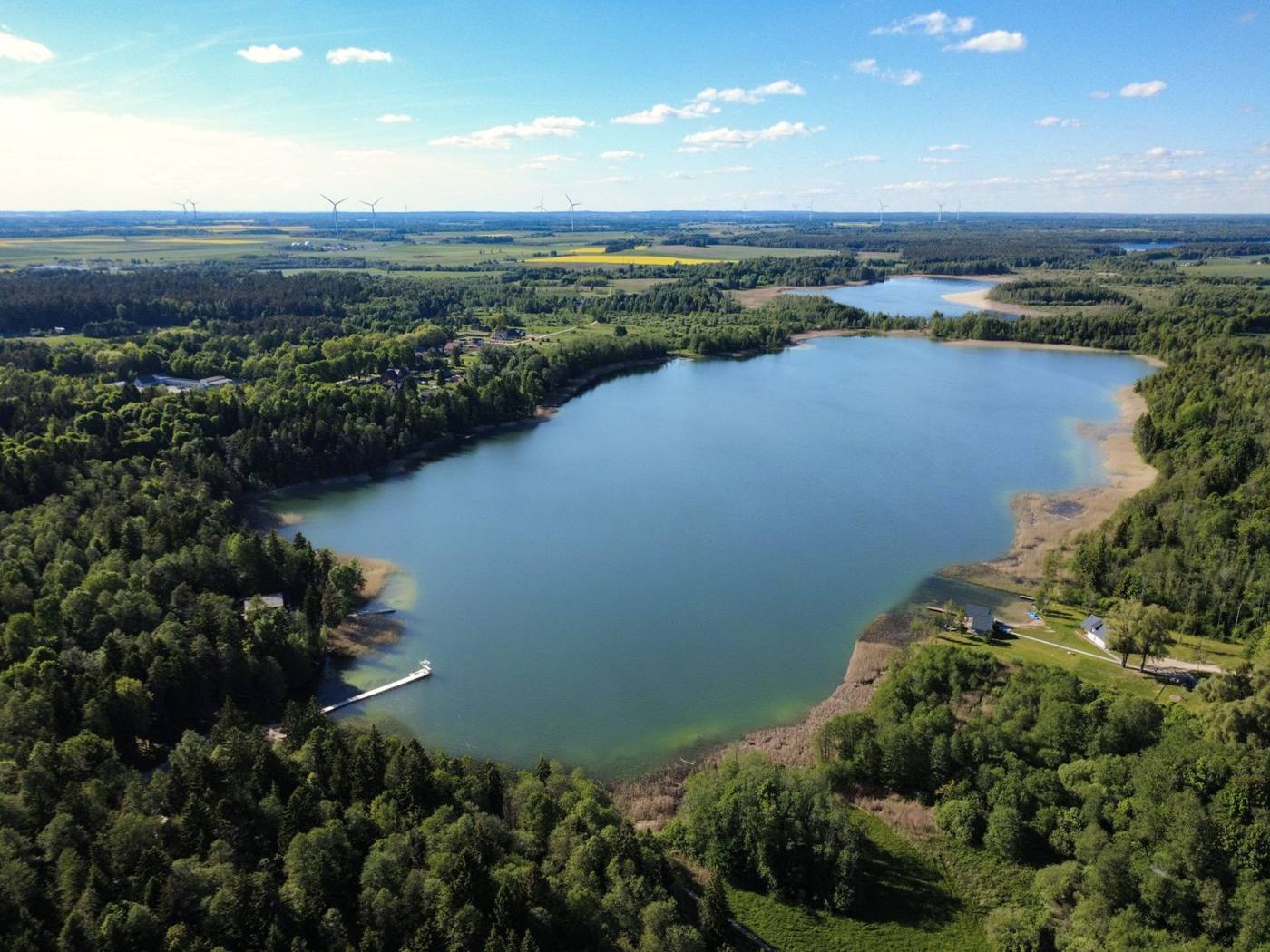
Lithuania's oldest national park: over a hundred linked lakes, Ladakalnis hill, the wooden church of Palūšė and the villages of Salos and Šuminai.
 4 daysEasy
Palanga and Klaipėda
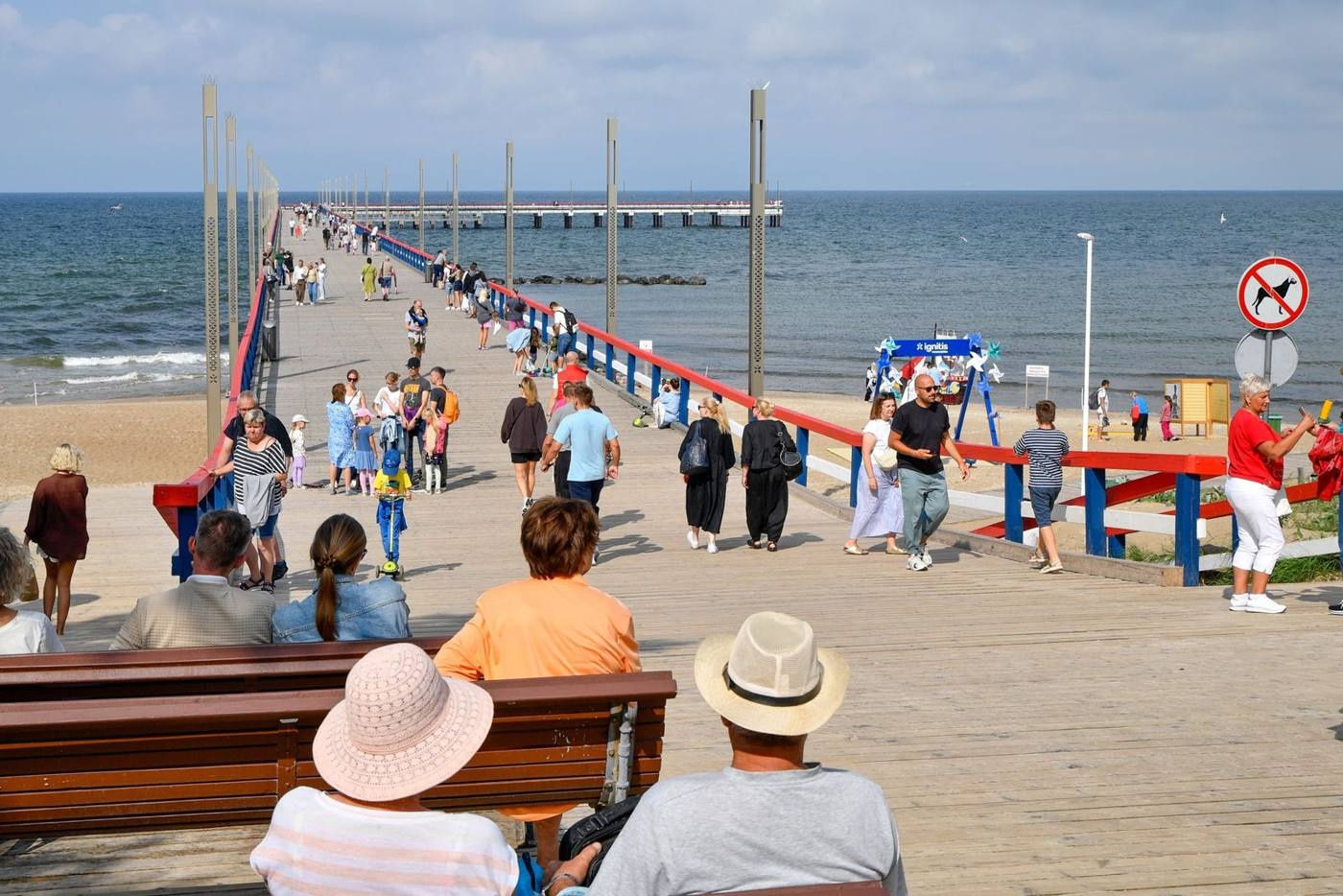
The resort of Palanga with the Amber Museum in the Tiškevičiai palace, the pier at sunset, Klaipėda's old town and the Sea Museum.