Vilnius and Trakai
The UNESCO baroque old town, the Gate of Dawn, the Republic of Užupis and Trakai castle on its lake island.
- Vilnius
- Porta dell'Aurora
- Užupis
- Gediminas' Tower
- Trakai
Day by day
- Day 1
The Old Town, the cathedral and the Gate of Dawn
This trip takes you to Vilnius, the most Baroque of the Baltic capitals, and to Trakai, with its castle on an island in the lake. In four days you see the Old Town on the UNESCO list, the Gate of Dawn, Saint Anne's Church, the Republic of Užupis, Gediminas Tower and the museum of occupations. You get around on foot and by train.
Before you go: Italian citizens only need an electronic identity card valid for travel abroad or a passport, with no visa: Lithuania is in the European Union and the Schengen area. Other nationalities should check their own rules. The country is safe. The crossings with Belarus have been closed several times, sometimes at short notice, and Italy's foreign ministry advises against travel to Russia: this route stays well away from the border and does not cross it.
In the morning start at the Gate of Dawn, the only gate left from the old city walls. Above the arch is a chapel with the icon of Our Lady of Mercy, venerated by Catholics and Orthodox alike: climb the stairs and look quietly.
Then walk down Didžioji Street and Pilies Street, among Baroque churches, courtyards and pastel coloured buildings, to Cathedral Square, with its white facade and bell tower.
In the afternoon go into the courtyards of Vilnius University, one of the oldest in Eastern Europe, then reach Saint Anne's Church, Gothic, in red brick. It is said that Napoleon would have liked to carry it back to Paris in the palm of his hand.
In the evening walk along Literatų Street, with small artworks and objects dedicated to writers linked to the city.
Practical tip: the streets of the Old Town are cobbled; wear comfortable shoes with thick soles.
- Day 2
Užupis, Gediminas Tower and the museum of occupations
Today you move from the city's most cheerful district to the hardest history of twentieth century Lithuania.
In the morning cross the bridge over the River Vilnia into Užupis, the artists' district, which in 1997 declared itself, as a game, an independent republic. Read the constitution on the plaques of Paupio Street, with articles such as the right to be happy and the right to be unhappy. Then walk up to the square with the angel blowing a trumpet and wander among the wooden houses and galleries.
Mid morning climb to Gediminas Tower, on Castle Hill, on foot along the path or by funicular. From the red brick tower you see red roofs, Baroque bell towers and, across the River Neris, the skyscrapers of the new city. Check prices and times.
In the afternoon go to the Museum of Occupations and Freedom Fights, in the building that housed the Gestapo and later the KGB. The rooms tell of the deportation of tens of thousands of Lithuanians to Siberia and of the partisans' resistance in the forests. In the basement you see the cells where prisoners were locked up and interrogated. It is hard, but necessary to understand the country. Check prices and times.
In the evening relax in one of the squares of the Old Town.
Practical tip: after the museum, give yourself a quiet break; many visitors find a walk along the River Neris, a few minutes away on foot, helps.
- Day 3
Trakai Castle and kibinai
Today you leave the city to see the most famous castle in Lithuania, on an island in the middle of a lake.
In the morning take the train or bus to Trakai, about half an hour from Vilnius. From the station walk along the main street, among colourful wooden houses with three windows facing the street: they are the houses of the Karaites, a small people of Turkic origin brought here from Crimea at the end of the fourteenth century by Grand Duke Vytautas. They still have their own language and a temple, the kenesa.
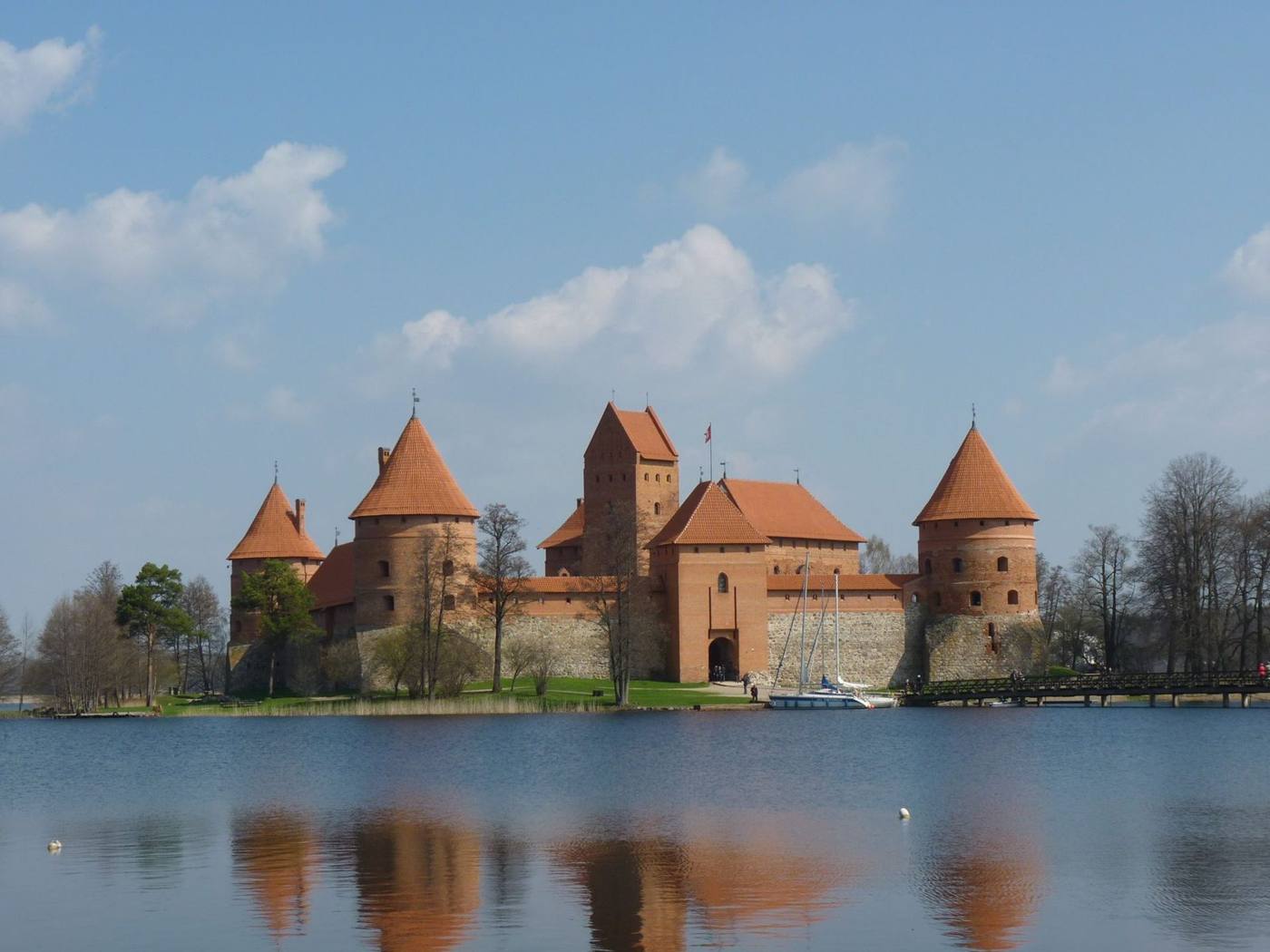
Then reach Lake Galvė and cross the wooden bridges to the island castle, in red brick, with towers and a courtyard. It was built between the fourteenth and fifteenth centuries, fell into ruin and was rebuilt in the twentieth century. In the museum you see the halls of the Grand Dukes, weapons and coins. Check prices and times.
At midday try kibinai, Karaite pastries filled with mutton or beef, or with vegetables, baked in the oven. They are the typical dish of Trakai.
In the afternoon hire a rowing boat or a pedalo and go round the island, to see the castle reflected in the water. Otherwise, walk the path along the lake shore.
In the evening return to Vilnius by train.
Practical tip: on summer weekends Trakai is very crowded; go on a weekday and arrive at the castle when it opens.
- Day 4
Departure
On the last day you enjoy a final morning in the city before leaving.
In the morning visit the Palace of the Grand Dukes of Lithuania, behind the cathedral, rebuilt on the foundations of the rulers' residence, with excavations and halls that tell the story of the Grand Duchy. Check prices and times.
Alternatively, if you like art, go to the national art gallery or wander through the covered markets, such as Halės, to buy rye bread, cheese, honey and smoked meats.
At midday have lunch with Lithuanian dishes: cold beetroot soup, bright pink, served in summer with hot potatoes, or cepelinai.
In the early afternoon head to the airport, about twenty minutes from the centre by bus, train or taxi.
Trip summary: in four days you have seen the Baroque Old Town of Vilnius with the Gate of Dawn, the cathedral and Saint Anne's Church, the Republic of Užupis, Gediminas Tower, the museum of occupations and Trakai Castle on its lake, with the Karaite kibinai. It is a small capital, easy to explore on foot, with prices that are still reasonable.
When to go: from May to September, with long days and pavement cafés. In June it gets dark very late. In winter it is very cold, but the city under snow is beautiful.
Practical tip: for getting around the city use public transport with an electronic ticket on your phone; for the airport there is also a train from the central station.
The most baroque of the Baltic capitals, with low prices and a centre easy to explore on foot. The occupations museum is hard but necessary to understand the country. Trakai is half an hour by train or bus.
Before you go
- Documents and visa
- EU citizens need a valid identity card or passport: Lithuania is in the EU and the Schengen area. Other nationalities should check the Schengen rules and the Entry/Exit System.
- Health and vaccines
- No vaccines required. EU citizens should bring their EHIC, plus insurance covering medical costs and repatriation. From spring to autumn the forests and meadows have ticks that can carry encephalitis: ask your doctor about the vaccine. Emergencies: 112.
- Money and payments
- Euro. Cards and phone payments are accepted almost everywhere; carry some cash for markets and villages.
- Power sockets
- Types C and F, 230 volts.
- Time zone
- Eastern European Time (UTC+2, summer UTC+3).
- Safety
- A safe country, with pickpockets in busy places in Vilnius and on public transport. Lithuania closed its border with Belarus in autumn 2025 after balloons crossed from Belarus, which also closed Vilnius airport several times; crossings can close again at short notice. Do not cross into Belarus or into the Russian region of Kaliningrad. The UK reports that some Ukrainian drones aimed at Russia have entered Lithuanian airspace: follow official guidance. Official advice: GOV.UK.
Information checked in November 2026 for Italian and EU citizens. Rules change: always check before you travel.
Variations
Shorter: three days, with the Old Town on the first day, Užupis and the museum on the second and Trakai on the third.
Longer: add two days in Kaunas, with the modernist city and the Ninth Fort.
Frequently asked questions
How do you get to Trakai?
By train or bus from Vilnius, in about half an hour. From the station to the castle it is about a half hour walk.
Is the museum of occupations suitable for children?
It is a museum with harrowing stories and prison cells. For young children a short visit is better, or skip it.
What are kibinai?
They are pastries filled with meat or vegetables, baked in the oven, the dish of the Karaite community of Trakai.
Indicative itinerary written by World Atlas. Before booking, check timetables, seasonal openings, documents and safety.
 4 daysEasy
The Curonian Spit
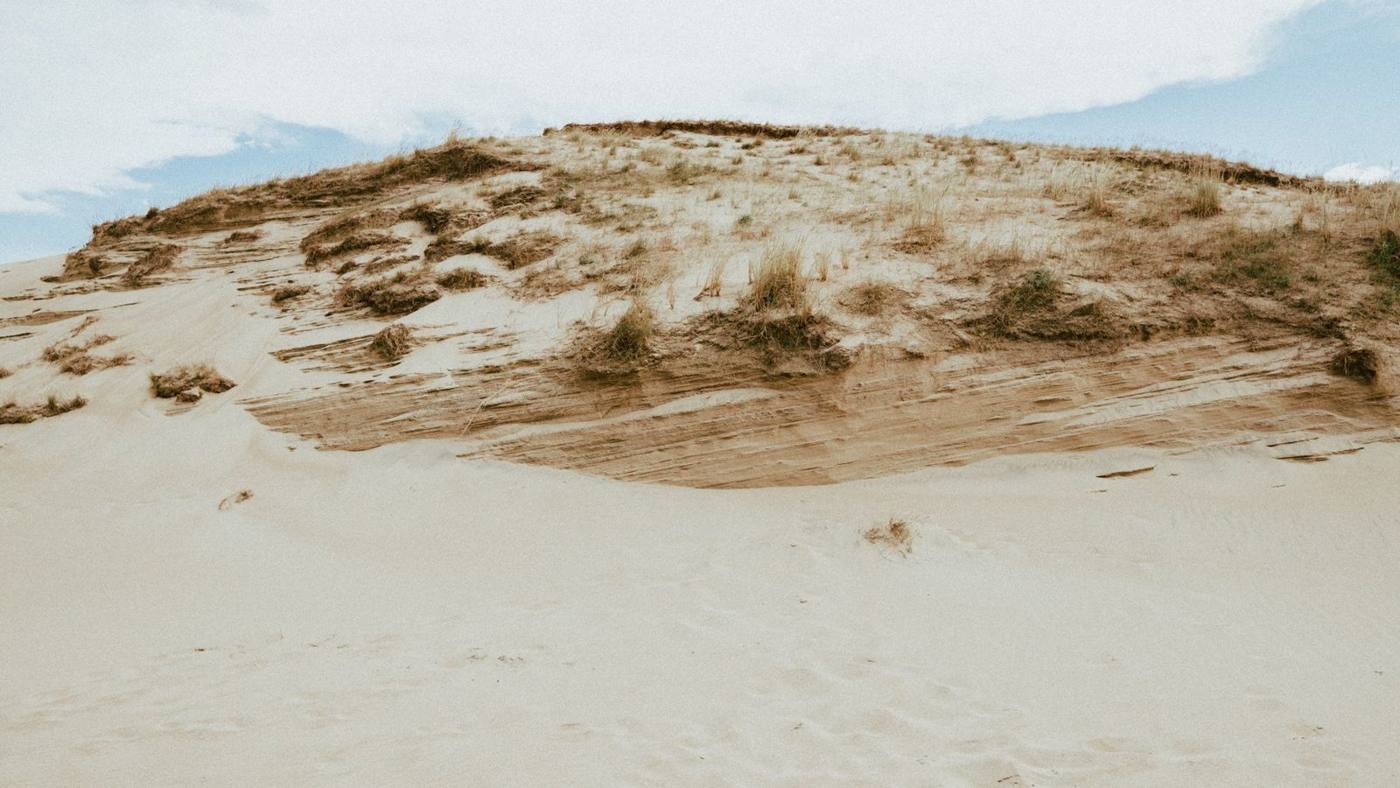
The thin UNESCO strip of dunes between lagoon and Baltic: Nida, the Parnidis dune, the Hill of Witches and pine forests by bike.
 4 daysEasy
Kaunas and the Hill of Crosses
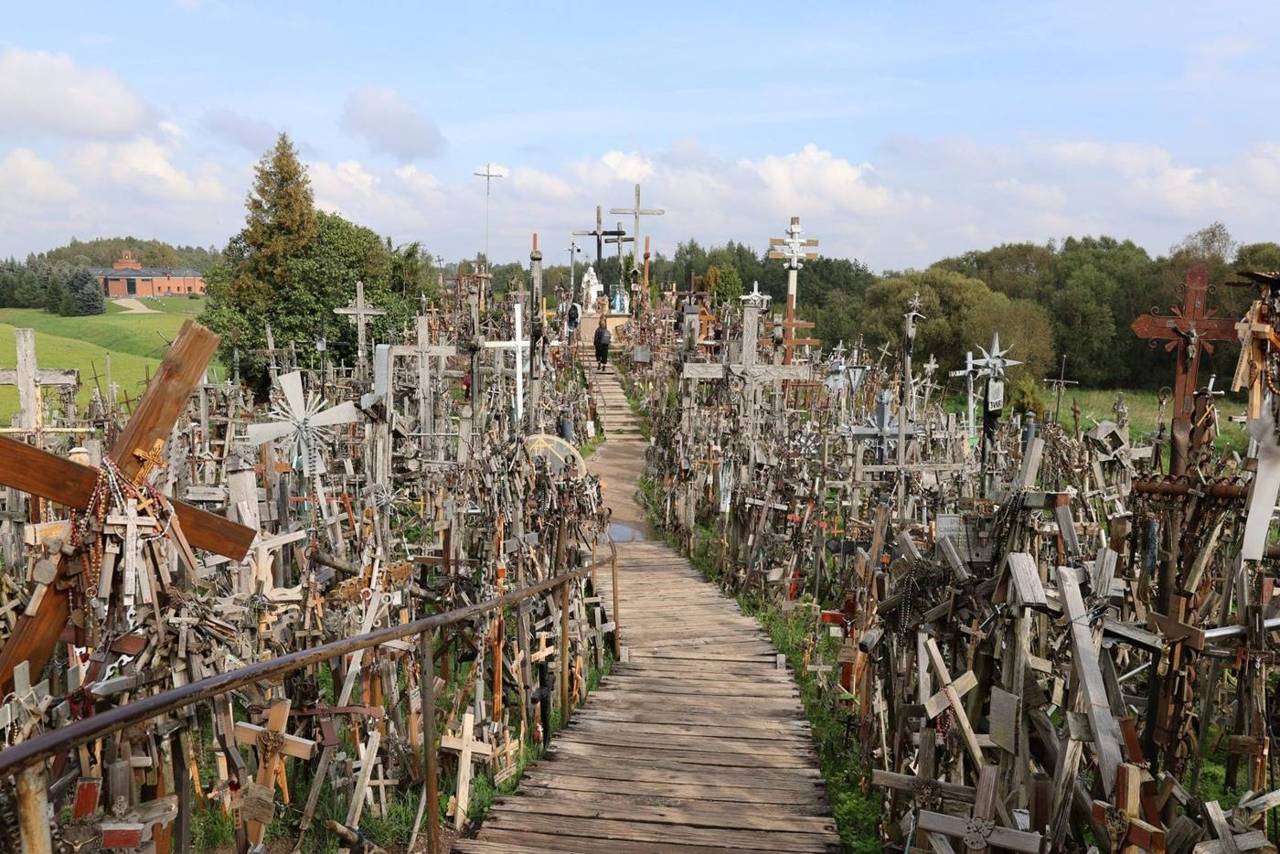
Kaunas with its UNESCO modernist architecture and street art, the Ninth Fort, the Rumšiškės open-air museum and the Hill of Crosses near Šiauliai.
 4 daysEasy
Druskininkai and Dzūkija
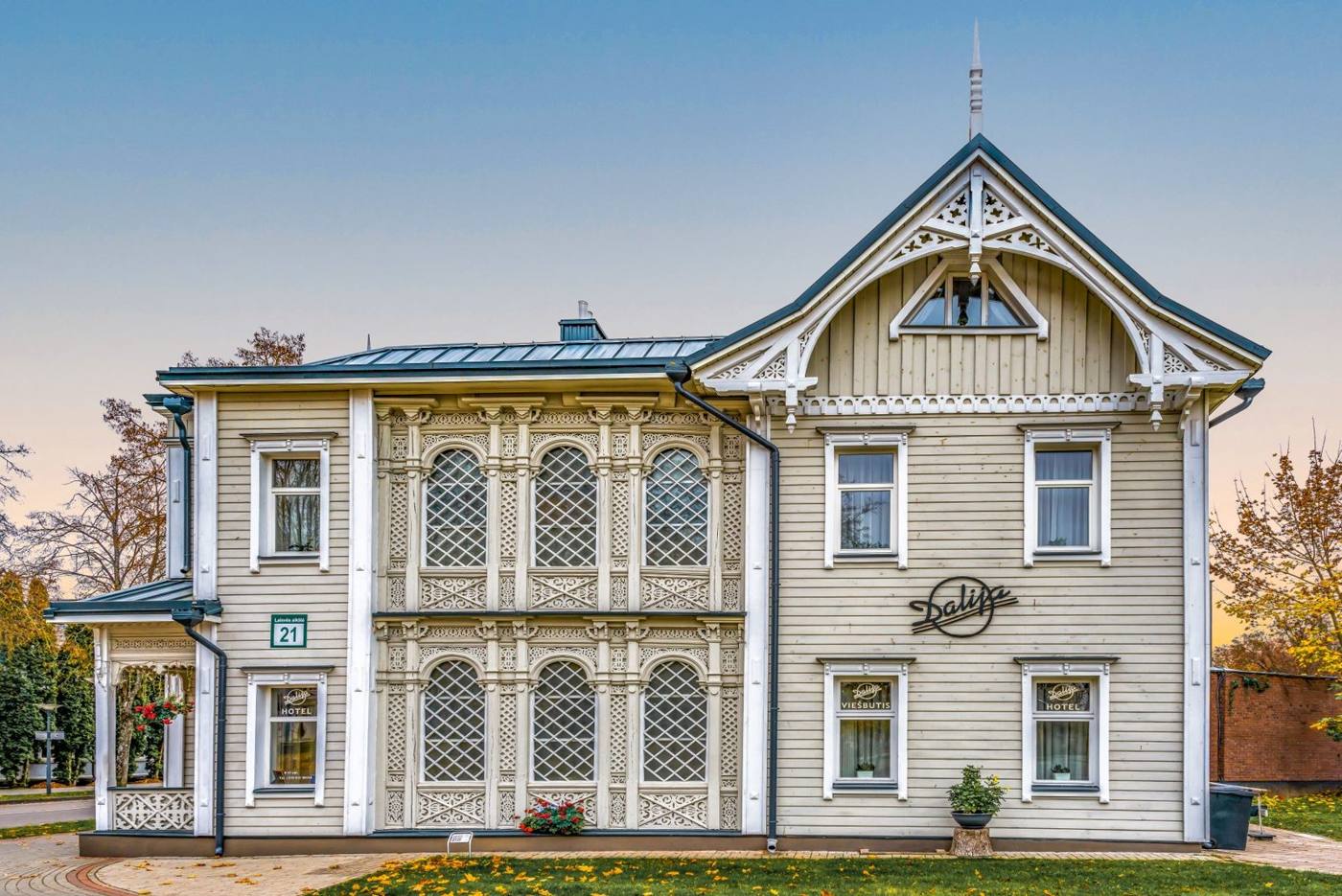
The spa town of Druskininkai, Grūtas Park with its Soviet statues, the pine forests of Dzūkija and the village of Zervynos with its wooden houses.