Maya triptych: Mexico City, Palenque and the Yucatán
The capital with Teotihuacán, the jungle pyramids of Palenque and the great Maya cities of the Yucatán, with cenotes to cool off.
- Mexico City
- Teotihuacán
- Palenque
- Campeche
- Uxmal
- Mérida
- Chichén Itzá
- Valladolid
- Tulum
Day by day
- Day 1
Arrival in Mexico City
This trip brings together the three souls of ancient and modern Mexico: the capital with its museums and the pyramids of Teotihuacán, the Maya city of Palenque in the jungle of Chiapas, and Yucatán with Campeche, Uxmal, Mérida, Chichén Itzá, the cenotes and the sea at Tulum. You travel on a domestic flight and then by hire car or coach.
Before you go: to enter Mexico, Italian citizens need a passport valid for the whole stay; no visa is needed for tourist trips. On arrival the officer decides how many days you may stay: check the number written down. Other nationalities should check their own rules. Before leaving also read the official travel advice for the states you will cross.
You arrive at Mexico City airport, one of the largest cities in the world, at about 2,240 metres above sea level, in a valley ringed by volcanoes.
In the afternoon rest: you will feel the altitude and the time difference, seven hours behind Italy in winter. If you have energy, walk around the Roma or Condesa districts, with tree lined avenues, Art Nouveau houses and parks.
In the evening try tacos al pastor, pork marinated and cooked on a vertical spit and served with pineapple, onion and coriander.
Sleep in Mexico City, for three nights.
Practical tip: in the city use taxis from authorised ranks or ride hailing apps, not taxis hailed in the street. Drink only bottled water. Keep your phone out of sight in crowded places and on the metro.
- Day 2
The historic centre and the Anthropology Museum
Today you discover the heart of the capital.
In the morning go to the Zócalo, one of the largest squares in the world, with the great Mexican flag at its centre. On one side stands the Metropolitan Cathedral, the largest in Latin America, built over almost three centuries; on the other the National Palace, with the murals of Diego Rivera telling the history of Mexico, from the Aztecs to the revolution. Check opening times and access, which can be restricted.
Next to the cathedral are the remains of the Templo Mayor, the great temple of Tenochtitlan, the Aztec capital on which the Spanish built the city. The site museum displays sculptures, offerings and the great stone disc of the goddess Coyolxauhqui.
In the afternoon go to the National Museum of Anthropology, in Chapultepec park, one of the most important museums in the world for the ancient civilisations of the Americas. Its halls cover the Olmecs, the Maya, the Aztecs and the other cultures of Mexico. Do not miss the Sun Stone, the great Aztec calendar, and the reconstructions of Maya tombs. Allow at least three hours. Check opening times and tickets.
In the evening walk through the historic centre, along pedestrian Madero street, to the Palacio de Bellas Artes, the white theatre with the orange dome.
Sleep in Mexico City.
Practical tip: the Anthropology Museum closes one day a week, usually Monday. Plan your days accordingly, and leave the Zócalo for a day when the museum is closed.
- Day 3
Teotihuacán and Coyoacán
Today you visit the largest ancient city in the Americas.
Early in the morning set off for Teotihuacán, about an hour north east of the capital, by coach from the northern bus station or by car. Arrive at opening time, before the heat and the groups.
Teotihuacán was a great metropolis between the first and seventh centuries, with perhaps more than a hundred thousand inhabitants, when in Europe the Roman empire was ending. The Aztecs found it already in ruins centuries later and gave it the name of the place where the gods are born. It is a UNESCO World Heritage site. Walk along the Avenue of the Dead, about two kilometres long, between the Pyramid of the Sun, one of the largest in the world, and the Pyramid of the Moon, from which you see the whole avenue. Also visit the Temple of the Feathered Serpent, with its carved stone heads. According to official 2026 figures, the anthropology institute fee for foreigners is 210 pesos. Check the rules for climbing the pyramids.
In the afternoon return to the city and go to Coyoacán, a quiet colonial district with tree lined squares and a market. Here is the blue house where the painter Frida Kahlo lived, now a museum, with her objects, clothes and studio. Tickets are sold online and sell out days ahead: book.
In the evening eat tostadas in the Coyoacán market, crisp tortillas topped with prawns, chicken or beans.
Sleep in Mexico City.
Practical tip: there is no shade at Teotihuacán. Bring a hat, sunscreen and water.
- Day 4
Flight to Villahermosa and Palenque
Today you leave the capital and head into the southern jungle.
In the morning take the domestic flight to Villahermosa, the capital of the state of Tabasco, about an hour and a half. From here drive or take the coach to Palenque, in the state of Chiapas, about two and a half hours through green plains, pastures and rivers.
If you have time, in Villahermosa visit the La Venta park museum, outdoors in a tropical park, with the great stone heads of the Olmecs, the oldest civilisation in Mexico, who lived about three thousand years ago. The heads are up to two metres high and weigh many tonnes. Check opening times.
In the afternoon you reach Palenque. The town is simple, but the best accommodation is along the road to the ruins, in the middle of the forest, where in the evening you hear howler monkeys. Their call, loud and deep, sounds like the roar of a large animal.
In the evening have dinner with the food of Chiapas, such as tamal de chipilín, a corn dough wrapped in leaves with an aromatic herb, or chicken with mole, a dark sauce of chillies, spices and chocolate.
Sleep in Palenque, for two nights.
Practical tip: in the Palenque jungle it is very hot and humid all year round. Wear light long sleeved clothes and use insect repellent. Before travelling by car in Chiapas, check the latest road advice.
- Day 5
Palenque and the waterfalls
Today you visit one of the most beautiful Maya cities, deep in the forest.
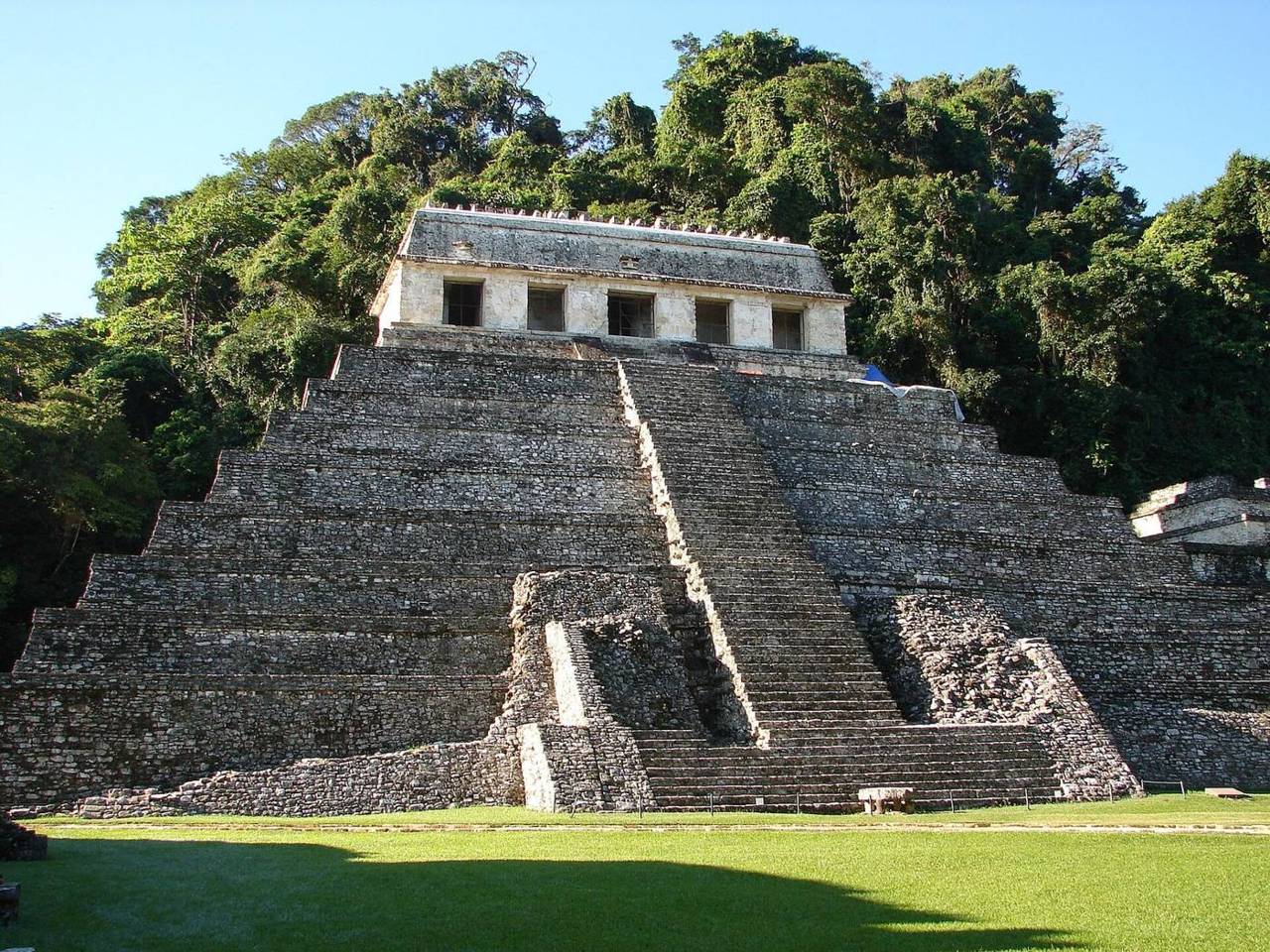
In the morning arrive at the ruins of Palenque at opening time, when the mist is still rising from the jungle. Palenque was a powerful Maya city between the fifth and eighth centuries. It is a UNESCO World Heritage site. Its most famous king was Pakal the Great, who reigned for almost seventy years. In 1952 an archaeologist found his tomb hidden inside the Temple of the Inscriptions, with a great carved stone slab over the sarcophagus and a jade mask.
Walk among the Palace, with its tower unique in the Maya world, the temples of the Cross group and the streams that run through the city. Much of the city is still covered by forest. At the end, take the woodland path down beside the waterfalls to the site museum, where the sculptures and a copy of Pakal's tomb are displayed. Check prices and opening times.
In the afternoon go to the Misol-Ha waterfall, about twenty kilometres away, about 35 metres high: a path runs behind the curtain of water. Further away, about 60 kilometres, are the Agua Azul falls, a series of cascades of blue water in the forest, most beautiful in the dry season, when the water is clear.
In the evening return to Palenque.
Sleep in Palenque.
Practical tip: on the road to Agua Azul there are sometimes roadblocks set up by local communities. Ask that same morning and, if there are problems, visit only Misol-Ha.
- Day 6
Campeche, the walled city
Today you reach the coast of the Gulf of Mexico.
In the morning drive north for about five hours to Campeche, the capital of the state of the same name, on the Gulf of Mexico. The road crosses tropical plains, small towns and, towards the end, the sea.
Campeche is a colonial city founded by the Spanish in the sixteenth century, a UNESCO World Heritage site. To defend itself from pirate attacks, which sacked it several times, in the seventeenth and eighteenth centuries it was surrounded by walls with bastions and gates, much of which still stand.
In the afternoon walk through the historic centre, with low houses painted in pastel colours, pink, blue, yellow and green, wrought iron balconies and the cathedral on the main square. Climb onto the walls and visit one of the bastions, now small museums. Check opening times.
At sunset stroll along the malecón, the seafront promenade of about seven kilometres, where local families walk and cycle. The sun sets over the gulf.
In the evening there are often light and sound shows on the walls in the main square. Have dinner with fish from the gulf or pan de cazón, a Campeche dish made with tortillas, beans and a small local shark.
Sleep in Campeche.
Practical tip: in Campeche the historic centre is explored on foot. Leave the car at your accommodation and walk: distances are short and the streets are safe and quiet. In the evening the centre is lively but calm.
- Day 7
Uxmal and the Ruta Puuc
Today you visit the most elegant Maya architecture in Yucatán.
In the morning drive north east for about two and a half hours to the Ruta Puuc, a road linking small Maya sites among the low hills of southern Yucatán. Puuc is the name of these hills and of a style of architecture with facades decorated with stone mosaics, masks of the rain god Chaac and geometric motifs.
Stop at Kabah, with the Palace of the Masks, whose facade is covered with hundreds of Chaac heads with hooked noses, and at Sayil, with a great three storey palace in the middle of the forest. Check prices and opening times.
In the afternoon you reach Uxmal, a UNESCO World Heritage site, one of the largest cities in the Puuc style. The Pyramid of the Magician has an unusual oval shape, with rounded sides. The Nunnery Quadrangle is a great courtyard enclosed by four buildings with carved facades. From the Governor's Palace, on a large platform, you see the flat forest stretching to the horizon. At Uxmal many iguanas bask on the stones.
In the evening, if it is on, watch the light and sound show on the ruins. Check days and times.
Sleep near Uxmal or in Santa Elena.
Practical tip: in Yucatán the heat is strong all year, especially from April to June. Visit the sites early in the morning and late in the afternoon, and rest in the middle of the day.
- Day 8
Mérida, the white city
Today you discover the capital of Yucatán.
In the morning drive north for about an hour and a half to Mérida. Along the way you can stop at one of the old henequen haciendas, large estates where in the nineteenth century agave was grown to make fibre for ropes. Many are in ruins, others have become museums.
Mérida is a lively and safe colonial city, called the white city. It was founded by the Spanish in 1542 on the ruins of the Maya city of T'hó, using the stones of the old temples.
In the afternoon walk around the Plaza Grande, with the cathedral of San Ildefonso, one of the oldest in the Americas, and the Government Palace, with large paintings of the history of Yucatán. Opposite stands the Casa de Montejo, the house of the Spanish founder, with a carved facade showing Spanish soldiers standing on the heads of defeated Maya. Then walk along the Paseo de Montejo, an avenue of nineteenth century villas built with henequen money.
If you have time, visit the Gran Museo del Mundo Maya, modern and full of original objects. Check opening times and tickets.
In the evening there is often traditional dancing in the squares of the centre. Have dinner with cochinita pibil, pork marinated in bitter orange and achiote and slow cooked in banana leaves.
Sleep in Mérida.
Practical tip: on Sundays the centre of Mérida closes to traffic and becomes a great party with music, markets and street food. It is a good day to arrive or to stay an extra night.
- Day 9
Chichén Itzá and the Ik Kil cenote
Today you visit the most famous Maya site in Mexico.
Early in the morning drive east for about two hours to Chichén Itzá. Arrive at opening time: later the coaches from Cancún arrive and the heat becomes strong.
Chichén Itzá, a UNESCO World Heritage site, was one of the great Maya cities between the ninth and twelfth centuries. In 2026, according to official figures reported by the Yucatán press, foreigners pay 697 pesos for a single ticket, which includes the national anthropology institute fee and the state fee.
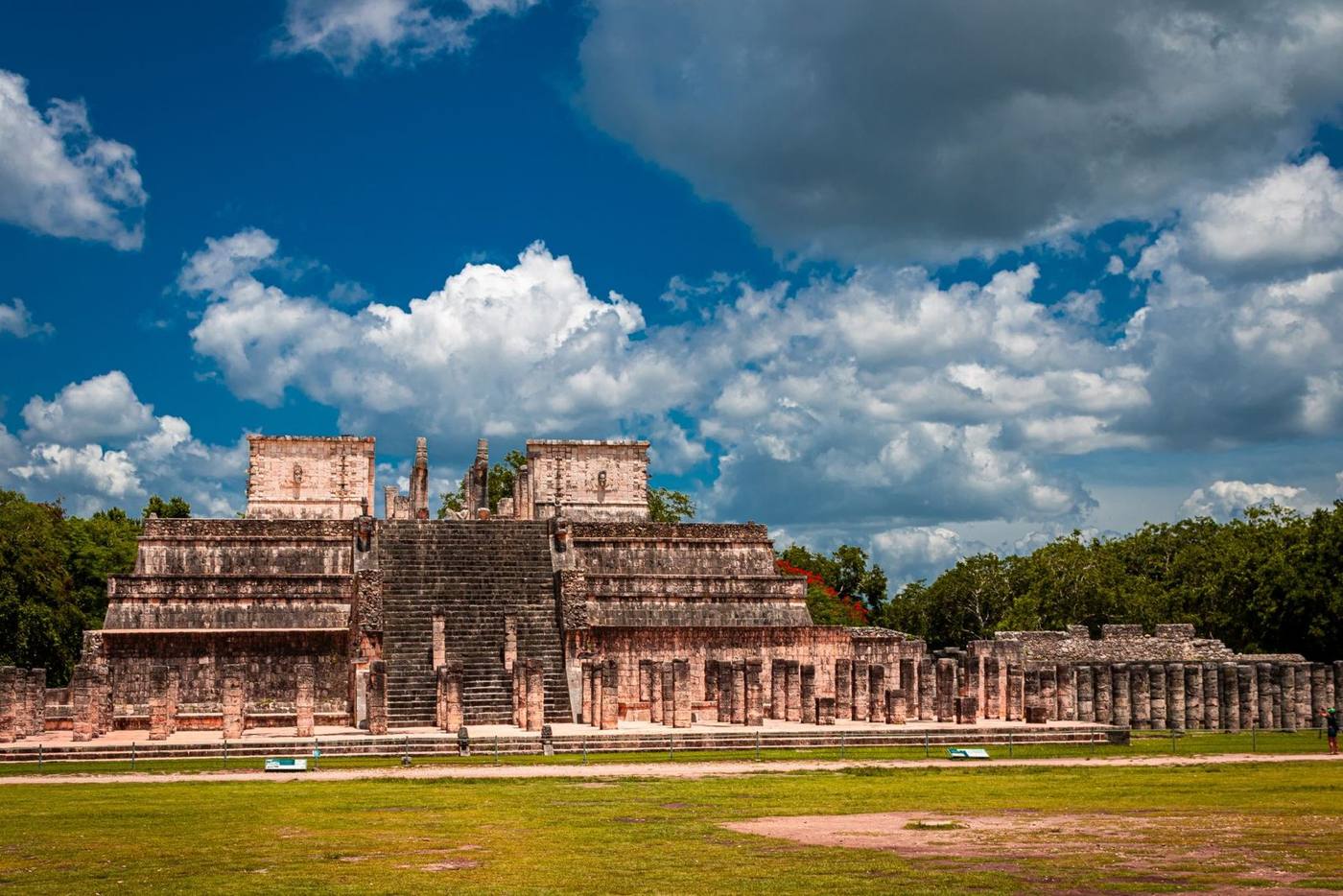
At the centre stands the Pyramid of Kukulkán, called El Castillo, with 365 steps in total, one for each day of the year. At the spring and autumn equinoxes, in the late afternoon, the shadow of its edges draws a descending serpent on the staircase. Climbing is not allowed. Then visit the great ball court, the largest in Mesoamerica, the Temple of the Warriors with its thousand columns and the sacred cenote, a great natural well where the Maya threw offerings.
In the afternoon go to the Ik Kil cenote, a few kilometres away: a deep round well, with walls hung with vines and a staircase cut into the rock down to the water. You can swim. Check prices and opening times.
In the evening continue for about forty minutes to Valladolid.
Sleep in Valladolid, for two nights.
Practical tip: in cenotes a life jacket is often compulsory and you must shower before entering, without sunscreen, to protect the water.
- Day 10
Valladolid and Ek Balam
Today you visit a quiet colonial town and a Maya city where you may still be able to climb.
In the morning walk around Valladolid, a colonial town with colourful houses, the church of San Servacio on the main square and the sixteenth century convent of San Bernardino de Siena. Walk along the Calzada de los Frailes, a street of pastel coloured houses, one of the prettiest in Yucatán. Then swim in the Zací cenote, right in the centre, a half open cave with green water.
Then drive for about half an hour north to Ek Balam, a lesser known Maya city in the middle of the forest. The great Acropolis is a structure about 160 metres long and about 30 high. Halfway up is the tomb of a king, protected by a canopy, with a stucco facade in superb condition: a great monster's mouth, with teeth, and winged figures that look like angels. Check whether climbing is still allowed: the rules change. Check prices and opening times.
In the afternoon swim in the X'Canché cenote, near the site, reached on foot or by bicycle.
In the evening return to Valladolid and have dinner on the square with Yucatecan dishes, such as panuchos, small fried tortillas filled with beans and topped with chicken or turkey.
Sleep in Valladolid.
Practical tip: between Valladolid and Ek Balam there are many little known cenotes, quieter than the famous ones. Ask at your accommodation which are open. Go in the morning, when the light enters the water.
- Day 11
Tulum on the Caribbean
Today you reach the Caribbean Sea.
In the morning drive south east for about an hour and a half to Tulum, in the state of Quintana Roo. This state asks foreign visitors for a compulsory tourist contribution, paid online: check the amount and rules before you go.
Tulum is one of the few Maya sites by the sea, and the image of the temple called El Castillo above the turquoise water is very famous. The site is small and can be visited in an hour or two; according to official 2026 figures the anthropology institute fee for foreigners is 210 pesos, and the ruins are now inside the Jaguar National Park, with regulated access. It was a port city, surrounded by walls on three sides and by the sea on the fourth, still inhabited when the Spanish arrived.
In the afternoon go down to the beach below the ruins or to one of the public beaches of the national park, with white sand and blue sea. From May to October large amounts of sargassum, a brown seaweed, sometimes wash up on the coast: check the situation before you go.
If you prefer, swim in the Gran Cenote, just outside Tulum, with transparent water and freshwater turtles.
In the evening have grilled fish or ceviche, raw fish marinated in lime.
Sleep in Tulum.
Practical tip: Tulum is one of the most expensive places in Mexico. Book ahead and compare prices between the town and the beach area. Bicycles are a handy way to get between the two.
- Day 12
Departure from Cancún
Today you leave Mexico.
In the morning, if your flight leaves in the afternoon, take a last swim in a cenote near Tulum or Puerto Morelos, or go snorkelling at Akumal, a bay where you often see sea turtles feeding on the seagrass. Follow the rules: do not touch or chase the turtles, and use only sunscreens that do not harm the sea.
Then drive for about an hour and forty minutes to Cancún airport and return the car. Allow extra time for traffic and security checks.
In these twelve days you have seen three civilisations and three landscapes: the great capital on the plateau with its museums and Teotihuacán, the forest of Chiapas with Palenque, and the flat limestone Yucatán, with its colonial cities, Maya ruins, cenotes and the Caribbean Sea.
When to go: the best period is from November to April, when the climate is dry and less hot. From May to October is the rainy season, with short afternoon storms; from June to November there is also a risk of hurricanes on the coast. At Christmas and Easter prices rise a lot.
Practical tip: driving in Yucatán is easy, but watch out for topes, speed bumps often unmarked at the entrance to villages. Do not drive at night and always fill up at official stations, checking that the pump starts from zero.
The best first trip to Mexico in under two weeks: fly into the capital and out of Cancún, with no backtracking. Palenque is the most atmospheric Maya site. Right months: November-April.
Before you go
- Documents and visa
- Passport valid for the whole stay; no visa is needed for tourism. On arrival the officer sets the number of days granted. Quintana Roo state charges foreign visitors a tax, the Visitax, payable online.
- Health and vaccines
- No compulsory vaccines. Drink only bottled water and use mosquito repellent against dengue and other diseases. Emergencies: 911.
- Money and payments
- Mexican peso. Cards are accepted in cities and tourist areas; in markets, villages and on local transport you need cash.
- Power sockets
- Types A and B, 127 volts: you need a flat-pin adapter.
- Time zone
- Mexico City is UTC-6; Quintana Roo is UTC-5. Mexico no longer uses daylight saving time, except in some border areas.
- Safety
- The situation varies greatly between states: the United States rates some, such as Guerrero, Michoacán and Sinaloa, at level 4, while Yucatán and Campeche are at level 1. Official advice: GOV.UK.
Information checked in November 2026 for Italian and EU citizens. Rules change: always check before you travel.
Variations
In 8 days: Yucatán only, from Cancún: Tulum, Valladolid, Chichén Itzá, Mérida and Uxmal, returning to Cancún.
In 16 days: add San Cristóbal de las Casas and the Sumidero Canyon after Palenque, and the Bacalar lagoon before Tulum.
Frequently asked questions
What document do I need for Mexico?
A passport valid for the whole stay; no visa is needed for tourism. On arrival check how many days the officer grants you. The state of Quintana Roo asks for an online tourist contribution. Other nationalities should check their own rules.
How much do Chichén Itzá, Teotihuacán and Tulum cost?
In 2026, according to official figures, foreigners pay 697 pesos at Chichén Itzá with the single ticket and 210 pesos to the anthropology institute at Teotihuacán and Tulum. Other sites: check prices and opening times.
Is it safe to drive this route?
In Yucatán yes, by day and watching out for speed bumps. In Chiapas, on the road to Agua Azul, there are sometimes roadblocks: ask on the day and read the latest official travel advice.
Indicative itinerary written by World Atlas. Before booking, check timetables, seasonal openings, documents and safety.
 7 daysEasy
Yucatán: Maya pyramids and cenotes
Chichén Itzá, Valladolid, the cenotes and the sea at Tulum: the easiest Mexico for a first week.
 15 daysModerate
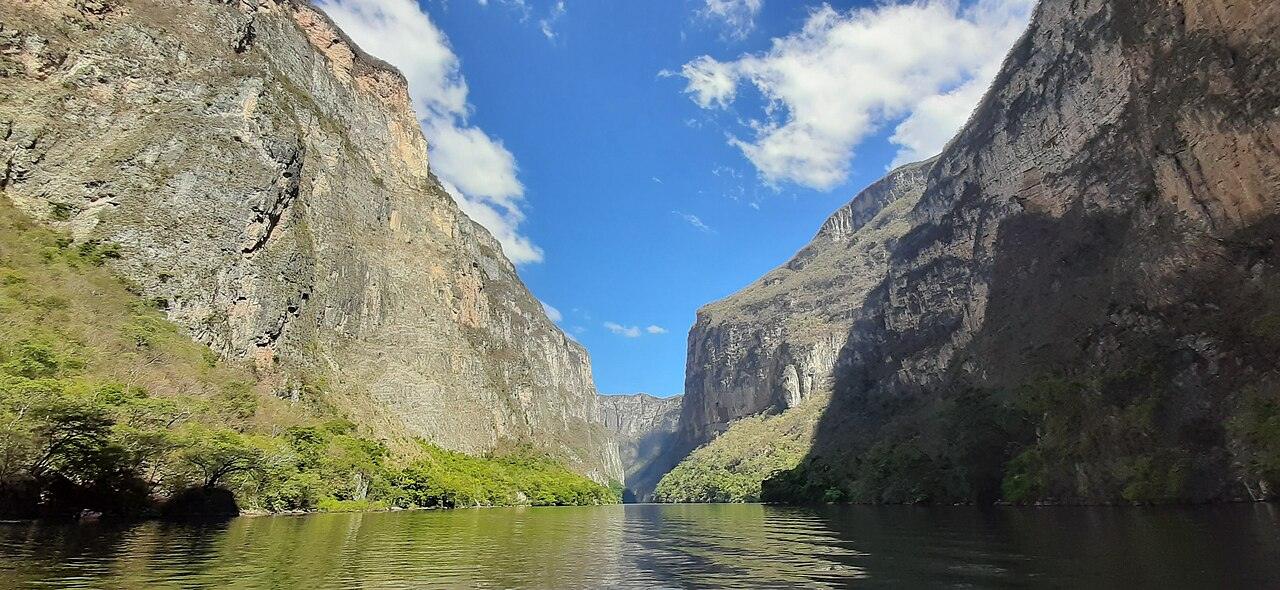
Chiapas, Yucatán and the Caribbean
From the capital to the colonial towns of Chiapas, then Palenque in the jungle, the Maya cities of Yucatán and the sea.
 17 daysModerate
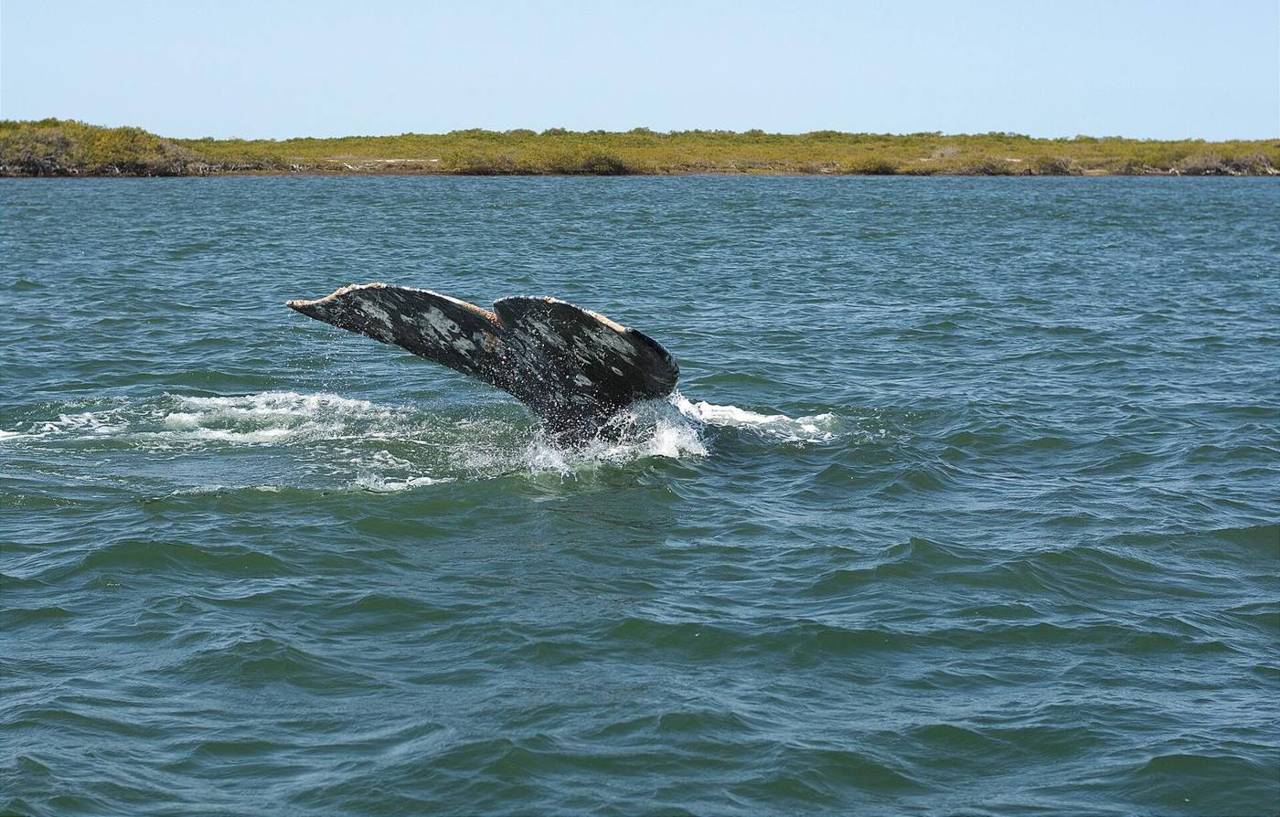
Baja California: whales and cacti
The lagoons where grey whales give birth and come up to be touched, the sea lions of Espíritu Santo, deserts of giant cacti and the Jesuit missions.