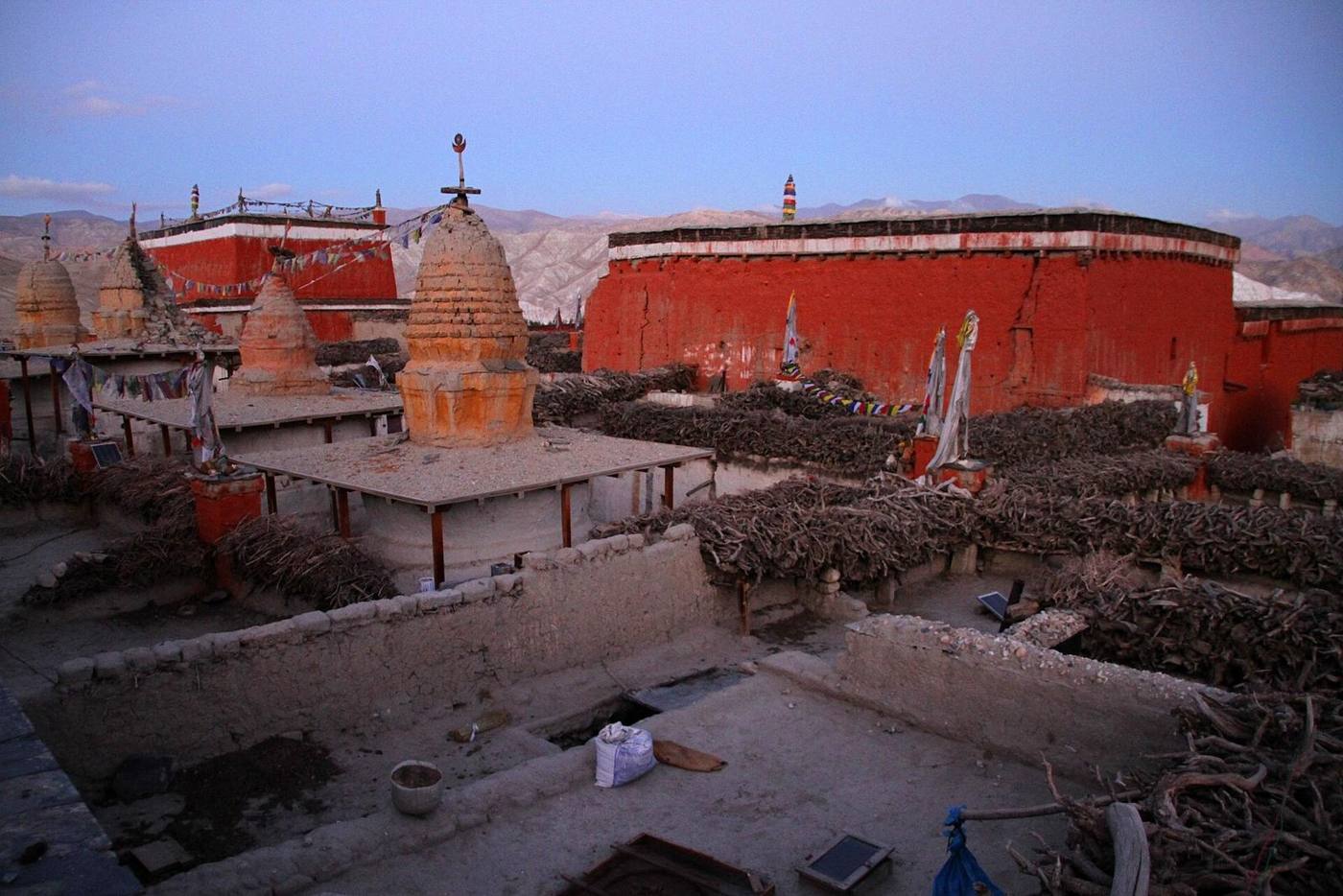
Mustang: the forbidden kingdom of Lo
Tibet within Nepal: red sandstone canyons, cliff caves, ancient monasteries and the walled city of Lo Manthang, open to tourists only since 1992.
- Kathmandu
- Pokhara
- Jomsom
- Kagbeni
- Ghami
- Tsarang
- Lo Manthang
Day by day
- Day 1
Arrival in Kathmandu
This sixteen-day trip takes you into Upper Mustang, the ancient kingdom of Lo, the «Tibet in Nepal»: red sandstone canyons, caves carved into the rock, ancient monasteries with precious wall paintings and the walled city of Lo Manthang, open to foreign travellers only since 1992. You will walk for days through a high-altitude desert, between mud villages and barley fields.
Before you go: Italian citizens need a passport valid for at least six months and a tourist visa, issued on arrival at Kathmandu airport after you fill in the online form. According to Nepal's Department of Immigration the visa costs 30 US dollars for 15 days, 50 for 30 days and 125 for 90 days. Other nationalities should check their own rules. After the protests of September 2025 the country voted on 5 March 2026 and has a new government, but demonstrations are still possible: avoid them and check your government's travel advice before leaving. Upper Mustang is a restricted area: you need a special permit, you must travel as at least two people, with a licensed guide and through a registered agency.
You land in Kathmandu and settle into your hotel. In the afternoon, if you have the energy, visit Durbar Square, the city's old royal square, with pagoda temples, palaces of carved wood and pilgrims. Many buildings were restored after the 2015 earthquake. Check prices and times.
Practical tip: bring US dollars in cash, in recent notes that are not damaged, for the visa and for the first days' expenses.
- Day 2
The permits and the city of Patan
In the morning the registered agency deals with the permits. For Upper Mustang you need the restricted area permit, issued by the Department of Immigration, and the Annapurna Conservation Area permit. According to the Nepal Tourism Board the Upper Mustang permit costs 50 US dollars per person per day. The conservation area fee changes: check prices and times. Bring your passport and a few passport photos.
While the agency works, meet your guide and check your gear. Mustang is a mountain desert: you need a windproof jacket, a wide-brimmed hat, sunglasses, strong sun cream, a scarf against the dust and a down jacket for the cold evenings.
In the afternoon visit Patan, the old royal city south of the Bagmati river, now almost joined to Kathmandu. Its Durbar Square is one of the finest in the valley, with stone and wooden temples, courtyards and the museum in the old palace, which explains the Buddhist and Hindu art of Nepal. It will help you understand the monasteries of Mustang. Check prices and times.
Then walk through the lanes around the square, where craftsmen work bronze and copper with ancient techniques, and stop in a courtyard for tea.
Practical tip: make a photocopy of your permit and passport and keep it apart from the originals, because you will show them at many checkpoints.
- Day 3
Pokhara and Phewa lake
Today you go to Pokhara, by a flight of about half an hour or several hours by tourist bus. From the plane window, when the sky is clear, you see the Himalayan range, with Annapurna and Dhaulagiri.
Pokhara is Nepal's second tourist city, on the shore of Phewa lake. On clear mornings the fishtail summit of Machhapuchhre is reflected in the water. After the traffic of Kathmandu, the atmosphere here is relaxed.
In the afternoon take a boat across the lake to the small Tal Barahi temple, on an island. Then, if you feel like walking, climb to the Peace Pagoda, on the hill beyond the lake, from where you see the city, the lake and the mountains. Check prices and times.
In the evening pack your bag for tomorrow. Flights to Jomsom are small and have strict weight limits: ask your agency how much you can carry and leave anything you do not need at your hotel in Pokhara. The luggage for the walking days will travel with porters or pack animals.
Go to bed early: the flight leaves at dawn.
Practical tip: according to the British government no Nepali airline meets international safety standards; flights to Jomsom are often delayed by wind or cloud, so always keep a spare day.
- Day 4
The flight to Jomsom and the walk to Kagbeni
At dawn take the flight from Pokhara to Jomsom, about twenty spectacular minutes. The plane flies up the Kali Gandaki valley, between the walls of Dhaulagiri and Annapurna, two mountains over 8,000 metres. If the flight is cancelled, the road is a long alternative: ask your agency.
Jomsom, at about 2,700 metres, is the capital of Mustang district. Here the landscape is already different: green gives way to rock, gravel and desert colours. After breakfast you start walking north, along the wide riverbed, with the wind at your back.
After a few hours you reach Kagbeni, a medieval village of mud houses, narrow lanes and covered passages, with a large red monastery and two clay figures that protect the village from spirits. Here Upper Mustang begins: show your permits at the checkpoint.
In the afternoon visit the Kagbeni monastery and walk round the village. Check prices and times. You will see fields of barley and buckwheat watered by channels, and children bringing the goats home.
The altitude is not yet very high, but the sun and wind are strong: drink plenty and protect your skin.
Practical tip: in the valley the wind gets up strongly from mid-morning: walk early and keep your scarf over your face during the dusty hours.
- Day 5
Into Upper Mustang as far as Chele
Today you really enter Upper Mustang. The path follows the Kali Gandaki north, sometimes in the riverbed, sometimes on the terraces above the water. Where the dirt road follows the valley, your guide uses the marked alternative trails. The landscape is magnificent: sandstone cliffs carved by the wind into towers and organ pipes, and high up black openings in the rock.
Those openings are man-made caves, some very old, used over the centuries as homes, tombs, stores and places of meditation. Many cannot be reached today. Archaeologists have found manuscripts and wall paintings inside.
You pass through Tangbe, a village of white houses with narrow lanes, colourful chortens and apple trees. Then you cross the river and climb to Chele, above 3,000 metres, the first village of Tibetan culture on this trip. The women wear striped aprons, the children greet you with «tashi delek», the Tibetan greeting. Reply with the same greeting and a smile.
In the evening sleep in Chele, in a simple trekkers' lodge. Mustang houses have flat roofs, covered with firewood and dung for burning, and the hearth in the middle of the kitchen, where everyone eats together.
Practical tip: from here upwards walk slowly and drink plenty: the altitude rises quickly over the next few days.
- Day 6
Samar and the passes to Syangboche
Today's stage is one of the hardest, with long climbs and passes above 3,500 metres. The path climbs a steep slope from Chele, with views of the Kali Gandaki canyon, and crosses the first pass with prayer flags. Stop at the top to catch your breath and look back: the valley is deep, red and grey.
Then go down to Samar, a small village among poplars, with a stream and green fields. It is a good place for lunch. From here a short detour leads to a sacred cave, important to Tibetan Buddhists: ask your guide whether there is time.
In the afternoon you continue up and down between valleys and passes, always above 3,500 metres. The colours of the earth change at every bend: ochre, purple, green, white. The sun is strong and the wind picks up: use your scarf and sunglasses.
In the evening you reach Syangboche, a small group of houses below the pass. Do not confuse this village with the one near Everest: it simply has the same name.
In the evening eat well and rest. If you have a bad headache or nausea, tell your guide straight away.
Practical tip: keep snacks and water in an outside pocket of your rucksack, so you can eat and drink without stopping on every climb.
- Day 7
Colourful chortens and the village of Ghami
Today you climb another pass, above 3,800 metres, with views of the snowy peaks of Annapurna and Nilgiri to the south. Then the path drops into a broad, rolling valley, where the villages are green patches of fields and poplars among the bare hills.
Along the way you meet many chortens, small stupas painted red, white, yellow and grey, the typical colours of Mustang. Always pass on the left, clockwise, as the locals do. In Geling and Ghiling there are old monasteries where the monks sometimes show visitors the statues and sacred books: ask your guide whether they are open.
After one last pass you go down to Ghami, one of the largest villages in Upper Mustang, with white flat-roofed houses, barley fields and a monastery. Near the village begins one of the longest mani walls in Nepal, a line of stones carved with prayers that runs for hundreds of metres.
In the afternoon rest and walk through the lanes. Life here follows the seasons: in summer people farm and graze their animals, in winter many families move down the valley because of the cold.
In the evening sleep in Ghami.
Practical tip: always ask before photographing people and monks, and do not touch the statues and books in the monasteries.
- Day 8
Tsarang and its monastery
In the morning you walk along the great Ghami mani wall, with its stones carved one by one with the mantra «om mani padme hum». Then the path climbs to another pass and drops into the Tsarang valley.
Tsarang, above 3,500 metres, is one of the main villages of the kingdom of Lo. You recognise it from afar: on the hill stand a large red monastery and the ruins of an old fortified palace, overlooking the fields and the canyon. The village has mud lanes, large houses and green fields.
In the afternoon visit Tsarang monastery, one of the most important in Mustang. Inside there are ancient statues, paintings, masks for ritual dances and a library of sacred texts. If a monk is there, ask him to show you the prayer hall. Check prices and times. Then climb to the ruins of the palace to see the valley from above.
At sunset the light turns the monastery and the surrounding hills red. Sit quietly and enjoy the silence: here the only voices are those of the animals and the wind.
In the evening sleep in Tsarang. Tomorrow you will reach Lo Manthang, the capital of the kingdom.
Practical tip: leave a small offering in the monasteries, because the money helps the monks look after the buildings and the wall paintings.
- Day 9
The Lo pass and arrival in Lo Manthang
Today is a special day. From Tsarang the path drops into the canyon, crosses the river and climbs gently onto a broad desert plateau. After a few hours you reach the Lo pass, covered in prayer flags. From here, for the first time, you see Lo Manthang: a square walled city, with white and grey walls, flat roofs and red monasteries, in the middle of a green plain.
Go down towards the city and enter by the main gate, as travellers once did. Lo Manthang, at about 3,800 metres, was for centuries the capital of the kingdom of Lo, on the old salt routes between Tibet and India. The local monarchy ended in 2008, together with Nepal's, but the royal family is still highly respected.
In the afternoon walk through the lanes inside the walls, between mud houses, courtyards, stables and prayer wheels. Old people sit in the sun, children play, women work wool.
Visit the first monastery, Jampa Lhakhang, from the fifteenth century, which holds large mandala wall paintings restored over years of work by international experts and local craftspeople. Go in quietly and use a torch only if you are allowed. Check prices and times.
Practical tip: bring a small torch and warm socks, because you enter the monasteries without shoes and inside it is dark and cold.
- Day 10
Lo Manthang, the palace and the Chhoser caves
In the morning visit Thubchen, the other great fifteenth-century monastery, with its huge prayer hall held up by wooden pillars and walls covered in paintings. Then pass the royal palace, a large building of several floors in the centre of the city: ask whether it is open to visitors, because restoration work has often changed the hours. Check prices and times.
In the afternoon take an excursion on horseback, on foot or by jeep to the north, into the Chhoser valley, close to the border with Tibet. Here the sandstone cliffs are full of caves dug on several levels, like a beehive. The most famous is a cave of many floors linked by passages and wooden ladders: with your guide you can go in and climb carefully. Check prices and times.
Nearby there is also a small monastery built into the rock of the cliff, which seems to hang above the valley. The landscape around is lunar, with ochre and grey hills and a deep blue sky.
In the evening return to Lo Manthang. If your trip coincides with the Tiji festival, in spring, you will see masked dances in the city square: ask for the dates, which change every year according to the Tibetan calendar.
Practical tip: if you go on horseback, ask for a helmet and a calm horse, and walk on the steep stretches.
- Day 11
Ghar Gompa monastery and Dhakmar
The return begins, by a different route. You leave Lo Manthang heading south and climb a pass with a view of the walled city, which you now see for the last time. Then the path crosses deserted plateaus and valleys, far from the road.
In the middle of the day you reach Ghar Gompa, also called Lo Gekar, one of the oldest monasteries in Nepal. According to tradition it was founded at the time of Padmasambhava, the master who brought Buddhism to Tibet. Inside, the walls are covered with painted stones and statues, and pilgrims walk round the temple to make a wish. Check prices and times.
In the afternoon go down to Dhakmar, a village at the foot of spectacular red cliffs, carved with caves and deep grooves. Legend says the red colour comes from the blood of a demon killed by Padmasambhava, and that the long mani wall of Ghami is made from its entrails. Guides tell these stories with a smile, but for many locals they are sacred.
At sunset the cliffs glow an intense red. It is one of the most beautiful landscapes in all of Mustang. In the evening sleep in Dhakmar.
Practical tip: in the high desert your skin and lips dry out quickly: use a rich cream and a lip balm.
- Day 12
From Dhakmar towards Ghami and Samar
In the morning you leave Dhakmar and walk to Ghami, where you find the great mani wall again. Now you know it better, and you can look at the carved stones one by one, some old and covered in lichen, others new, added by pilgrims.
From Ghami the path climbs back to the passes you crossed on the way up. The landscape is the same, but the light and the direction change everything: now you see ahead of you the snowy mountains of Annapurna and Nilgiri, which were behind you on the way up.
After the passes go down to Samar or Syangboche, depending on your strength and your guide's plan. Along the way stop at the teahouses, where families offer salted butter tea, Tibetan tea, and tsampa, roasted barley flour, the staple food of Mustang.
If you feel tired, part of the route can be done by jeep. Talk to your guide the evening before, so the car and the luggage can be arranged.
By now you are used to the altitude and walk more easily. Make the most of it to look around, take photos and talk to the people you meet: your guide helps you translate.
Practical tip: buy some tsampa or dried apples in a village for snacks, as the locals do.
- Day 13
Back to Kagbeni and Jomsom
Today you leave Upper Mustang. From Samar the path drops towards Chele and the Kali Gandaki canyon, then follows the river to Kagbeni, where you show your permits again at the checkpoint. Depending on time, your guide can arrange a stretch by jeep on the dirt road, to arrive sooner.
In Kagbeni stop for lunch and a last walk through the lanes. Then continue to Jomsom in the afternoon, with the wind blowing hard through the valley. It is the end of the walk.
In the evening, in Jomsom, thank your guide, the porters or whoever led the pack animals. In Nepal it is customary to give a tip at the end of the trek: ask your agency how much is usual and hand it over in an envelope, in person.
Treat yourself to a hot shower and a big dinner, perhaps Thakali dal bhat, the best-known dish of this valley. If you have time, visit the small Mustang museum in Jomsom, which explains the history, culture and nature of the region. Check prices and times.
Before you sleep confirm the time of tomorrow's flight, which leaves early in the morning, before the wind rises.
Practical tip: keep what you need for an extra night in Jomsom in your rucksack, in case the flight is cancelled because of wind or cloud.
- Day 14
The flight from Jomsom to Pokhara
Early in the morning take the flight from Jomsom to Pokhara. If the sky is clear, it is one of the most beautiful flights in the world: the plane drops down the Kali Gandaki valley between the walls of Dhaulagiri and Annapurna. If the flight is cancelled, there is the road, long but spectacular.
In Pokhara you find greenery, warmth and the lake again. After days of desert, the water of Phewa lake and the rice fields seem another world. Settle into your hotel, collect the luggage you left on the way out and enjoy a long lunch by the lake, with a fresh fruit juice.
In the afternoon rest on the lakeside or visit the International Mountain Museum, which tells the story of the great Himalayan expeditions, the culture of mountain peoples and the geology of the range. Check prices and times.
Alternatively, if you still have energy, visit the Gupteshwor Mahadev cave and nearby Davis Falls, where the river disappears underground. Check prices and times.
In the evening, at sunset, walk along the lake or hire a boat for the last hour of light. The mountains, if the sky is clear, turn pink.
Practical tip: if the Jomsom flight has cost you a day, skip the Pokhara visits and keep the margin for your international flight.
- Day 15
Back to Kathmandu
Early in the morning, if the sky is clear, go up Sarangkot hill for sunrise over Annapurna and Machhapuchhre. Then return to Kathmandu on the half-hour flight or by tourist bus, which takes several hours.
In the afternoon, in the city, visit the stupa of Swayambhunath, on the hill west of the centre. Travellers also call it the «monkey temple» because of the monkeys living on its steps. From the top you see the whole Kathmandu valley. The eyes of the Buddha painted on the tower look in every direction. Check prices and times.
After the monasteries of Mustang, you will notice that you recognise many things: the prayer wheels, the coloured flags, the chortens, the mantra on the stones. It is a sign that the trip has taught you something. Walk round the stupa clockwise, like the faithful, and stop to watch the city light up at sunset.
If you prefer a quieter place, visit instead the Garden of Dreams, a historic garden in the Thamel area, with pavilions, fountains and trees, perfect for an hour's rest away from the traffic. Check prices and times.
In the evening do your last shopping in Thamel or Boudhanath: incense, tea, singing bowls, wool scarves. Bargain calmly.
Practical tip: do not buy antiques or statues that look old, because exporting cultural goods is forbidden without a permit.
- Day 16
Departure
The last morning is yours to enjoy. If your flight leaves late, take your time visiting the stupa of Boudhanath, one of the largest in the world, and walk round it clockwise with the Tibetan pilgrims. Then go to the airport for your flight home.
In sixteen days you have seen Kathmandu and Patan, the lake at Pokhara, the flight up the Kali Gandaki valley, the medieval village of Kagbeni, the canyons and caves of Upper Mustang, the villages of Chele, Syangboche and Ghami, Tsarang monastery, the walled city of Lo Manthang with its wall paintings, the Chhoser caves, Ghar Gompa and the red cliffs of Dhakmar.
When to go: the best months are October and November and March and April, with clear skies and bearable temperatures. Mustang lies in the rain shadow of the Himalaya: little rain falls even in summer, during the monsoon, when the rest of Nepal is under the rain. In summer, however, landslides and cloud can block the road and the flights between Pokhara and Jomsom. In winter it is very cold and many inhabitants move down the valley.
Remember that the Upper Mustang permit is paid for each day spent in the area: plan your stages carefully with the agency.
Practical tip: book your international flight with at least a day to spare, because flights from Jomsom and Pokhara can be postponed because of the weather.
One of the rarest journeys in the Himalaya. The special permit costs $500 for 10 days, which explains the high price. Mustang lies in a rain shadow: it can be done in summer during the monsoon, when the rest of Nepal is under rain.
Before you go
- Documents and visa
- Passport valid for at least six months from the date of entry and a tourist visa, issued on arrival at Kathmandu airport. Fill in the form online up to 15 days ahead or at the airport kiosks. According to the Department of Immigration the visa costs 30 US dollars for 15 days, 50 for 30 days and 125 for 90 days: bring US dollars in cash. Border officers may ask for health insurance with repatriation and the address of your first night.
- Health and vaccines
- No compulsory vaccines when arriving from Europe; yellow fever is needed only if you come from a risk country. In the Terai, the southern plain, there is a malaria risk: ask your doctor. Above 3,000 metres climb slowly to avoid altitude sickness. Drink only bottled or treated water. Police 100, tourist police 1144.
- Money and payments
- Nepalese rupee. Cash dominates; ATMs are found in Kathmandu, Pokhara and the towns, far fewer on the trails. Cards work in the larger hotels.
- Power sockets
- Types C, D and M, 230 volts: bring a universal adapter. Power cuts are frequent.
- Time zone
- UTC+5:45 all year.
- Safety
- After the youth protests of 8 and 9 September 2025, with at least 75 deaths and the fall of the government, the country voted on 5 March 2026; since March 2026 a new government has held a large majority. Demonstrations and strikes are still possible and can turn violent: avoid them. The United States advises increased caution. The UK warns that areas hit by the flood of 26 August 2026 in Rasuwa district may remain unstable. A licensed guide is required in national parks and protected areas. According to the UK, no Nepali airline meets international safety standards, and mountain flights are often delayed by the weather. Official advice: GOV.UK.
Information checked in November 2026 for Italian and EU citizens. Rules change: always check before you travel.
Variations
In twelve days: go to Lo Manthang by jeep from Jomsom, walk only around the city and Chhoser, and return by jeep.
In eighteen days: add the villages of the eastern valley of Mustang, with more days of walking away from the road.
Frequently asked questions
How much is the Upper Mustang permit?
According to the Nepal Tourism Board the restricted area permit for Upper Mustang costs 50 US dollars per person per day. You also need the Annapurna Conservation Area permit: check up-to-date prices and times with a registered agency.
Can I go to Upper Mustang on my own?
No. You must travel as at least two people, with a licensed guide and through a registered agency, which applies for the permit at the Department of Immigration.
Can I go in summer?
Yes, Mustang lies in the rain shadow and little rain falls even during the monsoon. However, landslides and cloud can block the road and the flights to Jomsom: keep spare days.
Indicative itinerary written by World Atlas. Before booking, check timetables, seasonal openings, documents and safety.
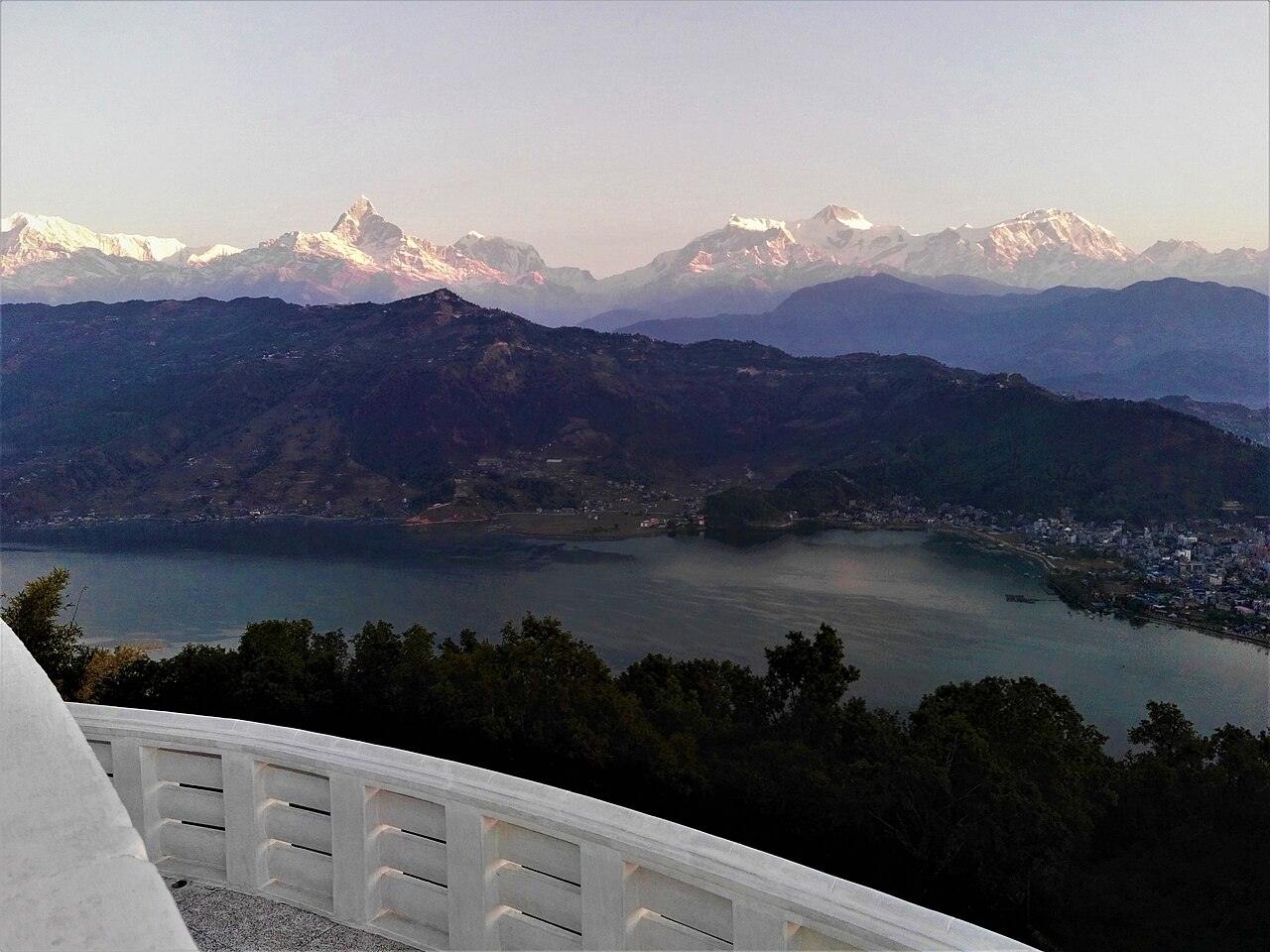 7 daysEasy
Kathmandu, Pokhara and Poon Hill
The temples of the Kathmandu Valley, the lake at Pokhara and a short trek with sunrise over the Annapurnas.
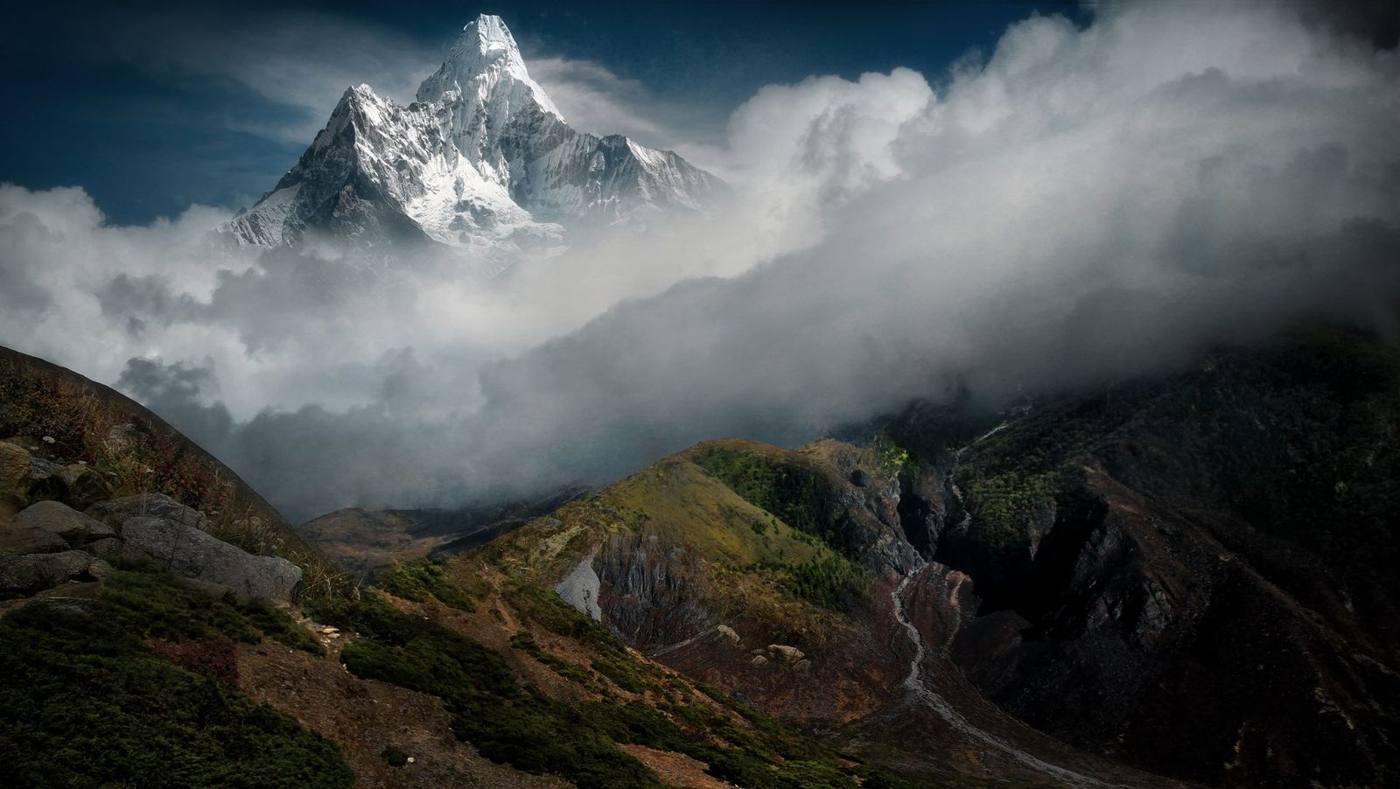 15 daysChallenging
Everest trek and Chitwan
The spectacular flight to Lukla, Sherpa villages and the Everest viewpoint of Kala Patthar, then the rhinos of Chitwan. Good fitness required.
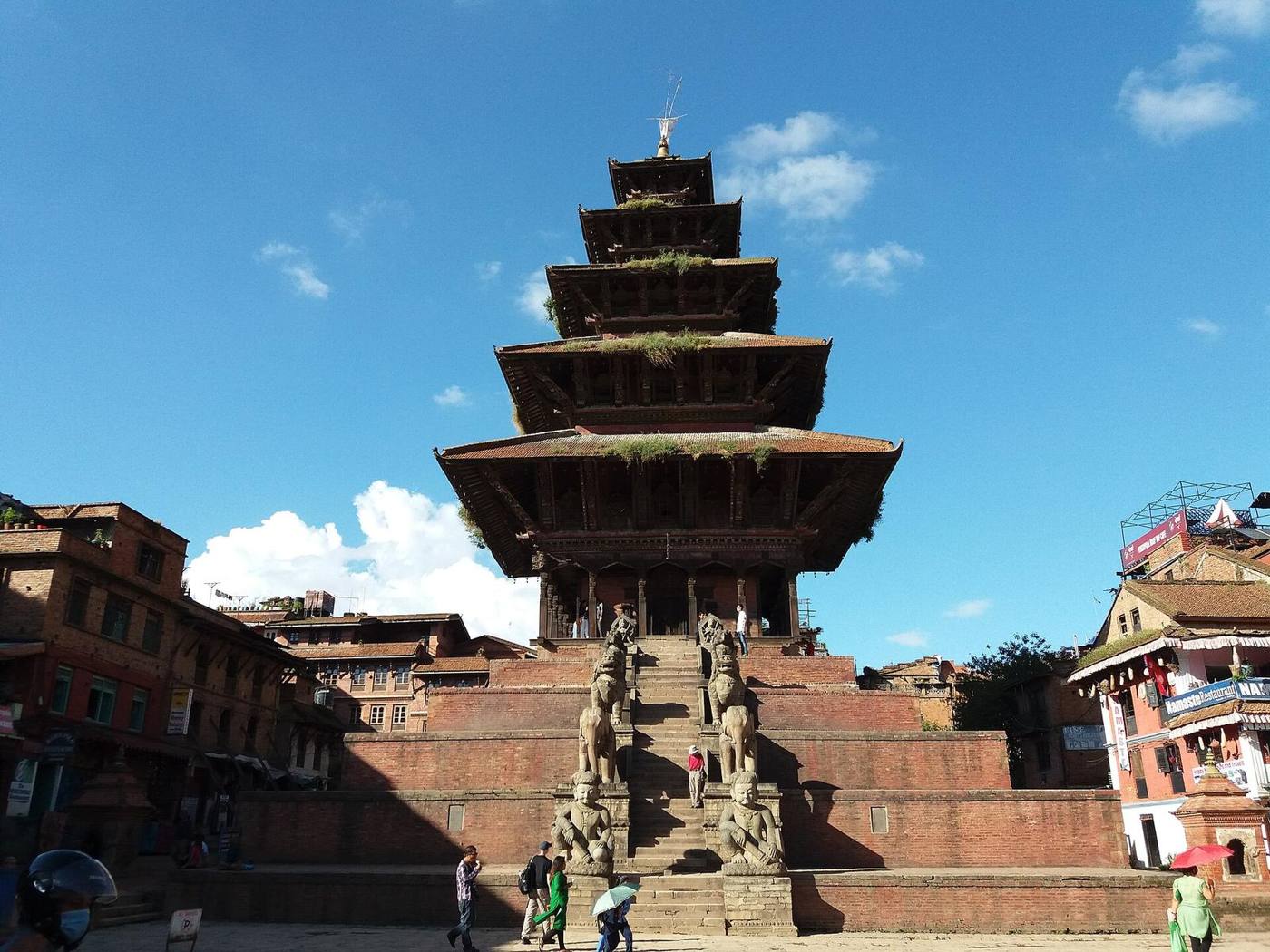 16 daysEasy
All of Nepal: the Kathmandu valley, Pokhara and Chitwan
The valley's three royal cities, a short trek with Annapurna views, rafting on the Trisuli, the rhinos of Chitwan and Lumbini, birthplace of the Buddha.