The Catlins and Stewart Island
The deep south: Dunedin and the Otago Peninsula with albatrosses and yellow-eyed penguins, the Catlins waterfalls and the wild kiwi of Stewart Island.
- Dunedin
- Otago Peninsula
- Catlins
- Bluff
- Stewart Island
- Invercargill
Day by day
- Day 1
Dunedin, the Scottish city of the South
This trip takes you to the far southern corner of New Zealand's South Island, a little visited area of windswept coast, wet forest and wildlife. It starts in Dunedin and on the Otago Peninsula, crosses the Catlins and takes the ferry to Stewart Island, the country's third island and almost entirely national park. In six days you see albatross, penguins, sea lions and, with some luck, a kiwi in the wild.
Dunedin airport has domestic flights from Auckland, Wellington and Christchurch. It is best to hire a car here, because the Catlins have no regular public transport.
The city was founded in the nineteenth century by Scottish settlers, and its name is the old Gaelic name for Edinburgh. You still see it in the stone churches, the steep streets and the Octagon, the eight sided square in the centre, with a statue of the Scottish poet Robert Burns.
The railway station, from the early twentieth century, is one of the most photographed buildings in the country, with dark stone, white windows and mosaics inside. Nearby, the Otago settlers museum tells the story of the region, from the Māori to the gold diggers.
In the afternoon go and see Baldwin Street, considered one of the steepest residential streets in the world. Walking up is hard work but fun.
Spend the night in Dunedin.
Practical tip: most visitors, Europeans included, must apply online for the NZeTA and pay the International Visitor Conservation and Tourism Levy, the IVL, of 100 New Zealand dollars. Traffic drives on the left, and country roads are narrow and winding.
- Day 2
The Otago Peninsula: royal albatross and yellow eyed penguins
The Otago Peninsula reaches out into the sea opposite Dunedin and is one of the best places in New Zealand to see wildlife. You drive along a scenic road beside the harbour, past small ports, green hills and wind beaten beaches.
At the tip of the peninsula, at Taiaroa Head, lives the only mainland royal albatross colony. These are huge birds, with a wingspan of about three metres, that spend most of their lives flying over the ocean and come back here to nest. The visitor centre runs guided visits to an observatory where you can see the nests without disturbing them. On windy days you are more likely to see them in flight.
In the same area you often see fur seals and, on the right evenings, little blue penguins coming ashore from the sea.
The moment everyone waits for is sunset, when yellow eyed penguins, hoiho in the Māori language, come out of the water and walk up the beach to their nests in the dunes. They are among the rarest penguins in the world and are endangered. To see them without disturbing them, it is best to join a guided visit with a local operator, who takes you to hides and hidden paths.
On open beaches such as Sandfly Bay, stay well away from the penguins, never stand between them and the sea and do not use a flash.
In the evening return to Dunedin for the night.
Practical tip: albatross and penguin visits have limited places, especially in summer. Book a few days ahead and bring a windproof jacket, even in January.
- Day 3
The Catlins: Nugget Point, waterfalls and sea lions
Leave Dunedin in the morning and drive south for about an hour and a half to the Catlins, a region of forest, cliffs and empty bays between Balclutha and Invercargill. It is one of the least populated parts of the island, with few villages, quiet roads and plenty of nature.
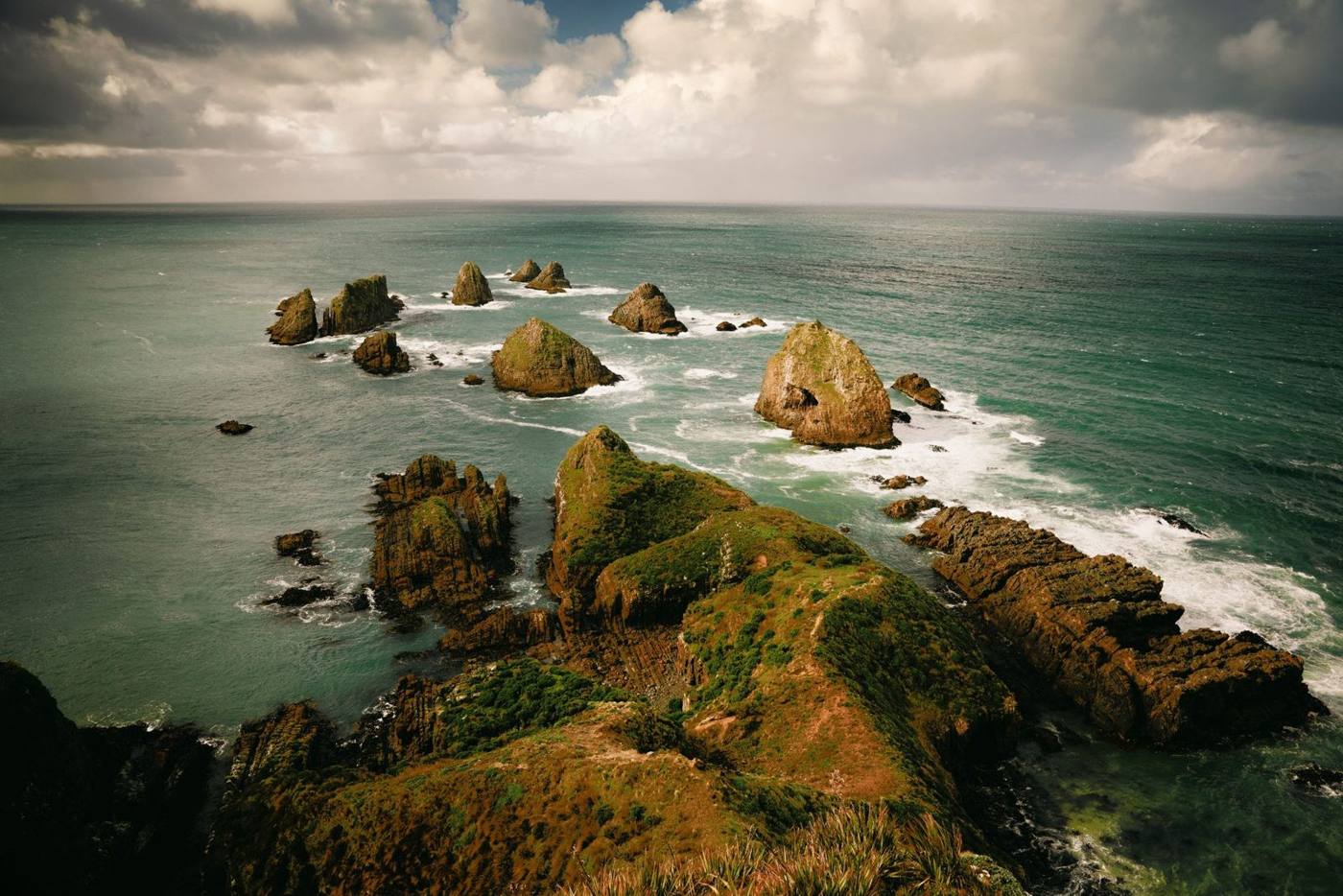
The first stop is Nugget Point, a thin headland ending in a white nineteenth century lighthouse. Below it, in the sea, lie many small rocky islets that look like gold nuggets, which is where the name comes from. The path from the car park to the lighthouse is short and easy. From above you often see fur seals on the rocks and seabirds circling.
In the afternoon head to Purakaunui Falls, in the middle of a forest of ferns and old trees. The short path leads to a waterfall that drops over three wide steps of rock, one of the most photographed in the country.
Towards evening reach Surat Bay, near the village of Owaka. New Zealand sea lions, among the rarest marine animals in the world, often rest on its long sandy beach. They look calm and slow, but on sand they can run fast.
Spend the night around Owaka.
Practical tip: the Department of Conservation asks visitors to stay at least ten metres from sea lions, never to stand between them and the sea and not to bring dogs onto the beach. Petrol stations and shops are scarce in the Catlins, so fill up before you set off.
- Day 4
From Curio Bay to Bluff and the ferry to Stewart Island
Leave early and follow the coast road west. The first stop is Curio Bay, where at low tide you can see a petrified forest about one hundred and eighty million years old: trunks and roots turned to stone on the rock shelf along the shore. Yellow eyed penguins often come back here at sunset, so stay behind the ropes.
In the next bay, Porpoise Bay, you may see Hector's dolphins, the smallest dolphins in the world, found only in New Zealand. Do not approach them or swim towards them.
Continue to Bluff, the southernmost port of the island, known for its oysters, usually harvested in the southern autumn and winter. From here the ferry to Stewart Island crosses Foveaux Strait in about an hour. The sea is often rough: if you get seasick, take something before you board. Small planes from Invercargill are an alternative.
Stewart Island is called Rakiura in the Māori language, a name linked to the glowing skies of the southern lights. Most of the island is national park, and there is only one settlement, Oban, on Halfmoon Bay. A few hundred people live here, and there are very few roads.
In the evening, weather permitting, join a guided outing to see the Stewart Island kiwi, a species that here sometimes shows itself even at dusk. Local operators take you to remote beaches with red light torches so as not to disturb the birds.
Practical tip: kiwi outings depend on the sea and the weather and can be cancelled. Book for your first evening, so the next day is a back up.
- Day 5
Ulva Island, the bird sanctuary
In the morning take a water taxi from the Golden Bay wharf, near Oban, to Ulva Island, a few minutes away by boat. It is a small sanctuary clear of mice, rats and other predators brought by people, which makes it one of the best places in New Zealand to see birds that have almost disappeared elsewhere.
The tracks are easy and run through an ancient forest of tall trees, ferns and moss. The birds here are not afraid and often come close. You see the South Island robin, which hops near your feet, the kākā, a large parrot with a loud call, the saddleback with its orange wattles and small yellow birds that live in flocks in the treetops. Sometimes you also meet the weka, a curious bird that cannot fly.
Take a packed lunch and give yourself plenty of time, because here you walk slowly and quietly, looking up. There are also small beaches where you can stop.
In the afternoon return to Oban and walk the tracks near the village, through the coastal forest. At sunset climb to Observation Rock, a small lookout above the bay with views over the islands and the open sea.
If last night's kiwi outing was cancelled, this is your second chance.
Spend the night in Oban.
Practical tip: before boarding the boat to Ulva, check your bags, shoes and clothes carefully, because seeds, soil and small animals must not reach the island. The rules are posted at the wharf and must be followed.
- Day 6
Back to Bluff and departure from Invercargill
Spend your last morning on the island on a short walk or with a coffee by the harbour, watching the fishing boats come in. On a clear day the morning light over Halfmoon Bay is very beautiful.
Take the ferry back to Bluff, checking the timetable first, as it changes with the season and the sea. Once ashore, drive up the hill above the port for a last view over the strait and Stewart Island. Just outside town is Stirling Point, with a signpost showing the distances to the world's great cities, one of the most photographed spots in the region and the end of the main highway that runs the length of New Zealand.
From Bluff to Invercargill takes about thirty minutes. Invercargill is the southernmost city in the country, with wide streets, Victorian houses and a large park with gardens and lawns. It is the hometown of Burt Munro, the motorcyclist who set a speed record in the United States on an old bike he had rebuilt himself. The city still remembers his story.
Invercargill airport has domestic flights to Christchurch, Wellington and Auckland, where you can continue your journey or fly home.
Practical tip: leave a margin between the ferry and your flight, because the sea in Foveaux Strait sometimes delays or cancels sailings. If you can, fly out the following day.
New Zealand for wildlife lovers and those who like quiet places. Stewart Island is one of the few places where you can see kiwi in the wild, even by day. The climate is cool and windy even in summer, and the crossing from Bluff can be very rough. It combines well with Queenstown, three hours away.
Before you go
- Documents and visa
- Valid passport and an NZeTA, requested online before leaving, with the IVL levy of 100 New Zealand dollars. The NZeTA costs 17 dollars through the official app and 23 through the website.
- Health and vaccines
- No vaccines required. Biosecurity checks on arrival are very strict: declare food, plants and hiking boots. Emergencies: 111.
- Money and payments
- New Zealand dollar. Cards are accepted almost everywhere, even in small towns.
- Power sockets
- Type I, 230 volts: you need an adapter for the angled flat-pin Australian-style plugs.
- Time zone
- UTC+12, UTC+13 with daylight saving time from late September to early April.
- Safety
- A very safe country. The main risks are natural: changeable mountain weather, strong sea currents, earthquakes and active volcanoes. Driving is on the left. Official advice: GOV.UK.
Information checked in November 2026 for Italian and EU citizens. Rules change: always check before you travel.
Variations
In 4 days: just Dunedin, the Otago Peninsula and the Catlins, without Stewart Island.
In 9 days: add Fiordland and Milford Sound, starting from Invercargill.
Frequently asked questions
When is the best time to see wildlife?
From November to March there are more penguins and albatross near their nests and the days are long. Albatross can be seen in almost every month.
What is the weather like?
This is the coolest and windiest part of New Zealand, even in summer. Bring warm layers, a waterproof jacket and walking shoes.
Do I need a car?
Yes, for Dunedin, the peninsula and the Catlins. On Stewart Island you get around on foot or by shuttle and water taxi.
Indicative itinerary written by World Atlas. Before booking, check timetables, seasonal openings, documents and safety.
 4 daysEasy
Auckland and the Hauraki Gulf
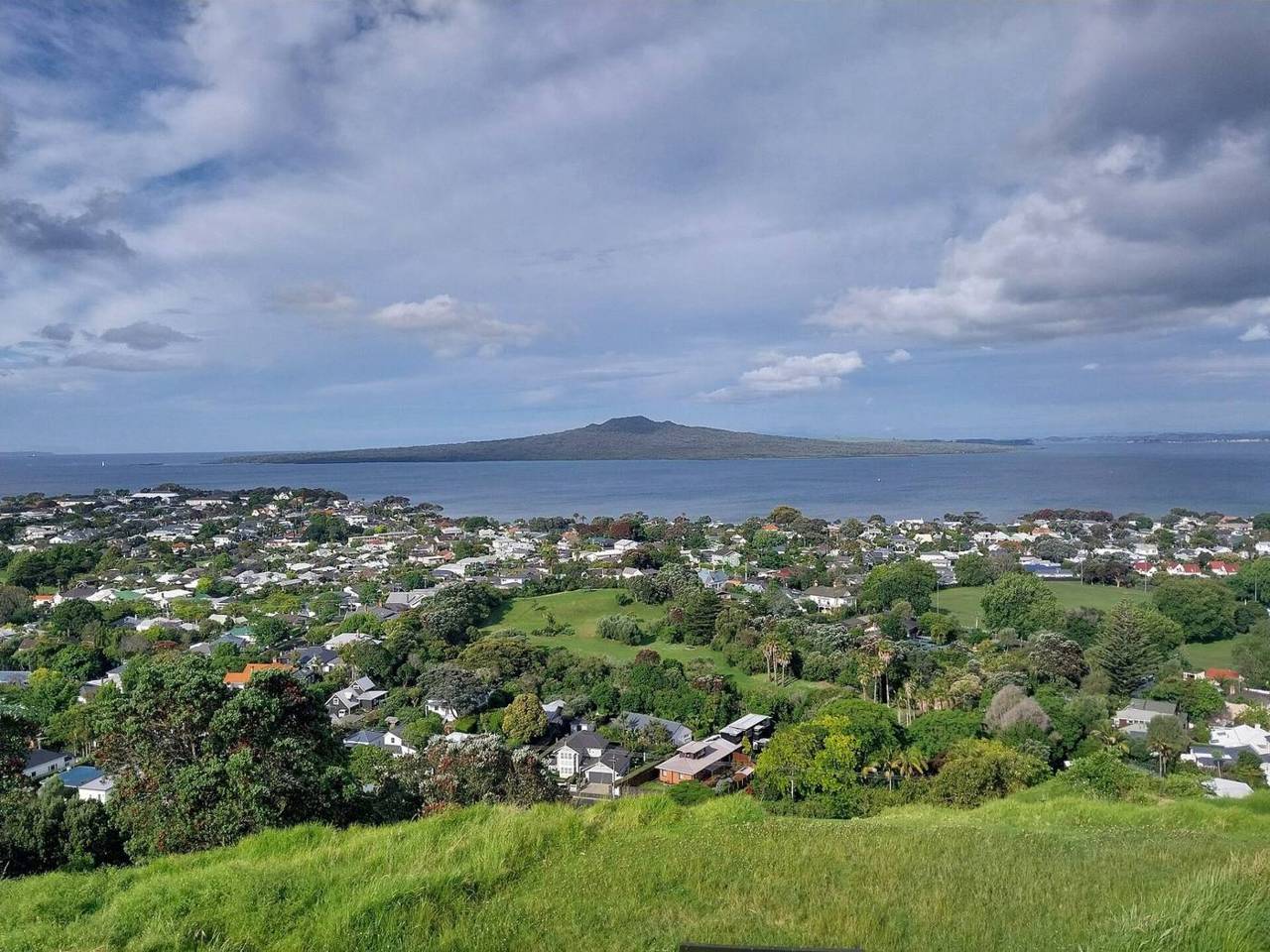
The city of volcanoes and sails: the harbour and the Auckland Museum, the view from the extinct Maungawhau volcano, the ferry to Rangitoto volcano, the beaches and vineyards of Waiheke Island and the bird sanctuary of Tiritiri Matangi, with rare species that have vanished elsewhere.
 4 daysEasy
The Coromandel Peninsula
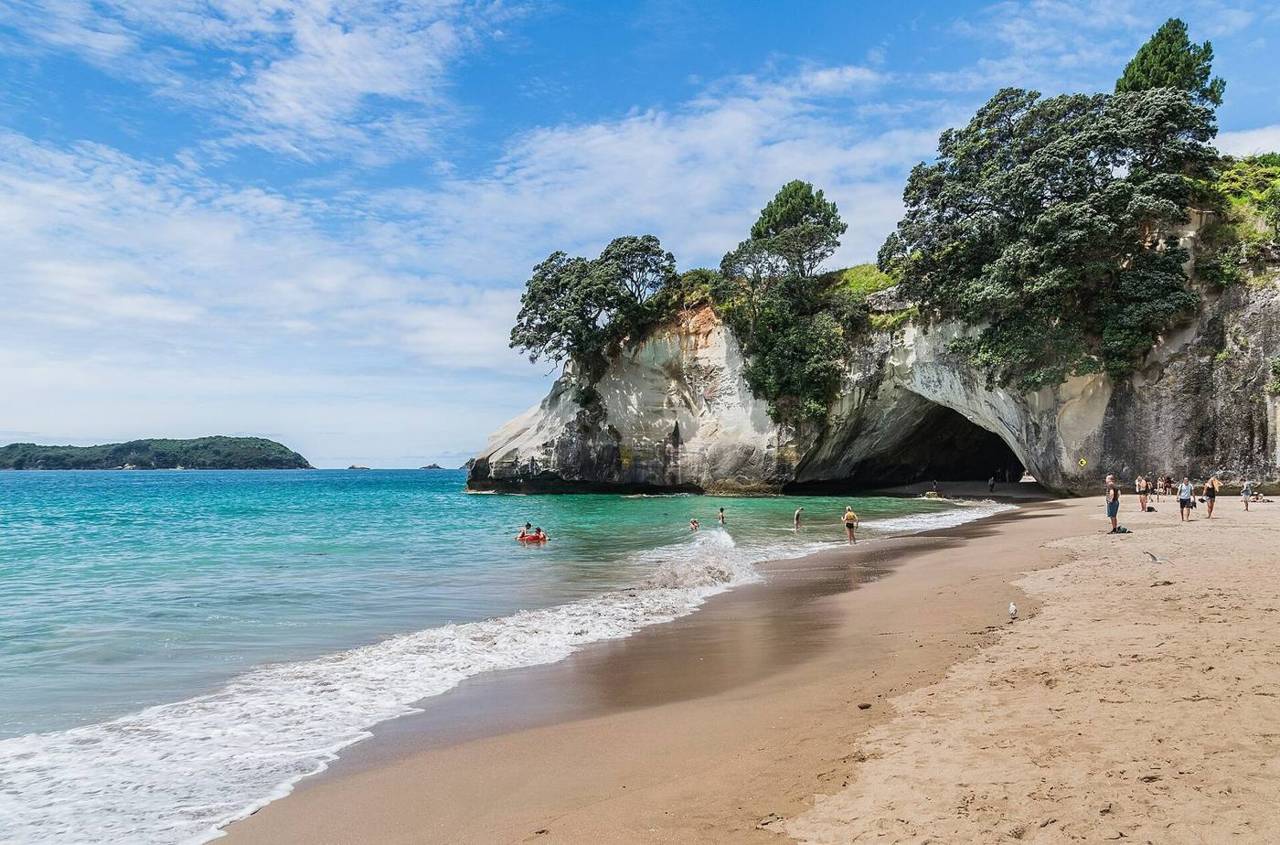
The North Island's finest beaches two hours from Auckland: the rock arch of Cathedral Cove, Te Whanganui-A-Hei marine reserve by kayak, Hot Water Beach, where you dig a warm pool in the sand, kauri forests and the coast road to Coromandel Town.
 4 daysEasy
Rotorua in depth: geothermal wonders and Māori culture
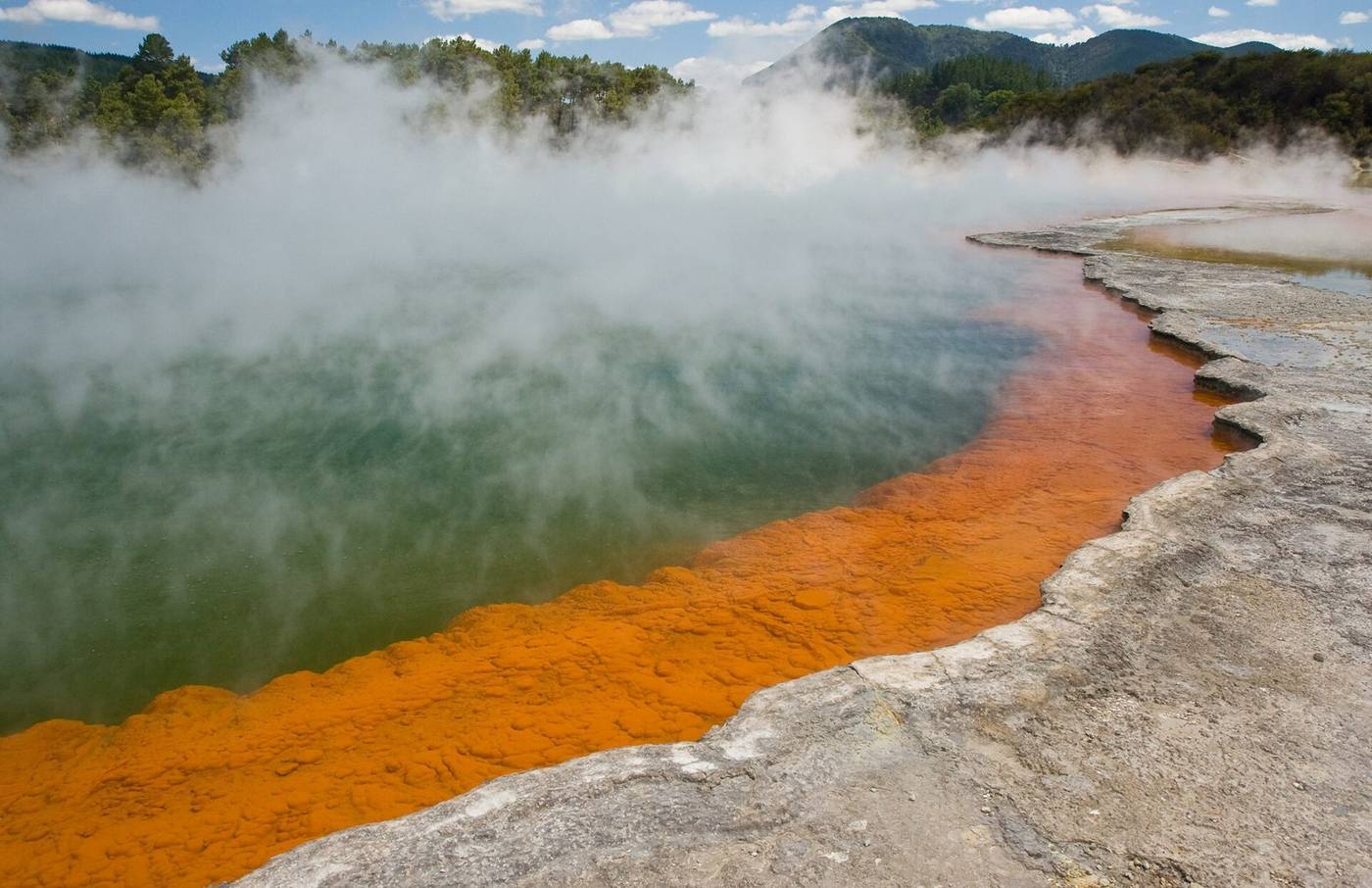
The steaming land: Pōhutu geyser at Te Puia, the coloured pools of Wai-O-Tapu and Waimangu, boiling mud, the redwoods of Whakarewarewa Forest, a living Māori village with food cooked in the steam and an evening of song and haka.