Musandam
The fjords of Arabia: a dhow cruise among mountains plunging into the sea, dolphins, snorkelling and the Jebel Harim mountain road.
- Khasab
- Khor ash Sham
- Telegraph Island
- Jebel Harim
- Khor Najd
Day by day
- Day 1
Arriving in Khasab
This four-day trip takes you to Musandam, the northern tip of Oman overlooking the Strait of Hormuz. It is an exclave: the rest of the country is far away, with the United Arab Emirates in between. The mountains drop straight into the sea and form deep inlets, the khor, known here as the fjords of Arabia.
Before you go: Italian citizens need a passport valid for at least six months from arrival. For stays of up to 14 days you enter Oman without a visa, with a return ticket, an accommodation booking and health insurance; to stay longer you need an e-visa, only on the official website evisa.rop.gov.om. If you arrive overland from Dubai you cross a real border, leaving the Emirates and entering Oman: check the rules of both countries and the crossing hours first. With a hire car you need the rental company's written permission and insurance valid in Oman. Other nationalities should check their own rules.
Some areas on this trip are close to borders or places where the situation changes often: check your government's travel advice before booking and again before you leave.
You reach Khasab by plane from Muscat or by car from Dubai, along the coast of Ras al Khaimah and then on a road cut between rock and sea. In the afternoon visit Khasab fort, of Portuguese origin, with rooms that tell the story of local life.
In the evening stroll along the harbour, where the fishing boats come in.
Practical tip: keep your passport handy, because in Musandam there are checkpoints even inside Oman.
- Day 2
By dhow in Khor ash Sham
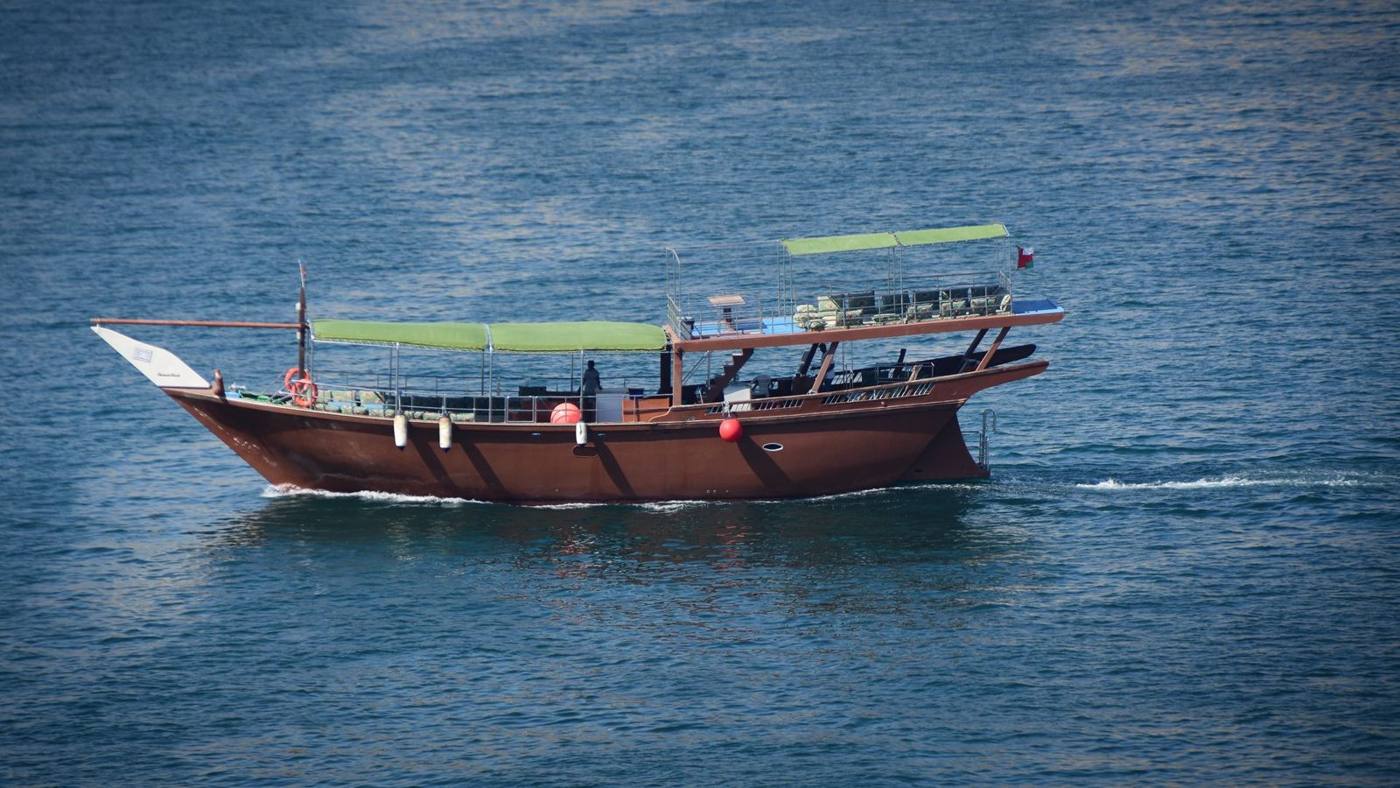
Today you spend the day at sea, on the traditional wooden boat, the dhow, which leaves from Khasab harbour.
The boat enters Khor ash Sham, the longest fjord in Musandam. Rock walls rise steeply on both sides, with folded layers of ochre and grey. Along the shore you will see small fishing villages that can only be reached by sea, with a few houses, a mosque and boats pulled up on the shingle.
Dolphins often swim alongside the hull and leap in front of the bow: watch carefully in the early hours, when the sea is glassy.
Halfway along you pass Telegraph Island, a rocky islet where in the nineteenth century the British set up a station for the telegraph cable linking India to Europe. Today only the walls remain. The boat then stops in a quiet bay for swimming and snorkelling, among colourful fish and corals.
On board you usually have a simple lunch, with rice, chicken or fish and fruit. You sit on carpets in the shade of the awning, watching the cliffs slide past.
You get back to Khasab in the afternoon. If you still have energy, drive up one of the hills above town to watch the sunset over the bay.
Practical tip: bring sun cream, a hat and water shoes, and check that there are life jackets on board for everyone.
- Day 3
Jebel Harim and Khor Najd
Today you explore the Musandam mountains by four-wheel drive, ideally with a local driver who knows the road.
The track climbs from the sea through tight hairpins towards Jebel Harim, the highest mountain on the peninsula. As you climb, the vegetation disappears and only rocks, acacias and small terraced fields remain. Along the way there are old stone villages, partly abandoned, and rock carvings showing riders and animals.
Near the summit there is a military area: do not photograph it and respect the signs. From the top, on clear days, you see valleys running down to the sea on several sides.
On the way down, take a detour to the Khor Najd viewpoint. From a high point you look down on an inlet closed in by mountains, with green water and a small beach at the end. The road down to the sea is steep and unpaved: only tackle it with a four-wheel drive and an experienced driver.
You can end the day on the beach, with a picnic in the shade of the rocks, or go back to Khasab for a last seafood dinner.
Remember that the roads here have no barriers and steep gradients: do not drive after sunset and do not set out if rain is forecast, because the valleys flood quickly.
Practical tip: carry plenty of water and a snack, because there are no shops in the mountains.
- Day 4
Leaving Khasab
Today is your travel day home.
If you leave in the afternoon, spend the morning on a last walk through the Khasab souk, small and quiet, where you can buy dates, spices and the distinctive walking stick with a small axe head, a symbol of the people of these mountains. Or visit the nearby rock carvings of Tawi, cut into large boulders a few kilometres from town.
If you are going back to Dubai overland, set off early: the drive takes a few hours and there can be queues at the border, both leaving Oman and entering the Emirates. If you are flying to Muscat, the airport is close to town.
Trip summary: in four days you have seen a remote and spectacular corner of Arabia. In Khasab you visited the fort and the harbour, in Khor ash Sham you sailed by dhow between rock walls, with dolphins beside the boat and a swim in a clear bay, near Telegraph Island you saw the remains of the British telegraph, and on Jebel Harim and at Khor Najd you looked down on the fjords from above.
When to go: from October to April temperatures are pleasant and the sea is good for snorkelling. From May to September it is extremely hot and the humidity is very high. In winter it can rain on a few days: then the mountain tracks become dangerous.
Practical tip: before leaving check that you have all the stamps in your passport, to avoid problems at the exit checkpoint.
An isolated, spectacular Omani enclave, easy to combine with Dubai. You cross from the UAE border with your passport; with a rental car you need the rental company's permission and Omani insurance. Summer is extremely hot.
Before you go
- Documents and visa
- Passport valid for at least six months from arrival. Italian citizens can enter without a visa for stays of up to 14 days, showing a return or onward ticket, an accommodation booking and travel health insurance. For longer stays you need an e-visa, applied for only on the official Royal Oman Police website, evisa.rop.gov.om. Reaching Musandam overland from the Emirates means crossing a real border: you need your passport and, with a hire car, the rental company's written permission and insurance valid in Oman.
- Health and vaccines
- No compulsory vaccinations, except a yellow fever certificate if you arrive from a country at risk. Protect yourself from the sun and drink plenty of water. Some medicines common in Europe are banned: carry your prescription and check with the Omani Ministry of Health. You need insurance with medical costs and repatriation. Emergencies: 9999.
- Money and payments
- Omani rial. Cards work in cities and hotels; keep cash for villages, souks and desert trips.
- Power sockets
- Type G, 240 volts: British plugs fit, others need an adapter.
- Time zone
- UTC+4 all year.
- Safety
- Laws and customs: dress modestly in public, with shoulders and knees covered; swimwear is only for tourist beaches and pools. Alcohol is served only in licensed venues, never in public. Drug penalties are very severe, even for tiny amounts; e-cigarettes and vapes are banned. Do not photograph military or government buildings, or people without permission; drones need a licence. During Ramadan do not eat, drink or smoke in public in daylight. Wadis flood suddenly after rain and outside Muscat there are camels and goats on the roads: avoid driving at night. The situation in the Gulf can change quickly, with sudden airspace closures. Official advice: GOV.UK.
Information checked in November 2026 for Italian and EU citizens. Rules change: always check before you travel.
Variations
Shorter version: in two days just do the dhow cruise in Khor ash Sham, starting from Dubai.
Longer version: add a day by boat to the village of Kumzar, which can only be reached from the sea.
Frequently asked questions
Can you visit Musandam from Dubai in a day?
Yes, but it is long: you cross the border twice and the drive takes a few hours. It is better to spend at least two nights in Khasab.
Do you need a four-wheel drive in Musandam?
Not for Khasab and the coast. For the climb up Jebel Harim and the descent to Khor Najd you do, ideally with a local driver.
Will you really see dolphins?
Very often, above all in the morning during dhow trips. They are wild animals, so it is not guaranteed.
Indicative itinerary written by World Atlas. Before booking, check timetables, seasonal openings, documents and safety.
 5 daysEasy
Dhofar and Salalah
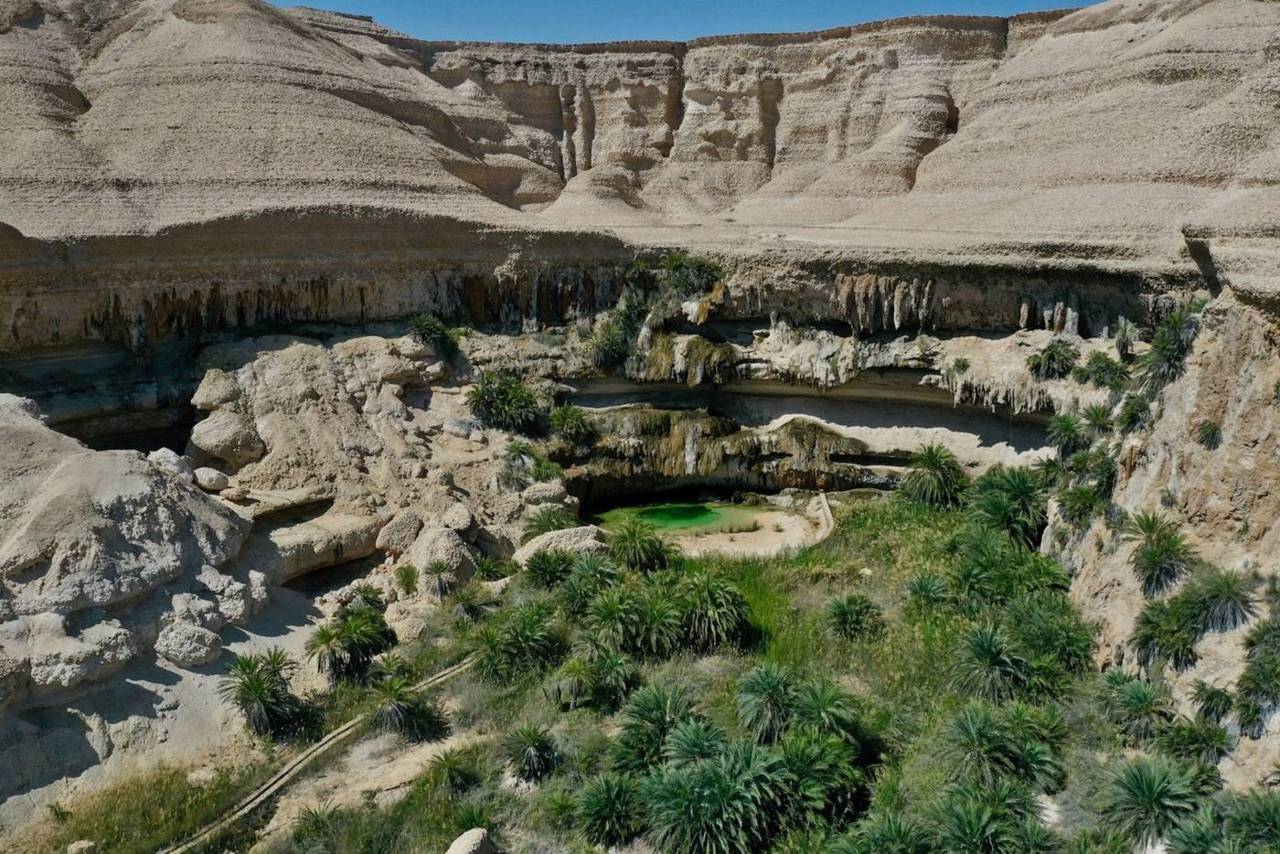
The land of frankincense: the UNESCO site of Al Baleed, the ancient port of Sumhuram, the frankincense trees of Wadi Dawkah and the beaches of Al Mughsail.
 8 daysEasy
Muscat, Nizwa and the desert
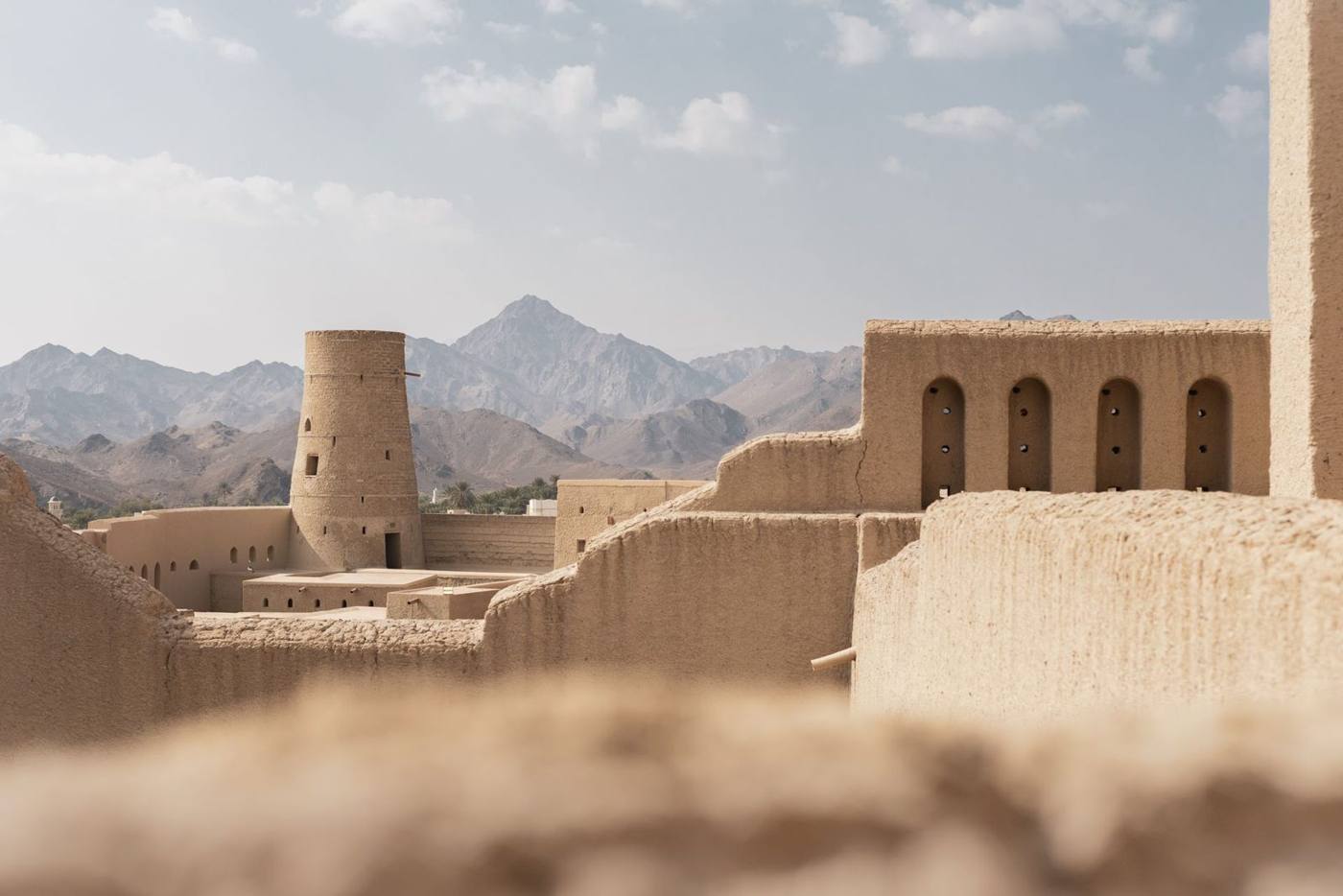
Muscat's Grand Mosque, Nizwa's fort and souk, the village of Misfat al Abriyeen, the Wahiba dunes and Wadi Shab and Wadi Bani Khalid.