The Philippines: Banaue's rice terraces, Sagada and Palawan
The UNESCO-listed rice terraces in the Cordillera mountains, the hanging coffins of Sagada and then two weeks of sea in Palawan.
- Manila
- Banaue
- Batad
- Sagada
- Puerto Princesa
- El Nido
- Coron
Day by day
- Day 1
Arrival in Manila
This trip combines two very different sides of the Philippines: first the mountains of the Cordillera, in northern Luzon, with the rice terraces of Banaue and Batad and the hanging coffins of Sagada, then the sea of Palawan, with the underground river of Puerto Princesa, the lagoons of El Nido and the lakes of Coron. You travel by bus in the north and by domestic flights and boats on the islands.
Before you go: Italian citizens enter the Philippines without a visa for tourism for up to 30 days, with a passport valid for at least six months and an onward ticket. Within the 72 hours before the flight you must fill in the eTravel form online on the official government website: beware of sites that charge for it. Other nationalities should check their own rules. The United States rates the Philippines at level 2 and advises against some areas of Mindanao and the Sulu Sea; northern Luzon and Palawan, where this trip goes, are far from those areas.
You land in Manila after a long flight, usually with a connection in the Gulf or in Asia. The Philippines is seven hours ahead of Italy in winter and six in summer.
Manila is a huge, hot and chaotic metropolis, with over thirteen million people in the metropolitan area. Make no plans today: settle in, drink plenty of water and rest.
In the late afternoon, take a stroll along Manila Bay, on the Roxas Boulevard seafront, famous for its sunsets over the water.
In the evening, try sinigang, a sour tamarind soup with vegetables and pork or prawns, one of the country's best-loved home dishes.
Overnight in Manila, for two nights.
Practical tip: in Manila use metered taxis or ride-hailing apps, which are very common. Keep your phone in your pocket when walking in crowded streets.
- Day 2
Intramuros and Binondo
Today you discover the history of Manila, from the Spanish to the Chinese merchants.
In the morning, go to Intramuros, the walled city built by the Spanish from the late sixteenth century on the bank of the Pasig River. Walk on the walls and visit Fort Santiago, where José Rizal, the writer and patriot regarded as the national hero, was imprisoned before his execution in 1896. Then enter San Agustín Church, the oldest stone church in the Philippines and a UNESCO World Heritage Site, which survived earthquakes and war, with its painted ceiling and cloister. Check prices and times.
To get around the streets of Intramuros you can hire a bicycle or ride in a calesa, the horse-drawn carriage.
At midday, cross the river to Binondo, considered the oldest Chinatown in the world, founded by the Spanish in 1594 for Chinese merchants. Its narrow streets are full of shops selling herbs, jewellery, lanterns and food.
In the afternoon, take a walk among the stalls and small eateries of Binondo: try steamed dumplings, fried rice, filled steamed buns and hopia, a flaky pastry with sweet beans. Also visit Binondo Church, dedicated to Saint Lorenzo Ruiz, the first Filipino saint.
In the evening, try lechon kawali, crispy fried pork belly, with rice.
Overnight in Manila.
Practical tip: Manila is hot and humid all year round. Visit Intramuros early in the morning, bring a hat and water, and rest during the hottest hours of the day, when the sun on the old stones is strongest.
- Day 3
The museum and the night bus to Banaue
Today you leave Manila for the mountains of the north, travelling overnight.
In the morning, visit the National Museum of the Philippines complex, in Rizal Park, with the fine arts museum, home to Juan Luna's great canvas Spoliarium, and the anthropology museum, with objects of the mountain peoples, textiles and ancient boats. Check times and entry rules.
Then walk in Rizal Park, the large park in the centre, with the monument to José Rizal, watched day and night by a guard of honour.
In the afternoon, rest, check out and pack a light backpack for the coming days in the mountains. If you can, leave your large suitcase in storage in Manila, because in Batad and Sagada you walk a lot.
In the evening, around nine or ten, take the night bus to Banaue, in Ifugao province. The journey takes about nine or ten hours, across the plain of Luzon and then on narrow, winding mountain roads. You arrive early in the morning.
The buses leave from terminals in the Sampaloc district. Book your seat a few days ahead, especially at weekends and during holidays. Check times and prices.
Overnight on the bus.
Practical tip: on night buses the air conditioning is very strong. Bring a sweatshirt, socks, a scarf, an eye mask and earplugs. Always keep your documents and money with you, not in the luggage hold, and keep a small bag of snacks and water for the night stops, which can be short.
- Day 4
Banaue and the descent to Batad
Today you enter the land of the rice terraces.
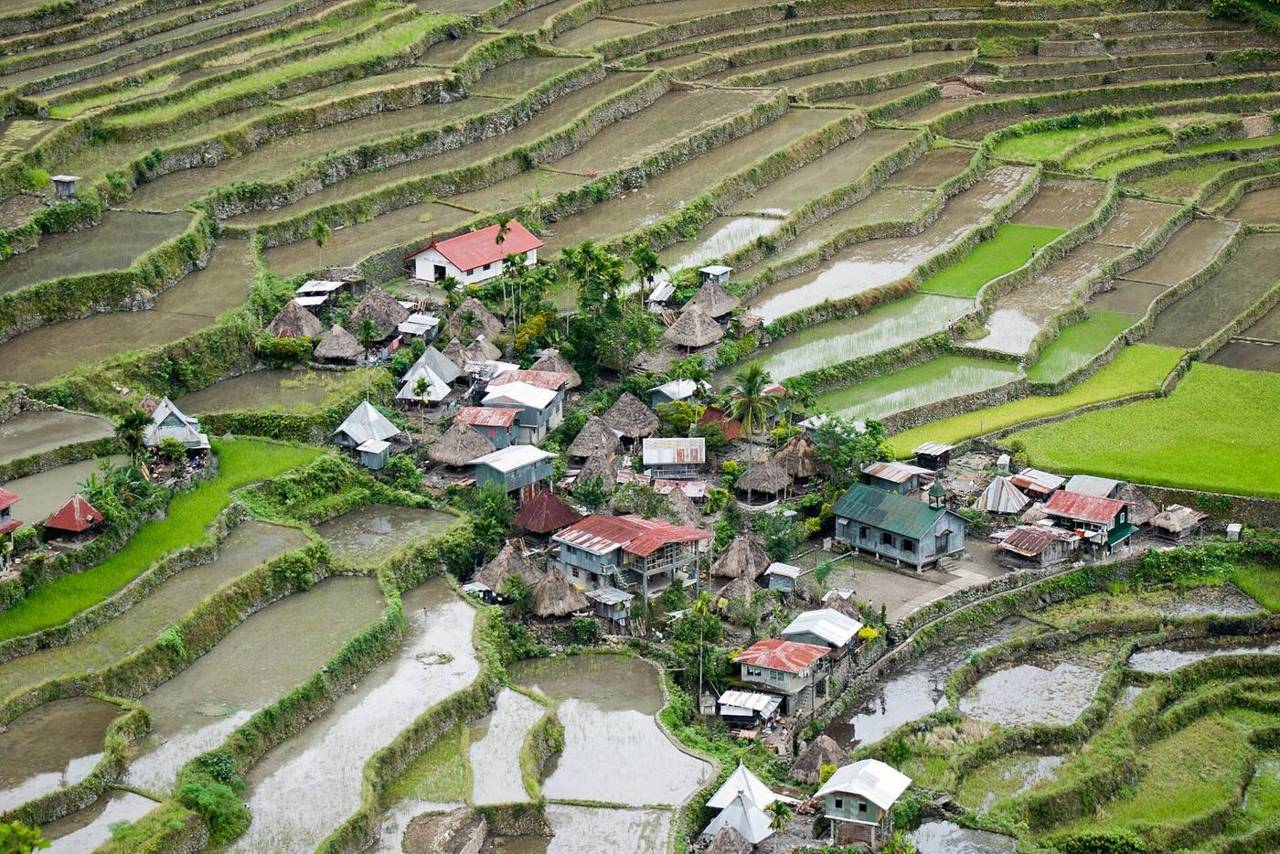
You arrive in Banaue at dawn. Banaue is a small mountain town in a valley surrounded by rice fields carved into the slopes by the Ifugao people. Have breakfast and go up to the viewpoint above the town, from where you see the valley with the terraces stepping down towards the river.
The Cordillera rice terraces were built by hand over centuries of work, with stone and earth walls and a system of channels that carries water from the forests down through every level. Since 1995 five groups of terraces have been a UNESCO World Heritage Site, including Batad and Bangaan, near Banaue.
In the late morning, take local transport or a tricycle to the start of the trail to Batad, about an hour by road. From here you walk down for about half an hour to an hour, on a path of steps and earth, to the village.
Batad is a village without roads, at the bottom of a great natural amphitheatre of rice terraces, which from above looks like a green stadium. The houses are simple, some still with the traditional thatched roof.
In the afternoon, rest at your lodging, in one of the houses overlooking the terraces, and watch the farmers at work.
In the village you pay a small environmental fee. Check prices and rules.
Overnight in Batad, for two nights.
Practical tip: in Batad luggage is carried on foot, so travel light. There are local porters who can help you, for a fee. There are no cash machines: get cash in Manila.
- Day 5
Batad and Tappiya Falls
Today you walk inside the amphitheatre of rice terraces.
Early in the morning, in the softest light, walk along the terrace walls to the viewpoint above the village, from where you see the whole amphitheatre. You walk on the narrow edges of the paddies, sometimes without any barrier: watch your step and never walk into the cultivated fields.
Then continue to Tappiya Falls, about an hour's walk, with many steps down and then up. The waterfall drops from a rock face into a cold, deep pool, where you can swim if the weather is good. The way back is tiring, because you climb back up the whole height.
In Batad it is advisable to walk with a guide from the village: they know the paths, tell you about Ifugao life and take you through the right places without damaging the terraces. Check prices and rules.
In the afternoon, visit the village, with its traditional wooden houses raised on stilts, and if you are interested ask to see the granaries and farm tools.
The terraces change colour through the year: bright green when the rice is growing, golden yellow before the harvest and silver with water after planting. They are greenest between March and July.
In the evening, have mountain rice, vegetables and chicken for dinner, watching the lights of the houses.
Overnight in Batad.
Practical tip: wear hiking boots with a good sole, because the stone steps are slippery, especially after rain. A rain poncho and a walking pole help a lot.
- Day 6
From Batad to Sagada
Today you leave the terraces of Ifugao for another valley of the Cordillera.
In the morning, walk back up from Batad village to the road, about an hour's climb, and return to Banaue. If you have time, stop at the Bangaan viewpoint, another small village listed by UNESCO, surrounded by terraces.
At midday, take a van or local transport from Banaue to Bontoc and then to Sagada, about three or four hours in all. The road climbs and descends among mountains covered in pine trees, villages and rice fields, with views over the valleys. Check times and connections.
Sagada is a town in Mountain Province, at about one thousand five hundred metres, with a cool climate, pine woods and caves in the limestone. It is home to the Kankanaey people, who have kept ancient funeral rites, including the custom of placing coffins in caves and on rock faces.
On arrival, go to the tourist information office in the town centre: here every visitor registers, pays the environmental fee and books guides for the caves and trails. Keep the receipt, because it serves as your pass at the sites.
In the late afternoon, walk around the town and visit the Episcopal Church of Saint Mary, built in stone by American missionaries in the early twentieth century.
In the evening, in the cool air, have mountain dishes for dinner and try Sagada coffee and yoghurt.
Overnight in Sagada, for two nights.
Practical tip: in Sagada the evenings are cold, sometimes below fifteen degrees. Bring a jacket, a warm sweatshirt and thick socks.
- Day 7
Sagada: the sea of clouds, hanging coffins and caves
Today is the fullest day of the mountain section.
At dawn, around five, go up to the Kiltepan viewpoint, just outside the town. On clear mornings the valleys below are filled with low clouds, which look like a white sea with the mountain tops rising out of it, while the sun comes up behind the ridges. The clouds are seen best in the cooler months, but they are never guaranteed.
After breakfast, walk with a guide towards Echo Valley, through the cemetery and a pine wood. On the rock walls of the valley hang the hanging coffins: wooden coffins fixed to the rock, some very old, following a Kankanaey tradition, according to which being higher up brought the dead closer to their ancestors. Respect the place: do not touch the coffins, do not climb on the rocks and keep your voice down.
In the afternoon, with a compulsory guide, enter Sumaguing Cave, the largest in the area, with stalactites, stalagmites, pools of water and limestone formations with curious names. You go down over smooth, wet rocks, often barefoot or in sandals, with water up to your knees. Fit visitors can do the crossing between Lumiang Cave, at whose entrance old coffins are stacked, and Sumaguing Cave, which takes a few hours. Check prices, duration and conditions.
In the evening, try lemon pie, the town's sweet speciality.
Overnight in Sagada.
Practical tip: in the caves wear clothes that can get wet and dirty, and keep your phone in a waterproof pouch. After heavy rain some sections may be closed.
- Day 8
Back to Manila
Today is a long day of travel, from the mountains to the capital.
Early in the morning, take the bus from Sagada towards Manila. There are direct buses, which take about twelve hours, or you can go via Baguio, the coolest city in the Philippines, in about six hours, and from there continue to Manila on a frequent bus, in about five hours. Check times and prices, and book ahead.
The road from Sagada to Baguio is one of the highest in the country, the Halsema Highway, which runs along the mountain ridges among terraced vegetable fields, pine trees and villages. On clear days the view is magnificent, but the road has many bends.
If you go via Baguio, stop for an hour to eat at the city's large market, with strawberries, mountain vegetables and Cordillera coffee.
In the evening you arrive in Manila, tired but with your eyes full of mountains. Sleep near the airport, because tomorrow you fly to Palawan.
Have something simple for dinner, such as pancit, stir-fried noodles with vegetables and meat, often eaten in the Philippines with family and at celebrations.
Overnight in Manila.
Practical tip: in the rainy season, from June to October, landslides on the Cordillera roads can block the way for hours. Keep a spare day in your plans and check the local news before you leave.
If you want to avoid such a long day, you can also spend a night in Baguio and fly from Clark or Manila the next day.
- Day 9
Flight to Puerto Princesa
Today the scenery changes completely: from the mountains to the sea.
In the morning, take the flight from Manila to Puerto Princesa, the capital of Palawan, in about an hour and a half. Palawan is a long, narrow island between the South China Sea and the Sulu Sea, with forests, limestone mountains, mangroves and hundreds of small islands around it.
Puerto Princesa is a quiet, orderly city, known in the Philippines for its care for the environment and cleanliness. Settle into your lodging and rest after the days in the mountains.
In the afternoon, take a boat trip in Honda Bay, north of the city, with stops on small white sand islands, such as Starfish Island and Cowrie Island, to swim and snorkel among corals and starfish. Check prices and times. Alternatively, take a canoe trip through the mangroves with local fishermen on the Iwahig River, where fireflies can be seen in the evening.
In the evening, stroll along the city's seafront, the Baywalk, with its food stalls, and try grilled fish and seafood.
Overnight in Puerto Princesa.
Practical tip: book your visit to the underground river before you arrive, because the number of visitors each day is limited and a permit is needed. Many lodgings and authorised agencies arrange it for you.
Before leaving for Palawan, buy mosquito repellent and use it especially at dawn and dusk, near the mangroves, where insects are most active.
- Day 10
Sabang and the underground river
Today you visit one of the natural wonders of the Philippines.
Early in the morning, leave Puerto Princesa by van for Sabang, on the west coast, in about two hours, through forests, rice fields and hills.
From Sabang a boat takes you in a few minutes along the coast, beneath limestone cliffs, to a beach in the forest. Here begins Puerto Princesa Subterranean River National Park, a UNESCO World Heritage Site, where a river flows under a mountain for over eight kilometres before emptying directly into the sea. About four kilometres are navigable.
You get into a small paddle boat, with a helmet and life jacket, while the guide lights up the great chambers of the cave with a torch, with stalactites, limestone columns and walls shaped like animals and figures. The tour lasts about an hour. Thousands of bats and swiftlets live in the vaults. You stay silent, hearing only the paddles and the drops of water.
On the beach at the exit you sometimes see monitor lizards and macaque monkeys, which live in the forest: do not feed them and keep your bags closed.
In the afternoon, relax on Sabang beach or take a boat trip through the mangroves. Then return to Puerto Princesa.
In the evening, have dinner and pack for El Nido.
Overnight in Puerto Princesa.
Practical tip: in the cave do not look up with your mouth open, because of the bats, and do not use flash. In rough seas the boats to the river may be suspended.
- Day 11
The road to El Nido
Today you cross Palawan heading north, to the most famous archipelago in the country.
In the morning, take the shared van or the bus from Puerto Princesa to El Nido, in about five or six hours. The road runs up the island among green mountains, coconut plantations, villages and rice fields, with stops for lunch and some glimpses of the sea. Check times and prices.
In the early afternoon you arrive in El Nido, a seaside town in northern Palawan, at the foot of dark limestone cliffs. In front of the town lies the Bacuit archipelago, with dozens of tall, sculpted limestone islands, hidden lagoons and white sand beaches.
The area is protected. On arrival every visitor pays the ecotourism development fee of 400 Philippine pesos, valid for the whole stay: keep the wristband or receipt, which you will be asked for on the boat trips.
Settle into your lodging and walk along the seafront, among the colourful fishing boats called bangka, with bamboo outriggers on each side.
At sunset, go to Las Cabañas beach, south of the town, where the sun sinks behind the islands.
In the evening, try kinilaw, raw fish marinated in vinegar, calamansi, a small local citrus fruit, and onion.
Overnight in El Nido, for four nights.
Practical tip: in El Nido cash machines are few and sometimes empty, and the electricity can go off for a few hours. Arrive with enough cash and a spare battery for your phone.
- Day 12
The great lagoons of Bacuit
Today you head out by boat on El Nido's most famous trip.
In the morning, around nine, set off on tour A, one of the four classic boat trips, called A, B, C and D. Tour A goes to the lagoons of Miniloc Island: the Big Lagoon, a large lagoon of green and turquoise water enclosed by limestone walls, and the Small Lagoon, where you enter by kayak or swimming through a crack in the rock.
To protect the lagoons, the number of visitors each day is limited and some visits must be booked in advance, with fixed times. Check rules and prices, which are paid separately from the El Nido fee.
During the trip the boat stops for snorkelling over the corals and for lunch on a beach, prepared by the crew: grilled fish and meat, rice, vegetables and tropical fruit such as mango and pineapple.
In the afternoon, swim at Seven Commando Beach, a beach with palm trees and white sand, or at the Secret Lagoon, a small lagoon behind a rock wall, reached through an opening.
Around four you return to town.
In the evening, have garlic prawns and rice for dinner, and finish with halo-halo, the dessert of shaved ice, milk, fruit and ube, the purple sweet potato.
Overnight in El Nido.
Practical tip: bring a dry bag, water shoes, a long-sleeved swim shirt and reef-friendly sun cream. Never touch the corals and do not take shells away.
- Day 13
Hidden beaches and sand islands
Today you choose a second trip among the islands of the archipelago.
In the morning, set off on tour C, the wildest, which usually goes to the islands of Matinloc and Tapiutan. Here you find Hidden Beach, a beach enclosed by rock walls, and Secret Beach, reached by swimming through a hole in the cliff, with the sound of the waves amplified by the rock. The sea here is open and the snorkelling is among the best in El Nido, with corals, clownfish and sometimes turtles.
Alternatively, if the sea is rough on the open side, choose tour B, more sheltered, with Snake Island, a snake-shaped sandbar that appears at low tide, and Cudugnon Cave, with its narrow entrance and an inner chamber where ancient burials were found.
In the afternoon, on your return, go kayaking along the town's coast or relax on Marimegmeg beach, not far from Las Cabañas.
In the evening, have Filipino home cooking for dinner, such as adobo, meat slowly cooked with vinegar, soy sauce, garlic and pepper.
Overnight in El Nido.
Practical tip: every morning the coast guard decides which trips can leave, depending on the sea and wind. If your trip is cancelled, ask to move it to the next day: keep your El Nido plans flexible.
If you suffer from seasickness, sit in the middle of the boat and take a tablet before boarding.
- Day 14
Nacpan and the north coast
Today you stay on land and discover the long beaches north of El Nido.
In the morning, hire a tricycle with a driver, the most common transport on Palawan, or a scooter if you have a motorbike licence, and head north for about an hour, past villages, rice fields and hills.
You reach Nacpan beach, a long strip of golden sand about four kilometres long, with coconut palms and open sea. There is plenty of space and few people here, even in the busiest months. Climb the small hill at the end of the beach for the view over the twin bays of Nacpan and Calitang, separated by a thin strip of sand.
For lunch, eat at one of the simple huts on the beach, with the catch of the day and rice.
In the afternoon, on the way back, stop at Nagkalit-kalit Falls, in the forest, with a short walk and a cool pool for swimming, or at Duli beach, loved by surfers in the windy months. Check prices and conditions.
At sunset, return to town and enjoy your last evening in El Nido, watching the islands turn dark against the orange sea.
Pack your bag for tomorrow's crossing.
Overnight in El Nido.
Practical tip: the roads of northern Palawan can be narrow, unpaved and unlit. Always wear a helmet and do not drive at night. Do not drink tap water: use bottled water or filtered water dispensers.
- Day 15
By boat to Coron
Today you sail among the islands of northern Palawan.
In the morning, take the fast boat from El Nido to Coron, in about four hours, across a sea dotted with green islands, rocks and fishing villages. Dolphins are sometimes seen near the boat. Check times, prices and sea conditions, and book the day before.
For those with more time and a taste for adventure, there are also expeditions of several days by traditional boat between El Nido and Coron, with nights in simple camps on the islands.
At midday you arrive in Coron, a port town on Busuanga Island. In front of the harbour rises Coron Island, a limestone mountain covered in forest, with inland lakes and lagoons.
In the late afternoon, climb Mount Tapyas, a hill above the town, with hundreds of steps and a large cross at the top. From the top you see the harbour, the islands and the sea, and the sunset is one of the finest of the trip.
In the evening, relax in the Maquinit hot springs, a natural pool of warm salt water near the mangroves, about half an hour from town. Check prices and times.
Have seafood from the market for dinner, such as crabs and scallops, grilled or cooked with coconut.
Overnight in Coron, for two nights.
Practical tip: the crossing from El Nido to Coron only runs in calm seas and can be cancelled in strong wind. Keep a spare day before your flight home.
- Day 16
The lakes of Coron Island
Today you visit the lakes and wrecks around Coron Island.
In the morning, set off on a boat trip to Coron Island, ancestral land of the Tagbanwa people, who manage access to the lakes and beaches. Entry fees are paid at each site: check prices and rules.
The first stop is Kayangan Lake. You climb about 300 steps to a viewpoint overlooking the bay, with limestone rocks rising from the sea, one of the most photographed views in the Philippines. Then you go down to the lake, with clear fresh water enclosed by rock walls, where you swim over submerged limestone formations.
Then go to the Twin Lagoon, two lagoons separated by a rock wall, which you cross by swimming under a passage at low tide or by climbing a small ladder. Here fresh and salt water mix, and you feel warmer and cooler layers.
In the afternoon, snorkel over the Skeleton Wreck, a small wreck in shallow water, and at the Coral Garden. Divers can go down to one of the wrecks of the Japanese ships sunk by American aircraft in September 1944, now covered in coral.
In the evening, at the last dinner of the trip, try lechon, roast suckling pig with crispy skin.
Overnight in Coron.
Practical tip: do not dive in the 24 hours before a flight. If you fly tomorrow, limit today's activities to snorkelling and swimming.
Go to Kayangan Lake early, before the groups arrive in mid-morning.
- Day 17
Departure from Coron
Today you leave the Philippines.
In the morning, take the van to Busuanga airport, about thirty to forty-five minutes from Coron, and fly to Manila, in about an hour. From Manila take your return flight to Italy, with a connection in the Gulf or in Asia. Leave plenty of time between the two flights: in Manila the terminals are far apart and the traffic is slow.
Over these seventeen days you have seen two faces of the Philippines. In the north, the capital with Intramuros and Binondo, the rice terraces of Banaue and the amphitheatre of Batad, Tappiya Falls, the sea of clouds, the hanging coffins and the caves of Sagada. On Palawan, the underground river at Sabang, the lagoons and beaches of El Nido, and the lakes and lagoons of Coron.
It is a trip of contrasts: the cool of the mountains and the heat of the sea, the peoples of the Cordillera and the island fishermen, long hours on the bus and days on the boat.
When to go: the best period is from December to May, in the dry season, with calm seas and safer mountain roads. The terraces are greenest between March and July, so March, April and May combine green terraces and good seas, although they are the hottest months. From June to November there are rains, typhoons and landslides, which can block roads, flights and boats.
Practical tip: if you have pesos left over, spend them before leaving, because they are hard to change outside the Philippines. Learn to say salamat, thank you: people really appreciate it.
The Philippines aren't just beaches: the Batad rice terraces are among the world's most beautiful farm landscapes. The trip north is long (9-10 hours by bus) but worth it. The terraces are greenest from March to July.
Before you go
- Documents and visa
- Passport valid for at least six months and an onward ticket; no visa for tourism up to 30 days for EU citizens. In the 72 hours before the flight you fill in the no-cost eTravel form online.
- Health and vaccines
- No compulsory vaccines arriving from Europe. Protect yourself against mosquitoes because of dengue and keep away from dogs and monkeys because of rabies. Drink only bottled water. Emergencies: 911.
- Money and payments
- Philippine peso. On small islands cash machines are few and often empty: carry cash.
- Power sockets
- Types A, B and C, 220 volts: bring a universal adapter.
- Time zone
- UTC+8 all year.
- Safety
- The United States rates the Philippines level 2, with level 4 for the Sulu archipelago, the southern Sulu Sea and Marawi, and level 3 for much of Mindanao. Typhoons occur from June to November. Official advice: GOV.UK.
Information checked in November 2026 for Italian and EU citizens. Rules change: always check before you travel.
Variations
In 12 days: Manila, Banaue, Batad and Sagada, then only El Nido, with the direct flight from Manila and the return from the same airport.
In 21 days: add Kalinga and the village of Buscalan after Sagada, and Port Barton, between Puerto Princesa and El Nido.
Frequently asked questions
What document do I need for the Philippines?
Italian citizens enter without a visa for tourism for up to 30 days, with a passport valid for at least six months and an onward ticket. Within the 72 hours before the flight you must fill in the eTravel form online on the official website. Other nationalities should check their own rules.
Is the journey to Banaue tiring?
Yes, the night bus from Manila takes about nine or ten hours and the return from Sagada about twelve. In Batad you walk on steep, slippery steps. You need normal fitness and hiking boots.
How much is the El Nido fee?
On arrival you pay 400 Philippine pesos for ecotourism development, valid for the whole stay. The lagoons, the Coron lakes, the underground river and the Sagada sites are paid separately: check prices and rules.
Indicative itinerary written by World Atlas. Before booking, check timetables, seasonal openings, documents and safety.
 7 daysEasy
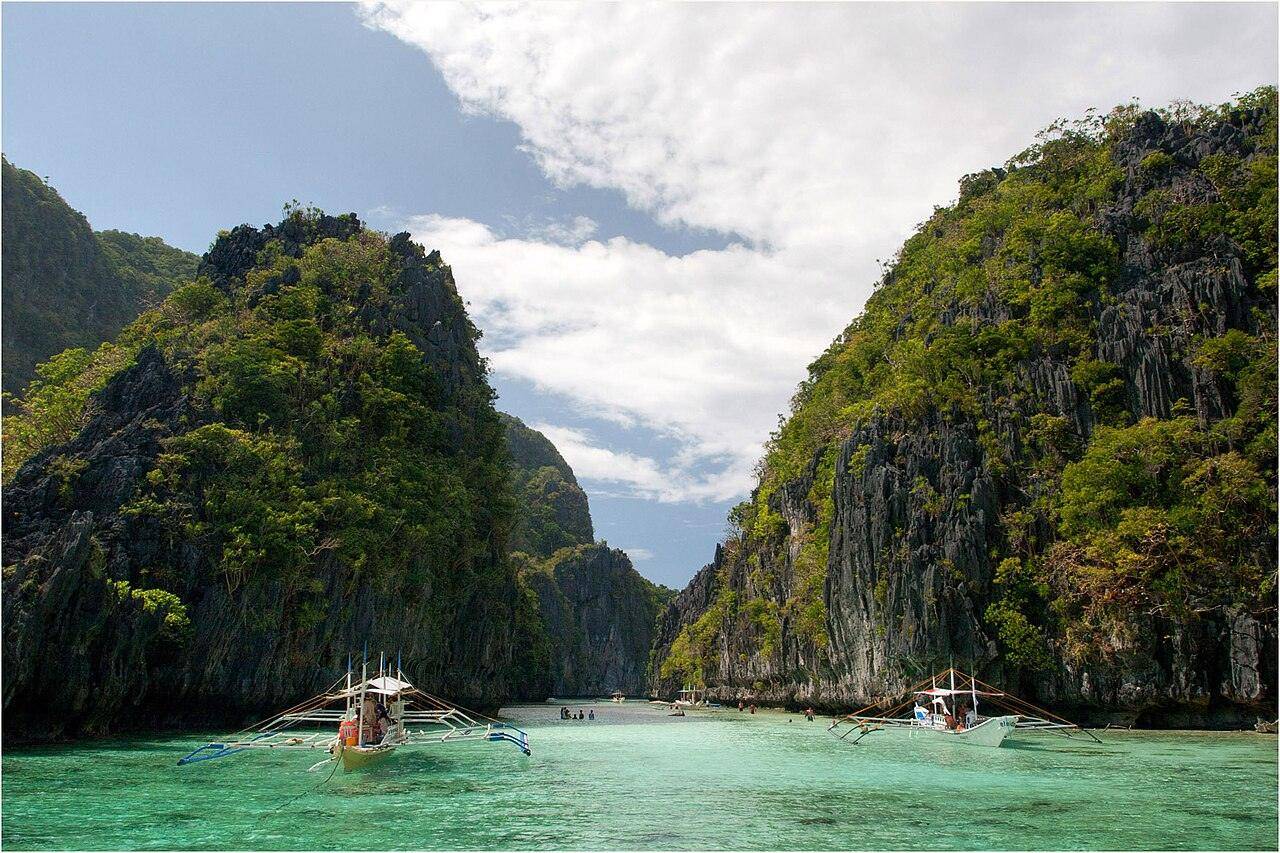
Palawan: El Nido and the lagoons
A week of islands, turquoise lagoons and snorkelling in the Bacuit archipelago, with a stop at the underground river.
 15 daysModerate
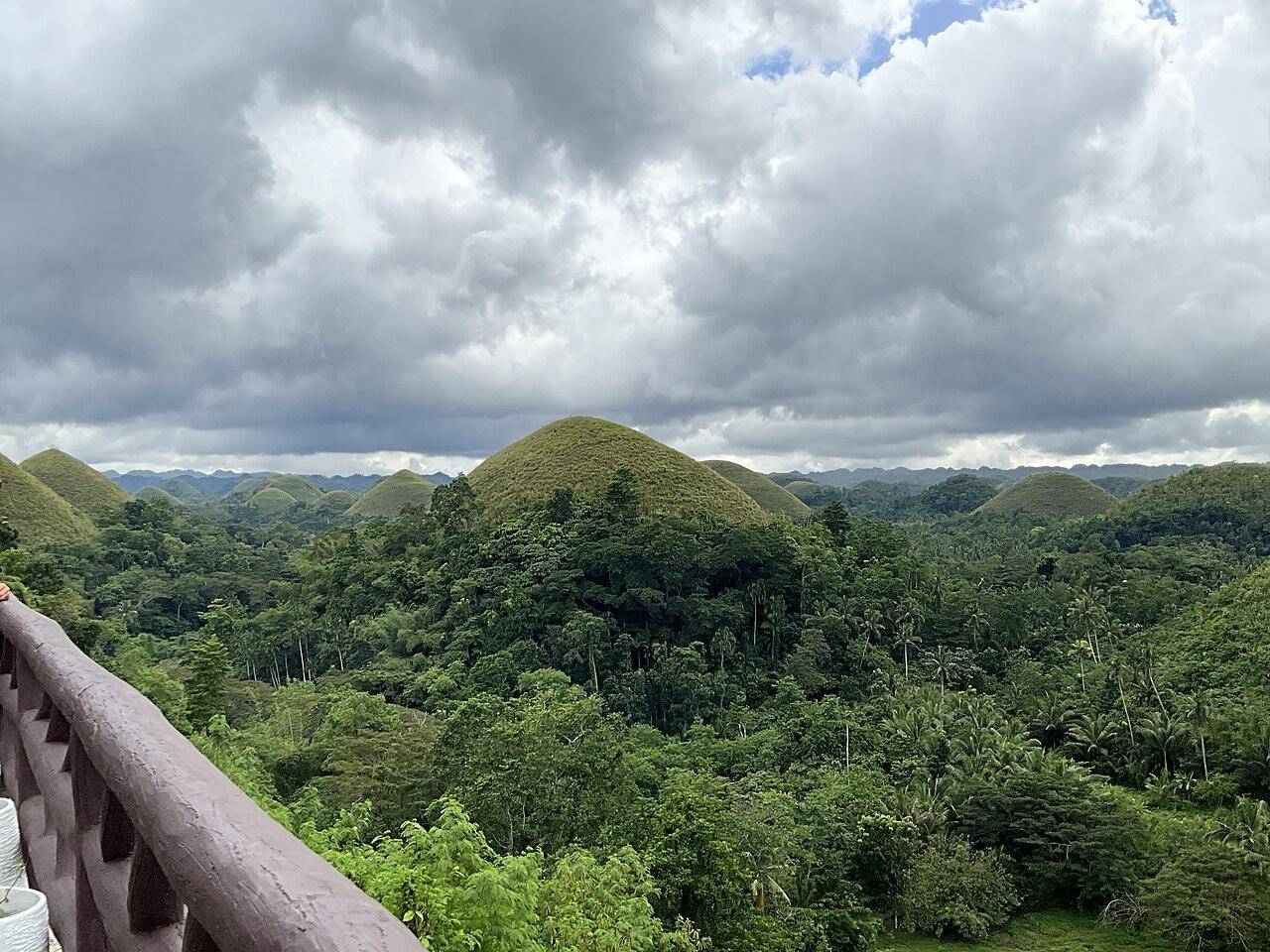
Palawan, Coron, Bohol and Cebu
The finest islands in two weeks: El Nido's lagoons, Coron's lakes and wrecks, Bohol's Chocolate Hills and tarsiers.
 12 daysEasy
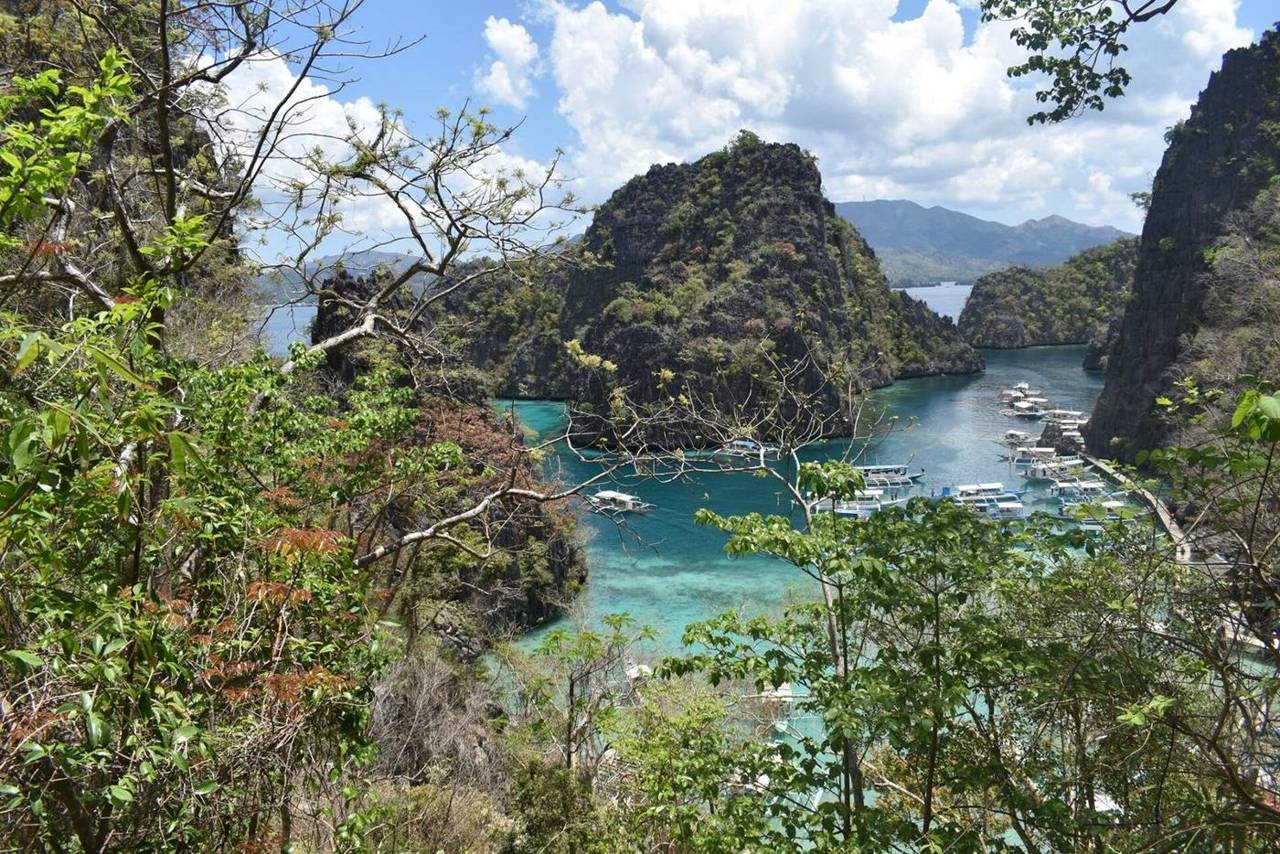
Philippines express: Palawan, El Nido and Coron
Puerto Princesa's underground river, the lagoons of El Nido among limestone cliffs, and Coron's lakes and wrecks.