The Grand Tour of Portugal, Minho to the Algarve
Fifteen days to see the whole country: the central coast, Porto and the Douro, the granite villages of the interior, Évora and the Algarve, finishing in Lisbon.
- Lisbon
- Nazaré
- Coimbra
- Porto
- Douro Valley
- Piódão
- Monsanto
- Marvão
- Évora
- Lagos
Day by day
- Day 1
Arrival in Lisbon and Belém
This trip is the grand tour of Portugal, from north to south and into the interior: Lisbon and Sintra, Óbidos, Nazaré and Tomar, Coimbra and Aveiro, Porto, Braga and Guimarães, the Douro valley with its terraced vineyards, the stone villages of Piódão and Monsanto, Marvão and Évora, then the Algarve with its cliffs and Sagres, at the end of Europe. You travel by rental car.
Before you go: Portugal is part of the Schengen area and the European Union. For Italian citizens an electronic identity card valid for travel abroad or a passport is enough; the paper identity card is no longer valid for travel abroad since 3 August 2026. Other nationalities should check their own rules.
You land at Lisbon airport, close to the city. Lisbon is built on seven hills on the bank of the Tagus River, near its mouth on the ocean, with yellow trams, houses covered in azulejos, the painted tiles, and viewpoints over red roofs.
In the afternoon, go to Belém, on the riverbank, the district of the great discoveries. Visit the Jerónimos Monastery, a UNESCO World Heritage Site, built from the sixteenth century in the Manueline style, with columns carved like ropes, shells and plants, where Vasco da Gama's tomb lies. Then go to the Belém Tower, a small fortress on the river, also a UNESCO site, and the Monument to the Discoveries. Check prices and times; the monastery is closed on Mondays.
Before heading back, try pastéis de Belém, the flaky custard tarts, baked and served warm with cinnamon.
Overnight in Lisbon, for two nights.
Practical tip: Lisbon's streets are steep and the white stone pavements are slippery, especially in the rain. Wear comfortable shoes with a good sole.
- Day 2
Sintra and Cabo da Roca
Today you visit the town of palaces among the hills and the westernmost point of the continent.
In the morning, take the train from Lisbon to Sintra, about forty minutes, or drive. Sintra is a small town among wooded hills, where Portuguese kings and nobles built their summer residences. The cultural landscape of Sintra is a UNESCO World Heritage Site.
Start with the Pena Palace, on a hilltop, built in the nineteenth century for the king consort Ferdinand II, a romantic palace painted yellow, red and blue, with towers, domes and terraces over the forest and the ocean. Then visit the Moorish Castle, a medieval fortress with walls along the mountain ridge, and the Quinta da Regaleira, with gardens full of grottoes, ponds and the initiation well, an upside-down tower dug into the ground with a spiral staircase. Check prices and times, and buy tickets online in advance.
In the centre of Sintra, visit the National Palace, with its two great white cone-shaped chimneys, and try travesseiros, puff pastry sweets filled with almond cream.
In the afternoon, go to Cabo da Roca, about half an hour away, the westernmost point of continental Europe, with a lighthouse and high cliffs above the ocean. Then return towards Lisbon along the coast, through Cascais, an elegant seaside town.
In the evening, in Lisbon, listen to fado, Portugal's traditional music, UNESCO intangible heritage, in a fado house in Alfama or Bairro Alto.
Overnight in Lisbon.
Practical tip: in Sintra traffic and parking are difficult. Take the train and then the buses that run between the palaces, and arrive early.
- Day 3
Óbidos, Nazaré and Tomar
Today you pick up the car and head north.
In the morning, collect your rental car and drive north to Óbidos, about an hour, a small medieval village entirely enclosed within its walls, with white houses trimmed in blue and yellow, bougainvillea and a castle. Walk along the walls, which have no railing on the inner side, with views over the rooftops, and try ginjinha, a sour cherry liqueur served in a small chocolate cup.
Then continue to Nazaré, about half an hour, a fishing village on the ocean, with a long beach and the Sítio headland, from which you see Praia do Norte. Here, in winter, some of the highest waves in the world form, drawing big-wave surfers. At the lighthouse in the fort of São Miguel Arcanjo there is a small museum about the waves. Check times. On the beach you sometimes still see women in the traditional seven skirts drying fish in the sun.
In the afternoon, if you have time, stop at the monastery of Alcobaça or Batalha, two great Gothic monasteries that are UNESCO World Heritage Sites, then continue east to Tomar, about an hour.
In Tomar, visit the Convent of Christ, a UNESCO World Heritage Site, the seat of the Knights Templar in Portugal and later of the Order of Christ, with the twelfth-century Templar rotunda, painted and gilded, and the famous Manueline window, carved with ropes, corals and symbols of the sea. Check prices and times.
Overnight in Tomar.
Practical tip: on Portuguese motorways many tolls are electronic only, with no booths. Ask your rental company for a device for automatic payment.
- Day 4
Coimbra, Aveiro and Porto
Today you visit the university city, the city of canals, and arrive in Porto.
In the morning, drive north from Tomar to Coimbra, about an hour and a half. Coimbra is home to one of the oldest universities in Europe, founded in 1290 and moved here in the sixteenth century, into the old royal palace at the top of the hill. The university is a UNESCO World Heritage Site. Visit the Joanina Library, one of the most beautiful baroque libraries in the world, with halls decorated in gilded wood and lacquer and tens of thousands of old books. At night the bats that live in the library eat the insects that would damage the books. Visits are at fixed times: buy your ticket in advance and check prices and times.
Then walk through the old town, down the steep streets towards the Mondego River.
In the afternoon, continue to Aveiro, about an hour, a city built around a lagoon and canals, called the Venice of Portugal, with colourful boats called moliceiros, painted with cheerful designs, and art nouveau houses. Take a boat trip on the canals and try ovos moles, sweets of egg yolk and sugar inside a thin wafer shaped like a shell. If you have time, go to nearby Costa Nova, with its colourful striped houses.
In the evening, you arrive in Porto, about an hour, the second city of Portugal.
Overnight in Porto, for two nights.
Practical tip: in Coimbra the Joanina Library has limited places for each time slot. Book before you leave, especially in summer, so you are not left without a ticket.
- Day 5
Porto: Ribeira and the Gaia cellars
Today you explore Porto, the city of wine.
In the morning, start at São Bento station, with its hall covered in thousands of blue and white azulejos telling the story of Portugal. Then climb to the cathedral, the Sé, on the hill, with views over the city, and go down through the lanes to the Ribeira, the district on the Douro River, a UNESCO World Heritage Site, with narrow, colourful houses, iron balconies and terraces on the water.
Visit the church of São Francisco, with its interior covered in gilded wood, and the Stock Exchange Palace, with the Arab Room. Check prices and times.
In the afternoon, cross the Dom Luís I bridge, a great two-level iron bridge built at the end of the nineteenth century, on the lower deck or on the upper deck, where the metro runs, with a spectacular view of the Ribeira. Across the river is Vila Nova de Gaia, home to the cellars of port wine, the fortified wine produced in the Douro valley and aged here. Visit a cellar to learn how port is made and taste it. Check prices and times.
At sunset, go up to the viewpoint of the Serra do Pilar monastery, in Gaia, to see Porto and the river lit by the evening sun.
In the evening, have a francesinha, a very rich sandwich with meat, sausages and cheese, covered in a hot sauce, Porto's most famous dish, or salt cod.
Overnight in Porto.
Practical tip: Porto is very steep. Use the Guindais funicular, between the Ribeira and the upper town, or the historic tram along the river, to save your legs.
- Day 6
Braga and Guimarães
Today you visit the two historic cities of the Minho.
In the morning, drive north from Porto to Braga, about an hour. Braga is one of the oldest cities in Portugal, called the Portuguese Rome for its many churches, with the cathedral, the oldest in the country, and a centre of squares and baroque palaces.
Just outside the city, visit the sanctuary of Bom Jesus do Monte, a UNESCO World Heritage Site, with its great zigzag baroque staircase climbing the hill, decorated with fountains, statues and chapels. You can climb on foot, about 580 steps, or take the nineteenth-century water-powered funicular, one of the oldest in the world still in service. Check prices and times.
In the afternoon, continue to Guimarães, about half an hour away, called the cradle of Portugal, because, according to tradition, the first king, Afonso Henriques, was born here in the twelfth century. On a wall at the entrance to the town are the words: here Portugal was born. Visit the castle of Guimarães, from the tenth century, and the Palace of the Dukes of Braganza, with its brick chimneys and tapestry-hung halls. Check prices and times. Then walk through the historic centre, a UNESCO World Heritage Site, with medieval squares, houses with wooden balconies and arcades.
In the evening, return to Porto, or sleep in Guimarães.
Overnight in Guimarães or Porto.
Practical tip: the Minho is Portugal's greenest and rainiest region. Bring an umbrella or a waterproof jacket even in spring and autumn.
Try vinho verde, the region's young, slightly sparkling wine, drunk chilled.
- Day 7
The Douro valley
Today you enter the valley of port wine.
In the morning, drive east to the Douro valley, about two hours, through hills and mountains. The last roads wind down towards the river through the vineyards.
The Alto Douro valley, a UNESCO World Heritage Site, is the oldest demarcated wine region in the world, established in 1756. The steep hills above the river are covered in terraced vineyards, built by hand in the schist rock over centuries of work, following the curves of the mountain like the lines of a drawing. In autumn the vineyards turn red, yellow and orange.
Arrive in Pinhão, a small village on the river, in the heart of the valley. The railway station is decorated with azulejo panels showing the grape harvest and life along the river.
In the afternoon, visit a quinta, a wine estate in the valley, to learn how grapes are grown on the terraces, how they were once trodden by foot in stone tanks called lagares, and for a tasting of port and red Douro wines. Check prices and times. Then take a short river cruise on a traditional boat, between hills covered in vines. Check prices and times.
At sunset, go up to the Casal de Loivos viewpoint, above Pinhão, with one of the finest views over the valley and the bends of the river.
Overnight in the Douro valley, for two nights.
Practical tip: in the Douro valley the roads are narrow and winding. If you do tastings, do not drive: choose a quinta to stay at or hire a driver.
- Day 8
Lamego and Viseu
Today you leave the valley through two historic towns.
In the morning, if you wish, take a last walk among the vineyards or ride the historic train along the river, which on some summer days links the valley's stations. Check days and times.
Then drive south to Lamego, about half an hour from Pinhão, a small town among the hills. Climb to the sanctuary of Nossa Senhora dos Remédios, at the top of a great baroque staircase of about 686 steps, decorated with blue azulejos, fountains, statues and obelisks, similar to that of Bom Jesus in Braga. You can climb on foot from the centre or drive to the top. The sanctuary's festival, at the end of August and start of September, is one of the largest in northern Portugal.
In the afternoon, continue south to Viseu, about an hour, a quiet city on the plateau, in the heart of the Dão wine region. Walk through the historic centre, with the Romanesque and Gothic cathedral, the Renaissance cloister and the Grão Vasco museum, dedicated to the sixteenth-century painter Vasco Fernandes, with works of Portuguese painting. Check prices and times.
In the evening, have the region's food, such as vitela assada, roast veal, with a red Dão wine.
Overnight in Viseu or in the Douro valley.
Practical tip: in the historic centres of these towns the streets are narrow and parking is difficult. Leave the car in the car parks at the edge of the centre and walk.
If you prefer to sleep two nights in the same place, stay in the Douro valley and visit Lamego and Viseu as a day trip.
- Day 9
Piódão, the schist village
Today you reach one of the most beautiful villages in inland Portugal.
In the morning, drive south from Viseu, about two hours, through the mountains of the Serra da Estrela and the Serra do Açor. The last roads are narrow and winding, among mountains covered in woods and heather.
Piódão is a schist village built on the sides of a deep valley in the Serra do Açor, with houses of dark stone and roofs of schist slabs, arranged in steps on the mountain like an amphitheatre. The doors and windows are painted blue, because in the past it was the only colour available in the area. In the centre, the white church of Our Lady of the Conception stands out among the dark houses. For centuries the village was isolated, without roads, and it has kept its old appearance.
In the afternoon, walk through the village's stone lanes, climb above the houses for the view of the whole, and take a walk on the surrounding trails, towards the nearby villages of Foz d'Égua, with its stone bridge and river beach, and Chãs d'Égua. They are among the region's schist villages, linked by marked trails.
In the evening, when the day visitors have gone, the village becomes silent. Have mountain food, such as cabrito, roast kid, and cheese from the Serra da Estrela.
Overnight in Piódão.
Practical tip: the roads to Piódão are narrow and in some places have no barriers. Drive calmly, by day, and fill up before heading into the mountains.
In winter the surrounding mountains can be snowy: check the weather.
- Day 10
Monsanto, the village among the boulders
Today you visit a village built among granite rocks.
In the morning, drive east from Piódão to Monsanto, about two and a half hours, across the hills and plains of Beira Baixa, with olive trees and cork oaks.
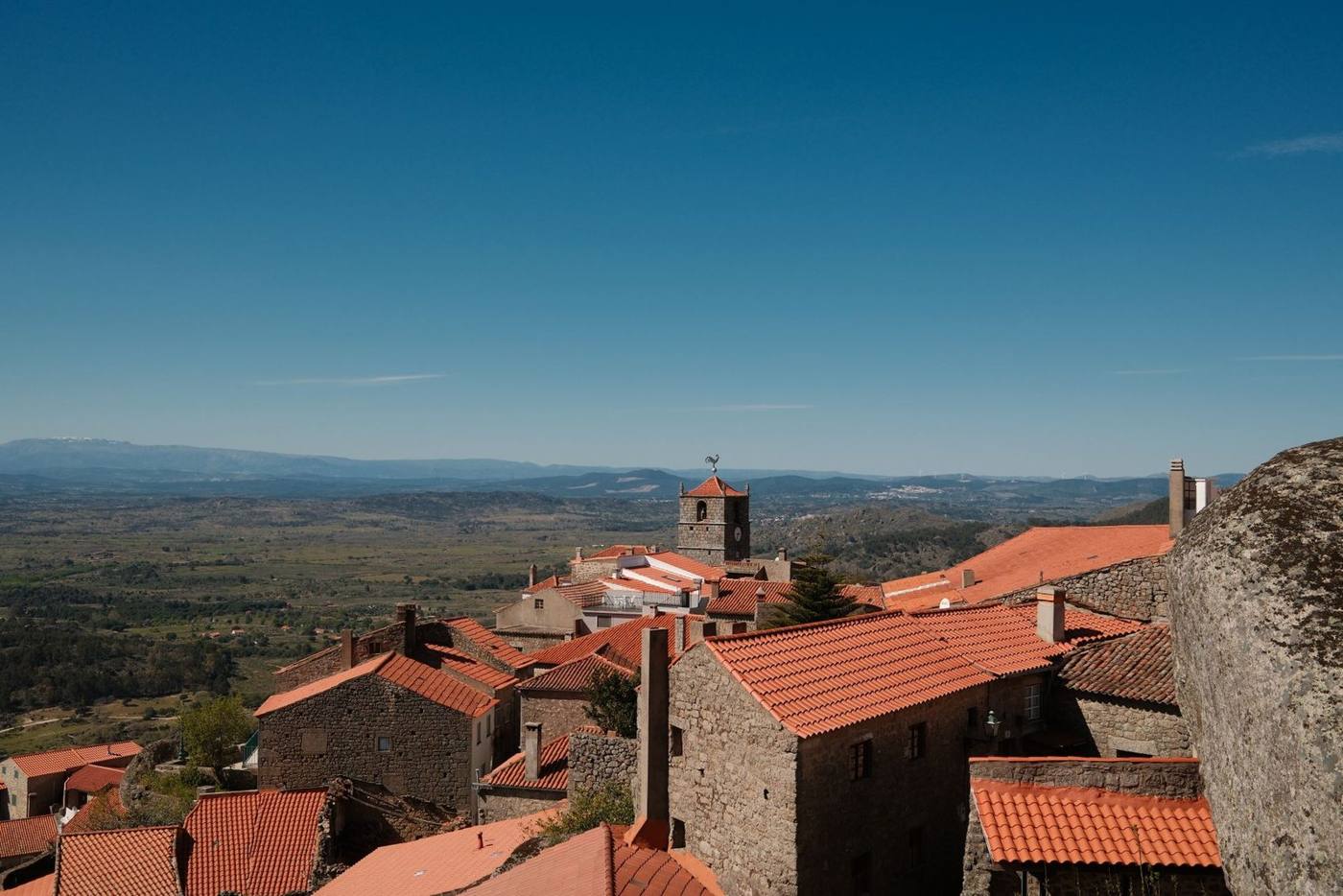
Monsanto is a village built on the side of a hill covered in enormous rounded granite boulders. The houses are wedged between the rocks, under the rocks, and sometimes use the rocks themselves as walls and roofs. In 1938 it was chosen in a national competition as the most Portuguese village in Portugal.
In the afternoon, walk through the village's stone lanes, among the houses under the boulders, and climb to the castle at the top of the hill, a Templar fortress, now in ruins, with views over the plain as far as Spain. The climb is steep but short.
Then, if you have time, visit Idanha-a-Velha, a few kilometres away, one of the oldest villages in Portugal, with Roman ruins, an early Christian cathedral and walls, in a landscape of fields and olive groves.
At sunset, return to the top of Monsanto's hill, when the light turns the granite gold and the plain pink.
In the evening, have dinner in the village and look for the marafonas, Monsanto's traditional rag dolls, a symbol of the May festival.
Overnight in Monsanto.
Practical tip: in Monsanto the streets are steep and paved with smooth stone. Wear shoes with a good sole and bring a bottle of water for the climb to the castle.
The inland villages are small: book your accommodation in advance.
- Day 11
Marvão, Castelo de Vide and Évora
Today you visit two border villages and arrive in the most beautiful city of the Alentejo.
In the morning, drive south from Monsanto to Castelo de Vide, about an hour and a half, a white village on the hills of the Serra de São Mamede, with decorated houses, fountains and a castle. Visit the judiaria, the old Jewish quarter, with its sloping lanes and the small medieval synagogue, one of the oldest in Portugal. Check times.
Then go up to Marvão, about a quarter of an hour away, a fortified village on the crest of a granite mountain, at about 860 metres, with walls surrounding the whole village and a castle at the top. From the castle you see the whole Alentejo and, on the horizon, Spain. The village seems suspended in the sky.
In the afternoon, drive south-west to Évora, about two hours, across the plains of the Alentejo, with cork oaks, olive trees and wheat fields.
Évora is a Roman and medieval city, a UNESCO World Heritage Site, enclosed within its walls. Visit the Roman temple, with its first-century Corinthian columns, the cathedral, with the view from its roof, and the Chapel of Bones, in the church of São Francisco, with walls covered in bones and skulls, built by the friars in the sixteenth century as a reminder of the brevity of life. Check prices and times.
In the evening, have Alentejo food, such as carne de porco à alentejana, pork with clams, and a red wine from the region.
Overnight in Évora.
Practical tip: in summer the Alentejo is very hot, often over 35 degrees. Visit the towns early in the morning and in the evening.
- Day 12
The Algarve: Faro and Lagos
Today you reach the southern coast.
In the morning, drive south from Évora to Faro, about two and a half hours, across the Alentejo and the Algarve mountains.
Faro is the capital of the Algarve, with a small old town within its walls, the Cidade Velha, with the cathedral, a square with orange trees and views over the Ria Formosa lagoon, a nature park of channels, sand islands and salt marshes, home to flamingos, storks and seahorses. Visit the Chapel of Bones in the Carmo church, similar to the one in Évora. If you have time, take a short boat trip in the lagoon. Check prices and times.
In the afternoon, continue west along the coast to Lagos, about an hour, a seaside town with walls, a harbour and a lively historic centre. Many of the Portuguese expeditions to Africa set off from Lagos in the fifteenth century.
At sunset, go to Ponta da Piedade, south of the town, a headland with golden cliffs, rock arches, caves and sea stacks rising from the green and turquoise sea. Go down the staircase to sea level, or take a boat or kayak trip among the caves. Check prices and times.
In the evening, have Algarve seafood, such as cataplana, a stew of fish and shellfish cooked in a shell-shaped copper pan.
Overnight in Lagos, for two nights.
Practical tip: in summer the Algarve is very crowded. Book your accommodation in advance and visit the most famous beaches early in the morning.
- Day 13
The Seven Hanging Valleys trail
Today you walk along the most beautiful cliffs in the Algarve.
Early in the morning, drive east from Lagos to Praia da Marinha, about forty minutes, one of the most famous beaches in Portugal, with golden cliffs, rock arches and clear water. From here starts the Seven Hanging Valleys trail, about six kilometres one way, to Vale Centeanes beach, near the Alfanzina lighthouse.
The trail follows the edge of the cliffs, between sky and sea, passing above caves, arches, sea stacks and hidden beaches, such as Benagil, with its famous cave with a hole in the roof through which sunlight pours in. Along the way are the hanging valleys, small valleys that end abruptly above the sea. The walk is easy, but without shade.
To see the inside of the Benagil cave you go by boat or kayak: in recent years the rules for entering and for landing on the cave beach have changed, to protect the place and for safety. Check the current rules and choose an authorised operator.
In the afternoon, return to Praia da Marinha, by taxi or on foot, and swim at one of the beaches along the route.
In the evening, return to Lagos and have dinner in the historic centre.
Overnight in Lagos.
Practical tip: along the cliffs, always stay on the trail and away from the edge. The rock is crumbly and there are collapses every year. Never sit under the cliffs on the beach.
Bring plenty of water, a hat and sun cream: there are no cafés on the trail.
- Day 14
Sagres and Cabo São Vicente
Today you reach the end of Europe and head back towards Lisbon.
In the morning, drive west from Lagos to Sagres, about half an hour, at the south-western corner of Portugal and of Europe, a land of very high cliffs battered by wind and ocean.
Visit the fortress of Sagres, on a headland over the ocean, linked by tradition to Prince Henry the Navigator, who promoted Portuguese exploration in the fifteenth century. Inside there is a large stone compass rose on the ground and a small church. Check prices and times.
Then go to Cabo São Vicente, a few kilometres away, with its lighthouse on cliffs about 75 metres high. For centuries it was considered the end of the known world. Ancient sailors called it the sacred promontory. From the viewpoint, looking west, there is no other land until America.
In the afternoon, drive north to Lisbon, about three hours on the motorway through the Alentejo, or along the west coast, the Costa Vicentina, slower but with the villages and wild beaches of the nature park.
In the evening, in Lisbon, return the car and have dinner in the Cais do Sodré or Príncipe Real district.
Overnight in Lisbon.
Practical tip: at Cabo São Vicente the wind is very strong, even in summer, and it is cold. Bring a jacket. At sunset the cape is very crowded: arrive early and find a sheltered spot.
Return the car before entering central Lisbon: driving and parking in the city are difficult.
- Day 15
Alfama, Bairro Alto and departure
Today you spend your last morning in Lisbon.
Early in the morning, climb into Alfama, the oldest district in the city, which survived the earthquake of 1755, with its narrow lanes, staircases, washing hung out, churches and small restaurants. Go up to São Jorge Castle, on the highest hill, with walls, towers and views over the whole city and the Tagus River. Check prices and times. Then stop at the Santa Luzia and Portas do Sol viewpoints, with terraces covered in azulejos and views over the rooftops of Alfama.
Go down to the cathedral, the Sé, and take tram 28, the city's most famous yellow tram, which runs through the historic districts up steep slopes and around tight bends.
At midday, go to the Baixa, the lower town rebuilt after the earthquake with straight streets, to the great Praça do Comércio on the river, then climb to Chiado and Bairro Alto, the district of bars and nightlife, with the São Pedro de Alcântara viewpoint.
Then go to the airport, about half an hour from the centre by metro or taxi, for your flight home.
In these fifteen days you have seen all of Portugal: Lisbon and Sintra, the villages and monasteries of the centre, Coimbra and Porto, the Minho, the Douro valley, the stone villages of the interior, Évora, the Algarve cliffs and Sagres.
When to go: the best months are from April to June and September and October, with a mild climate. In summer the interior and the Alentejo are very hot, and the Algarve is crowded.
Practical tip: in Lisbon, watch out for pickpockets on tram 28 and in crowded places.
The choice for a first trip to Portugal with two weeks available and a wish to see the interior that short tours skip. The highlight is exactly those days between the Douro, Piódão, Monsanto and Marvão. The drawback is pace: a lot of driving and many single nights, so Lisbon and Porto only get a taste. If the group wants less road, dropping the Algarve frees two useful days elsewhere.
Before you go
- Documents and visa
- EU citizens need a valid identity card or passport. Other nationalities should check the Schengen rules.
- Health and vaccines
- No vaccines required. EU citizens should bring their EHIC. Emergencies: 112.
- Money and payments
- Euro. Cards are accepted almost everywhere. Lisbon, Porto and several municipalities, including in the Algarve, charge a tourist tax per person per night.
- Power sockets
- Types C and F, 230 volts.
- Time zone
- Western European Time (UTC+0, summer UTC+1); the Azores are one hour behind the mainland.
- Safety
- A very safe country. In Lisbon watch for pickpockets on tram 28 and in the busiest areas; in summer, wildfire risk inland. Official advice: GOV.UK.
Information checked in November 2026 for Italian and EU citizens. Rules change: always check before you travel.
Variations
In 10 days: Lisbon and Sintra, Óbidos, Coimbra, Porto and the Douro valley, flying home from Porto, without the interior and without the Algarve.
In 18 days: add the Azores, with three days on São Miguel, at the end, or the Portuguese Coastal Way from Porto to Santiago, on foot.
Frequently asked questions
What document do I need for Portugal?
Portugal is in the Schengen area and the European Union. Italian citizens need only an electronic identity card valid for travel abroad or a passport; the paper identity card is no longer valid for travel abroad since 3 August 2026. Other nationalities should check their own rules.
Do I need a car?
Yes, for this trip a car is necessary, especially for the interior, the Douro valley and villages such as Piódão and Monsanto. In Lisbon and Porto it is better to leave it and use public transport. Remember the electronic tolls on the motorways.
When is the best time to go?
From April to June and in September and October, with a mild climate and fewer people. At the end of September you can see the grape harvest in the Douro valley. In summer it is very hot inland.
Indicative itinerary written by World Atlas. Before booking, check timetables, seasonal openings, documents and safety.
 8 daysEasy
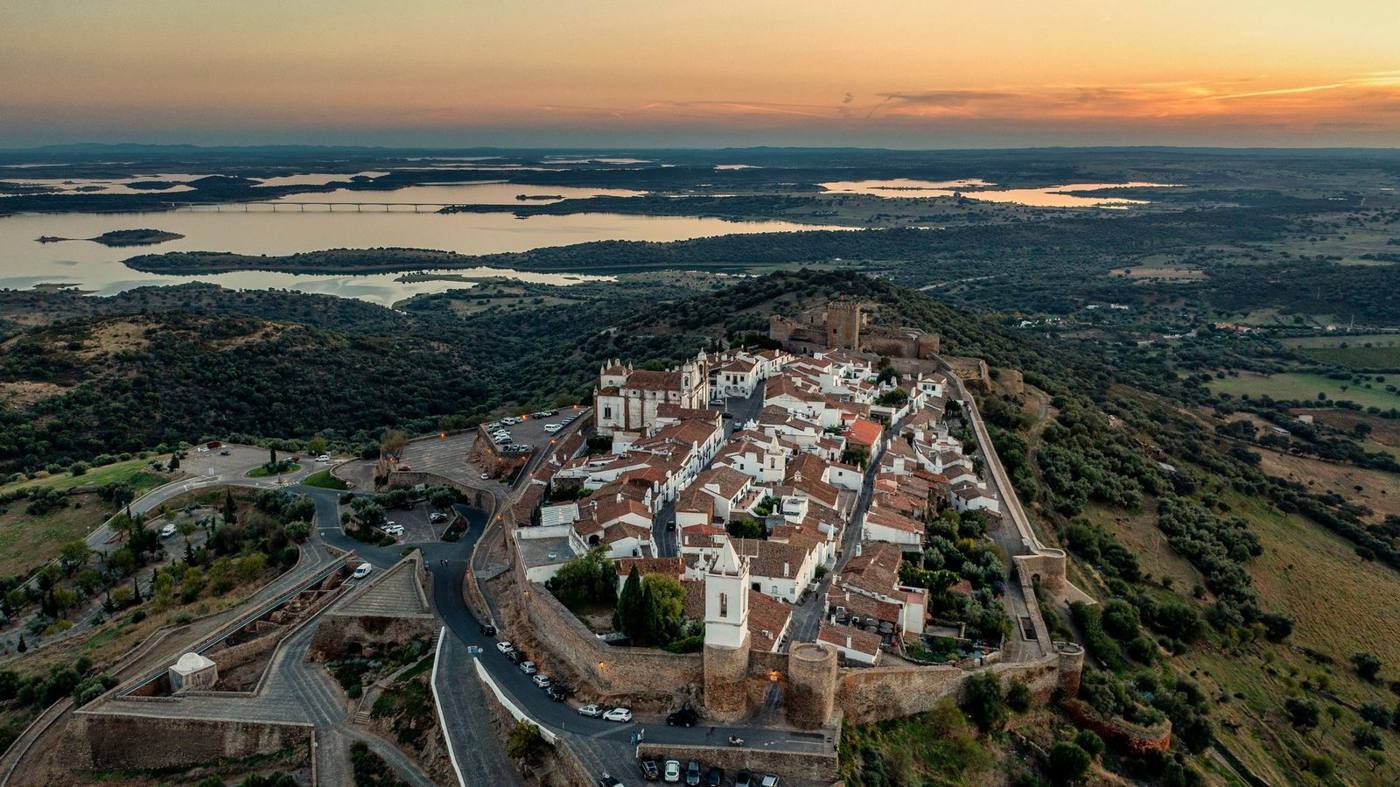
Alentejo: Évora, Monsaraz and Mértola
A slow week in Portugal's plains, among white towns, Neolithic stone circles, wineries and a reservoir under one of Europe's darkest night skies.
 9 daysEasy
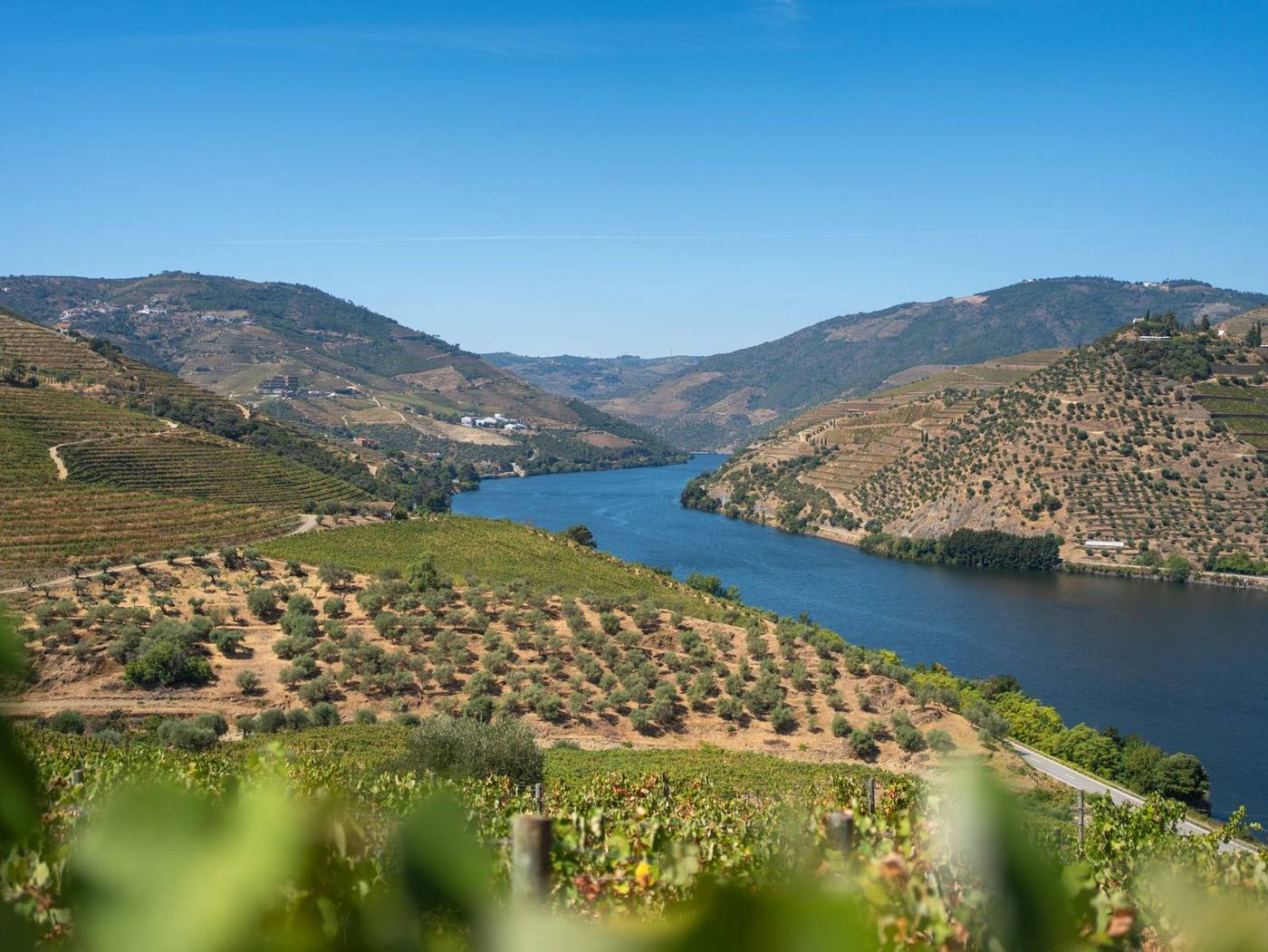
The Douro Valley and the Historic Villages of the Beiras
From Porto up the river past the wine quintas, on to the rock engravings of the Côa, and back along the Spanish border from one fortress to the next.
 4 daysEasy
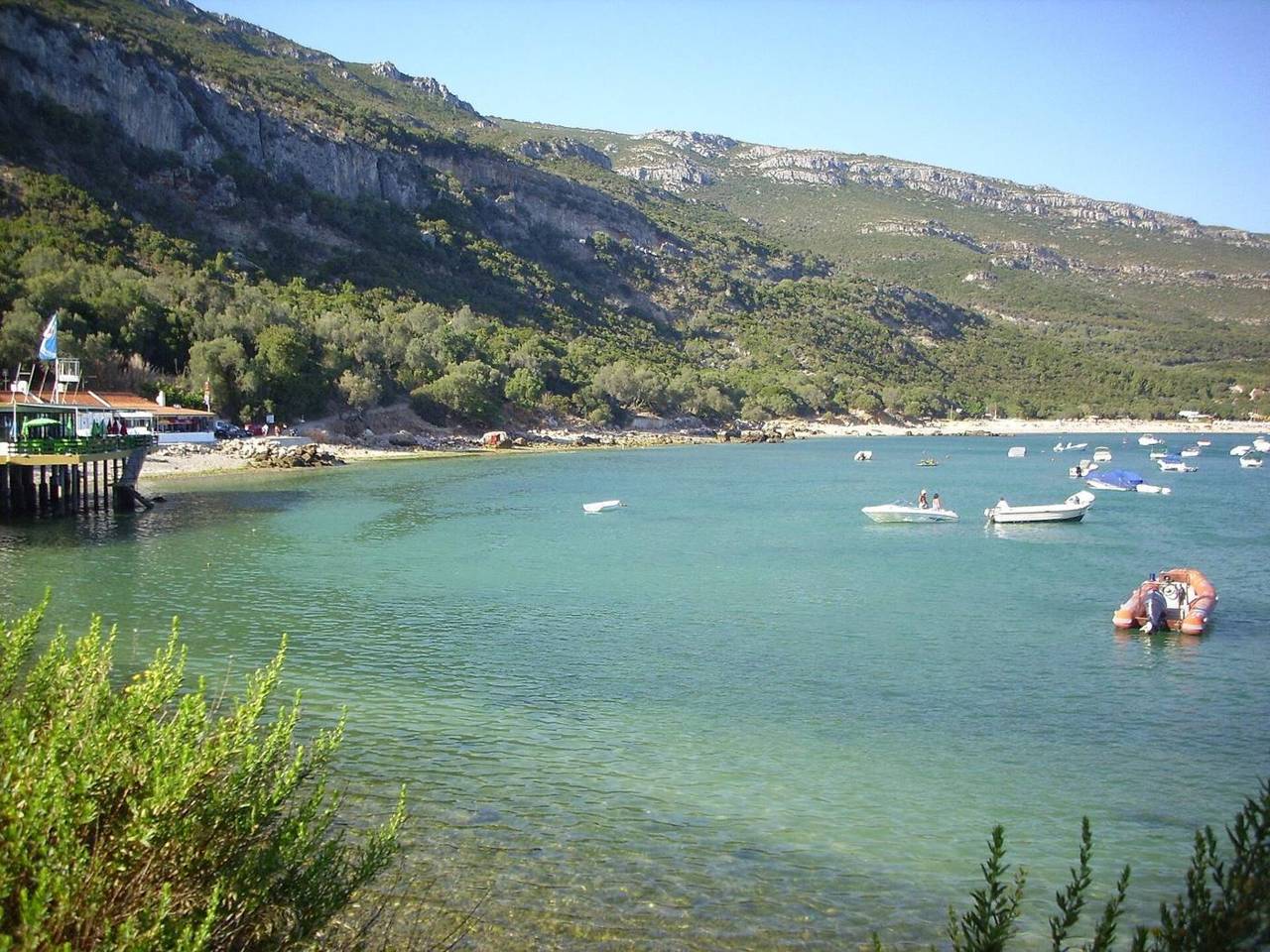
Arrábida, Setúbal and the Sado dolphins
South of Lisbon, across the bridge: the Arrábida hills with the turquoise beaches of Portinho and Galapinhos, the fishing village of Sesimbra, Setúbal and its market, the resident dolphins of the Sado estuary by boat and the dunes of the Tróia peninsula.