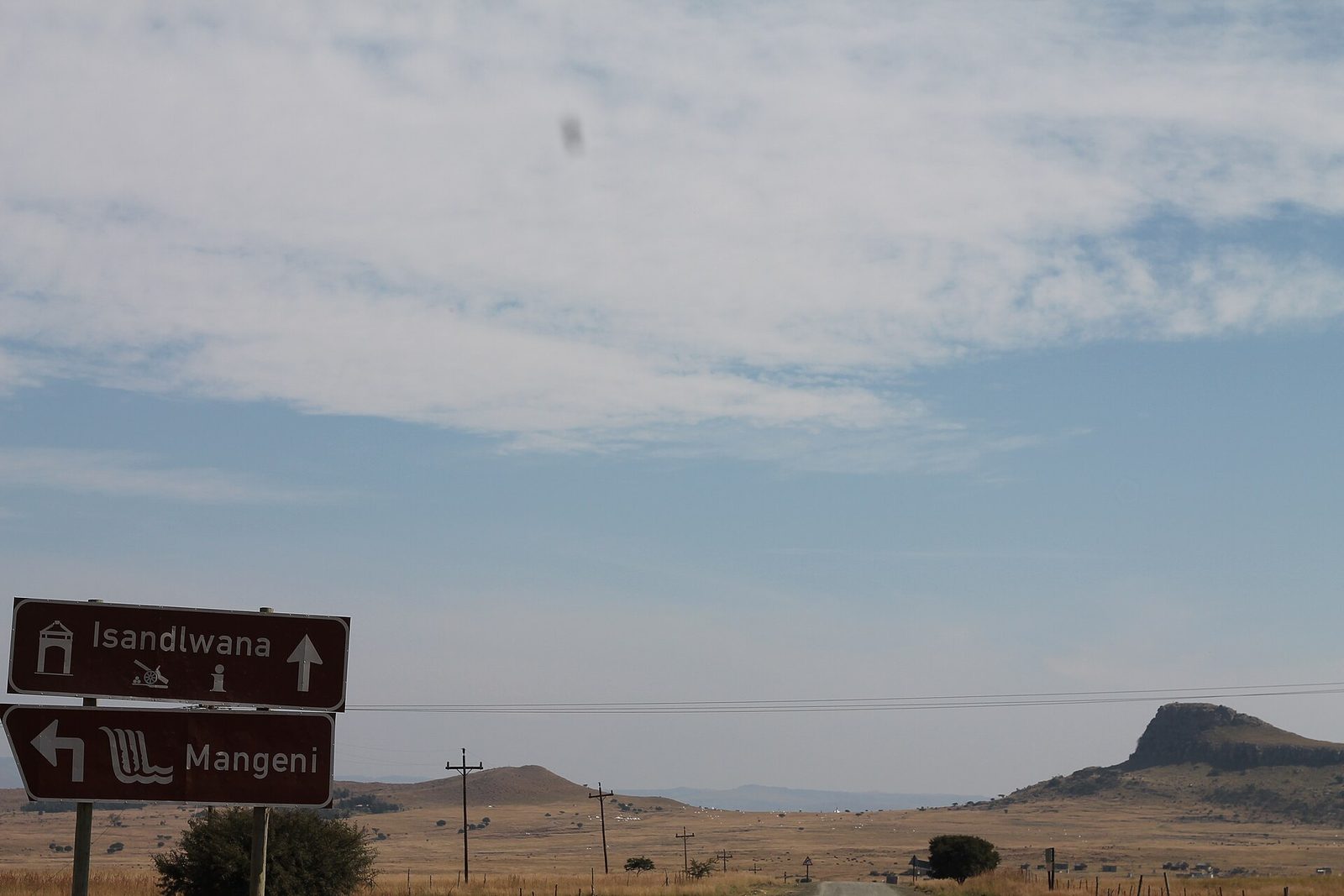
The KwaZulu-Natal battlefields
The hills where Zulus, British and Boers clashed: Isandlwana, where in 1879 the Zulu army defeated the British, Rorke's Drift, the Blood River and Spioenkop, told on site by local historian guides who bring events to life.
- Durban
- Dundee
- Isandlwana
- Rorke's Drift
- Blood River
- Spioenkop
Day by day
- Day 1
From Durban to Dundee and the Talana Museum
Northern KwaZulu-Natal is a region of rolling grassy hills, farms, Zulu villages with round houses and flat-topped mountains, where in the nineteenth century the wars that shaped South Africa's history were fought: between the Boer Voortrekkers and the Zulu kingdom in 1838, between the British Empire and the Zulu in 1879, and between the British and the Boers from 1899 to 1902. Visiting the battlefields with a good guide, who tells the story on the spot, is a unique experience. Italian citizens can enter South Africa without a visa for tourism for up to 90 days; the passport must be valid for at least thirty days after departure and have at least two blank pages.
In the morning drive north-west from Durban, about four hours, on the road climbing from the warm, green coast inland, past sugar cane plantations and then hills and pastures. Drive only in daylight.
In the afternoon you reach Dundee, a small mining town, and visit the Talana Museum, on the site of the Battle of Talana Hill, fought on 20 October 1899: the first battle of the Anglo-Boer War. The museum occupies a historic farm and several buildings, with rooms on the wars, Zulu history, the area's coal mines and glassmaking. From the windows you see the hill where the Boers placed their guns.
In the evening stay in Dundee or on a farm in the area, a base for the following days.
Practical tip: book a specialist battlefield guide in advance; much of the story can only be told on site and the sites have little signage.
- Day 2
Isandlwana and Rorke's Drift with a guide
In the morning, with your guide, go to Isandlwana, about an hour and a half from Dundee, an isolated, oddly shaped mountain, rather like a sphinx, rising from a great grassy plain. Here on 22 January 1879, at the start of the Anglo-Zulu War, a Zulu army of about twenty thousand warriors attacked the camp of a British column and almost wiped it out: about 1,300 British soldiers and African allies died. It was one of the British army's worst defeats against an army without modern firearms.
The battlefield is dotted with cairns of white stones marking where the dead were buried, and with memorials, including one to the Zulu warriors in the shape of a necklace of honour. Listening to the guide while standing where the battle took place helps you understand the tactics, such as the Zulu army's buffalo-horn formation.
In the afternoon continue to Rorke's Drift, about twenty minutes away, a small mission station where, on the evening and night of the same day, about 150 British soldiers held out against an assault by three or four thousand Zulu warriors, behind barricades of mealie bags and biscuit boxes. Eleven defenders received the Victoria Cross, Britain's highest military decoration. A small museum reconstructs the defence. At Rorke's Drift there is also a Zulu craft centre, with textiles and ceramics.
In the evening return to your base.
Practical tip: secondary roads in the area are gravel; drive in daylight and carefully.
- Day 3
Blood River, the Ncome monument and the story of the Voortrekkers
In the morning go to Blood River, about an hour from Dundee, the site of the battle of 16 December 1838 between a group of about 470 Voortrekkers, Boer settlers leaving the Cape Colony to move inland, and a large Zulu army of King Dingane. The Voortrekkers defended themselves in a circle of wagons, called a laager, and won; the river ran red with the blood of the fallen warriors, hence its name.
On the riverbank stands an impressive monument: a reconstruction of the wagon circle with 64 life-size bronze wagons, arranged exactly as on that day. Next to it a small museum tells the story from the Voortrekkers' point of view; 16 December was an important holiday for Afrikaners, now turned into the Day of Reconciliation.
Across the river, reached by a bridge, is the Ncome Museum, built in 1998 to tell the same battle from the Zulu point of view, in a building shaped like buffalo horns, with an exhibition on the culture and history of the Zulu kingdom. Visiting the two museums one after the other shows clearly how the same story can be told differently and how South Africa is trying to make them coexist.
In the afternoon, if you have time, visit Ladysmith, the town besieged by the Boers for four months in 1899 and 1900, with a siege museum.
In the evening stay in the Ladysmith area.
Practical tip: the museums have reduced hours at weekends; check beforehand.
- Day 4
Spioenkop and on towards Durban or the Drakensberg
In the morning climb Spioenkop hill, about half an hour from Ladysmith, within a small nature reserve above a reservoir. Here in January 1900, during the Anglo-Boer War, British troops trying to relieve the siege of Ladysmith took the hilltop at night, but in the morning, in the mist, they found themselves under Boer fire from the surrounding hills: one of the bloodiest battles of the war.
At the top you see the trenches where hundreds of soldiers died, now mass graves marked with white stones, and the memorials of both armies. From the summit, on clear days, you see the Drakensberg range on the horizon. A curious fact: that day three men who would change history were on the same battlefield, Winston Churchill, a young war correspondent, Mahatma Gandhi, a stretcher-bearer with the Indian ambulance corps, and Louis Botha, a Boer commander and future prime minister of South Africa.
In the Spioenkop reserve you also see zebras, giraffes, antelopes and kudu, and you can take a walk by the lake.
In the afternoon head back to Durban, about three hours, or on to the Drakensberg, about an hour away, to continue your trip in the mountains.
Things to take home: Zulu baskets and beadwork, ceramics and books on the history of the Natal wars.
Practical tip: South Africa is at level 2 in US travel advisories because of crime; do not leave items visible in the car and do not drive at night.
For history lovers: without a good guide the places say little, with one they become moving. It combines well with the Drakensberg. Rural roads have potholes and animals: drive only by day. The United States advises increased caution (level 2) because of crime: no driving at night, windows closed in cities, no valuables on show. Italians need no visa for up to 90 days.
Before you go
- Documents and visa
- Passport valid for at least 30 days beyond departure, with at least two completely blank pages; no visa for tourism up to 90 days. A return ticket is required.
- Health and vaccines
- No compulsory vaccines arriving from Europe; a yellow fever certificate is needed only if arriving from a risk country. Kruger and the north-east have seasonal malaria risk: ask your doctor before travelling. Emergencies: 10111 police, 10177 ambulance, 112 from mobiles.
- Money and payments
- South African rand. Cards work almost everywhere; keep some cash for tips and car guards.
- Power sockets
- Type M, plus C and N, 230 volts: you need an adapter for the large three round-pin plugs.
- Time zone
- UTC+2 all year: South Africa does not use daylight saving time.
- Safety
- The United States rates South Africa level 2 for crime. In cities avoid walking alone at night, leave nothing visible in the car and use ride-hailing apps after dark. Official advice: GOV.UK.
Information checked in November 2026 for Italian and EU citizens. Rules change: always check before you travel.
Variations
In 2 days: Isandlwana and Rorke's Drift with a guide on day one, Blood River and Ncome on day two.
In 7 days: add the Drakensberg, with hikes to the Amphitheatre and San rock paintings, or the Hluhluwe-iMfolozi reserve.
Frequently asked questions
Do I need a guide?
It is strongly recommended: the sites have little explanation and a specialist guide tells the battle on the spot, making the visit far richer.
What documents do I need?
A passport valid for at least thirty days after departure, with at least two blank pages; no visa is needed for tourism up to 90 days.
When is the best time to go?
All year; from May to September the weather is dry and cool, while summer brings afternoon thunderstorms.
Indicative itinerary written by World Atlas. Before booking, check timetables, seasonal openings, documents and safety.
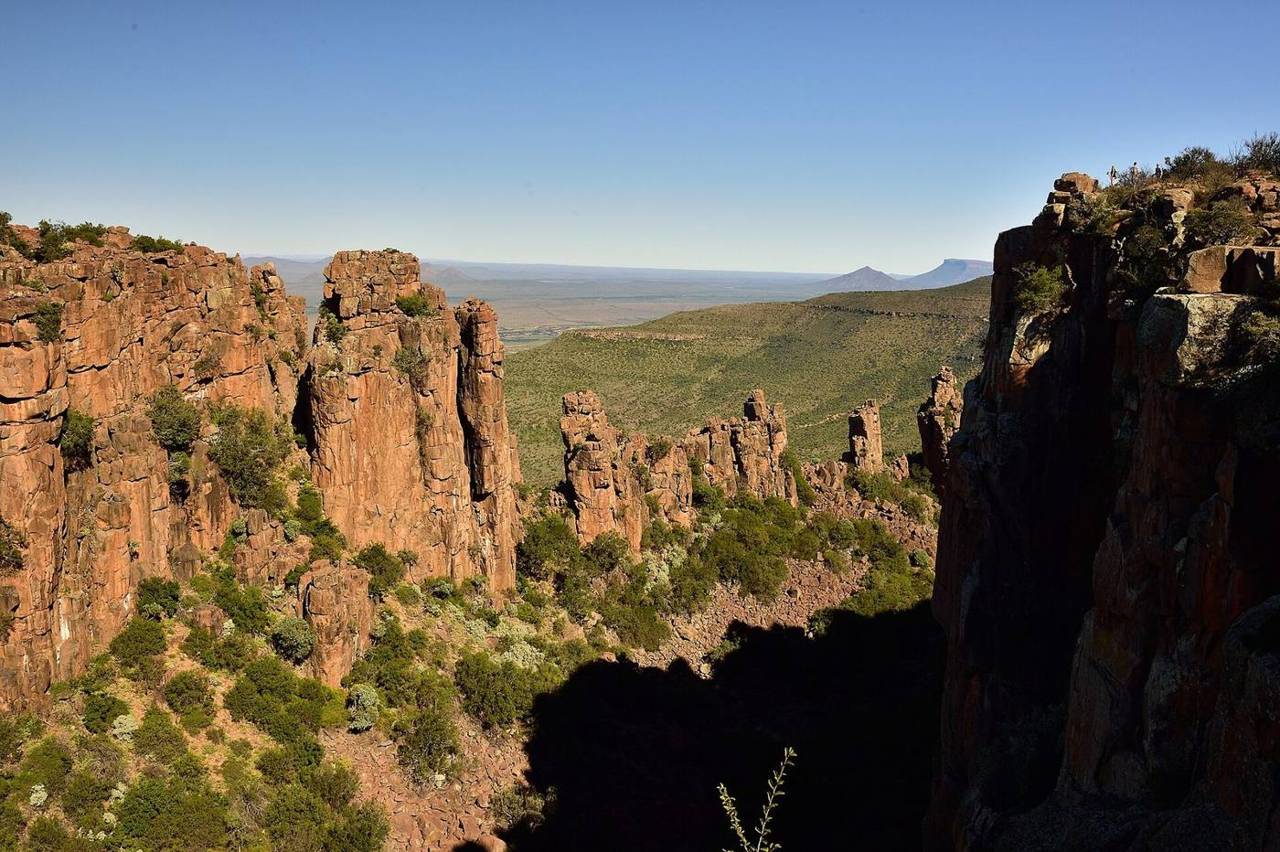 6 daysEasy
Addo and the eastern Karoo
A clear of malaria safari in the Eastern Cape: Addo Elephant Park, the nearby private reserves with the Big Five, then inland to Graaff-Reinet, one of the country's oldest towns, and the Valley of Desolation with its rock columns above the Karoo.
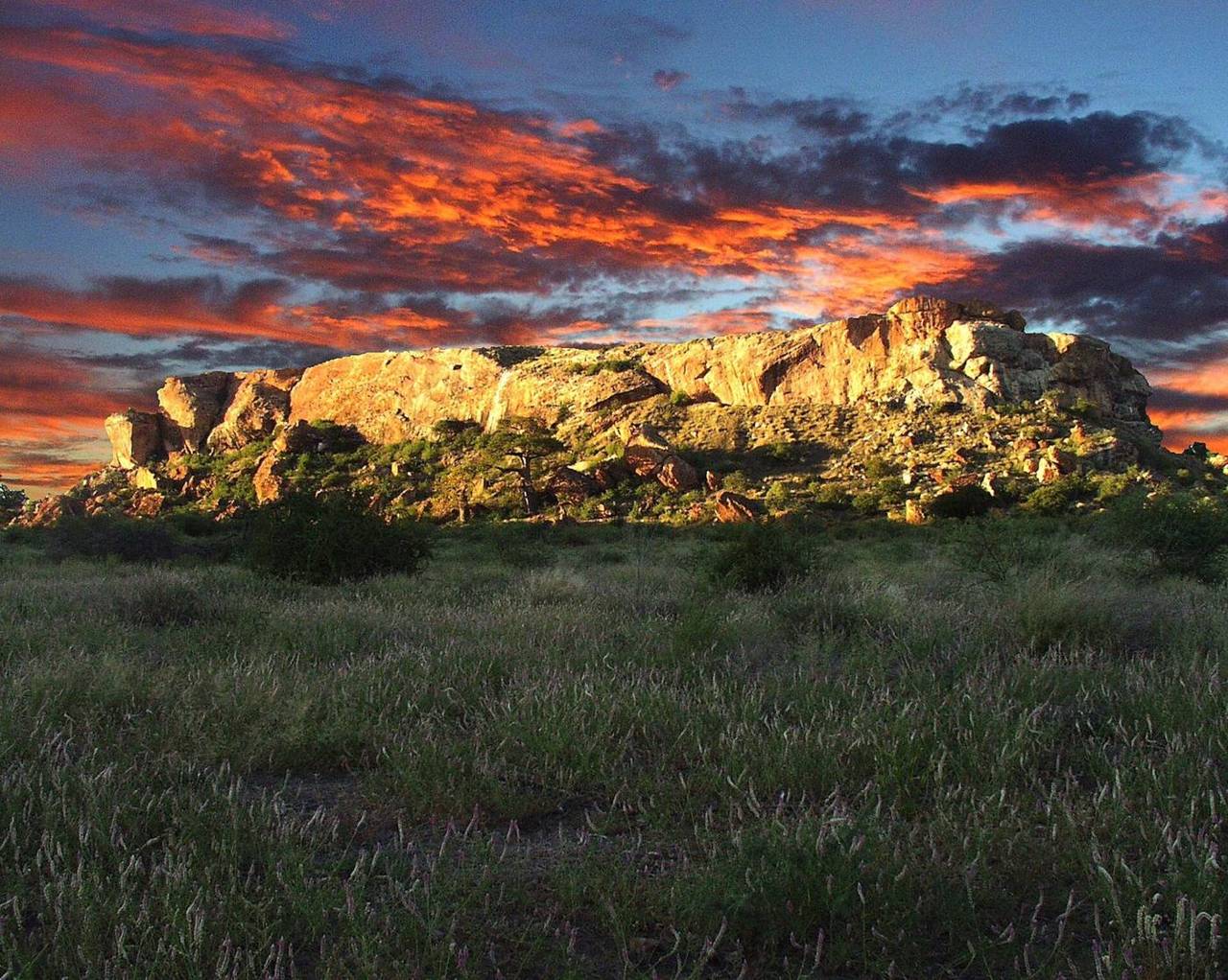 7 daysModerate
Limpopo: Mapungubwe and northern Kruger
The South Africa of baobabs: Mapungubwe, an Iron Age African kingdom and UNESCO World Heritage site at the confluence of the Limpopo and Shashe rivers, then northern Kruger, wilder and less visited than the south, with Punda Maria, the Luvuvhu river and Lanner Gorge.
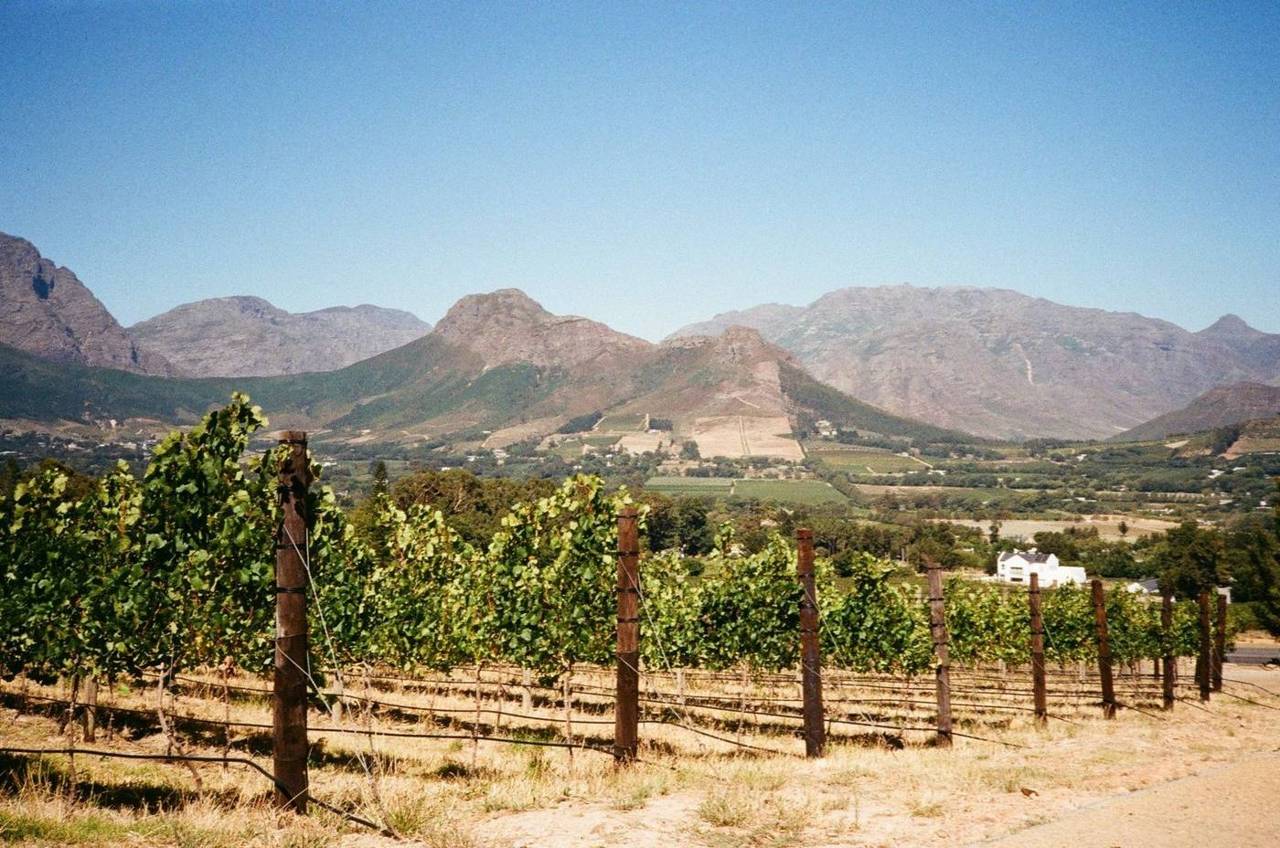 5 daysEasy
The Winelands in depth
The Cape wine valleys among granite mountains: Stellenbosch with its Cape Dutch houses, Franschhoek and its wine tram, Paarl and the Tulbagh valley, with historic estates, some of the country's best cooking and trails through the vineyards.