Sri Lanka and the Maldives by boat
Ten days on the island of temples and tea, then five days on a boat in the Maldives among atolls, snorkelling and fishing islands.
- Negombo
- Sigiriya
- Kandy
- Ella
- Galle
- Malé
- Maldives atolls
Day by day
- Day 1
Arrival in Negombo
This fifteen-day trip combines ten days in Sri Lanka, the island of temples, tea and leopards, with five days on a boat in the Maldives, among atolls, snorkelling with manta rays and nurse sharks and fishing islands. It is the simplest way to see the Maldives without staying in a resort.
Before you go: Italian citizens enter Sri Lanka with a passport valid for at least six months and with the ETA, the electronic travel authorisation to apply for before leaving only on the official website eta.gov.lk. For the Maldives they receive a 30 day tourist visa on arrival: you need a confirmed booking for the boat, and within the 96 hours before arrival you must fill in the IMUGA declaration online. Other nationalities should check their own rules. In Sri Lanka heavy rain can cause landslides and cut roads and railways, above all in the centre of the island: check conditions before every journey, use a local driver and do not travel at night. Do not show Buddha tattoos: they can lead to deportation.
You land at Colombo airport and in half an hour you are in Negombo, a fishing town on the west coast, with a large lagoon and many Catholic churches, a legacy of the Portuguese.
In the afternoon rest after the flight, then walk along the beach and to the Dutch canal, dug in colonial times. At sunset watch the fishing boats come in.
In the evening have dinner with fish and prawn curry, with rice and sambols, spicy coconut relishes.
Sleep in Negombo.
Practical tip: buy a local SIM card at the airport: it is cheap and you need it for maps and to call your driver.
- Day 2
The Dambulla cave temple and Sigiriya
Today you enter the Cultural Triangle, the ancient heart of Sri Lanka.
Early in the morning, if it is the right day, visit the Negombo fish market, with fish laid out to dry in the sun on the beach. Then set off with your driver heading north-east, among rice paddies, coconut palms and villages.
At midday you reach Dambulla and visit the cave temple, a UNESCO World Heritage Site. Beneath a great rock face there are five caves full of Buddha statues, some huge and reclining, and the ceilings are covered with colourful paintings. Go in barefoot, with shoulders and knees covered. Check prices and times.
In the afternoon you reach the Sigiriya area. If you feel strong, climb Pidurangala hill today, near the rock, to watch the sunset over Sigiriya and the jungle: the path is steep in the last stretch, among the rocks.
In the evening have rice and curry, the everyday dish of Sri Lanka: rice with many small bowls of vegetable, lentil and fish curries.
Sleep in the Sigiriya area, for two nights.
Practical tip: always keep a pair of socks in your bag: you enter temples barefoot and at midday the stone floor is scorching.
- Day 3
Sigiriya rock and Polonnaruwa
Today you see two of the island's most famous sites.
At opening time climb Sigiriya rock, a UNESCO World Heritage Site, a red rock about two hundred metres high above the jungle. In the fifth century King Kasyapa built a fortress and palace on it. You cross the water gardens, then climb stairs and walkways to the paintings of the maidens, frescoes of celestial women, and the mirror wall, with ancient inscriptions left by visitors. Higher up you pass between the great paws of the stone lion that gives the rock its name, and reach the top, with the palace ruins and views over the forest. Check prices and times.
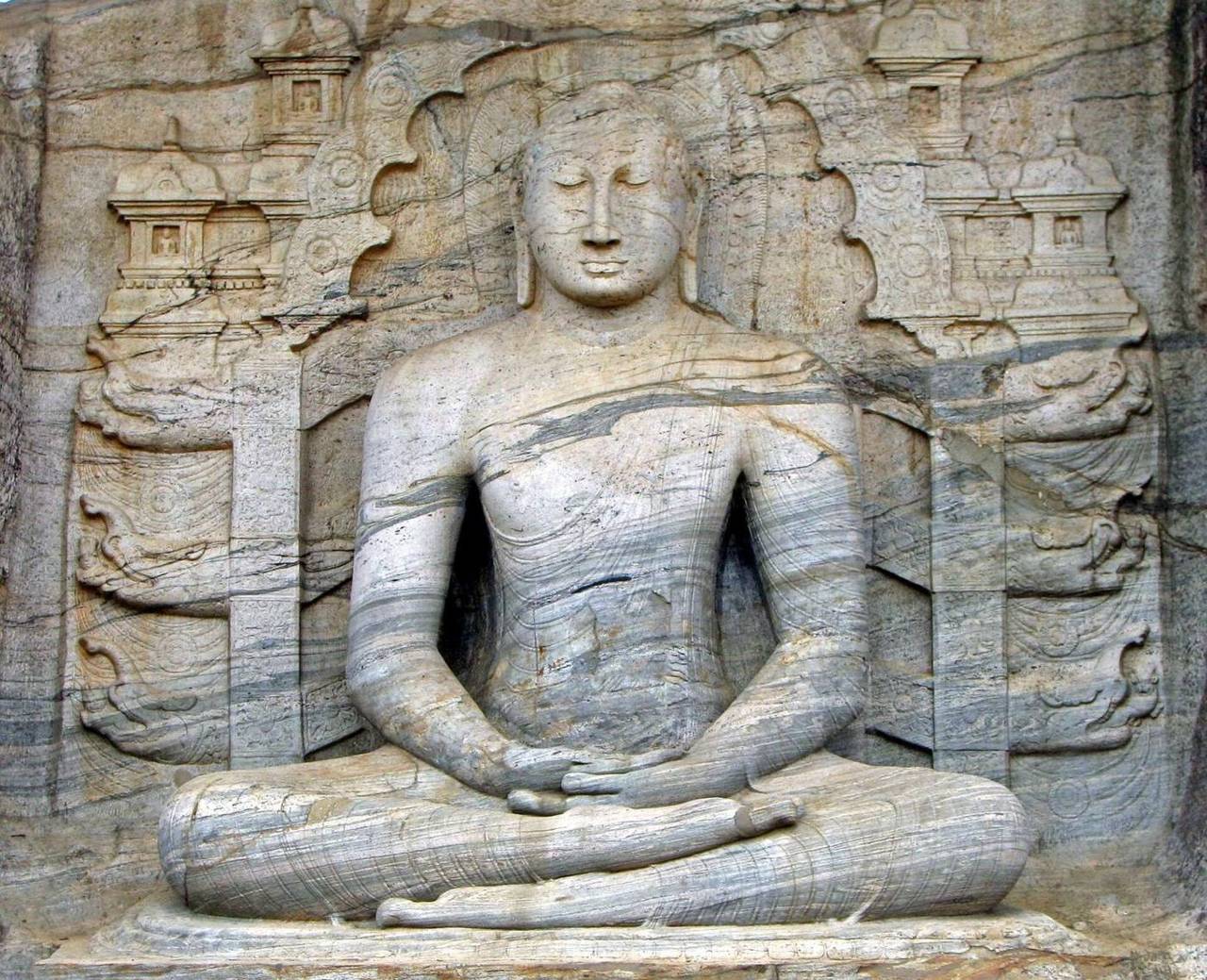
In the afternoon go to Polonnaruwa, the island's medieval capital, also a UNESCO World Heritage Site. Cycle around the royal palace, the audience hall, the brick dagobas and the Gal Vihara, with four great Buddha statues carved from the same rock, including a reclining Buddha more than ten metres long. Check prices and times.
Towards evening head back towards Sigiriya. Along the road wild elephants are sometimes seen: do not get out of the car.
Sleep in the Sigiriya area.
Practical tip: climb Sigiriya at opening time: after nine the heat and the queue on the stairs grow a lot.
- Day 4
Kandy and the Temple of the Tooth
Today you go down towards the hills of the centre, to Kandy.
In the morning you leave Sigiriya and take the road south. If you are interested, stop at Matale at a spice garden to see cinnamon, pepper, cardamom and nutmeg, and taste the herbal teas.
At midday you reach Kandy, the last capital of the Sinhalese kings, a UNESCO World Heritage Site, around a lake among the hills.
In the afternoon visit the Temple of the Tooth, the most sacred place in Sri Lanka, where a relic of the Buddha's tooth is kept. Go at the time of the puja, the evening ceremony, with drums, offerings of lotus flowers and worshippers dressed in white. Go in barefoot and modestly dressed. Check prices and times.
Then walk around Kandy lake, with its white wall and the monitor lizards on the banks, and climb to a viewpoint above the city.
If you have time, watch a show of Kandyan dance, with dancers in costume, drums and, at the end, fire walking.
In the evening have hoppers for dinner, bowl-shaped rice flour pancakes with an egg in the middle.
Sleep in Kandy.
Practical tip: buy tomorrow's train ticket in advance on the official railway website: the scenic seats go quickly.
- Day 5
The train through the tea plantations
Today you take one of the most beautiful train journeys in Asia, through the tea hills.
In the morning, if you have time, visit the Peradeniya botanical garden, just outside Kandy, with its avenue of royal palms, orchids and an enormous fig tree. Check prices and times.
Then take the train that climbs into the mountains. Before leaving check on the railway website whether the line is open all the way: after heavy rain a section is sometimes closed, and in that case do that stretch by car to Nanu Oya and pick up the train there.
The train climbs slowly through bright green tea plantations, waterfalls, tunnels and villages. Tea pickers work on the slopes with baskets on their backs. Stay by the open window and watch the changing landscape.
Get off at Nanu Oya and go to Nuwara Eliya, at almost 1,900 metres, the cool hill town of the British, with colonial-style houses, a park and a lake.
In the afternoon visit a tea factory and see how the leaves are withered, rolled, fermented and dried. Then taste the different mountain teas.
Sleep in Nuwara Eliya.
Practical tip: evenings in Nuwara Eliya are cold: bring a jumper and a jacket.
- Day 6
By train to Ella
Today you continue by train to Ella, the hill village most loved by travellers.
In the morning take the train from Nanu Oya towards Ella and Badulla. It is the most scenic section of the line: you pass Pattipola, the highest station, through cloud forest, then descend among deep valleys, plantations and waterfalls.
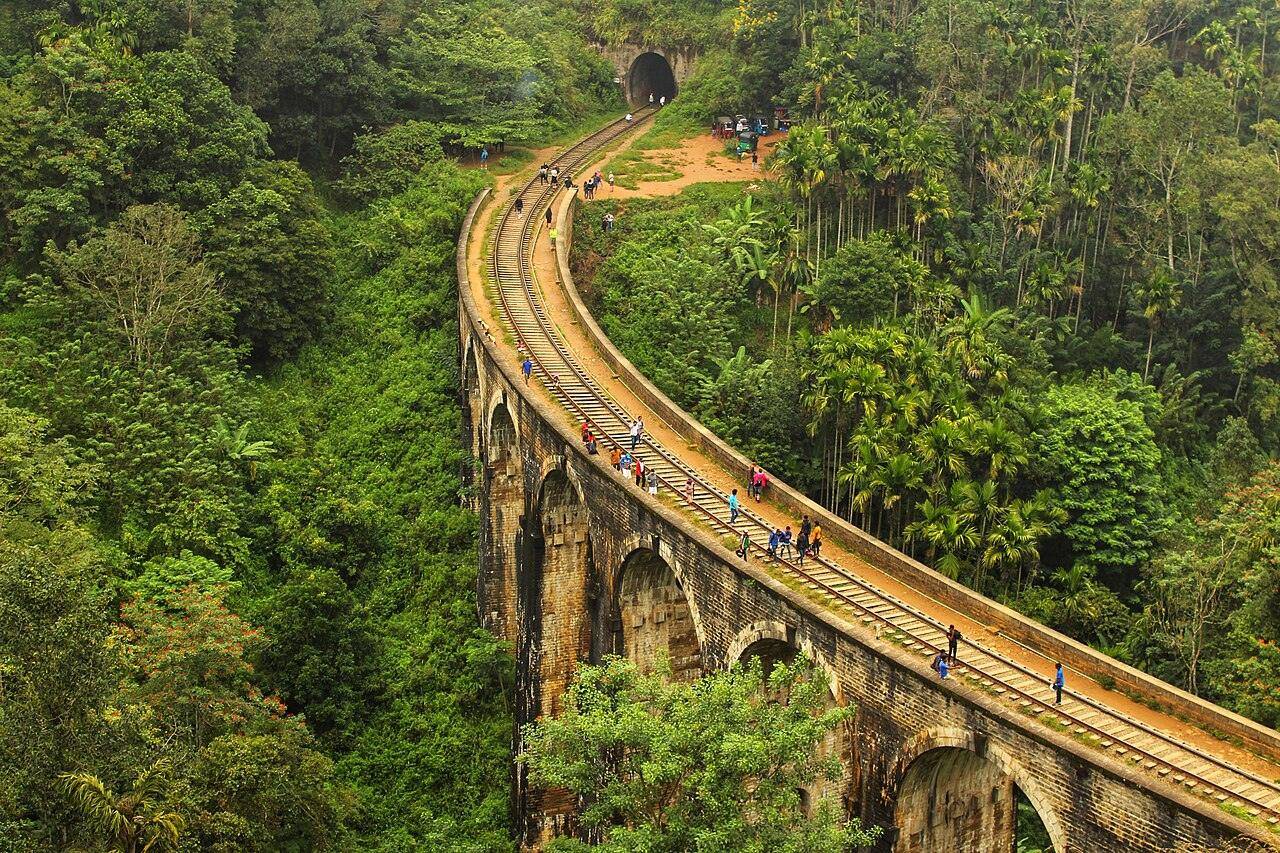
At midday you reach Ella, a village among the mountains, with cafes, guesthouses and paths. Drop your luggage and walk to the Nine Arch Bridge, a colonial-era stone railway viaduct, between the jungle and the plantations. Wait for a train to pass for the most famous photo: ask in the village for the times, because trains are few.
In the late afternoon climb Little Adam's Peak, a hill with an easy path through tea plantations, to a summit overlooking the valley and Ella Rock, the mountain opposite. At sunset the light on the hills is beautiful.
In the evening have kottu for dinner, flatbread chopped and stir-fried on the griddle with vegetables, eggs and spices, the island's best-loved street food.
Sleep in Ella.
Practical tip: on the Nine Arch Bridge keep well away from the tracks when a train comes and do not walk across the viaduct.
- Day 7
To Yala or Udawalawe and the first safari
Today you go down from the hills to the southern plain, to see the animals of Sri Lanka.
In the morning you leave Ella with your driver. The road drops through gorges and past waterfalls, such as Ravana Falls, then the vegetation changes: it becomes drier and hotter.
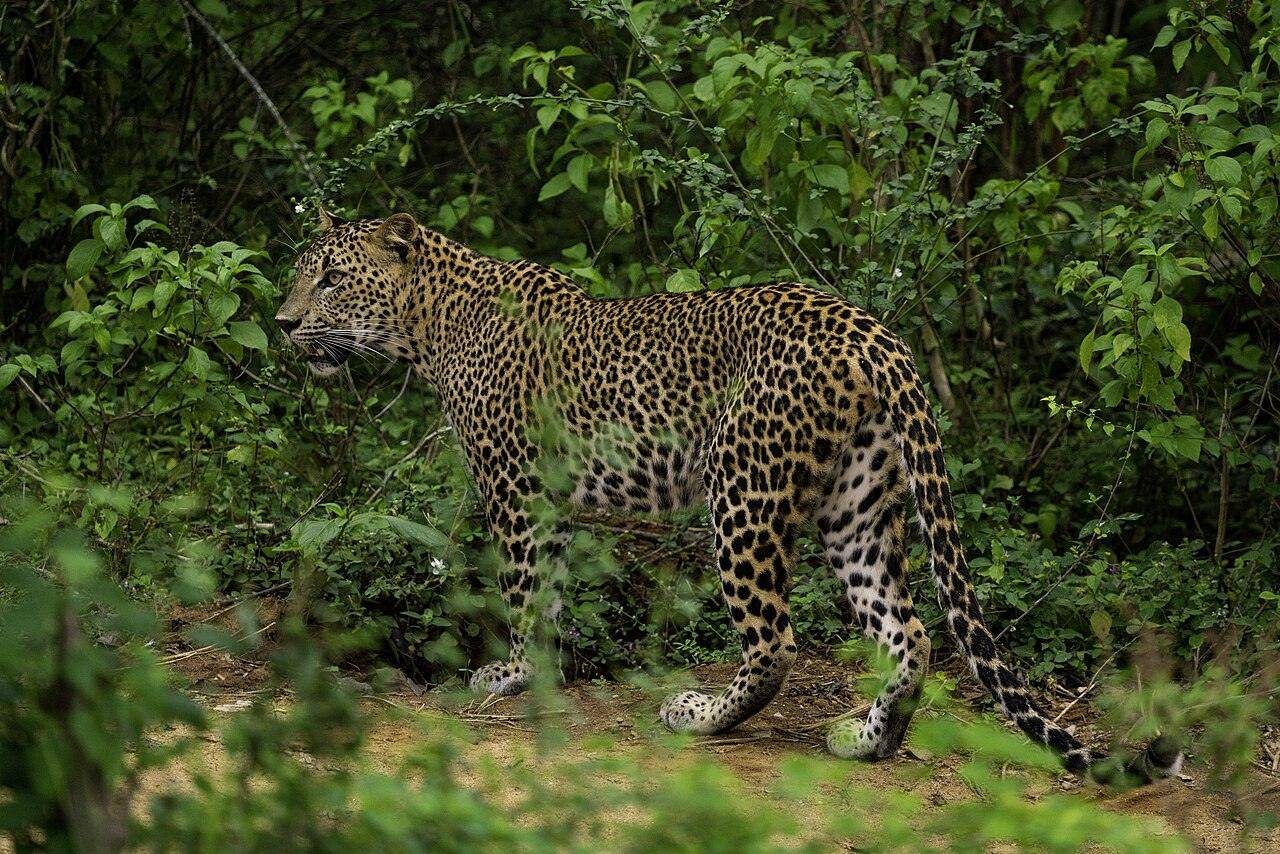
You can choose between two parks. Udawalawe National Park is famous for elephants, which live in large groups around the reservoir and are almost always seen. Yala National Park is famous for leopards, which have one of the highest densities in the world here, but it is busier.
In the afternoon take your first jeep safari with a park guide. You see elephants, water buffalo, spotted deer, crocodiles, peacocks and many birds. In Yala, with luck, a leopard rests on a rock or a branch.
The park has strict rules: always stay in the jeep, do not make noise and do not ask the driver to get too close to the animals. Check prices, times and the park's closure periods.
In the evening have fish curry and rice for dinner.
Sleep near the park, for two nights.
Practical tip: bring binoculars and neutral-coloured clothes: they help you see the animals better without disturbing them.
- Day 8
The dawn safari
Today you go back into the park at the best time of day.
At dawn enter the park by jeep, when the light is soft and the animals are most active. It is the best time for leopards in Yala and to see elephants moving towards the water in Udawalawe. In the wetlands you see herons, storks, kingfishers and, sometimes, the very shy sloth bear.
In mid-morning go back for breakfast and rest during the hottest hours.
If you are at Udawalawe, visit the elephant transit home, where orphaned calves are fed and cared for before returning to the wild: watch feeding time from a platform, without touching the animals. Check prices and times.
If you are at Yala, in the afternoon go to Tissamaharama, the nearby town, with a large white dagoba and a lake full of birds, or visit the shrine of Kataragama, visited by Buddhists, Hindus and Muslims. In the evening, during the puja, worshippers bring fruit and flowers in a very intense atmosphere.
In the evening try buffalo curd with palm treacle, a speciality of the south.
Sleep near the park.
Practical tip: in the park bring sun cream, a hat and water: the jeeps are open and the sun is strong even in the morning.
- Day 9
Galle, the fortified city
Today you reach the south coast and the city of Galle.
In the morning you leave the park and take the coast road west, among beaches, palms and fishing villages. Stop at Mirissa or Weligama to see the stilt fishermen, who fish sitting on poles driven into the sea.
At midday you reach Galle. The fort, a UNESCO World Heritage Site, was built by the Portuguese and then enlarged by the Dutch in the seventeenth century. Inside the stone walls there is a small town with narrow streets, colonial houses with verandas, churches, a mosque, a lighthouse and shops.
In the afternoon walk along the walls, which run around the headland above the sea. Visit the maritime museum, if it is open, and the Dutch church, with its floor covered in colonial-era gravestones. Check prices and times.
At sunset sit on the ramparts near the lighthouse and watch the sun sink into the ocean, while boys play cricket on the grass.
In the evening have dinner in the fort with grilled fish and a tropical fruit salad.
Pack for the Maldives: you need little on the boat.
Sleep in Galle.
Practical tip: bring a soft bag for the boat: hard suitcases are awkward in small cabins.
- Day 10
The flight to Malé and boarding
Today you leave Sri Lanka and fly to the Maldives.
In the morning drive with your driver to Colombo airport, on the motorway up the coast. Take the flight to Malé, about an hour and a half over the ocean.
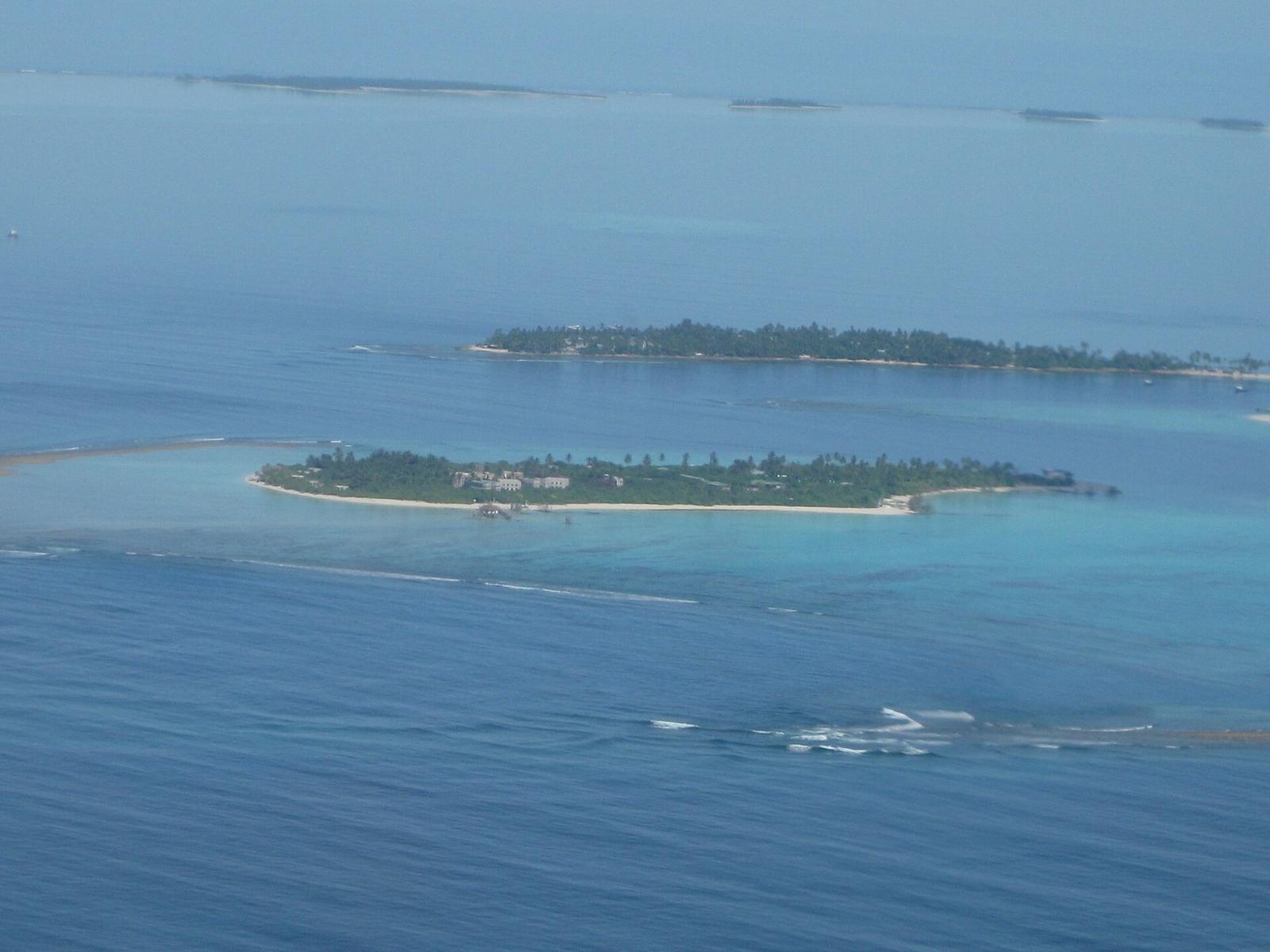
From the window, as you arrive, you see the atolls: rings of low islands and turquoise lagoons in the deep blue. The Maldives are made up of more than twenty atolls and over a thousand islands, almost all just a few metres above sea level.
At the airport, which is on an island, the boat crew meet you and take you aboard by dhoni, the typical Maldivian wooden boat. The boat will be your home for five nights: small cabins, an open deck, shared meals and stops for snorkelling and diving.
In the afternoon, if the programme includes it, visit Malé, the capital, one of the most densely built cities in the world, with the seventeenth-century coral stone Friday Mosque, the fish market and the fruit market. Dress modestly: it is a Muslim country. Check prices and times.
In the evening, on board, first dinner with fish and Maldivian curry, and the guide's briefing.
Sleep on the boat.
Practical tip: alcohol cannot be brought into the Maldives: do not pack it.
- Day 11
First day among the atolls
Today you begin sailing among the atolls.
In the morning the boat leaves the Malé area and sails to the first atoll of the programme. From the deck watch the islands go by: some deserted, with white sand and palms, others with villages, others with resorts.
Go snorkelling for the first time on a shallow reef. Beneath you are corals, parrotfish, surgeonfish, moray eels and, often, sea turtles grazing on the algae. If you dive, do a first check dive with the guide to test your equipment.
At lunch eat on board, with rice, vegetable curry, fish and fruit.
In the afternoon the boat stops near a deserted sandbank rising out of the water. Go ashore and walk on the white sand, look for crabs among the shells, swim in the lagoon and watch the colours of the water change from pale green to blue.
At sunset, on board, watch the sun go down over the ocean and, sometimes, dolphins swimming near the boat.
In the evening, after dinner, some crews switch on lights in the water to see the night fish.
Sleep on the boat.
Practical tip: always wear a swim shirt when snorkelling: the sun on your back burns in minutes.
- Day 12
Manta rays and channels
Today you look for manta rays, one of the finest encounters in the Maldives.
In the morning the boat goes to a cleaning station, a spot on the reef where mantas stop so that small fish can clean their skin. Snorkel or dive and watch them glide above you, with their great black and white wings. Stay still, do not touch them and do not chase them: they come close by themselves.
The best times and places for mantas change with the monsoons: the guide chooses the atoll and site according to the season.
At lunch rest on board in the shade.
In the afternoon, if you dive, do a dive in a channel, the passage between the ocean and the lagoon, where currents bring in big fish: grey reef sharks, jacks, barracuda and shoals of fusiliers. If you snorkel, the guide chooses a calmer reef.
At sunset the boat anchors in the lagoon of an inhabited island.
In the evening have mas huni, tuna with grated coconut, onion and chilli, eaten with roshi, the Maldivian flatbread.
Sleep on the boat.
Practical tip: in the channels always follow the guide's instructions and carry a surface marker buoy: currents can be strong.
- Day 13
Nurse sharks and a fishing island
Today you meet nurse sharks and the life of the local islands.
In the morning visit an inhabited island, home to a fishing community. Walk along the sandy streets, with low houses, mosques, the school and boats being repaired. Cover your shoulders and knees and swim only on beaches set aside for tourists, if there are any. Have tea with Maldivian sweets and buy a few local products.
In the afternoon the boat moves to a spot where nurse sharks gather, large calm sharks that rest on the sandy bottom. In some places, such as Vaavu atoll, they can also be seen in the evening, when dozens arrive under the boats' lights, together with rays. Watch them from above with a mask or while diving, without touching them.
If the programme includes it, in South Ari atoll you can also look for the whale shark, the largest fish in the world, which sometimes swims near the surface. The encounter is not guaranteed.
In the evening, on board, last night party with bodu beru music, the traditional drums.
Sleep on the boat.
Practical tip: keep your distance from sharks and mantas and do not put on sun cream just before getting in the water.
- Day 14
The last day on the boat
Today is your last day at sea.
In the morning do a last snorkel or dive on a reef chosen by the guide, perhaps with turtles or Napoleon wrasse. Then the boat starts heading back towards the Malé area.
During the crossing rest on deck, watch the atolls go by and look out for dolphins, which often swim ahead of the bow.
At midday stop at a sandbank or an island for a last swim in the lagoon, with warm, clear water.
In the afternoon the boat anchors near Malé or the airport island. If you like, spend an hour in Hulhumalé, the new island built on the sea near the airport, with a long beach and a seafront.
Divers must not dive in the last twenty-four hours before flying: the guide plans the dives to respect this rule.
In the evening have a last dinner on board with the crew. Leave a tip for the people who have worked for you: it is a much appreciated custom.
Sleep on the boat or in a guesthouse in Hulhumalé.
Practical tip: dry your wetsuit and gear well and pack them the night before, so you are not in a hurry in the morning.
- Day 15
Departure from Malé
On the last day you leave the Maldives.
In the morning have breakfast and go ashore by dhoni to the airport. If your flight is in the afternoon, walk along the Hulhumalé seafront or have a last swim on the public beach.
Then go to the airport and take your flight home.
In fifteen days you have seen Negombo, the Dambulla cave temple, Sigiriya rock, Polonnaruwa, Kandy with the Temple of the Tooth, the Peradeniya garden, the train through the tea plantations to Nuwara Eliya and Ella, elephants and perhaps leopards in the southern parks, Galle fort and then five days on a boat in the Maldives, with manta rays, nurse sharks, fishing islands and turquoise lagoons.
When to go: from January to April, when both destinations have their best weather. The period that works for both is December to April. From May to October the south and west coasts of Sri Lanka and the Maldives have the monsoon, with more rain and rough seas.
On the boat space is tight: you need to be adaptable, but the sea makes up for it.
Practical tip: check your luggage allowance with the airline in advance, especially if you are bringing diving equipment.
The cheapest way to see the Maldives: by boat, not in a resort. The Colombo-Malé flight takes an hour and a half. The season that works for both is December-April. Space on board is tight: you need to be adaptable.
Before you go
- Documents and visa
- Passport valid for at least six months with two consecutive blank pages, plus the ETA, the electronic travel authorisation to apply for before leaving on the official website eta.gov.lk. Since 25 May 2026 the tourist ETA for Italian passports costs nothing: it is valid for 30 days and allows two entries; to stay longer you need a paid extension.
- Health and vaccines
- No vaccinations are compulsory for travellers from Italy. Malaria has been eliminated, but dengue and chikungunya are rising, especially during the monsoons: use insect repellent and if you have a fever see a doctor at once, without taking aspirin. After a bite from a stray animal you need rabies treatment. Drink bottled water. Outside the big cities hospitals are often basic: you need insurance covering medical costs and repatriation. Emergencies: 119.
- Money and payments
- Sri Lankan rupee (LKR). Cards work in hotels and larger shops; carry cash for tuk tuks, markets, temples and small places. Change money at banks or authorised exchange offices.
- Power sockets
- Types D and G, 230 volts: bring a universal adapter.
- Time zone
- UTC+5:30 all year.
- Safety
- Public order is generally stable. Cyclone Ditwah, in November and December 2025, caused landslides and serious damage to roads and railways: the train line from Colombo returned to Peradeniya, on the edge of Kandy, only in October 2026, and the section to Badulla has not yet been restored. During the monsoons further landslides and closures are possible: check the forecast on meteo.gov.lk; the Disaster Management Centre answers on 177. Driving yourself is not advised: use a local driver, and never travel at night. Buy train tickets only on the official railway website. Wild elephants can attack: in parks always follow authorised guides. Showing Buddha tattoos or disrespecting sacred images can lead to arrest or deportation; drug laws are very strict. In the north, around Jaffna, Kilinochchi and Mullaitivu, mine clearance is still under way. Official advice: GOV.UK.
Information checked in November 2026 for Italian and EU citizens. Rules change: always check before you travel.
Variations
In twelve days you shorten Sri Lanka to seven days, skipping the safari, and stay five days on the boat in the Maldives.
In eighteen days you add Anuradhapura, an extra night in Ella and a beach day in Mirissa before the flight to Malé.
Frequently asked questions
How long is the flight between Colombo and Malé?
About an hour and a half. There are daily flights, but book ahead in the high season months.
Is a Maldives boat trip suitable for non-divers?
Yes, many boats take both divers and snorkellers. Ask for the programme in advance, because some cruises are designed mainly for divers.
Does the train between Kandy and Ella always run?
After heavy rain some sections may be closed. Check on the official railway website before leaving and, if needed, do one stretch by car.
Indicative itinerary written by World Atlas. Before booking, check timetables, seasonal openings, documents and safety.
 7 daysEasy
The Cultural Triangle and the tea country
Sigiriya, the elephants of Minneriya, Kandy and the scenic train to Ella in one full week.
 15 daysModerate
Complete Sri Lanka: temples, leopards, whales and the sea
The ancient cities, the tea train, Yala's leopards, the whales of Mirissa and a few days on the southern beaches.
 12 daysEasy
Sri Lanka in 12 days: sacred cities, mountains and the south coast
The classic loop at the right pace: Polonnaruwa and Sigiriya, the Temple of the Tooth in Kandy, the train through the plantations, the elephants of Udawalawe and Galle fort.