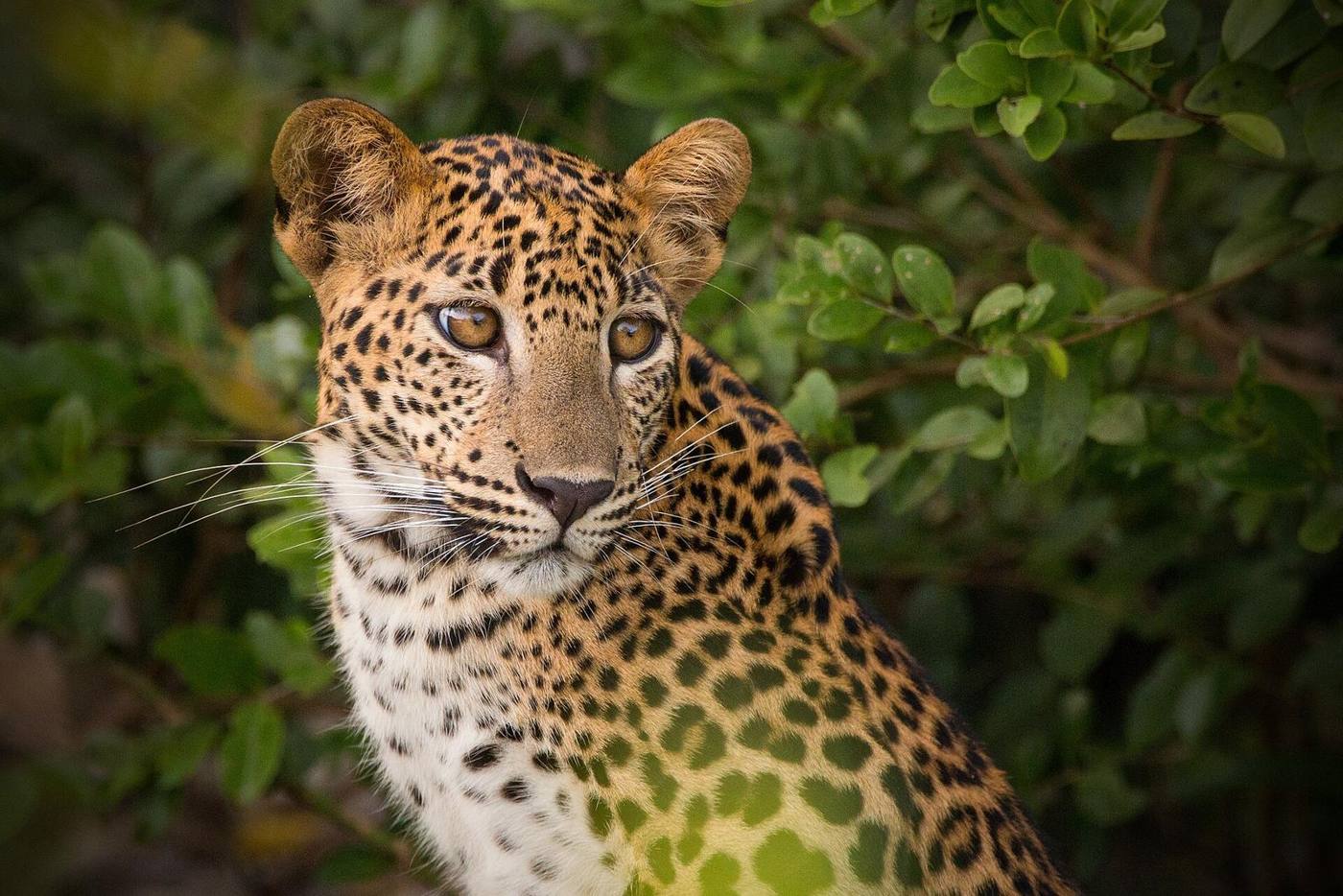
Sri Lanka's wildlife: leopards, blue whales and rainforest
The leopards of Wilpattu, the elephant gathering at Minneriya, Sinharaja rainforest and blue whales off Mirissa.
- Negombo
- Wilpattu
- Minneriya
- Sinharaja
- Mirissa
Day by day
- Day 1
Arrival in Negombo
This trip is devoted to the wildlife of Sri Lanka: the leopards and sloth bears of Wilpattu, the elephants of Minneriya, the rainforest of Sinharaja with birds found only on the island, and the blue whales off Mirissa.
Before you go: Italian citizens enter Sri Lanka with a passport valid for at least six months and with the ETA, the electronic travel authorisation to apply for before leaving on the official website eta.gov.lk. Since 25 May 2026 the tourist ETA for Italian passports costs nothing, is valid for 30 days and allows two entries. Other nationalities should check their own rules. Cyclone Ditwah, in November and December 2025, caused landslides and serious damage to roads and railways: check conditions before every journey. Viaggiare Sicuri advises against driving yourself, recommends a local driver and advises against travelling at night. Do not show Buddha tattoos: they can lead to deportation. Wild elephants can attack: in the parks always follow authorised guides.
You arrive at the international airport, right next to Negombo, a fishing town on a lagoon. Rest after the flight and in the afternoon walk on the beach, where fishermen pull their boats ashore and lay fish to dry in the sun on mats.
At sunset visit St Mary's Church, a large Catholic church painted inside: Negombo is called little Rome for its many churches.
In the evening try fish from the lagoon, prawns and crabs cooked in curry with coconut milk.
Sleep in Negombo, for one night.
Practical tip: withdraw cash in Negombo before leaving, because cash machines are few near the parks, and you need rupees for jeeps, guides and tips.
- Day 2
The road to Wilpattu and a first safari
Today you reach the largest national park in Sri Lanka.
Early in the morning set off with a driver northwards along the coast, past coconut plantations, salt pans and the lagoons of Puttalam. The journey to the Wilpattu entrance takes a few hours.
In the afternoon take your first jeep safari. The name Wilpattu means land of lakes: in the dry forest there are villus, shallow natural lakes ringed by white sand that fill up with the rains. The animals gather around the water, and that is where the tracker, the park guide who rides in the jeep, takes you to look for them. Compared with the southern parks there are far fewer jeeps, and the sightings are calmer.
Use only jeeps registered with the Department of Wildlife Conservation, with an authorised driver. The rules apply to everyone: stay in the vehicle, do not feed the animals, make no noise, keep to the marked tracks, give way to the animals and take your rubbish back with you. Check prices and times.
Leave the park before closing time and return to your lodging on the edge of the forest.
In the evening listen to the sounds of the night: the calls of night birds, the frogs and, sometimes, elephants passing close to the villages.
Sleep near Wilpattu, for two nights.
Practical tip: book tomorrow's full-day safari in advance, because it needs organising, with a packed lunch and entry at dawn.
- Day 3
A full day in Wilpattu
Today you spend the whole day in the park, from dawn to the afternoon.
At opening time enter by jeep, when the animals are most active and the light is soft. Wilpattu is famous for the Sri Lankan leopard, a subspecies found only on the island: here it is often seen by day, walking along the red sand tracks or resting on a branch. The tracker reads the footprints, listens for the alarm calls of deer and monkeys and works out where it is hiding.
The other symbol of the park is the sloth bear, shy and nocturnal, easier to see when the trees are fruiting, usually in the middle of the year. You also see elephants, spotted deer, sambar, buffalo, mugger crocodiles on the banks of the villus, monitor lizards and mongooses.
Bird lovers will find painted storks, fish eagles, hornbills, peacocks and the Sri Lanka junglefowl, the national bird.
At midday have lunch at the authorised rest area, the only place where you may get out of the jeep.
In the afternoon continue the safari towards the more distant villus and return to the exit before closing. Check prices and times.
Sleep near Wilpattu.
Practical tip: wear neutral colours such as beige and green, bring binoculars, a light jacket for the early morning, a scarf against the dust and plenty of water; keeping silent in the jeep raises your chances of seeing a leopard.
- Day 4
Minneriya and the elephants around the lake
Today you cross the island eastwards to the elephant park.
In the morning leave with your driver. The road passes near Anuradhapura, the first ancient capital, then crosses the plains of the Cultural Triangle, with rice fields and the great reservoirs built by the kings to store the rainwater. The journey takes a few hours.
In the afternoon take a safari in Minneriya National Park, around a large ancient reservoir. In the dry season, when the other lakes in the area empty, the water draws back and leaves meadows of fresh grass on the shores: hundreds of elephants come from the surrounding forests to eat, drink and bathe. This is the gathering, one of the largest meetings of Asian elephants in the world, seen above all from July to September. In other months the herds are smaller, and sometimes the drivers choose nearby Kaudulla park, where the animals move.
Watch the mothers with their calves, the young males playing at pushing each other and the herds entering the lake at sunset. You also see fish eagles, pelicans and cormorants.
Use only jeeps registered with the Department of Wildlife Conservation, stay in the vehicle and always leave space for the elephants. Check prices and times.
Sleep near Minneriya, for one night.
Practical tip: if an elephant flaps its ears, raises its trunk or makes a mock charge, ask the driver to stop or to back away calmly, without shouting.
- Day 5
A long transfer south
Today you cross Sri Lanka from north to south, from the dry plains to the wet zone.
Set off early with your driver. The road runs south through rice fields, then skirts the hills and crosses the rubber and tea plantations, as far as the edge of the Sinharaja forest. The journey is long and takes most of the day: stop regularly to rest.
On the way stop at a roadside fruit stall to try king coconut, the orange coconut you drink, mango, papaya and rambutan, or the small sweet local bananas.
For lunch try rice and curry, rice with many small curries of vegetables, lentils and fish, often served on a banana leaf, and coconut sambol, spicy and fragrant.
In the late afternoon you reach a village near one of the forest entrances, surrounded by tree-covered hills and small tea gardens. If there is still light, walk between the rows of tea and look at the forest climbing the hills.
In the evening pack your bag for the next day: leech socks, a poncho and closed shoes.
Sleep near Sinharaja, for two nights.
Practical tip: the mountain road is slower than it looks on the map, and after the cyclone some stretches may have works or landslides: leave at dawn to arrive before dark, when fog makes driving difficult.
- Day 6
Sinharaja, the primary rainforest
Today you enter the Sinharaja forest, a UNESCO site and the last large primary lowland rainforest in Sri Lanka.
Early in the morning go to the entrance and meet your guide, compulsory for all visitors. Buy your ticket at the Forest Department office. Check prices and times.
Walk for a few hours along the trails among very tall trees, lianas, tree ferns and streams. Many of the plants and animals of Sinharaja are endemic, meaning they exist only in Sri Lanka. The guide shows you what you would not see alone: green pit vipers motionless on branches, colourful frogs, horned lizards, giant butterflies and purple-faced langurs, monkeys that live only on the island.
Sinharaja is also famous for its mixed bird flocks, groups of many different species moving together through the trees in search of insects. With some luck you see the Sri Lanka blue magpie, with its red beak, and the red-faced malkoha.
Along the way you reach a waterfall where you can rest.
In the afternoon it often rains: go back under cover and rest.
In the evening, with the guide and a torch, take a short walk around your lodging to see frogs, spiders and night insects.
Sleep near Sinharaja.
Practical tip: never leave the trails and do not collect plants, seeds or insects: in the protected forest it is an offence punished with fines and prison.
- Day 7
Birds at dawn and the road to Mirissa
Today you look for the last forest birds and then head down to the ocean.
At dawn go back into the forest with the guide, when the birds sing most. Look for the endemic species you did not see yesterday: the Sri Lanka junglefowl, the national bird, the Sri Lanka grey hornbill, the Sri Lanka thrush, shy and hard to spot, and several species of bulbul and flycatcher. Listen for the calls: in the dense forest you hear birds long before you see them.
Return to your lodging for breakfast and leave with your driver southwards. The road descends from the hills through tea and cinnamon plantations to the southern coast. The journey takes a few hours.
In the afternoon you arrive in Mirissa, a fishing village with a crescent bay and palms leaning over the sand. Walk on the beach and climb the small hill of coconut palms, one of the most photographed spots on the coast.
At sunset watch the fishing boats going out for the night with their lamps lit.
In the evening try the grilled catch of the day, such as tuna or swordfish, with rice and sambol.
Sleep in Mirissa, for two nights.
Practical tip: in Mirissa the sea can have strong waves and currents: swim only in the sheltered part of the bay, where you are told it is safe, and respect the red flags.
- Day 8
Blue whales off Mirissa
Today you go out to sea to look for the largest animal that has ever lived.
At dawn leave Mirissa harbour by boat. Off the south coast the continental shelf is very narrow and the seabed soon drops to great depths: that is why blue whales pass close to the coast, above all from December to April, when the sea is calm. You often see dolphins too, spinner dolphins leaping out of the water, and sometimes sperm whales. The trip lasts a few hours and sightings are never guaranteed.
In Sri Lanka whale watching is governed by the Sea Mammals Regulations of 2012, amended in 2019, under the law protecting fauna and flora. Boats must stay at least 100 metres from the whales, and you may not swim or dive with whales without a permit from the Department of Wildlife Conservation. Choose an authorised boat and, if you see the captain getting too close or chasing the animals, ask him to move away. Check prices and times.
Return to harbour late in the morning and rest on the beach.
In the afternoon, if you like, walk along the coast to nearby Weligama, with its wide sandy bay, or relax in the shade.
Sleep in Mirissa; if your flight is early in the morning, leave today for Colombo instead and sleep near the airport.
Practical tip: take a seasickness tablet before leaving, bring a jacket for the wind, sun cream and a hat, and eat something light.
- Day 9
Back to Colombo and departure
Today you leave the south coast and return towards the airport.
In the morning enjoy a last breakfast with tropical fruit and set off with a driver. The Southern Expressway takes you from Mirissa towards Colombo, then the airport expressway continues north. The journey takes a few hours: allow a generous margin for traffic around the capital.
If you have time, stop in Galle for a short walk on the walls of the Dutch fort, a UNESCO site, or in Colombo to see the seafront of Galle Face Green.
In nine days you have seen the finest wildlife of Sri Lanka: the leopards, sloth bears and villus of Wilpattu, the elephants around the lake of Minneriya, the rainforest of Sinharaja with its endemic species and the blue whales in the ocean off Mirissa.
When to go: it depends on the animals you most want to see. Blue whales at Mirissa are seen above all from December to April, when the trails of Sinharaja are also drier. The great gathering of Minneriya is instead from July to September, when the sea at Mirissa is rough. Wilpattu is driest from February to October. It is hard to have everything on the same trip: choose according to your priority.
Practical tip: before you leave give a tip to the tracker and the jeep drivers, who do much of the work, and never buy objects made from shells, coral, ivory or turtles: it is forbidden and harms the animals.
Sri Lanka for wildlife lovers. Wilpattu is quieter than Yala for leopards. The Minneriya gathering is in late summer, while blue whales off Mirissa are seen from December to April: hard to get everything in one trip, so choose by priority.
Before you go
- Documents and visa
- Passport valid for at least six months with two consecutive blank pages, plus the ETA, the electronic travel authorisation to apply for before leaving on the official website eta.gov.lk. Since 25 May 2026 the tourist ETA for Italian passports costs nothing: it is valid for 30 days and allows two entries; to stay longer you need a paid extension.
- Health and vaccines
- No vaccinations are compulsory for travellers from Italy. Malaria has been eliminated, but dengue and chikungunya are rising, especially during the monsoons: use insect repellent and if you have a fever see a doctor at once, without taking aspirin. After a bite from a stray animal you need rabies treatment. Drink bottled water. Outside the big cities hospitals are often basic: you need insurance covering medical costs and repatriation. Emergencies: 119.
- Money and payments
- Sri Lankan rupee (LKR). Cards work in hotels and larger shops; carry cash for tuk tuks, markets, temples and small places. Change money at banks or authorised exchange offices.
- Power sockets
- Types D and G, 230 volts: bring a universal adapter.
- Time zone
- UTC+5:30 all year.
- Safety
- Public order is generally stable. Cyclone Ditwah, in November and December 2025, caused landslides and serious damage to roads and railways: the train line from Colombo returned to Peradeniya, on the edge of Kandy, only in October 2026, and the section to Badulla has not yet been restored. During the monsoons further landslides and closures are possible: check the forecast on meteo.gov.lk; the Disaster Management Centre answers on 177. Driving yourself is not advised: use a local driver, and never travel at night. Buy train tickets only on the official railway website. Wild elephants can attack: in parks always follow authorised guides. Showing Buddha tattoos or disrespecting sacred images can lead to arrest or deportation; drug laws are very strict. In the north, around Jaffna, Kilinochchi and Mullaitivu, mine clearance is still under way. Official advice: GOV.UK.
Information checked in November 2026 for Italian and EU citizens. Rules change: always check before you travel.
Variations
In six days: Wilpattu with a full-day safari, then the road to Mirissa and the whales, without Minneriya and Sinharaja.
In twelve days: add Udawalawe park with its elephants and the Elephant Transit Home between Sinharaja and Mirissa, and one more night in Wilpattu.
Frequently asked questions
Can you see the blue whales and the Minneriya gathering on the same trip?
Hardly: whales at Mirissa are seen above all from December to April, while the elephant gathering is from July to September. Choose according to your priority.
What are the rules for watching whales?
The Sea Mammals Regulations require boats to keep at least 100 metres from whales and forbid swimming or diving with them without a permit from the Department of Wildlife Conservation. Choose an authorised boat.
How are safaris in the parks organised?
Only with jeeps registered with the Department of Wildlife Conservation and authorised drivers; in the parks always stay in the vehicle. Check prices and times.
Indicative itinerary written by World Atlas. Before booking, check timetables, seasonal openings, documents and safety.
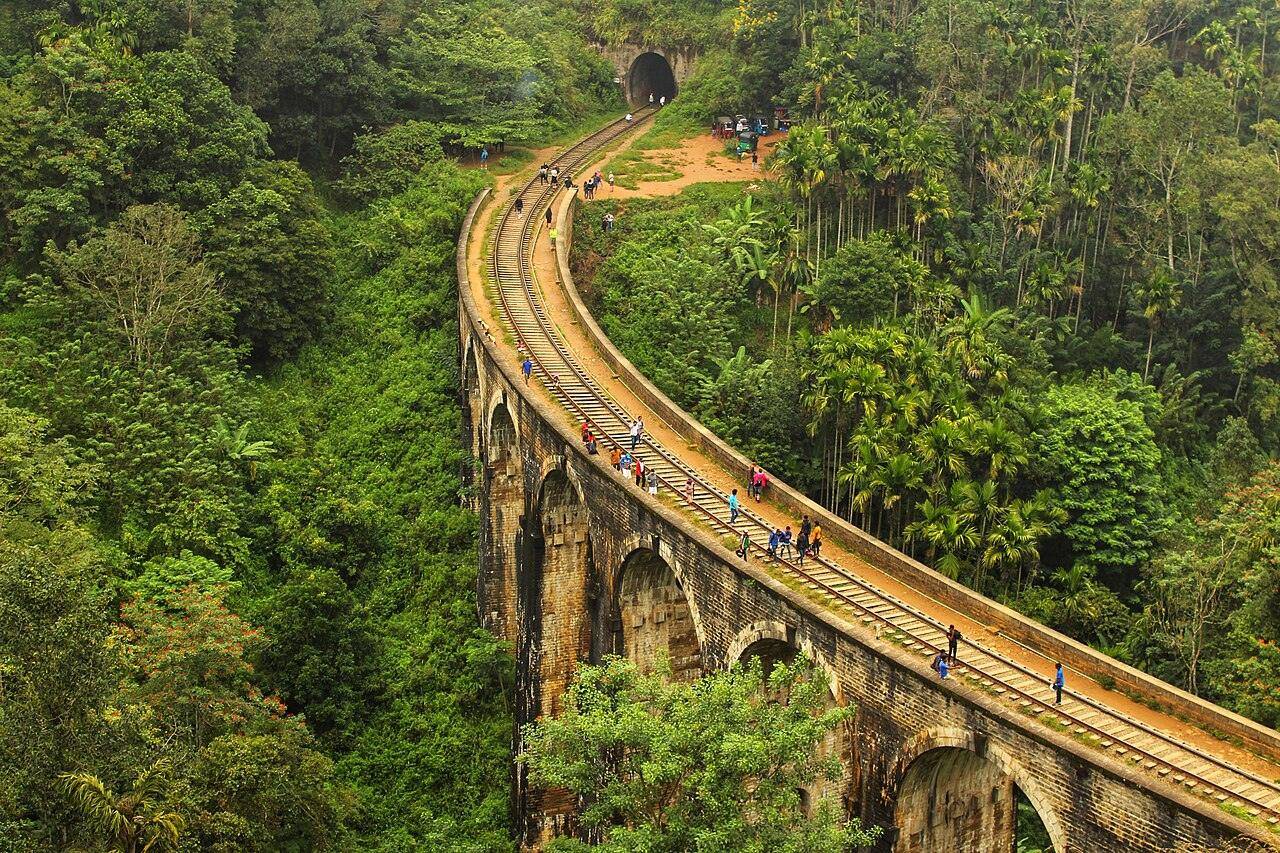 7 daysEasy
The Cultural Triangle and the tea country
Sigiriya, the elephants of Minneriya, Kandy and the scenic train to Ella in one full week.
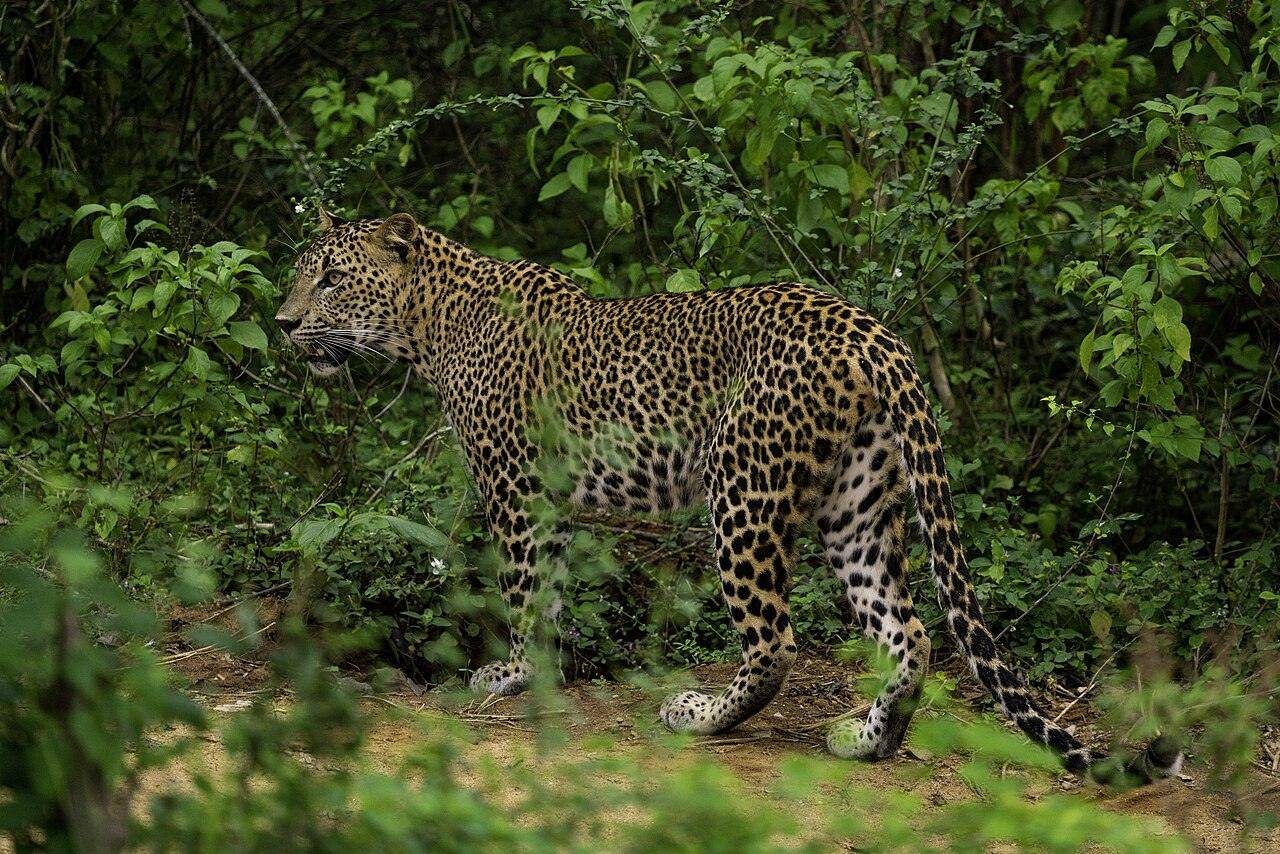 15 daysModerate
Complete Sri Lanka: temples, leopards, whales and the sea
The ancient cities, the tea train, Yala's leopards, the whales of Mirissa and a few days on the southern beaches.
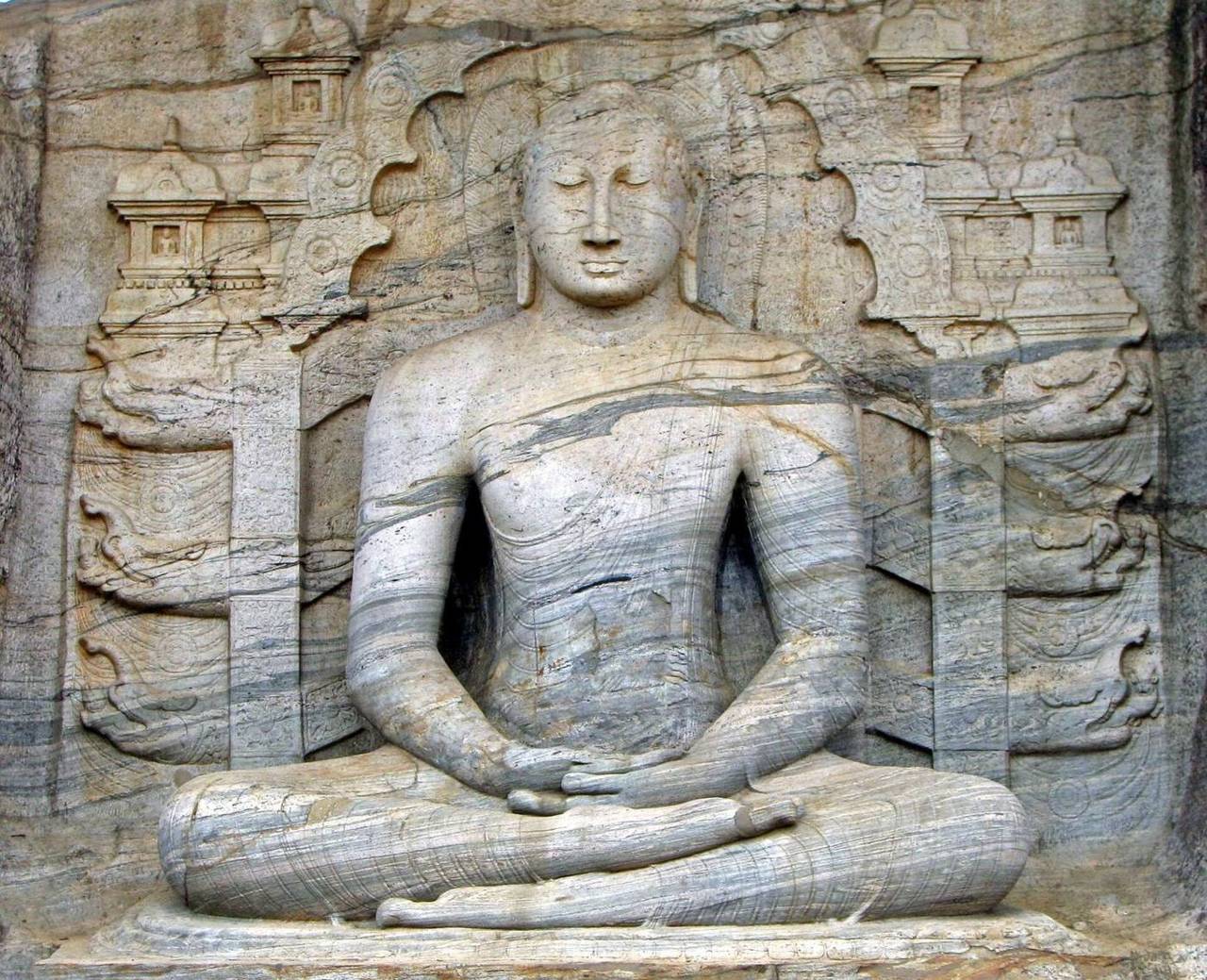 12 daysEasy
Sri Lanka in 12 days: sacred cities, mountains and the south coast
The classic loop at the right pace: Polonnaruwa and Sigiriya, the Temple of the Tooth in Kandy, the train through the plantations, the elephants of Udawalawe and Galle fort.