Unknown Tanzania: Nyerere, Ruaha, Katavi and the Tanganyika chimpanzees
The south and west that almost no one sees: boat safaris in Nyerere (formerly Selous), the lions of Ruaha, the buffalo of Katavi and the chimpanzees of Gombe and Mahale.
- Dar es Salaam
- Nyerere
- Ruaha
- Katavi
- Mahale
- Lake Tanganyika
- Gombe
- Kigoma
Day by day
- Day 1
Arrival in Dar es Salaam
This trip crosses the Tanzania that few people see: Nyerere National Park, the former Selous reserve, with boat safaris on the Rufiji River, the lions and baobabs of Ruaha, the remote plains of Katavi, then the Mahale Mountains and Gombe on Lake Tanganyika, with their chimpanzees. You travel mostly by small plane between park airstrips and by boat on the lake.
Before you go: Italian citizens enter Tanzania with a passport. Check the current requirements for the visa and for yellow fever vaccination, which may be required depending on the countries you arrive from or transit through. Also talk to your doctor about malaria prevention, as malaria is more widespread in the hot parks of the south and west. Other nationalities should check their own rules. The UK advises against all but essential travel within 20 kilometres of the border with Mozambique's Cabo Delgado province, and the US reports a higher risk in the Mtwara region: this route stays far from these areas. In the Kigoma region and near the border with Burundi the UK reports armed robberies and the Italian government recommends great caution: there you travel by plane and boat, never by road at night. Check the current advice before you go.
You land at the airport of Dar es Salaam, the largest city in the country, on the Indian Ocean.
In the afternoon take a walk to the Kivukoni fish market, near the port, where fishermen auction the day's catch.
Sleep in Dar es Salaam.
Practical tip: on the small park planes luggage has a low weight limit and must be packed in a soft bag, without rigid wheels. Check the exact limit with the airline.
- Day 2
Flight into Nyerere
Today you fly into Nyerere National Park, the largest national park in Tanzania, created in 2019 from part of the Selous reserve, a UNESCO World Heritage Site.
The flight on a small plane takes less than an hour. From the window you see the coast disappear and give way to a mosaic of forests, rivers and lakes. You land on a red earth airstrip, where your guide is waiting with the 4x4.
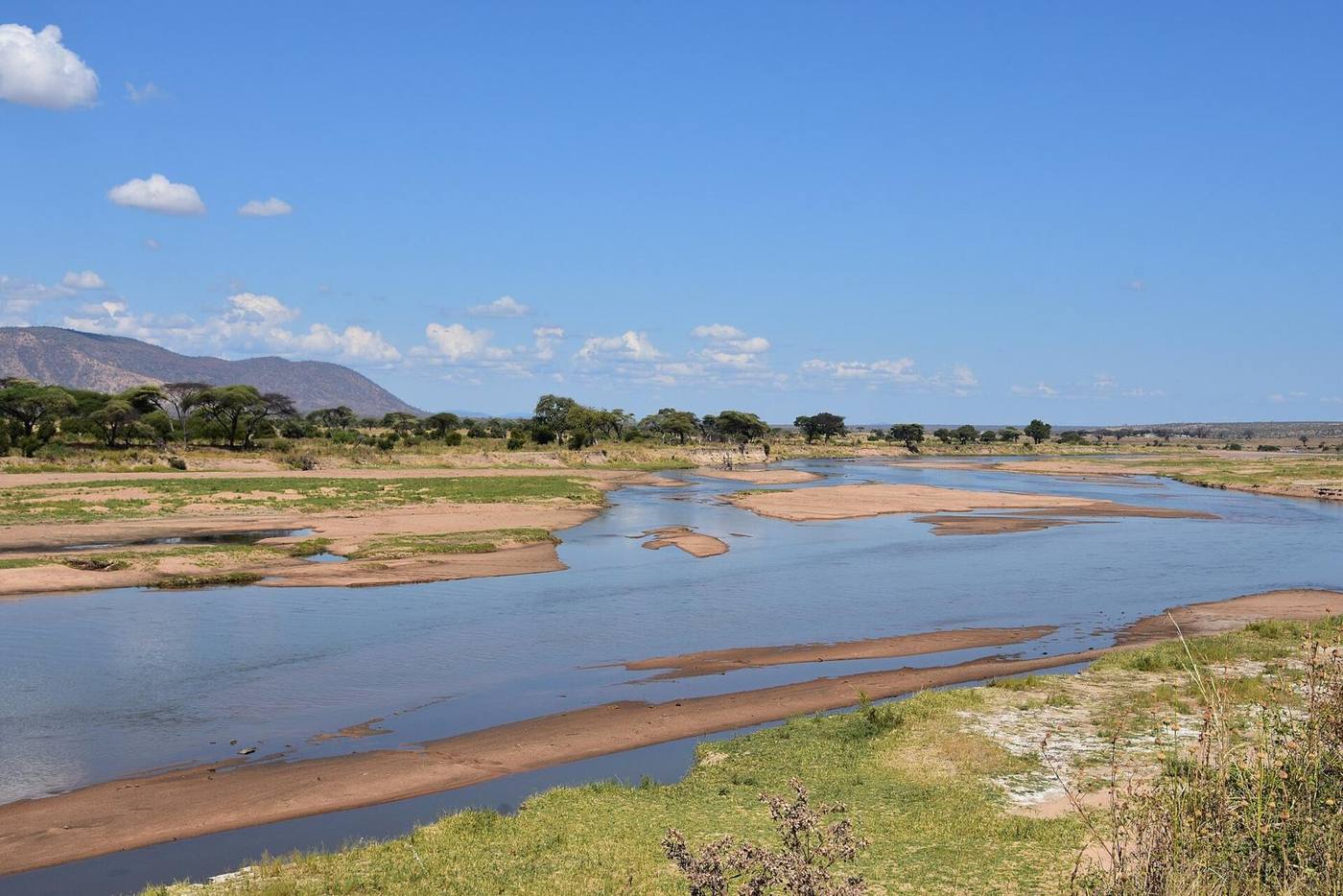
The heart of the park is the Rufiji River, one of the largest in East Africa, which here splits into channels, lakes and swamps. The landscape is very different from the northern parks: borassus palms, miombo woodland, still waters reflecting dead trees.
In the afternoon you go on your first game drive around the lakes. You see groups of impala, giraffes, zebras, white-bearded wildebeest and many species of water birds. Nyerere is one of the best places in Africa to see the African wild dog, with its patchy coat: it is rare and hunts in packs, at dawn and dusk. If the guide hears news of a pack, get ready to move fast.
Unlike the famous parks, there are few vehicles here. You are often alone in front of the animals.
At sunset stop on the shore of a lake to watch the hippos leaving the water to graze.
Sleep in Nyerere, for three nights.
Practical tip: there are tsetse flies in Nyerere. Avoid blue and black clothes and bring long sleeves and insect repellent. A light scarf helps protect your neck during game drives.
- Day 3
Boat safari on the Rufiji
Today you discover Nyerere from the water, with a boat safari on the Rufiji River and the lakes connected to it.
You leave early in the morning, when the river is calm and the light is soft. The boat is small, with a motor, driven by an experienced boatman. You glide slowly along the sandy banks, where Nile crocodiles bask in the sun with their mouths open. Some are enormous. In the deeper channels you see groups of hippos snorting and watching you with their eyes just above the water.
The river is a paradise for birds. Look for the fish eagle, the pied kingfisher, Goliath herons, the largest in the world, and colonies of bee-eaters digging their nests in the sandy banks. Elephants come down to drink on the banks and sometimes cross the river swimming, with their trunks raised.
In mid-morning you return to camp for lunch and a rest in the hot hours.
In the afternoon you go on another game drive, towards different areas of the park. You may see lions, buffaloes, lesser kudu and, with luck, a leopard.
In the evening, on the shore, watch the sunset over the water, when the river turns orange and the birds fly back to the trees.
Sleep in Nyerere.
Practical tip: in the boat always stay seated and keep your hands inside. Hippos and crocodiles are among the most dangerous animals in Africa and the boatman knows how close to go. Keep your camera on a strap, so it cannot fall into the river.
- Day 4
Nyerere on foot
Today you experience the park in a different way: on foot, on a walking safari led by an armed ranger.
In Nyerere walking safaris are allowed and they are one of the most intense moments of the trip. You leave at dawn, while the air is still cool, in a small group. The ranger walks in front with a rifle, then the guide, then you. You walk in single file, in silence, and communicate with gestures.
On foot you learn to read the savannah. The guide shows you animal tracks in the sand, elephant dung that is still warm, leopard claw marks on a trunk, termite mounds. You discover the medicinal plants used by local people and the birds that warn of danger. When you see a group of buffaloes or an elephant in the distance, you stop and watch, always at a safe distance.
The walk lasts two or three hours. You return to camp for breakfast or lunch.
In the afternoon rest, then go on a last game drive or boat trip, depending on what you enjoyed most. At sunset the guide can take you to a viewpoint above the lakes.
In the evening, around the fire, the sounds of the night will seem closer after a day on foot.
Sleep in Nyerere.
Practical tip: for the walking safari wear comfortable closed shoes, long trousers and clothes in neutral colours, such as olive green and beige. Leave bright colours and perfume at home.
- Day 5
Flight to Ruaha
Today you leave Nyerere and fly west to Ruaha National Park, one of the largest and least visited parks in East Africa.
The flight on a small plane crosses central Tanzania, over hills covered in woodland and scattered villages. It may stop at other airstrips. You land in Ruaha, where the air is drier and the landscape more open and rocky.
Ruaha takes its name from the Great Ruaha River, which flows along the eastern edge of the park. In the dry season the river shrinks to pools and sandy channels, and all life gathers around the water. The park lies in a transition zone between the wildlife of East Africa and that of southern Africa: here you can see species missing from the northern parks, such as the greater kudu, with its spiral horns, the roan antelope and the sable antelope.
In the afternoon you go on your first game drive along the river. The landscape is dominated by baobabs, huge and grey, and by rocky hills. Elephants are very numerous and dig in the sand of the dry riverbeds to find water.
At sunset stop near the river, where zebras, impala and giraffes come to drink.
Sleep in Ruaha, for three nights.
Practical tip: in Ruaha it is very hot at midday, even over 30 degrees in the dry season. Drink plenty of water, wear a wide-brimmed hat and rest at camp in the middle of the day. Mornings and evenings are much cooler, so keep a light jacket in the vehicle.
- Day 6
The lions of Ruaha
Today is a full day of game drives in Ruaha, devoted above all to the big cats.
Ruaha is famous for its lions. The prides are often large, with many females and cubs, and they hunt animals as big as buffaloes and giraffes. You leave at dawn, when the lions are still active after the night's hunt. The guide follows tracks in the sand of the dry rivers and listens to the calls of other animals: baboons and impala give alarm calls when they see a predator.
Leopards also live in the park, hidden among the rocks and on the branches of baobabs, and cheetahs on the more open plains. With luck you may also see wild dogs, which move a lot and do not stay long in the same place.
Have a packed lunch in the shade of a large tree near the Mwagusi, a sand river that fills with water only in the rainy season. Here elephants dig deep holes with their feet and trunks to reach the water under the sand. After them the other animals come to drink.
In the afternoon continue the game drive towards the hills, with views over the Great Ruaha valley.
In the evening, at camp, listen to the lions calling to each other in the dark, a deep sound you can hear for kilometres.
Sleep in Ruaha.
Practical tip: bring two memory cards and a spare battery for your camera. In remote camps electricity is often solar and limited, and charging may only be possible at certain hours.
- Day 7
Baobabs, kudu and the Great Ruaha River
Today is your last day in Ruaha. You can choose between a walking safari in the morning and another day in the 4x4.
If you choose the walking safari, you walk with an armed ranger along the river and among the baobabs. Up close the trees seem even bigger: some have trunks so wide that it takes many people with outstretched arms to encircle them. The guide explains how the baobab stores water in its trunk, how its fruit, rich in vitamin C, is eaten by animals and people, and how elephants eat its bark in the driest periods.
By 4x4 instead you can explore the areas furthest from camp. Look for the greater kudu, the most elegant antelope of the savannah, with white stripes on its flanks and the long spiral horns of the male. The lesser kudu also lives in Ruaha, smaller, preferring dense woodland.
In the afternoon stop along the Great Ruaha River. Crocodiles sleep on the sand and hippos crowd into the remaining pools. Birds are everywhere: the southern ground hornbill, black with a red face, walks through the grass like a turkey.
At sunset watch the sky turn red behind the baobabs: it is one of the most beautiful images of the trip.
Sleep in Ruaha.
Practical tip: ask your guide to stop the vehicle and switch off the engine for a few minutes. In silence you hear the sounds of the savannah and the animals come closer more calmly.
- Day 8
Flight to Katavi
Today you fly even further west, to Katavi National Park, one of the most remote and least visited parks in the whole of Africa.
The flight on a small plane takes a few hours, with possible stops. Below you, you see miombo forests stretching for hundreds of kilometres without roads, broken only by rivers and swamps. Katavi is very far from everything, and for this reason it has remained almost untouched.
You land on the park airstrip and immediately understand the difference: there are no other vehicles, no paved roads, only dirt tracks and great floodplains. In the dry season the plains around the Katuma River dry out and become stretches of yellow grass, while water remains only in a few pools.
In the afternoon you go on your first game drive. You see the first great herds of buffaloes, which here can number hundreds or even thousands of animals together. They move in a cloud of dust, followed by the lions that hunt them. You also see zebras, giraffes, topi, waterbuck and many elephants.
In the evening the sky over Katavi is full of stars. With no lights for kilometres, the Milky Way is very bright.
Sleep in Katavi, for three nights.
Practical tip: in Katavi facilities are basic and the phone signal is weak or absent. Tell your family before you leave that you may have no connection for a few days, and give them the contact details of your camp for emergencies.
- Day 9
The buffaloes and hippos of Katavi
Today is a full day of game drives in Katavi, the park of great gatherings.
In the dry season, between August and October, Katavi offers one of the strangest sights in Africa. The Katuma River shrinks to a few muddy pools, and the hippos, which need to stay in water during the day, crowd into the few pools that remain. You can see dozens or hundreds of hippos pressed against one another, pushing, yawning and fighting for space. The noise and the smell are very strong.
The crocodiles, meanwhile, take refuge in caves dug into the riverbanks, where they wait for the rains.
On the plains of Lake Katavi and Lake Chada the great herds of buffaloes graze. Lions follow them and hunt by day as well. With luck you may witness a hunt, a hard but natural moment.
Have a packed lunch under a tree, watching the animals approach the water. In Katavi you spend whole hours without seeing another vehicle: it is like going back to the Africa of a hundred years ago.
In the afternoon look for the rarer antelopes: the roan antelope, the sable antelope and the puku, a wetland antelope that you can see in only a few parks in Tanzania.
Sleep in Katavi.
Practical tip: in the crowded pools the hippos are nervous and aggressive. Always stay in the vehicle and let the guide decide how close to go. Keep your voice low and avoid sudden movements.
- Day 10
Katavi on foot and the plains
Today is your last day in Katavi. In the morning you can go on a walking safari with a ranger, then return to the plains by 4x4.
The walking safari in Katavi is special, because the park sees so few visitors that the animals react more naturally to human presence. You walk through the woodland at the edge of the plains, listen to bird calls and watch buffaloes and giraffes from a distance. The guide teaches you to recognise the tracks of lions, hyenas and leopards in the dust.
You return to camp for breakfast and some rest.
In the afternoon you go on your last game drive. This time take your time to watch without hurrying: sit in front of a pool and watch the animals arrive in turn. First the zebras and impala, then the elephants, which drive all the others away, and finally the buffaloes at sunset. It is the rhythm of the dry season.
Katavi also has a legend. The name comes from the spirit of a hunter who, according to local tradition, lives in a large tamarind tree in the park. Some local people still leave offerings near the tree. Ask your guide to tell you the story.
In the evening pack your bags: tomorrow you fly towards Lake Tanganyika.
Sleep in Katavi.
Practical tip: keep your documents, medicines and a change of clothes in your hand luggage. If a flight changes time or a bag arrives later, you will always have the essentials with you.
- Day 11
Lake Tanganyika and the Mahale Mountains
Today you reach Mahale Mountains National Park, on the shores of Lake Tanganyika, one of the most isolated and beautiful places on the trip.
A small plane takes you from Katavi to the airstrip near the lake. Then you board a boat and sail along the coast for a stretch, because there are no roads to Mahale: you can only arrive by lake or by air.
Lake Tanganyika is the longest freshwater lake in the world and the second deepest. The water is so clear that you can see colourful fish, the cichlids, swimming near the shore. On the other side, on clear days, you can see the mountains of the Democratic Republic of the Congo.
The Mahale Mountains rise straight from the beach, covered in rainforest and woodland. One of the most important chimpanzee populations in Africa lives here. Japanese researchers have studied them since the 1960s, and one group of chimpanzees has become used to human presence: it is the group you will go looking for over the next few days.
In the afternoon rest on the white sand beach and swim in the lake, if the camp says it is safe. At sunset the sun goes down over the water, towards the Congo.
Sleep in Mahale, for three nights.
Practical tip: only swim at the spots indicated by the camp. Always ask first, because in some areas of the lake there may be crocodiles or hippos. Bring water shoes too, as some stretches of shore are rocky.
- Day 12
Trekking among the chimpanzees of Mahale
Today you go looking for chimpanzees in the Mahale forest, the most awaited moment of the trip.
You leave early in the morning with a park guide and a small group. The guides know roughly where the chimpanzees were the evening before, but there is never any certainty. The trek can last from half an hour to several hours, on steep paths, among huge trees, lianas and streams. It is hot and humid.
When you find the group, you notice the noise first: screams, breaking branches, drumming on trunks. Then you see them, a few metres away. The chimpanzees move on the ground and in the trees, eat fruit, groom each other, play. The young cling to their mother's belly or back. The dominant males show their strength with sudden charges and cries.
Time with the chimpanzees is limited, usually to one hour, so as not to disturb them. You must wear a face mask, because chimpanzees can catch human diseases. Stay at the distance indicated by the guide and do not eat near them.
You return to camp in the early afternoon. Rest on the beach or take a boat trip along the coast.
Sleep in Mahale.
Practical tip: do not join the trek if you have a fever, a cold or a cough. Wear long trousers and walking boots and bring light gloves for holding on to branches. Check prices and the rules of the permit.
- Day 13
Mahale: forest and lake
Today you have another day in Mahale. You can go on a second chimpanzee trek, or spend your time in the forest and on the lake.
If you choose a second trek, you will see the chimpanzees at a different time of day and understand their behaviour better. Every encounter is different: one day they are calm and feed quietly, another day they move fast and make a lot of noise. The guides know many chimpanzees by name and tell you their stories and their families.
If you prefer, take a walk in the forest with a guide, to discover the other monkeys, such as the red colobus and the red-tailed monkey, as well as the birds and colourful butterflies. Along the streams there are small waterfalls.
In the afternoon go out by boat on the lake. With a mask you can watch the cichlids, small colourful fish that live only in Lake Tanganyika and are found in aquariums all over the world. You can also fish with local fishermen or simply watch the sunset from the boat.
In the evening, at camp, listen to the silence of the lake, broken only by the song of night birds and, sometimes, by the cries of chimpanzees in the forest.
Sleep in Mahale.
Practical tip: bring a head torch. In the lake camps there are few lights at night, so as not to disturb the animals, and you often have to walk from the dining area to your tent in the dark. Spare batteries are hard to find here.
- Day 14
Sailing north on the lake
Today you leave Mahale and sail north on Lake Tanganyika, towards Kigoma.
The boat journey is long, many hours, and follows one of the wildest coasts in Africa. The mountains plunge into the water, the forest comes down to the beach and along the coast you see small fishing villages, with mud huts and wooden boats pulled up on the sand.
The fishermen of the lake work mostly at night. They use lamps to attract the small fish called dagaa, similar to sardines, which they then dry in the sun on large sheets or on the rocks. Along the coast you will see silver stretches of fish drying in the sun.
The lake is so large that it looks like a sea. On windy days the waves can be high, and the boat slows down. On calm days the water is smooth as a mirror and reflects the mountains.
Stop at a village to stretch your legs and see the life of the lake people. Greet them with «jambo» or «habari», and ask permission before taking photos.
You reach Kigoma in the late afternoon. Kigoma is Tanzania's most important port on the lake, a small and lively town.
Sleep in Kigoma, for two nights.
Practical tip: on the boat wear a life jacket and check there is one for everyone before leaving. Protect your skin from the sun, which burns a lot on the water, and keep your luggage in waterproof bags.
- Day 15
Gombe, Jane Goodall's chimpanzees
Today you visit Gombe National Park, one of the smallest parks in Tanzania, but one of the most famous in the world.
From Kigoma a boat takes you north along the lake shore. Gombe is a narrow strip of hills and valleys covered in forest, between the beaches of the lake and the crest of the mountains.
Here, in 1960, a young Englishwoman named Jane Goodall arrived to study wild chimpanzees. Her observations changed science: she discovered that chimpanzees use and make tools, for example twigs to fish for termites, and that they have personalities, emotions and complex family bonds. Research at Gombe still continues today and is one of the longest studies of wild animals in history.
With a park guide you walk in the forest to find a group of chimpanzees. The paths are steep but short compared with Mahale. The chimpanzees of Gombe have been used to humans for generations, and some descend from the families studied by Jane Goodall.
Here too your time with them is limited and you must wear a face mask. After the encounter you can walk to the Kakombe waterfall, in the forest.
In the afternoon you return to Kigoma by boat.
Sleep in Kigoma.
Practical tip: at Gombe baboons are numerous and curious. Do not hold food in your hand or keep it in an open backpack, and do not leave things unattended on the beach. Check prices and the rules of the permit.
- Day 16
Ujiji, Kigoma and the flight back
Today you visit the surroundings of Kigoma and in the afternoon you fly to Dar es Salaam.
In the morning go to Ujiji, a few kilometres from Kigoma, one of the oldest towns in the interior of Tanzania. Ujiji was a terminus for the caravans coming from the Indian Ocean coast, which carried ivory and also enslaved people.
At Ujiji, in 1871, the journalist Henry Morton Stanley met the Scottish explorer David Livingstone, who had not been heard from for years. According to Stanley's account, he greeted him with the phrase that became famous: «Dr Livingstone, I presume?». Today there is a small museum and a monument at the place of the meeting. Check prices and times.
Then go back to Kigoma and walk around the market, where fish from the lake, fruit and fabrics are sold. Watch the fishing boats returning to the harbour.
In the afternoon you take the flight from Kigoma to Dar es Salaam. From the window you look one last time at Lake Tanganyika, stretching south as far as the eye can see.
You reach Dar es Salaam in the evening. The city seems huge and noisy after two weeks in the parks.
Sleep in Dar es Salaam.
Practical tip: flights from Kigoma can change times or be cancelled. Always leave a day's margin before your international flight, as in this programme, and reconfirm the flight the day before.
- Day 17
Departure from Dar es Salaam
Today you leave Tanzania from Dar es Salaam airport.
If your flight leaves late, in the morning visit the National Museum, near the botanical gardens, with sections on the history of the country, archaeology and human evolution, or take a walk through the huge and very crowded Kariakoo market. Check prices and times.
In seventeen days you have seen the wildest Tanzania. You have sailed on the Rufiji among crocodiles and hippos and walked through Nyerere with a ranger. You have seen the lions and baobabs of Ruaha, the greater kudu and rare antelopes. You have crossed the plains of Katavi with their herds of buffaloes and hippos crowded into the pools. Then the Mahale Mountains, the forest and the chimpanzees, the long voyage on Lake Tanganyika, Gombe and the story of Jane Goodall, Ujiji and Livingstone.
When to go: this trip should only be done in the dry season, from June to October. In those months the animals gather around the water, the tracks are passable and the flights between the parks operate. The best months for Katavi are August to October, when the pools shrink. From November to May the rains make many tracks impassable and several camps close.
It is an expensive and complex trip, but it takes you to parks where you are almost always alone with the animals.
Have a good trip.
Practical tip: in Dar es Salaam the traffic to the airport can be very slow. Leave well in advance, at least three and a half hours before your flight.
The safari for those who have already seen Africa: huge, almost empty parks, no queue of jeeps around a lion. Long distances and complex logistics, with internal flights or whole days on tracks. Only go in the dry season, June to October: in the rains many tracks become impassable.
Before you go
- Documents and visa
- Passport valid for at least six months and a visa, applied for online on the official immigration website. From 2026 compulsory travel insurance is also required, and Zanzibar has its own: dates and costs differ between sources, so check the official websites.
- Health and vaccines
- Malaria prevention is recommended; a yellow fever certificate is needed if you arrive from a country at risk. Drink only bottled water. Emergencies: 112.
- Money and payments
- Tanzanian shilling. Parks are paid by card and safaris often in US dollars; carry cash for tips.
- Power sockets
- Types G and D, 230 volts: you need an adapter for British plugs.
- Time zone
- UTC+3 all year.
- Safety
- The United States rates Tanzania level 2, with more caution in the Mtwara region; the United Kingdom advises against travel within 20 km of the border with Cabo Delgado in Mozambique. Official advice: GOV.UK.
Information checked in November 2026 for Italian and EU citizens. Rules change: always check before you travel.
Variations
In 10 days: only Nyerere and Ruaha, with flights to and from Dar es Salaam and an extra day in each park.
In 21 days: add four days in Zanzibar at the end, with a short flight or the ferry from Dar es Salaam.
Frequently asked questions
What documents do I need for Tanzania?
Italian citizens enter with a passport and need a visa: check the current rules. Yellow fever vaccination may be required depending on the countries you arrive from. Talk to your doctor about malaria prevention. Other nationalities should check their own rules.
Is the Lake Tanganyika area safe?
The UK does not advise against Kigoma, Mahale and Gombe, but it reports armed robberies in the Kigoma region and near the border with Burundi, and the Italian government recommends great caution along that border. On this trip you travel by plane and boat, not by road. Check the current advice before you go.
When is the best time?
Only in the dry season, from June to October. For Katavi the best months are August to October. In the rains many tracks become impassable and several camps close.
Indicative itinerary written by World Atlas. Before booking, check timetables, seasonal openings, documents and safety.
 7 daysModerate
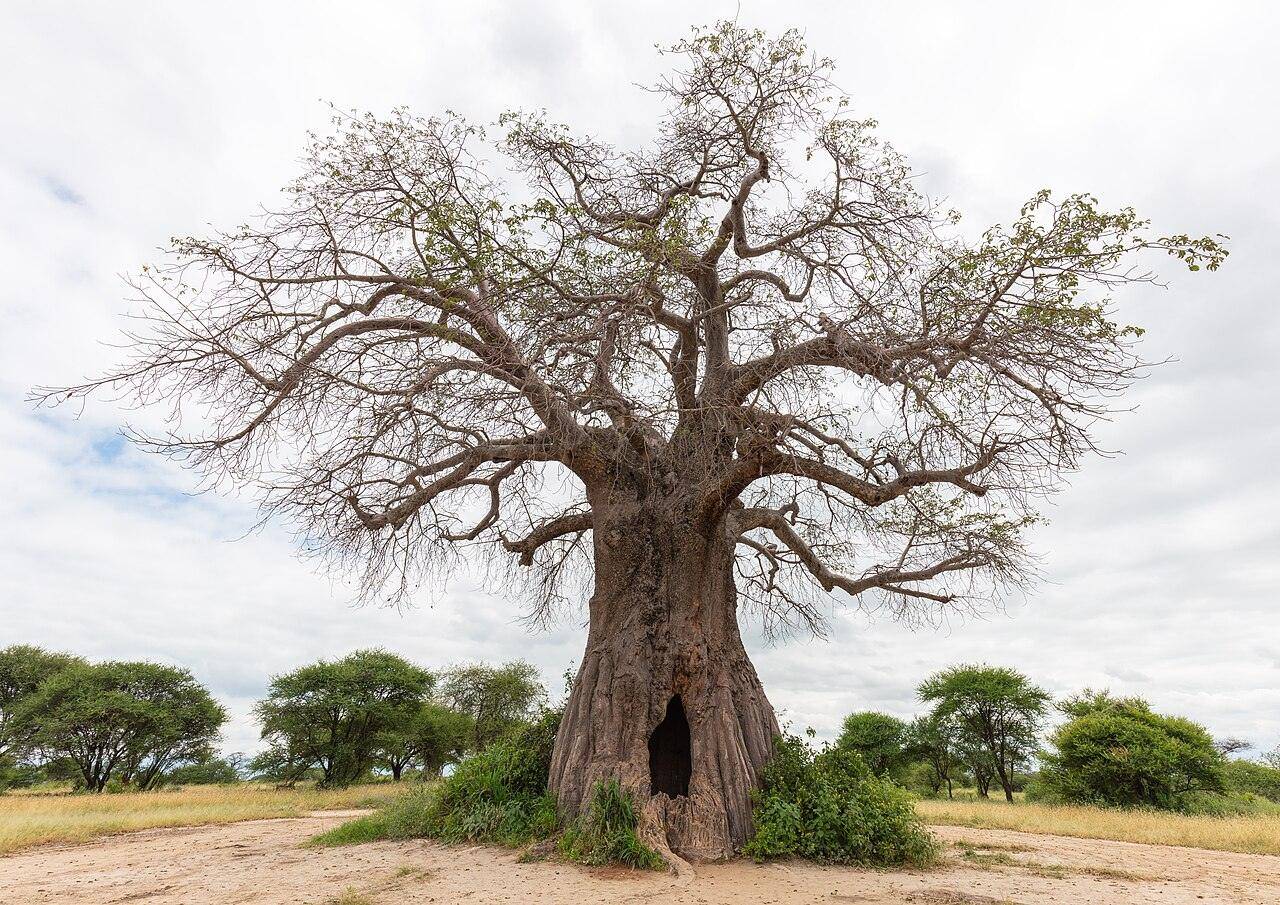
Classic safari: Tarangire, Serengeti, Ngorongoro
The northern circuit in a week: elephants and baobabs, the endless Serengeti plains and Africa's most famous crater.
 15 daysModerate
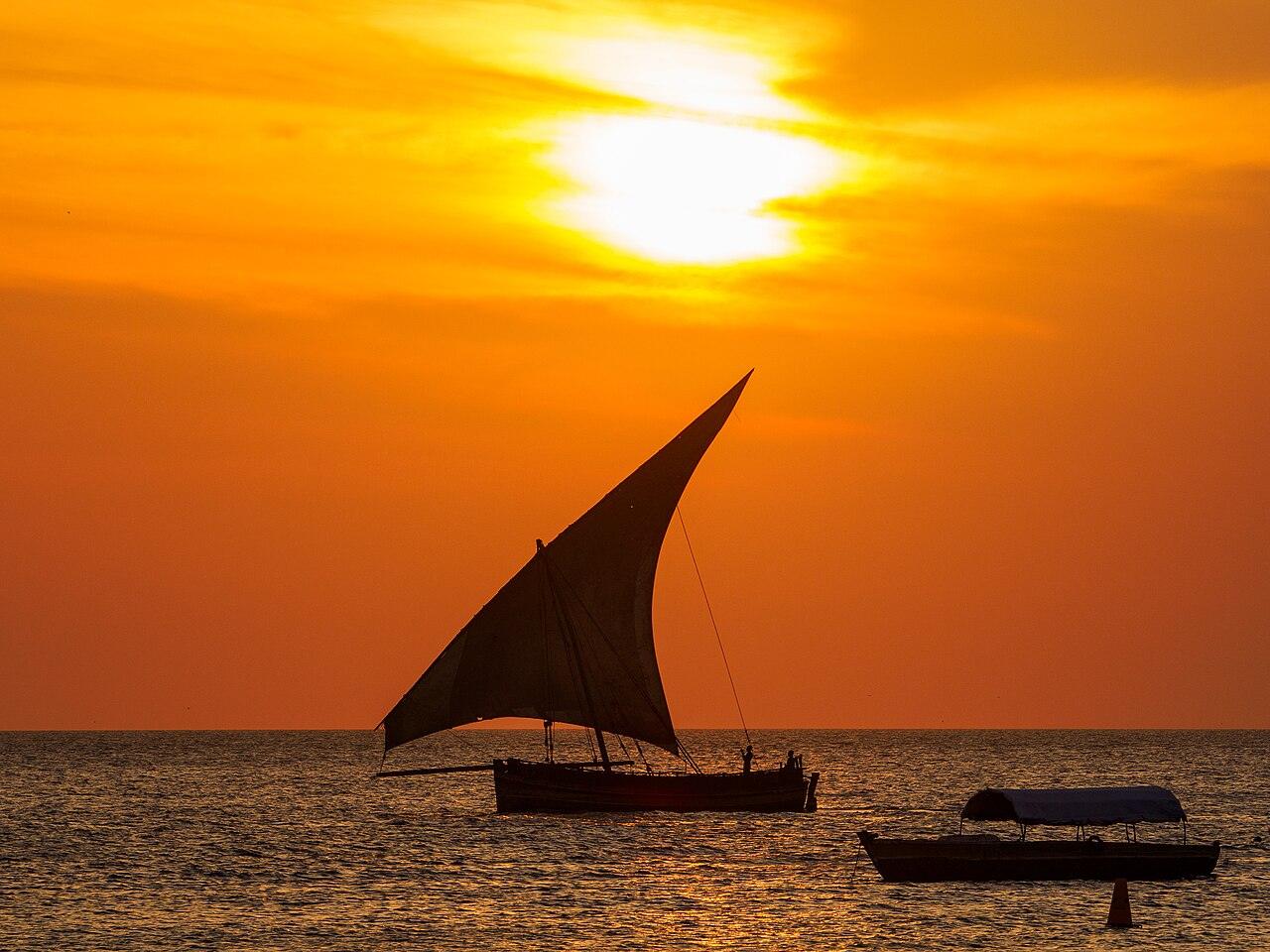
Safari and Zanzibar
One week in the great northern parks and one in Zanzibar, between Stone Town and the Indian Ocean beaches.
 9 daysEasy
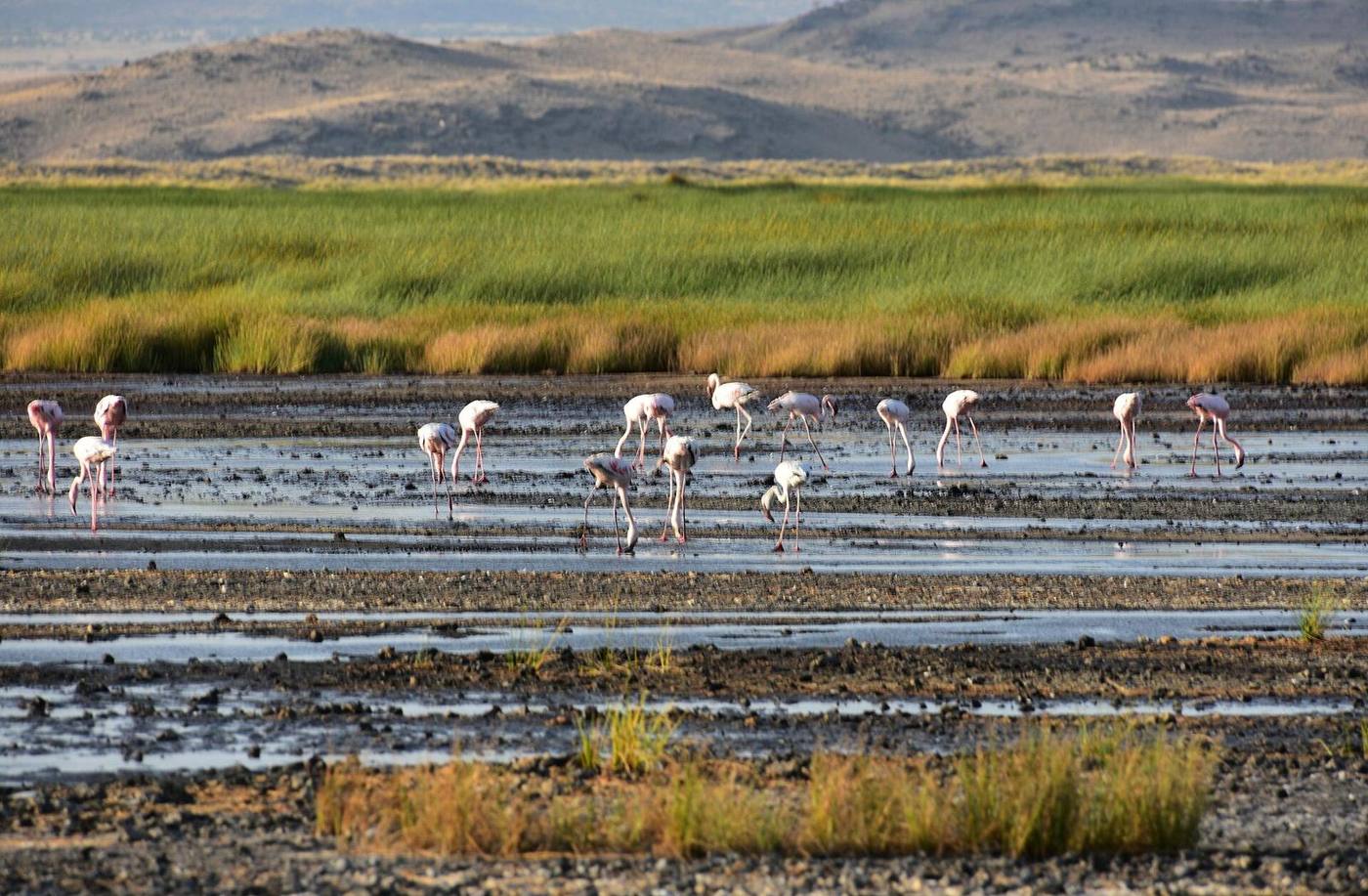
The northern parks and Lake Natron
Tarangire, the Serengeti, Ngorongoro Crater, Olduvai Gorge and the flamingos of Lake Natron below the Maasai's sacred volcano.