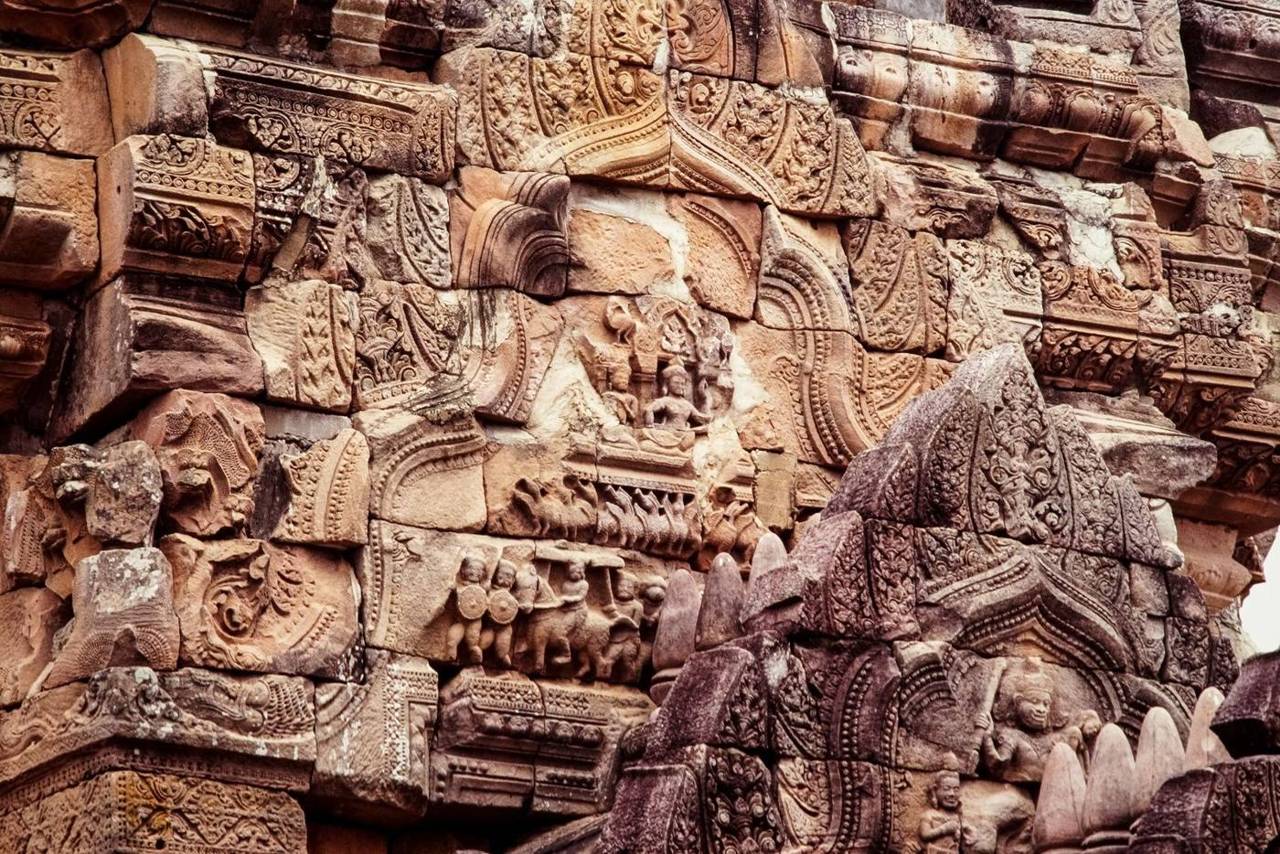
Isan: Khao Yai and the Khmer temples to the Mekong
The Thailand most visitors skip: wild elephants and hornbills in Khao Yai, the Khmer sanctuaries of Phimai and Phanom Rung, and the rock paintings of Pha Taem above the Mekong.
- Bangkok
- Khao Yai National Park
- Nakhon Ratchasima
- Phimai
- Phanom Rung
- Muang Tam
- Ubon Ratchathani
- Khong Chiam
- Pha Taem
Day by day
- Day 1
Arrival in Bangkok
This trip takes you into Isan, the great plateau of north eastern Thailand, the part of the country that foreign visitors see least. It begins in the forest of Khao Yai, where you look for gibbons, hornbills and wild elephants, continues with the Khmer sanctuaries of Phimai, Phanom Rung and Muang Tam, built when this land looked towards Angkor, and ends on the Mekong, facing Laos, among the rock paintings of Pha Taem. You travel by car with a driver or with a local guide, and you return to Bangkok on a domestic flight from Ubon Ratchathani.
Before you go: since 15 September 2026 Italian citizens can enter Thailand without a visa for a tourist stay of up to 30 days, with a passport valid for at least six months. In the three days before arrival you must fill in the digital arrival card online, the TDAC, on the official website. Other nationalities should check their own rules.
Some areas on this trip are close to borders or places where the situation changes often: check your government's travel advice before booking and again before you leave.
You land at Suvarnabhumi airport after a long flight. The airport rail link takes you into the city in about half an hour; a taxi takes longer, depending on the traffic.
In the afternoon rest, then take a trip on the Chao Phraya river on a public boat. In the evening have dinner at a night market: it is a good moment to try som tam already, the green papaya salad that you will find everywhere in Isan, only spicier.
Sleep in Bangkok, one night.
Practical tip: buy a local SIM card with data at the airport. Outside the cities English is rare, and a translation app with Thai downloaded helps a great deal.
- Day 2
Towards Khao Yai
In the morning you leave Bangkok heading north east. After about three hours on the road you reach Pak Chong, the small town at the entrance to Khao Yai National Park. It is Thailand's first national park and it is part of the Dong Phayayen and Khao Yai forest complex, a UNESCO World Heritage Site.
The park covers hills and mountains clothed in tropical forest, grasslands and rivers. It is home to wild elephants, gibbons, sambar deer, macaques and four species of hornbill, the large birds with enormous beaks. The main road crosses the park from north to south and passes close to the visitor centre.
In the afternoon stop at the visitor centre to look at the trail maps and ask about a park guide for the following days. Then go to the Nong Phak Chi observation tower, on a grassland with a waterhole: towards evening it is the best place to see deer and, with luck, elephants.
At sunset, just outside the park, many people stop to watch the bats leaving a cave on the hillside: millions of animals pour out in a long black cloud that moves across the sky for several minutes.
Sleep in the Pak Chong area or along the road that climbs to the park, for three nights.
Practical tip: drive slowly on the park roads, especially at sunset. If you meet an elephant on the road, stop well back, switch off bright lights, do not sound the horn and wait for it to move away on its own.
- Day 3
Into the forest with a guide
Today is the most important day for wildlife. Set off early, at dawn, when the forest is cool and the animals are most active. With a park guide you walk a forest trail, usually for a few hours.
The first thing you hear is the gibbons: in the morning they sing from the tall trees with a loud, long call. The guide knows how to find the fig trees where hornbills stop to feed, and shows you elephant signs, the scratches on the trees and the footprints in the mud.
During the rainy season and just after it there are many leeches: wear leech socks or long socks pulled over your trousers. From November to February the forest is drier and walking is easier.
At midday rest. In the afternoon go to the Pha Diao Dai viewpoint, a rock above the forest from which you see the green hills all the way to the horizon. With a clear sky the view is wide.
In the evening, if the park offers it, take the night drive in an open vehicle with the park's spotlight: you see deer, civets and sometimes porcupines at the edge of the road.
On your own you should only walk the marked trails near the visitor centre; in the deep forest you always need a guide.
Practical tip: you pay a ticket to enter the park: check prices and times on the website of the Thai national parks. Keep the ticket, you need it to get back in.
- Day 4
The waterfalls of Khao Yai
The last day in the park is devoted to water. In the morning go to Haew Narok waterfall, in the south of the park: a tall waterfall with several drops, reached on a walk through the forest and a long concrete staircase. In the dry season there is less water, but the place is still very beautiful.
Then move on to Haew Suwat waterfall, smaller, with a wide pool and a wall of rock. It is famous in Thailand because it appeared in a film, and at weekends it fills up with day trippers. Arrive early or come on a weekday.
Along the road keep your eyes open: macaques sit at the edge of the tarmac, and hornbills fly across the road from one tree to another. If you see cars stopped, there is often an animal.
In the afternoon leave the park and explore the countryside around Pak Chong. Here the air is cooler than in Bangkok and there are vineyards, dairy farms and fruit stalls along the road. Taste the local milk and yoghurt, a speciality of the area.
In the evening pack your bag: tomorrow you leave the forest for the Khmer temples.
Practical tip: never feed the macaques and never leave food or plastic bags visible in the car. The animals have learnt to open bags and they can bite.
- Day 5
Nakhon Ratchasima and Phimai
In the morning you leave Khao Yai and in about an hour and a half you reach Nakhon Ratchasima, which Thais call Korat. It is the gateway to Isan, a large and busy city. Stop at the Thao Suranari monument, the local heroine, where people bring flowers and offerings.
Then continue for about an hour to Phimai, a small town on the Mun river. Here you find Phimai Historical Park, the largest Khmer sanctuary in Thailand. It was built between the end of the 11th and the beginning of the 12th century as a Buddhist temple, and it faces south east, towards Angkor, to which it was joined by an ancient road.
You enter through a gate in the outer wall, cross a bridge with balustrades in the shape of naga serpents and reach the central prang, the tower in white sandstone. Look closely at the carved lintels above the doors: they tell stories from the Ramayana and Buddhist scenes.
Near the park is the Phimai National Museum, with the most precious sculptures and lintels found in the region. Outside the town, the great banyan tree of Sai Ngam is a tangle of roots and trunks beside the river.
In the evening try pad mi Korat, the stir fried rice noodles typical of the area.
Sleep in Phimai or Nakhon Ratchasima.
Practical tip: visit the temple early in the morning or late in the afternoon, when the stone takes on a warm light. For the park and the museum, check prices and times.
- Day 6
Phanom Rung, Muang Tam and silk
Today you see the most beautiful Khmer sanctuary in Thailand. Phanom Rung stands on the cone of an extinct volcano, in Buriram province. It was built between the 10th and the 13th century as a Hindu temple dedicated to Shiva.
You climb along a ceremonial avenue lined with stone pillars, then a staircase and three naga bridges, up to the central sanctuary. Above one door is the lintel of the reclining Vishnu, one of the most famous pieces of Khmer art, stolen and then returned to Thailand by the United States at the end of the 1980s. On a few days each year the sun rises or sets through all the doors of the sanctuary: ask for the dates, because it gets very crowded.
At the foot of the hill is Muang Tam, a smaller and quieter sanctuary, with four L shaped ponds surrounded by naga. In the morning light the water reflects the brick towers.
In the afternoon continue towards Surin and stop at the village of Ban Tha Sawang, where women weave a precious silk with gold threads on their looms. You can watch the work and buy a piece directly from the people who make it.
Do not go on towards the temples on the border with Cambodia and stay well away from the frontier line. Travel by day and do not drive at night on these roads.
Sleep in Surin.
Practical tip: at Phanom Rung there is a combined ticket with Muang Tam: check prices and times. Bring water and a hat, the climb is in the sun.
- Day 7
Ubon Ratchathani
Today is a day on the road heading east. In about four hours you reach Ubon Ratchathani, the largest city in southern Isan, on the Mun river. It is a calm city, with many temples and a strong Buddhist tradition.
Visit Wat Nong Pah Pong, the forest monastery founded by Ajahn Chah, one of the best known meditation masters of Thai Buddhism. The monastery is a large, silent wood with paths, meditation halls and a museum dedicated to the master. Dress with shoulders and legs covered, speak quietly and take off your shoes where required.
In the centre is Wat Thung Si Muang, with a wooden library on stilts built in the middle of a pond, to protect the sacred texts from termites. In July Ubon hosts the candle festival, with large wax sculptures carried in procession.
In the evening go to the night market. Here the cooking of Isan is the best in the country: papaya som tam, larb of minced meat with herbs and toasted rice, gai yang, the grilled chicken, and sticky rice served in a bamboo basket. You eat with your hands, rolling the rice into a small ball and using it to pick up the food.
Sleep in Ubon Ratchathani.
Practical tip: if you do not eat spicy food, ask for «mai phet», which means not spicy. In Isan even a little chilli can be strong.
- Day 8
Khong Chiam and the two coloured river
In the morning you leave Ubon heading east and in just over an hour you reach Khong Chiam, a quiet village on the Mekong. On the other side of the river is Laos.
Here the Mun river flows into the Mekong. Thais call the spot «the two coloured river», because the waters of the two rivers have different tones and for a stretch they flow side by side without mixing. The difference is easiest to see in the dry season. You can watch it from the riverside or from a small motorboat.
In the afternoon visit Kaeng Tana National Park, not far away, where the Mun runs between large flat rocks and rapids. A suspension bridge leads to an island in the river. It is a good place for a walk and to see how the river people live, with fishermen's nets and long boats.
In the evening return to Khong Chiam and have dinner with grilled river fish, eaten with fresh herbs and spicy sauces. From the riverside you watch the sunset over the hills of Laos.
Sleep in Khong Chiam, for two nights.
Practical tip: the border with Laos is the river. Do not cross it on local boats: the official crossings have precise rules for foreigners. Stay on the Thai side for the whole stay.
- Day 9
Pha Taem and dawn over Laos
Wake up before dawn and go to Pha Taem National Park, about half an hour from Khong Chiam. The clifftop viewpoint is famous as one of the first places in Thailand to see the sun rise: the light climbs over the hills of Laos with the Mekong below you.
Then walk down the path beneath the cliff. On the rock are the prehistoric paintings, made by early people thousands of years ago: giant fish, fish traps, animals, hand stencils and human figures. The path is easy and well marked, with walkways.
Near the park are the sandstone pillars of Sao Chaliang, mushroom shaped rocks carved by wind and water. Further north, in the same park, Soi Sawan waterfall has the most water in the months just after the rains.
In the afternoon rest in Khong Chiam. If you like, visit a temple on the river or take a short walk through the village, where life moves slowly between the boats and the market stalls.
It is your last evening on the Mekong: have an early dinner and watch the lights of the Lao villages on the far bank.
Practical tip: you pay a ticket for the park: check prices and times. At dawn it is cool even in winter, so bring a sweatshirt. After nine o'clock the sun on the cliff is strong.
- Day 10
Back to Bangkok
In the morning you return to Ubon Ratchathani, about an hour and a half by road, and take a domestic flight to Bangkok. The flight lasts just over an hour. Before leaving you can take a last walk through the Ubon market to buy sticky rice, sauces and Isan snacks.
In the afternoon, in Bangkok, choose what you did not see on the first day. You can visit the Grand Palace and the temple of the Emerald Buddha, Wat Pho with its reclining Buddha, or cross the river to climb Wat Arun, the temple of dawn. For the temples, dress with shoulders and knees covered.
If you prefer the modern city, take the Skytrain and spend the afternoon among the shopping centres, or go to Chinatown, on Yaowarat Road, when in the evening the signs light up and street food stalls fill the pavements.
After ten days of Isan cooking, in Chinatown you can try other things: fish noodles, sesame sweets, cut fruit, pork soups.
Sleep in Bangkok, near the river or a Skytrain station, so that tomorrow you can move around easily before the flight.
Practical tip: on domestic flights the hold baggage allowance can be smaller than on international flights. Check the weight allowed before booking, so you do not pay extra at the airport.
- Day 11
Departure
On the last day you leave from Bangkok. If your flight is in the evening, in the morning you can take a last walk through a market, eat mango with sticky rice or have a Thai massage, which has a long tradition at Wat Pho. Leave your bag at your accommodation and come back for it calmly.
Reach Suvarnabhumi airport on the rail link, about half an hour, or by taxi, allowing for the traffic. Arrive at least three hours before your flight.
What to take home: Surin silk, bamboo baskets for sticky rice, tea, spices, curry paste, soap and massage oils.
This trip has shown you a Thailand different from the one of the islands. You have walked in the forest of Khao Yai among gibbons and hornbills, seen the Khmer sanctuaries of Phimai, Phanom Rung and Muang Tam, eaten Isan cooking in the markets of Ubon and watched the sun rise over the Mekong at Pha Taem, in front of the rock paintings.
When to go: the best period is from November to February, with clear skies, cooler air and dry roads. From March to May it is very hot. From June to October it rains, the forest is green and the waterfalls are full, but the trails are muddy and there are many leeches. At Khao Yai avoid weekends and Thai public holidays.
Practical tip: keep your passport to hand until boarding. Check your flight time again the day before, because it sometimes changes.
For travellers who already know the north and the islands and want rural Thailand, with few foreigners and the country's best food. Khao Yai is the most accessible park for wildlife, three hours from Bangkok, but it fills with Thai day trippers at weekends: go midweek. The drawback is that the Khmer temples look small after Angkor; see them first. Outside the cities English is rare, so a local guide helps.
Before you go
- Documents and visa
- Passport valid for at least six months. Since 15 September 2026 many nationalities, including most EU citizens, enter without a visa for tourism for up to 30 days. Before each entry, within the three days beforehand, the no-cost Thailand Digital Arrival Card (TDAC) must be completed online on the official website.
- Health and vaccines
- No vaccines required arriving from Europe; ask your doctor about hepatitis A and typhoid. Dengue is present: use repellent. Do not drink tap water. Health insurance recommended. Emergencies: 191 police, 1669 ambulance, 1155 tourist police.
- Money and payments
- Baht. Cards accepted in cities and hotels; markets and small places need cash. ATMs charge a flat fee for withdrawals with foreign cards.
- Power sockets
- Types A, B, C and O, 220 volts: bring a universal adapter.
- Time zone
- UTC+7, no daylight saving time.
- Safety
- A safe country for travellers. Avoid the southernmost provinces near Malaysia and the border strip with Cambodia. Beware of tuk-tuk and gem scams, and of scooter traffic. Official advice: GOV.UK.
Information checked in November 2026 for Italian and EU citizens. Rules change: always check before you travel.
Variations
In 8 days: Khao Yai for two nights, then Phimai and Phanom Rung, returning to Bangkok from Buriram.
In 14 days: add Udon Thani and the archaeological site of Ban Chiang, then the town of Nong Khai on the Mekong.
Frequently asked questions
Do I need a visa?
Since 15 September 2026 Italian citizens can enter without a visa for a tourist stay of up to 30 days. In the three days before arrival you fill in the TDAC online. Other nationalities should check their own rules.
Can you see elephants at Khao Yai?
Often yes, especially at sunset on the park roads and near the grasslands, but they are wild animals and there is no guarantee. With a park guide your chances of seeing gibbons and hornbills are very high.
Can you visit the Khmer temples near the border?
Phimai, Phanom Rung and Muang Tam are part of the trip. Do not go to the temples on the border with Cambodia and do not approach the frontier. Check your government's travel advice before booking and before you leave.
Indicative itinerary written by World Atlas. Before booking, check timetables, seasonal openings, documents and safety.
 10 daysModerate
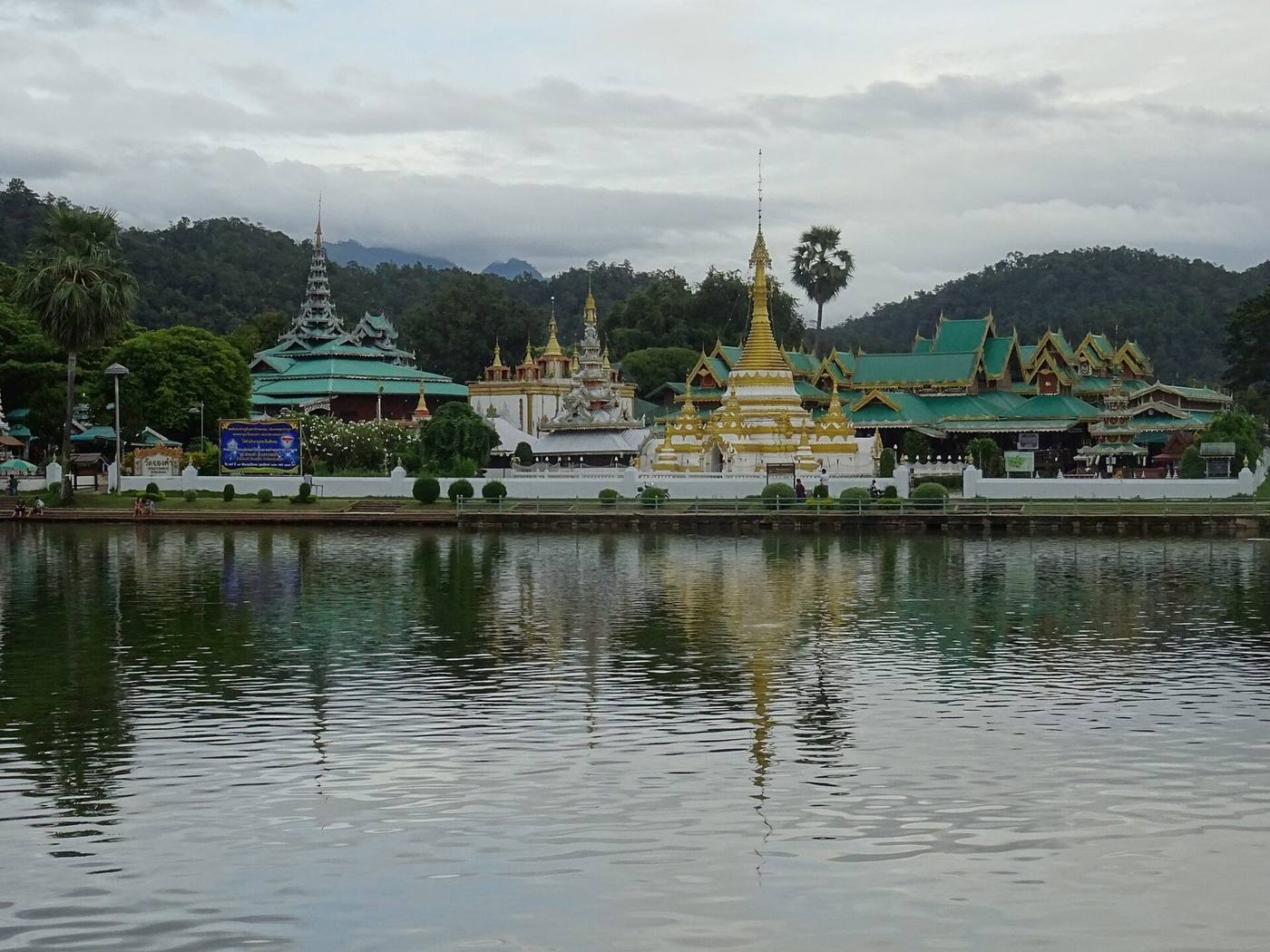
The Mae Hong Son Loop
A circuit through the mountains on the Myanmar border: Pai, the caves of Soppong, Mae Hong Son and Mae Sariang, the summit of Doi Inthanon and an elephant sanctuary with no riding.
 12 daysChallenging
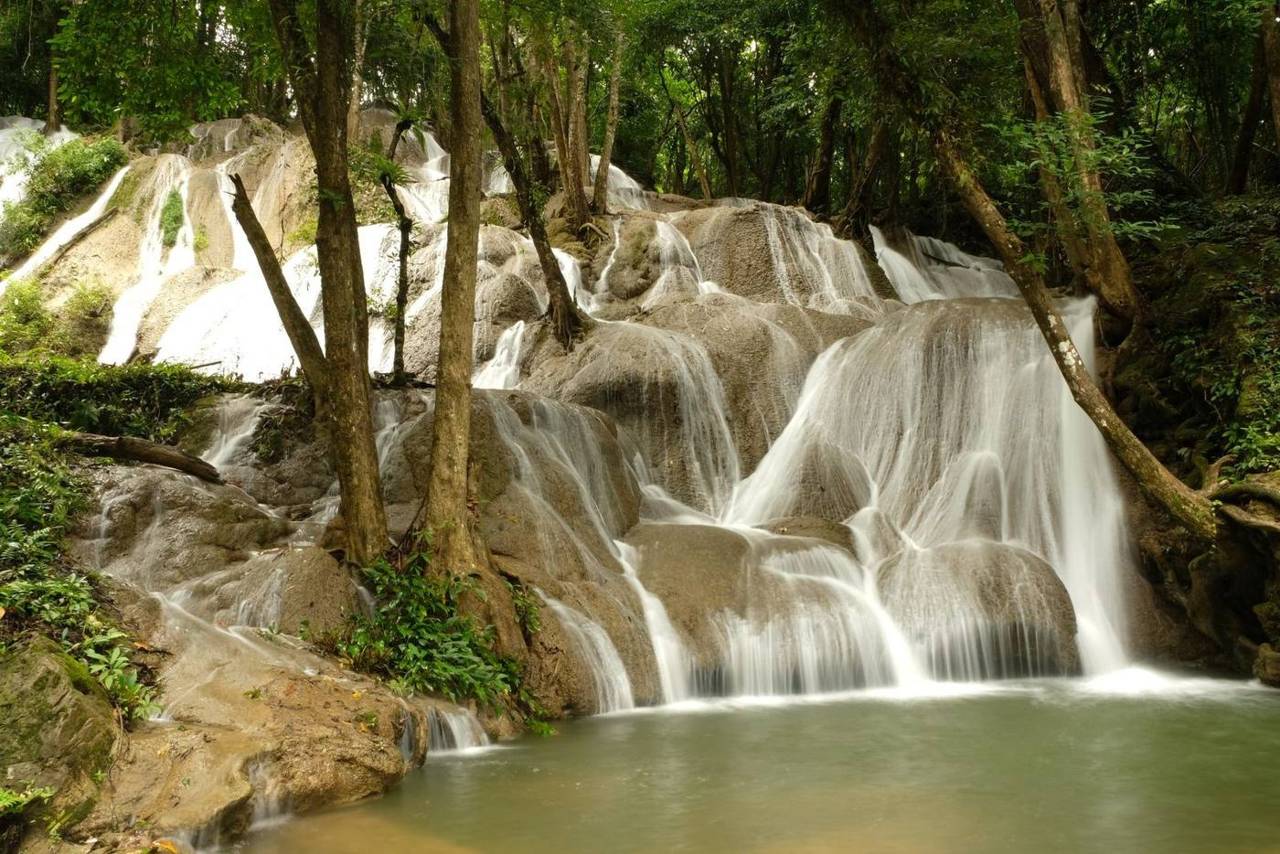
The West: Kanchanaburi, Sangkhlaburi and Thi Lo Su Falls
Along the Myanmar border from the Death Railway to the Mon village of Sangkhlaburi, then Mae Sot and Umphang, with a rafting descent and a trek to the country's largest waterfall.
 10 daysModerate
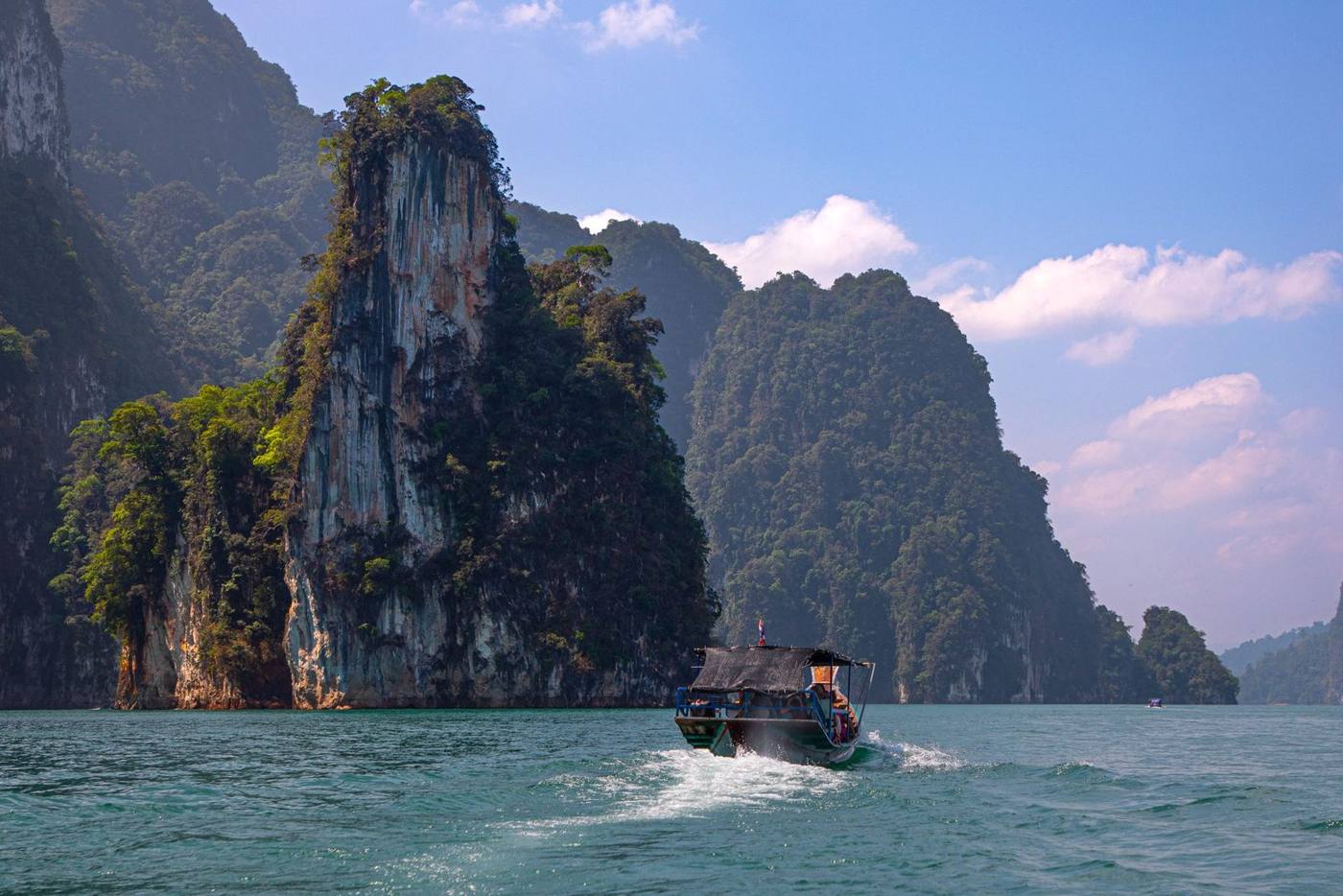
The Southern Forests: Kui Buri, Sam Roi Yot and Khao Sok
A journey of wildlife and rainforest: the wild elephants of Kui Buri, the royal cave of Phraya Nakhon and two nights in floating bungalows on Cheow Lan lake.