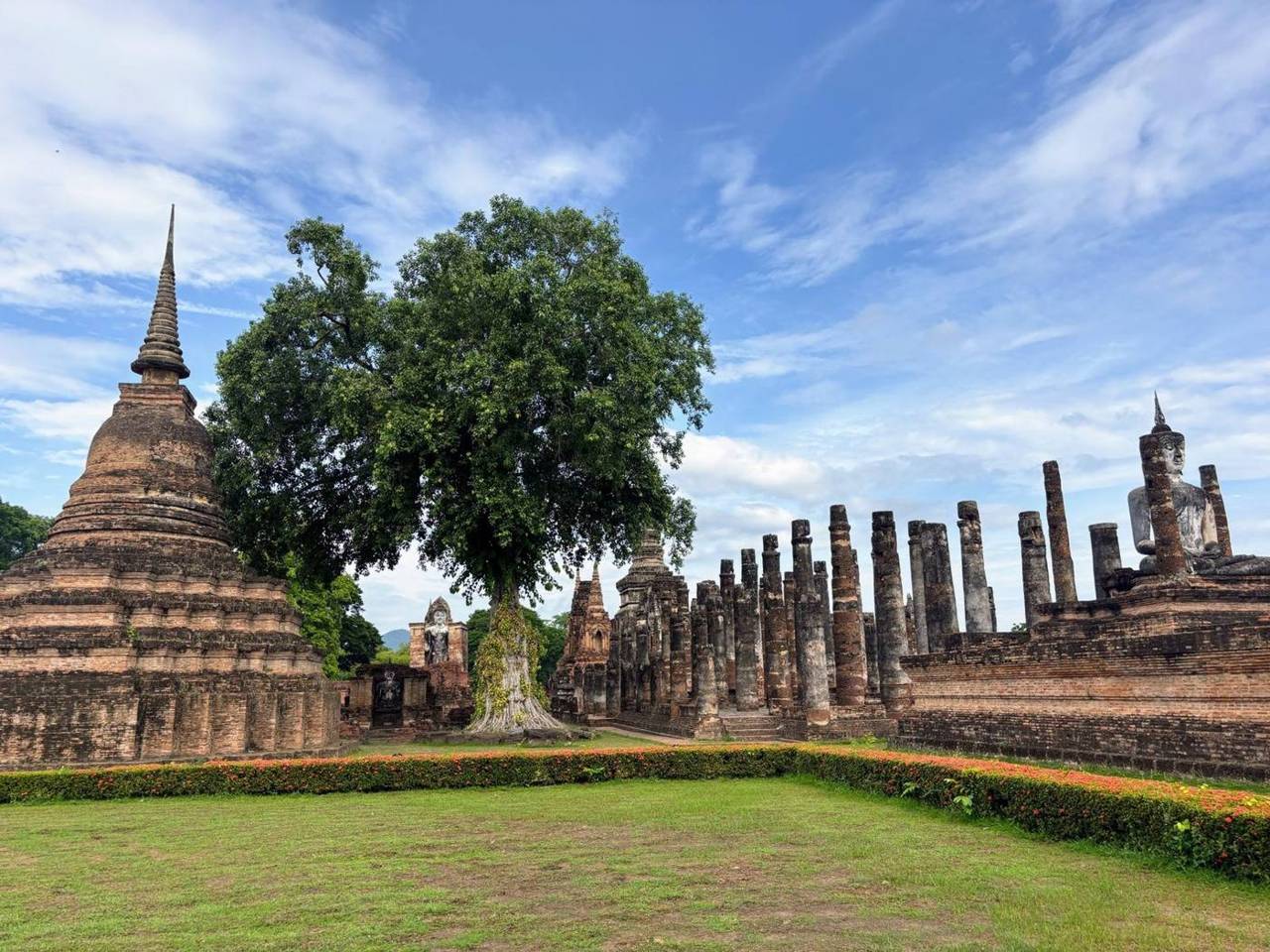
Thailand and Cambodia: from Sukhothai to Angkor
Trekking among northern hill villages, the old capitals of Siam, then the temples of Angkor, Tonle Sap lake and Phnom Penh with its Khmer Rouge memorial sites.
- Bangkok
- Chiang Mai
- Chiang Rai
- Lampang
- Sukhothai
- Lopburi
- Ayutthaya
- Siem Reap
- Tonle Sap
- Phnom Penh
Day by day
- Day 1
Arrival in Bangkok
This trip tells the story of one civilisation from both sides of the border: in Thailand Bangkok, the mountain villages of the North, Lampang and the old capitals of Siam, Sukhothai, Lopburi and Ayutthaya; in Cambodia the temples of Angkor, Tonle Sap lake and Phnom Penh with the memorial sites of the Khmer Rouge. Between the two countries you fly from Bangkok to Siem Reap, because the land crossings are closed.
Before you go: since 15 September 2026 Italian citizens can enter Thailand without a visa for tourism for up to 30 days, with a passport valid for at least six months, and must fill in the TDAC online in the three days before arrival. For Cambodia you need a passport valid for at least six months and a 30 day tourist visa, applied for online through the official e-visa at least a few days ahead or at the airport on arrival, paying in dollars with a photo; check the amount. Anyone arriving by air must fill in the e-Arrival Card online in the seven days before. Other nationalities should check their own rules. The British Foreign Office advises against travel within 20 kilometres on both sides of the Thailand Cambodia border, where land crossings are closed and there are mines: this trip does not go there.
You arrive at Suvarnabhumi airport after a long flight and reach the city on the airport rail link, about half an hour.
In the afternoon rest, then take the public boat on the Chao Phraya river to see the city from the water.
In the evening have dinner at a night market with pad thai and green papaya salad.
Sleep in Bangkok, for two nights.
Practical tip: buy a local SIM card at the airport. In Cambodia you will need another one.
- Day 2
A floating market and the Grand Palace
Today you combine the Thailand of the canals with that of the kings.
Set off at half past six for the Damnoen Saduak floating market, about an hour and a half south-west of Bangkok. The vendors' boats, loaded with fruit, vegetables, noodles and sweets, glide along the canals among the palms. Today it is a very touristy market: arrive early, before the groups, and look above all at the quieter side canals. Try the noodles cooked on the boats and fresh coconut.
Return to the city around midday and, in the early afternoon, visit the Grand Palace, built from 1782 when Bangkok became the capital. Inside the walls stands Wat Phra Kaew, the most sacred temple in the country, with the small Emerald Buddha, made of green jade. Around it you see golden stupas, giant guardian demons and walls painted with the stories of the Ramakien. You need covered clothing. Check prices and times: the ticket office closes in the afternoon.
Then walk to Wat Pho, with its reclining Buddha about 46 metres long, and try a Thai massage at the temple school.
At sunset take the ferry to Wat Arun, the Temple of Dawn, on the opposite bank.
In the evening have dinner in Chinatown, along Yaowarat Road, among the street food stalls.
Sleep in Bangkok.
Practical tip: if someone near the palace tells you it is closed and offers you another tour, it is a well known scam. Always go to the official entrance.
- Day 3
The night train to Chiang Mai
Today you have a morning to yourself in Bangkok and in the evening you head north.
In the morning climb the Golden Mount, Wat Saket, an artificial hill with a temple on top, reached by a spiral staircase of more than three hundred steps, with bells and a view over the whole old city. Check prices and times. Alternatively, if it is the weekend, go to Chatuchak market, with thousands of stalls.
In the afternoon rest and pack a small bag for the night, with clothes for the trek of the next few days.
Towards evening go to Krung Thep Aphiwat central station, Bangkok's large new station, from which long distance trains leave for the north. The night train to Chiang Mai takes about twelve hours and arrives the next morning.
In second class sleeper, the seats turn into beds in the evening, with curtains, sheets and pillows, made up by the staff. First class has small closed compartments for two people. It is a comfortable way to travel and saves a night in a hotel.
From the window, before dark, you see the rice fields of the central plain go by. In the morning, when you wake up, the train is climbing through hills and forests towards the north.
Have dinner before leaving or with the food sold on board.
Sleep on the train.
Practical tip: book sleeper berths on the official Thai railways website a few weeks in advance. Lower berths are wider than upper ones.
- Day 4
Chiang Mai and the start of the trek
Today you arrive in the North and start walking in the mountains.
The train reaches Chiang Mai in the morning. Chiang Mai, founded at the end of the thirteenth century, was the capital of the Lanna kingdom, with a culture, a language and an architecture different from those of Bangkok. The old city is a square surrounded by a moat and sections of wall.
In the morning take a quick tour of the old city. Visit Wat Phra Singh, with its decorated wooden buildings in Lanna style, and Wat Chedi Luang, with the ruins of a large brick stupa, damaged by an earthquake in the sixteenth century.
Late in the morning set off with your guide towards the hills north of Chiang Mai, in the direction of Chiang Rai, where the two day trek begins. Choose a route with a licensed local guide who knows the language of the villages.
In the afternoon walk through bamboo forests, tea and coffee plantations and small streams, to a village of one of the hill peoples, such as the Lahu, the Akha or the Karen. These peoples came from Myanmar, Laos and China, and each has its own language, clothing and traditions.
In the evening have dinner with the family hosting you: mountain rice, vegetables from the garden and chilli.
Sleep in a village house.
Practical tip: bring hiking boots that are already broken in, a head torch, a jacket for the evening and small notes to buy handicrafts.
- Day 5
The trek and arrival in Chiang Rai
Today you finish the trek among the villages and arrive in Chiang Rai.
In the morning you wake to the crowing of cockerels and the mist rising from the valleys. After breakfast walk towards another village, on paths that climb and descend through the hills, across fields of mountain rice grown on the slopes and through forest.
Along the way the guide explains the forest plants, how they are used for food and medicine, and village life, which is changing fast: many young people work in the cities and come back only for festivals. Respect the people: always ask before taking photographs and do not give sweets or money to children.
At midday have lunch near a waterfall, where you can swim in the cool water.
In the early afternoon finish the trek and continue by car to Chiang Rai, the northernmost city in Thailand, founded in the thirteenth century.
In the late afternoon visit Wat Rong Khun, the White Temple, a modern temple created by the artist Chalermchai Kositpipat, covered in white plaster and mirrors. Inside, the paintings mix Buddhist images with figures from modern culture. Check prices and times.
In the evening visit the Chiang Rai night market and try khao soi, the curry noodle soup typical of the North.
Sleep in Chiang Rai.
Practical tip: in the North from December to February the mornings are cool, but at midday it is hot. Dress in layers.
- Day 6
The Blue Temple and Lampang
Today you leave Chiang Rai and head south to Lampang.
In the morning visit Wat Rong Suea Ten, the Blue Temple, decorated in deep blue and gold, with a large white Buddha inside. Then visit Baan Dam, the Black House, a museum created by the artist Thawan Duchanee, with dozens of dark buildings full of horns, hides, bones and sculptures. It is a strange and powerful place, very different from the White Temple. Check prices and times.
Late in the morning set off by car southwards, about three and a half hours on the road through mountains and farmed valleys.
In the afternoon you reach Lampang, a quiet town on the Wang river, little visited by foreigners. Lampang is famous for its horse drawn carriages, which still go round the centre. Take a carriage ride among the old teak houses.
Visit Wat Si Rong Muang or Wat Pongsanuk, wooden temples built in Burmese and Lanna style by the teak merchants of the nineteenth century.
At sunset walk along the river and the old merchants' street, Kad Kong Ta, where there is a walking market at weekends.
In the evening have dinner with northern dishes, such as sai ua, the herb sausage, and nam prik ong, a tomato and meat dip with vegetables.
Sleep in Lampang.
Practical tip: Lampang is also the town of the ceramic bowls painted with a cockerel. The factories on the outskirts sell at good prices.
- Day 7
Wat Phra That Lampang Luang and Sukhothai
Today you visit one of the most beautiful temples of the North and reach the first capital of Siam.
In the morning go to Wat Phra That Lampang Luang, about twenty kilometres from Lampang. It is a fortified temple, surrounded by brick walls, built between the fourteenth and sixteenth centuries. Inside there is a large golden stupa and an open wooden hall, the viharn, among the oldest in Thailand, with decorated columns and a golden Buddha. In a small room, through a hole, the image of the stupa is projected upside down onto a cloth, like in a camera obscura.
Late in the morning set off south to Sukhothai, about three hours by road.
In the afternoon rent a bicycle at the entrance to the Sukhothai Historical Park, a UNESCO World Heritage Site since 1991. Sukhothai was the capital of the first Thai kingdom, in the thirteenth and fourteenth centuries. Cycle among the lotus ponds and the ruined temples. Visit Wat Mahathat, the main temple, with rows of standing and seated Buddhas and the lotus bud stupa typical of the Sukhothai style. Then Wat Sa Si, on a small island in the middle of a pond.
Outside the walls go to Wat Si Chum, where a huge seated Buddha, about fifteen metres high, looks out through a narrow opening in the wall.
At sunset the ruins turn orange.
Sleep in Sukhothai.
Practical tip: the park is divided into zones with separate tickets. Check prices and times and bring water: there is little shade among the ruins.
- Day 8
Lopburi and its monkeys
Today you go down to the central plain, to Lopburi.
Early in the morning, if you wish, take one last bicycle ride among the ruins of Sukhothai, in the soft light of dawn, with monks walking on their alms round.
Then set off by car southwards, about five hours, through rice fields, sugar cane and small villages. Stop for lunch at a service area or a small place along the road.
In the afternoon you reach Lopburi, one of the oldest towns in Thailand, inhabited before the Thai kingdoms, in the period of the Dvaravati culture and then under the Khmer empire.
Visit Phra Prang Sam Yot, a thirteenth century Khmer temple with three laterite towers joined by corridors, built as a Hindu shrine and later Buddhist. Around it live hundreds of macaques, which jump on the towers, the power lines and the cars. In November the town holds a big festival with a fruit banquet for the monkeys. Check prices and times.
Then visit the palace of King Narai, from the seventeenth century, where the king received the French ambassadors of the court of Louis XIV. Today it is a national museum, with statues and objects from different periods.
In the evening have dinner at a local market, away from the monkeys.
Sleep in Lopburi or in Ayutthaya, about an hour away.
Practical tip: at Phra Prang Sam Yot take off glasses, hat and earrings, and do not hold food or bottles. The monkeys steal everything, and they can bite.
- Day 9
Ayutthaya and return to Bangkok
Today you visit the old capital of the kingdom of Siam, before going back to Bangkok.
Ayutthaya was founded in 1351, on an island where three rivers meet, and for more than four centuries it was one of the largest and richest cities in Asia, with Portuguese, Dutch, Japanese and Chinese traders. In 1767 the Burmese army captured and destroyed it. Today its ruins are a UNESCO World Heritage Site.
In the morning rent a bicycle or a tuk-tuk with driver. Visit Wat Mahathat, where the head of a stone Buddha is wrapped in the roots of a fig tree. Kneel or crouch to photograph it: you must not stand higher than the Buddha's head.
Then go to Wat Phra Si Sanphet, with its three large bell shaped stupas in a row, the old temple of the royal palace. Next to it is Wihan Phra Mongkhon Bophit, with a large bronze Buddha.
In the afternoon visit Wat Chaiwatthanaram, on the riverbank, with a large central tower in Khmer style surrounded by smaller towers. It is at its best at sunset, but today head back to Bangkok in the late afternoon. Check temple prices and times.
Return to Bangkok by car or train, about an hour and a half.
In the evening pack for Cambodia and make sure you have your visa or everything needed to apply for it on arrival.
Sleep in Bangkok.
Practical tip: in Ayutthaya, after ten, the heat is strong. Start early, stop at midday and set off again in the afternoon.
- Day 10
Flight to Siem Reap
Today you leave Thailand and fly to Cambodia.
In the morning take the flight from Bangkok to Siem Reap, just over an hour. The land crossings between the two countries have been closed since the border clashes of 2025, so flying is the only option. You arrive at the new Siem Reap-Angkor International Airport, about an hour from town.
On arrival show your completed e-Arrival Card and your e-visa, or apply for a visa at the counter, with a photo and US dollars in cash. In Cambodia the riel and the US dollar are used together: prices in shops and markets are often in dollars, and change is given in riel.
Siem Reap is a quiet town on the river of the same name, which grew thanks to the temples of Angkor, a few kilometres to the north.
In the afternoon buy your Angkor pass at the official ticket office, if you want to enter tomorrow at dawn. There are one, three and seven day passes: for this trip take the three day one. Check prices and times on the official website.
Then visit the Angkor National Museum or walk along the river to the old market, with spices, dried fish and fabrics.
In the evening try amok, fish curry steamed in banana leaves, the most famous dish of Khmer cuisine.
Sleep in Siem Reap, for four nights.
Practical tip: bring new, undamaged dollar notes. Torn or worn notes are often refused.
- Day 11
Angkor: the small circuit
Today you visit the most famous temples of Angkor, a UNESCO World Heritage Site since 1992.
Angkor was the capital of the Khmer empire between the ninth and fifteenth centuries, one of the largest cities of the ancient world, with canals, reservoirs and hundreds of stone temples in the middle of the forest.
Set off at five by tuk-tuk to see sunrise over Angkor Wat, the largest religious monument in the world, built in the first half of the twelfth century by King Suryavarman II and dedicated to Vishnu. Its five towers shaped like lotus buds are reflected in the pond in front of the entrance. After sunrise go in and walk through the galleries, with kilometres of reliefs: battles, the churning of the ocean of milk, heaven and hell. Climb, if it is open, to the highest terrace.
Then go to Angkor Thom, the great fortified city of King Jayavarman VII, from the late twelfth century. You enter through the south gate, with rows of statues holding a serpent. In the centre stands the Bayon, the temple with dozens of towers carved with large smiling stone faces. Then walk along the Terrace of the Elephants and the Terrace of the Leper King.
In the afternoon visit Ta Prohm, the temple partly left to the forest, where the huge roots of the trees embrace walls and doorways.
Return to Siem Reap to rest during the hottest hours.
Sleep in Siem Reap.
Practical tip: cover your shoulders and knees, because it is compulsory in the highest temples. Bring plenty of water: among the stones it is very hot from ten onwards.
- Day 12
Angkor: the grand circuit
Today you follow the grand circuit, with temples that are less crowded and just as beautiful.
Early in the morning visit Preah Khan, the temple of the sacred sword, built in 1191 by Jayavarman VII in honour of his father. It was a large monastery and school, with very long corridors, doorways one behind another, trees growing on the walls and a two storey building with round columns, unique at Angkor.
Then go to Neak Pean, a small shrine on a round island in the middle of an ancient reservoir. You reach it along a long wooden walkway over a pond. According to tradition, its pools had healing powers.
Continue with Ta Som, small and peaceful, with a fig tree wrapped around the east gate, and the East Mebon, a temple mountain that once stood on an island in the middle of a large reservoir, now dry, with statues of elephants at the corners.
At midday have lunch at one of the small places near the temples, then rest.
If you have time, in the afternoon go to Banteay Srei, about thirty kilometres away, a small tenth century temple in pink sandstone, with the finest carvings in all of Angkor.
At sunset climb Pre Rup, a temple mountain of brick and laterite, from which you watch the sun go down over the plain and the rice fields.
Sleep in Siem Reap.
Practical tip: for the grand circuit hire a tuk-tuk for the whole day and agree the price and the route before setting off.
- Day 13
Tonle Sap lake and the floating villages
Today you discover the great lake that gives life to the whole of Cambodia.
Tonle Sap is the largest freshwater lake in South-East Asia. It has a unique phenomenon: in the rainy season the Mekong swells and pushes water back up the Tonle Sap river, which changes direction and fills the lake, which becomes many times larger. In the dry season the river flows back towards the Mekong. The lake is one of the richest freshwater fishing areas in the world.
In the morning go to the village of Kampong Phluk, about an hour south-east of Siem Reap. The houses are built on very tall stilts, up to about six metres high, because in the rainy season the water rises to a few metres below the doors. In the dry season you see the bare stilts and life beneath the houses, with nets spread out and boats on dry land.
Board a boat and cross the flooded forest, where trees grow in the water, to the open lake, which looks like a sea.
In the afternoon, if you wish, visit the village of Kampong Khleang, larger and less touristy, or return to Siem Reap to rest.
In the evening watch a Cambodian circus show, which combines acrobats, theatre and music and was born from a school for young artists.
Sleep in Siem Reap.
Practical tip: in the lake villages do not buy sacks of rice or school notebooks offered from the boats: it is often a scam. If you want to help, choose reputable charities.
- Day 14
The journey to Phnom Penh
Today you cross Cambodia to the capital.
In the morning leave Siem Reap by car with driver or by bus heading south, about six hours on National Road 6. If you prefer, there is also a flight of less than an hour.
Along the road you see the Cambodian countryside: flat rice fields, sugar palms, wooden houses on stilts, white cows and children on bicycles. Stop at Skun, a town famous for a market selling fried spiders, and try them if you dare.
If you travel by car, you can make a detour to Sambor Prei Kuk, near Kampong Thom, a UNESCO World Heritage Site since 2017. These are the remains of Isanapura, capital of a Khmer kingdom of the sixth and seventh centuries, older than Angkor, with brick temples in the middle of the forest. Check prices and times.
In the afternoon you reach Phnom Penh, at the confluence of the Mekong and the Tonle Sap. It is a lively city, full of mopeds and building sites, with tree lined boulevards built during the French colonial period and Buddhist pagodas.
At sunset walk along the riverfront, Sisowath Quay, where families exercise, play and stroll. Visit Wat Ounalom, the centre of Cambodian Buddhism.
In the evening have dinner with lok lak, stir fried beef with a lime and Kampot pepper sauce.
Sleep in Phnom Penh, for three nights.
Practical tip: in Phnom Penh keep your phone and bag away from the road side. Bag snatching from mopeds is common.
- Day 15
Royal Palace, Silver Pagoda and National Museum
Today you discover the historic heart of Phnom Penh.
In the morning visit the Royal Palace, built from the mid nineteenth century, when the king moved the capital here. The king still lives in part of the palace, closed to the public. You visit the gardens and the buildings with their tiered yellow and gold roofs, such as the Throne Hall.
In the same complex is the Silver Pagoda, so called because the floor is covered in thousands of silver tiles. Inside are kept a small Buddha of green crystal, known as the Emerald Buddha, and a large gold Buddha decorated with diamonds. Cover your shoulders and knees. Check prices and times: the palace closes for a break at midday.
Next door visit the National Museum, in a red building in Khmer style, with the richest collection of Khmer sculpture in the world, including statues of Vishnu, Shiva and King Jayavarman VII.
In the afternoon go to the Central Market, a large yellow art deco building with a dome, built in the 1930s. Then visit Wat Phnom, the pagoda on the small hill which, according to legend, gave the city its name.
At sunset take a boat cruise on the Mekong and the Tonle Sap, with a view of the illuminated palace.
Sleep in Phnom Penh.
Practical tip: the Russian Market, Psar Tuol Tom Poung, is the best for fabrics, silk and handicrafts. Always bargain with a smile.
- Day 16
Tuol Sleng and Choeung Ek
Today is a heavy day, devoted to the memory of the Khmer Rouge regime. Plan nothing else for it.
Between 1975 and 1979 the Khmer Rouge, led by Pol Pot, emptied the cities and forced the population to work in the fields. Executions, hunger, forced labour and disease killed about a quarter of the population, according to many estimates.
In the morning visit the Tuol Sleng Genocide Museum, in the former high school that became prison S-21. Here thousands of people were imprisoned, interrogated and tortured. The classrooms are still divided into small cells, and on the walls are the photographs of the prisoners, taken on arrival. Very few survived. Take the audio guide, which tells the stories of the victims. Check prices and times.
In the early afternoon go to the Choeung Ek Genocidal Centre, about fifteen kilometres south of the city, one of the killing fields. Many people who passed through S-21 were killed here. In the centre stands a glass memorial stupa with thousands of victims' skulls. Walk in silence among the mass graves, following the audio guide.
Since 2025 Tuol Sleng, Choeung Ek and the M-13 prison have been UNESCO World Heritage Sites as places of memory.
In the afternoon return to the city and rest. In the evening have a quiet dinner near the river.
Sleep in Phnom Penh.
Practical tip: dress respectfully, speak quietly and do not photograph people. If you travel with teenagers, think carefully about the visit.
- Day 17
Flight home
On the last day you leave from the new Techo International Airport in Phnom Penh, opened in 2025 south of the city. Allow plenty of time to get there, because traffic leaving the city can be slow. From here there are flights with a stopover in Asia or the Gulf to Europe.
If your flight is in the afternoon, in the morning take a last walk along the riverfront at dawn, when Cambodians exercise and monks pass on their alms round.
What to bring home: hand woven silk, krama cotton scarves, Kampot pepper, stone or wooden statues bought from reputable workshops, Cambodian silver, and from Thailand Lampang ceramics, northern tea and fabrics of the hill peoples.
This trip joins two countries that share a long history of kingdoms, temples and religion. In Thailand you saw Bangkok, the mountain villages, the wooden temples of Lampang and the ruins of Sukhothai, Lopburi and Ayutthaya. In Cambodia you saw Angkor, Tonle Sap lake and Phnom Penh, with the beauty of the Royal Palace and the pain of memory.
When to go: the best period is from November to February, in the dry and cooler season, with clear skies and bearable temperatures. From March to May it is very hot. From June to October it rains, but Tonle Sap is at its fullest and the rice fields are green.
Practical tip: to leave Cambodia keep the departure form you received on entry, if you were given one. If you lose it, ask immigration before your flight.
The right trip for anyone who wants to understand the region rather than just see it: the Thai capitals and Angkor tell the story of the same civilisation from both sides of the border. The first half partly overlaps the northern itinerary, so there is no point doing both. The land border between Thailand and Cambodia is closed: AnM adds a domestic flight at extra cost, to be checked when booking. At Angkor, start at dawn; by 10 a.m. it is already hot.
Before you go
- Documents and visa
- Passport valid for at least six months. Since 15 September 2026 many nationalities, including most EU citizens, enter without a visa for tourism for up to 30 days. Before each entry, within the three days beforehand, the no-cost Thailand Digital Arrival Card (TDAC) must be completed online on the official website.
- Health and vaccines
- No vaccines required arriving from Europe; ask your doctor about hepatitis A and typhoid. Dengue is present: use repellent. Do not drink tap water. Health insurance recommended. Emergencies: 191 police, 1669 ambulance, 1155 tourist police.
- Money and payments
- Baht. Cards accepted in cities and hotels; markets and small places need cash. ATMs charge a flat fee for withdrawals with foreign cards.
- Power sockets
- Types A, B, C and O, 220 volts: bring a universal adapter.
- Time zone
- UTC+7, no daylight saving time.
- Safety
- A safe country for travellers. Avoid the southernmost provinces near Malaysia and the border strip with Cambodia. Beware of tuk-tuk and gem scams, and of scooter traffic. Official advice: GOV.UK.
Information checked in November 2026 for Italian and EU citizens. Rules change: always check before you travel.
Variations
In 12 days: skip the trek and Lampang, and go from Bangkok to Sukhothai and Ayutthaya, then Siem Reap and Phnom Penh.
In 21 days: add Kampot and Kep on Cambodia's south coast after Phnom Penh, with the pepper plantations.
Frequently asked questions
Can you cross from Thailand to Cambodia overland?
No, the land crossings have been closed since 2025 and the British Foreign Office advises against the 20 kilometres from the border. The trip uses a Bangkok to Siem Reap flight. Check the state of the border before you leave.
What documents do I need for Cambodia?
A passport valid for at least six months, a 30 day tourist visa, online or on arrival in dollars with a photo, and the e-Arrival Card online in the seven days before the flight. Other nationalities should check their own rules.
How much time do you need for Angkor?
At least two full days, with the three day pass: one for the small circuit with Angkor Wat, the Bayon and Ta Prohm, one for the grand circuit with Preah Khan and Neak Pean.
Indicative itinerary written by World Atlas. Before booking, check timetables, seasonal openings, documents and safety.
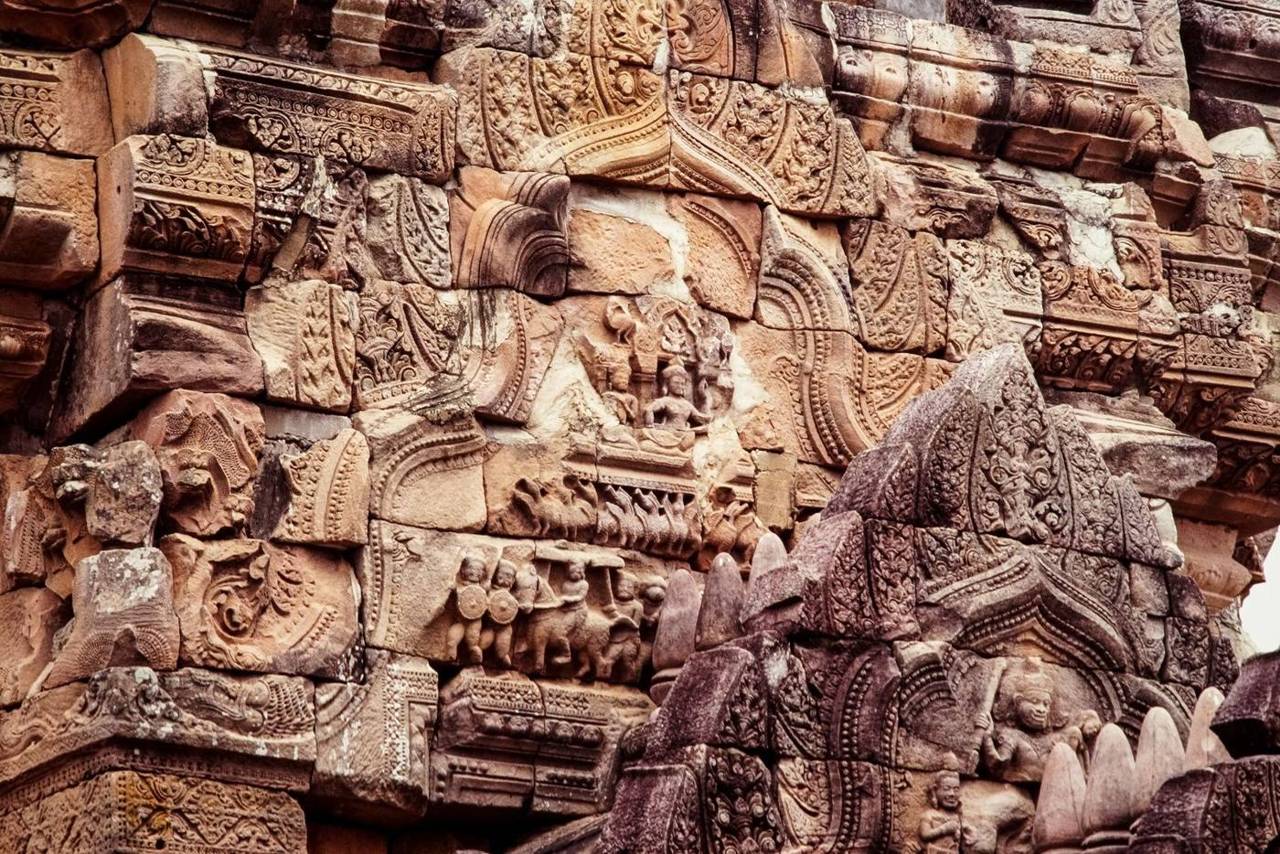 11 daysEasy
Isan: Khao Yai and the Khmer temples to the Mekong
The Thailand most visitors skip: wild elephants and hornbills in Khao Yai, the Khmer sanctuaries of Phimai and Phanom Rung, and the rock paintings of Pha Taem above the Mekong.
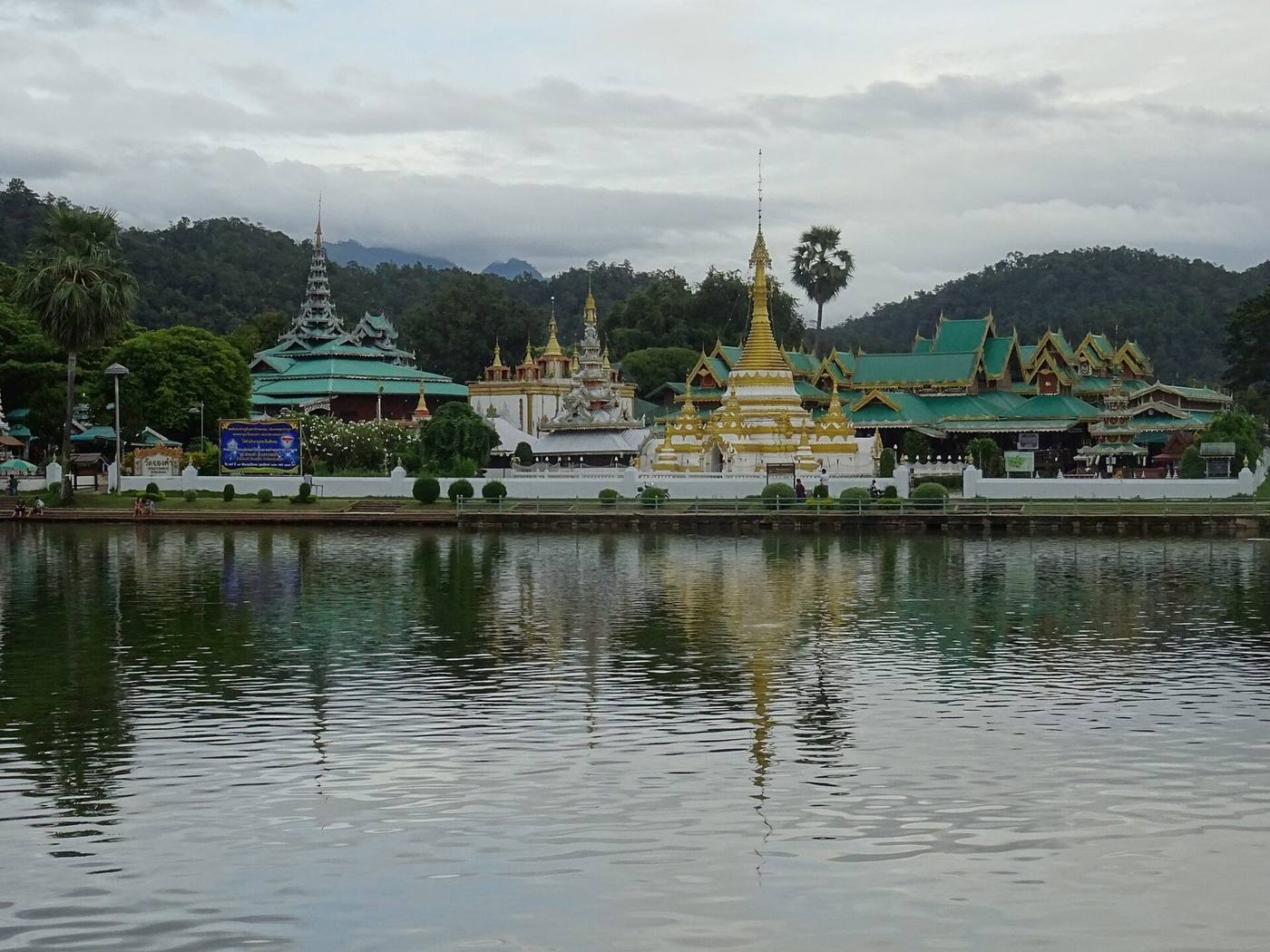 10 daysModerate
The Mae Hong Son Loop
A circuit through the mountains on the Myanmar border: Pai, the caves of Soppong, Mae Hong Son and Mae Sariang, the summit of Doi Inthanon and an elephant sanctuary with no riding.
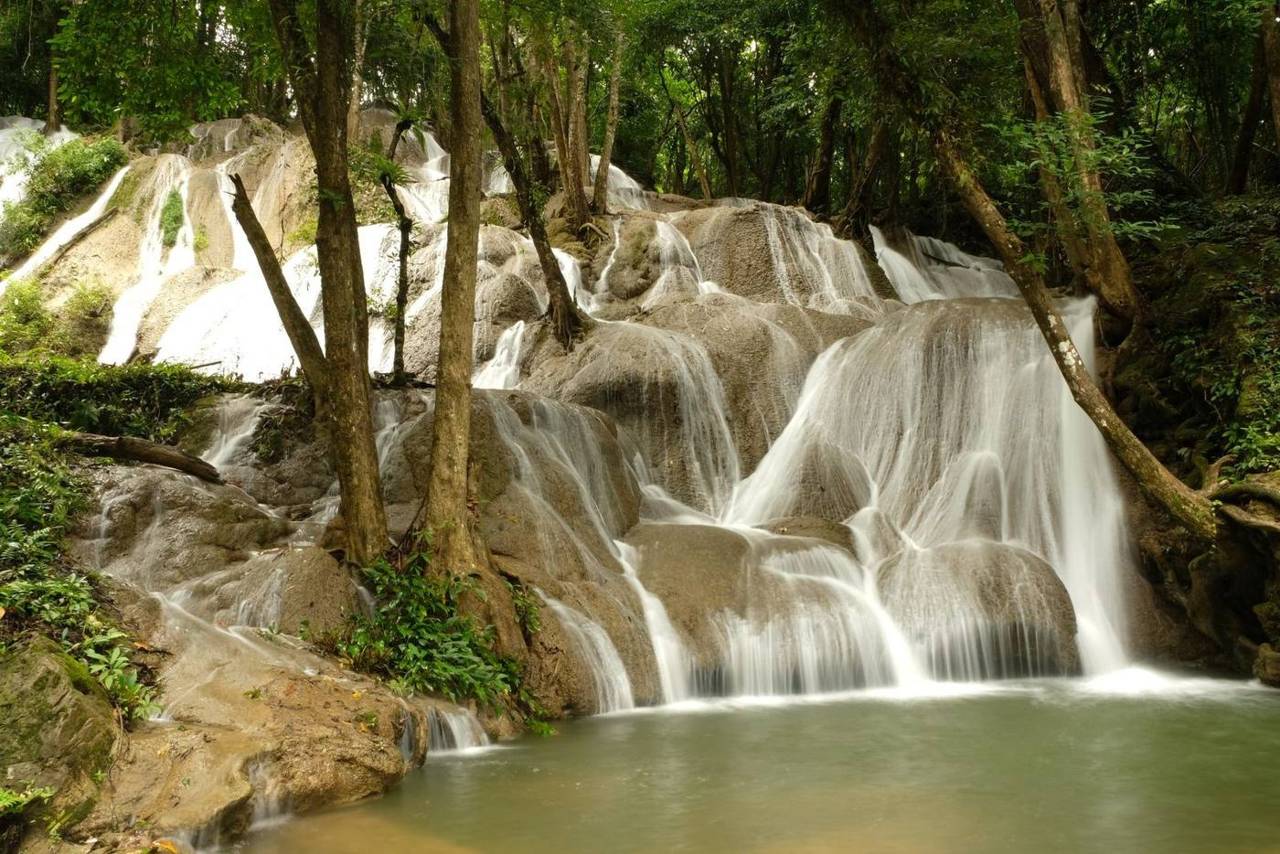 12 daysChallenging
The West: Kanchanaburi, Sangkhlaburi and Thi Lo Su Falls
Along the Myanmar border from the Death Railway to the Mon village of Sangkhlaburi, then Mae Sot and Umphang, with a rafting descent and a trek to the country's largest waterfall.