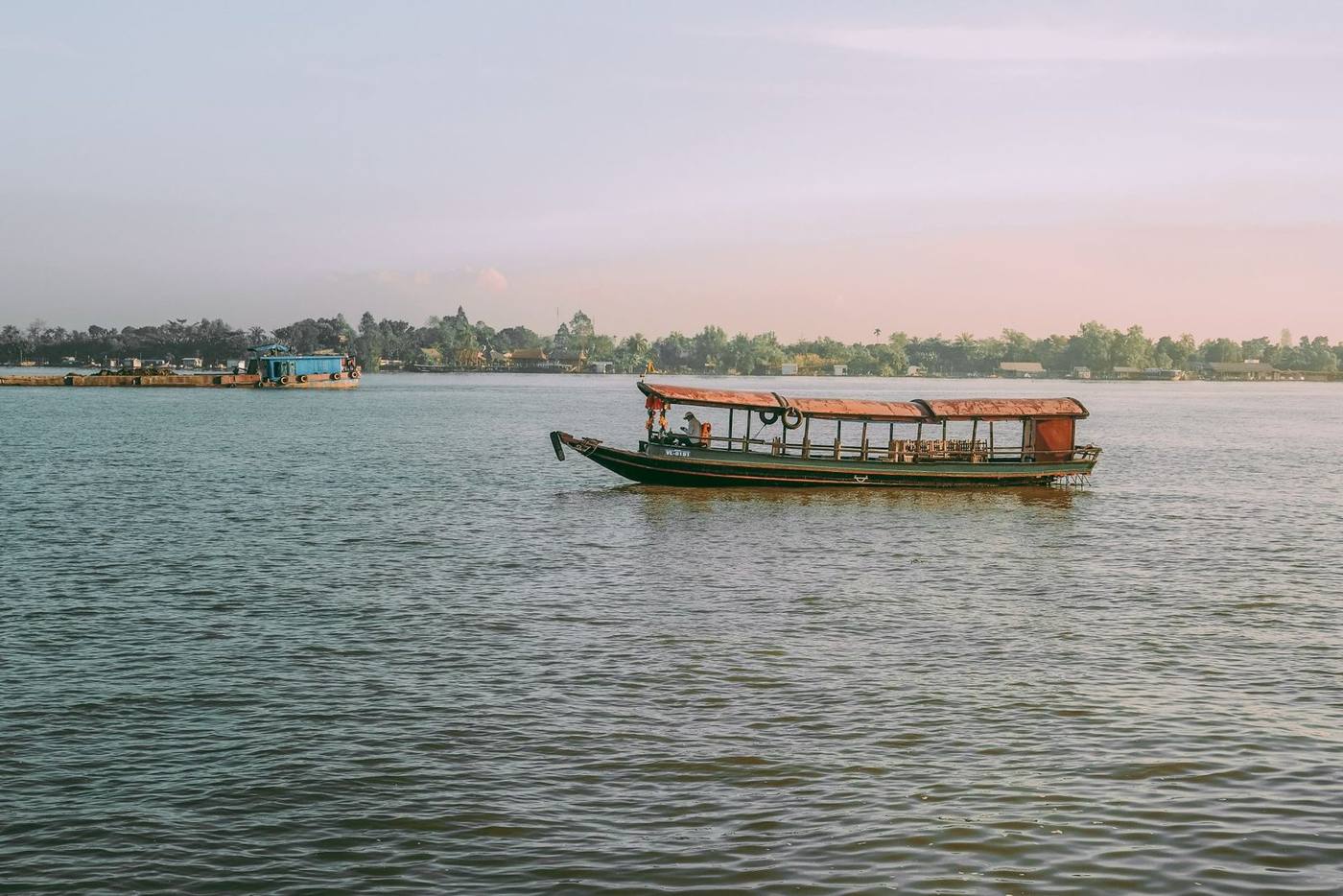
Thailand and Laos: from the Golden Triangle down the Mekong
From northern Thailand you cross the Mekong at Huay Xai, take two days of slow boat to Luang Prabang, then Vang Vieng and Vientiane, and finish with three beach days on Ko Samet.
- Bangkok
- Chiang Mai
- Chiang Rai
- Chiang Saen
- Huay Xai
- Pak Beng
- Luang Prabang
- Vang Vieng
- Vientiane
- Ko Samet
Day by day
- Day 1
Departure from Italy
This trip links two countries along the same great river: northern Thailand, with Chiang Mai, Chiang Rai and the Golden Triangle, then Laos, with two days on the slow boat down the Mekong to Luang Prabang, Vang Vieng among the karst mountains and the capital, Vientiane. At the end you return to Thailand for three days by the sea on Ko Samet. You travel by plane, by car with a driver, by boat and by coach.
Before you go: since 15 September 2026 Italian citizens can enter Thailand without a visa for tourism for up to 30 days, with a passport valid for at least six months, and must fill in the TDAC online in the three days before each arrival, including by land. For Laos you need a passport valid for at least six months, with two blank pages, and a 30 day tourist visa: the safest way is the official eVisa, applied for online at least a few days ahead, which is accepted at Friendship Bridge IV between Chiang Khong and Huay Xai. Other nationalities should check their own rules. The British Foreign Office advises against all but essential travel to Xaisomboun Province in Laos and to within 20 kilometres of the border between Thailand and Cambodia: this trip does not touch these areas.
Today is a travel day. From Rome or Milan there are flights with one stop to Bangkok, with about eleven hours in the air plus the connection. Try to sleep on board: you will land the next morning or afternoon, five or six hours ahead of Italy.
Practical tip: photograph your passport, Lao eVisa and bookings and save them offline too. At the border your phone may have no signal.
- Day 2
Arrival in Bangkok
You land at Suvarnabhumi, the main airport of Bangkok. The airport rail link reaches the centre in about half an hour and connects with the elevated metro, the Skytrain; a taxi is easier with luggage, but traffic can double the time.
This trip is designed for people who already know the capital a little, so there is no need to rush today. After a rest, take a public boat on the Chao Phraya river: from the water you see Wat Arun, the Temple of Dawn, the spires of the Grand Palace and the old wooden houses on stilts go by. It is the simplest way to feel the city without tiring yourself out.
Towards evening you can get off at Chinatown, around Yaowarat, when the stalls switch on their lights. Try a noodle soup, grilled skewers and cut fruit, mango and papaya. If you still have energy, go up to one of the city's rooftop terraces to see the lights along the river.
Tomorrow you leave early for the north, so pack light: over the next days you will move often, and the boat on the Mekong has little space for big bags. If you can, leave a suitcase in storage in Bangkok, where you will come back at the end of the trip.
Sleep in Bangkok, one night, near a Skytrain station or the river.
Practical tip: buy a local SIM card with data at the airport. In Laos you will need another one, or a roaming package.
- Day 3
Chiang Mai, the old city
In the morning fly from Bangkok to Chiang Mai: the flight takes just over an hour and there are departures all day. Chiang Mai, founded at the end of the thirteenth century as the capital of the kingdom of Lanna, is the great city of the north, cooler and slower than the capital.
Drop your bags and walk through the old city, the square enclosed by walls and a moat. Wat Phra Singh is the most revered temple: look at the gilded Lanna style decoration and the young monks studying in the courtyard. A few minutes away is Wat Chedi Luang, with its great brick chedi partly brought down by an earthquake centuries ago and still imposing.
In the afternoon stop at one of the many small neighbourhood temples, which are often quieter than the famous ones. Remember to go in with shoulders and knees covered and to take off your shoes.
In the evening go to the night bazaar, in the streets east of the old city, among crafts, hill tribe textiles and food. It is the moment to taste khao soi, the curry noodle soup with coconut milk, the signature dish of the north. If it is Sunday, the main pedestrian street of the old city turns into a long walking market.
Sleep in Chiang Mai, one night, in the old city or near Tha Phae Gate.
Practical tip: to get around town use ride hailing apps or the red songthaew, the shared pick-up trucks. Agree on the price before you get in.
- Day 4
Chiang Rai and the White Temple
Today the road climbs north-east. From Chiang Mai to Chiang Rai it takes about three hours by car or coach, through hills covered in forest, rice fields and small villages. A car with a driver for all the days in the north is worth it: the distances are short, but the stops are many.
Before entering the city, stop at Wat Rong Khun, the White Temple. It is not old: it is the work of a Thai artist who began it at the end of the 1990s and is still building it. It is entirely white, covered in fragments of mirror, with a bridge over a sea of hands reaching upwards, a symbol of human desire. Inside, the paintings mix the Buddha with characters from films and comics. Arrive early: by midday it is very crowded. Check prices and times.
In the afternoon, if you have time, go to Wat Rong Suea Ten, the Blue Temple, smaller and intense, with a great white Buddha set against deep blue.
In the centre, the golden clock tower lights up in the evening with a short light show. Around it is the night market, quieter than the one in Chiang Mai, where you can have dinner with grilled pork and sticky rice.
Sleep in Chiang Rai, one night.
Practical tip: temples in the north often have donation boxes and small entry fees. Keep small notes and coins with you.
- Day 5
Chiang Dao, Thaton and Chiang Saen
This is the longest day in the car in the north, but also one of the most beautiful. The road heads back west through the mountains to Chiang Dao, at the foot of Doi Chiang Dao, one of the highest peaks in Thailand, a great wall of limestone often wrapped in morning cloud.
Here visit Chiang Dao cave, a Buddhist temple inside the mountain: the deeper passages are explored with a local guide and an oil lamp, among stalactites and small statues of the Buddha. Check prices and times.
Then continue north to Thaton, a village on the Kok river, close to the border with Myanmar. Climb to the temple on the hill: from its terraces you see the river winding between rice fields and mountains. Have lunch with a simple fried rice or a soup at a village eatery.
In the afternoon the road comes down towards Mae Chan and reaches Chiang Saen, on the banks of the Mekong. It is one of the oldest towns in the north: the walls, the moat and red brick chedi among the trees still stand. At sunset walk along the riverfront and look at the far bank: Laos is already there.
Sleep in Chiang Saen, two nights, in a small guesthouse by the river.
Practical tip: leave at eight with water and a snack. Get enough cash in Chiang Rai: there are few cash machines in the villages along the way.
- Day 6
Doi Tung, Mae Sai and the Golden Triangle
Today you explore the corner where three countries meet. In the morning drive up Doi Tung, a mountain once covered with opium fields and today with forest and coffee and macadamia plantations, thanks to a long development project started by the mother of King Bhumibol.
Visit the Mae Fah Luang gardens, carefully kept flowering terraces, and the wooden royal villa where the Princess Mother lived in her last years. The air is cool, and sometimes you need a sweatshirt. Check prices and times.
Then go down to Mae Sai, the northernmost town in Thailand, on the border with Myanmar. The market near the border bridge is lively, with fabrics, tea and stones. Look around, but do not cross the border: Myanmar has serious security warnings and this trip does not enter it.
In the afternoon reach Sop Ruak, the point of the Golden Triangle where the Ruak river flows into the Mekong and Thailand, Laos and Myanmar meet. There is a big golden Buddha by the river and the Hall of Opium, a museum that tells the history of the opium trade in the region with maps, objects and reconstructions.
Return to Chiang Saen for the night. Tomorrow you cross the border.
Practical tip: this evening make sure you have printed your Lao eVisa approval and have some dollars in cash for small expenses at the border.
- Day 7
The border and the slow boat to Pak Beng
Early start. From Chiang Saen to Chiang Khong it takes about an hour along the Mekong. At the Thai border post you get your exit stamp, then a shuttle bus crosses Friendship Bridge IV to the Lao side at Huay Xai. Here you show your passport and eVisa approval and receive your entry stamp.
From the border a tuk-tuk takes you to the slow boat pier, where the boat usually leaves in the late morning. They are long wooden boats with benches or car seats, a roof and open sides. Arrive early to choose a seat away from the engine, which is at the back and very noisy.
Then the slowest and most beautiful part of the trip begins. For six or seven hours the river flows between forested hills, sandbanks, black rocks and small villages. You see children swimming, fishermen in dugout canoes, buffalo on the banks. There is nothing to do but watch, read and talk to the other passengers.
At sunset the boat reaches Pak Beng, a village halfway down the river that lives from river travellers. Have a simple dinner with sticky rice and laap, the minced meat salad with herbs and lime, the national dish of Laos.
Sleep in Pak Beng, one night.
Practical tip: bring an inflatable cushion, water, food for lunch and a fleece. Mornings on the river are cool, especially from December to February.
- Day 8
Down the Mekong to Luang Prabang
The boat leaves Pak Beng early in the morning. There is often mist on the river and the mountains appear slowly. Today again you have about seven hours on the water, with the river sometimes narrowing between rock walls and gentle rapids, sometimes widening between sandy beaches.
The landscape is rural Laos: wooden and bamboo houses, vegetable gardens on the banks that flood in the rainy season, small temples on top of the hills. The boat stops now and then to let villagers on or off with sacks of rice and baskets.
Towards the end of the journey you pass close to the Pak Ou caves, carved into the limestone cliff above the river and filled with thousands of small Buddha statues left by the faithful over the centuries. The slow boat does not usually stop: if you want to visit them, you can go back by boat from Luang Prabang.
In the late afternoon you arrive in Luang Prabang. The pier is a little outside the centre, so you need a tuk-tuk. The town, the old royal capital, is a UNESCO World Heritage Site: a peninsula between the Mekong and the Nam Khan river, with low roofed temples, French colonial houses and palm trees.
In the evening stroll through the night market on the main street, where women from the villages sell textiles and handmade work.
Sleep in Luang Prabang, three nights, on the peninsula or nearby.
Practical tip: Laos uses the kip, but cash machines give small amounts per withdrawal. Bring some euros or dollars too, to change in town.
- Day 9
The waterfalls of Tat Sae and Kuang Si
Today you leave town to see two very different waterfalls. Hire a tuk-tuk or a car with a driver for the whole day: it is easier than looking for a ride on the spot.
In the morning go to Tat Sae, south-east of Luang Prabang, which you reach with a short boat ride on the Nam Khan river. Here the water falls in steps between rocks and trees, forming small pools where you can swim. It is at its best after the rains, from August to December; in the dry season, from February, it may have little water. Check prices and times.
After lunch head to Kuang Si, about an hour south-west of town. It is the most famous waterfall in Laos: the water, rich in limestone, is turquoise and flows down a series of natural pools surrounded by forest. You can swim in some of them, following the signs. A steep path climbs to the top of the main fall. At the entrance there is a rescue centre for bears saved from illegal trade. Check prices and times.
Return to town in mid afternoon and rest: tomorrow you get up before dawn.
Away from marked paths in Laos, never walk through fields or woodland: the country still has a great deal of unexploded ordnance left from the war.
Practical tip: bring swimwear and a small towel. In villages and in town, cover your shoulders and legs as soon as you get out of the water.
- Day 10
Luang Prabang on foot and by bicycle
At first light, around half past five, the monks leave the temples in line and walk through the streets of the peninsula to receive sticky rice from kneeling believers. This is the morning alms round, a religious rite. Watch it from a distance, in silence, without flash and without standing in front of the line. If you want to take part, buy rice from a local family and ask how to do it, wearing covered clothes.
After breakfast hire a bicycle: the peninsula is flat and small. Start at Wat Xieng Thong, at the tip, the most beautiful temple in town, with a roof that sweeps almost to the ground and a coloured glass mosaic showing the tree of life. Check prices and times.
On the main street is the Royal Palace Museum, the residence of the last kings of Laos, with the throne halls and gifts from foreign governments. Check prices and times. Then cycle along the Nam Khan and cross one of the small bamboo bridges, which are rebuilt every year after the rains.
In the late afternoon climb the roughly three hundred steps of Phou Si, the hill in the middle of town. At the top there is a small golden chedi and a view over the Mekong at sunset. Arrive early, as it gets very busy.
In the evening try Lao food: or lam, a stew of meat, herbs and aubergine, and fried river weed with sesame.
Practical tip: one simple rule applies in town. In temples and near monks keep your legs and shoulders covered; women must not touch monks.
- Day 11
To Vang Vieng among the karst hills
Today you leave Luang Prabang and head south. The mountain road crosses one of the most beautiful areas of Laos: passes and valleys, minority villages on the ridges, forests and, towards the end, the great limestone towers that shape the landscape of Vang Vieng. By car with a driver it takes several hours, with stops at viewpoints.
There is also the fast train between Laos and China, opened in 2021, which links Luang Prabang and Vang Vieng in about an hour. If you would rather not spend the day in the car, it is a good alternative: buy tickets in advance, with your passport, because they often sell out.
Vang Vieng is a small town on the Nam Song river, surrounded by karst mountains. In past years it was known for parties; today many people come for the nature. In the afternoon walk along the river to the bridge, look at the mountains reflected in the water and, if you like, float down a stretch of river by kayak or on an inner tube, with an outfitter that provides life jackets.
At sunset hot air balloons often rise above the valley. You can watch them from the riverside.
The Foreign Office reports cases of methanol poisoning in Laos, including here. Drink only from sealed bottles of known brands and avoid spirits that are offered to you or of uncertain origin.
Sleep in Vang Vieng, one night.
Practical tip: for kayaking, keep your phone and documents in a dry bag. The Nam Song can run fast after rain.
- Day 12
Vientiane, the capital on the Mekong
In the morning, before leaving, visit one of the caves around Vang Vieng, such as Tham Chang, close to the centre, with a small spring at the exit. Then the road, or the train, takes you to Vientiane in a couple of hours.
Vientiane is a quiet capital, almost a large village, stretched along the Mekong. Start at Pha That Luang, the great golden stupa, the symbol of Laos and the most important sacred site in the country, which also appears on the national emblem. Check prices and times.
Then go to Patuxai, the victory arch in the middle of the main avenue, built in honour of those who fought for independence from France. It recalls the arch in Paris, but it is decorated with figures from Buddhist and Hindu mythology. Climb to the top to see the city from above. Check prices and times.
If you have time, stop at Wat Si Saket, one of the oldest temples in the city, with the cloister walls covered in thousands of small Buddha statues.
At sunset walk along the riverfront, where there is a market every evening and people exercise in the open air. On the other side of the river is Thailand. Have dinner with a bowl of rice noodle soup, khao piak sen, or a filled baguette, a French legacy.
Sleep in Vientiane, one night.
Practical tip: this evening fill in the Lao digital immigration form for departure online, required at Friendship Bridge I, and the TDAC to re-enter Thailand.
- Day 13
Friendship Bridge and the journey to Rayong
This is the most tiring day of the trip, but it takes you to the sea. Early in the morning reach Friendship Bridge I, about twenty kilometres from the centre of Vientiane. It was the first bridge across the Mekong between the two countries, opened in 1994. Get your exit stamp from Laos, cross the river on the shuttle bus and enter Thailand at Nong Khai.
Remember that people entering Thailand by land without a visa are normally limited to two entries a year through land borders: on this trip you use only one.
From Nong Khai take a taxi to Udon Thani airport, about an hour away. From there fly to Bangkok or, if there is a flight, to U-Tapao airport, much closer to Rayong. From Bangkok it is about three hours by road to the south-east, by car with a driver or by coach.
Rayong is a town on the east coast with few tourists, known for its fruit, its fish sauce and its fishing harbours. There is not much to see: arrive, have dinner with some grilled fish and rest. You can spend the night near the pier at Ban Phe, where the boats for Ko Samet leave.
Sleep in Rayong or Ban Phe, one night.
Practical tip: book the domestic flight in advance and leave at least three hours between reaching the bridge and the departure of your flight. There can be queues at the border.
- Day 14
Ko Samet, arriving on the island
From Ban Phe pier the boat to Ko Samet takes about half an hour, the speedboat even less. The island is part of Khao Laem Ya and Mu Ko Samet National Park: you pay the park entry fee on arrival. Check prices and times.
Ko Samet is long and narrow, with an east coast full of white sand bays and calm water and a rockier west coast. It is close to Bangkok, so at weekends many Thai families come; on weekdays it is quieter.
Settle into one of the bays on the east side and spend the afternoon without plans. After two weeks of roads, borders and boats, it is time to stop. The sand of Ko Samet is very fine and almost white, because of the quartz.
In the late afternoon walk north to Hat Sai Kaew, the main beach near the pier. Here stands the statue of the mermaid and the prince, taken from a long classical Thai poem by the poet Sunthorn Phu, who set part of his story on the island.
In the evening, on many beaches, tables are set out on the sand with lanterns. Try a whole grilled fish with a lime, garlic and chilli sauce, or a coconut soup.
Sleep on Ko Samet, three nights.
Practical tip: there are few cash machines on the island and some places accept only cash. Withdraw money in town before you board the boat.
- Day 15
Snorkelling around the islands
Today you go out by boat. From the main beaches there are half day or full day trips to the small islands around Ko Samet, such as Ko Kudee and Ko Thalu, with clearer water and small coral reefs.
Choose a small boat with fewer people, and ask beforehand how many stops it makes and whether a mask and a life jacket are included. The sea in the gulf is not as clear as the Andaman Sea, but on calm days you can see parrotfish, butterflyfish, sea urchins and hard corals near the rocks. Swim without touching anything and without standing on the coral.
During the beach stops you can rest in the shade and have lunch with fried rice and fruit. Some of the islands are tiny, with a single bay and a small patch of forest.
In the afternoon, back on Ko Samet, stay on the beach or have a Thai massage in the shade under the trees. The bays of Ao Phai and Ao Wong Deuan, on the east side, are good for a swim at sunset, when the water is warmer and the light softer.
The evening is quiet: Ko Samet has a few beach bars, but it is not a party island. Look at the stars where there is little light, especially in the bays further south.
Practical tip: wear water resistant sun cream and a T-shirt for snorkelling. The midday sun on the sea burns within minutes.
- Day 16
The southern bays and the sunset to the west
The last full day by the sea is for exploring the island. You can walk along the paths that link the bays on the east side, over rocks and between trees, or hire a scooter if you are used to riding one and have a licence with an international driving permit. The inland roads are steep and sandy: in the heat, walking is often the best choice.
Towards the south the beaches become smaller and quieter. Ao Thian, also called Candlelight Beach, is made up of small coves separated by rocks, with few buildings. Here the water is shallow and calm, good for a relaxed swim.
In the afternoon cross the island to the west side, to Ao Prao, the only large bay facing the sunset. The coast here is wilder and the sun goes down over the sea, above the distant mainland.
Go back east for the last dinner on the beach. It is also time to repack your bag and think about the journey you have made: from the Mekong to the gulf, from the mountains of the north to the sea.
If you still have energy, take a night walk on the sand with a torch: on moonless nights, at some times of year, the water near the shore glows with tiny luminous organisms.
Practical tip: check today the boat times for Ban Phe and book your transfer to Bangkok, so there are no surprises tomorrow.
- Day 17
Back to Bangkok and flight to Italy
In the morning take the boat to Ban Phe and then a car or coach to Bangkok. From the island to Suvarnabhumi airport it takes about four hours in all, so choose an evening flight. If you left a suitcase in storage in town, allow time to collect it.
On this trip you have seen Bangkok from the river, the temples of Chiang Mai and the White Temple in Chiang Rai, the mountains of Chiang Dao and the Golden Triangle, then two days on the slow boat down the Mekong to Luang Prabang, the waterfalls of Kuang Si, the karst mountains of Vang Vieng and the capital, Vientiane. At the end you rested for three days on the beaches of Ko Samet. It is a trip of roads and rivers, with many hours of transfers, but it pays you back with landscapes and encounters.
When to go: the best period is from November to February, with dry days and cool mornings in the north and on the river. March and April are very hot and in the north the air is often full of smoke from agricultural fires. From May to October it is the rainy season: the Mekong is higher and the waterfalls are more beautiful, but mountain roads can be hit by landslides and the sea around Ko Samet is rougher.
Before your flight, if you have time, eat one last noodle soup at a market near the airport.
Practical tip: at Suvarnabhumi airport, security and passport checks can take a long time. Arrive at least three hours before your flight.
For travellers who have already seen Bangkok and want a journey of roads and rivers more than monuments. The slow boat on the Mekong is the heart of the route, and Luang Prabang alone justifies the trip. The drawback is the long transfers, especially Vientiane to Rayong, and Ko Samet, close and easy but not among the finest islands. Bring clean US dollar notes for the Lao visa at the border.
Before you go
- Documents and visa
- Passport valid for at least six months. Since 15 September 2026 many nationalities, including most EU citizens, enter without a visa for tourism for up to 30 days. Before each entry, within the three days beforehand, the no-cost Thailand Digital Arrival Card (TDAC) must be completed online on the official website.
- Health and vaccines
- No vaccines required arriving from Europe; ask your doctor about hepatitis A and typhoid. Dengue is present: use repellent. Do not drink tap water. Health insurance recommended. Emergencies: 191 police, 1669 ambulance, 1155 tourist police.
- Money and payments
- Baht. Cards accepted in cities and hotels; markets and small places need cash. ATMs charge a flat fee for withdrawals with foreign cards.
- Power sockets
- Types A, B, C and O, 220 volts: bring a universal adapter.
- Time zone
- UTC+7, no daylight saving time.
- Safety
- A safe country for travellers. Avoid the southernmost provinces near Malaysia and the border strip with Cambodia. Beware of tuk-tuk and gem scams, and of scooter traffic. Official advice: GOV.UK.
Information checked in November 2026 for Italian and EU citizens. Rules change: always check before you travel.
Variations
Shorter version: skip Ko Samet and fly back to Bangkok from Vientiane, in twelve or thirteen days.
Longer version: add three days at Luang Prabang for the Pak Ou caves and the Nam Ou river up to Nong Khiaw.
Frequently asked questions
Do I need a visa for Laos?
Yes. Italian citizens need a 30 day tourist visa. The safest way is the official eVisa, applied for online a few days ahead: it is accepted at Friendship Bridge IV between Chiang Khong and Huay Xai and at Friendship Bridge I in Vientiane.
Is the slow boat on the Mekong comfortable?
It is basic: wooden benches or seats, a roof and a simple toilet. You travel for about seven hours a day for two days, with a night in Pak Beng. Bring a cushion, water and food.
Can I avoid the long hours on the road?
In part. Between Luang Prabang, Vang Vieng and Vientiane you can take the fast train between Laos and China, and from Udon Thani you can fly to Bangkok. The slow boat, however, is the heart of the trip.
Indicative itinerary written by World Atlas. Before booking, check timetables, seasonal openings, documents and safety.
 17 daysModerate
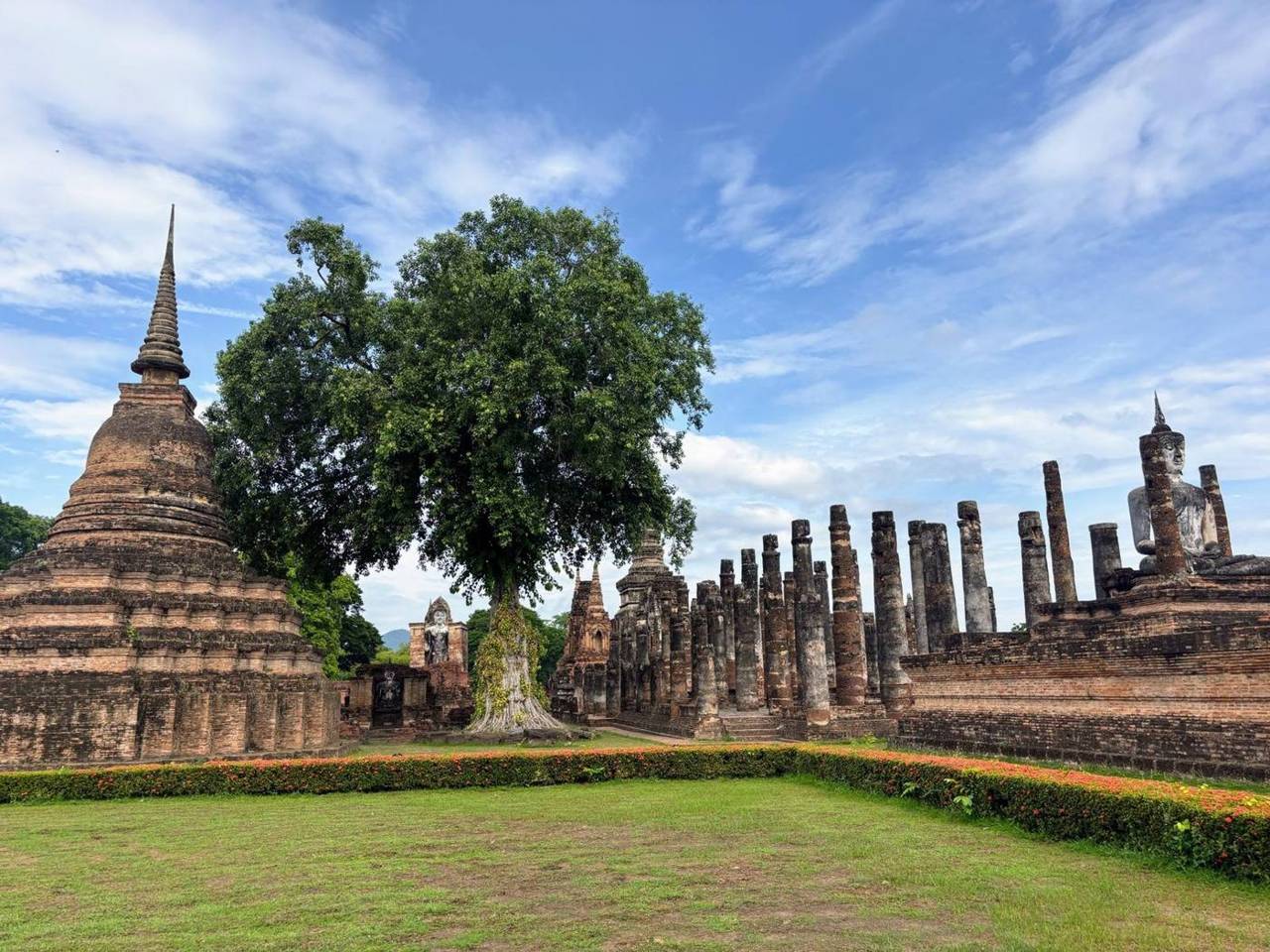
Thailand and Cambodia: from Sukhothai to Angkor
Trekking among northern hill villages, the old capitals of Siam, then the temples of Angkor, Tonle Sap lake and Phnom Penh with its Khmer Rouge memorial sites.
 11 daysEasy
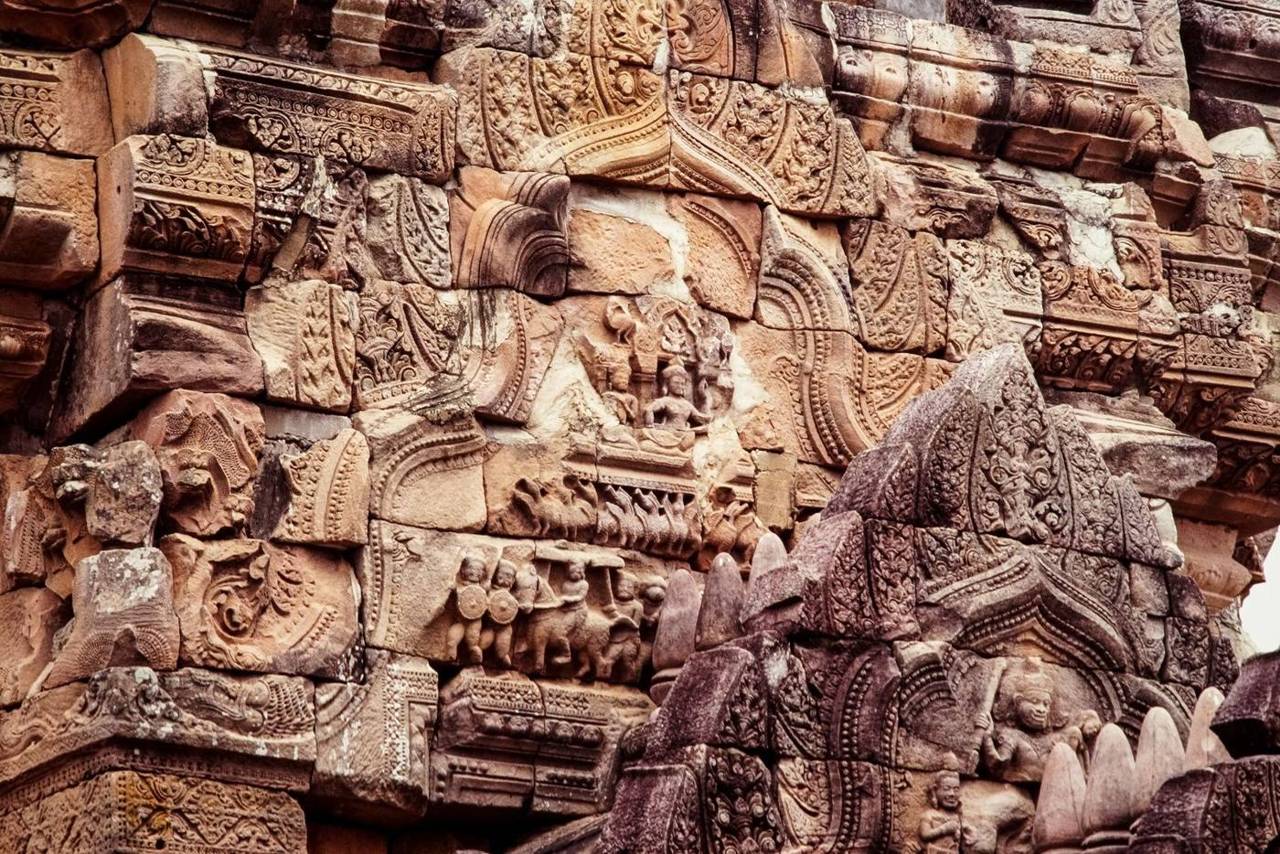
Isan: Khao Yai and the Khmer temples to the Mekong
The Thailand most visitors skip: wild elephants and hornbills in Khao Yai, the Khmer sanctuaries of Phimai and Phanom Rung, and the rock paintings of Pha Taem above the Mekong.
 10 daysModerate
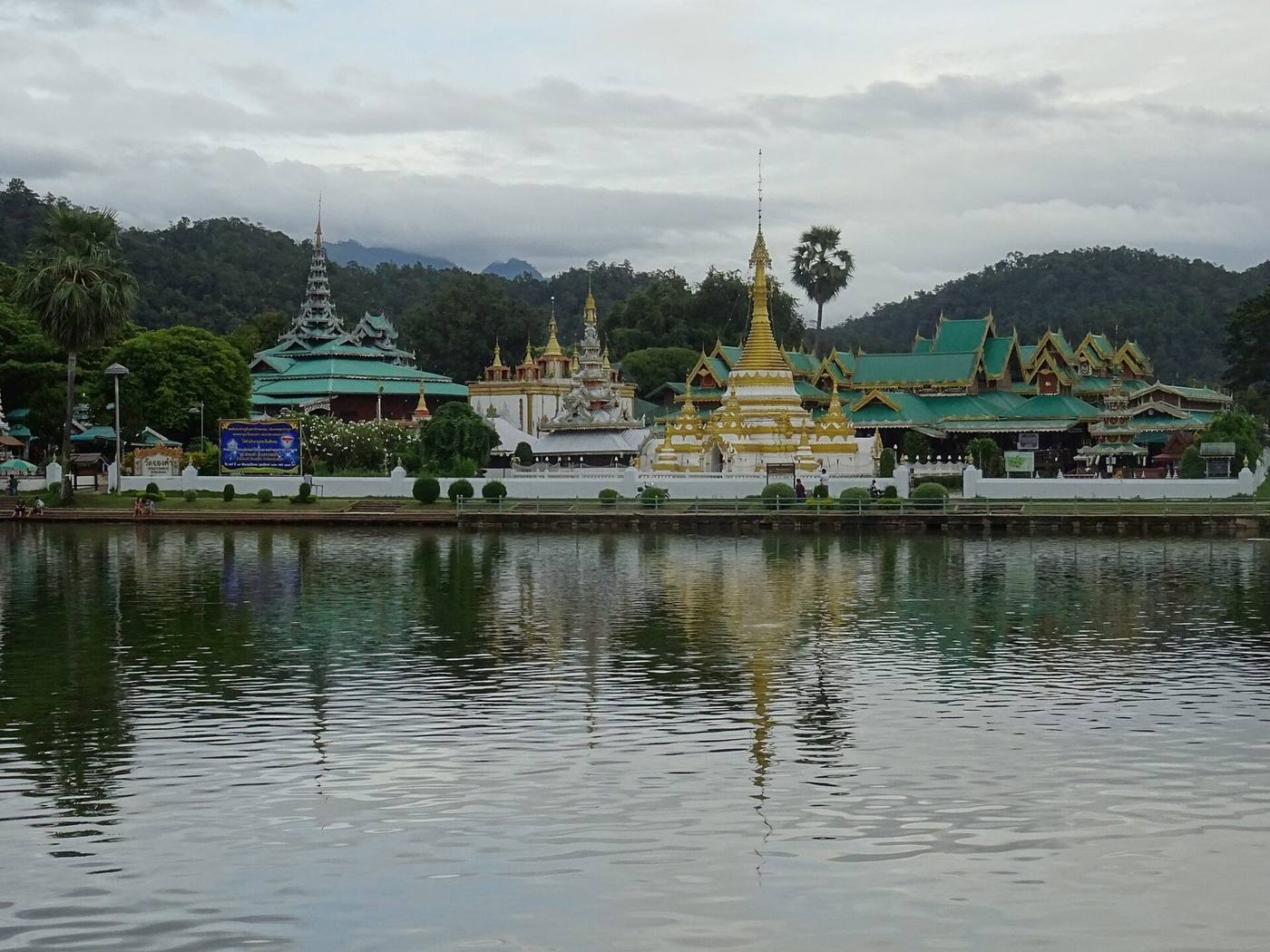
The Mae Hong Son Loop
A circuit through the mountains on the Myanmar border: Pai, the caves of Soppong, Mae Hong Son and Mae Sariang, the summit of Doi Inthanon and an elephant sanctuary with no riding.