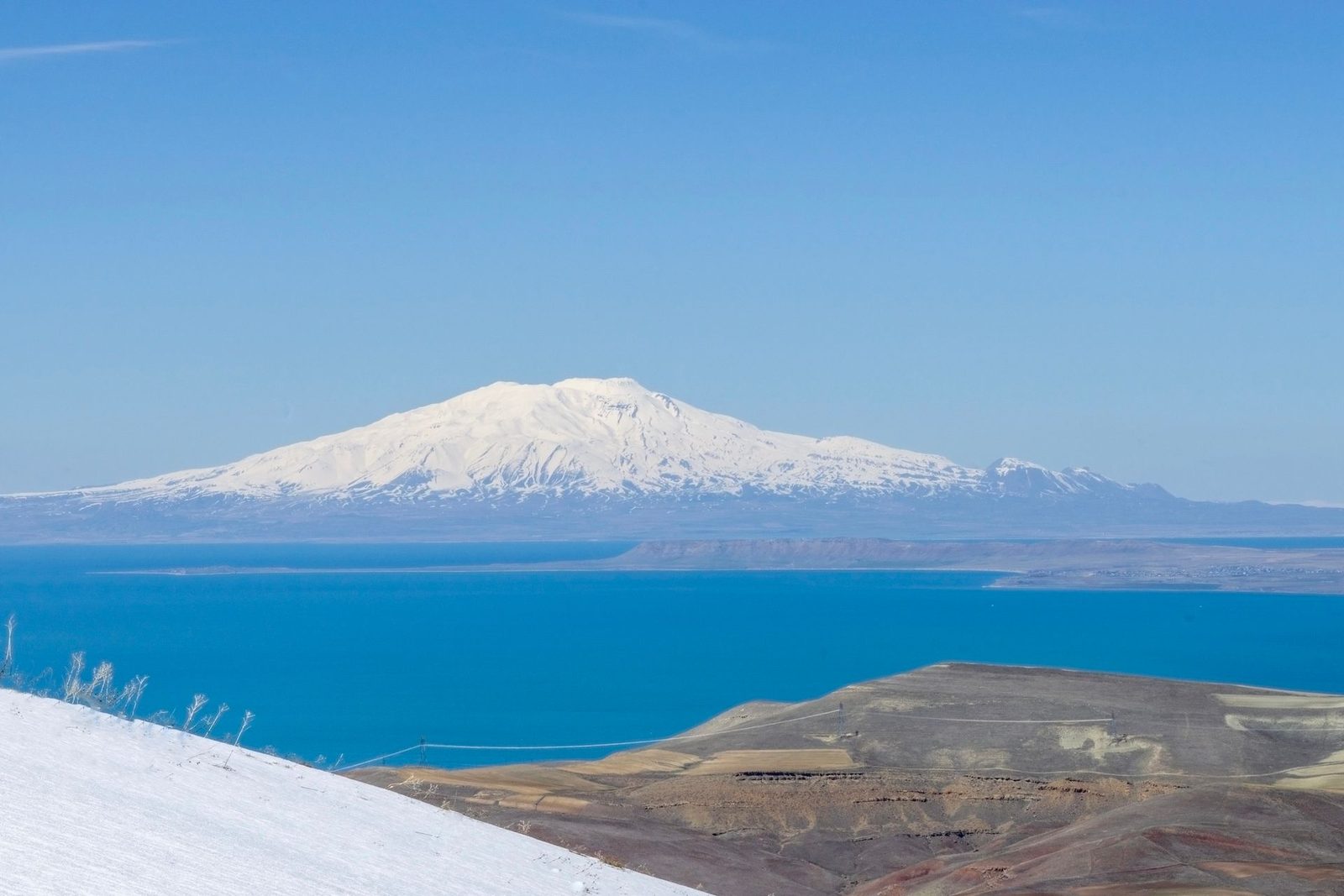
Ararat: the climb and Armenian Anatolia
Turkey's highest summit, above 5,100 metres, preceded by Erzurum, Kars and the ruined churches of Ani on the Armenian border.
- Istanbul
- Erzurum
- Kars
- Ani
- Doğubayazıt
- Mount Ararat
- İshak Paşa Palace
Day by day
- Day 1
Istanbul: the Blue Mosque and Hagia Sophia
This trip takes you to the summit of Mount Ararat, Turkey's highest mountain, an ice capped volcano of about five thousand one hundred and thirty metres in the far east of the country, near the borders with Iran and Armenia, and crosses eastern Anatolia: Erzurum, the Georgian churches of the valleys, Kars and the Armenian ghost city of Ani, and the İshak Paşa Palace.
Before you leave: Italian citizens can enter Turkey with an electronic identity card or a passport; other nationalities should check their own rules. The United States government rates Turkey at level 2, with level 4 only within ten kilometres of the Syrian and Iraqi borders, an area this trip does not touch. To climb Ararat you need a special permit, obtained only through an authorised Turkish agency, weeks in advance: check timings, documents and costs.
On the first day you arrive in Istanbul. In the afternoon visit the Blue Mosque, with its six minarets and interior covered in İznik tiles, and Hagia Sophia, the great sixth century basilica that later became a mosque. For foreigners, access to the upper gallery of Hagia Sophia costs 25 euros. In mosques cover shoulders and legs; women cover their hair.
In the evening walk along the Bosphorus or have dinner with fish and meze.
Sleep in Istanbul.
Practical tip: the season for climbing Ararat usually runs from July to early September. Outside these months the mountain is snow covered and the climb becomes winter mountaineering.
- Day 2
Flight to Erzurum
In the morning take a domestic flight from Istanbul to Erzurum, about two hours, the main city of eastern Anatolia, on a plateau at almost two thousand metres, surrounded by mountains.
Sleeping two nights at almost two thousand metres is the first step of acclimatisation: the body starts to adapt to thinner air before the climb above four thousand metres. Drink plenty of water, avoid alcohol and do not exert yourself on the first day.
In the afternoon walk around the centre of Erzurum, a conservative, religious city very different from Istanbul, with Seljuk and Mongol mosques and madrasas of the twelfth and thirteenth centuries, built of dark stone.
Visit the Three Tombs, Üç Kümbetler, three tower shaped Seljuk mausoleums with conical roofs in a small garden, and the Great Mosque, Ulu Camii, of the twelfth century, with a very sober columned interior.
In the evening try eastern cooking: cağ kebabı, marinated lamb cooked on a horizontal spit and served in strips on skewers, Erzurum's signature dish, with freshly baked bread.
Sleep in Erzurum.
Practical tip: in Erzurum the evenings are cool even in summer because of the altitude. Bring a light jacket, and keep drinking water through the day.
- Day 3
Erzurum, Georgian churches and Kars
In the morning visit the Çifte Minareli Medrese, the thirteenth century twin minaret madrasa, Erzurum's symbol, with a great carved stone portal and two fluted minarets decorated with turquoise tiles. Then climb to the citadel on the hilltop, with its clock tower and views over the city and mountains. Check opening hours and prices.
Leave Erzurum with a car and driver or with your agency, heading to the valleys to the north, where between the ninth and eleventh centuries the Georgian kingdom of Tao Klarjeti left great stone churches among the mountains.
Visit the church of Öşk Vank, of the tenth century, a great cross shaped domed church in a village, with carved columns and capitals and traces of frescoes. Then, if there is time, the church of Işhan, on a slope above the valley, with a tall dome and stone decoration. The roads are mountain roads: check conditions.
In the afternoon continue east to Kars, about three hours, a city on a plateau at about one thousand eight hundred metres, with Russian style stone buildings dating from when the city was part of the Russian Empire, between 1878 and 1918.
Sleep in Kars.
Practical tip: the Georgian churches are in inhabited villages and often have no custodian. Respect the sites and ask villagers before entering courtyards.
- Day 4
Ani, Kars and on to Doğubayazıt
In the morning visit Ani, about forty kilometres from Kars on the Armenian border, Turkey's most impressive ghost city and a World Heritage Site. In the tenth and eleventh centuries it was the capital of the Armenian Bagratid kingdom, with dozens of churches, and was called the city of a thousand and one churches.
Today, on a grassy plateau bounded by deep gorges, there remain the walls, the great eleventh century cathedral with its collapsed dome, the Church of the Redeemer, cut in half by lightning and an earthquake, the Church of Saint Gregory of Tigran Honents with colourful frescoes, and a Seljuk mosque on the edge of the gorge. The Akhurian river at the bottom of the gorge marks the border with Armenia: stay on the site paths and keep away from the border. Check opening hours and prices.
Return to Kars and visit the castle on the hill, with a view over the city, and the tenth century Armenian Church of the Holy Apostles, now a mosque, at the foot of the castle.
In the afternoon drive south, about three hours, to Doğubayazıt, a small town at the foot of Ararat a few kilometres from the Iranian border. If the sky is clear, you will see the white cone of the mountain rising above the plain on the way.
Sleep in Doğubayazıt.
Practical tip: Ani has little shade in summer and is hot at midday. Go early in the morning and bring water and a hat.
- Day 5
By jeep to 2,400 metres and Camp 1
Today you start the climb, with the guide and the agency that arranged your permit.
In the morning you check your equipment and leave town by jeep for the south side of the mountain, on a dirt track, up to about two thousand four hundred metres, where the trail begins. Here the horses or mules of Kurdish herders usually carry the heavy bags, tents and food up to the camps.
You walk for four or five hours on slopes of grass, volcanic stones and earth, passing the summer camps of nomadic herders, with black tents and flocks of sheep. The climb is steady but not technical.
In the afternoon you reach Camp 1, at about three thousand two hundred metres, a tent camp on a shelf with views over the Doğubayazıt plain and the mountains towards Iran. The sun drops early behind the mountain and the temperature falls fast.
In the evening you have dinner at camp and sleep in a tent.
Follow the rules of acclimatisation: walk slowly, drink a lot, eat even if you are not hungry. If you have a bad headache, nausea or unusual tiredness, tell the guide at once: these are the signs of altitude sickness.
Sleep in a tent at Camp 1.
Practical tip: water at the camps comes from melted snow or springs. Bring tablets or a filter to purify it.
- Day 6
Camp 2 at about 4,200 metres
Today you climb from Camp 1 to Camp 2, a height gain of about a thousand metres, in four or five hours of walking.
The trail becomes steeper and crosses scree and large blocks of lava on slopes without grass. The landscape is almost lunar: black and red rock, snow in the gullies and, above, the summit ice. Nearby to the east you can see Little Ararat, a lower, almost perfect volcanic cone.
You reach Camp 2, at about four thousand two hundred metres, on small ledges among the rocks, often swept by wind. Here the air is much thinner and even pitching a tent or walking to the toilets is tiring.
In many programmes the afternoon or an extra day is spent on an acclimatisation walk higher up, towards four thousand seven hundred metres, before returning to sleep at Camp 2. Check your agency's programme: an extra day greatly improves your chances of reaching the summit.
In the evening you eat early and go to bed very early, because the summit push starts in the middle of the night. Prepare everything beforehand: crampons, ice axe, head torch with new batteries, warm layers, gloves and hot water in a flask.
Sleep in a tent at Camp 2.
Practical tip: at night at Camp 2 temperatures fall below zero even in summer. You need a sleeping bag rated for very low temperatures.
- Day 7
The summit by night
Today is summit day. The alarm goes at around one or two in the morning and you set off by head torch, in line behind the guide.
For the first hours you climb steep slopes of gravel and rock in the dark and cold, with a slow, steady pace. Your breathing is short and every step is hard work. You take short breaks to drink and eat something.
Towards dawn you reach the edge of the summit glacier. Here you put on crampons and, depending on conditions, rope up. The last section is on ice and hard snow at a moderate angle, up to the summit at about five thousand one hundred and thirty metres.
From the top, on clear days, you see the mountain's shadow cast across the plain, Little Ararat, and far away the lands of Turkey, Iran and Armenia. According to tradition, Noah's Ark came to rest in these mountains.
You stay on the summit only a few minutes because of the cold and wind, then start the descent, which needs great care: tiredness increases the risk of falls.
You return to Camp 2 and, depending on the programme, go down to Camp 1 in the afternoon.
Sleep in a tent at Camp 1 or Camp 2.
Practical tip: the guide decides whether to continue or turn back. If the weather worsens or someone feels ill, turning back is the right choice.
- Day 8
Descent, the İshak Paşa Palace and the flight
In the morning walk down from the camp to the end of the track, where the jeep takes you back to Doğubayazıt. Have a hot shower and rest.
Then visit the İshak Paşa Palace, a few kilometres from town, on a shelf above the plain with views of Ararat. Built between the seventeenth and eighteenth centuries by a Kurdish governor of the Ottoman Empire, it is one of the most photographed buildings in eastern Turkey: it blends Ottoman, Persian, Armenian and Georgian styles, with a mosque, a harem, a courtyard with a carved portal, baths and an enormous kitchen. Check opening hours and prices.
Above the palace are the ruins of an ancient fortress and an older mosque.
In the afternoon drive back to Erzurum, about four hours, or go to the nearest airport chosen by your agency, and take the evening flight to Istanbul. Check flights in advance: in the east of the country they are not frequent.
In the evening you arrive in Istanbul.
Sleep in Istanbul.
Practical tip: Doğubayazıt is close to the Iranian border and there are checkpoints along the roads. Always keep your identity document and your permit to hand. Follow soldiers' instructions and do not photograph military sites.
- Day 9
Recovery in Istanbul
Today is a day of rest and recovery in Istanbul after the effort of the mountain.
In the morning take time for a hammam, the Turkish bath, with the heat of the steam, the scrub with a rough mitt and the foam massage, the best way to loosen your muscles after the climb. Check prices and rules.
Then visit Topkapı Palace, the residence of the Ottoman sultans for almost four centuries, with its courtyards, kitchens, treasury and harem, or the Basilica Cistern, a sixth century underground reservoir with hundreds of columns standing in water. Check opening hours and prices.
In the afternoon walk through the Grand Bazaar, one of the largest and oldest covered markets in the world, with thousands of shops selling carpets, ceramics, lamps, jewellery and spices, and the Spice Bazaar near the Galata Bridge.
At sunset take a public ferry on the Bosphorus, for example from Eminönü to Kadıköy on the Asian shore, to see the city from the water, with domes and minarets against the sky.
In the evening have a dinner to celebrate the summit.
Sleep in Istanbul.
Practical tip: after the climb your body is tired. Do not overfill the day and drink plenty of water, as your body is still recovering from the altitude.
- Day 10
Flight home
On the last day take your flight home from Istanbul airport. The main airport is far from the centre, about an hour or more in traffic: plan your timing carefully.
If your flight leaves in the afternoon, in the morning you can take a last walk in the Balat neighbourhood, with its colourful houses on steep streets and its churches, or in Galata, with its tower and streets running down to the Golden Horn.
Before leaving buy something to take home: lokum, Turkish delight, tea and Turkish coffee, spices from the bazaar, painted ceramics, textiles or a small carpet. For carpets always ask for a certificate and a receipt.
This trip combines one of the most accessible high altitude climbs in the world, without extreme technical difficulty but very tiring, with an eastern Anatolia far from mass tourism: the stone city of Erzurum, the Georgian churches in the valleys, the Armenian ruins of Ani, the İshak Paşa Palace and the great white cone of Ararat.
Before a trip like this, prepare with months of training: long mountain walks with height gain, running or cycling, and if possible a climb to four thousand metres in the Alps.
Practical tip: check that your travel insurance covers high altitude above five thousand metres and mountain rescue. Many policies do not.
For fit hikers who have already slept above four thousand metres: the climb is not technical, but acclimatisation time is short and summit day is long and cold. Its strength is the cultural part, Ani and Kars, which few groups ever see. The honest limit is that weather and altitude can deny the summit even to those in good shape; bring crampons, a warm sleeping bag and get a medical check before signing up.
Before you go
- Documents and visa
- Passport, or for some EU citizens a national identity card; no visa for tourism up to 90 days in 180 for most EU nationalities.
- Health and vaccines
- No compulsory vaccines. Drink bottled water. Emergencies: 112.
- Money and payments
- Turkish lira. Cards work almost everywhere; state site tickets are set in euros but paid in lira at the day's rate.
- Power sockets
- Types C and F, 230 volts: the same round-pin sockets as much of Europe.
- Time zone
- UTC+3 all year: Turkey does not use daylight saving time.
- Safety
- The United States rates Turkey level 2, with level 4 within 10 km of the Syrian and Iraqi borders. Tourist areas are busy and calm. Official advice: GOV.UK.
Information checked in November 2026 for Italian and EU citizens. Rules change: always check before you travel.
Variations
In 7 days: the climb only, flying direct from Istanbul to Erzurum or the nearest airport and returning straight after the summit.
In 14 days: add Lake Van with Akdamar island and its Armenian church, and an extra day of acclimatisation on the mountain.
Frequently asked questions
Do I need a permit for Ararat?
Yes. You need a special permit, obtained only through an authorised Turkish agency, weeks in advance. Timings, documents and costs should be checked.
Which document do I need for Turkey?
Italian citizens can enter with an electronic identity card or a passport. Other nationalities should check their own rules.
Is it a difficult climb?
It is not very technical, but it is tiring because of the altitude: above five thousand metres altitude sickness is a real risk. You need training, acclimatisation days, crampons and a guide.
Indicative itinerary written by World Atlas. Before booking, check timetables, seasonal openings, documents and safety.
 15 daysModerate
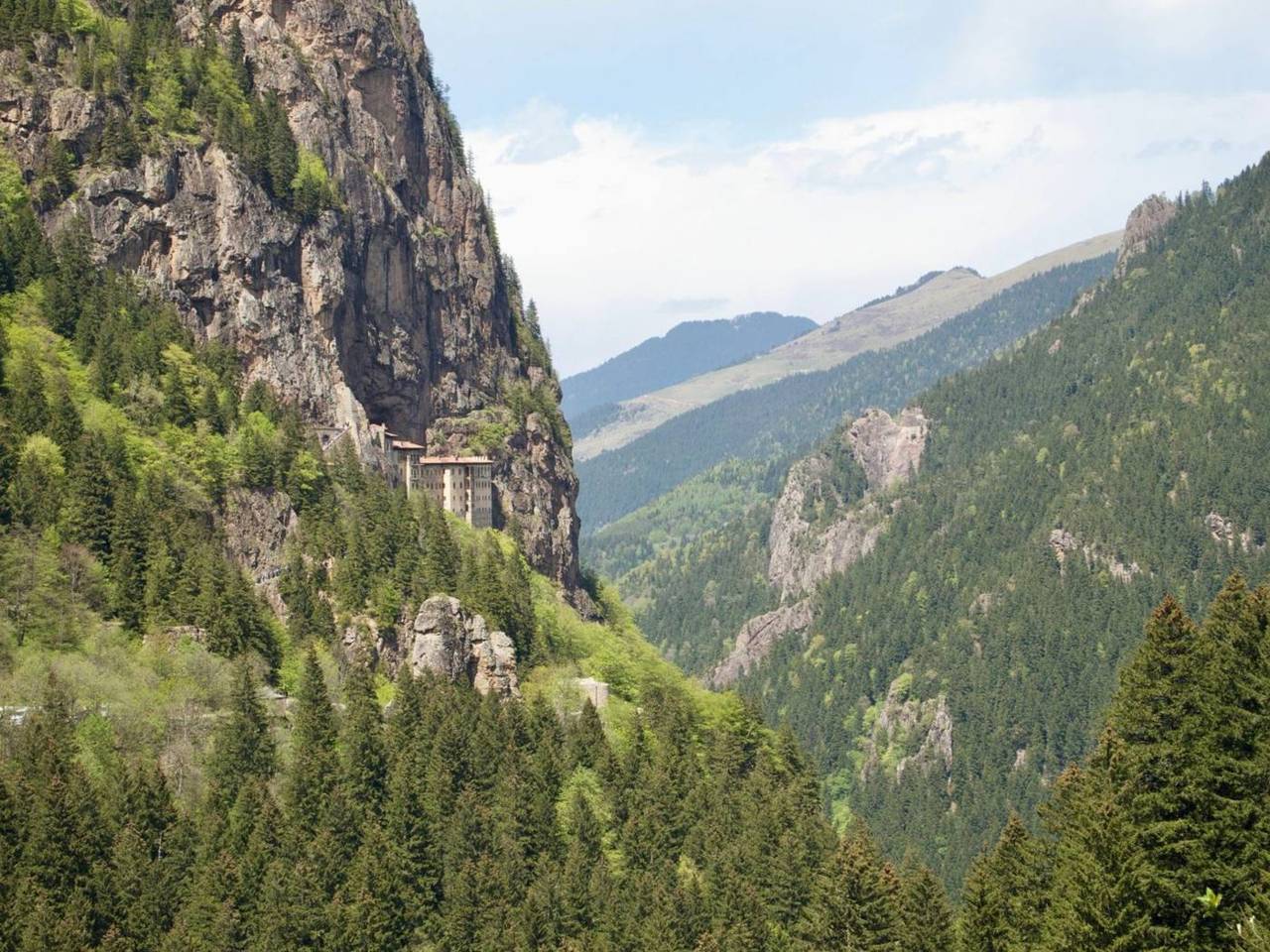
From Cappadocia to the Black Sea and on to Ani
An arc across Anatolia: Safranbolu, the Hittites of Hattusa, the green Black Sea coast, Sumela monastery and the Armenian far east.
 16 daysModerate
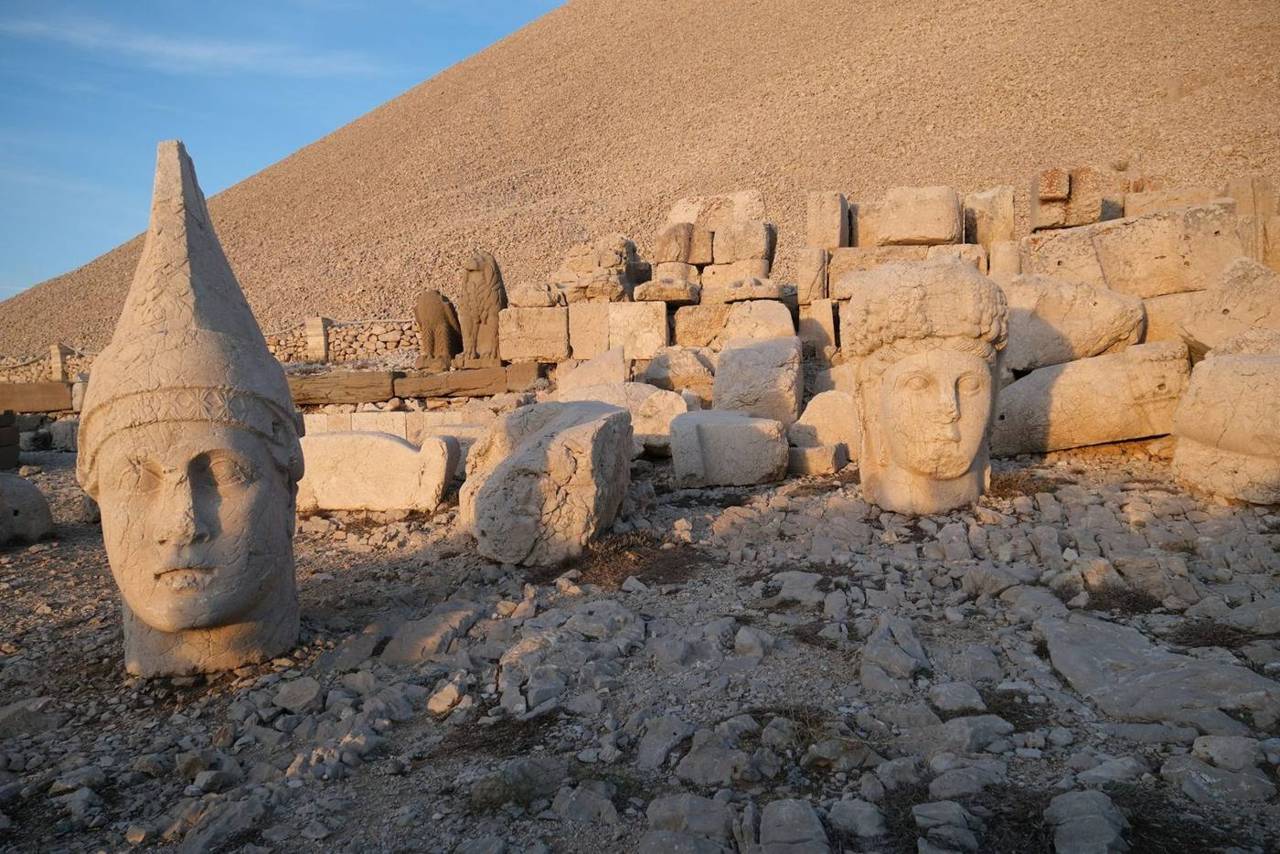
Nemrut, Cilicia and the ancient coast
From Cappadocia to the colossal heads of Nemrut, then the castles of Cilicia, Aspendos and Termessos, ending at Ephesus: Turkey's ruins from east to west.
 4 daysEasy
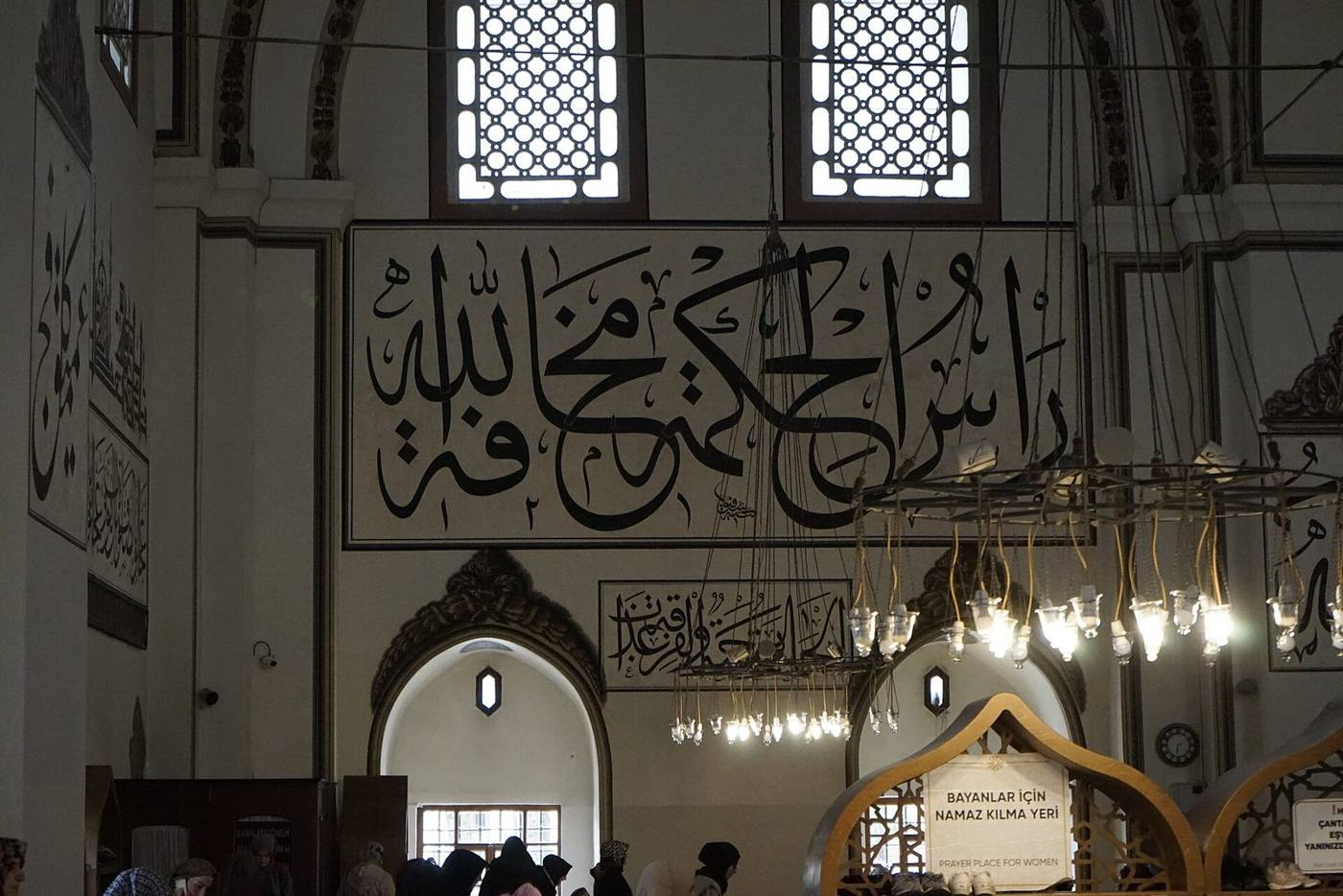
Bursa, İznik and Mount Uludağ
The first Ottoman capital, two hours from Istanbul: the mosques and tombs of Bursa, a UNESCO World Heritage site, the silk caravanserais, the İskender kebab born here, the cable car up Mount Uludağ, the village of Cumalıkızık and İznik, ancient Nicaea of ceramics and the Council.