Scotland: Edinburgh, the Highlands and Skye
Edinburgh and its castle, Glencoe, Loch Ness, the Isle of Skye with the Old Man of Storr and the Speyside whisky region.
- Edinburgh
- Stirling
- Glencoe
- Fort William
- Skye
- Inverness
- Speyside
- Edinburgh
Day by day
- Day 1
Edinburgh: the castle and the Royal Mile
To enter the United Kingdom you need a passport, because identity cards are no longer accepted, and an ETA, the electronic travel authorisation, applied for online on the official British government website: it costs 20 pounds and is valid for two years.
Edinburgh, the capital of Scotland, is one of the most beautiful cities in Europe, built on volcanic hills. The medieval Old Town and Georgian New Town are a UNESCO World Heritage site. From the airport the tram reaches the centre in about half an hour.
Start at Edinburgh Castle, on the rock of an extinct volcano that dominates the city. Inside you see the Scottish Crown Jewels, the Stone of Destiny, on which Scottish kings were crowned, and St Margaret's Chapel, the oldest building in the city, from the twelfth century. Every day except Sunday the One O'Clock Gun is fired at 1 p.m. Book your entry time online.
In the afternoon walk down the Royal Mile, the Old Town's main street, linking the castle with the Palace of Holyroodhouse, with St Giles' Cathedral, narrow alleys called closes and wynds, hidden courtyards and tartan and whisky shops.
In the evening try haggis, Scotland's national dish, with neeps and tatties, turnip and potato.
Practical tip: from 24 July 2026 Edinburgh charges a visitor levy of 5% of the accommodation cost for the first five nights. In August the city hosts the Festival and the Fringe: very high prices and accommodation to book months ahead.
- Day 2
The Georgian New Town and the museums
In the morning cross Princes Street Gardens, in the valley below the castle, with the Gothic Scott Monument, and reach the New Town, built between 1767 and 1850 on a regular plan of elegant streets and squares. Walk along George Street, Charlotte Square, with its perfect Georgian facades, and Circus Lane, a curved street of low houses with flowers.
Visit the Scottish National Gallery at the foot of Castle Hill, no-cost to enter, with works by Raphael, Rembrandt and Scottish painters. Alternatively the National Museum of Scotland, also no-cost, tells the country's story from geology to Dolly the sheep, the first cloned mammal, now preserved. From the rooftop terrace you see the whole city.
In the afternoon follow the Water of Leith down to Dean Village, an old mill hamlet at the bottom of a green valley a few minutes from the centre, with stone houses by the river. The riverside path continues to Stockbridge, a quiet district with cafés and shops; there is a market on Sundays.
In the evening climb Calton Hill for sunset over the city, with the unfinished Parthenon-style National Monument, nicknamed Edinburgh's Disgrace.
Practical tip: Edinburgh weather often changes within a single day; always carry a waterproof jacket.
- Day 3
Arthur's Seat and the Palace of Holyroodhouse
In the morning visit the Palace of Holyroodhouse at the bottom of the Royal Mile, the King's official residence in Scotland, where Mary, Queen of Scots lived. You see the royal apartments and the roofless ruins of twelfth-century Holyrood Abbey among Gothic stones. Opposite the palace stands the Scottish Parliament, an unusual modern building.
Then climb Arthur's Seat, a 251-metre extinct volcano in Holyrood Park, in the heart of the city. The most common route takes about an hour there and back, on paths that are sometimes steep and slippery in the rain. From the top the view takes in all of Edinburgh, the castle, the port of Leith and the Firth of Forth out to the North Sea. The wind at the top can be very strong.
In the afternoon, if you have energy, visit Leith, Edinburgh's historic port, now a lively district with bars along the canal, and the Royal Yacht Britannia, the ship used by the royal family for more than forty years, now a museum.
In the evening collect your rental car or plan the next day: for the Highlands a car is best, although there are trains and buses.
Practical tip: in Scotland you drive on the left; many Highland and Skye roads are single-track, with passing places: never park in them and let following traffic overtake.
- Day 4
Stirling Castle and Loch Lomond to Glencoe
In the morning drive to Stirling, about an hour from Edinburgh, with its castle on a rock that was for centuries one of the most important residences of the Scottish kings. The castle controlled the passage between the Lowlands and the Highlands: whoever held it held Scotland. Inside you see the Great Hall, the royal palace restored in Renaissance colours and the unicorn tapestries. Nearby, the monument to William Wallace, the hero of Scottish independence, rises on a hill.
Then continue west to Loch Lomond, the largest lake in Great Britain by area, in Loch Lomond and The Trossachs National Park. Stop at Luss, a village of stone cottages on the shore, for a walk on the pier.
In the afternoon the road climbs onto Rannoch Moor, a vast, wild plateau of bogs and lochans, and enters Glencoe, Scotland's most famous glen, with steep mountains rising on both sides. Here in 1692 the Glencoe Massacre took place, when soldiers killed members of the MacDonald clan who had given them shelter.
In the evening stay in Glencoe or Fort William. Practical tip: from June to September the Highlands have midges, tiny biting insects, especially at dawn, at dusk and when there is no wind: bring repellent and a head net.
- Day 5
Glencoe and the Glenfinnan Viaduct
In the morning walk in Glencoe. The Lost Valley trail, about three hours there and back, climbs past waterfalls and boulders to a valley hidden among the mountains, where the MacDonald clan hid stolen cattle. It is steep and requires boots. Alternatively the Glencoe visitor centre tells the story of the massacre and the glen's geology, and an easy path runs along the river.
In the afternoon drive towards Fort William, at the foot of Ben Nevis, the highest mountain in the United Kingdom, and then west to Glenfinnan on Loch Shiel. Here stand the monument to Prince Charles Edward Stuart, who raised the standard of the Jacobite rising in 1745, and the Glenfinnan Viaduct, a curved railway bridge of twenty-one arches made famous by the Harry Potter films. A path climbs to the viewpoint above the viaduct.
In summer the Jacobite steam train crosses the viaduct, usually once in the morning and once in the afternoon: check the times to see it pass.
In the evening stay near Fort William or continue towards the coast.
Practical tip: the Glenfinnan car park fills early in the summer months; arrive in good time, and never walk on the tracks for photos.
- Day 6
Eilean Donan Castle and the Isle of Skye
In the morning drive north along the Road to the Isles, then to Eilean Donan Castle, about two hours from Fort William, one of Scotland's most photographed castles, on an islet where three lochs meet, linked to the mainland by a stone bridge. The present castle is a twentieth-century reconstruction of the medieval castle destroyed in 1719.
Then cross the bridge to the Isle of Skye, the largest of the Inner Hebrides, famous for wild landscapes, the Cuillin mountains and the mist that gives it its Gaelic name, the island of clouds.
In the afternoon go to the Fairy Pools in Glen Brittle, a series of waterfalls and pools of clear blue water at the foot of the Black Cuillin, with a path of about an hour and a half there and back. The water is icy even in summer.
In the evening stay in Portree, the main town, a small harbour with colourful houses on the bay.
Practical tip: Skye has become very busy; book accommodation well ahead, because it sells out in summer. The Fairy Pools and Old Man of Storr car parks are paid. Wild camping and overnight campervan stops are banned in many places on the island.
- Day 7
Skye: the Old Man of Storr and the Quiraing
Today is the Trotternish peninsula in the north of Skye, with some of Scotland's strangest landscapes, born from ancient landslips of volcanic rock.
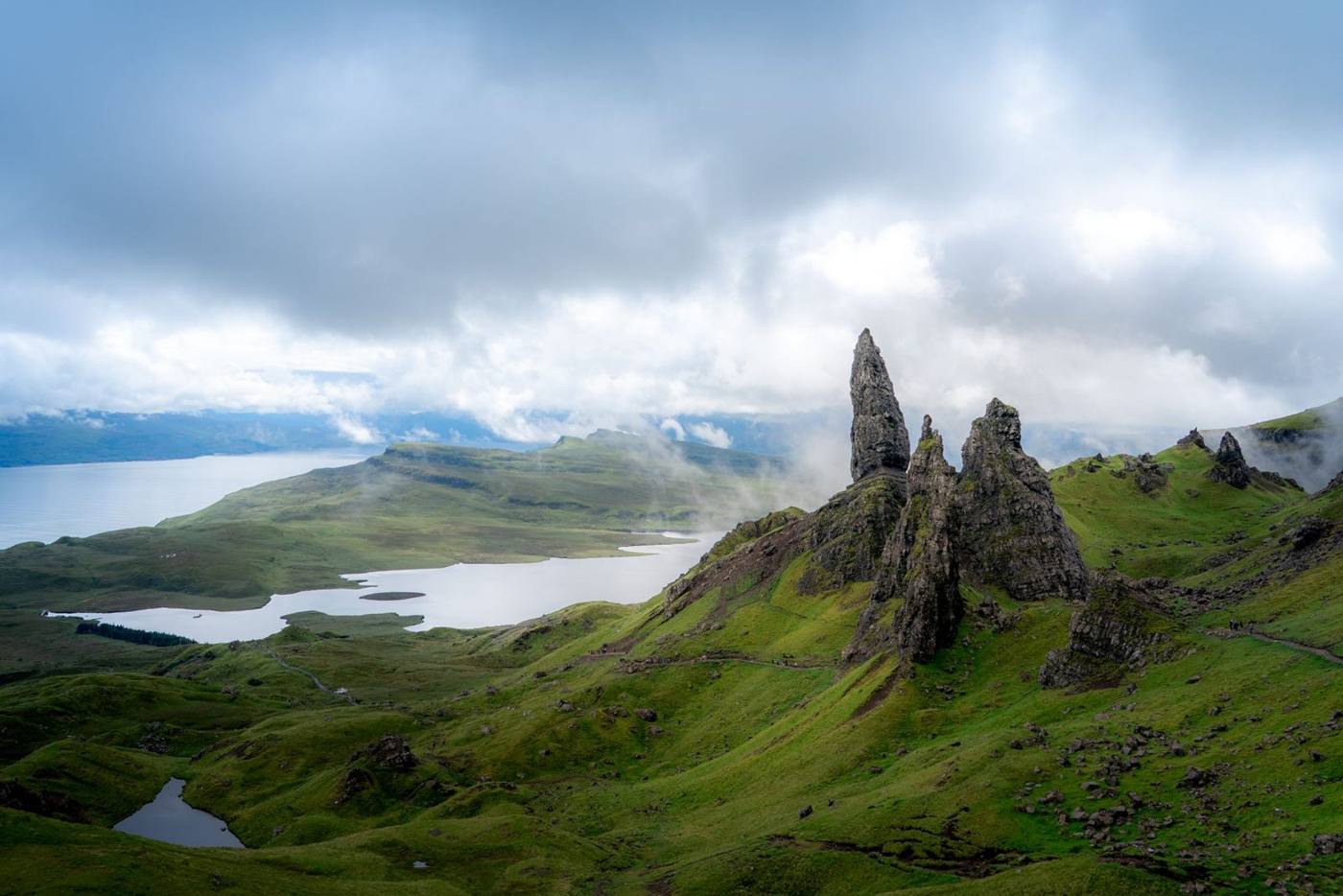
Early in the morning climb to the Old Man of Storr, a rock pinnacle about fifty metres high rising above the escarpment, with views of the sea and the island of Raasay. The path climbs for about an hour and a half, steep and sometimes muddy. At dawn the light is finest and there are fewer people.
Continue along the coast to Kilt Rock and Mealt Falls, which drop from the cliff straight into the sea: the columnar rock of the cliff looks like the pleats of a kilt.
In the afternoon walk in the Quiraing, a landscape of pinnacles, green plateaus and cliffs created by a landslip that is still moving. The circular path takes about two and a half hours, with spectacular views of the coast.
In the evening, if you have time, visit Dunvegan Castle on the west coast, seat of the MacLeod clan for more than eight centuries, with its gardens and, according to legend, the Fairy Flag.
Practical tip: Trotternish roads are narrow and single-track, with sheep on the carriageway; drive slowly and use the passing places.
- Day 8
Loch Ness and Inverness
In the morning leave Skye and drive east through the Great Glen to Loch Ness, about two and a half hours away. Loch Ness is a long, deep lake, more than two hundred metres, with water darkened by peat, world famous for the legend of Nessie, the loch monster.
On the shore visit Urquhart Castle, one of Scotland's largest, now in ruins, on a promontory over the loch, with a tower from which you see the whole of Loch Ness. The castle was destroyed in 1692 so that it would not fall into Jacobite hands. At nearby Drumnadrochit an exhibition tells the story of the legend and the scientific studies of the loch.
You can take a cruise on the loch from Fort Augustus or Drumnadrochit; at Fort Augustus the Caledonian Canal, with its staircase locks, links the loch to the sea.
In the afternoon reach Inverness, capital of the Highlands, a small city on the River Ness, with its red sandstone castle, cathedral and river islands linked by footbridges. Just outside the city lies Culloden battlefield, where the Jacobite rising ended in 1746, with a visitor centre.
In the evening listen to traditional Scottish music in one of the bars in the centre.
Practical tip: at Culloden the battlefield walk is outdoors: bring a jacket, even in summer.
- Day 9
Speyside distilleries and the Cairngorms
In the morning drive east into Speyside, the valley of the River Spey, about an hour from Inverness, the region with the highest concentration of whisky distilleries in the world, about half of all those in Scotland. Clear river water, barley and peat have made this valley the home of malt Scotch whisky.
Visit a distillery on a guided tour of about an hour, showing the whole process: malted barley, fermentation, distillation in copper stills and ageing in oak casks for at least three years. Tours are booked in advance. If you are driving, many distilleries give you your tasting to take away in a small bottle.
Then visit the Speyside Cooperage at Craigellachie, where you see coopers repairing casks by hand.
In the afternoon enter Cairngorms National Park, the largest in the United Kingdom, with rounded mountains, ancient Scots pine forests and lochs. At Aviemore walk around Loch an Eilein, with the ruins of a castle on an island, in the Rothiemurchus forest. The park is home to red deer, red squirrels, golden eagles and Britain's only no-cost-ranging reindeer herd.
In the evening stay in Aviemore. Practical tip: in Scotland the drink-drive limit is very low; whoever is driving does not drink.
- Day 10
Back to Edinburgh and departure
In the morning leave the Highlands and drive south to Edinburgh, about three hours from Aviemore, over the Drumochter Pass, one of the highest points on the British road network, and through Perthshire, with its forests and rivers.
On the way, if you have time, stop at Pitlochry, a Victorian town with a salmon ladder that lets fish climb past the dam on the River Tummel; or at Dunkeld, with its ruined cathedral by the river and the great Birnam Oak, linked to Shakespeare's Macbeth.
Alternatively visit white-walled Blair Castle, seat of the Dukes of Atholl, who still have the only private army in Europe.
In Edinburgh return the car and, if your flight leaves in the evening, take a last walk in the Old Town, or visit the Scotch Whisky Experience on the Royal Mile if you have not seen a distillery.
Things to take home: Scotch whisky, within customs and baggage rules, shortbread, wool and cashmere scarves, and clan tartan bought from Scottish makers.
Practical tip: the United States rates the United Kingdom level 2 for terrorism; in Scotland the main risks are the weather, narrow roads and the mountains. For your return, allow time for security at Edinburgh airport and remember that liquids go in checked luggage.
The classic Scotland trip, with powerful landscapes and history. The weather is changeable all year, so bring a waterproof jacket even in August. Skye is very crowded in summer and lodging sells out months ahead. From June to August the Highlands have midges, so bring repellent. In August the Edinburgh Festival triples prices.
Before you go
- Documents and visa
- You need a passport: identity cards are no longer accepted. Before leaving you apply online for an ETA, the electronic travel authorisation: it costs 20 pounds and is valid for two years.
- Health and vaccines
- No vaccines required. EU citizens should carry the European Health Insurance Card for necessary treatment. Emergencies: 999 or 112.
- Money and payments
- Pound sterling. Contactless cards are used everywhere, including on London public transport.
- Power sockets
- Type G, 230 volts: you need an adapter for British three-pin plugs.
- Time zone
- UTC in winter and UTC+1 in summer.
- Safety
- The United States rates the United Kingdom level 2 for terrorism. In big cities watch out for pickpockets; in Scotland and Wales the main risks are weather and mountains. Driving is on the left. ETA: GOV.UK.
Information checked in November 2026 for Italian and EU citizens. Rules change: always check before you travel.
Variations
In 7 days: two days in Edinburgh, Stirling and Glencoe, two days on Skye and the return via Loch Ness, skipping Speyside.
In 14 days: add the Outer Hebrides with their white beaches and stone circles, or Orkney.
Frequently asked questions
What do I need to enter the United Kingdom?
A passport, because identity cards are no longer accepted, and an ETA, applied for online on the official website: it costs 20 pounds and is valid for two years.
Can I do the trip without a car?
Partly: trains and buses link Edinburgh, Stirling, Fort William, Inverness and Skye. For Glencoe, Skye and Speyside, however, a car lets you see much more.
When is the best time for Scotland?
May to September, with long days. May and September have fewer midges and fewer people; in winter days are very short and some roads can close for snow.
Indicative itinerary written by World Atlas. Before booking, check timetables, seasonal openings, documents and safety.
 8 daysEasy
Cornwall and Devon
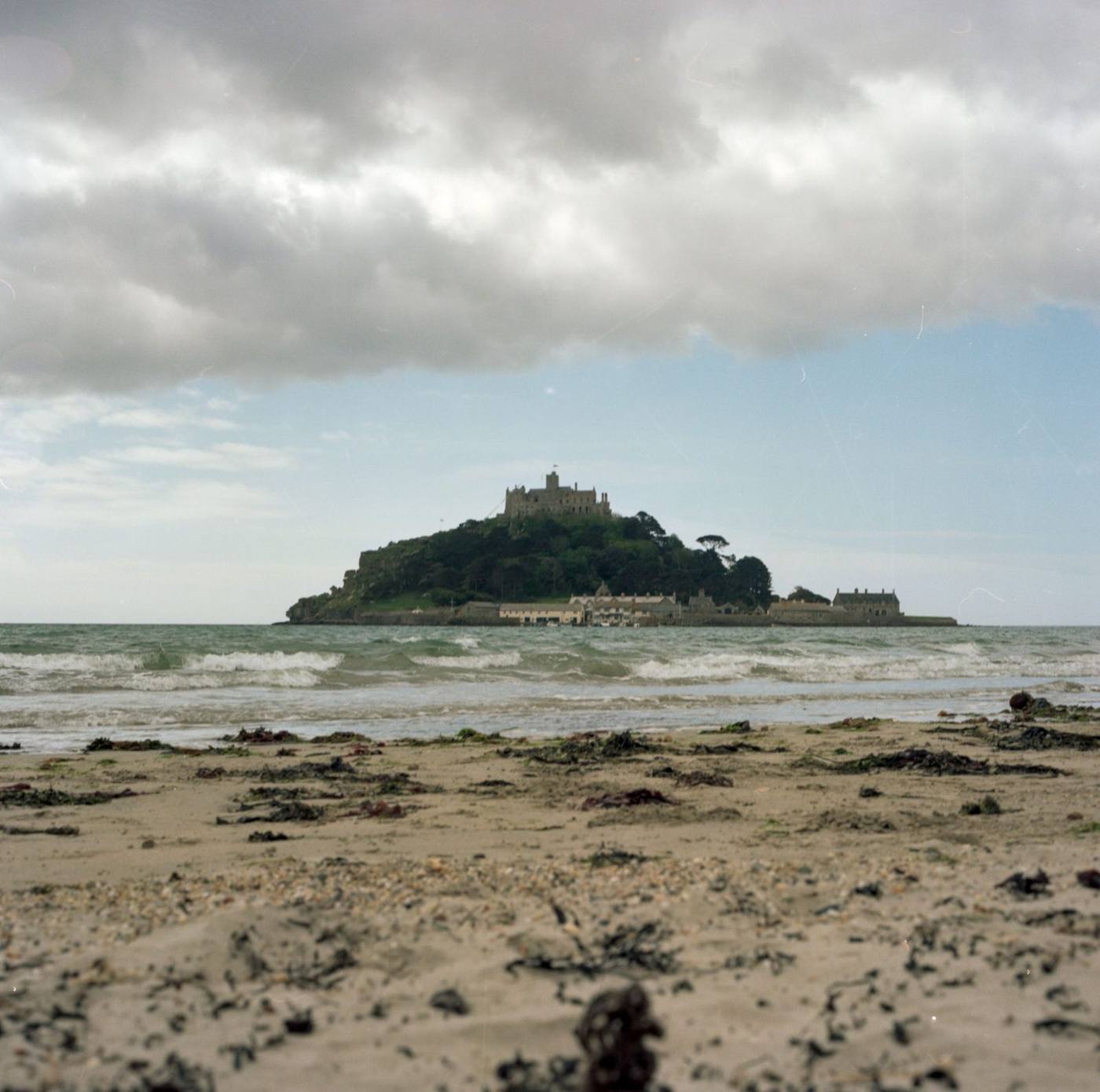
England's south-west: Dartmoor moor, St Ives and the cliffs of Land's End, the Minack Theatre, St Michael's Mount and the fishing villages.
 5 daysModerate
The Lake District
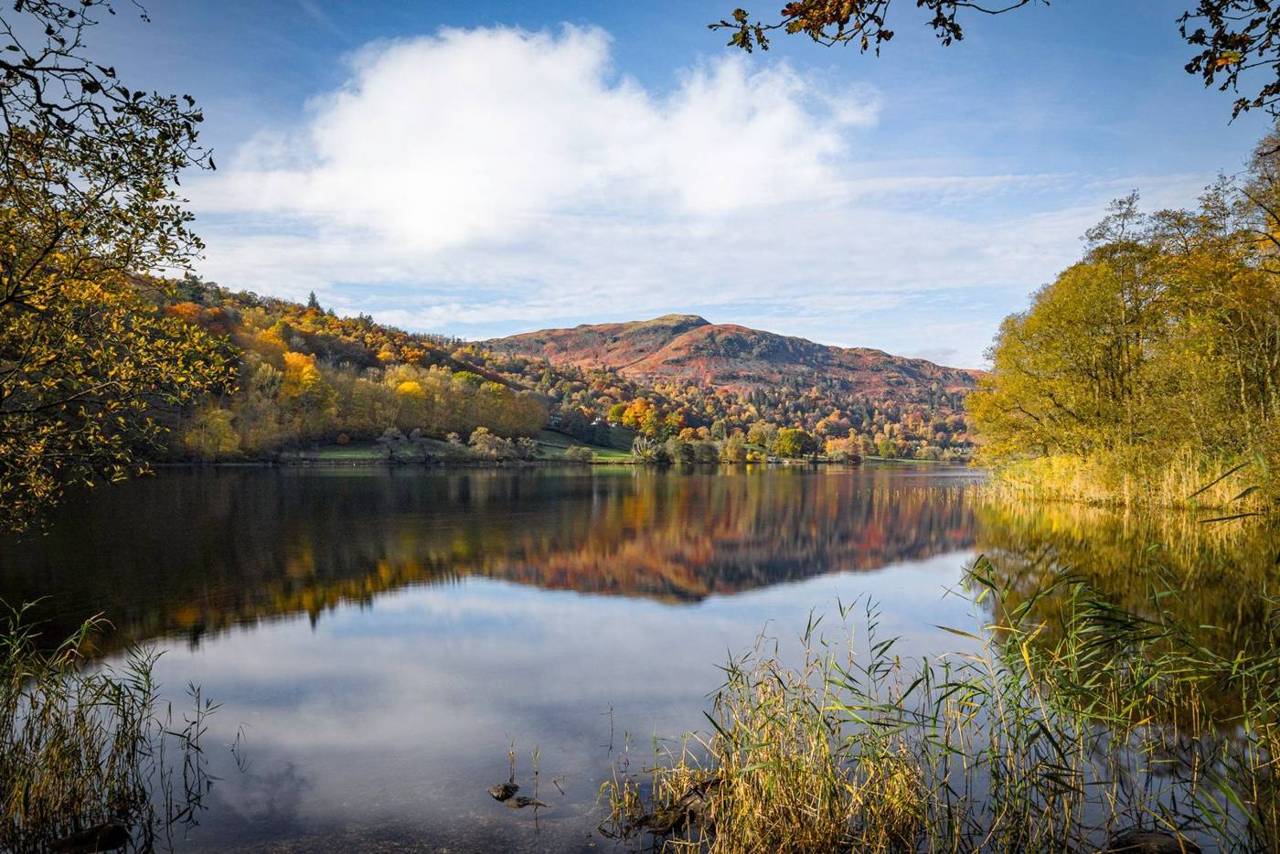
Lakes and fells of northern England: Windermere, Grasmere and Wordsworth's house, the climb up Helvellyn and Scafell Pike.
 6 daysEasy
The Cotswolds, Oxford, Bath and Stonehenge
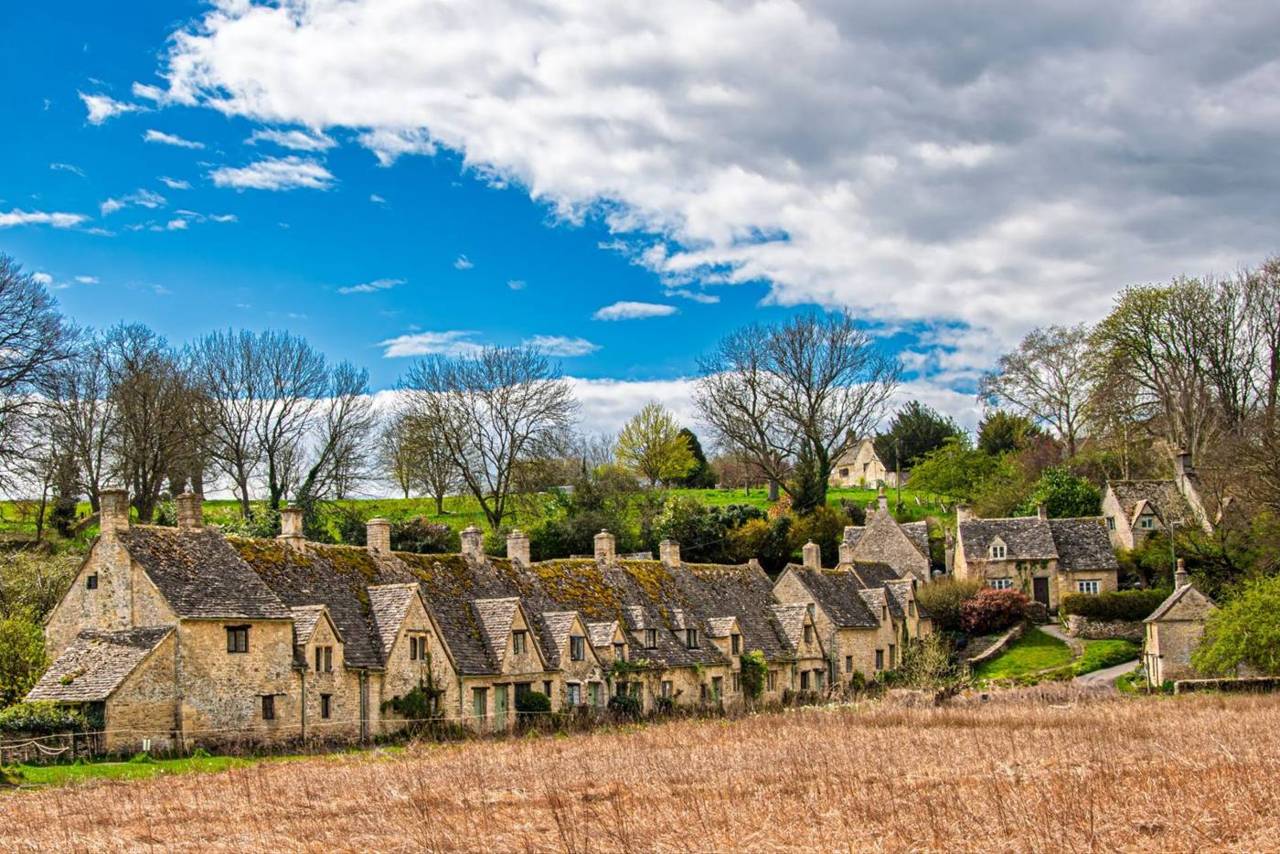
The colleges of Oxford, the golden-stone villages of the Cotswolds, the Roman baths and Georgian architecture of Bath, Stonehenge and Avebury.