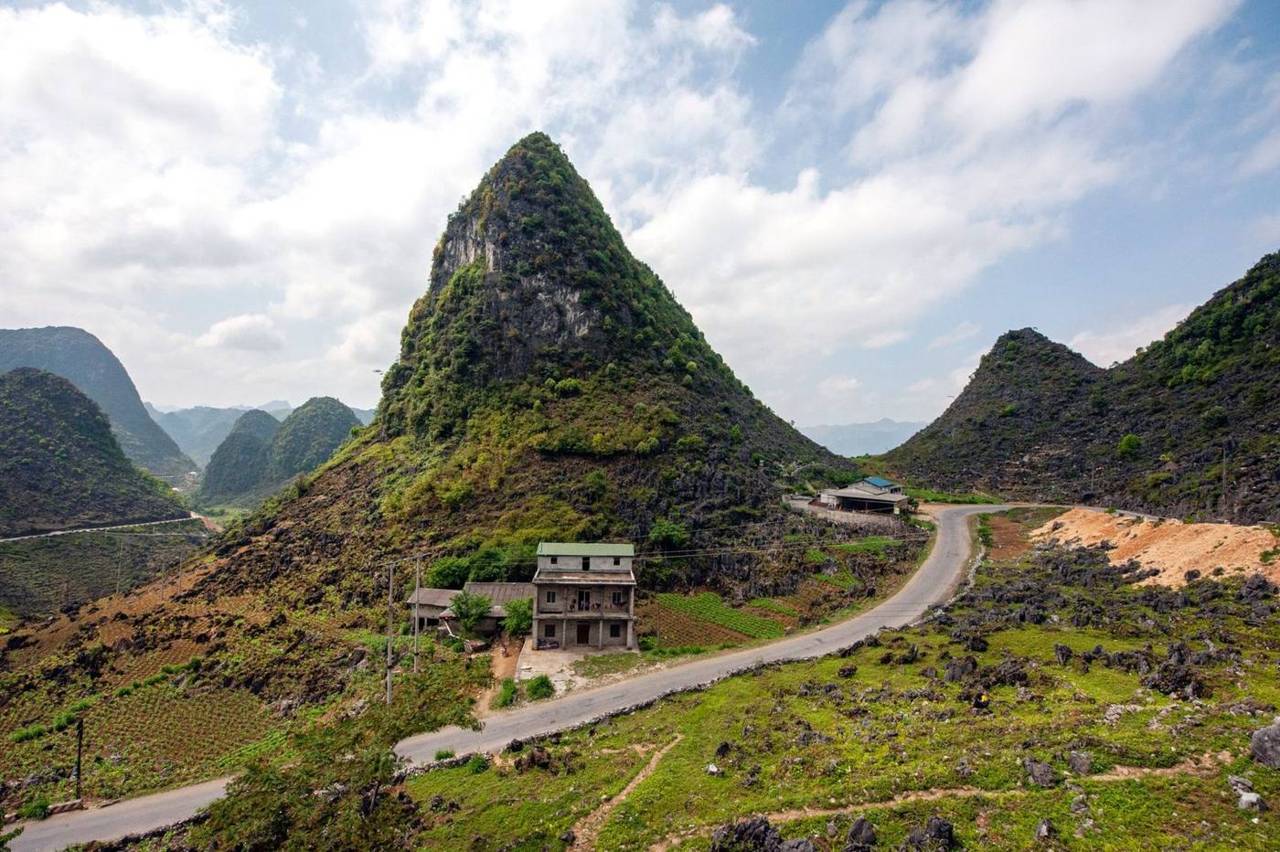
Hill tribes and mountains of the North
From the Can Cau and Bac Ha markets to the karst plateau of Dong Van, with Ba Be Lake and a night on the Gulf of Tonkin to finish.
- Hanoi
- Mai Chau
- Tam Coc
- Sapa
- Can Cau
- Bac Ha
- Dong Van
- Lo Lo Chai
- Ba Be Lake
- Ha Long Bay
Day by day
- Day 1
Arrival in Hanoi
This trip takes you into the mountains of northern Vietnam, among the ethnic minorities: the Mai Chau valley, the rice fields and limestone peaks of Tam Coc, the villages around Sapa, the markets of Can Cau and Bac Ha, the Dong Van karst plateau as far as Lo Lo Chai, near China, Ba Be lake and finally a night in Ha Long Bay. You travel by minibus with a driver, with many hours on mountain roads, and on foot.
Before you go: Italian citizens can enter without a visa for stays of up to 45 days, an exemption valid until 14 March 2028; for longer stays there is the 90 day electronic visa. Other nationalities should check their own rules. The passport must be valid.
Border areas: the British government warns that visiting areas near the border may require a permit from the local authorities, and some villages need permission from the provincial police. On the Dong Van plateau, in the Ha Giang area, part of Tuyen Quang province since 2025, police stepped up checks on foreigners in the border communes in 2026. Have the permit arranged before you set off, always carry your passport and do not photograph barracks or military posts.
You land at Noi Bai airport, about forty minutes from the centre. In the afternoon walk through the Old Quarter, where each street was devoted to a trade, to Hoan Kiem Lake, with the red bridge of Ngoc Son temple.
In the evening eat pho, the rice noodle soup with beef, the national dish born here in the north.
Sleep in Hanoi, for two nights.
Practical tip: to cross the road in Hanoi, walk slowly and steadily, without stopping suddenly. The scooters will pass around you.
- Day 2
Hanoi, from the mausoleum to Hoa Lo prison
Today you get to know the capital and its history.
Early in the morning visit the mausoleum of Ho Chi Minh, the founder of modern Vietnam, in a large granite building on Ba Dinh square, where you see his embalmed body. The rules are strict: shoulders and legs covered, silence, no photos inside. The mausoleum is only open in the morning and closes at certain times of year for maintenance. Nearby are the stilt house where he lived and the One Pillar Pagoda, a small wooden pagoda on a single column in the middle of a pond.
Then visit the Temple of Literature, built in 1070 in honour of Confucius, seat of Vietnam's first university, with courtyards, gardens and stone turtles carrying the steles with the names of the graduates. Check prices and times.
In the afternoon visit the Museum of Ethnology, the best way to prepare for the trip: it presents the 54 ethnic groups of Vietnam, with clothing, tools and traditional houses rebuilt in the garden. If there is time, go into Hoa Lo prison, built by the French for Vietnamese political prisoners and later used for American pilots during the war. Check prices and times.
In the evening try bun cha, grilled pork with noodles and herbs, and egg coffee, a city speciality.
Sleep in Hanoi.
Practical tip: leave a large suitcase in the city and travel with a soft bag. In the coming days you will change lodgings often and village houses have little space.
- Day 3
The Mai Chau valley
Today you leave the capital for the first mountains.
In the morning set off by minibus to the south-west, about four hours. After the plain, the road climbs through hills covered in forest and fields of sugar cane. Stop on the Thung Khe pass, with views over the mountains, then descend into the Mai Chau valley.
Mai Chau is a green, flat valley enclosed by limestone mountains, inhabited mainly by the White Thai. They live in wooden houses on stilts, with the space under the house used for tools, the loom and animals. It is the trip's first meeting with mountain communities, in a place used to visitors and easy to explore.
In the afternoon walk or cycle through the rice fields to the villages of Lac and Poom Coong, where women weave cotton and silk cloth with geometric patterns beneath the houses. The paths are flat and run between canals, buffalo and vegetable plots.
Before dinner climb the hill above the valley to watch the sun set over the rice fields and the smoke from the fires rising from the roofs.
In the evening have dinner with Thai cooking: mountain chicken, grilled river fish, sticky rice cooked in bamboo and rice spirit. After dinner young people from the village often perform traditional dances.
Sleep in Mai Chau, in a stilt house.
Practical tip: in stilt houses you sleep on mattresses laid on the floor, under a mosquito net. Bring earplugs: the wooden walls let every sound through.
- Day 4
Tam Coc and Bai Dinh pagoda
Today you head down to the limestone peaks that rise from the rice fields.
In the morning leave Mai Chau and drive east to Ninh Binh, about three hours, through villages and hills. Ninh Binh is called Ha Long Bay on land, for the limestone pinnacles covered in vegetation that rise from the plain.
At the end of the morning board a rowing boat at Tam Coc, whose name means three caves. The rowers, often local women, also row with their feet. For about two hours the boat glides along the Ngo Dong river between rock walls and rice fields, and passes under three low caves carved by the water through the mountain. Check prices and times.
In the afternoon visit Bai Dinh pagoda, a large Buddhist complex built on the hillside, with long arcades full of statues of arhats, the sages of Buddhism, a tall tower and huge bronze statues of the Buddha. Beside it stands the old pagoda, smaller, inside a cave.
If you still have energy before sunset, climb to Mua cave: about five hundred stone steps lead to a peak with a view over the rice fields and the river. Check prices and times.
In the evening try mountain goat meat, the local speciality, and crispy rice, com chay.
Sleep in Ninh Binh.
Practical tip: on the Tam Coc boats the sun beats down and there is no shade. Bring a hat, water and sun cream.
- Day 5
The transfer to Sapa
Today is a long day on the road towards the mountains of the north-west.
Set off early from Ninh Binh. The minibus heads back up the plain, passes Hanoi and takes the motorway that follows the Red River valley north-west to Lao Cai, the city on the border with China. Allow most of the day, with stops. Along the way the rice fields of the plain give way to hills covered in cinnamon and tea plantations.
From Lao Cai the road winds up for about an hour to Sapa, a mountain town at about 1,500 metres, founded by the French at the start of the twentieth century as a hill retreat. It lies at the foot of Fansipan, the highest mountain in Indochina, over 3,100 metres, and is surrounded by valleys covered in terraced rice fields.
Today Sapa is a very touristy town, with hotels and shops, but in the valley villages life is still tied to the fields. Black Hmong women, dressed in indigo blue, and Red Dao women, in red turbans, come into town to sell their textiles.
In the late afternoon walk around the lake and the market, as far as the stone church built by the French.
In the evening eat mountain food: grilled stream fish, black pork, bamboo shoots and mountain vegetables.
Sleep in Sapa.
Practical tip: Sapa is cool all year round and in winter it can be very cold. Have a fleece, a waterproof jacket and hiking shoes ready.
- Day 6
On foot in the Muong Hoa valley
Today you walk among the terraced rice fields and sleep in a village.
In the morning set off on foot with a local guide from Sapa and descend into the Muong Hoa valley. The path runs through bamboo groves, streams and rice terraces carved into the mountainsides, which turn yellow at the end of summer and lie fallow from November. You walk for about four or five hours, with climbs and descents.
You reach Lao Chai, a Black Hmong village, with wooden houses, black pigs roaming loose and women dyeing cloth with indigo grown in their gardens: their hands stay blue for days. Then continue to Ta Van, a Giay village, with stilt houses, rice fields and the river flowing at the bottom of the valley.
In the afternoon, after lunch, rest and walk around the village. You see the school, the terraces all around and women embroidering in front of their houses.
In the evening you eat with your host family, around the fire or at a low table: rice, vegetables from the garden, pork and home made rice spirit. Respect the house rules and always ask before photographing people.
Sleep in Ta Van, as the guest of a village family.
Practical tip: in many villages children and women sell bracelets and textiles. If you buy, pay a fair price, but avoid giving money or sweets to children: it draws them away from school.
- Day 7
Among the Dao villages and back to Sapa
Today you continue on foot through the valley and meet another people.
In the morning leave Ta Van and walk south along the valley, among terraces and woods, to the Red Dao villages, such as Giang Ta Chai. Dao women wear a red turban and shave their eyebrows and forehead, following an old custom. They know the mountain herbs and prepare herbal baths, a tradition of their medicine. If you like, try a hot herbal bath in a village house after the walk.
Along the path you cross wooden suspension bridges and waterfalls. In some places the bamboo is so dense that the path looks like a green tunnel.
At midday have lunch in a village, then return to Sapa by car along the valley road.
In the afternoon, if the weather is clear, you can go up towards Fansipan by cable car, which reaches almost to the summit. On a clear day you see the mountains of the Hoang Lien Son range and the valleys. Check prices and times. Otherwise rest and climb Ham Rong mountain, above the town, with gardens and a view over the valley. Check prices and times.
In the evening try the skewers of meat and vegetables grilled over charcoal sold on the street, and hot mountain soup.
Sleep in Sapa.
Practical tip: at the top of Fansipan it is much colder than in Sapa and often windy. Bring a warm jacket even in summer.
- Day 8
Can Cau market and the walk to Ban Pho
Today is Saturday, the day of the Can Cau market.
Set off early from Sapa and drive down to Lao Cai, then climb east into the mountains to Can Cau, a plateau near the border with China, about three hours in all. The market takes place only on Saturdays, on a hillside, and the Flower Hmong come from the surrounding villages on foot or by motorbike, dressed in pleated skirts embroidered in pink, green and blue.
Above all it is a livestock market: buffalo, horses, pigs and dogs are inspected and bargained over at length. Around them people sell cloth, tools, seeds and food cooked in large pots. Families eat and drink corn spirit sitting at long tables. It is a real market, made for local people.
In the afternoon walk with the guide on a path through hills and maize fields towards Ban Pho, a Flower Hmong village famous for its corn spirit, distilled in the houses. The walk takes about two or three hours.
In the late afternoon you reach Bac Ha, a valley town. Visit the palace of Hoang A Tuong, a white colonial style villa built at the start of the twentieth century for a local Tay chief. Check prices and times.
Sleep in Bac Ha.
Practical tip: build the dates of the trip around the markets. Can Cau is only on Saturdays and Bac Ha only on Sundays: if the days do not match, you miss them.
- Day 9
Bac Ha market and the road to Ha Giang
Today is Sunday and Bac Ha fills with colour.
Early in the morning go to the Bac Ha market, the largest and most colourful in the region. Flower Hmong, Dao, Tay, Nung and other peoples come from the surrounding mountains. The market has several areas: one for buffalo and horses, one for textiles, with embroidered fabrics and traditional clothing, one for vegetables and herbs, and one for food, where people eat thang co, a stew of horse meat and offal, the local speciality. Compared with Can Cau you see more visitors, but it is still a very lively market.
Buy here, if you wish, an embroidered cloth or a bag: ask who made it and bargain calmly and with a smile.
At the end of the morning set off east towards Ha Giang. The road crosses mountains covered in terraces, villages and deep valleys, with many bends: it is a long stage, taking most of the afternoon. Stop for the views and to stretch your legs.
You reach Ha Giang, the town on the Lo river that is the gateway to the Dong Van plateau, in the late afternoon. Here the guide checks with you the border area permit and the documents for the coming days.
In the evening have a simple dinner and rest.
Sleep in Ha Giang.
Practical tip: keep your passport with you at all times, not in your suitcase. In border areas the police may check documents and your hosts must register you.
- Day 10
Heaven's Gate and the road to Dong Van
Today you climb onto the Dong Van karst plateau.
In the morning leave Ha Giang and climb north. After about an hour you reach Quan Ba Heaven's Gate, a pass with a view over a valley and two symmetrical round hills, known as the twin mountains. From here the landscape changes: the mountains turn to grey stone, with maize fields planted among the rocks.
The Dong Van plateau is a UNESCO Global Geopark, with very ancient limestone rocks and pointed mountains. It is home above all to the Hmong, together with the Dao, Tay, Lo Lo and other peoples, in houses of rammed earth and stone, with dry stone walls around their plots.
Continue towards Yen Minh, through a pine forest, then along roads that climb and drop through deep valleys, with hairpins above sheer drops and villages clinging to the slopes.
In the afternoon visit the palace of the Vuong family, at Sa Phin, the residence built between the end of the nineteenth century and the start of the twentieth by a Hmong chief who ruled the area, with stone courtyards, tiled roofs and carved wooden beams. Check prices and times.
You reach Dong Van at sunset. In the evening walk through the small old town, with stone and wooden houses at the foot of a mountain.
Sleep in Dong Van, as a guest in a local house, for two nights.
Practical tip: the plateau roads are narrow and full of bends. If you suffer from car sickness, sit at the front and take a remedy before setting off.
- Day 11
Lung Cu and the village of Lo Lo Chai
Today you reach the far north of Vietnam, a few kilometres from China.
In the morning leave Dong Van and drive north through stone mountains and Hmong villages. Before leaving, check with the guide that the border area permit is in order: these communes are border zones and the police may check documents.
You reach Lung Cu, near the northernmost point of the country. On a hill stands the flag tower, with a large Vietnamese flag of 54 square metres, one for each ethnic group in the country. You climb many steps to the top, with views over the border mountains, the valleys and the terraced fields.
Then go down on foot or by car to Lo Lo Chai, a Lo Lo village at the foot of the hill. The houses are of rammed earth, with thick walls and tiled roofs, around stone courtyards. Lo Lo women wear clothes embroidered in bright colours with checked patterns. Walk slowly among the houses and the buckwheat fields, which in October and November flower in white and pink.
In the afternoon return to Dong Van. If it is Sunday, a market is held in the old town.
In the evening have dinner with your host family: maize soup, vegetables, smoked pork and buckwheat cake.
Sleep in Dong Van.
Practical tip: do not go near the border line and do not cross fields or paths towards China. Always follow the guide and the instructions of the police.
- Day 12
The Ma Pi Leng Pass and Meo Vac
Today you travel one of the most spectacular mountain roads in Asia.
In the morning leave Dong Van heading south-east and climb the Ma Pi Leng Pass, a road cut into the rock halfway up a cliff, above the canyon of the Nho Que river. Stop at the viewpoints: below you the river, green as jade, flows through a deep gorge between sheer limestone walls. The road was built by hand by thousands of young volunteers from the minorities, between 1959 and 1965.
If the weather and the water allow, go down to the river and take a boat trip through the Tu San canyon, between towering walls. Check prices and times.
At midday you reach Meo Vac, a small town in a hollow among the mountains. Have lunch with noodle soup and smoked buffalo meat, a speciality of the plateau.
In the afternoon visit a nearby village, with Hmong earth houses, stone walls and maize fields among the rocks. Women spin and weave hemp, then decorate the cloth with wax and indigo.
In the evening walk around the centre of Meo Vac, then have dinner with your host family.
Sleep in Meo Vac, as a guest in a local house.
Practical tip: on the Ma Pi Leng Pass stop only in lay-bys and do not lean over the edges for photos. The road is narrow and lorries pass close.
- Day 13
Towards Ba Be lake
Today you leave the plateau and head down towards lakes and forests.
It is a long day on the road, so set off early. From Meo Vac the road descends through deep valleys and crosses the mountains to the south-east, among Tay and Nung villages, rice fields at the bottom of the valleys and ever greener woods. The grey mountains give way to hills covered in forest. Stop regularly to stretch, for coffee and for lunch in the villages along the way.
In the afternoon you reach Ba Be national park, around the lake of the same name, the largest natural freshwater lake in Vietnam. The name means three lakes: three connected basins, enclosed by limestone mountains covered in tropical forest.
Settle in Pac Ngoi, a Tay village on the lake shore, with wooden stilt houses, rice fields and vegetable plots down to the water.
Before sunset, climb to Hua Ma cave, on a hill near the lake. A staircase leads to the entrance, then a lit path crosses large chambers with stalactites and stalagmites. Check prices and times.
In the evening have dinner with Tay cooking: grilled fish from the lake, pork cooked in leaves, bamboo shoots and coloured sticky rice.
Sleep in Pac Ngoi, as the guest of a Tay family, for two nights.
Practical tip: in the rainy season, from June to September, landslides can slow mountain roads. Leave with time to spare and do not plan tight commitments on arrival.
- Day 14
By boat on Ba Be lake
Today you explore the lake by boat, among caves and waterfalls.
In the morning board a wooden motorboat and cross the lake, among forested mountains reflected in the calm water. You pass close to the Widow's Island, a small islet with a little shrine, linked to a local legend about the birth of the lake.
Then reach Puong cave, a great natural tunnel through the mountain, a few hundred metres long, through which the Nang river flows. The boat enters under the high vault, among stalactites and thousands of bats hanging above.
Further on you reach Dau Dang waterfall, a series of drops and rapids on the Nang river, among rocks and forest. Walk along the path by the water and stop for lunch in a nearby village.
In the afternoon return towards the lake and, if you wish, take a kayak for a quiet paddle near the shore, or walk with the guide on a forest trail to a Dao village. The park is home to monkeys, butterflies and many birds, but the forest is dense and the animals are hard to see.
In the evening, in Pac Ngoi, listen to traditional Tay songs accompanied by the tinh lute, if the family or the village offers them.
Sleep in Pac Ngoi.
Practical tip: on the boat bring a light jacket for the wind and a waterproof bag for your phone and camera.
- Day 15
Down to the sea
Today you leave the mountains and reach the coast of the Gulf of Tonkin.
In the morning take a last walk in Pac Ngoi, among the rice fields and stilt houses, while the mist rises from the lake. Then set off by minibus to the south-east. It is another long day on the road: first you come down from the hills to the plain, then you take the motorways towards the coast. The landscape changes completely: from the forests and Tay villages you move to cities, factories and the rice fields of the plain.
In the late afternoon you reach Halong City, on the coast. Here you choose with the group between two ways of seeing the bay. The cruise leaves from the port of Halong City and sails among the islands of Ha Long Bay or the quieter Bai Tu Long Bay. Cat Ba island, the largest in the area, is reached by ferry instead, and from there you visit Lan Ha Bay, with its beaches and the national park.
In the evening walk along the seafront and have dinner with fish and seafood, such as local squid, fried or grilled, and prawns.
Sleep in Halong City.
Practical tip: between July and October typhoons can cancel boat departures. Book the cruise with a refund in case of bad weather and check the forecast the evening before.
- Day 16
A night in Ha Long Bay
Today you sail among the limestone islands.
In the morning board the boat in the port. Ha Long Bay, on the UNESCO list, has more than a thousand islands and limestone stacks covered in vegetation rising from the green water. After fifteen days of mountains, here the same rocks are surrounded by the sea.
The boat sails slowly among the islands. During the day paddle a kayak or ride a rowing boat between the rock walls, enter a cave with stalactites and visit a fishing village or a small beach, depending on the boat's itinerary. Check beforehand what is included.
If you chose Cat Ba, today you sail in Lan Ha Bay, with its small beaches and floating farms, and you can walk in the island's national park, among forests and hills.
At sunset go up to the top deck and watch the islands turn into dark shapes, while the lights of the boats come on across the water. Dinner on board is based on fish and seafood.
In the evening, if the sea is calm, some boats offer squid fishing with lamps.
Sleep on board, in the bay, or on Cat Ba.
Practical tip: take a sweatshirt for the evening and a small backpack with essentials to your cabin. Large suitcases often stay in the boat's storage.
- Day 17
Back to Hanoi and the flight to Italy
Today is the last day.
At dawn many boats offer a tai chi lesson on deck, with a calm sea and the islands emerging from the morning haze. After breakfast visit a last cave or a beach, then the boat returns to port towards the end of the morning, after brunch on board.
In the early afternoon take the minibus to Hanoi, about two and a half or three hours on the motorway, and continue to Noi Bai international airport for the evening flight to Italy, usually with one stop.
In these seventeen days you have seen northern Vietnam and its peoples: Hanoi and its history, the Thai stilt houses of Mai Chau, the mountains of Tam Coc, the terraced rice fields of Sapa with the Hmong, Giay and Dao villages, the markets of Can Cau and Bac Ha, the Dong Van plateau with Heaven's Gate, the Vuong palace, Lung Cu, Lo Lo Chai and the Ma Pi Leng Pass, Ba Be lake with its caves and finally Ha Long Bay.
When to go: the best months are from September to November and from March to May. In September the rice fields of Sapa are yellow and ready for harvest, in October and November buckwheat flowers on the Dong Van plateau, and in spring the hills are green. In winter it is cold in the mountains, with fog and sometimes frost. From June to August heavy rain causes landslides on the roads, and in summer and autumn typhoons can stop the boats in the bay.
Practical tip: in village houses leave a small useful gift, such as exercise books for school or fruit, instead of sweets.
This is the trip for anyone who wants the northern minorities without stopping at Sapa, which is now a tourist town. Its strength is the Dong Van plateau, with cliff-edge roads and markets still used by local people. The drawback is the time spent in minibuses on mountain roads, many slow hours of it. Plan the dates around the Saturday and Sunday markets and pack a light down jacket for homestay nights.
Before you go
- Documents and visa
- Passport with at least six months' validity remaining. Italian, French and several other European citizens need no visa for tourism up to 45 days, an exemption valid until 14 March 2028; otherwise use the e-visa from the official portal.
- Health and vaccines
- No compulsory vaccines. Protect yourself against mosquitoes because of dengue; drink only bottled water. Emergencies: 113 police, 114 fire, 115 ambulance.
- Money and payments
- Vietnamese dong. Cards and QR code payments are widespread in cities; in markets, villages and for small purchases you need cash.
- Power sockets
- Types A and C, among others, 220 volts: a universal adapter is useful.
- Time zone
- UTC+7 all year: Vietnam does not use daylight saving time.
- Safety
- A safe country for travellers. In big cities beware of snatch thefts from scooters; from July to December typhoons and floods hit the centre and north. Official advice: GOV.UK.
Information checked in November 2026 for Italian and EU citizens. Rules change: always check before you travel.
Variations
In 12 days: Hanoi, Sapa with a night in a village, the markets of Can Cau and Bac Ha and three days on the Dong Van plateau, with a direct return to Hanoi.
In 21 days: add the Ban Gioc waterfalls, on the border with China in the Cao Bang area, after Ba Be lake, and a second night in Lan Ha Bay.
Frequently asked questions
Do I need a permit for the Dong Van plateau?
For some border areas with China, such as Lung Cu and Lo Lo Chai, foreigners may need a permit from the local authorities, and in 2026 the police stepped up checks. Have the permit arranged before you set off, always carry your passport and follow the instructions of the guide and the police.
What documents do I need for Vietnam?
Italian citizens can enter without a visa for up to 45 days, an exemption valid until 14 March 2028; for longer stays there is the 90 day electronic visa. Other nationalities should check their own rules.
What is it like sleeping in the villages?
You stay in local family houses, often on mattresses laid on the floor under a mosquito net, with simple bathrooms and hot water not always guaranteed. Bring a sleeping bag liner, a torch, earplugs and a light down jacket for cold nights.
Indicative itinerary written by World Atlas. Before booking, check timetables, seasonal openings, documents and safety.
 18 daysChallenging
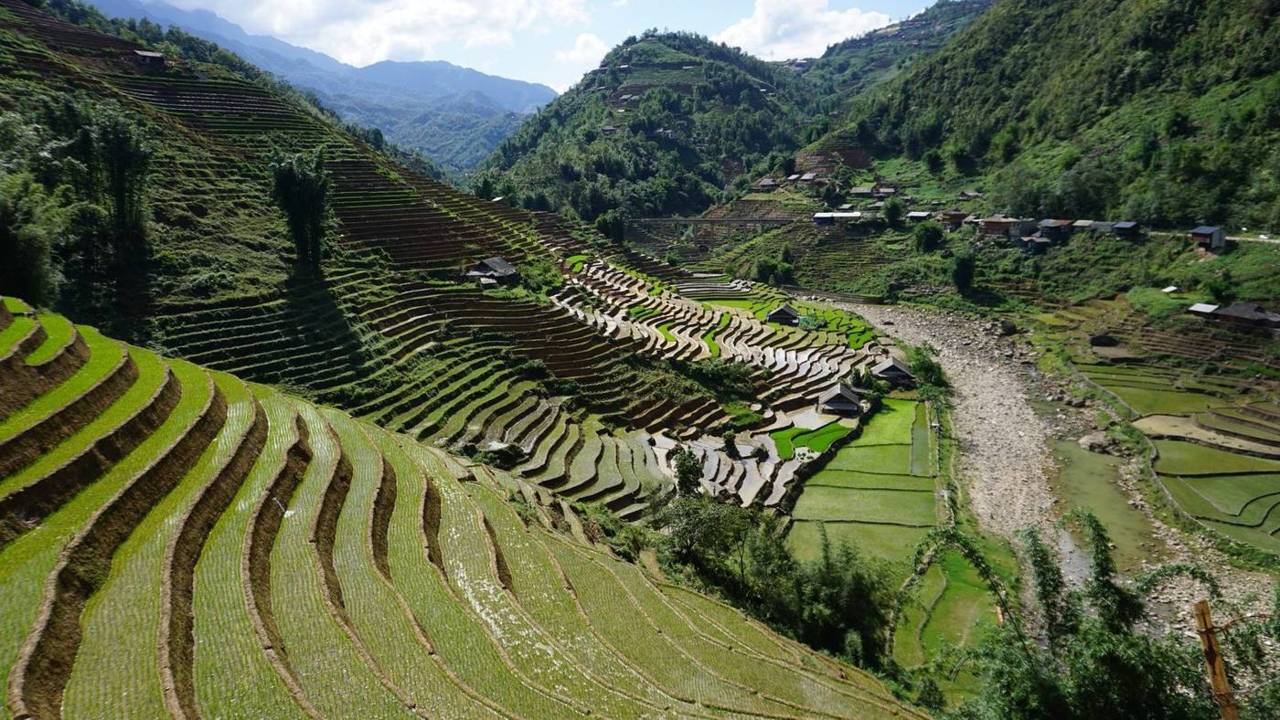
Sapa on foot and the Fansipan climb
Several days walking between Sapa's villages, the highest summit in Indochina if the season allows, then a slow return through the border provinces.
 17 daysModerate
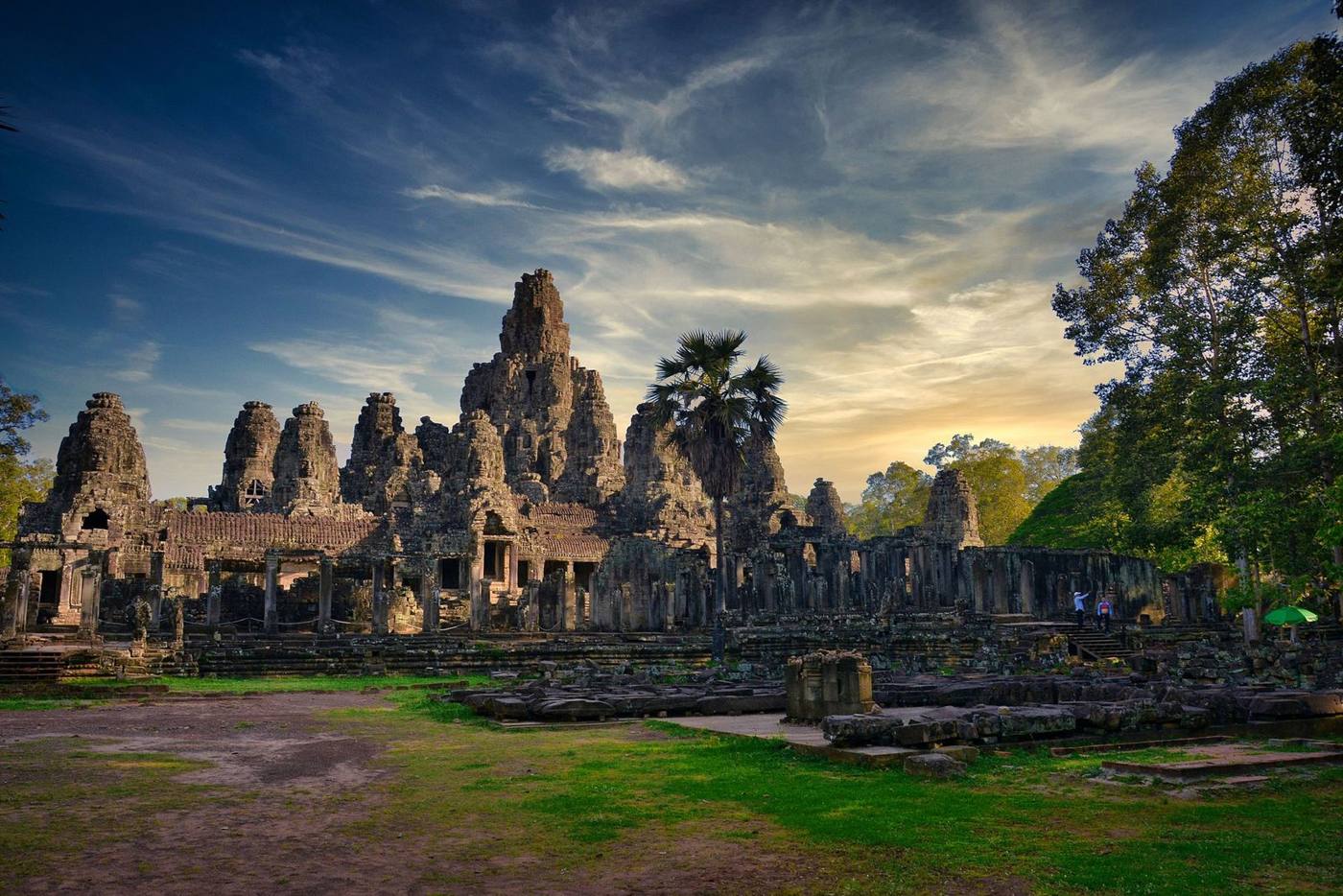
From Angkor to Ha Long Bay
A week in Cambodia among the temples of Angkor and the memory of Phnom Penh, then Vietnam travelled north from the Mekong to Hanoi.
 21 daysChallenging
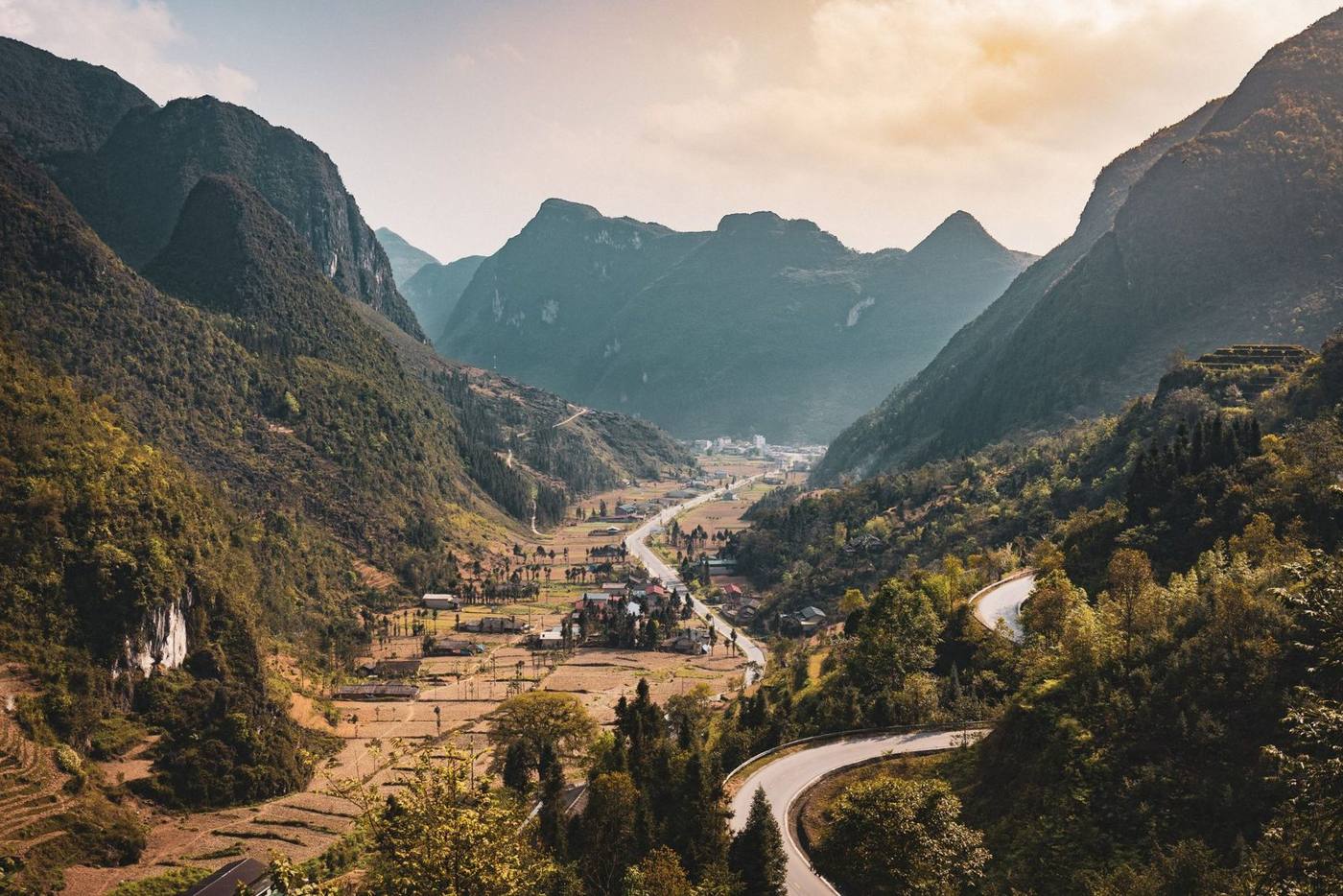
Hill tribes of Vietnam and Laos
Northern Vietnam from Ha Giang to Dien Bien Phu, then across the border to Phongsaly for three days of trekking and the calm of Luang Prabang.