Indochina: Cambodia, Vietnam and Laos
Three countries in just over three weeks: Angkor's temples as far as Koh Ker, Vietnam from Saigon to Ha Long, Laos from Vientiane to Luang Prabang.
- Phnom Penh
- Siem Reap
- Koh Ker
- Ho Chi Minh
- Hoi An
- Hue
- Hanoi
- Ha Long Bay
- Vang Vieng
- Luang Prabang
Day by day
- Day 1
Flying to Bangkok
This trip crosses three countries in twenty three days: Cambodia with Phnom Penh, Angkor and the remote temples of Beng Mealea and Koh Ker, Vietnam from Ho Chi Minh City to Hoi An, Hue, Hanoi and Ha Long Bay, and Laos from Vientiane to Vang Vieng and Luang Prabang. You travel mostly by plane, then by car, boat and train.
Before you go: Italian citizens need a visa for Cambodia. Apply for the tourist e-visa only on the official website evisa.gov.kh, with a passport valid for at least six months from entry, and before arrival also fill in the electronic arrival form. For Vietnam, Italian citizens can enter without a visa for stays of up to 45 days, an exemption valid until 14 March 2028. For Laos you need a 30 day tourist visa: the official eVisa, to be requested only on laoevisa.gov.la, is valid only at certain airports and crossings, so check that it covers Vientiane airport. Other nationalities should check their own rules. If you need to leave the airport in Bangkok, also check the entry rules for Thailand.
Safety: the British government advises against all but essential travel within 20 kilometres of the land border between Cambodia and Thailand, where the crossings are closed. That is why you enter Cambodia by air, and Koh Ker too lies about sixty kilometres from the border. In Laos the UK advises only against Xaisomboun Province, which this trip does not visit.
Today you take the flight from Italy to Bangkok, usually with one stop, and spend the night on the plane.
Practical tip: carry a printed copy of your Cambodian e-visa and some undamaged US dollar notes, used in Cambodia and handy for the Lao visa.
- Day 2
From Bangkok to Phnom Penh
Today you arrive in Bangkok and continue by plane to Phnom Penh, the capital of Cambodia.
At Bangkok airport follow the signs for connecting flights. If you have separate tickets, you must go through passport control, collect your luggage and check in again: allow at least four hours between the two flights. The flight to Phnom Penh takes just over an hour. For now the land border between the two countries remains closed, so flying is the only option.
You land at the new Phnom Penh international airport, outside the city. A car or taxi takes you to the centre. Cambodia is six hours ahead of Italy in winter, five in summer.
In the late afternoon walk along Sisowath Quay, where the Tonle Sap meets the Mekong. In the evening families come out to exercise in the open air, children play and street vendors cook skewers and fritters. In front of you fishing boats drift past and the lights of the far bank come on.
For dinner try fish amok, fish cooked in coconut milk with spices and served in a banana leaf, and lok lak, stir fried beef with a pepper and lime sauce.
Sleep in Phnom Penh, for three nights.
Practical tip: on the riverfront keep your bag and phone on the side away from the road: bag snatching from motorbikes is common.
- Day 3
The Royal Palace and the Silver Pagoda
Today you visit the most elegant places in Phnom Penh: the Royal Palace, the Silver Pagoda and the National Museum.
In the morning go into the Royal Palace, the king's residence, built in the second half of the nineteenth century, when the capital was moved here. Walk among the pavilions with pointed golden roofs and the throne hall, decorated with paintings and colourful ceilings. Next door is the Silver Pagoda, named after the silver tiles of its floor; inside are an Emerald Buddha and a large gold Buddha covered in precious stones. A mural of the Ramayana runs along the courtyard wall. Cover your shoulders and knees. Check prices and times.
Then visit the National Museum, in the red Khmer style building near the palace, with the largest collection of Khmer sculpture in the world: statues of Vishnu and the Buddha, bronzes and temple fragments. It helps you understand Angkor before you see it.
In the afternoon climb to Wat Phnom, the pagoda on the small hill that gives the city its name, and then visit the central market, Psar Thmei, under its great yellow dome from the 1930s.
In the evening take a sunset boat on the river, to the point where the Tonle Sap and the Mekong meet.
Sleep in Phnom Penh.
Practical tip: book tuk-tuks through ride hailing apps: the price is clear before you set off.
- Day 4
Tuol Sleng and the Russian Market
Today you face the hardest part of Cambodia's history and then spend the afternoon at the Russian Market.
In the morning visit the Tuol Sleng Genocide Museum, in a secondary school that the Khmer Rouge turned into the S-21 prison. Between 1975 and 1979 thousands of people were imprisoned and tortured here, and almost all of them were then killed. The classrooms have been left as they were, with brick cells, iron beds and walls covered in photographs of the prisoners. Take the audio guide, which tells the stories calmly and respectfully. Check prices and times.
If you wish, continue to the Choeung Ek memorial centre, the killing field about fifteen kilometres from the city, with its stupa filled with skulls. It is a harrowing visit: decide whether you feel up to it, also with your companions in mind.
In the afternoon change atmosphere at the Russian Market, Psar Tuol Tom Poung, so called because many Russians shopped here in the 1980s. Under its low roof you find fabrics, silks, figurines, spare parts, spices and food. Stop at the stalls for a sugar cane juice or a plate of noodles.
In the evening go back to the riverfront for a walk and a quiet dinner.
Sleep in Phnom Penh.
Practical tip: at Tuol Sleng and Choeung Ek dress modestly, speak quietly and do not photograph Cambodian visitors who are praying.
- Day 5
To Siem Reap and the Angkor pass
Today you leave Phnom Penh and travel to Siem Reap, the town of the Angkor temples.
You can take a short domestic flight or a bus, which takes about six hours and crosses plains of rice fields and villages of wooden stilt houses. By air you arrive at the new Siem Reap international airport, about an hour from the centre.
Buy your pass on the official website angkorenterprise.gov.kh: 37 dollars for one day, 62 for three days to use within a week, 72 for seven days to use within a month. The three day pass suits this trip. Beng Mealea and Koh Ker have separate tickets.
In the afternoon, if you arrive early, visit the Angkor National Museum, which explains the history of the Khmer empire and the meaning of the temples. Check prices and times.
In the evening stroll along the Siem Reap river and through the old market, among stalls of spices, silks and wood carvings, and choose a Khmer soup with fish from Tonle Sap for dinner.
Book a tuk-tuk with driver for the following days and agree the dawn departure time.
Sleep in Siem Reap, for four nights.
Practical tip: temples require covered shoulders and knees; bring a light scarf and long trousers in a cool fabric, so that you are ready for every visit.
- Day 6
Sunrise over Angkor Wat and the Bayon
Today you see the two most famous monuments of Angkor: Angkor Wat at sunrise and the Bayon.
Set off at around five. The park opens at 5am and closes at 6.30pm, according to the official website. Stand by the pool in front of Angkor Wat and watch the five towers appear against the sky and reflect in the water. Then enter the temple, built in the twelfth century for King Suryavarman II and dedicated to Vishnu. Walk the galleries of reliefs, with the battles of the Mahabharata, the royal procession and the churning of the ocean of milk. If it is open, climb to the central sanctuary.
In mid morning enter Angkor Thom by the south gate, with its rows of gods and demons holding the sacred serpent. At its centre is the Bayon, with dozens of towers and huge smiling stone faces watching you from every side. Continue to the Terrace of the Elephants.
In the afternoon, the hottest part of the day, visit Ta Prohm, the temple where trees grow over the galleries and roots run down the walls. Follow the wooden walkways and marked routes.
In the evening rest in town: tomorrow you leave early again.
Sleep in Siem Reap.
Practical tip: bring a torch for the darkness before dawn and a packed breakfast: by six you will already be hungry.
- Day 7
Banteay Srei and the grand circuit
Today you visit the most refined temple of Angkor, Banteay Srei, and the temples of the grand circuit.
Early in the morning go to Banteay Srei, north of the park, about an hour by tuk-tuk. It is a small tenth century temple in pink sandstone, with the finest decoration in Khmer art: pediments with scenes from the Ramayana, garlands, female figures and monkey headed guardians. It is part of the Angkor pass. Arrive at opening time, before the groups.
On the way back stop at the palm sugar stalls, where families boil palm sap in large pots.
In the afternoon follow the grand circuit. At Preah Khan walk the long corridors, through doorway after doorway and past lichen covered walls. At Neak Pean a walkway crosses the pool to the small temple on the island. At Ta Som look at the gate gripped by the roots of a fig tree. At the East Mebon look for the large stone elephants at the corners of the terraces, then rest for a few minutes in the shade.
At sunset climb Pre Rup, the brick pyramid temple, and watch the sun go down over the rice fields.
Sleep in Siem Reap.
Practical tip: between midday and three the heat is intense: stop in the shade for lunch and set off again when the light drops.
- Day 8
Beng Mealea and Koh Ker
Today you leave the classic circuits for two remote sites, almost always without crowds: Beng Mealea and Koh Ker.
Set off at dawn by car with driver. In about an hour and a half you reach Beng Mealea, a large twelfth century temple that has never been rebuilt. Walk the wooden walkways among moss covered blocks, collapsed galleries and trees growing on the roofs. The ticket costs 10 dollars, open from 6am to 6.30pm.
Continue north to Koh Ker, capital of the Khmer empire for about twenty years in the tenth century and a UNESCO World Heritage Site. The ticket costs 15 dollars, with the same hours. The best known monument is Prasat Thom, a seven tiered pyramid rising from the forest, unlike anything you see at Angkor. Around it, in the forest, are dozens of smaller brick temples with large stone lingas.
Koh Ker lies about sixty kilometres from the Thai border as the crow flies, outside the zone advised against. The area has been cleared of mines, but not everywhere: stay on the paths and walkways and do not pick up metal objects.
In the late afternoon return to Siem Reap, about two and a half hours by road.
Sleep in Siem Reap.
Practical tip: buy the Beng Mealea and Koh Ker tickets on the official website angkorenterprise.gov.kh and bring water and fruit for the whole day.
- Day 9
Flying to Ho Chi Minh City
Today you leave Cambodia and fly to Vietnam, to Ho Chi Minh City, the great southern city that many still call Saigon.
In the morning, if your flight leaves late, take a last stroll around the Siem Reap market or the riverside. Then head to the airport, about an hour from the centre. The flight to Ho Chi Minh City takes about an hour.
You enter Vietnam without a visa for up to 45 days. Vietnam is in the same time zone as Cambodia. On arrival change some money into dong, the local currency, and buy a SIM card: ride hailing apps work well and are the easiest way to get around the city.
In the afternoon walk around District 1, the historic centre. Look at Notre-Dame Cathedral, built of red bricks brought from France at the end of the nineteenth century: it has been under restoration for years, so check whether the interior is open. Next door is the Central Post Office, with its great iron and glass vault and old painted maps.
At sunset go to Nguyen Hue, the wide pedestrian street where families and young people gather in the evening, and look at the illuminated skyscrapers.
Sleep in Ho Chi Minh City, for two nights.
Practical tip: to cross the road among the motorbikes, walk slowly and never stop suddenly: riders avoid you if you are predictable.
- Day 10
The War Remnants Museum and the new city
Today you discover Vietnam's recent history and the modern city that has grown so quickly.
In the morning visit the War Remnants Museum, devoted to the Vietnam War seen from the Vietnamese point of view. In the courtyard there are planes, tanks and helicopters; in the halls, very powerful photographs of the bombing, of the victims of Agent Orange and of war reporters. It is a hard but important visit. Check prices and times.
Then go to the Independence Palace, the former presidential palace of South Vietnam, where the tanks of the North drove in on 30 April 1975. The rooms have been left as they were in the 1960s, with bunkers and the communications room underground.
For lunch stop at Ben Thanh Market, under its clock tower, and try pho, rice noodle soup with beef, or com tam, broken rice with grilled pork.
In the afternoon look at the new city: the skyscrapers along the Saigon River, the modern districts on the far bank and the old shophouses holding out among the towers. In the evening go up to a rooftop viewpoint or take a boat on the river.
Sleep in Ho Chi Minh City.
Practical tip: hold your phone firmly when you are on the pavement: bag and phone snatching from motorbikes is common in the centre.
- Day 11
Da Nang and the Marble Mountains
Today you fly to central Vietnam, to Da Nang, and stop at the Marble Mountains before reaching Hoi An.
In the morning take the flight from Ho Chi Minh City to Da Nang, just over an hour. Da Nang is a modern seaside city, with a long beach and bridges over the Han River. On Saturday and Sunday evenings the Dragon Bridge breathes fire and water in front of the crowds.
From the airport a car takes you to the Marble Mountains, five hills of limestone and marble between Da Nang and Hoi An, each dedicated to one of the five elements. The most visited is the water mountain: climb the steps among pagodas, caves with altars lit by light falling from above, and terraces with views over the coast. The steps are steep and slippery after rain. Check prices and times.
At the foot of the hills are the workshops of stone carvers, who make statues large and small.
In the afternoon continue to Hoi An, about half an hour by road. Settle in and take a first walk along the Thu Bon River, when the boats light their lanterns.
Sleep in Hoi An, for two nights.
Practical tip: between September and December central Vietnam can have typhoons and floods: check the forecast and keep a spare day.
- Day 12
Hoi An, the town of lanterns
Today you visit Hoi An, the old trading port and UNESCO World Heritage Site, with its wooden houses, the temples of the Chinese communities and its coloured lanterns.
For centuries ships from China, Japan and Europe stopped here, and each community left its houses, assembly halls and temples. Early in the morning, before the groups, walk through the old town, with its yellow shophouses and wooden shutters. The old town ticket includes entry to a choice of sites, such as the Japanese covered bridge, the Chinese assembly halls and old merchants' houses. In the merchants' houses look at the carved beams and the family altars, still used by the descendants. Check prices and times.
At midday try cao lau, thick noodles with pork and herbs, the town's signature dish, and banh mi, the Vietnamese sandwich.
In the afternoon hire a bicycle and ride among the rice fields and vegetable gardens of Tra Que village, as far as An Bang beach, a few kilometres away.
In the evening return to town, when the lanterns light up. On the river, boats take visitors to set small floating lanterns on the water.
Sleep in Hoi An.
Practical tip: Hoi An is famous for its quick tailors, but a well made garment needs at least two fittings: order on the first day.
- Day 13
The Hai Van Pass and Hue
Today you travel from Hoi An to Hue along the coast, over the Hai Van Pass.
In the morning set off by car with driver. Past Da Nang the road climbs to the Hai Van Pass, the pass of the ocean clouds, where the mountains plunge into the sea. At the top are the ruins of an old fortification and views over Da Nang Bay on one side and the Lang Co lagoon on the other. In fog the view disappears, but the climb is still beautiful.
Go down towards the Lang Co lagoon, with its fishing villages and lift nets, and stop for a seafood lunch.
In the afternoon you reach Hue, the capital of the emperors of the Nguyen dynasty between 1802 and 1945, on the banks of the Perfume River. At sunset visit Thien Mu Pagoda, with its seven storey tower on the riverbank.
In the evening taste Hue's imperial cuisine, with small refined dishes such as banh beo, little steamed rice cakes with shrimp, and the spicy soup bun bo Hue.
Sleep in Hue, for two nights.
Practical tip: if you love trains, the railway between Da Nang and Hue follows the coast with fine views: it is an alternative to the car.
- Day 14
The Hue citadel and the imperial tombs
Today you visit the imperial citadel of Hue and the tombs of the emperors along the Perfume River.
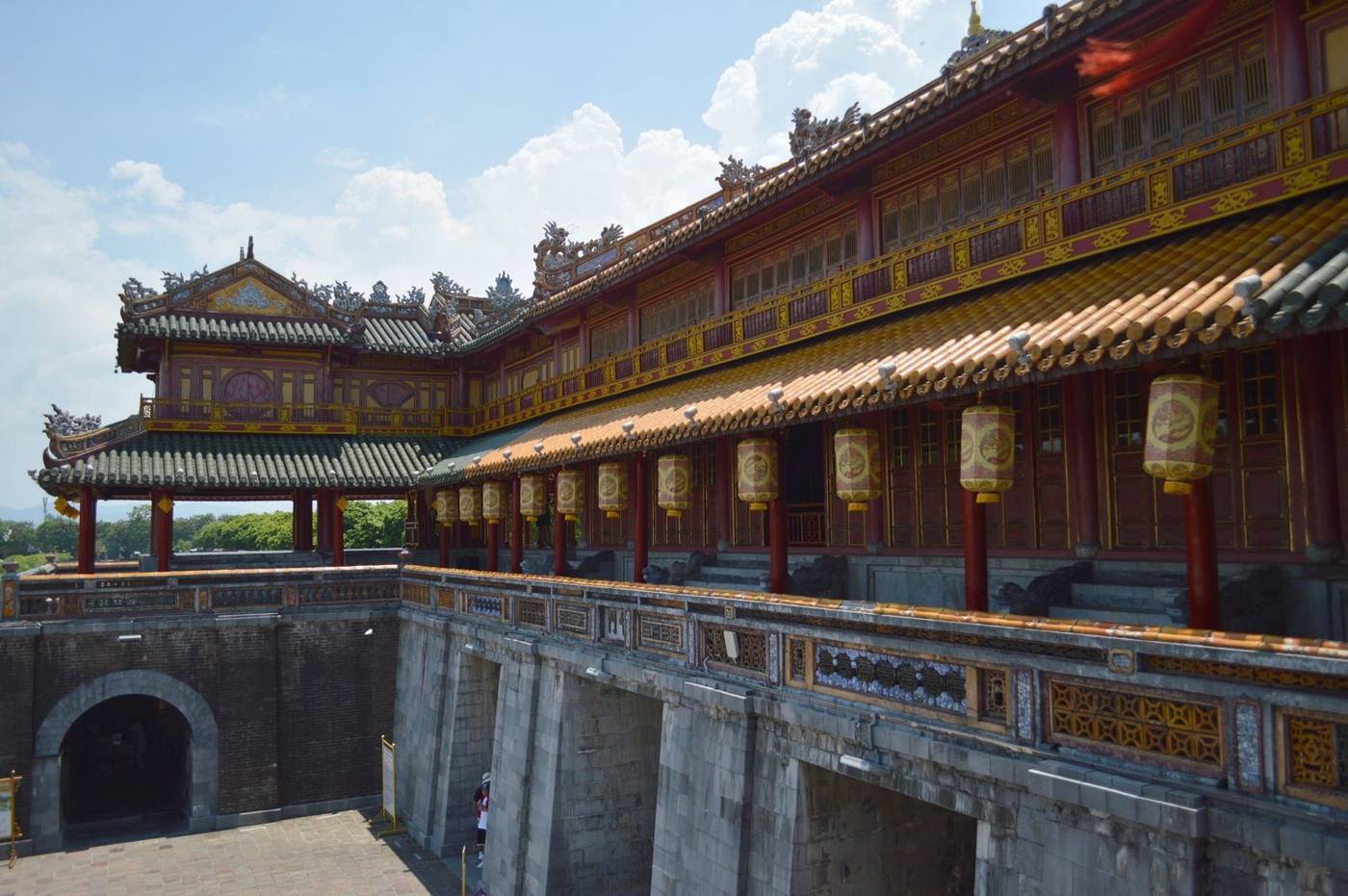
In the morning enter the citadel, a UNESCO World Heritage Site, surrounded by walls and a moat. Inside is the Imperial City, with the Noon Gate, the Palace of Supreme Harmony where ceremonies were held, courtyards, gardens and ancestral temples. Many buildings were destroyed during the war and are now being restored: among the lawns you see foundations and rebuilt columns. Check prices and times.
For lunch try com hen, rice with tiny river clams, herbs and peanuts, the city's most popular dish.
In the afternoon visit the imperial tombs, on the hills south of the city. The tomb of Tu Duc is a park with ponds, pavilions and frangipani trees, where the emperor came to write poetry. That of Khai Dinh, more recent, mixes Vietnamese and European styles, with an inner hall covered in glass and porcelain mosaics.
At sunset take a slow boat on the Perfume River, as the light fades over the hills.
Sleep in Hue.
Practical tip: buy the combined ticket for the citadel and the tombs if you want to visit more than one: check prices and times on site.
- Day 15
Hanoi and the Old Quarter
Today you fly to Hanoi, the capital, and spend the afternoon in the Old Quarter and around the lake.
In the morning take the flight from Hue to Hanoi, just over an hour. You land at Noi Bai airport, about forty minutes from the centre. In winter Hanoi is cooler than the south, often with grey skies: bring a light jacket.
In the afternoon walk around Hoan Kiem Lake, the heart of the city, with its red bridge and the Temple of the Jade Mountain on a small island. Then enter the Old Quarter, the thirty six streets where each street once had its own trade: silk street, silver street, tombstone street, mat street. Today it is a maze of motorbikes, shops and stalls, with narrow, deep tube houses.
Towards evening visit the Temple of Literature, dedicated to Confucius in the eleventh century and home to Vietnam's first university, with its courtyards, ponds and stone steles bearing the names of graduates. Check prices and times.
For dinner try bun cha, grilled pork with noodles and herbs, and then an egg coffee, the city's speciality.
Sleep in Hanoi.
Practical tip: at weekends the streets around the lake become pedestrian in the evening: it is the best time for a stroll.
- Day 16
Ha Long Bay
Today you go to Ha Long Bay, a UNESCO World Heritage Site, with its thousands of limestone islands rising from the sea.
In the morning leave Hanoi by car or bus, about two and a half hours on the motorway. At the port board your boat for a cruise with a night on board. Choose a company with registered boats and check that there are life jackets for everyone.
The boat moves slowly among pinnacles covered in vegetation, sheltered bays and fishing villages. In the afternoon you usually visit a cave, with stalactites and large lit chambers, and go kayaking between the islands, entering small lagoons hidden behind rock arches. If the sea allows, have a swim. For kayaking bring a hat, sunscreen and a waterproof bag for your phone.
At sunset go up on deck and watch the light change on the islands. In the evening dinner on board is fish and seafood.
Cruises depend on the weather: in July 2025 a tourist boat capsized during a sudden storm. The authorities suspend trips when the sea is rough: always follow their instructions.
Sleep on the boat in the bay.
Practical tip: bring a jumper for the evening and a seasickness remedy, even if the water in the bay is usually calm.
- Day 17
Back to Hanoi
Today you see the bay at dawn and then return to Hanoi.
Get up early: on deck there is sometimes tai chi at dawn, while the mist lifts between the islands. After breakfast the boat visits one last cave or beach, then slowly returns to port.
At midday drive back to Hanoi, about two and a half hours.
In the afternoon visit Ba Dinh Square and the mausoleum of Ho Chi Minh, the founder of modern Vietnam. The mausoleum has short opening hours, is closed on some days and for a few months each year for maintenance: check prices and times in advance. Nearby you can see the stilt house where Ho Chi Minh lived and the One Pillar Pagoda, built on a single column in the middle of a pond.
In the evening go to a water puppet show, a traditional art born in the rice fields of the north: wooden puppets move across the water of a pool, guided from behind a screen, with live music. Check prices and times.
After the show wander among the food stalls of the Old Quarter.
Sleep in Hanoi.
Practical tip: at the mausoleum modest clothing is required, with shoulders and knees covered, and silence is kept: leave bags and cameras at the left luggage office.
- Day 18
Vientiane and That Luang
Today you fly to Laos, to Vientiane, the calmest capital in Southeast Asia.
In the morning take the flight from Hanoi to Vientiane, about an hour. At the airport you go through immigration with the visa you prepared. Laos is in the same time zone as Vietnam. The currency is the kip; also bring some dollars or euros to change.
In the afternoon visit Pha That Luang, the great golden stupa that is the symbol of the country, surrounded by a cloister with Buddha statues. Then stop at Patuxai, the victory arch in the middle of the main avenue, with views over the city from the top. Also visit Wat Si Saket, one of the oldest temples in Vientiane, with thousands of small Buddha statues in the niches of its walls. Check prices and times.
Also visit the centre devoted to the victims of unexploded ordnance: Laos is one of the most heavily bombed countries in history, and millions of cluster bombs still lie in the ground. Throughout the country always stay on the paths.
At sunset walk along the Mekong riverfront, with Thailand on the far bank, and stop at the night market.
Sleep in Vientiane.
Practical tip: in temples take off your shoes and cover your shoulders and knees, and women should not touch monks or hand them objects directly.
- Day 19
Vang Vieng between river and cliffs
Today you go to Vang Vieng, a small town on the Nam Song River surrounded by limestone cliffs.
In the morning take the fast train on the Laos China railway, about an hour from Vientiane. Buy your ticket in advance, with your passport, at the station or on the railway's official app: seats often sell out.
In Vang Vieng the scenery is spectacular: rice fields, forest covered pinnacles and caves. Choose the activities you prefer. By kayak you paddle down the river between the cliffs, stopping at caves. Tubing means floating down the river sitting in an inner tube. On the zipline you fly over the forest hanging from a cable. Always wear a life jacket and a helmet, choose activities with equipment in good condition and do not go into the water after drinking: the river has strong currents, especially after rain.
In the afternoon reach a lagoon of blue water at the foot of the mountain, with a cave nearby, and have a swim.
Be careful with alcoholic drinks: in November 2024 some foreign tourists in Vang Vieng died of methanol poisoning after drinking spirits. Drink only sealed bottled drinks, from reliable places.
Sleep in Vang Vieng.
Practical tip: at sunset climb to one of the viewpoints above the town to see the light on the cliffs.
- Day 20
By train to Luang Prabang
Today you continue by train to Luang Prabang, the old royal capital of Laos and a UNESCO World Heritage Site.
In the morning, if you have time, take a last walk along the river in Vang Vieng, then catch the train to Luang Prabang, about an hour through mountains and tunnels. The station is outside town: a minibus or tuk-tuk takes you to the centre.
Luang Prabang stands on a peninsula between the Mekong and the Nam Khan River. The old town is small and easy to explore on foot, among monasteries with sweeping roofs, wooden houses, French colonial villas and palm trees.
In the afternoon visit Wat Xieng Thong, the most beautiful monastery in town, from the sixteenth century, with roofs that sweep almost to the ground and walls decorated with coloured glass mosaics. Then stop at the Royal Palace, now the National Museum. Check prices and times.
At sunset climb Mount Phousi, the hill in the middle of town: from the top you see the two rivers, the temple roofs and the mountains. There are many steps and the top gets crowded: arrive a little early.
In the evening stroll through the night market, with hand woven textiles and street food.
Sleep in Luang Prabang, for two nights.
Practical tip: buy your train ticket a few days ahead: in the peak months seats sell out.
- Day 21
The monks' alms round, Pak Ou and Kuang Si
Today you see the monks' alms round at dawn, travel up the Mekong to the Pak Ou caves and in the afternoon swim at the Kuang Si waterfalls.
At first light, along the streets of the old town, monks in orange robes walk in line to receive rice from the faithful. It is a religious rite, not a show: watch from a distance, in silence, without flash and without standing in their way. Take part only if you truly wish to, in covering clothes and with rice bought from reliable sources.
After breakfast take a boat north on the Mekong. In about two hours you reach the Pak Ou caves, carved into the cliff above the river, with thousands of small Buddha statues left by the faithful. Check prices and times.
In the afternoon go to the Kuang Si waterfalls, south of town: the water falls in steps between turquoise pools in the middle of the forest. Swim in the pools where it is allowed and climb the path to the highest fall. At the entrance there is a centre that cares for bears rescued from illegal trade. Check prices and times.
Sleep in Luang Prabang.
Practical tip: for swimming at Kuang Si bring a one piece swimsuit or a T-shirt: Laos is a modest country.
- Day 22
From Luang Prabang to Bangkok
Today you leave Laos and fly to Bangkok, the first stage of the journey home.
In the morning, if your flight leaves late, stop at the Luang Prabang morning market, among vegetables, Mekong fish and herbs, and drink a last Lao coffee by the river. You can also visit a weaving school or a handmade paper workshop, two traditions of the town.
Then go to Luang Prabang airport, a few minutes from the centre, and take the flight to Bangkok, about an hour and a half.
In Bangkok, if your flight to Italy leaves in the evening, stay in the airport for the connection. If it leaves the next day, you must enter Thailand: check the entry rules and choose accommodation near the airport or along the fast rail line into the city. The British government advises against the border areas with Cambodia and some provinces of southern Thailand: Bangkok is not among them.
If you have a few hours in the city, walk along the Chao Phraya River or visit a market, then have pad thai for dinner, stir fried noodles with prawns and peanuts.
Sleep in Bangkok or on the plane.
Practical tip: check the weight of your luggage before the long haul flight, as domestic flights in Asia often have lower limits.
- Day 23
Back to Italy
Today you return to Italy, after more than three weeks in Cambodia, Vietnam and Laos.
The flight from Bangkok usually reaches Italy with a stop in Europe or the Gulf. The time difference is six hours in winter and five in summer: to recover, try to stay awake until evening and get out in daylight.
In these twenty three days you have seen three countries: the Phnom Penh riverfront, the Royal Palace and the Silver Pagoda, the memory of Tuol Sleng, sunrise over Angkor Wat, the faces of the Bayon, the roots of Ta Prohm, Banteay Srei, Beng Mealea and the pyramid of Koh Ker, Ho Chi Minh City and the War Remnants Museum, the Marble Mountains, the lanterns of Hoi An, the Hai Van Pass, the Hue citadel, Hanoi's Old Quarter, Ha Long Bay, That Luang in Vientiane, the cliffs of Vang Vieng, the monks' alms round, Pak Ou and the Kuang Si waterfalls.
When to go: the best period is from November to February, with the driest and coolest weather in Cambodia, southern Vietnam and Laos. In winter Hanoi and the bay are cool and the sky is often grey. Between March and May the heat becomes heavy, especially at Angkor. From May to October the rains arrive, and between September and December central Vietnam can have typhoons and floods.
Practical tip: if you have a fever in the weeks after you return, see a doctor and tell them where you have been.
It makes sense for travellers with three weeks who want an overview of the region rather than depth in one country. Angkor with Koh Ker and Beng Mealea is the best part, well away from the short circuits. The weak point is Vietnam, cut to less than a week and its busiest stops, so anyone who already knows Hanoi and Hoi An will find little new. Start rested: with internal flights and borders, quite a few days are pure travel.
Before you go
- Documents and visa
- Passport with at least six months' validity remaining. Italian, French and several other European citizens need no visa for tourism up to 45 days, an exemption valid until 14 March 2028; otherwise use the e-visa from the official portal.
- Health and vaccines
- No compulsory vaccines. Protect yourself against mosquitoes because of dengue; drink only bottled water. Emergencies: 113 police, 114 fire, 115 ambulance.
- Money and payments
- Vietnamese dong. Cards and QR code payments are widespread in cities; in markets, villages and for small purchases you need cash.
- Power sockets
- Types A and C, among others, 220 volts: a universal adapter is useful.
- Time zone
- UTC+7 all year: Vietnam does not use daylight saving time.
- Safety
- A safe country for travellers. In big cities beware of snatch thefts from scooters; from July to December typhoons and floods hit the centre and north. Official advice: GOV.UK.
Information checked in November 2026 for Italian and EU citizens. Rules change: always check before you travel.
Variations
In 16 days: drop Laos and fly home from Hanoi, keeping Cambodia and Vietnam from Ho Chi Minh City to Ha Long Bay.
In 27 days: add two days in the Mekong Delta before Ho Chi Minh City and two days in Ninh Binh between Hanoi and the bay.
Frequently asked questions
What documents do I need for Cambodia, Vietnam and Laos?
For Cambodia you need the e-visa, to be requested only on evisa.gov.kh, and the electronic arrival form. Italian citizens enter Vietnam without a visa for up to 45 days, until 14 March 2028. For Laos you need a tourist visa: the official eVisa is requested only on laoevisa.gov.la. Other nationalities should check their own rules.
Why fly from Bangkok to Phnom Penh?
The land crossings between Thailand and Cambodia are closed, and the British government advises against the 20 kilometre strip along the border. The flight avoids that area completely.
How much do Angkor, Beng Mealea and Koh Ker cost?
On the official website angkorenterprise.gov.kh the Angkor pass costs 37 dollars for one day, 62 for three days and 72 for seven days. Beng Mealea costs 10 dollars and Koh Ker 15 dollars.
Indicative itinerary written by World Atlas. Before booking, check timetables, seasonal openings, documents and safety.
 12 daysModerate
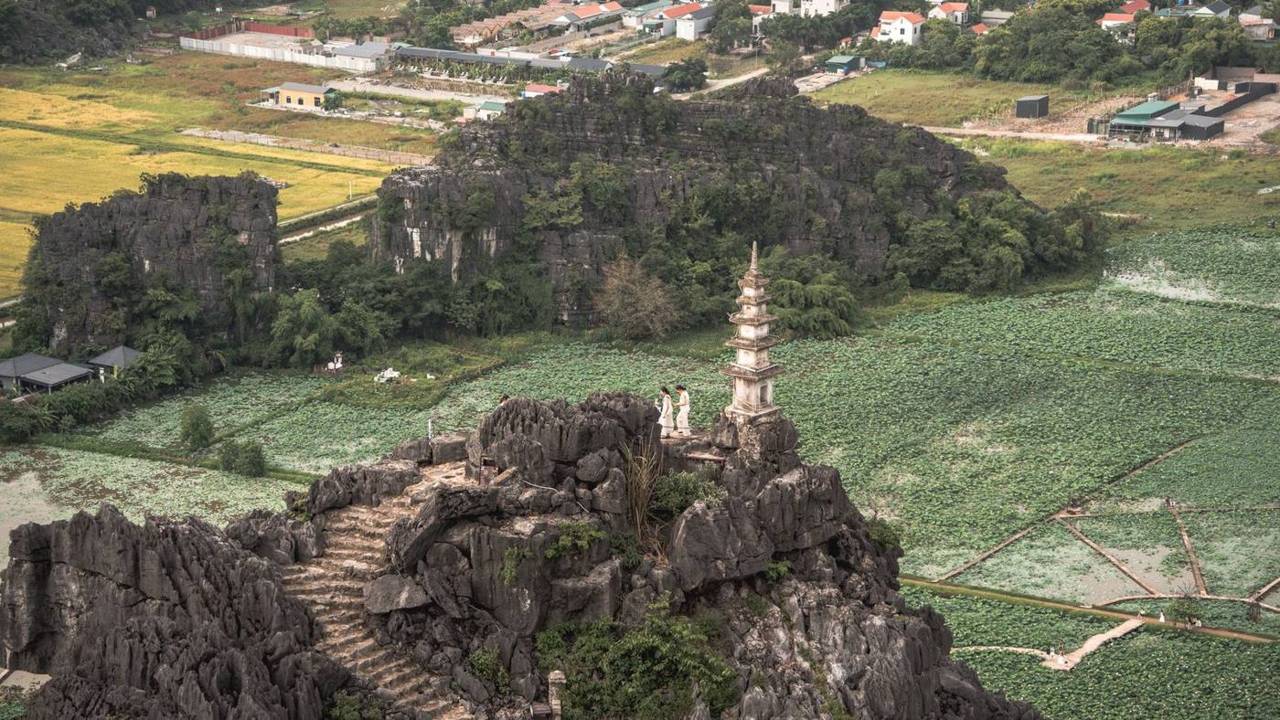
Karst and caves: Ninh Binh, Phong Nha and Lan Ha
Limestone Vietnam in twelve days: paddies among the pinnacles, the Pu Luong reserve, the caves of Phong Nha and kayaking in Lan Ha Bay.
 10 daysEasy
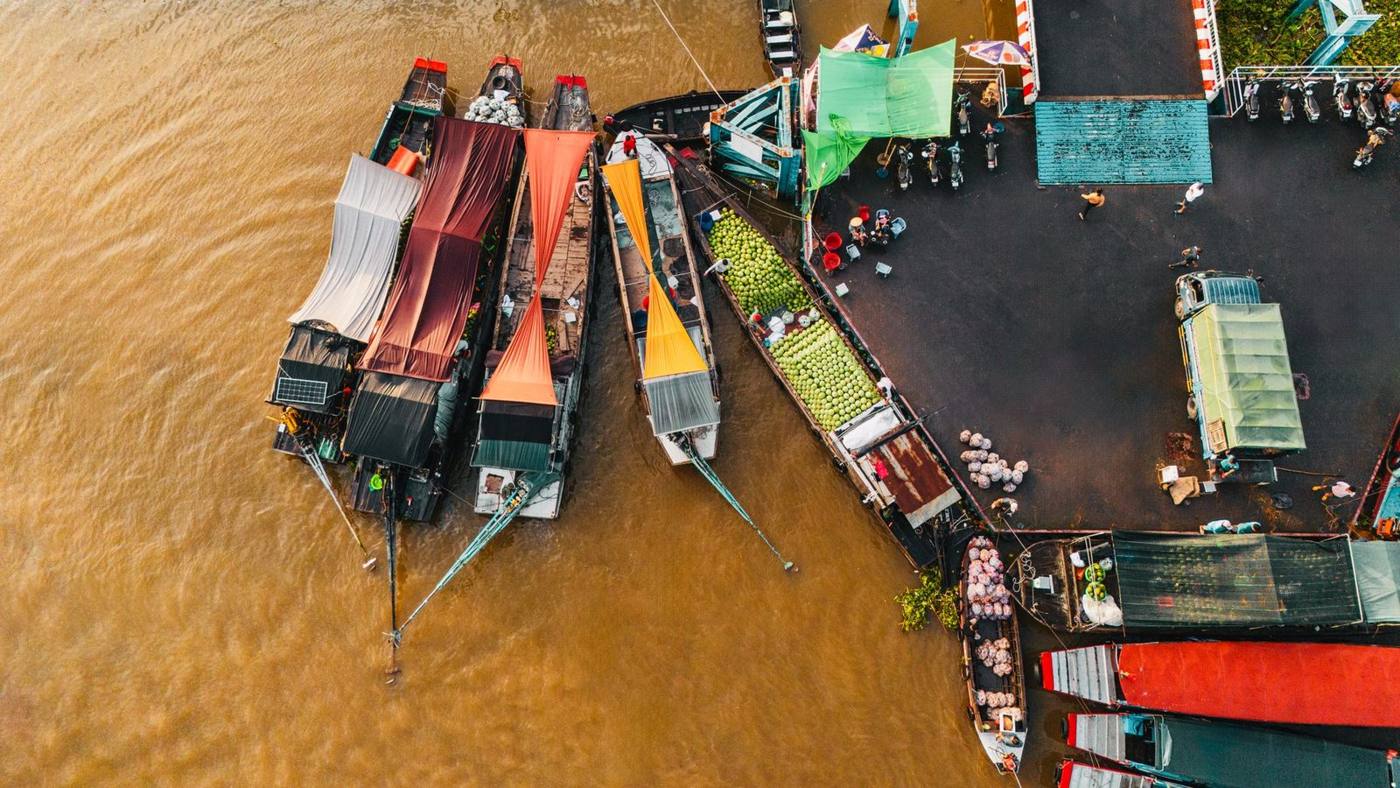
The Mekong Delta and Phu Quoc
A week on the water among canals, dawn markets and flooded forests up to the Cambodian border, then a few days by the sea on Phu Quoc.
 4 daysEasy
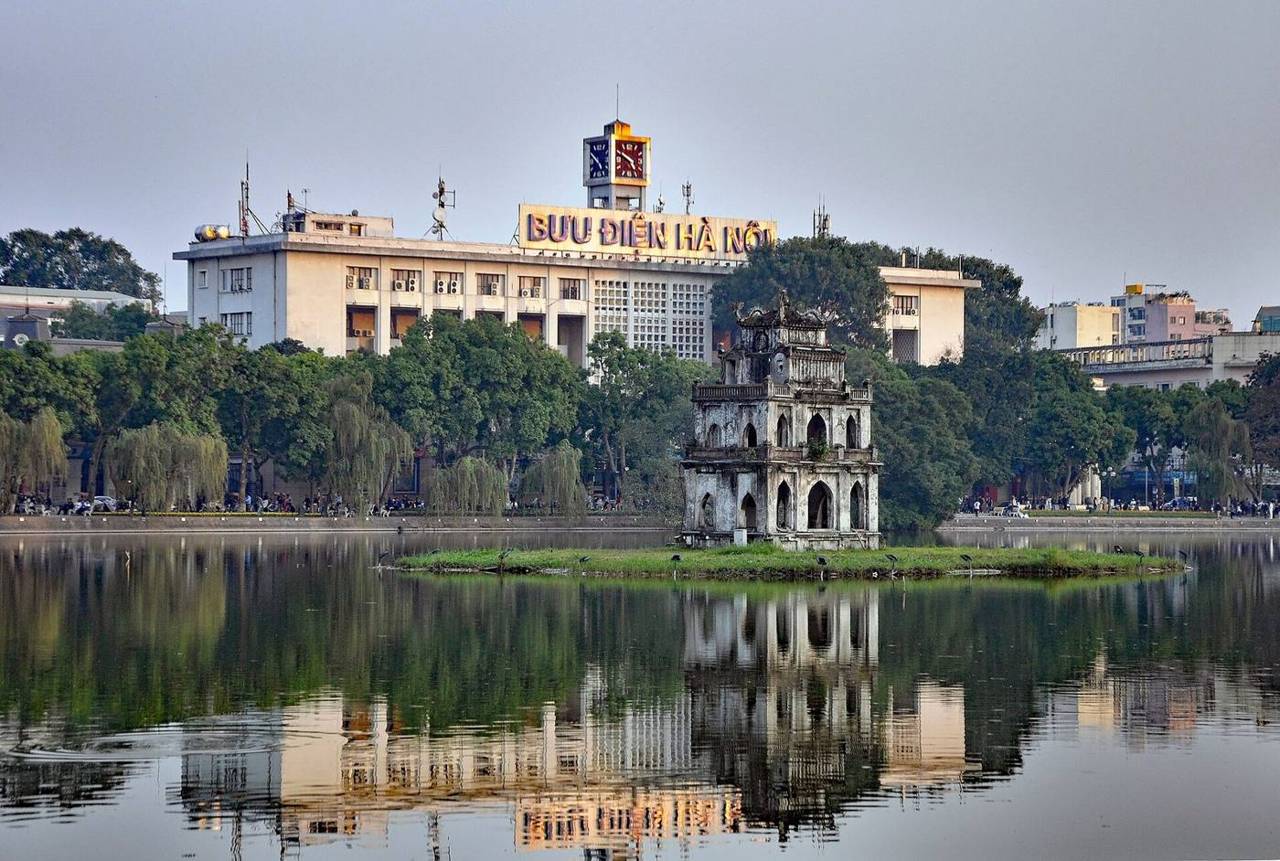
Hanoi in depth
The capital at a gentle pace: the Old Quarter of the 36 streets, Hoan Kiem Lake, the Temple of Literature, the Ho Chi Minh Mausoleum, the Museum of Ethnology, the water puppet theatre and street food, from pho to bun cha.