 Iceland
An island still being formed: volcanoes, glaciers, geysers, waterfalls and black beaches. In summer the sun never sets; in winter you can see the northern lights.
Places not to miss
Golden Circle
Þingvellir, the Strokkur geyser and Gullfoss waterfall.
Jökulsárlón
A glacial lagoon full of icebergs and Diamond Beach.
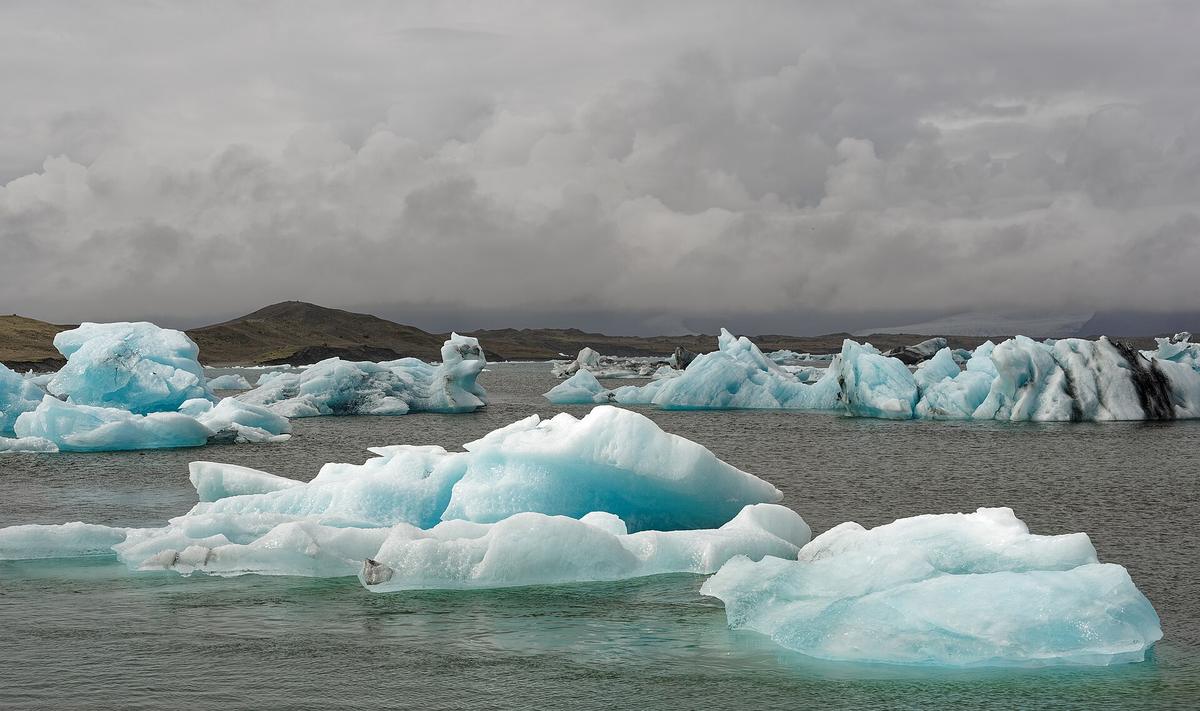
Photo: Jakub Hałun, CC BY 4.0 Vík
The black beach of Reynisfjara and its sea stacks.
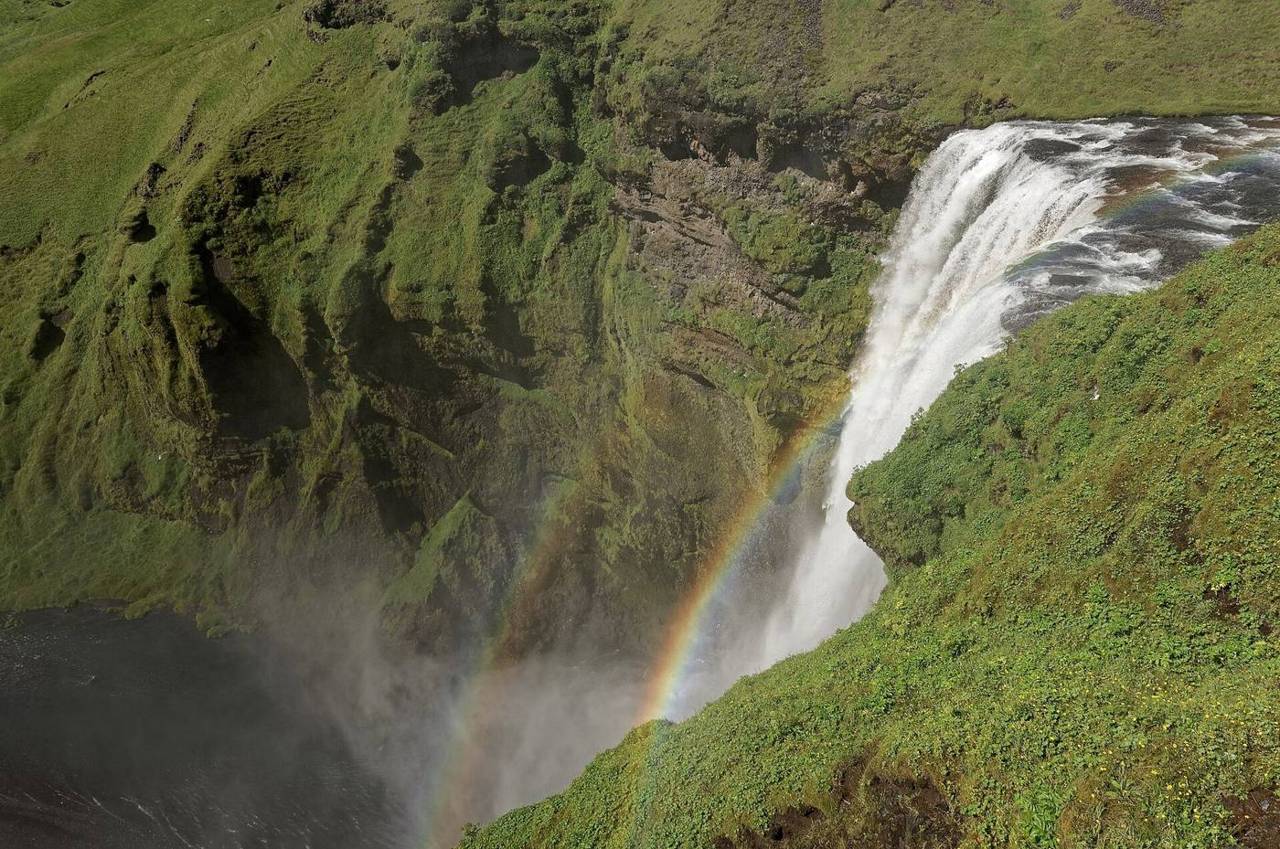
Skógafoss and Seljalandsfoss
Two iconic south-coast waterfalls; you can walk behind the second.
Landmannalaugar
Colourful rhyolite mountains and hot springs.
Lake Mývatn
Craters, lava fields and geothermal baths in the north.
Nature and wildlife
Puffins (May-August), whales at Húsavík, seals, Arctic foxes.
Food and drink
Lamb, very fresh fish, skyr, Icelandic hot dogs.
When to go
June-August for open roads; September-March for the northern lights.
Did you know?
Iceland has no army and one of the lowest crime rates in the world.
Itineraries in Iceland
The Golden Circle and the south coast
Geysers, the Þingvellir rift, the Skógafoss and Seljalandsfoss waterfalls, Reynisfjara black beach and the Jökulsárlón glacier lagoon.
The Ring Road, the full loop
The whole island on the ring road: the south coast, the eastern fjords, Lake Mývatn, the whales of Húsavík and the Snæfellsnes peninsula.
Northern lights in winter
Hunting the aurora away from city lights, ice caves under Vatnajökull and frozen waterfalls on the south coast.
The Laugavegur trek
Four days on foot from Landmannalaugar to Þórsmörk among coloured rhyolite mountains, obsidian fields, glaciers and rivers to ford.
The Westfjords
Iceland at its most remote: Dynjandi waterfall, the Látrabjarg cliffs with their puffins, empty fjords and hot pools by the sea.
The Highlands by 4x4
Iceland's uninhabited interior: Landmannalaugar, the Kerlingarfjöll mountains, Askja crater and the Holuhraun lava field.
Reykjavík and Snæfellsnes in a long weekend
Four days for a first taste: the capital, a geothermal lagoon and the peninsula known as Iceland in miniature.
The north: Mývatn, whales and Tröllaskagi
Fly to Akureyri for a week in the north: whales at Húsavík, Goðafoss and Dettifoss waterfalls, the craters of Mývatn and the troll peninsula.
Glaciers and active volcanoes
A glacier hike with crampons at Sólheimajökull or Skaftafell, the Reykjanes peninsula with its recent lava flows and snorkelling in the Silfra fissure.
Iceland and the Faroe Islands
Five days on Iceland's south coast and five in the Faroes, among sheer cliffs, turf-roofed villages and seabirds.
The East Fjords
The less-travelled Iceland: Egilsstaðir and Lake Lagarfljót, the mountain road to Seyðisfjörður with its coloured wooden houses, puffins at Borgarfjörður Eystri in summer, Hengifoss falls between layers of red basalt and the fishing villages along the fjords down to Djúpivogur.
The Westman Islands
A volcanic archipelago half an hour by ferry from the south coast: Heimaey, the only inhabited island, with the Eldfell volcano born in 1973 and the Eldheimar museum on the houses buried by lava, the country's largest puffin colony and the beluga whale sanctuary.
Hornstrandir on foot
Iceland's wildest reserve, in the far north-west: no roads, only boats from Ísafjörður, unmarked trails between abandoned bays, the bird-covered cliffs of Hornbjarg and Arctic foxes, which are not hunted here.
Fimmvörðuháls, Skógar to Þórsmörk
A pass between two glaciers in one long day: you climb from Skógafoss past more than twenty waterfalls, cross the craters of the 2010 eruption between Eyjafjallajökull and Mýrdalsjökull and descend into the green valley of Þórsmörk.
Practical guide to Iceland
- Documents
- EU citizens need only a valid identity card or passport. Iceland is not part of the European Union but is in the Schengen area, so there are no systematic checks on flights from other Schengen countries. The ETIAS authorisation for non-EU visitors is not yet in operation and has no confirmed start date.
- Safety
- One of the safest countries in the world for crime. The dangers are nature and weather: windstorms that close roads, ice, fog, sneaker waves on southern beaches such as Reynisfjara, crevasses on glaciers, boiling water in geothermal areas. On the Reykjanes peninsula near Grindavík eruptions have recurred since 2021 and some areas close at short notice. Check alerts on SafeTravel and the weather on vedur.is every day. Emergencies: 112. Official advice: GOV.UK.
- Getting around
- The best way is a rental car: the Ring Road, Route 1, circles the island and is paved. Mountain roads marked with an F are forbidden to ordinary cars, usually open between June and July and require a 4x4. Road conditions are on umferdin.is. Scheduled buses are few outside the Reykjavík area; domestic flights link the capital with Akureyri, Egilsstaðir and Ísafjörður. There are no trains.
- Verified costs
- We do not give a single daily figure. Certain costs in 2026: since 1 January all vehicles pay a per-kilometre fee, 6.95 krónur for cars, charged by the company for rental cars (source island.is); the accommodation tax is 800 krónur per unit per night, 400 at campsites (source island.is). Parking at Þingvellir National Park costs 1,000 krónur a day for a car with up to five seats, valid at all the park's car parks (source thingvellir.is). At Skaftafell and Jökulsárlón a daily fee is charged, valid until midnight, half price at the second site on the same day (source vatnajokulsthjodgardur.is).
Climate month by month
Average minimum and maximum temperatures in Reykjavík (south-west) and Akureyri (north). The climate is cool all year but milder than people expect, thanks to the Gulf Stream; wind and rain matter more than temperature. In June the nights are light, in December daylight lasts four or five hours.
- January
- Reykjavík -2 / 3 °C · Akureyri -3 / 3 °C
- February
- Reykjavík -2 / 3 °C · Akureyri -3 / 3 °C
- March
- Reykjavík -2 / 4 °C · Akureyri -3 / 3 °C
- April
- Reykjavík 1 / 7 °C · Akureyri 0 / 6 °C
- May
- Reykjavík 4 / 10 °C · Akureyri 3 / 10 °C
- June
- Reykjavík 7 / 13 °C · Akureyri 7 / 14 °C
- July
- Reykjavík 9 / 15 °C · Akureyri 9 / 15 °C
- August
- Reykjavík 9 / 14 °C · Akureyri 8 / 15 °C
- September
- Reykjavík 6 / 12 °C · Akureyri 6 / 12 °C
- October
- Reykjavík 2 / 8 °C · Akureyri 1 / 7 °C
- November
- Reykjavík -1 / 5 °C · Akureyri -2 / 4 °C
- December
- Reykjavík -2 / 4 °C · Akureyri -4 / 2 °C
Source: Climats et Voyages (Reykjavík and Akureyri 1991-2020). Data and prices checked in November 2026.
Where to go and where not to
There are no particular warnings beyond normal precautions; before booking, always check up-to-date official travel advice, because the situation can change.