 Turkey
A bridge between Europe and Asia: Istanbul, the fairy chimneys of Cappadocia, Greek and Roman ruins, turquoise coasts and one of the richest cuisines in the Mediterranean.
Places not to miss
Istanbul
Hagia Sophia, the Blue Mosque, Topkapı, the Grand Bazaar, a cruise on the Bosphorus.
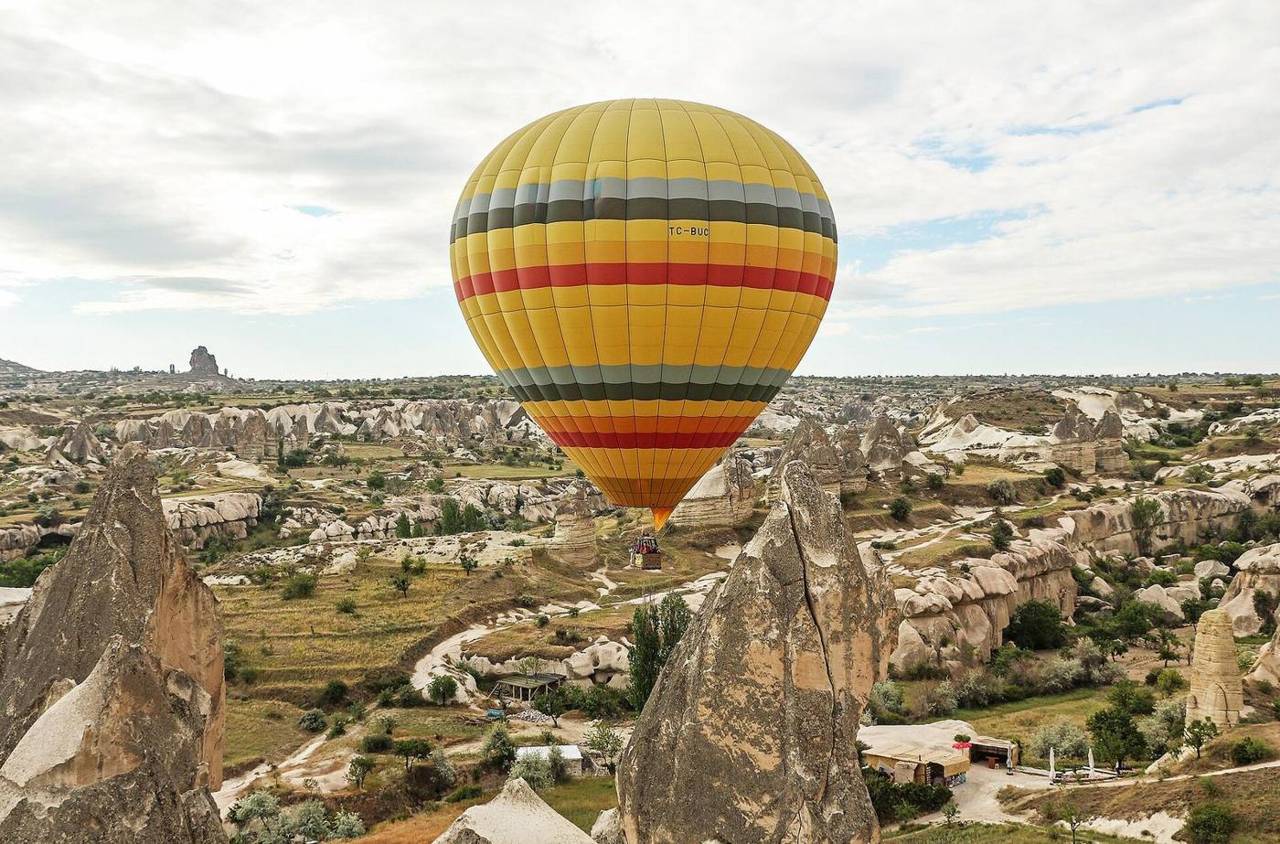
Cappadocia
Hot-air balloons at dawn, the rock churches of Göreme, underground cities.
Ephesus
The Library of Celsus and the Roman theatre, among the best-preserved ruins in the Mediterranean.
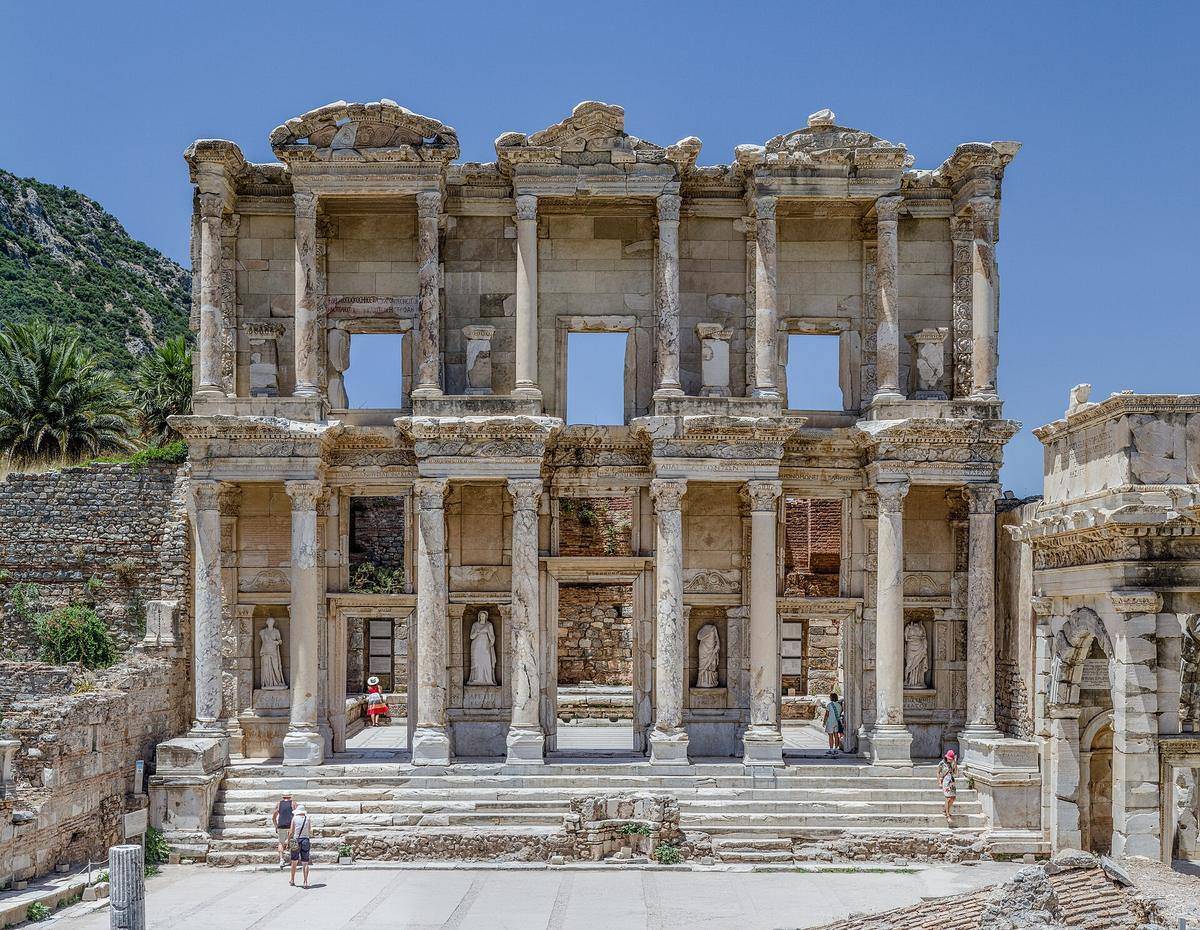
Photo: Benh LIEU SONG, CC BY-SA 3.0 Pamukkale
White travertine terraces and the ancient city of Hierapolis.
Lycian Coast
Kaş, Ölüdeniz, the Lycian Way, Kekova and its sunken city.
Mount Nemrut
Colossal stone heads at 2,100 metres, at dawn.
Göbekli Tepe
The oldest known sanctuary, around 11,000 years old.
Nature and wildlife
Loggerhead turtles at Dalyan, flamingos, bears in the Pontic Mountains.
Food and drink
Kebabs of every kind, meze, baklava, pide, lahmacun, Turkish tea and coffee.
When to go
April-June and September-October; July-August for the sea.
Did you know?
Istanbul is the only major city in the world split between two continents.
Itineraries in Turkey
Istanbul and Cappadocia
The city on the Bosphorus and the fairy chimneys seen from a balloon: essential Turkey in a week.
The Aegean and Lycian coast: Ephesus, Pamukkale and the sea
Greek and Roman ruins, the white terraces of Pamukkale and the turquoise bays between Fethiye and Kaş.
Grand tour of Turkey
Istanbul, Cappadocia, Konya, the Lycian coast, Pamukkale and Ephesus: the very best in two weeks.
Walking the Lycian Way
Turkey's finest trail: selected stretches between Fethiye and Kaş, with nights in villages and swims in small coves.
A week aboard a gulet from Fethiye to Marmaris
Seven nights on board among the coves of the Gulf of Fethiye and the Carian coast, with a boat trip up the Dalyan river to the tombs of Kaunos.
Istanbul at an easy pace and the Dardanelles
Four full days in Istanbul, Asian side included, then Iznik, Bursa, Troy and the Gallipoli battlefields.
From Istanbul to Izmir along the northern Aegean
The less trodden side of the Aegean coast: Assos above the sea, Pergamon and its Asclepieion, the islands off Ayvalık and finally Ephesus.
Ararat: the climb and Armenian Anatolia
Turkey's highest summit, above 5,100 metres, preceded by Erzurum, Kars and the ruined churches of Ani on the Armenian border.
From Cappadocia to the Black Sea and on to Ani
An arc across Anatolia: Safranbolu, the Hittites of Hattusa, the green Black Sea coast, Sumela monastery and the Armenian far east.
Nemrut, Cilicia and the ancient coast
From Cappadocia to the colossal heads of Nemrut, then the castles of Cilicia, Aspendos and Termessos, ending at Ephesus: Turkey's ruins from east to west.
Bursa, İznik and Mount Uludağ
The first Ottoman capital, two hours from Istanbul: the mosques and tombs of Bursa, a UNESCO World Heritage site, the silk caravanserais, the İskender kebab born here, the cable car up Mount Uludağ, the village of Cumalıkızık and İznik, ancient Nicaea of ceramics and the Council.
Konya, Çatalhöyük and Lake Beyşehir
Anatolia's spiritual heart: Rumi's mausoleum and the whirling dervishes of Konya, the Seljuk madrasas, the Neolithic town of Çatalhöyük, a UNESCO World Heritage site, and the wooden Eşrefoğlu Mosque on Lake Beyşehir, also UNESCO-listed.
Trekking in the Kaçkar Mountains
The green mountains above the Black Sea: Rize's tea plantations, wooden villages, the shepherds' summer pastures (yayla) of Ayder, glacial lakes and the climb to Kaçkar summit, almost 4,000 metres, with Sumela Monastery on the way back.
Gaziantep, Şanlıurfa and Göbekli Tepe
Turkey's oldest past and its food: Gaziantep, capital of pistachios and baklava, with the Zeugma mosaic museum; Şanlıurfa with Abraham's pool of sacred fish; Göbekli Tepe and Karahan Tepe, stone temples from about 11,000 years ago, a UNESCO World Heritage site.
Datça, Bozburun and Knidos
The quietest peninsulas of the Turkish Aegean: Datça with the stone houses of Eski Datça and its almonds, the ruins of Knidos on the tip between two seas, the bays of Bozburun and Selimiye reached by boat, and Marmaris as the gateway.
Bodrum and its peninsula
Ancient Halicarnassus between sea and history: the Castle of the Knights of St John with its underwater archaeology museum, the remains of the Mausoleum, one of the seven wonders of the ancient world, the windmills, the white villages of Gümüşlük and Yalıkavak, and a trip to Didyma and Miletus.
Safranbolu, Amasra and the Western Black Sea
A Turkey of Ottoman houses and forests: Safranbolu with its wooden mansions and caravanserais, a UNESCO World Heritage site, the Incekaya canyon, the Genoese port of Amasra with its sea castle, and the green Black Sea coast as far as Cide.
Cappadocia on foot
Cappadocia away from the coaches: the Red and Rose valleys at sunset, Pigeon Valley, the painted rock churches of Soğanlı, the Greek village of Mustafapaşa, the Ihlara valley along the river and Mount Erciyes in the background.
Ankara, Hattusa and Amasya
Anatolia of the Hittites and the kings of Pontus: the Museum of Anatolian Civilisations and Atatürk's mausoleum in Ankara, Hattusa, the Hittite capital and a UNESCO World Heritage site, with the Lion Gate and the rock sanctuary of Yazılıkaya, and Amasya with its royal tombs carved into the cliff above the river.
İzmir, Alaçatı and Çeşme
The most modern Aegean: İzmir with the Kemeraltı bazaar, the Kordon seafront and the ancient agora, then the Çeşme peninsula with Alaçatı's stone houses, windmills, wind for surfing, the beaches of Ilıca and the Greek island of Chios half an hour away by ferry.
Practical guide to Turkey
- Documents
- Italian and most EU citizens enter without a visa for tourist stays of up to 90 days in 180; Italians can use a passport or an identity card valid for travel. Check the rule for your nationality, and the documents required for minors or for overland arrivals.
- Safety
- The tourist areas of Istanbul, Cappadocia and the coast are busy and calm. The United States and the United Kingdom advise against areas within 10 km of the Syrian and Iraqi borders; the UK also against Şırnak and Hakkari provinces. In Istanbul beware of carpet scams and bars with inflated bills. Official advice: GOV.UK.
- Getting around
- Between Istanbul, Cappadocia and the coast flying is best: domestic flights are frequent and cheap. Long-distance buses are comfortable and cover the whole country. On the coast a rental car gives great freedom; motorways have electronic tolls. In Istanbul use the Istanbulkart on trams, metro and ferries.
- Verified costs
- We do not give a single daily figure. Certain costs in 2026 for foreign visitors: Hagia Sophia upper gallery, 25 euros (source hagiasophia.com); Ephesus 40 euros until 31 March 2027, with the Terrace Houses extra (source Tours Around Turkey). State site tickets are set in euros and paid in Turkish lira at the day's rate, and are updated often: check before you go.
Climate month by month
Average minimum and maximum temperatures in Istanbul, Antalya and Kayseri in Cappadocia, plus the sea temperature at Antalya. The coast is hot and dry in summer; Cappadocia has cold, snowy winters.
- January
- Istanbul 3 / 9 °C · Antalya 5 / 15 °C · Kayseri -5 / 5 °C · Antalya sea 17.5 °C
- February
- Istanbul 3 / 10 °C · Antalya 6 / 16 °C · Kayseri -4 / 7 °C · Antalya sea 16.5 °C
- March
- Istanbul 5 / 12 °C · Antalya 8 / 18 °C · Kayseri 0 / 12 °C · Antalya sea 17 °C
- April
- Istanbul 8 / 17 °C · Antalya 11 / 22 °C · Kayseri 4 / 18 °C · Antalya sea 18 °C
- May
- Istanbul 14 / 22 °C · Antalya 15 / 26 °C · Kayseri 8 / 23 °C · Antalya sea 20.5 °C
- June
- Istanbul 18 / 27 °C · Antalya 20 / 32 °C · Kayseri 11 / 27 °C · Antalya sea 24 °C
- July
- Istanbul 21 / 30 °C · Antalya 23 / 35 °C · Kayseri 14 / 31 °C · Antalya sea 27 °C
- August
- Istanbul 22 / 30 °C · Antalya 24 / 35 °C · Kayseri 13 / 31 °C · Antalya sea 28 °C
- September
- Istanbul 18 / 26 °C · Antalya 20 / 32 °C · Kayseri 9 / 27 °C · Antalya sea 27 °C
- October
- Istanbul 14 / 20 °C · Antalya 16 / 27 °C · Kayseri 5 / 21 °C · Antalya sea 24.5 °C
- November
- Istanbul 9 / 15 °C · Antalya 10 / 22 °C · Kayseri 0 / 13 °C · Antalya sea 21 °C
- December
- Istanbul 5 / 11 °C · Antalya 7 / 17 °C · Kayseri -4 / 6 °C · Antalya sea 18.5 °C
Source: Climats et Voyages (air 1991-2020; for the sea the period is not stated). Data and prices checked in November 2026.
Where to go and where not to
Avoid the areas listed above and before booking, always check up-to-date official travel advice, because the situation can change.