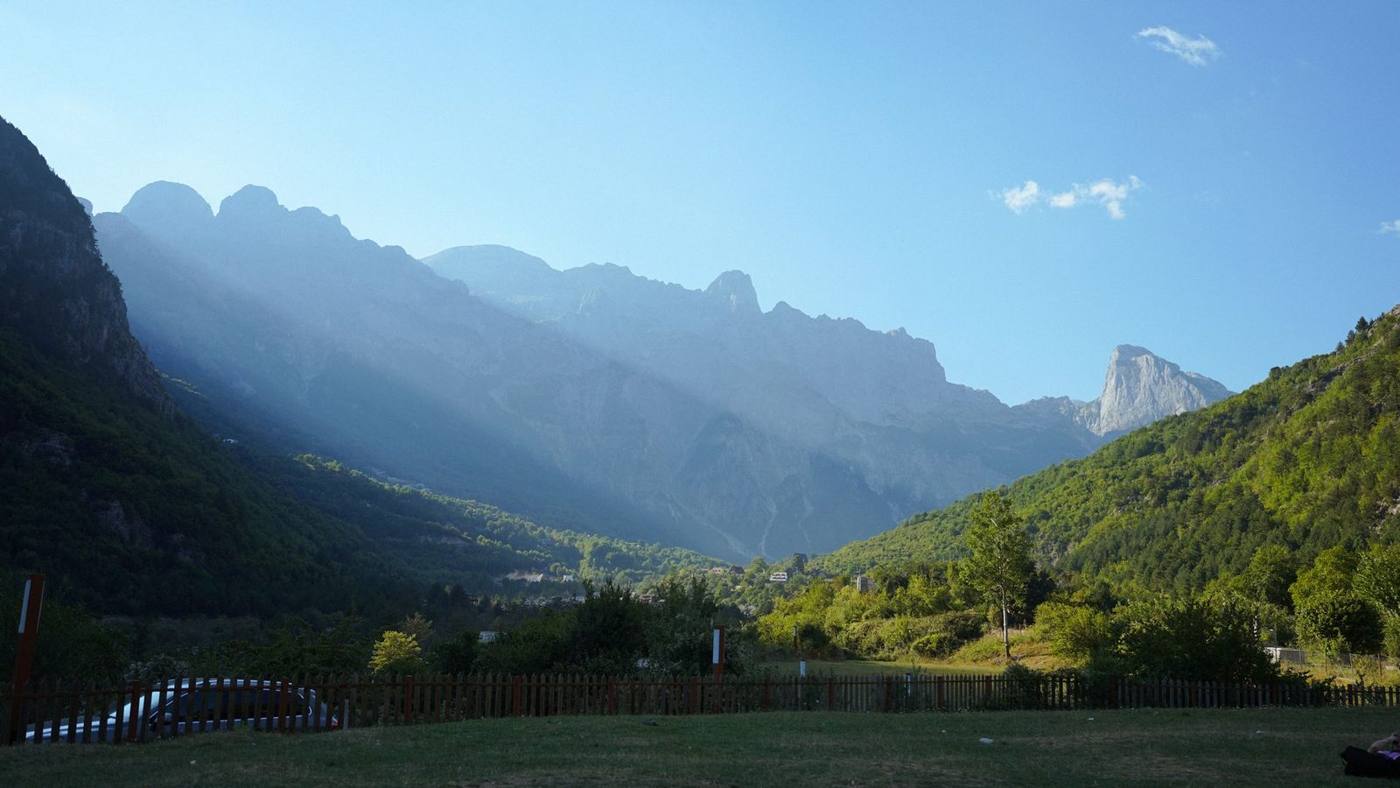
Albanian Alps: Theth, Valbona and Lake Koman
The Lake Koman ferry, the trek between Valbona and Theth and a finale by the sea.
- Tirana
- Shkodër
- Koman
- Valbona
- Theth
- Durrës
Day by day
- Day 1
Arrival in Tirana
This trip takes you into the Albanian Alps, the highest and wildest mountains in the country, on the border with Montenegro and Kosovo. You will see Shkodër and Rozafa fortress, sail on Lake Koman, walk from Valbona to Theth over the pass, and finish with Kruja and two days by the sea. You travel by local transport, minibuses and the ferry, or with a local organiser.
Before you go: Italian citizens can enter Albania with an electronic identity card or a passport, valid for at least three months after leaving the country, without a visa for tourist stays. Italian paper identity cards are no longer valid for travel abroad from 3 August 2026. Other nationalities should check their own rules. The United States rates Albania at level 2 because of crime, with no areas to avoid. In the mountains the weather changes quickly and in winter roads can be closed by snow: this trip is designed for late spring and early autumn.
You land in Tirana and reach the centre. In the late afternoon, stroll in the Grand Park around the artificial lake, then on towards Skanderbeg Square, where in the evening the lights come on over the Et'hem Bey Mosque and the clock tower.
Have dinner with a mountain dish to prepare for the days ahead: handmade pasta, jufka, with butter and cheese.
Overnight in Tirana.
Practical tip: buy a local SIM card at the airport or in town, because wifi is rare in the mountain villages and you need the phone to stay in touch with guides and minibuses.
- Day 2
Shkodër and Rozafa fortress
In the morning, go to Shkodër, about two hours north of Tirana. It is the great city of the north, Catholic and Muslim together, on the shore of the largest lake in the Balkans, shared with Montenegro.
First climb to Rozafa fortress, on the hill where the Buna and Drin rivers meet. The legend says that the builders, to make the walls stand, had to wall up alive the wife of one of them, Rozafa, who asked them to leave one breast outside so she could feed her baby. From the top you see the lake, the rivers and the mountains of the north. Check prices and times.
Then go down into town and walk along Kolë Idromeno street, the pedestrian street with colourful nineteenth century houses. Nearby is the Marubi National Museum of Photography, with the pictures of a family of photographers who recorded northern Albania for more than a century. Check prices and times.
In the afternoon, rent a bicycle, widely used in town, and ride to the Lead Mosque, at the foot of the fortress, and along the lakeshore.
In the evening, have dinner with carp from the lake or grilled river fish.
Overnight in Shkodër.
Practical tip: book tomorrow's minibus to Koman today; it leaves very early in the morning and picks passengers up at their accommodation.
- Day 3
The Lake Koman ferry and arrival in Valbona
The alarm goes off at dawn. The minibus takes you from Shkodër to the Koman dam in about an hour and a half, on a narrow mountain road full of bends.
At the Koman pier you board the ferry. The trip takes about two hours on a long, narrow reservoir, enclosed between rock walls and woods, that looks like a fjord. Now and then the boat stops to drop off a farmer or load a sack, because for some houses this is the only road. Sit outside, at the bow or on the roof, for the best view of the gorges. Check prices and times, which often change from one season to the next.
At Fierzë, at the end of the lake, another minibus takes you in about an hour to Valbona, through the Tropojë valley. The Valbona valley is a national park, wide and green, with a river of white stones and mountains over two thousand metres.
In the afternoon, take a walk along the river towards the village of Rragam, to get your legs used to tomorrow's climb.
In the evening, have dinner in the house where you are staying: there is usually fresh cheese, cornbread and slow-cooked meat.
Overnight in Valbona.
Practical tip: on the ferry, bring a jacket even in summer, because early in the morning it is cool on the lake and the wind in the gorges is strong.
- Day 4
The trek from Valbona to Theth over the pass
Today is the big day of the trip: the trail that crosses the mountains from Valbona to Theth, over the Valbona Pass, at 1,795 metres. It takes about six hours of walking, with a considerable height gain on the way up and on the way down.
Set off early from the upper part of the valley, at Rragam. The path first climbs through beech woods, then becomes steeper on the scree, with tight zigzags. Near the pass the woods open up and you see the peaks all around, often with snow until June. At the top, stop for a packed lunch: ahead of you opens the Theth valley.
The descent is long and steep, through rocks and beech trees, down to the first meadows and the scattered houses of Theth. Along the way there are a few seasonal kiosks where you can get a drink, but do not count on them too much.
If you do not want to carry your big backpack, many houses in Valbona arrange for luggage to be driven to Theth, taking the long way round by road.
In the evening a generous dinner awaits you, with plum raki and homemade sweets.
Overnight in Theth, for two nights.
Practical tip: carry at least two litres of water, boots, poles and a waterproof jacket, and set off only in good weather: in a thunderstorm the pass is dangerous.
- Day 5
Theth, the Blue Eye and the Grunas waterfall
Theth is a scattered village at the bottom of a valley enclosed by mountains, with stone houses, fields and a small church with a bell tower, the symbol of the village.
In the morning, set off on foot for the Syri i Kaltër of Theth, the Blue Eye of the north, a pool of turquoise water below a small waterfall. The path follows the river down the valley, passes the village of Nderlysaj and climbs back up through the woods: in all it takes a few hours there and back. You can swim, but the water is icy even in August.
In the afternoon, walk to the Grunas waterfall, not far from the centre of the village: a high fall of water in a narrow gorge, reached in less than an hour on an easy path.
On the way back, visit the kulla, the lock-in tower: a fortified house where men involved in a blood feud, under the Kanun, the ancient code of the mountains, shut themselves in to save their lives. Check prices and times.
In the evening, sit outside and watch the valley at sunset, as the peaks turn pink.
Overnight in Theth.
Practical tip: in Theth there are few cash machines or none; bring cash for all your days in the mountains, including dinners and transport.
- Day 6
Back to Shkodër
Today you leave the mountains. A minibus takes you from Theth to Shkodër in about two and a half hours, on the road that climbs out of the valley to the Thora pass and then drops towards the plain. Today the road is almost all asphalted, but it is still narrow and full of bends.
From the pass, if the minibus stops, take a last look down at the Theth valley, with the peaks of Radohima and the Alps around it.
You reach Shkodër at lunchtime. In the afternoon, visit the Site of Witness and Memory, a museum in the former secret police prison, with the cells where opponents of the regime were locked up. It is a harsh place but an important one for understanding the recent history of the north. Check prices and times.
Then relax: sit in a cafe on Kolë Idromeno street or cycle to the village of Shiroka, on the lakeshore, a few kilometres away, to watch the sunset over the water and the mountains of Montenegro.
In the evening, have dinner with tavë krapi, baked lake carp, or with stuffed vegetables.
Overnight in Shkodër.
Practical tip: if you suffer from car sickness, sit at the front of the minibus and eat lightly before leaving, because the descent from Thora is one hairpin after another.
- Day 7
Kruja and its bazaar
In the morning, leave for Kruja, about an hour and a half from Shkodër. The little town sits high on the side of the mountain, and on clear days you can see the plain all the way to the sea from the road.
This time, take your time with Kruja. Start at the covered bazaar, a sloping street with wooden roofs and cobbles. The shops sell handmade carpets, qeleshe, the white felt caps of northern men, copper objects and old souvenirs of the regime. Ask to watch a craftsman working the felt.
Then enter the fortress. The Skanderbeg Museum tells the story of 25 years of resistance against the Ottomans, with its halls and copies of weapons. A little higher up is the Ethnographic Museum, in an eighteenth century house with a Turkish bath, an olive press and the women's rooms. Inside the walls there is also the Dollma tekke, a small place of worship of the Bektashi, a Muslim order with a strong presence in Albania. Check prices and times.
Have lunch with a view over the plain, then head down to the coast.
Overnight in Kruja or already by the sea, near Durrës.
Practical tip: at the bazaar, bargain politely and pay in lek, because the exchange rate in euros is almost always worse.
- Day 8
To the sea, at Durrës or on the riviera
After the mountain days you have two days by the sea. You can choose between two options.
The easiest is the Durrës coast, less than an hour from Tirana airport: long sandy beaches, such as Golem and Qerret, with shallow water, many beach clubs and the town a few minutes away. It suits you if you want to rest without more driving.
The most beautiful is the southern riviera, between Dhërmi and Himarë, with clear water and white shingle, but it takes about four hours by car from Kruja, and as long again on the last day to get back to the airport.
If you stay in Durrës, settle on the beach in the morning and have a long swim. In the afternoon, when the sun goes down, go and see the old town: the Roman amphitheatre among the houses, the walls and the seafront, which fills with families in the evening. Check prices and times.
In the evening, have dinner with spaghetti and clams or with fish, because in Durrës seafood cooking shows a strong Italian influence.
Overnight in Durrës or on the riviera, for two nights.
Practical tip: on the Durrës beaches in August the umbrellas fill up early; arrive before ten or choose the beaches further south, towards Kavajë.
- Day 9
A day of rest on the coast
Today you have no timetable. After the Valbona Pass and the mountain roads, your legs will thank you.
In the morning, have a slow breakfast and go down to the sea. If you are in Durrës, walk along the beach to the south, where the water is calmer, or take a bike to follow the seafront. If you are on the riviera, choose one of the nearby bays, such as Jalë or Gjipe, and spend the day in the water.
In the afternoon, if you still want to see something, from Durrës you can make a short trip to King Zog's villa, on the hill above the port, which you can see from outside, or to the Archaeological Museum near the beach, with finds from ancient Dyrrachium. Check prices and times.
At sunset, sit on the seafront with a coffee or a glass of raki and think back over the past days: the ferry through the gorges, the climb to the pass, the blue water below the waterfall.
In the evening, have your last Albanian dinner, with the specialities you have not tried yet: tavë kosi, lamb baked with yoghurt, or spinach byrek.
Overnight in Durrës or on the riviera.
Practical tip: pack your bag for the flight today and clean your boots, so that they dry in time and do not dirty the rest of your luggage.
- Day 10
Departure
It is the day you go home. From Durrës to Tirana airport takes less than an hour, from the riviera about four: work out your timing carefully.
If your flight is in the afternoon, have a last swim in the morning or a walk along the seafront. Before you leave, buy something to take home: mountain tea, çaj mali, gathered in the Albanian Alps themselves, chestnut honey from the north, a qeleshe from Kruja or a bottle of raki.
In ten days you have seen Albania at its wildest: Rozafa fortress and the city of Shkodër, Lake Koman between the gorges, the Valbona valley, the trail over the pass to Theth, the Blue Eye and the Grunas waterfall, the lock-in tower, the bazaar of Kruja and the sea to finish. It is the finest trek in the Balkans, at a price that is still reasonable. The pass between Valbona and Theth needs fit legs.
When to go: the best months are May, June and September. The Koman ferry and the services in Theth and Valbona usually run from late spring to autumn; in winter many houses close and snow blocks the trails. In early June there may still be snow near the pass. In July and August the trails are crowded and the sea is warm.
Practical tip: for the ferry and minibuses, check times and services a few days before, because they change often; many travellers rely on a local organiser.
The finest trek in the Balkans at a still modest price: the ferry across Lake Koman is worth the trip on its own. The pass between Valbona and Theth needs fit legs, about six hours with a serious climb. Roads and ferry times change often, so a local organiser is the safer choice.
Before you go
- Documents and visa
- Electronic identity card or passport for EU citizens, valid for at least three months after leaving Albania. Italian paper identity cards are no longer valid for travel abroad from 3 August 2026. No visa is needed for tourist stays of up to 90 days.
- Health and vaccines
- No compulsory vaccinations. Outside Tirana medical facilities are limited: you need insurance covering medical costs and repatriation. Drink sealed bottled water. Emergencies: 127 ambulance, 129 police, 128 fire.
- Money and payments
- Albanian lek. Cash machines and cards work mainly in cities and tourist areas; in villages and small shops you need cash.
- Power sockets
- Types C and F, 230 volts: you need an adapter for British plugs.
- Time zone
- UTC+1, UTC+2 in summer, one hour ahead of the UK.
- Safety
- The United States rates Albania at level 2 because of crime, with no areas to avoid. The UK advises staying away from demonstrations in central Tirana. In winter mountain roads can be blocked by snow. Official advice: GOV.UK.
Information checked in November 2026 for Italian and EU citizens. Rules change: always check before you travel.
Variations
In 7 days: Shkodër, Lake Koman, Valbona, the pass and Theth, with a direct return to Tirana and no sea.
In 13 days: add two days on the southern riviera and a day in Berat on the way back.
Frequently asked questions
What document do I need for Albania?
Italian citizens can enter with an electronic identity card or a passport, valid for at least three months after leaving, without a visa for tourist stays of up to 90 days. Other nationalities should check their own rules.
How hard is the trail from Valbona to Theth?
It takes about six hours of walking and fit legs, with a steep climb to the pass, at 1,795 metres, and a long descent. No technical skills are needed, but you need boots, water and good weather.
Does the Koman ferry run all year?
It runs mainly from late spring to autumn; in winter sailings are reduced or suspended. Times change often: check them a few days before or rely on a local organiser.
Indicative itinerary written by World Atlas. Before booking, check timetables, seasonal openings, documents and safety.
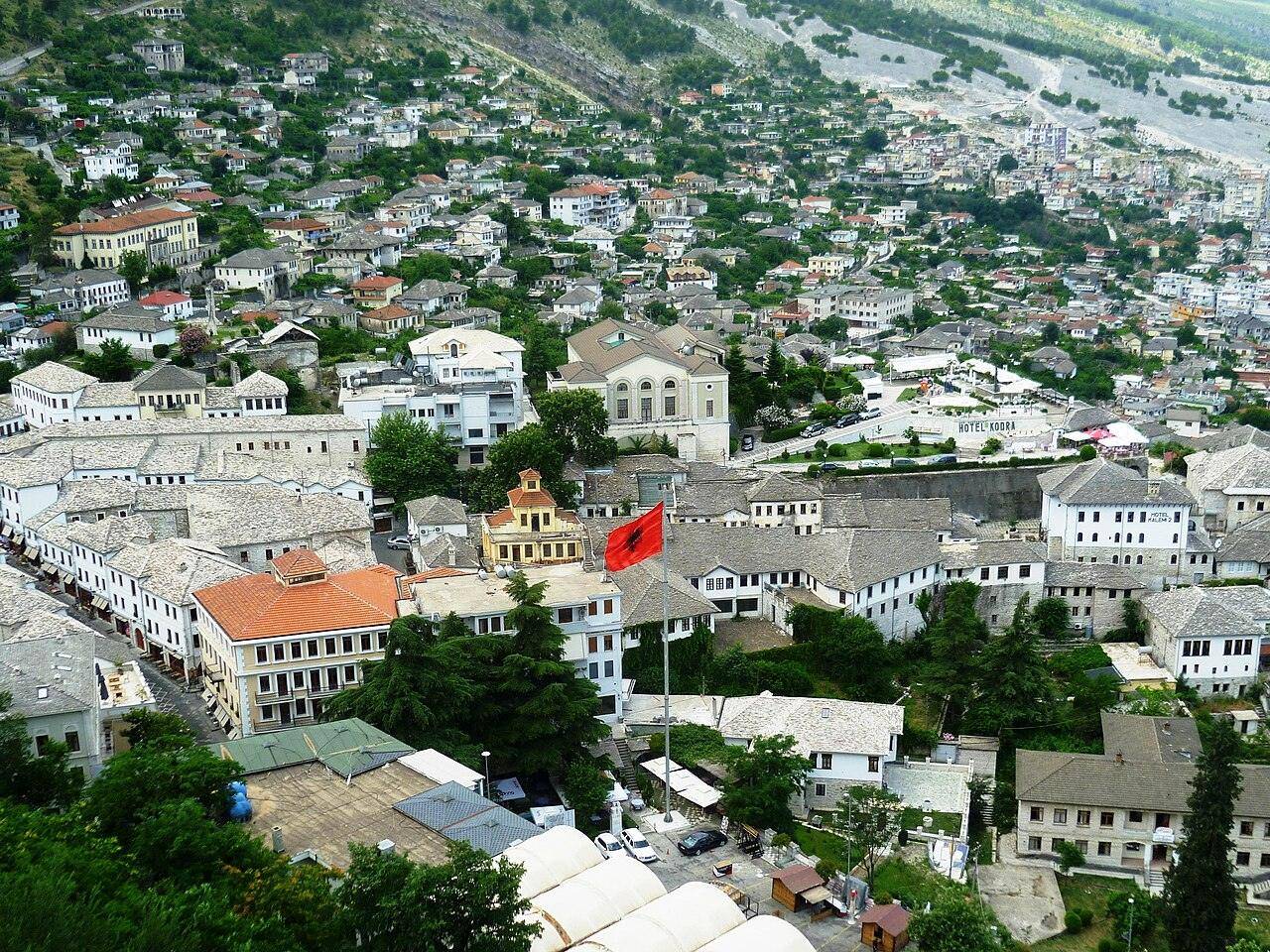 7 daysEasy
The Albanian Riviera and Ottoman towns
Turquoise sea at low prices, the site of Butrint and the stone towns of Gjirokastër and Berat.
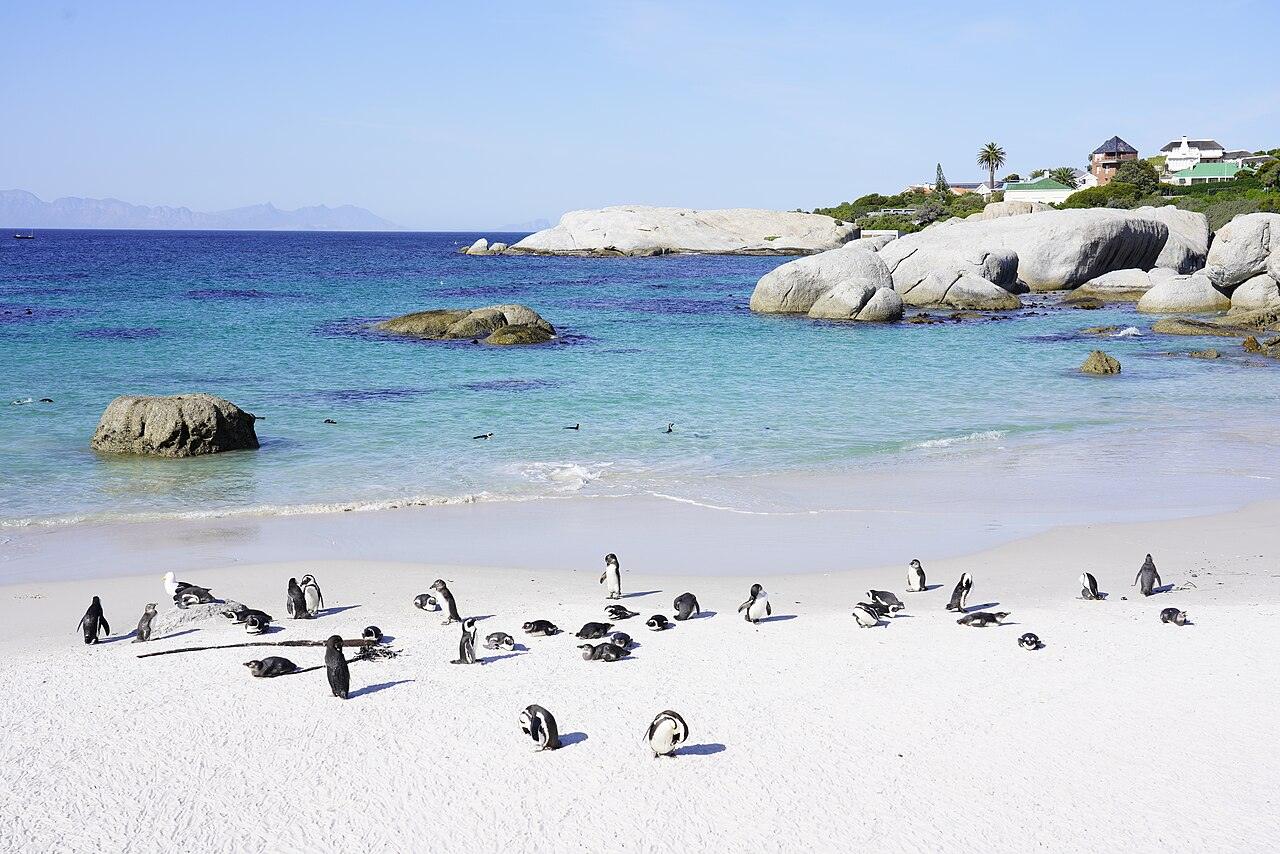 7 daysEasy
Cape Town and the Cape Peninsula
A week of Table Mountain, the penguins of Boulders Beach, the Cape of Good Hope and the Stellenbosch vineyards.
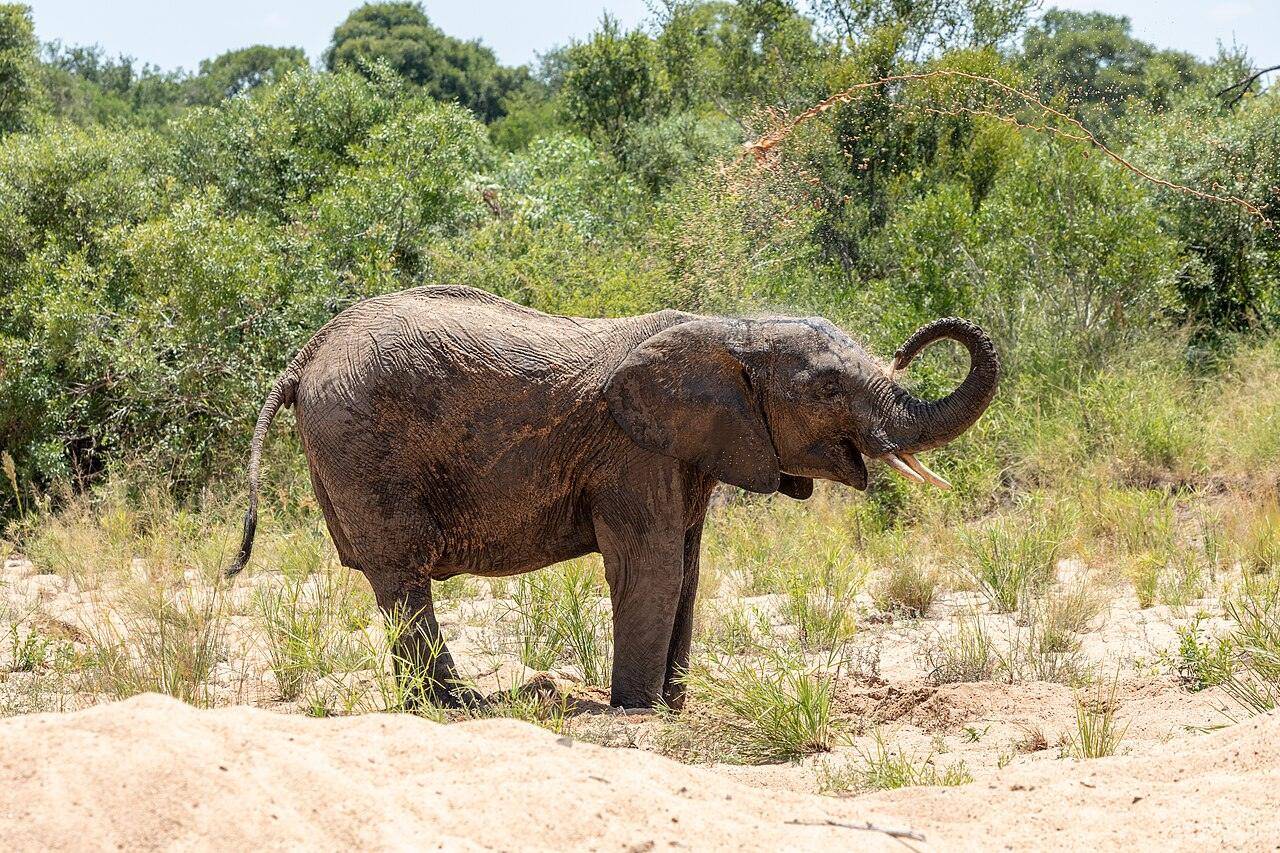 15 daysModerate
Kruger, the Garden Route and Cape Town
The great classic: a Kruger safari, the scenic Garden Route and a finale in Cape Town.