Kruger, the Garden Route and Cape Town
The great classic: a Kruger safari, the scenic Garden Route and a finale in Cape Town.
- Johannesburg
- Blyde River Canyon
- Kruger
- Port Elizabeth
- Tsitsikamma
- Knysna
- Oudtshoorn
- Cape Town
Day by day
- Day 1
Johannesburg and the road to Mpumalanga
This trip is classic South Africa in two weeks: the Panorama Route with its canyons and waterfalls, a safari in Kruger with the Big Five, the Garden Route along the Indian Ocean, the Cango Caves and Cape Town, with Table Mountain, the penguins and the Cape of Good Hope. You travel by rental car and with a domestic flight.
Before you go: Italian citizens enter South Africa without a visa for stays of up to 90 days. The passport must be valid for at least 30 days beyond the date of exit and have at least two blank pages. Other nationalities should check their own rules. The United States rates South Africa at level 2, increased caution, because of crime. Kruger is a malaria area: ask your doctor before you leave.
You land at Johannesburg international airport, the largest city in the country, on the plateau at about 1,750 metres. Pick up your rental car and head straight east towards Mpumalanga province, about four or five hours on the motorway across the plateau, with mines, maize fields and hills.
On the way, stop at Dullstroom, a mountain village famous for its trout streams and cafés, about halfway.
In the late afternoon, you reach the Graskop or Hazyview area, near the Drakensberg escarpment, where the plateau drops towards the Kruger lowveld.
In the evening, have South African food, such as bobotie, a spiced mince bake with an egg topping, and pap, white maize porridge.
Overnight in the Graskop or Hazyview area.
Practical tip: in South Africa you drive on the left. Do not stop in isolated areas at night, keep your doors locked and valuables out of sight when you stop at traffic lights.
- Day 2
The Panorama Route
Today you drive one of the most beautiful roads in South Africa.
The Panorama Route follows the edge of the Drakensberg escarpment, where the plateau drops sheer for hundreds of metres to the lowveld, with waterfalls, canyons and viewpoints.
Early in the morning, before the clouds, go to God's Window, a viewpoint on the edge of the escarpment, from which on clear days you see the lowveld as far as Kruger and, it is said, almost to Mozambique. Nearby are the Pinnacle, a rock column rising from a forested gorge, and the Lisbon and Berlin falls, which drop into deep gorges.
Then continue to Bourke's Luck Potholes, where the Treur and Blyde rivers meet and the water has carved large cylindrical holes into the yellow and red rock, with walkways and bridges above the pools.
In the afternoon, reach the Three Rondavels viewpoint over the Blyde River Canyon, one of the largest canyons in the world and perhaps the greenest, with three rounded peaks that recall traditional African huts and a lake at the bottom. Small entrance fees are charged at the viewpoints: check prices and times.
In the late afternoon, return towards Graskop and try Graskop pancakes, sweet or savoury.
In the evening, continue towards Kruger.
Overnight near Kruger or in a neighbouring reserve, for three nights.
Practical tip: on the escarpment mist often arrives around midday and covers the viewpoints. Start with the furthest viewpoints early in the morning.
- Day 3
Kruger
Today you enter the most famous national park in southern Africa.
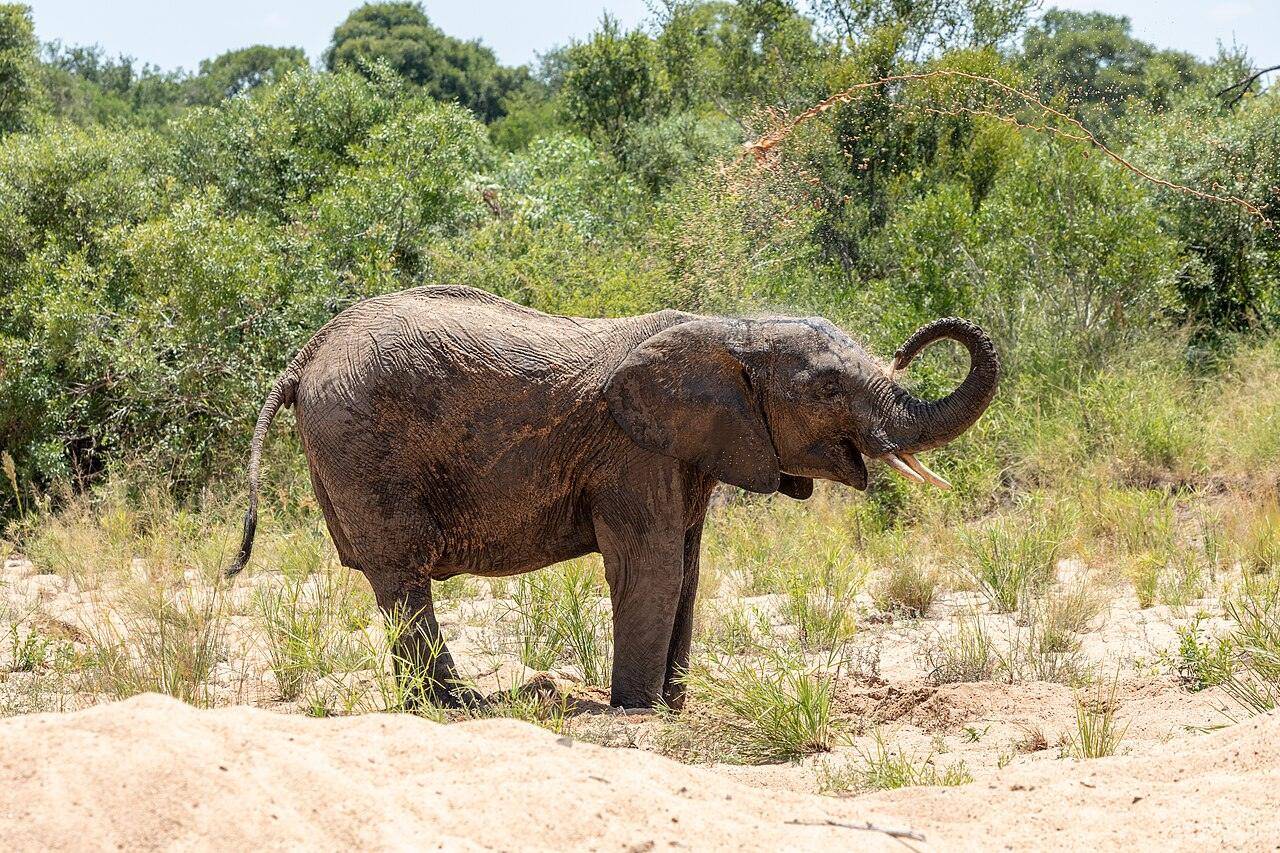
Kruger National Park, one of the largest in Africa, is almost the size of Wales, with grass savannah, mopane and acacia woodland, rivers and granite hills. The Big Five live here, the lion, leopard, elephant, buffalo and rhino, together with cheetahs, wild dogs, giraffes, zebras, hippos, crocodiles and hundreds of bird species. From 1 November 2026 the daily conservation fee for foreign adults is 692 rand: check for any changes.
At dawn, enter the park through one of the southern gates, such as Phabeni, Paul Kruger or Malelane, as soon as it opens. Early morning is the best time to see predators, which are more active in the cool. Drive slowly on the park's tarred and gravel roads, stopping near rivers and waterholes, where the animals come.
At midday, stop at one of the park's rest camps, such as Skukuza or Lower Sabie, with restaurants, shops and terraces over the rivers, where you often see elephants and hippos.
In the afternoon, keep driving until sunset, then leave the park or reach your camp before the gates close.
In the evening, have a braai, the South African barbecue.
Overnight near Kruger.
Practical tip: in Kruger never get out of the car outside marked places, do not lean out of the windows and do not feed the animals. Gates open and close at fixed times, with fines for late arrivals: check the times for the season.
- Day 4
Safaris with guides
Today you go on safari with park guides or in a private reserve.
At dawn, set off on a guided safari in an open vehicle, with an experienced ranger who knows the animals' habits and keeps in radio contact with other rangers. Compared with a private car, the higher open vehicle lets you see further into the savannah. Many Kruger camps also offer walking safaris, with armed rangers, to learn about tracks, plants and insects. Check prices and times.
Alternatively, you can spend two nights in one of the private reserves that border Kruger without fences, such as those in the Sabi Sand area, where vehicles can leave the roads to follow the animals and safaris also run at night. They are more expensive, but leopard sightings are often very close.
Around midday, rest during the hot hours.
In the afternoon, set off on the sunset safari, which continues after dark with a spotlight, to see nocturnal animals such as hyenas, genets and, with some luck, leopards hunting.
In the evening, have dinner under the stars, with the sounds of the savannah all around.
Overnight near Kruger.
Practical tip: on safari wear neutral colours, a fleece for the morning, a hat, sun cream and binoculars. Take photos without flash at night, so as not to disturb the animals.
There is malaria in Kruger, especially from November to April: use repellent and long clothes at sunset, and follow your doctor's advice.
- Day 5
More of Kruger
Today is your last day on safari.
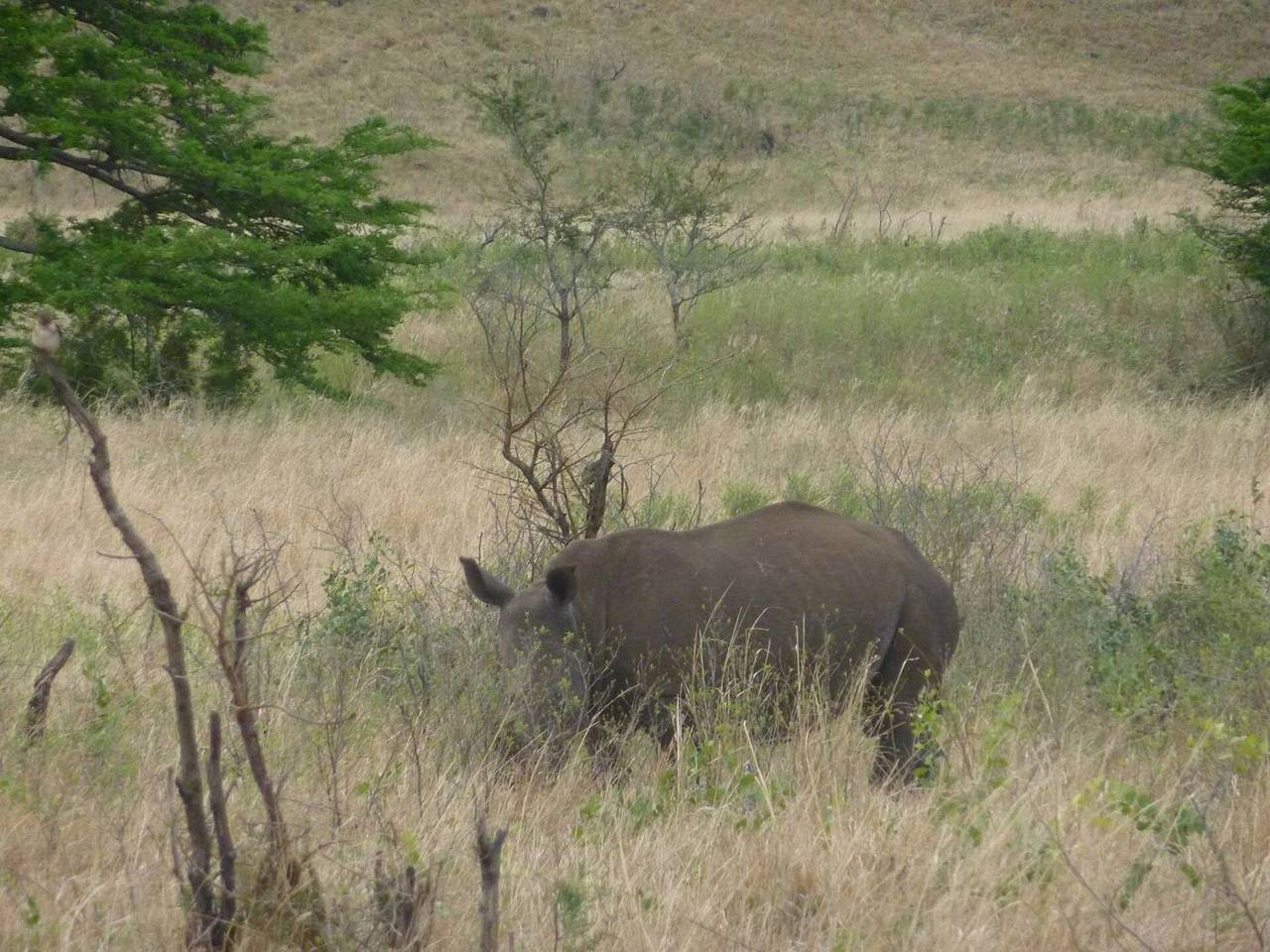
At dawn, take a last drive in the park, by car or on a guided safari, looking for the animals you have not yet seen. If you are missing rhinos, ask the rangers: to protect them from poaching, their whereabouts are not shared on maps and social media.
Kruger has different roads and areas, each with its own landscapes. In the south, between Skukuza, Lower Sabie and Crocodile Bridge, the savannah is rich in animals and predators. Along the Sabie River you see elephant families going to drink, buffaloes and hippos. On the bridges over the rivers, where you can get out at some marked points, look for crocodiles and birds.
At midday, have lunch at one of the camps and visit the small museum or visitor centre at Skukuza, with the history of the park, created in 1898 as a game reserve and made a national park in 1926.
In the afternoon, take a last drive until sunset.
In the evening, if you are in a park camp, join a bush dinner or simply sit by the camp fence to listen to lions roaring in the night.
Overnight near Kruger.
Practical tip: keep a notebook or an app to record the animals you see: it is a game that children love too.
If many cars are stopped in one place, there is usually an important animal. Wait your turn patiently and do not block the road for others.
- Day 6
Flight to Port Elizabeth
Today you leave the savannah and reach the Indian Ocean coast.
In the morning, drive to Kruger Mpumalanga airport, near Nelspruit, now called Mbombela, about an hour, or return to Johannesburg. Return the car and take the flight to Port Elizabeth, now called Gqeberha, on the south coast, often with a connection in Johannesburg or Cape Town. Check times and prices.
In Gqeberha, pick up a new rental car. The city is on Algoa Bay, with long sandy beaches and a seafront. Here the Garden Route begins, the coastal road between Gqeberha and Mossel Bay, about 300 kilometres of mountains, forests, lakes, lagoons and beaches.
If you have time in the afternoon, visit Addo Elephant National Park, about an hour north of the city, with hundreds of elephants, buffaloes, zebras and sometimes lions, in a landscape of green bush. Check prices and times.
Then drive west to Jeffreys Bay, about an hour, a surf town famous worldwide for its long, perfect waves, or continue to Tsitsikamma.
In the evening, have fish from the coast, such as kingklip, a local white fish.
Overnight in Jeffreys Bay or the Tsitsikamma area.
Practical tip: on the Garden Route distances are short, but there are many stops. Do not plan too much in a single day.
On South African domestic flights checked baggage is sometimes charged extra: check your ticket conditions.
- Day 7
Tsitsikamma and the suspension bridge
Today you walk between the forest and the ocean.
In the morning, go to the Tsitsikamma section of the Garden Route National Park, on the coast, where ancient forest runs down to the cliffs above the Indian Ocean. There is a park entrance fee: check prices and times.
From the Storms River Mouth camp, by the sea, follow the trail on wooden walkways through the forest to the suspension bridge, about a kilometre away, which crosses the mouth of the Storms River between two rock walls, with waves surging into the gorge beneath your feet. After the bridge, if you have energy, climb to the viewpoint above the river mouth, a steep climb, for the view over the coast and the bridge.
Then walk along the coastal trail towards the waterfall, on the first stretch of the famous Otter Trail, one of the finest multi-day trails in Africa, along a route of boulders and rocks by the sea. The full trail requires booking far in advance; the first stretch to the waterfall can be done in a day.
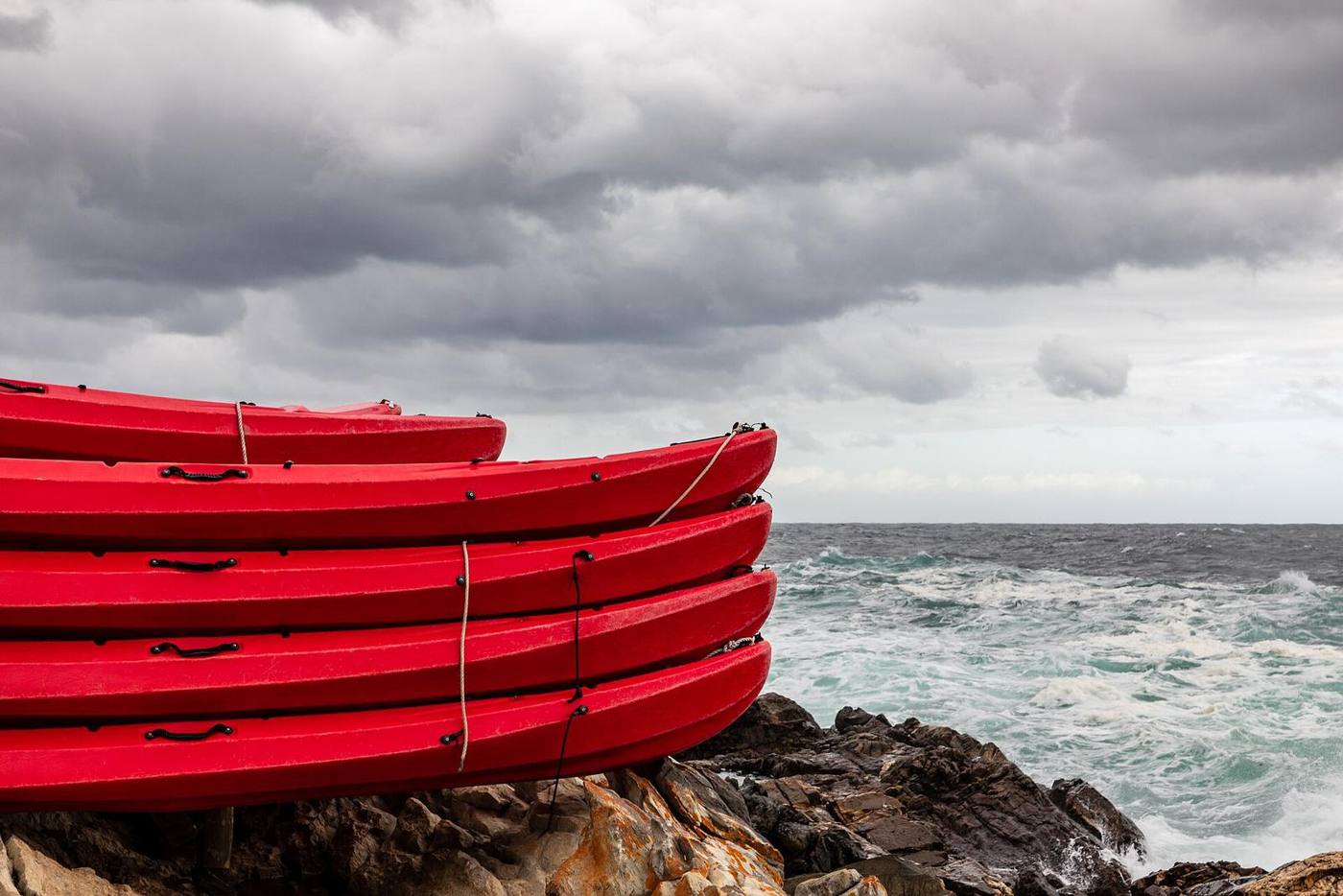
In the afternoon, if you wish, take a kayak and lilo trip, on an inflatable mattress, through the Storms River gorge. Check prices and safety.
In the evening, have dinner and watch the sunset over the ocean.
Overnight in the Tsitsikamma area.
Practical tip: on the trail to the waterfall the boulders are slippery in the rain and at high tide. Check the tide times and wear hiking shoes.
In the Tsitsikamma forest live Knysna turacos, green birds with red wings: look among the trees.
- Day 8
Bloukrans and Nature's Valley
Today you explore the gorges and beaches between Tsitsikamma and Plettenberg Bay.
In the morning, drive west to the Bloukrans bridge, an arch bridge over a deep gorge, home to one of the highest bungee jumps in the world, over 200 metres. Even if you do not want to jump, you can stop at the viewpoint to watch. Check prices and safety.
Then go down the old Bloukrans or Groot River pass road to Nature's Valley, a small, quiet village in a bay, between the forest and a long beach with a lagoon. Walk on the beach, by the lagoon or on the forest trails to the coastal viewpoints.
In the afternoon, continue to Plettenberg Bay, known as Plett, about half an hour away. Nearby are some animal sanctuaries, such as those for primates and birds, which house rescued animals. Choose reputable ones and check prices and times.
Plettenberg Bay is a seaside town with three long beaches, a lagoon, the mouth of the Keurbooms River and the Robberg reserve on its peninsula.
In the evening, have oysters from the coast or grilled fish.
Overnight in Plettenberg Bay or Knysna, for two nights.
Practical tip: on the Garden Route coast the weather can change quickly, with rain and wind even in summer. Always keep a jacket in the car.
On beaches with strong waves, only swim where there are lifeguards, and never alone.
- Day 9
Robberg and the dolphins
Today you walk on a peninsula in the ocean and go out by boat.
In the morning, go to Robberg Nature Reserve, on a rocky peninsula about four kilometres long jutting into the ocean south of Plettenberg Bay, a nature reserve with caves inhabited by early humans tens of thousands of years ago. Walk the full loop trail, about nine kilometres, three or four hours, over cliffs, rocks and a great sand dune running down to a beach. Along the coast lives a colony of Cape fur seals, which you see and hear on the rocks. There are also shorter trails. Check prices and times.
In the afternoon, take a boat trip in Plettenberg Bay to see dolphins, which often swim close to the boat, seals and, from June to November, southern right whales and humpbacks passing along the coast. Choose an authorised operator and check prices and times.
In the evening, have dinner in Plettenberg Bay.
Overnight in Plettenberg Bay or Knysna.
Practical tip: the Robberg trail has exposed sections on the rocks, close to the sea. Do not go near the edge in strong waves and allow time to return before sunset. Bring water, food and sun cream: there are no shops on the peninsula.
From July to October, on the south coast and at Hermanus, whales are often seen even from the shore.
- Day 10
Knysna and the lagoon
Today you discover Knysna and its lagoon.
In the morning, drive to Knysna, about half an hour away, a town on the shore of a large lagoon, closed off from the sea by two sandstone headlands called The Heads, with a narrow, dangerous passage between the waves. Go up to the viewpoint on the eastern headland, reachable by car, for the view over the lagoon, the passage and the ocean. Then go down to the beach below the cliffs.
In the afternoon, take a cruise on the lagoon, among the islands and boats, with Knysna oysters, famous throughout the country. Check prices and times. Or visit the Knysna forest, one of the largest ancient forests in South Africa, with trails among giant yellowwood trees, such as the King Edward Tree, and memories of the nineteenth-century gold rush at Millwood. This forest was home to the last wild elephants of the area, now almost gone.
If you have time, drive to Wilderness, about half an hour west, with its lakes, rivers and long beaches, and climb to the Map of Africa viewpoint, where the river forms a bend shaped like the African continent.
In the evening, have dinner on the Knysna lagoon front with oysters and a glass of South African wine.
Overnight in Knysna or Plettenberg Bay.
Practical tip: in 2017 a great fire destroyed many houses and part of the forest in Knysna. In the dry months always follow the fire warnings and do not light fires outside permitted places.
- Day 11
Oudtshoorn and the Cango Caves
Today you leave the coast and cross the mountains to the Little Karoo.
In the morning, drive north from George over the Outeniqua Pass to Oudtshoorn, about an hour and a half, in the Little Karoo, a semi-arid valley between mountains, with lucerne fields, farms and a dry, hot climate.
Oudtshoorn is called the ostrich capital of the world. At the end of the nineteenth century ostrich feathers were fashionable in Europe, and the great farmers built elegant houses here called feather palaces. Visit the town museum and one of the houses of the period. If you visit an ostrich farm, avoid riding them.
Then go to the Cango Caves, about half an hour north, in the Swartberg mountains, one of the finest limestone cave systems in the world, with enormous halls, stalactites and stalagmites. There is a standard tour, suitable for everyone, and an adventure tour, through very narrow tunnels and cracks. Check prices, times and physical requirements.
In the afternoon, if the roads are open, drive the Swartberg Pass, a nineteenth-century gravel mountain road and national monument, with hairpin bends among red rocks and views over the Great Karoo. Check road conditions.
In the evening, have ostrich meat, very lean, or Karoo lamb.
Overnight in Oudtshoorn.
Practical tip: the Swartberg Pass is gravel and narrow. Drive slowly, only in good weather and if your rental agreement allows it.
- Day 12
To Cape Town
Today you reach Cape Town along Route 62.
In the morning, leave Oudtshoorn heading west on Route 62, a road through the valleys of the Little Karoo, between mountains, vineyards, orchards and small villages, such as Calitzdorp, famous for its port-style sweet wines, and Barrydale. It takes about five or six hours to Cape Town with stops.
Before arriving, cross the Breede valley and the winelands, or pass through Montagu, a village with hot springs and Victorian houses.
In the afternoon, you arrive in Cape Town, one of the most beautiful cities in the world, between Table Mountain, a mountain flat as a table over a thousand metres high, and the Atlantic Ocean. It was founded in 1652 by the Dutch as a supply station for ships bound for the East.
At sunset, go up Signal Hill, a hill above the city, with views of Table Mountain, the city, the harbour and Robben Island, where Nelson Mandela was imprisoned for eighteen years.
In the evening, have dinner at the V&A Waterfront, the restored historic harbour, with restaurants, shops and views of the illuminated mountain.
Overnight in Cape Town, for three nights.
Practical tip: in Cape Town do not walk alone in the evening or in isolated areas, use app taxis and leave nothing on view in the car.
If you want to visit Robben Island, book the official tour many days in advance: places run out quickly.
- Day 13
Table Mountain and the Bo-Kaap
Today you climb the city's iconic mountain.
Early in the morning, if the sky is clear and there is no wind, go up Table Mountain by cable car, with the cabin rotating during the climb so you can see the view in every direction. Check prices and times, and check first that the cable car is open, because it closes in strong wind or cloud. Alternatively, if you are fit, walk up the Platteklip Gorge trail, about two or three hours of steep climbing on stone steps.
At the top, the plateau is a nature park, part of Table Mountain National Park, with fynbos plants, a vegetation found nowhere else in the world, and small animals called dassies. Walk the trails to the viewpoints over the city, the bay, the Twelve Apostles ridge and the ocean.
In the afternoon, come down and visit the Bo-Kaap, the district on the slopes of Signal Hill with brightly painted houses, home to the Cape Muslim community, largely descended from people brought here as slaves from Asia. Visit the district's small museum and try Cape Malay food, such as sweet curry and samosas. Check times.
Then visit the Company's Garden, the historic gardens in the city centre, and the District Six Museum, dedicated to the district from which tens of thousands of people were evicted during apartheid. Check times and prices.
In the evening, have dinner in town.
Overnight in Cape Town.
Practical tip: on the Table Mountain trails walk in a group, bring water and a jacket, and do not set off in uncertain weather: the cloud, known as the tablecloth, rolls in within minutes.
- Day 14
The Cape of Good Hope and Stellenbosch
Today you visit the Cape Peninsula.
In the morning, head south along the Atlantic coast, through Camps Bay, Llandudno and the scenic Chapman's Peak road, cut into the rock above the ocean, one of the most beautiful coastal roads in the world, with a toll. Check that it is open.
You reach the Cape of Good Hope section of Table Mountain National Park. From 1 November 2026 entry for foreign adults costs 592 rand: check for any changes. Go up to the Cape Point lighthouse, on foot or by funicular, for the view over the cliffs and the ocean, then go down to the Cape of Good Hope sign, the most south-westerly point of Africa, discovered by the Portuguese navigator Bartolomeu Dias in 1488. In the park you often see baboons, ostriches and antelopes.
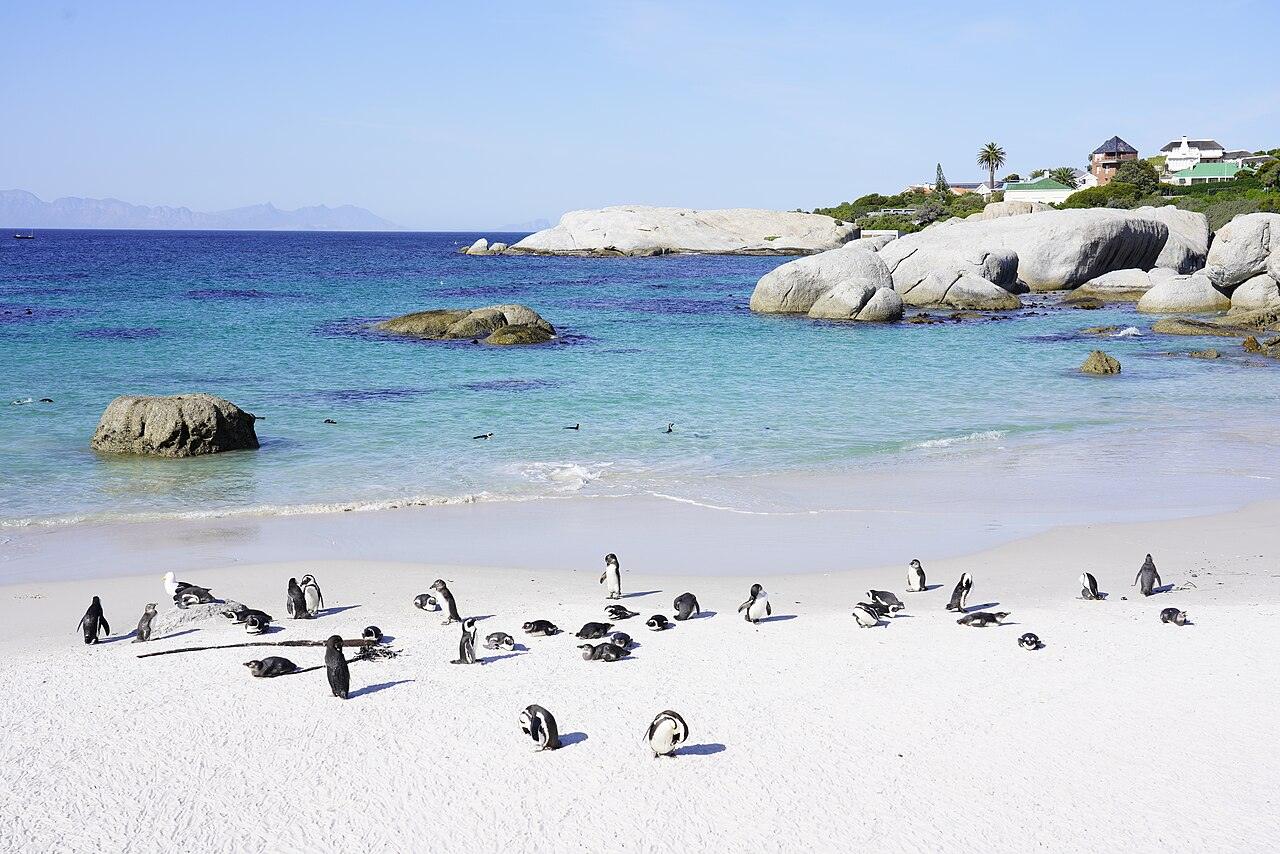
Then go to Boulders Beach, near Simon's Town, on the False Bay coast, home to a colony of African penguins that walk on the sand and swim among great granite boulders. From 1 November 2026 entry for foreign adults costs 282 rand. The African penguin is endangered: stay on the boardwalks and do not get close.
In the afternoon, continue to Stellenbosch, about an hour, a university town founded in 1679, with white Cape Dutch houses, oak trees and vineyards among the mountains. Visit a wine estate for a tasting of South African wines, such as pinotage. Check prices and times.
In the evening, return to Cape Town.
Overnight in Cape Town.
Practical tip: Cape baboons steal food and can be aggressive. Do not feed them and lock the car.
- Day 15
Departure
Today you leave South Africa.
In the morning, if your flight leaves late, take a last walk. You can visit Kirstenbosch botanical gardens, at the foot of Table Mountain, among the most beautiful in the world, with fynbos plants, proteas, the national flower, and a walkway through the treetops called the Boomslang. Check prices and times.
Alternatively, walk along the Sea Point promenade, much loved by local people, with views of the ocean and the mountain, or do your last shopping at the V&A Waterfront, for African crafts, wines and rooibos, a red herbal tea that grows only in this region of South Africa.
Then return the car at Cape Town international airport, about twenty minutes from the centre, and take your flight home, direct or with a connection.
In these fifteen days you have seen classic South Africa: the canyons and waterfalls of the Panorama Route, the Big Five of Kruger, the forests and beaches of the Garden Route, the seals of Robberg, the Cango Caves, Table Mountain, the Cape of Good Hope, the penguins of Boulders and the vineyards of Stellenbosch.
When to go: for Kruger the best months are from May to October, in the dry season, when the grass is short and the animals gather near water. For Cape Town and the Garden Route the months from October to April are better, with warmth and sunshine. For a good compromise, choose October, November or April.
Practical tip: tipping is customary in South Africa. In restaurants people usually leave about ten per cent, and car guards are given a small coin too.
The great South African classic, the most varied trip on the continent in two weeks. A private reserve next to Kruger costs more but allows off-road drives and much closer encounters. Distances on the Garden Route are long, so do not squeeze the stages.
Before you go
- Documents and visa
- Passport valid for at least 30 days beyond departure, with at least two completely blank pages; no visa for tourism up to 90 days. A return ticket is required.
- Health and vaccines
- No compulsory vaccines arriving from Europe; a yellow fever certificate is needed only if arriving from a risk country. Kruger and the north-east have seasonal malaria risk: ask your doctor before travelling. Emergencies: 10111 police, 10177 ambulance, 112 from mobiles.
- Money and payments
- South African rand. Cards work almost everywhere; keep some cash for tips and car guards.
- Power sockets
- Type M, plus C and N, 230 volts: you need an adapter for the large three round-pin plugs.
- Time zone
- UTC+2 all year: South Africa does not use daylight saving time.
- Safety
- The United States rates South Africa level 2 for crime. In cities avoid walking alone at night, leave nothing visible in the car and use ride-hailing apps after dark. Official advice: GOV.UK.
Information checked in November 2026 for Italian and EU citizens. Rules change: always check before you travel.
Variations
In 10 days: Johannesburg, the Panorama Route, three days in Kruger and then Cape Town with the Cape Peninsula, without the Garden Route.
In 18 days: add Hermanus, for the whales, and the coast of Cape Agulhas, the southernmost point of Africa, between Oudtshoorn and Cape Town, or three days in KwaZulu-Natal, with the Drakensberg mountains and iSimangaliso park.
Frequently asked questions
What documents do I need for South Africa?
Italian citizens enter without a visa for up to 90 days. The passport must be valid for at least 30 days beyond exit and have at least two blank pages. Other nationalities should check their own rules.
How much do the parks cost?
From 1 November 2026, according to the official South African national parks rates, a foreign adult pays 692 rand per day in Kruger, 592 rand at the Cape of Good Hope and 282 rand at the Boulders penguin beach. The Table Mountain cable car is paid separately.
Is South Africa safe?
The United States rates it at level 2, because of crime. In the cities do not walk alone in the evening, use app taxis and leave nothing on view in the car. In the parks always follow the rangers' rules.
Indicative itinerary written by World Atlas. Before booking, check timetables, seasonal openings, documents and safety.
 7 daysEasy
Cape Town and the Cape Peninsula
A week of Table Mountain, the penguins of Boulders Beach, the Cape of Good Hope and the Stellenbosch vineyards.
 13 daysEasy
Kruger, Eswatini and the Zululand parks
Almost two weeks of pure wildlife: Kruger, the small kingdom of Eswatini, the rhinos of Hluhluwe-iMfolozi and the hippos of the St Lucia estuary.
 10 daysEasy
The Garden Route from Port Elizabeth to Cape Town
Africa's most famous coastal road: the elephants of Addo, the waves of Jeffreys Bay, the Tsitsikamma forest, the whales of De Hoop and the Cape winelands.