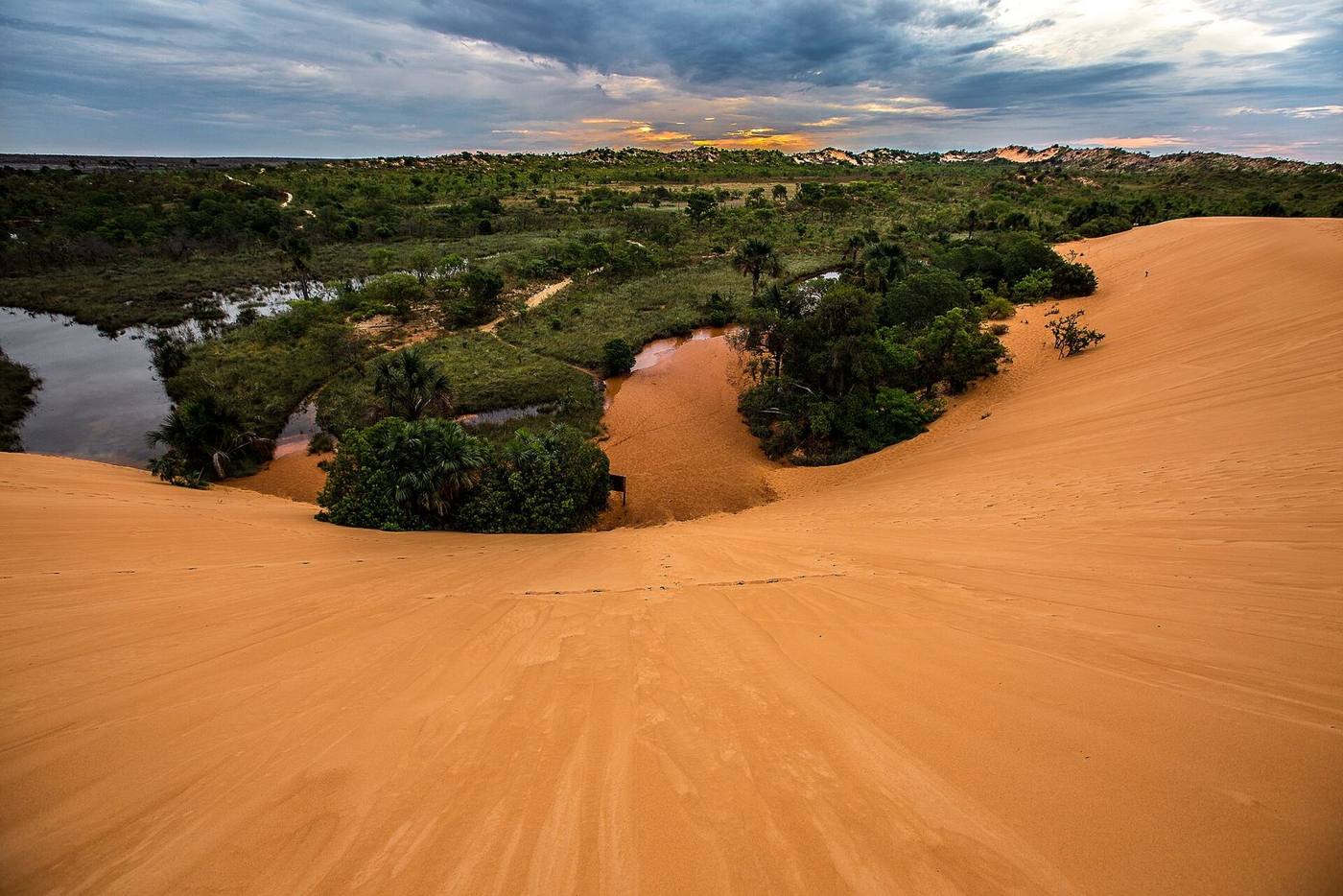
Jalapão: dunes and fervedouros
One of Brazil's most remote areas, in Tocantins: orange dunes in the savanna, the fervedouros, spring-fed pools where the sand pushes you up so you cannot sink, waterfalls, the Pedra Furada rock arch and golden grass crafts.
- Palmas
- Ponte Alta do Tocantins
- Mateiros
- São Félix do Tocantins
- Palmas
Day by day
- Day 1
Palmas and setting off by 4x4, the Sussuapara canyon
Jalapão, in the state of Tocantins in the heart of Brazil, is one of the country's most remote and wild regions: a great plateau of savannah, the cerrado, with orange dunes, crystal-clear rivers, waterfalls, canyons and springs where you cannot sink. It is protected by a state park and other natural areas and is visited almost only on 4x4 tours, as the roads are sand tracks. Italian citizens can enter Brazil without a visa for tourism with a valid passport.
You fly to Palmas, the capital of Tocantins, a young city founded in 1989 and built to a plan on the shore of a large reservoir on the Tocantins river. In the morning meet your guide and set off east by 4x4, first on tarmac and then on red sand tracks, through the cerrado, with low twisted trees, buriti palms along the streams and large termite mounds.
In the afternoon, near Ponte Alta do Tocantins, visit the Sussuapara canyon, a narrow gorge carved into sandstone, its walls covered in ferns and moss dripping with water, in a cool green light. You walk in the stream along the canyon floor to a small waterfall.
In the evening stay in Ponte Alta, in a simple pousada.
Practical tip: Jalapão has very few services; bring cash, sunscreen, insect repellent and a torch, and expect little phone signal.
- Day 2
Cachoeira da Velha and the little beach on the Novo river
In the morning continue east to Cachoeira da Velha, Jalapão's largest waterfall, on the Novo river: a horseshoe-shaped fall over a hundred metres wide and about twenty-five metres high, pouring in several branches through the vegetation with a powerful roar. Wooden walkways give views from several points, including from above. The Novo, with its dark, clear water, is considered one of Brazil's cleanest rivers.
A little downstream the river forms the Prainha do Rio Novo, a small white sand beach where the water flows calmly and you can swim, among the gallery forest lining the banks. It is a good place for a picnic lunch and a rest in the shade.
In the afternoon, if there is time, go rafting or canoeing on the Novo with local operators, through easy rapids and quiet stretches.
Along the day's tracks you often see rheas, the South American ostriches, seriemas, long-legged birds running through the savannah, blue and yellow macaws and, with luck, the maned wolf, a canid with long red legs.
In the evening stay in Mateiros, the small town at the centre of the region.
Practical tip: the middle of the day is very hot and the sun strong; drink plenty of water and cover up.
- Day 3
The Jalapão dunes at sunset and Pedra Furada
In the morning visit the Serra do Espírito Santo, a table mountain dominating the region: a steep path of about an hour climbs to the flat summit, with views over all of Jalapão, its cerrado, rivers and dunes. It is a demanding hike in the heat, best done early.
In the afternoon go to the Jalapão dunes, the region's symbol: dunes of fine orange sand up to about thirty metres high at the foot of the Serra do Espírito Santo. They formed from the erosion of the mountain's sandstone, carried by the wind. At their foot runs a clear stream with buriti palms, creating a green oasis that contrasts with the sand. Climb the dunes barefoot, as the sand is soft, and wait for sunset: the low sun turns the sand an intense red and orange while the mountain darkens behind. It is one of the finest sunsets in Brazil.
If your route passes Ponte Alta, visit instead the Pedra Furada, a large red sandstone arch sculpted by the wind, very photogenic at sunset, when the sun shines through the opening.
In the evening return to Mateiros.
Practical tip: you cannot walk everywhere on the dunes, to protect them; follow the routes your guide shows you.
- Day 4
The fervedouros around Mateiros and São Félix and the village of Mumbuca
In the morning discover the fervedouros, Jalapão's most curious wonder: small natural pools of crystal-clear water, surrounded by palms and ferns, where groundwater rises forcefully through a sandy bottom. The pressure is so strong that you cannot sink: you float as in a natural whirlpool bath, with the sand shifting under your feet. The water is clear and lukewarm, and on the bottom you see white sand bubbling.
Around Mateiros and São Félix there are several, such as Fervedouro do Ceiça, Fervedouro Bela Vista and Fervedouro do Buriti. They are on private land and each owner charges a small entry fee; access is limited to a few minutes and a few people at a time to protect the springs. Sunscreen and repellent cannot be used before entering.
In the afternoon visit the quilombola community of Mumbuca, a village founded by descendants of escaped slaves, where women work capim dourado, golden grass, a plant that grows only in Jalapão and, woven with buriti palm fibre, becomes bags, jewellery, baskets and objects that shine like gold. Buying them here directly helps the community.
In the evening stay in São Félix or Mateiros.
Practical tip: to protect the springs, enter the fervedouros without sunscreen or repellent, and respect the queue.
- Day 5
Back to Palmas
In the morning, before leaving, take a last swim in a fervedouro or at one of the waterfalls near São Félix, such as the Formiga waterfall, a small fall dropping into a natural pool of emerald water surrounded by woodland, one of the most beautiful in the region.
Then head back to Palmas, a long 4x4 journey on sand tracks and then tarmac, about six or seven hours depending on the route and track conditions. Along the way there are stops for lunch in small towns and to photograph the cerrado landscape, with table mountains on the horizon.
In the late afternoon you reach Palmas. If you have time, watch the sunset over the great Tocantins lake from Graciosa urban beach, or visit the vast Praça dos Girassóis in the city centre, one of the largest squares in the world, with the government palace.
Palmas has flights to Brasília, São Paulo and other Brazilian cities.
Things to take home: capim dourado crafts from the Jalapão communities, honey and cerrado fruits such as pequi and buriti, and palm-fibre handicrafts.
Practical tip: leave time before your flight, as sand tracks can slow the journey, especially in the rainy season. Say goodbye to your driver and guide with thanks.
Only on organised 4x4 tours: tracks are sandy and services very few. In the fervedouros you enter in short shifts and without sunscreen, to protect the water. The dry season is best; from December to March rains make some tracks impassable. Far from the border areas mentioned in advisories.
Before you go
- Documents and visa
- Valid passport; no visa for tourism up to 90 days for EU citizens.
- Health and vaccines
- No compulsory vaccines arriving from Europe; yellow fever is recommended for the Amazon and some inland areas. Protect yourself against mosquitoes because of dengue. Emergencies: 190 police, 192 ambulance, 193 fire.
- Money and payments
- Brazilian real. Cards and instant payments are everywhere; carry little cash.
- Power sockets
- Type N, plus C, 127 or 220 volts depending on the city: check the voltage before plugging in devices.
- Time zone
- Rio and São Paulo are UTC-3 all year: Brazil does not use daylight saving time.
- Safety
- The United States rates Brazil level 2 for crime, with level 4 within 160 km of land borders (except Foz do Iguaçu and the Pantanal). No favelas without a community guide. Official advice: GOV.UK.
Information checked in November 2026 for Italian and EU citizens. Rules change: always check before you travel.
Variations
In 4 days: Sussuapara canyon, Cachoeira da Velha, the dunes and fervedouros, with a quicker return to Palmas.
In 8 days: add the Chapada dos Veadeiros, near Brasília, with more cerrado waterfalls and canyons.
Frequently asked questions
Do I need an organised tour?
It is almost essential: the roads are sand tracks requiring a 4x4 and an experienced driver; tours leave from Palmas.
When is the best time to go?
In the dry season, May to September: better tracks and clear water. From November to April it rains and some tracks become difficult.
What documents do I need?
Italian citizens need only a valid passport, with no visa, for tourism.
Indicative itinerary written by World Atlas. Before booking, check timetables, seasonal openings, documents and safety.
 6 daysModerate
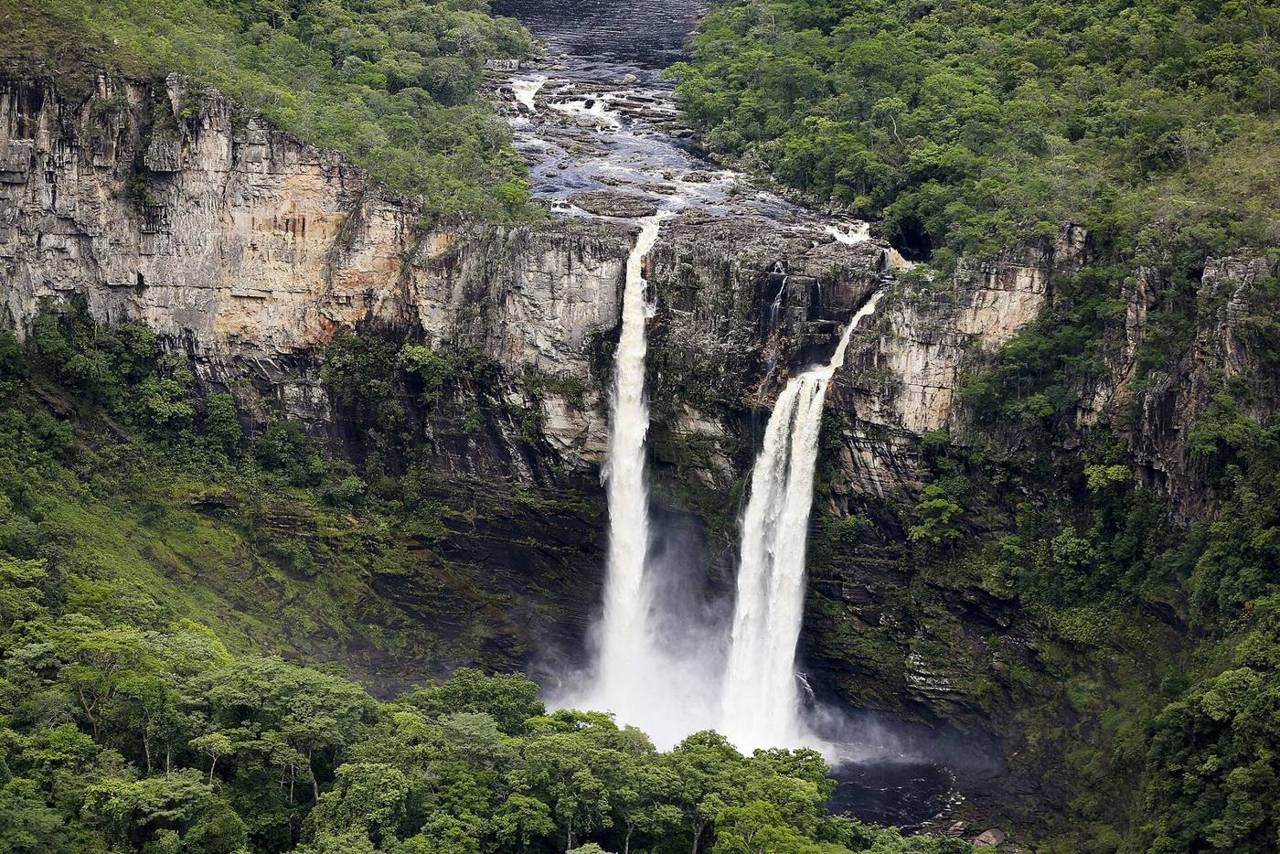
Brasília and the Chapada dos Veadeiros
Oscar Niemeyer's modernist capital, a UNESCO World Heritage site, and the Chapada dos Veadeiros plateau in the cerrado, with canyons, waterfalls, quartz rocks and the Valley of the Moon.
 7 daysEasy
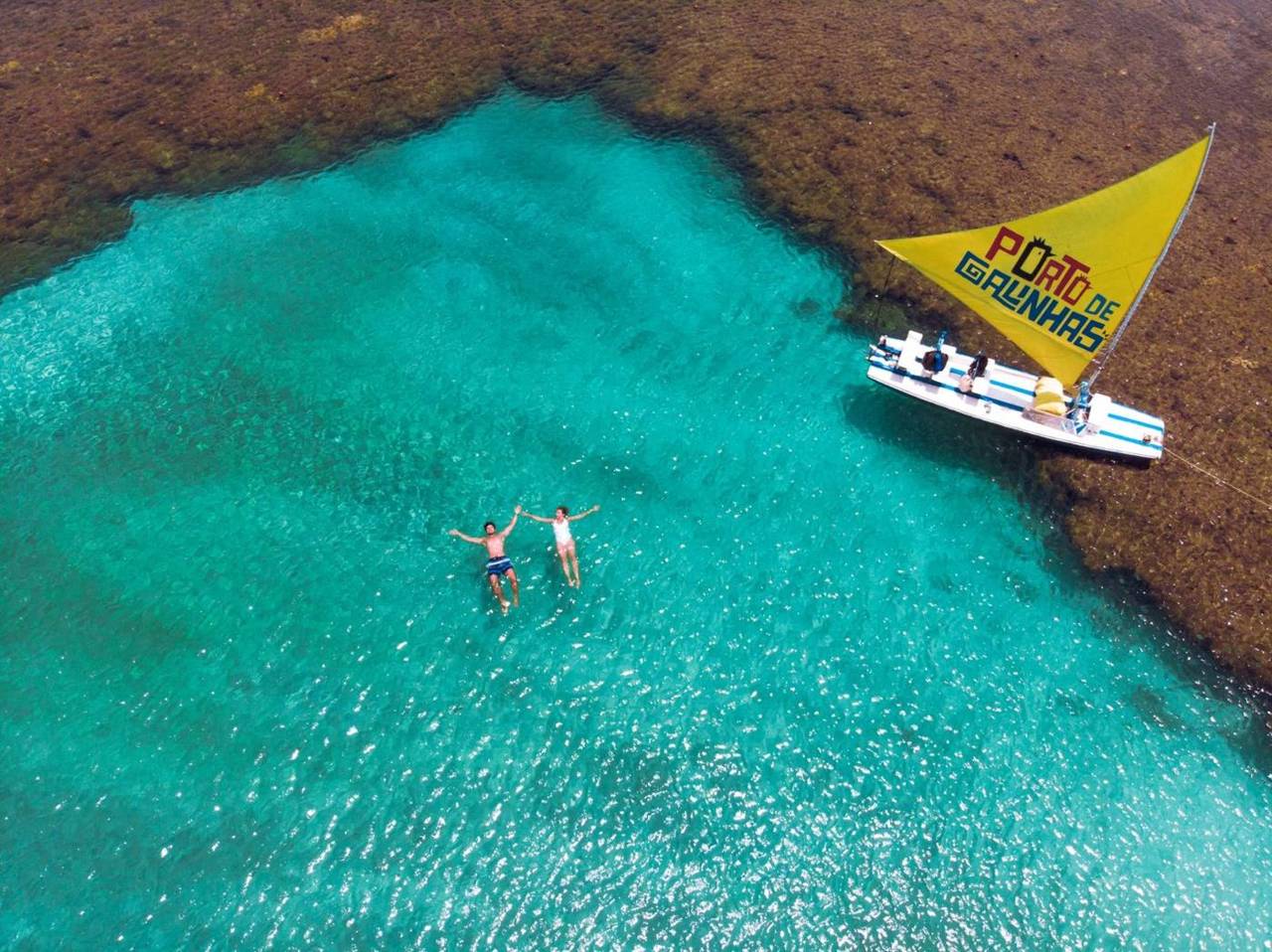
Recife, Olinda and the Coral Coast
The colonial north-east and the natural pools: Olinda with its baroque churches on the hill, Recife and its bridges, Porto de Galinhas, Maragogi and São Miguel dos Milagres, where at low tide you swim among corals and fish in shallow, clear water.
 6 daysEasy
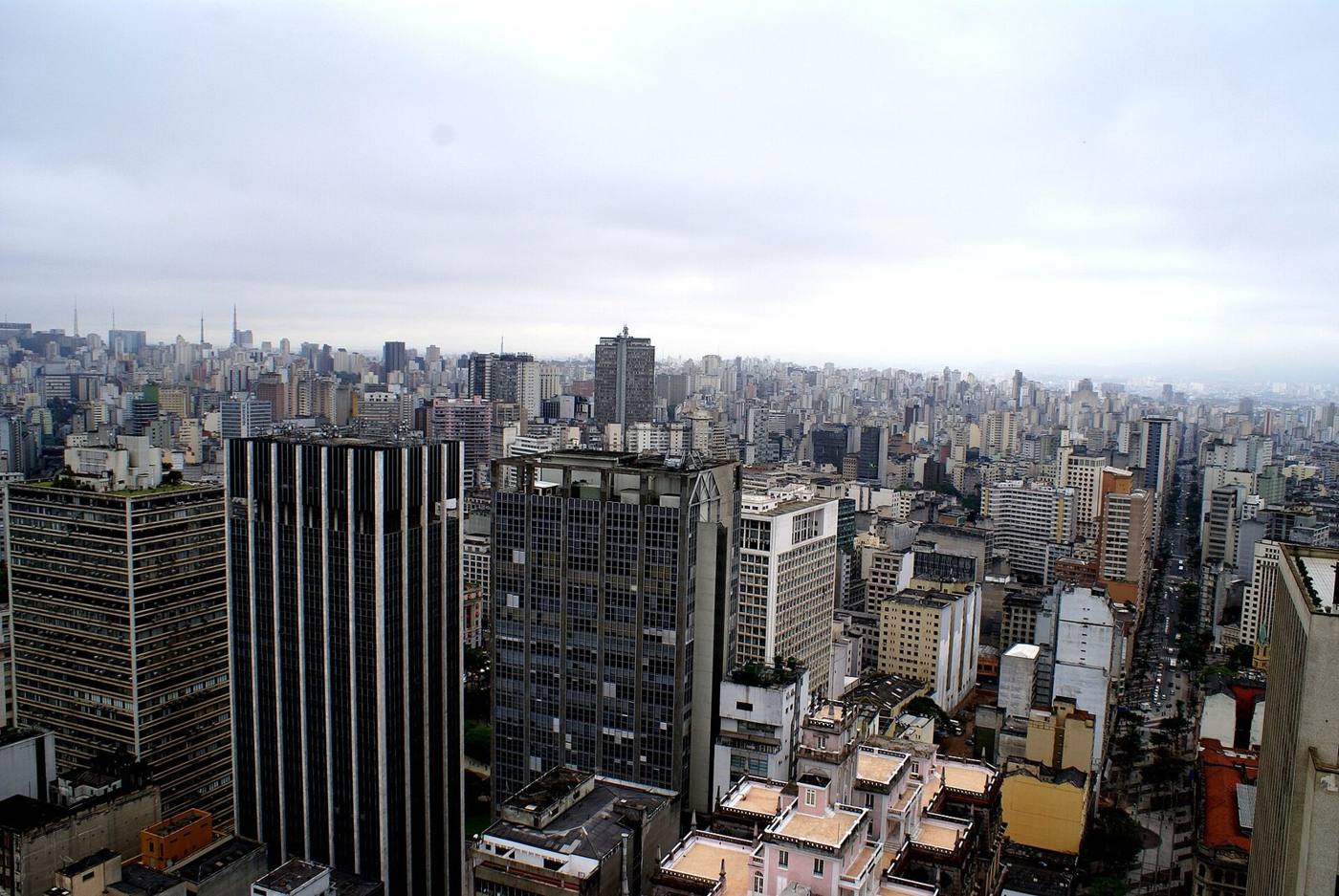
São Paulo and the coast of Ilhabela and Ubatuba
South America's largest metropolis with its museums, markets and food from every corner of the world, then the Costa Verde: Ilhabela island with waterfalls in the Atlantic forest and the beaches of Ubatuba.