Bay of Fundy and Prince Edward Island
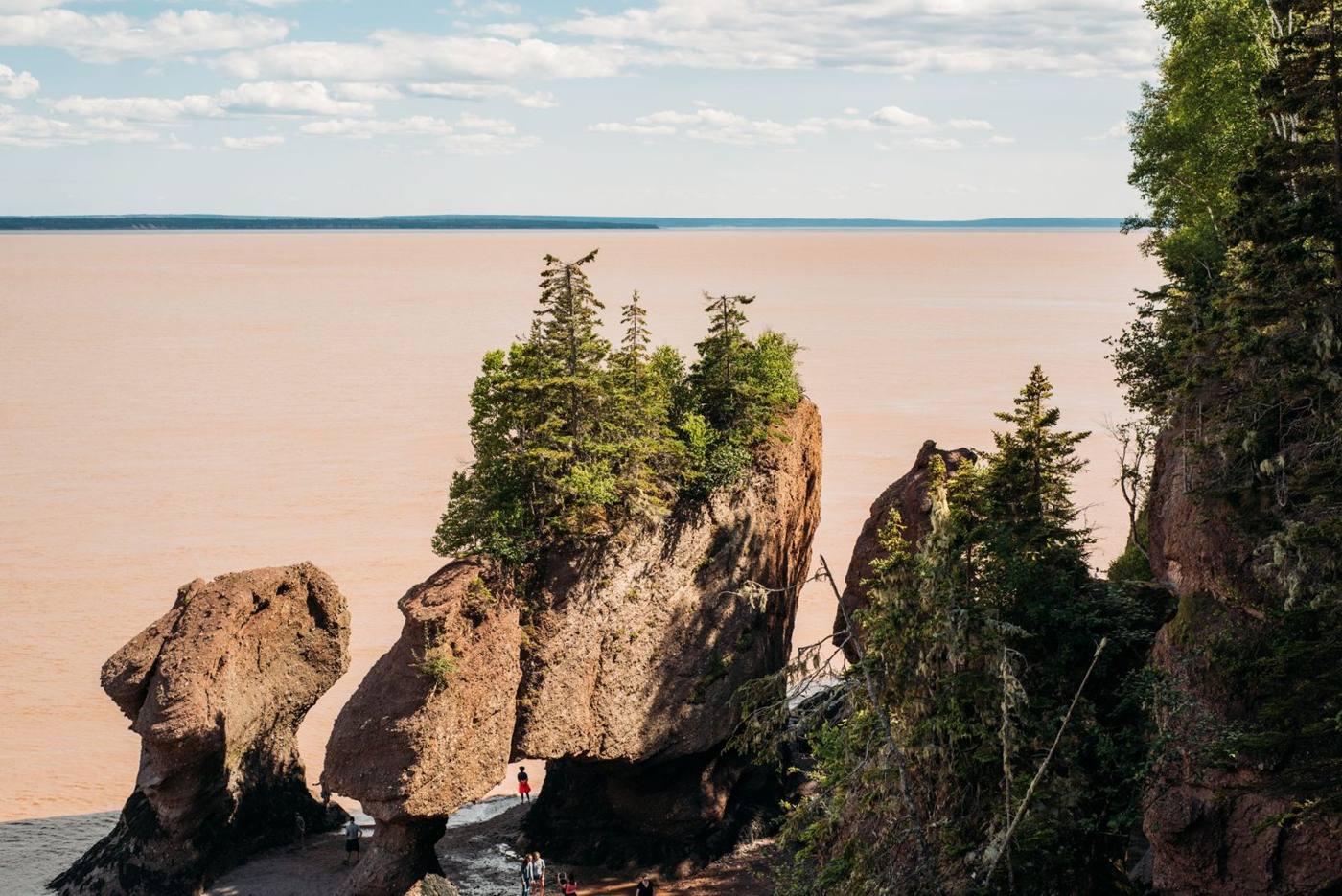
The Hopewell Rocks at low tide, Fundy National Park, the red beaches and fishing villages of Prince Edward Island.
- Moncton
- Hopewell Rocks
- Fundy
- Saint Andrews
- Confederation Bridge
- Charlottetown
- Cavendish
Day by day
- Day 1
Arrival in Moncton
This trip explores the Maritime provinces of eastern Canada, on the Atlantic: New Brunswick, with the Bay of Fundy and the highest tides in the world, and Prince Edward Island, the country's smallest province, with green hills, red sand beaches, lighthouses and fishing villages. It is a peaceful Canada of wooden villages, lobster, oysters and warm hospitality.
To fly into Canada, Italian and most EU citizens need an eTA, the electronic travel authorisation, which costs 7 Canadian dollars and must be obtained online before departure.
You fly into Moncton, from Toronto, Montréal and Halifax, and pick up a hire car. Moncton is a bilingual city, English and French, home to a large Acadian community, descendants of French settlers who arrived in the seventeenth century. In 1755 the British deported most Acadians, in an event known as the Great Upheaval. Many later returned.
In the afternoon, if the timing is right, go to the bank of the Petitcodiac River in central Moncton to see the tidal bore, a wave that runs up the river twice a day when the Bay of Fundy tide enters the estuary. Times are posted in a small riverside park.
Alternatively, go to Magnetic Hill, famous for an optical illusion: a car in neutral seems to roll uphill by itself.
In the evening have fish and seafood from the coast.
Spend the night in Moncton.
Practical tip: Bay of Fundy tides shift by about an hour each day. Download tide tables for every day of your trip.
- Day 2
Hopewell Rocks at high and low tide
Today go to Hopewell Rocks, about forty minutes south of Moncton, on the Bay of Fundy coast. It is the most famous place to see the bay's tides, the highest in the world: in places the difference between high and low tide exceeds fifteen metres, the height of a five storey building. Twice a day around a hundred billion tonnes of water flow in and out of the bay.
At Hopewell the tides have carved the red rock into the flowerpot rocks, great rock pillars up to twenty metres high, topped with trees, which look like giant flowerpots.
The highlight is seeing the same place at low and high tide on the same day. At low tide you descend a staircase to the sea floor and walk on sand and mud among the pillars, looking up at them. About six hours later, at high tide, the sea has covered everything and the water nearly reaches the tops of the pillars: then you see them from above, or by kayak among the rocks.
Between tides, walk the park's trails through the clifftop forest, or visit the visitor centre, which explains how the tides work.
In the evening continue to Alma, a small fishing village at the entrance to Fundy National Park.
Spend the night in Alma.
Practical tip: the Hopewell Rocks ticket is valid for two days. Check the low tide time: you can only go down to the sea floor for a few hours. Wear shoes you do not mind getting muddy.
- Day 3
Fundy National Park and Alma
Today discover Fundy National Park, which protects a stretch of coast and the wooded hills behind it.
The park has more than twenty five trails through spruce and maple forest, rivers and waterfalls. One of the finest is Dickson Falls, a short route on wooden boardwalks through a gorge covered in moss and ferns, with a waterfall. Another trail leads to Laverty Falls in the middle of the forest. The Matthews Head trail follows the coast, with views over the bay.
At low tide go down to Herring Cove or Point Wolfe beach, where the sea retreats for hundreds of metres, leaving pools full of seaweed, crabs, starfish and anemones.
In the afternoon drive the coastal road to Cape Enrage, a headland with a lighthouse above high cliffs, about half an hour from Alma. The view over the bay is very wide. At low tide you can walk down to the beach below the cliff, where you find plant fossils three hundred million years old.
In the evening return to Alma for dinner. Alma is famous for lobster, caught in the bay and served boiled with melted butter, and for lobster rolls. Bay of Fundy scallops are another speciality.
Spend the night in Alma.
Practical tip: entry to the national park requires a Parks Canada ticket: check the price. On the beaches always check the tide time so as not to get cut off when the water returns.
- Day 4
Saint Andrews and the whales of the Bay of Fundy
Today head west to Saint Andrews, about three hours from Alma, on the New Brunswick coast near the United States border. The road passes through the city of Saint John, where you can see the reversing falls: at high tide the sea enters the mouth of the Saint John River with such force that the river's rapids flow backwards.
Saint Andrews is an elegant town founded at the end of the eighteenth century by Loyalists, settlers who stayed loyal to the British crown after American independence. It has colourful wooden houses, gardens and a long main street with shops and galleries.
In the afternoon take a boat trip to see whales. In summer the nutrient rich waters of the Bay of Fundy attract many species: minke, fin and humpback whales and, more rarely, the North Atlantic right whale, one of the rarest whales in the world. You also see dolphins, porpoises and seals.
Back on land, walk along the harbour and through Kingsbrae Garden, a large botanical garden. At low tide in Saint Andrews you can also walk across the sea floor to Ministers Island, with the house of a wealthy nineteenth century railway magnate, but only at the indicated times.
Spend the night in Saint Andrews.
Practical tip: whale watching runs from June to October. Choose operators who respect the rules on distance from the animals. It is cold on the water even in summer: bring a jacket.
- Day 5
The Confederation Bridge and Charlottetown
Today cross New Brunswick eastwards to the Confederation Bridge, about three and a half hours from Saint Andrews, which links the mainland to Prince Edward Island.
The bridge, opened in 1997, is almost thirteen kilometres long and is the world's longest bridge over ice covered water. Crossing takes about ten minutes, with sea on both sides.
Prince Edward Island is Canada's smallest province, with green hills, potato fields, soil coloured red by iron, small wooden churches, lighthouses and a very slow pace of life.
In the afternoon you reach Charlottetown, the capital, a small city by the sea. Here in 1864 the conference was held that led to Canada's birth as a country in 1867, which is why the city is called the birthplace of Confederation. Walk around the centre, with Victorian brick and wooden houses, St Dunstan's cathedral, the harbour with its boats and Victoria Row, a pedestrian street with outdoor cafés.
If it is open, visit Province House, where the conference took place, or the Confederation Centre of the Arts.
In the evening have the island's mussels, famous throughout Canada, and island potatoes.
Spend the night in Charlottetown.
Practical tip: the bridge toll is paid only when leaving the island, not on arrival: check the amount. Province House has long been closed for restoration: check whether it can be visited.
- Day 6
The dunes of Cavendish and the north coast
Today go to the island's north coast, to Cavendish, about forty minutes from Charlottetown, within Prince Edward Island National Park.
The park protects a long stretch of coast with sandy beaches, grass covered dunes, red sandstone cliffs and small lagoons. Red cliffs dropping into the blue sea, topped with green grass, are the island's most typical landscape.
Walk along Cavendish beach and the Greenwich dunes trail further east, where a floating boardwalk crosses a pond to a system of parabolic dunes that move slowly with the wind.
Cavendish is also the setting of the novel Anne of Green Gables, written by Lucy Maud Montgomery in 1908, one of the world's best loved children's books. You can visit Green Gables, the farm that inspired the novel, with the woodland paths described in the book, and the site of the writer's home.
In the afternoon drive the coastal road east, past small fishing harbours and beaches.
In the evening join a traditional lobster supper, held in many of the island's churches and community halls in summer.
Spend the night in Cavendish or on the north coast.
Practical tip: there is a fee for the national park: check it. On the dunes walk only on the boardwalks, so as not to damage the vegetation that holds them in place.
- Day 7
Malpeque oysters and East Point lighthouse
Today explore both ends of the island.
In the morning head west to Malpeque Bay, about half an hour from Cavendish, famous for its oysters, considered among the best in the world. In the bay you see fishing boats and lines of buoys marking the oyster beds. At some harbours you can buy freshly harvested oysters and eat them on the wharf, or join a short trip with a fisher to see how they are farmed.
Then cross the island eastwards, about two hours, to East Point, the island's eastern tip, with a white lighthouse from 1867 on a red cliff, where two ocean currents meet. You can climb the lighthouse to look over the sea.
On the way back stop at Basin Head, a beach famous for its singing sand, which squeaks underfoot because of the shape of its grains. Beside it is a channel where youngsters jump from the bridge into the water.
At sunset stop at one of the small harbours on the east coast, such as Souris, where ferries leave for the Magdalen Islands in Québec.
Spend the night in Charlottetown or on the east coast.
Practical tip: distances on the island are short, but country roads are slow. Plan your time carefully to get back in the evening.
- Day 8
Back to Moncton and departure
On the last day leave Prince Edward Island and return to Moncton for your flight, about two hours from Charlottetown, crossing the Confederation Bridge again.
Alternatively, leave the island by ferry from Wood Islands, on the south coast, which takes about an hour and a quarter to Caribou, Nova Scotia, and then drive to Moncton or Halifax. The ferry runs only from spring to autumn.
If you have time, stop before leaving at Shediac, on the New Brunswick coast, about twenty minutes from Moncton, which calls itself the lobster capital of the world. At the entrance to town stands a giant lobster sculpture more than ten metres long. Nearby is Parlee Beach, with some of the warmest water on Canada's Atlantic coast.
Alternatively, visit Bouctouche, an Acadian town further north, with a long sand dune on the sea and a wooden boardwalk, and a reconstructed village telling the story of Acadian culture.
Before leaving buy some souvenirs: maple syrup, Acadian products, pottery and local crafts.
From Moncton airport there are flights to Toronto and Montréal, from which you continue to Europe.
Practical tip: remember the toll when leaving by the Confederation Bridge. If you choose the ferry, book and check times; there too you pay only when leaving the island.
A relaxed trip, good for families, with the tides as its natural highlight. Check tide times to walk on the seabed at Hopewell. Prince Edward Island has the warmest waters in Atlantic Canada, but the sea is still cool. It combines well with Nova Scotia.
Before you go
- Documents and visa
- Passport valid for the whole stay. Anyone flying in needs an eTA, applied for online on the official Canadian government website: it costs 7 Canadian dollars.
- Health and vaccines
- No compulsory vaccines. Medical care is very expensive for visitors: health insurance is essential. Emergencies: 911.
- Money and payments
- Canadian dollar. Cards are accepted almost everywhere; tips of 15 to 20% are customary in restaurants.
- Power sockets
- Types A and B, 120 volts: you need an adapter and devices must accept 120 volts.
- Time zone
- Montreal and Quebec City are UTC-5, Calgary and Banff UTC-7, Vancouver UTC-8, all with daylight saving time in summer.
- Safety
- A very safe country. In summer wildfires can close roads and parks and bring smoke: check local alerts. Official advice: GOV.UK.
Information checked in November 2026 for Italian and EU citizens. Rules change: always check before you travel.
Variations
In 4 days: Moncton, Hopewell Rocks and Fundy park.
In 10 days: add Nova Scotia, with Halifax, Peggy's Cove and the Cabot Trail on Cape Breton Island.
Frequently asked questions
When is the best time to go?
June to September, with long days, whales and lobster. In autumn the leaf colours are beautiful.
Do I need an eTA?
Yes, to arrive by air. It costs 7 Canadian dollars and must be obtained online before departure.
Do I need a car?
Yes. Public transport between the parks, villages and the island is very limited.
Indicative itinerary written by World Atlas. Before booking, check timetables, seasonal openings, documents and safety.
 8 daysEasy
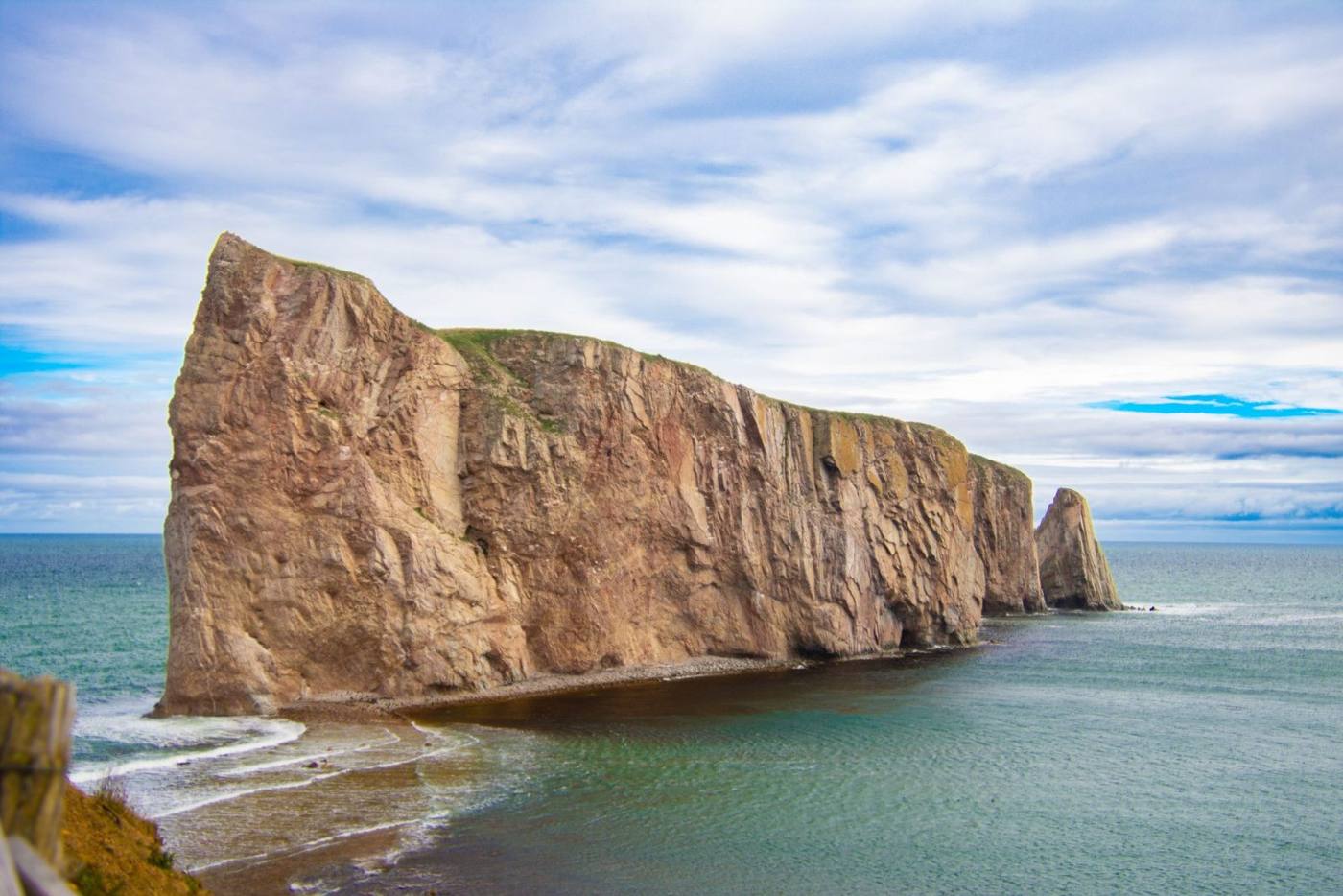
Gaspésie and Percé
A loop around the Gaspé peninsula in maritime Quebec: fishing villages on the St Lawrence, the Chic-Choc mountains with caribou and moose, Forillon park at land's end, the pierced rock of Percé and Bonaventure Island with one of the world's largest gannet colonies.
 6 daysModerate
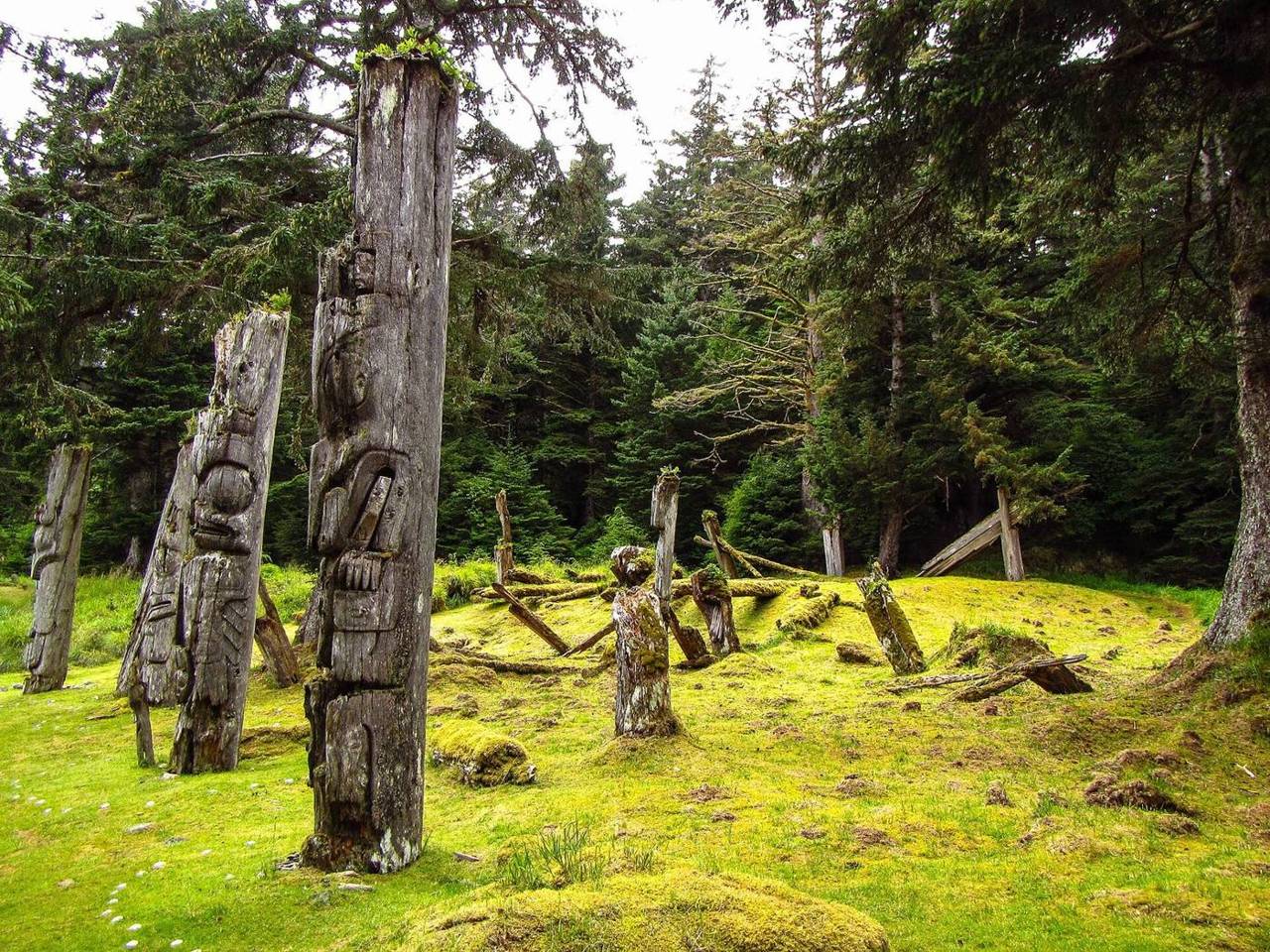
Haida Gwaii
The islands of the Haida people off British Columbia: the Kay Llnagaay heritage centre with its totem poles, moss-covered rainforests, wind-swept beaches and, in Gwaii Haanas park, the ancient village of SGang Gwaay with its mortuary poles, a UNESCO World Heritage site.
 6 daysModerate
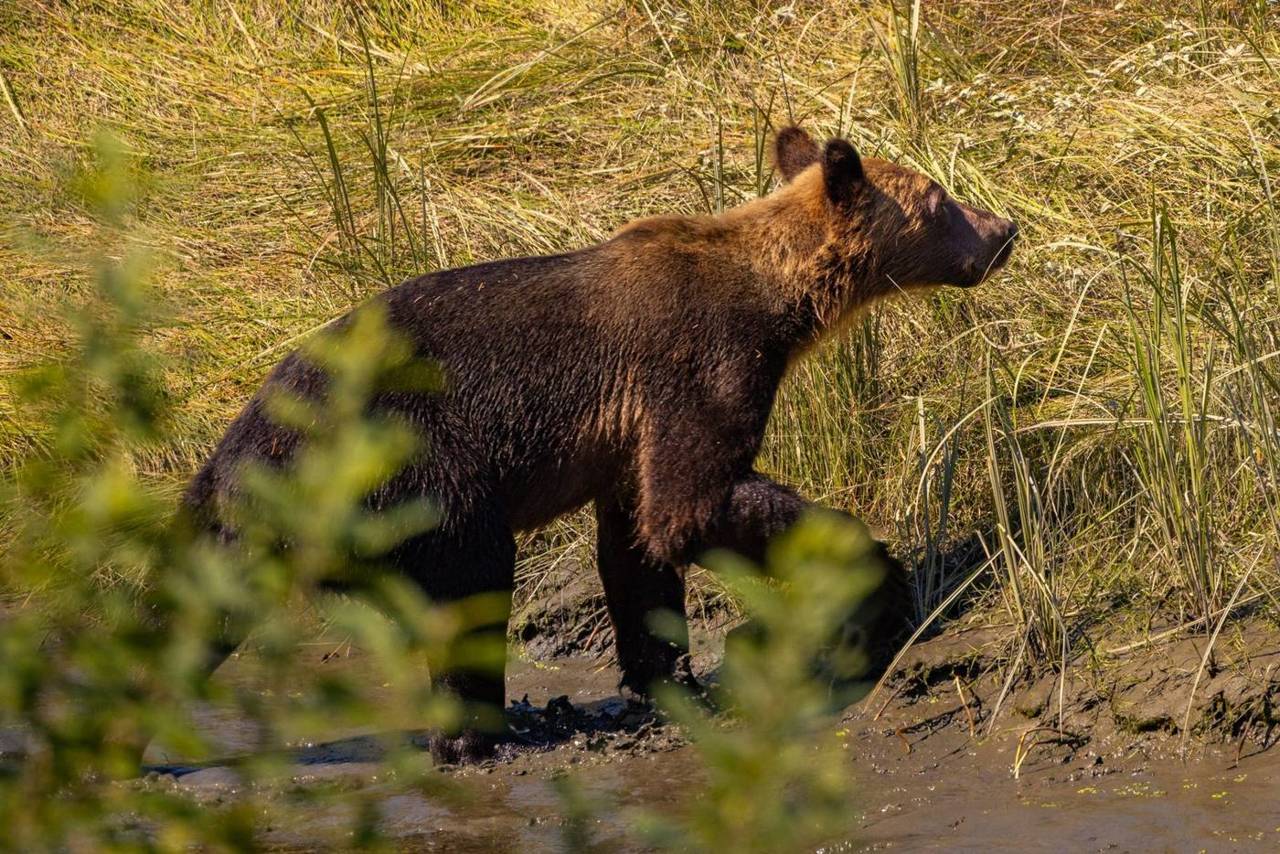
Grizzlies of the Great Bear Rainforest
The world's largest temperate rainforest, on the British Columbia coast: grizzlies fishing for salmon in the rivers, with luck the white spirit bear, fjords, orcas and humpbacks, staying in lodges reached only by floatplane or boat.