San Agustín and the Tatacoa Desert
The pre-Columbian stone statues of San Agustín, the gorges of the Magdalena river and starry nights in the red and grey Tatacoa Desert.
- Bogotá
- Neiva
- Tatacoa
- San Agustín
- Estrecho del Magdalena
- Bogotá
Day by day
- Day 1
Flight from Bogotá to Neiva and the road to Villavieja
This trip goes to the department of Huila, in southern Colombia, along the valley of the Magdalena River, the country's most important river. It combines two very different places: the Tatacoa Desert, a landscape of red and grey rock carved by erosion, with one of Colombia's clearest skies for stargazing, and San Agustín, in the mountains where the Magdalena rises, with the largest group of pre Columbian stone statues in South America, a UNESCO World Heritage Site.
Before travelling to Colombia you must complete the Check-MIG form online. The US government rates Colombia at level 3 of 4: find out which areas to avoid and travel carefully.
On the first day take a domestic flight from Bogotá to Neiva, the capital of Huila, in about an hour. Neiva is a hot lowland city, at about 440 metres, very different from cool Bogotá.
From Neiva take a car with a driver or local transport to Villavieja, about an hour north east, a small colonial village on the edge of the desert, with an eighteenth century church and a quiet square. Villavieja also has a small palaeontology museum, with fossils of prehistoric animals found in the desert, such as giant tortoises, crocodiles and mammals from millions of years ago.
In the evening, if the sky is clear, watch the first stars from the village.
Spend the night in Villavieja or in the Tatacoa Desert.
Practical tip: in the Tatacoa it is very hot by day, often above 35 degrees. Bring a hat, sunscreen, plenty of water and light clothes, but also a sweater for the night.
- Day 2
The red desert of El Cuzco
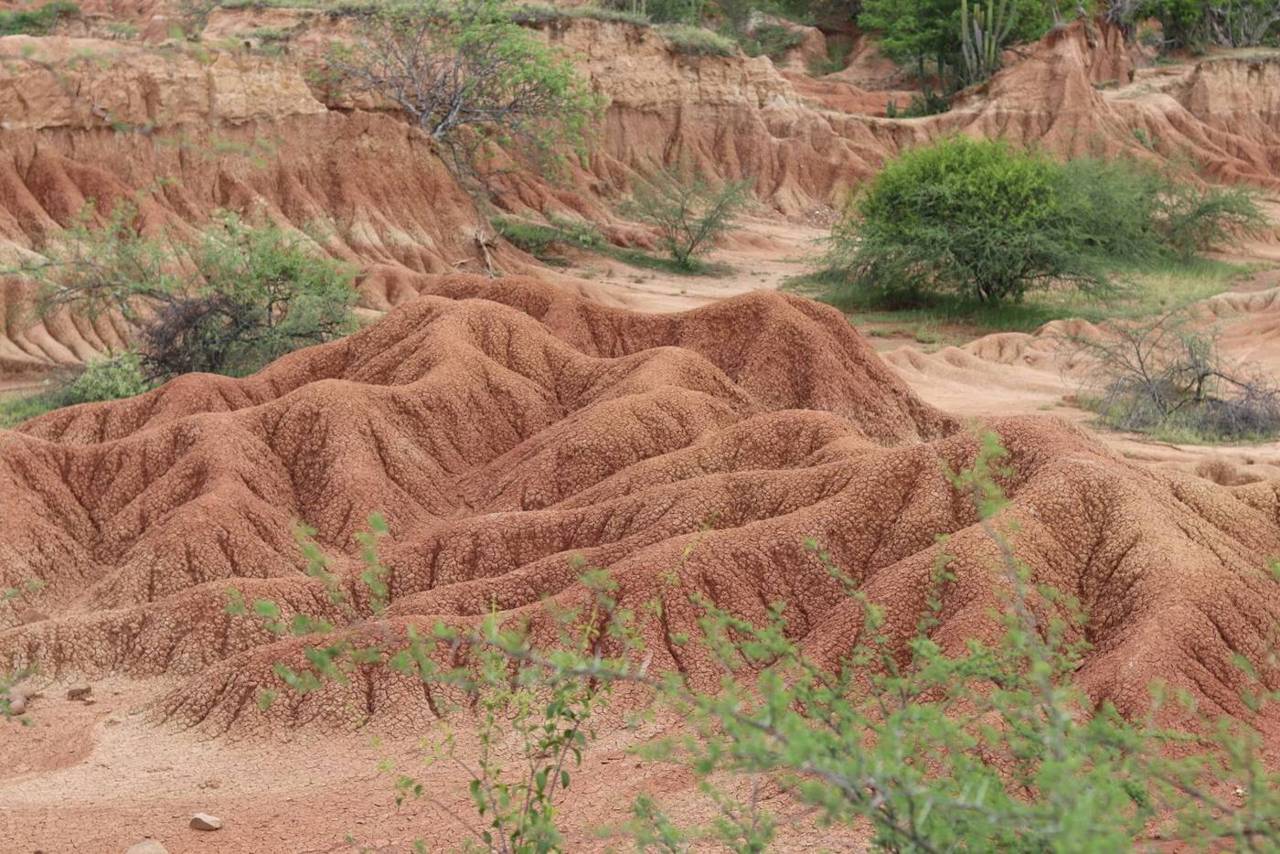
Today explore the Tatacoa Desert. It is not a true desert but a tropical dry forest, an area of about 330 square kilometres with little rain, its clay soil sculpted by rain and wind into canyons, labyrinths, pinnacles and hills. There are cacti, thorny shrubs, lizards, foxes and birds. The name Tatacoa comes from a rattlesnake that once lived here.
The desert has two zones of different colours. Early in the morning, before the heat, go to the red zone, called El Cuzco, a few kilometres from Villavieja. Here the ground is red, orange and ochre, carved into gullies and pinnacles that look like a maze. A trail drops from the viewpoint among the rocks and winds through the canyons. In the morning light the colours are intense.
In the afternoon, when it is too hot to walk, rest in the shade. In some parts of the desert there are natural or spring fed pools where you can swim to cool off.
Towards sunset return to the El Cuzco viewpoint to watch the red rocks glow in the light of the setting sun.
In the evening, in the desert, try the food of Huila, such as cabrito, roast kid raised in the area, and tropical fruit drinks.
Spend the night in the Tatacoa Desert.
Practical tip: in the desert you get around by your own car, motorbike taxi or bicycle, but the distances and the heat are great. Walk only early in the morning and in the evening, and do not leave the paths: it is easy to get lost in the labyrinths.
- Day 3
The grey zone of Los Hoyos and the observatory
Today discover the desert's second zone, the grey one, called Los Hoyos, about ten kilometres from El Cuzco.
At Los Hoyos the ground is grey and silvery, with hills and pinnacles that look like a lunar landscape. A trail crosses the rock formations, and at the end there is a spring fed pool where you can swim, surrounded by the grey rocks. It is a beautiful contrast with the red desert of the day before.
In the afternoon rest and prepare for the evening: the Tatacoa is one of the best places in Colombia for stargazing. The desert lies near the equator, far from city lights, with a sky that is often clear and dry. From here you can see the constellations of both hemispheres, north and south, and the Milky Way with the naked eye.
In the evening go to the desert's astronomical observatory, near El Cuzco, where an astronomer explains the sky and lets you look through telescopes at the planets, the moon, star clusters and nebulae. Sessions are held every night if the sky is clear.
If the sky is cloudy or there is a full moon, the viewing is less spectacular: the best times are around the new moon and in the dry season, between June and September and between December and February.
Spend the night in the Tatacoa Desert.
Practical tip: check the times and price of the observatory sessions, which change. Bring a red light torch, so as not to spoil the viewing, and a light jacket.
- Day 4
To San Agustín and the Archaeological Park
Today leave the desert and head south to San Agustín, about five or six hours by road through the Magdalena valley. You pass through Neiva and then mountain villages, with coffee, cocoa, banana and rice plantations. The climate grows cooler as you climb.
San Agustín is a town at about 1,700 metres, in the mountains of the Colombian Massif, the area where the Magdalena and Cauca rivers rise. Around the town, on green hills, are hundreds of stone statues carved by a civilisation that lived here between the first and eighth centuries AD, about which little is still known. We do not even know what this people called themselves; they disappeared before the Spanish arrived.
The statues are figures of men, animals and deities, some up to seven metres tall, with large eyes, jaguar fangs, serpents and eagles. They were part of tombs and sacred places.
If you arrive early, begin your visit to the San Agustín Archaeological Park in the afternoon, about two and a half kilometres from the town. The park has a museum explaining San Agustín culture and a route through the mesas, hills with tombs and statues in their original positions.
Spend the night in San Agustín.
Practical tip: the road to San Agustín is long and mountainous. Travel by day and check the state of the road before setting off. The archaeological park ticket covers several sites: check which ones and for how many days.
- Day 5
The Archaeological Park and the Fuente de Lavapatas
Today devote the day to the San Agustín Archaeological Park, the most important site in the region.
In the morning walk through mesas A, B, C and D, artificial hills where the most famous statues stand, under roofs that protect them from the rain, beside the tombs they guarded. Some figures are guardians with jaguar faces, others hold children, serpents or tools. One of the best known statues is the double self, a figure with a second being above its head, perhaps an animal or a spirit.
Then go down to the Fuente de Lavapatas, a rock riverbed carved with channels, basins, serpents, lizards and human figures, through which water flows. It was probably a place of water rituals, linked to purification or fertility.
Then climb to the Alto de Lavapatas, the highest hill in the park, with statues and a fine view over the mountains and the valley.
The park also has the Bosque de las Estatuas, a woodland trail about a kilometre long, where dozens of statues found in different parts of the region have been placed.
In the afternoon return to town, walk around the square and try Huila coffee, among the best in Colombia, grown on the surrounding hills.
Spend the night in San Agustín.
Practical tip: the park is visited on foot along dirt paths, sometimes muddy. Wear comfortable shoes and bring a rain jacket and water. A local guide helps a great deal in understanding the meaning of the statues.
- Day 6
Alto de los Ídolos, the Magdalena Strait and Bordones Falls
Today explore the sites outside town, with a car and driver or, for part of the way, on horseback, as many visitors do.
In the morning go to the Estrecho del Magdalena, about half an hour from San Agustín, the point where the great Magdalena River, which further north becomes hundreds of metres wide, squeezes through a rock gorge only about two and a half metres across. The water runs fast and deep between the walls. Do not go near the edge: the current is extremely strong.
Then go to the Alto de los Ídolos, near the village of San José de Isnos, about an hour from San Agustín, the second most important archaeological site in the area. Here, on a hill, are tombs and statues, including the tallest of the San Agustín culture, about seven metres, half of it underground. Some statues are partly painted, with colours still visible.
Nearby is also the Alto de las Piedras, another site with statues and tombs.
In the afternoon go to Bordones Falls, about an hour from Isnos, one of the highest waterfalls in Colombia, dropping about four hundred metres into a forested gorge. From a viewpoint you see the water falling into the void and the deep valley.
Nearby is also the Salto de Mortiño, another waterfall of about 170 metres.
Spend the night in San Agustín.
Practical tip: the San Agustín Archaeological Park ticket usually also covers the Alto de los Ídolos and the Alto de las Piedras: keep it with you. Check the current rules.
- Day 7
Last morning in San Agustín and back towards Neiva
The last full day begins with a quiet morning in San Agustín. One option is a horse ride of a few hours among the smaller sites around the town, such as La Chaquira, a rock above the Magdalena gorge with carved figures looking towards the river, and La Pelota, with painted statues. The landscape is made of green hills, coffee and sugar cane plantations, and deep gorges.
Another option is a rafting trip on the Magdalena River, with stretches of rapids suitable even for beginners, run by local operators.
If you prefer something slower, visit a small coffee farm near the town to see how the beans are grown, picked and roasted.
After lunch set off for Neiva, about five hours north along the Magdalena valley. On the way you pass Pitalito, one of the most important towns for Huila coffee, and the Betania reservoir, surrounded by hills.
In the evening, in Neiva, have dinner with typical Huila dishes, such as asado huilense, marinated pork baked in the oven, served with insulsos, corn sweets, and a tropical fruit drink.
Spend the night in Neiva.
Practical tip: horse rides and rafting are arranged in town the day before. Check the guides' experience and the safety conditions, and always ask for a helmet and life jacket.
- Day 8
Flight from Neiva to Bogotá and departure
On the last day take the flight from Neiva to Bogotá, about an hour, to continue to Europe or other regions of Colombia.
If your flight is in the afternoon, visit Neiva in the morning. The city lies on the banks of the Magdalena River, with a riverside promenade, the Malecón, where you walk near the water. In the centre the main square has a cathedral and the monument to La Gaitana, a large sculpture recalling an indigenous woman who, according to tradition, led the resistance of the native peoples against the Spanish conquistadors in the sixteenth century, to avenge the death of her son.
Before leaving buy some souvenirs of Huila: Huila coffee, ceramic crafts such as chivas, small clay models of the old colourful country buses, and traditional straw hats.
If you have a few more days, from Bogotá you can reach other regions of Colombia, such as the coffee region, Cartagena on the Caribbean or Medellín.
In Bogotá, if you have time between flights, visit the Gold Museum, with thousands of gold objects from pre Columbian cultures, very helpful for understanding the country's ancient civilisations, including that of San Agustín.
Practical tip: flights between Neiva and Bogotá are few each day and may be rescheduled. Leave at least a few hours' margin before an international flight from Bogotá, or better still spend a night in the capital.
An untouristy Colombia, with the country's most mysterious archaeology and a surprising desert. Daytime in the Tatacoa tops 40°C, so visit at dawn and sunset. The road from San Agustín to Popayán crosses Cauca, an area under travel warnings, so it is safer to return via Neiva. Always check your government's travel advice.
Before you go
- Documents and visa
- Valid passport; no visa for tourism up to 90 days for EU citizens. Before the flight, between 72 hours and one hour before departure, you fill in the no-cost Check-MIG form online.
- Health and vaccines
- No compulsory vaccines arriving from Europe; yellow fever is recommended for forest areas and some parks. Protect yourself against mosquitoes because of dengue. In Bogotá, at 2,600 metres, the altitude is noticeable. Emergencies: 123.
- Money and payments
- Colombian peso. Cards work in cities; use cash machines inside banks or shopping centres, by day.
- Power sockets
- Types A and B, 110 volts: you need an adapter and devices must accept 110 volts.
- Time zone
- UTC-5 all year: Colombia does not use daylight saving time.
- Safety
- The United States rates Colombia level 3 for crime and terrorism, with level 4 for Arauca, Cauca except Popayán, Valle del Cauca except Cali, Norte de Santander and 10 km from the Venezuelan border. Use app taxis and never accept drinks from strangers. Official advice: GOV.UK.
Information checked in November 2026 for Italian and EU citizens. Rules change: always check before you travel.
Variations
In 5 days: San Agustín only, flying to Neiva or Pitalito, without the Tatacoa Desert.
In 11 days: add the coffee region, with Salento and the Cocora valley, or a few days in Bogotá.
Frequently asked questions
Do I need a visa?
No, for European citizens. You must, however, complete the Check-MIG form online before leaving.
Is it safe to go to Huila?
The US government rates Colombia at level 3 of 4. Find out before leaving, travel by day and follow local advice.
When are the stars best in the Tatacoa?
In the dry season, around the new moon, when the sky is clearest and darkest.
Indicative itinerary written by World Atlas. Before booking, check timetables, seasonal openings, documents and safety.
 6 daysModerate
The Pacific: Nuquí and the whales
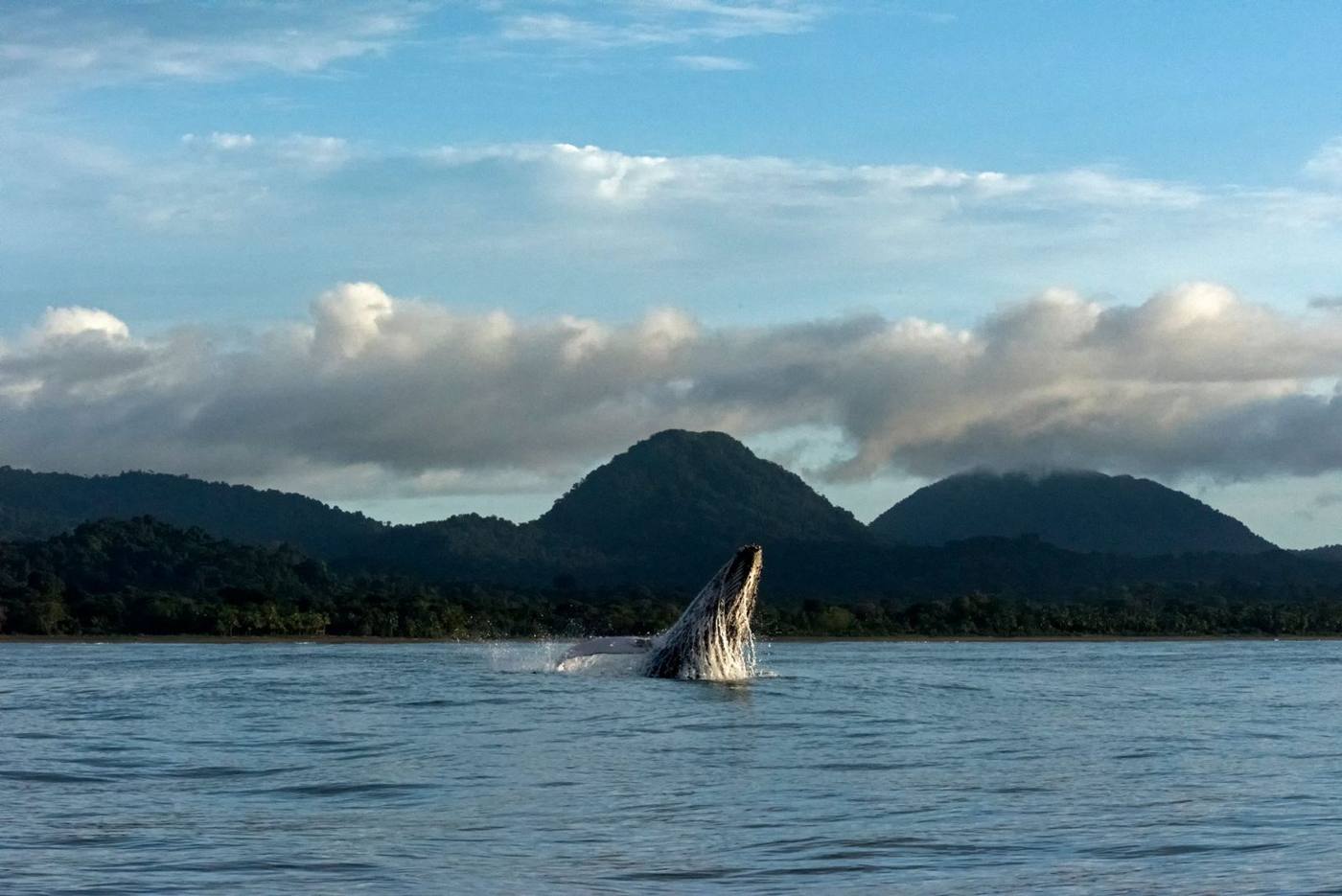
The Chocó coast, where jungle meets the beach: humpback whales with calves a few metres from the boat, waterfalls, hot springs and Afro-Colombian villages.
 4 daysEasy
Bogotá in depth
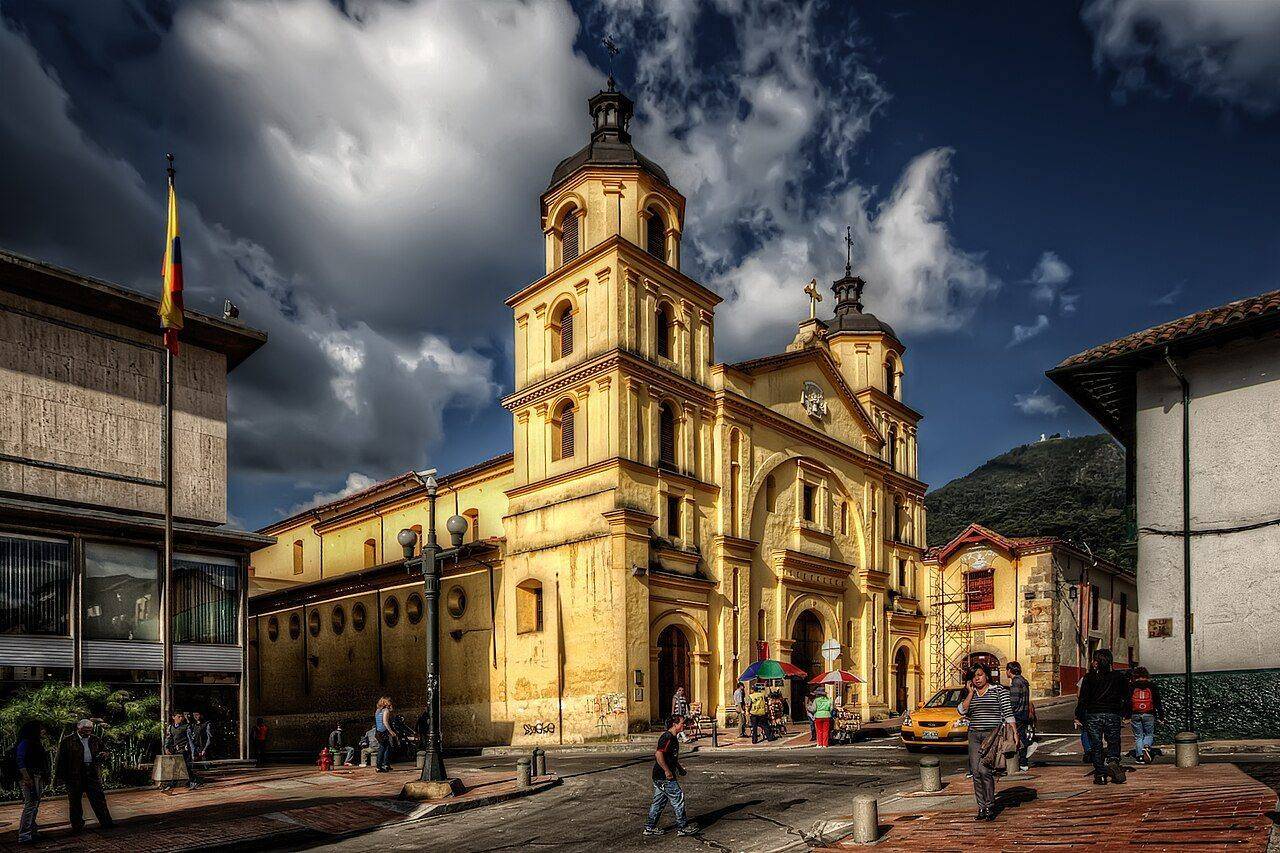
The capital at 2,600 metres: the colonial Candelaria district, the Gold Museum with thousands of pre-Hispanic pieces, the Botero Museum, Monserrate sanctuary by cable car, the downtown murals, Paloquemao market with fruits you have never seen and Usaquén on a Sunday.
 4 daysEasy
Mompox, the town on the river
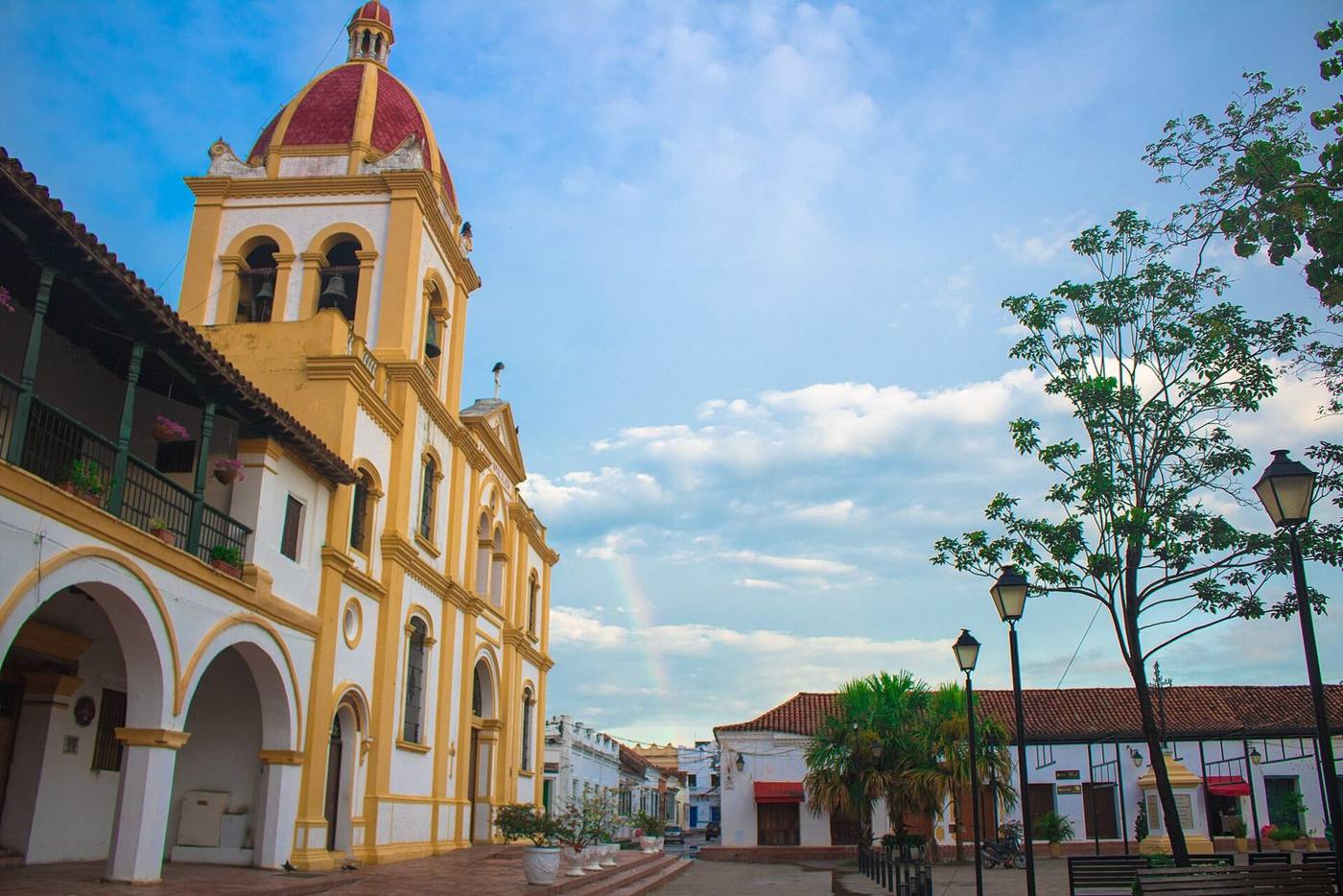
The colonial town frozen in time on a branch of the Magdalena River, a UNESCO site: yellow-painted churches, houses with wrought-iron grilles, silver filigree workshops, the Holy Week processions and a dawn boat trip through the Ciénaga de Pijiño wetlands.