Diving the Zenobia
The Swedish ferry Zenobia, sunk in 1980 off Larnaca, one of the world's most famous wrecks, with trucks still in the hold, and the caves of Cape Greco.
- Larnaca
- Zenobia
- Cape Greco
Day by day
- Day 1
Arrival in Larnaca and a check dive
This trip is devoted to a single wreck, the Zenobia, a large Swedish ferry that sank in 1980 off the port of Larnaca, in south-east Cyprus. It is one of the most famous wrecks in the world, with dozens of lorries still in its hold. On the last day you move to Cape Greco for the underwater caves. You sleep in Larnaca every night and travel on the dive centre's boat trips.
Before you go: Italian citizens can enter Cyprus with an electronic identity card or a passport. Cyprus is in the EU but not in the Schengen area, so documents are checked on arrival. Other nationalities should check their own rules. The currency is the euro. You drive on the left. This trip stays in the Republic of Cyprus. Dives on the Zenobia are only for certified divers: bring your certification card and logbook, choose a licensed dive centre and take insurance that specifically covers diving. Follow the news on the Middle East before you leave.
You land at Larnaca airport, a few minutes from the town. In the afternoon go to the dive centre: the staff check your certification and, if required, your medical certificate, and give you your equipment. Then make a check dive from the shore or in a nearby bay, a few metres deep. It is the time to adjust your weights, test the gear and find your buoyancy again before the wreck.
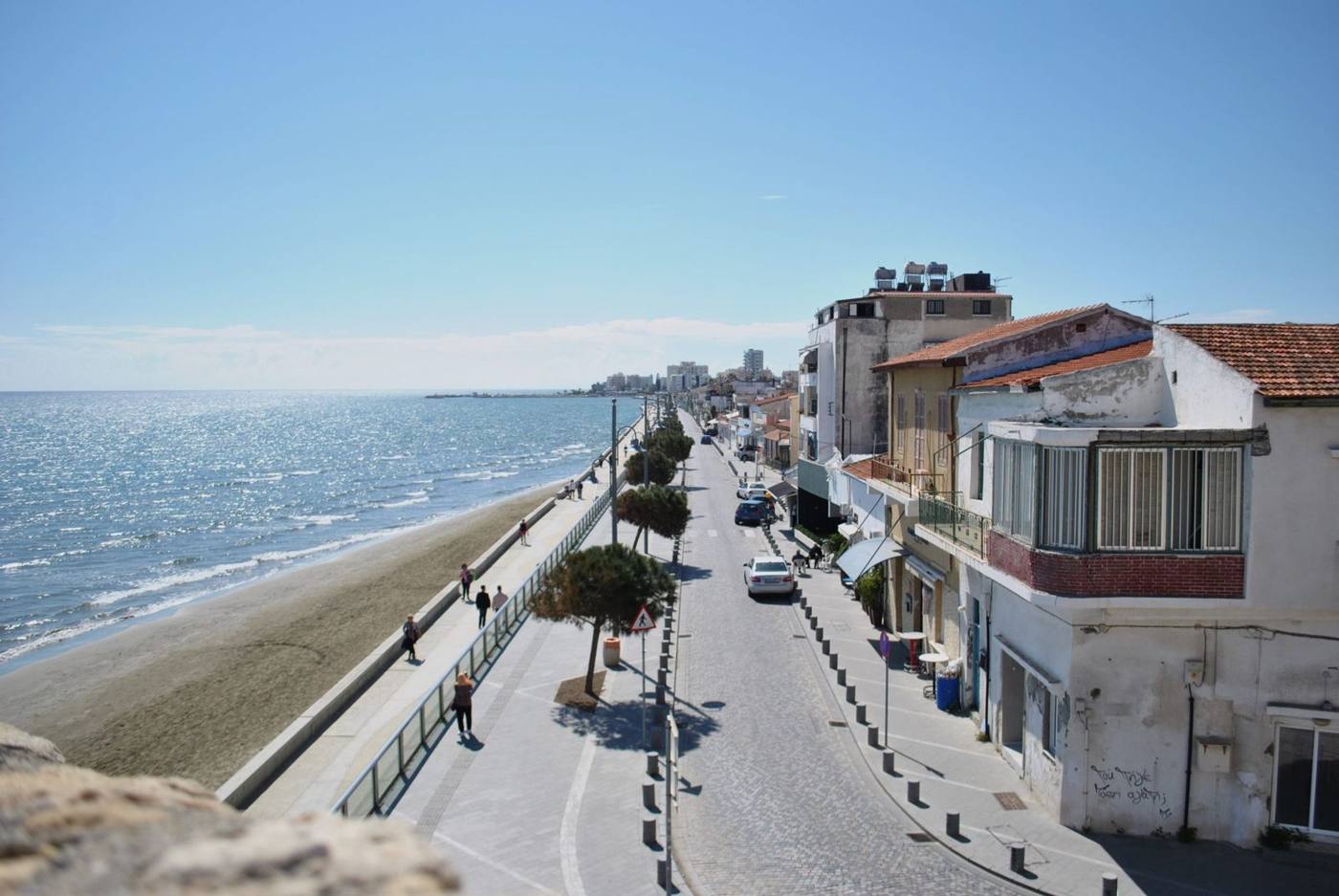
In the evening walk along the Finikoudes seafront, lined with palm trees, and eat grilled fish with salad and village bread.
Practical tip: tell the centre your real level and how many dives you have made recently; on the Zenobia the guide chooses the route according to your experience.
- Day 2
The Zenobia from outside: the hull and the lorries
Today you go down to the Zenobia for the first time. The boat leaves the port of Larnaca and within minutes reaches the wreck, marked by buoys. The Zenobia was a ferry about 170 metres long, launched in Sweden in 1979. In June 1980, on her maiden voyage, her ballast systems failed and she began to list. She was taken to Larnaca and sank a few days later, with no victims. More than a hundred lorries and their cargo went down with her.
The wreck lies on her port side on a sandy seabed. The highest side is at about 15 metres, the bottom at around 40. On the first dive the guide leads you along the outside: the hull covered in sponges and algae, the propellers, the bridge and the lorries that fell onto the sand beside the ship. The water is usually clear, with groupers, barracudas, bream and parrotfish.
Make the second dive after the surface interval, often on another part of the hull. Always stay within the limits of your certification: with an entry-level card you do not go below 18 metres, and on this wreck you do not need to go deeper to see a great deal.
In the afternoon, rest. Visit the Church of St Lazarus, in golden stone, with its large carved wooden iconostasis, and the small fort by the sea. Check times.
Practical tip: drink plenty of water and avoid hard exercise after diving; heat and dehydration increase the risk of decompression sickness.
- Day 3
The deck, the holds and penetration for qualified divers
On the third day you explore the most spectacular parts of the Zenobia. Again you make two boat dives with the centre's guide.
On the first dive you explore the lorry deck and the open areas of the ship. Through the large openings you can still see the trailers in rows, the wheels and parts of the cargo. Near the area of the ship's canteen and restaurant there are plates and objects covered in concretions. Many parts can be seen from outside, without going in, with light coming through the openings.
Penetration, which means entering the enclosed parts of the ship, is a different matter. You only do it with a specific wreck certification or an advanced card recognised by the centre, with an experienced guide, a torch and often a guideline. Inside the space is tight, the silt rises quickly and visibility can drop to zero. If you do not have the right training, stay outside: the Zenobia is superb from the outside too.
Some centres offer a wreck course on the Zenobia itself. It is a good way to learn navigation and finning techniques suited to these environments, with instructors who know the ship well.
In the evening take a walk in the old Turkish quarter of Larnaca, around the mosque, and towards the fishing harbour.
Practical tip: before each dive go over the plan, the maximum depth and the reserve air with your buddy; on the wreck the group must stay together.
- Day 4
The caves of Cape Greco and the end of the trip
Today you leave the wreck and head east to Cape Greco, about forty minutes by road from Larnaca. The cape is a national forest park, with pale rock cliffs, sea caves and very clear water. Many centres run dives from the shore or from a small boat.
Underwater the cliffs form caves and arches at moderate depths, suitable for divers with an entry-level card too. Light comes in through the openings and lights up the walls. You can see octopus, moray eels, damselfish and, with some luck, sea turtles. In the caves always follow the guide and stay where you can see the exit.
After the dives walk the coastal path in the park, with cliffs dropping into the sea, the chapel of Agioi Anargyroi above the caves and the view over Konnos Bay. Bring a hat and water, as there is little shade.
Trip summary: in four days you made a check dive, spent two days on the Zenobia, first outside and then on the deck and in the open areas, and a final day among the caves of Cape Greco. You leave the next day, to respect the 24 hours without flying after your last dive.
When to go: from May to November, with the warmest water between July and October. You can still dive in winter, but with a thicker wetsuit and a rougher sea.
Practical tip: book your flight home at least 24 hours after your last dive and do not drive up into the mountains, such as the Troodos, in the same interval.
A huge, well-preserved wreck at 15-40 metres. Internal sections need advanced certification and an experienced guide. Remember the 24 hours without flying after the last dive.
Before you go
- Documents and visa
- EU citizens need a valid identity card or passport: Cyprus is in the EU but not in the Schengen area, so documents are checked on arrival. Enter only through Larnaca or Paphos airports or the ports of Limassol and Larnaca: arriving via Ercan airport or northern ports is illegal under the law of the Republic of Cyprus. Traffic drives on the left. Other nationalities should check their own rules.
- Health and vaccines
- No vaccines required. EU citizens can use public healthcare with their EHIC; insurance with medical cover and repatriation is still advised. Emergencies: 112.
- Money and payments
- Euro. Cards are accepted almost everywhere; carry some cash in mountain villages.
- Power sockets
- Type G, 240 volts: the same plugs as in the UK.
- Time zone
- Eastern European Time (UTC+2, summer UTC+3).
- Safety
- A safe country with low crime. The UN buffer zone divides the island: cross only at official crossing points, such as Ledra Street and Ledra Palace in Nicosia, showing an identity card or passport; crossing elsewhere is illegal and dangerous, partly because of minefields. Do not take photos in the buffer zone or near military sites. Cars hired in the south usually have no insurance cover in the north: buy separate cover, sold at some crossing points. Wildfire risk is high from April to October. Official advice: GOV.UK.
Information checked in November 2026 for Italian and EU citizens. Rules change: always check before you travel.
Variations
In 3 days: a check dive and two days on the Zenobia, without Cape Greco.
In 6 days: add a wreck course on the Zenobia and a rest day in Larnaca before the flight.
Frequently asked questions
Who can dive the Zenobia?
Only certified divers, with a licensed centre. With an entry-level card you visit the upper part of the wreck; to go deeper and enter the enclosed parts you need advanced or wreck certification and an experienced guide.
How deep is the wreck?
The Zenobia lies on her side: the highest point is at about 15 metres and the bottom at around 40. Always stay within the limits of your certification.
When can I fly after diving?
Wait at least 24 hours after your last dive. That is why the flight home is planned for the day after the end of the trip.
Indicative itinerary written by World Atlas. Before booking, check timetables, seasonal openings, documents and safety.
 4 daysEasy
Easter and Orthodox villages
Orthodox Holy Week in the villages, the Easter-night bonfire, flaounes pastries and the fields of orchids and anemones of the Cypriot spring.
 3 daysEasy
Lefkara and Choirokoitia
The lace and silver village of Lefkara, the UNESCO Neolithic settlement of Choirokoitia with its rebuilt round houses and Stavrovouni monastery.
 5 daysEasy
Paphos and the Akamas peninsula
The Roman mosaics of Paphos, the Tombs of the Kings, Aphrodite's Rock, the Blue Lagoon of Akamas and the Aphrodite trail.