Ardèche: gorges and the Chauvet cave
The limestone gorges of the Ardèche, with the Pont d'Arc and the river to paddle by canoe, the faithful replica of the Chauvet cave with the world's oldest paintings, a UNESCO World Heritage site, the medieval villages of Balazuc and Vogüé and lavender fields.
- Vallon-Pont-d'Arc
- Pont d'Arc
- Grotte Chauvet 2
- Balazuc
- Vogüé
Day by day
- Day 1
Vallon-Pont-d'Arc and the Pont d'Arc
The Ardèche is a region of southern France, between the Rhône valley and the Massif Central, with limestone plateaus, oak and chestnut woods, stone villages and a river that has carved one of the most spectacular gorges in Europe. Here, in 1994, the Chauvet cave was discovered, with the oldest and finest prehistoric paintings known to date. In five days you see the cave, the gorges from above and from the water, and the villages of the lower Ardèche.
You arrive by car from the Rhône valley, or by train to Montélimar or Avignon, then by car or bus. Vallon-Pont-d'Arc is the main village of the gorges, about an hour from Montélimar.
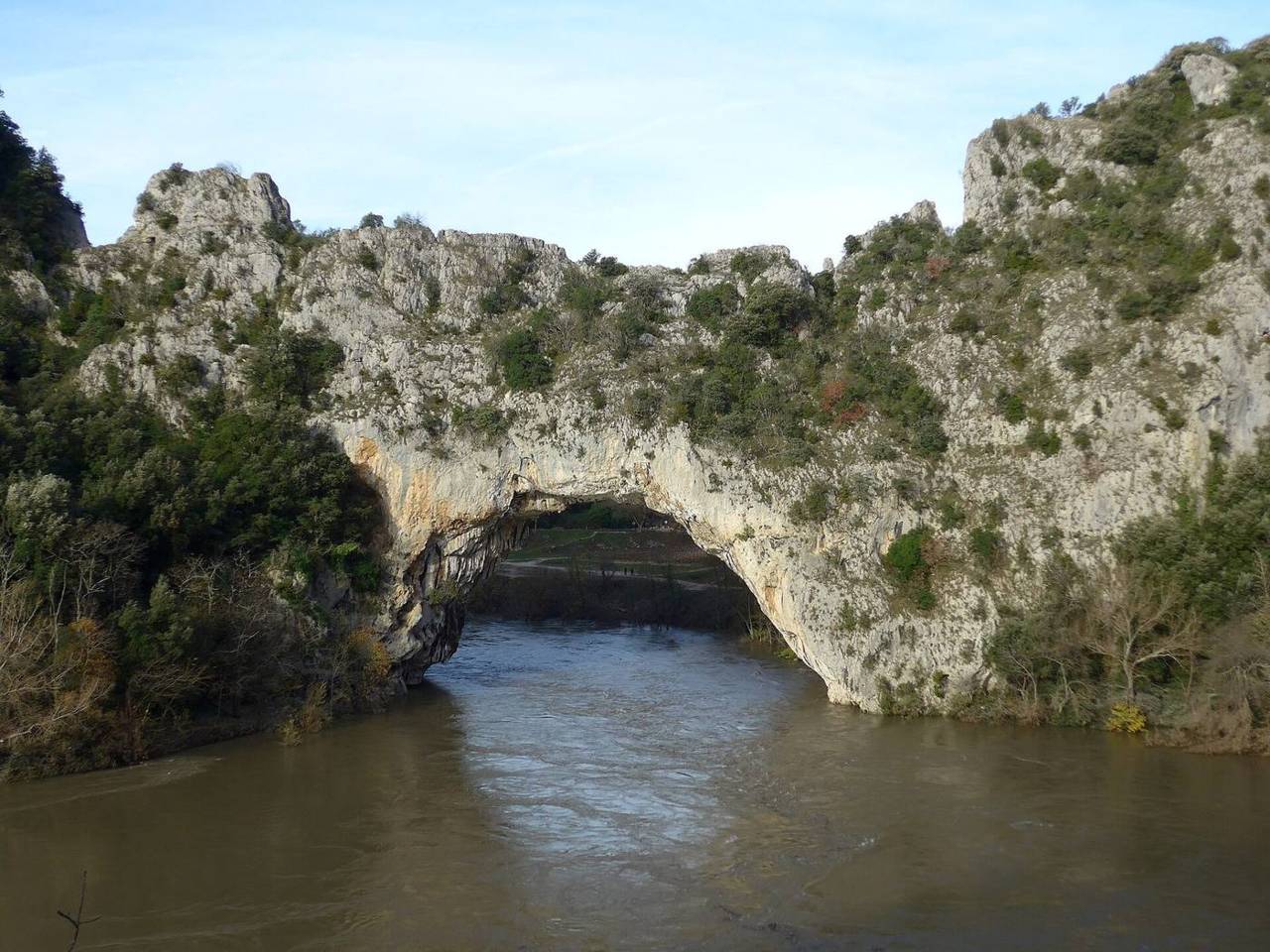
In the afternoon, go to the Pont d'Arc, a few kilometres from the village, a natural rock arch about fifty metres high under which the Ardèche river flows. It formed when the river broke through a limestone promontory it once went around in a great meander. From the roadside viewpoint you see the arch with canoes passing beneath, and you can go down to the gravel beaches to swim in the green water.
In the evening, walk around Vallon-Pont-d'Arc and try Ardèche cooking: caillette, a parcel of pork and herbs, chestnuts, which have a protected designation here, and picodon goat's cheese.
Practical tip: in July and August the gorges are very crowded and the roads full. May, June and September are the best months, with warm weather and fewer people.
- Day 2
Grotte Chauvet 2 and the prehistoric paintings
In the morning, go to the Grotte Chauvet 2, above Vallon-Pont-d'Arc. The real Chauvet cave, discovered in December 1994 by three cavers, contains more than a thousand paintings and engravings made about thirty-six thousand years ago. It has been a UNESCO site since 2014. To protect it, the original cave is closed to the public and only a few researchers enter.
So that everyone can see it, Chauvet 2 opened in 2015, a faithful scaled reproduction of the most important parts of the cave, with the same rock shapes, the same half-light, the temperature and even the smell of the real cave. The paintings were reproduced with the same techniques and pigments used by the prehistoric artists.
The guided visit lasts about an hour. You see cave lions, woolly rhinoceroses, mammoths, horses, bears and bison, painted in charcoal and ochre with a surprising sense of movement, using the curves of the rock to give the animals volume. There are also hand prints, cave bear skulls on the floor and tracks left by animals.
In the afternoon, visit the Aurignacian gallery, the museum next to the cave, which tells the story of people of that era and of ice-age animals, with life-size reconstructions.
In the evening, return to Vallon and rest: tomorrow will be a long day.
Practical tip: book your visit in advance, especially in summer. Visits run at set times and in several languages.
- Day 3
The gorges by canoe or the scenic road
Today, choose how to see the Ardèche gorges, a nature reserve about thirty kilometres long, where the river runs between limestone walls up to three hundred metres high.
The first option is the canoe or kayak descent from Vallon-Pont-d'Arc to Sauze, near Saint-Martin-d'Ardèche, about thirty-two kilometres. In a full day, paddling through easy rapids and long calm bends, you pass under the Pont d'Arc, between sheer walls, caves, gravel beaches and woods. You can also do it in two days, sleeping at one of the two bivouacs in the gorges, Gaud and Gournier, which must be booked. Canoes are rented in Vallon, with a shuttle back.
The second option is the scenic gorges road, which runs along the edge of the plateau on the left bank from Vallon to Saint-Martin, with a series of viewpoints high above the river. The finest are those at Serre de Tourre, overlooking the Madeleine meander and the red walls, and at Gaud.
In the area you can also visit the Madeleine cave, with large chambers and formations, open for guided tours.
In the evening, return to Vallon and dine on local specialities.
Practical tip: the canoe descent requires basic fitness and the ability to swim. Check the water level: in spring and after rain the river is stronger.
- Day 4
Balazuc, Vogüé and the Aven d'Orgnac
In the morning, drive north to Balazuc, about half an hour away, one of the most beautiful villages in France, built on the edge of a cliff above the Ardèche river. The grey stone houses, stepped lanes, arches and Romanesque church seem to grow out of the rock. From the bridge below the village you see it all, clinging to the wall.
A little further north is Vogüé, another riverside village at the foot of a cliff, overlooked by a castle that hosts art exhibitions. Its lanes run parallel to the river, with covered passages between the houses.
In the afternoon, drive south to the Aven d'Orgnac, about an hour away, one of the largest and most spectacular caves in France. A lift descends into the heart of the earth, and the route crosses enormous chambers with giant stalagmites shaped like pine cones, columns and limestone cascades, lit to bring out their shapes. Next to the cave is the City of Prehistory, a museum devoted to the people who lived in the Ardèche from prehistoric times onwards.
In the evening, sleep in one of the villages of the area and try Côtes du Vivarais wine or chestnut juices.
Practical tip: in the caves the temperature stays around thirteen degrees all year. Bring a jumper even in summer.
- Day 5
The return
On your last morning, if you have time, visit one of the markets of the lower Ardèche, held on different days in the various villages, with goat's cheeses, honey, chestnuts, olives and charcuterie. Or walk one of the trails on the plateau, among oak woods and dolmens, prehistoric stone tombs, which are very numerous in the Ardèche.
Another option is a walk to the Ray-Pic waterfall, further north, a waterfall dropping between basalt columns, a reminder of the volcanoes once active in the region. On the way you pass through the villages of the Ardèche mountains, with chestnut woods, dry-stone walls and terraces where silkworms were once raised, an activity that made the region rich for centuries. Some old silk mills can still be visited.
Then head back to the Rhône valley. From Montélimar or Avignon you take the train to Lyon, Marseille or Paris.
This trip combines well with Provence to the south, with Avignon, the Luberon and the Camargue, or with the Tarn gorges and the Cévennes to the west. To the north, you can continue towards Lyon and Burgundy.
Practical tip: Italian citizens only need an identity card valid for travel. In summer the fire risk in the gorges is high: respect bans on fires and trails closed on alert days.
For families and nature lovers. The original cave is closed to the public: you visit the replica, which is very well made. Canoeing the gorges is easy in summer, though water can be low in August; book ahead. It combines with Provence.
Before you go
- Documents and visa
- EU citizens need a valid identity card or passport. Other nationalities should check the Schengen rules.
- Health and vaccines
- No vaccines required. EU citizens should bring their EHIC. Emergencies: 112.
- Money and payments
- Euro. Cards are accepted almost everywhere; every accommodation charges the taxe de séjour per person per night.
- Power sockets
- Types C and E, 230 volts.
- Time zone
- Central European Time (UTC+1), summer time (UTC+2) from the last Sunday of March to the last Sunday of October.
- Safety
- A safe country, with a high terrorism alert level and security checks at museums and stations. In Paris watch for pickpockets on the metro. Official advice: GOV.UK.
Information checked in November 2026 for Italian and EU citizens. Rules change: always check before you travel.
Variations
In 3 days: the Pont d'Arc, Grotte Chauvet 2 and the scenic gorges road.
In 8 days: add Provence, with Avignon and the Luberon.
Frequently asked questions
Can you visit the real Chauvet cave?
No. The original cave is closed to the public to protect it. You visit Chauvet 2, the faithful reproduction opened in 2015.
Do I need canoeing experience?
No experience is needed, but basic fitness and the ability to swim are. You can choose a short stretch or the whole descent in one or two days.
What documents do I need?
Italian citizens only need an identity card valid for travel. France is in the Schengen area and uses the euro.
Indicative itinerary written by World Atlas. Before booking, check timetables, seasonal openings, documents and safety.
 5 daysEasy
Lille and the Opal Coast
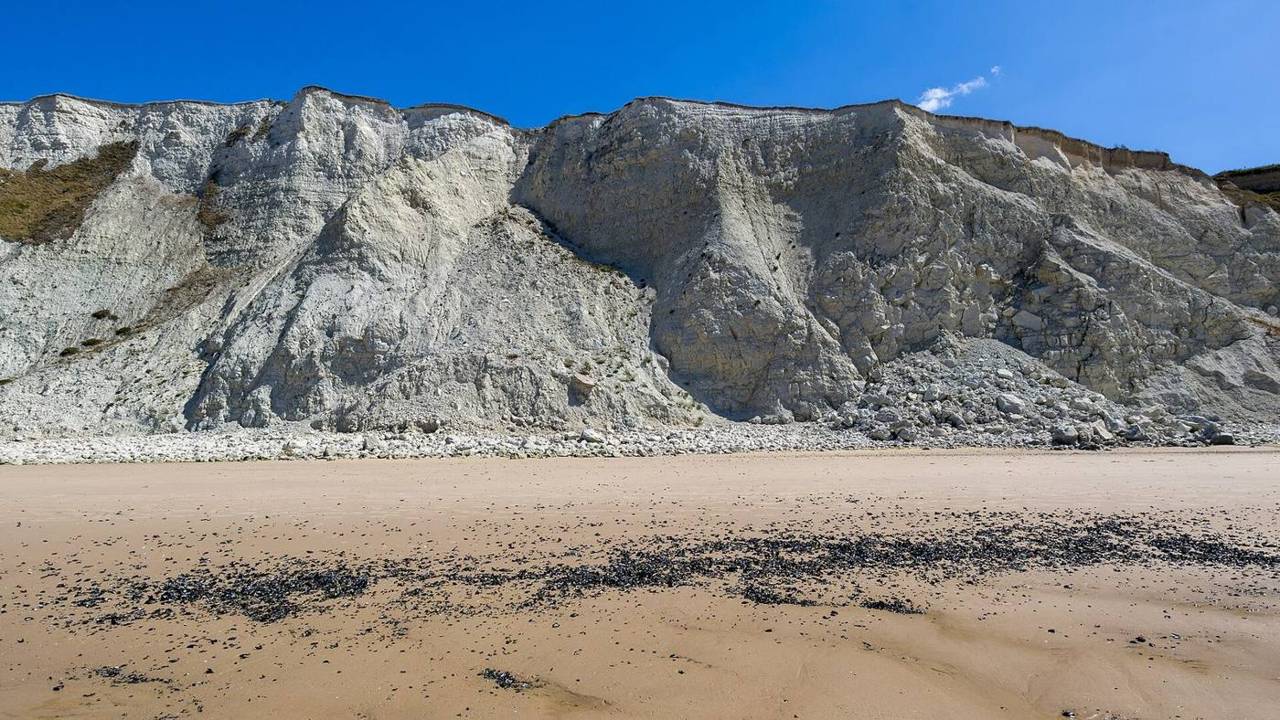
Northern France: Lille with its Flemish Grand-Place and Fine Arts museum, the Louvre-Lens, the Great War memorials, then the cliffs of Cap Blanc-Nez and Cap Gris-Nez facing England, Boulogne with the Nausicaá aquarium and the citadel of Montreuil.
 5 daysEasy
La Rochelle, Île de Ré and the Marais Poitevin
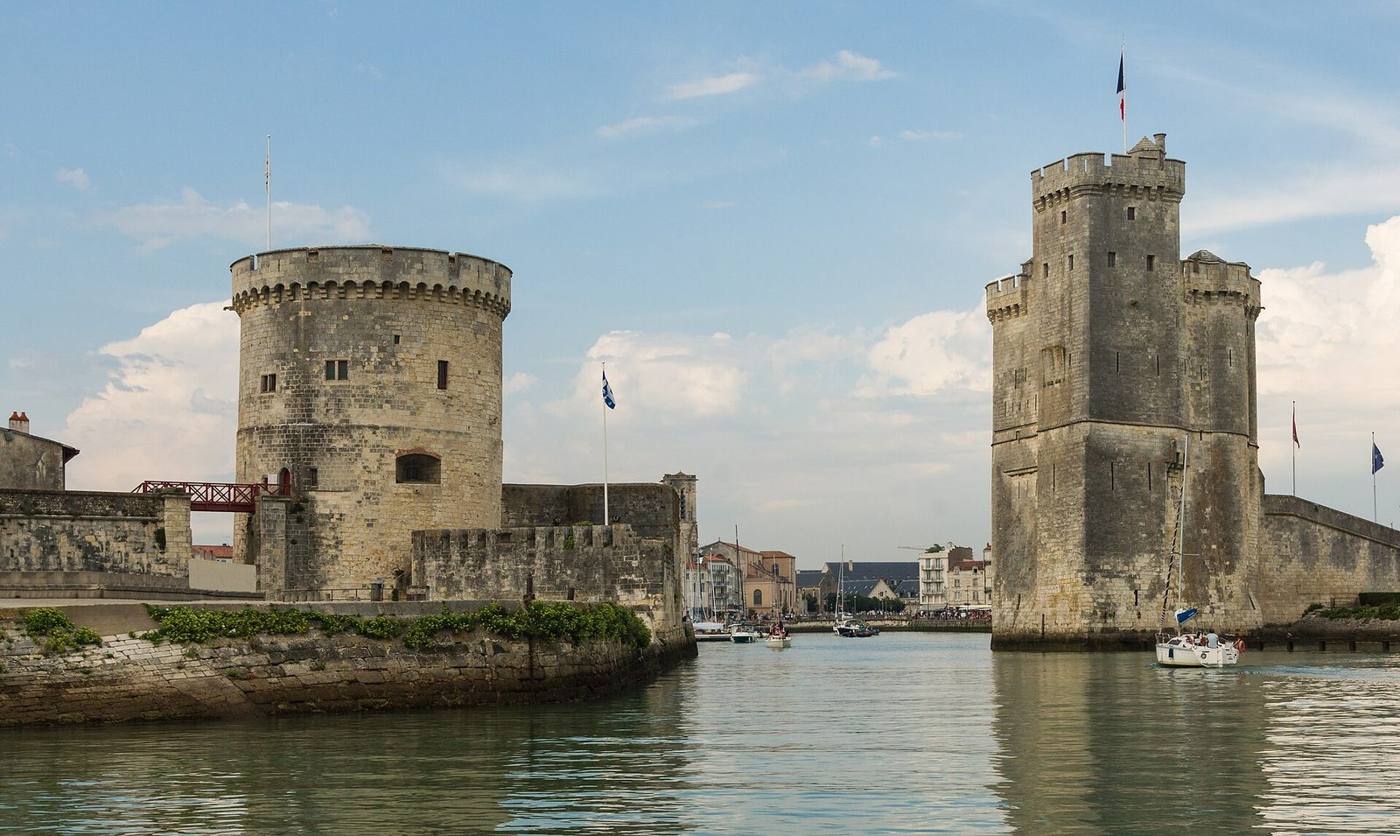
The Atlantic coast between towers and salt pans: La Rochelle's old port and towers, Île de Ré by bike between white villages and salt marshes, Fort Boyard seen from the sea, and the 'Green Venice' of the Marais Poitevin explored by boat among canals and trees.
 5 daysEasy
The Jura: lakes and Besançon
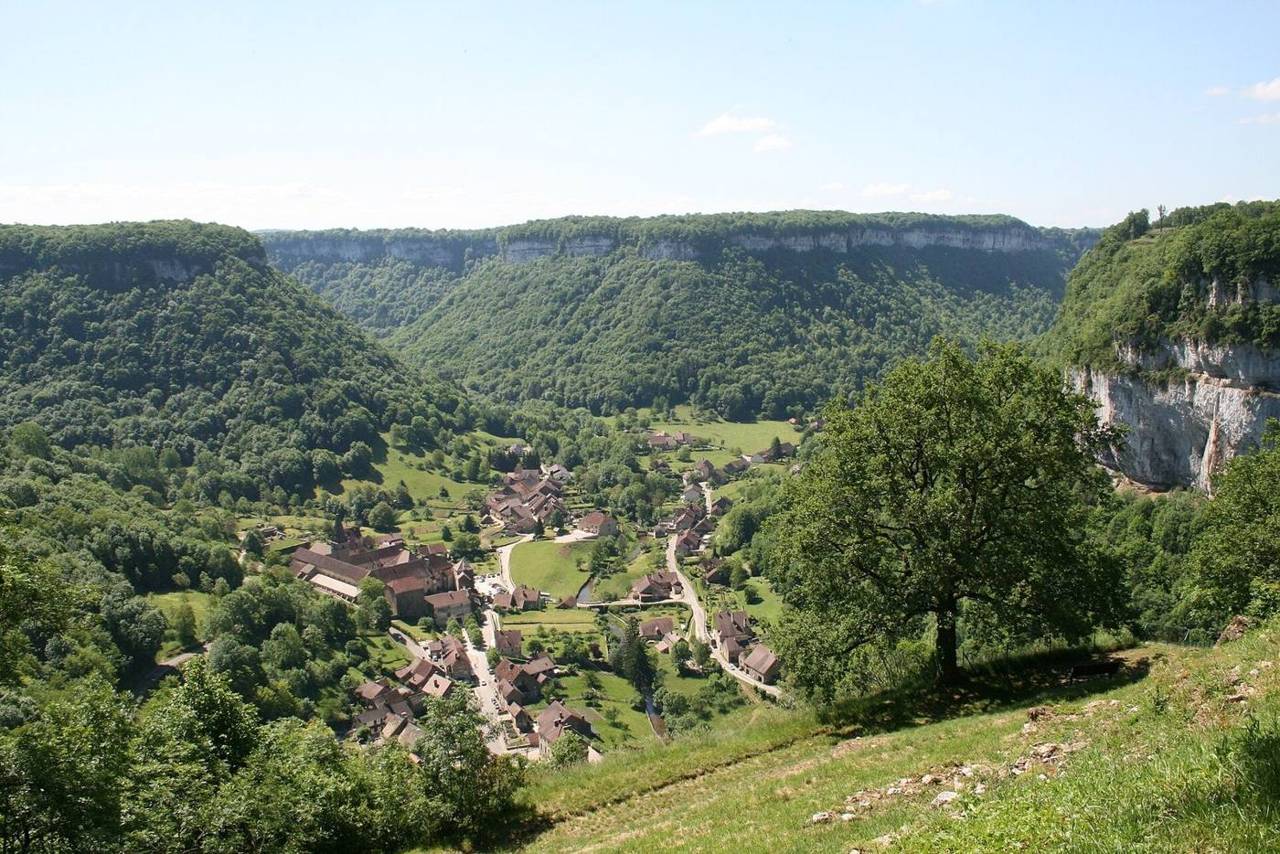
The green France of Comté cheese and yellow wine: Besançon with Vauban's citadel, the Royal Saltworks of Arc-et-Senans, a UNESCO World Heritage site, the village of Baume-les-Messieurs at the end of a blind valley, the Hérisson waterfalls and the Jura lakes.