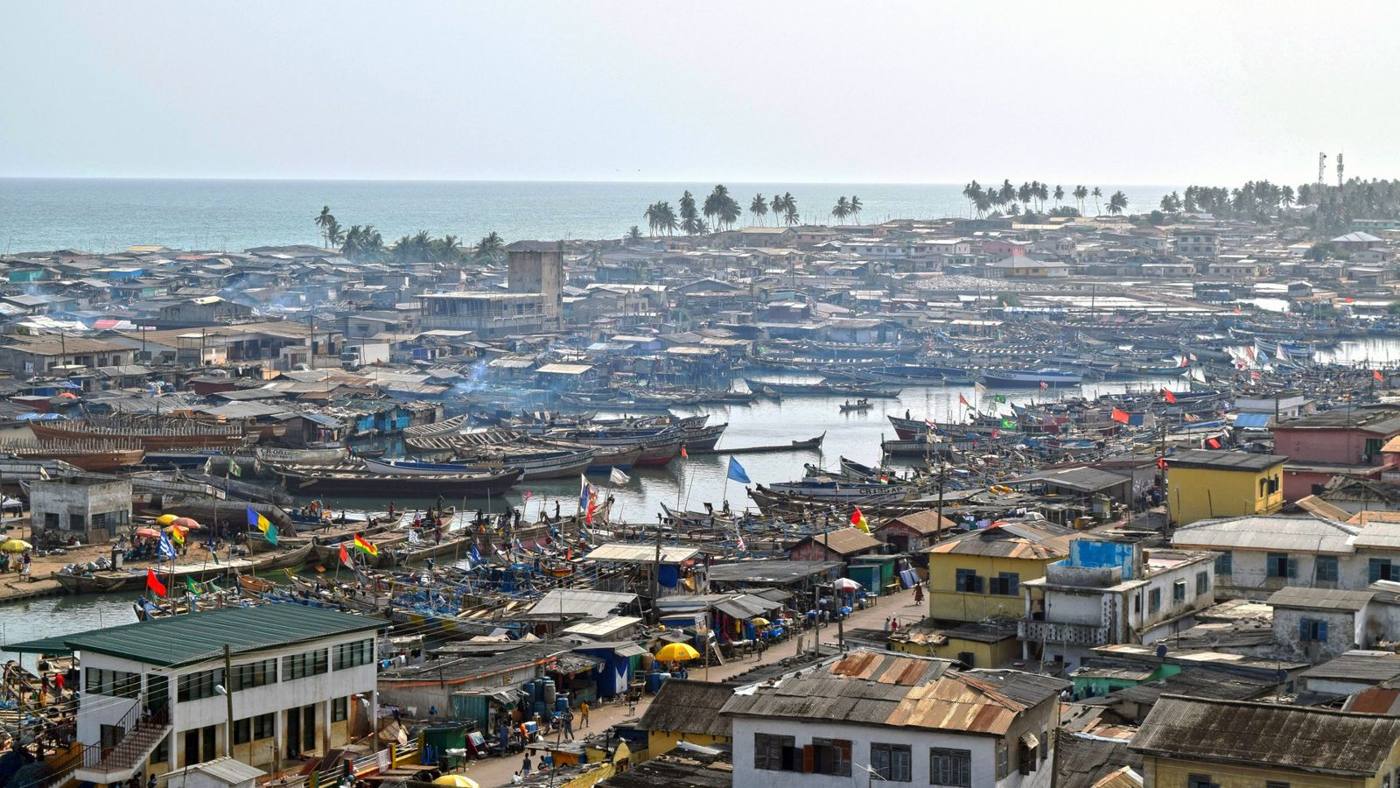
Accra and the coast of forts
Accra and Jamestown, the UNESCO slave-trade castles of Cape Coast and Elmina, the canopy walkway of Kakum park and the beaches of Busua.
- Accra
- Cape Coast
- Kakum
- Elmina
- Busua
Day by day
- Day 1
Accra: Jamestown, the Nkrumah memorial and Makola
This trip takes you along the coast of Ghana, following the traces of the slave trade and the history of the country: Accra and Jamestown, the UNESCO-listed castles of Cape Coast and Elmina, the Kakum canopy walkway and the beaches of Busua. You travel by car with a driver.
Before you go: Italian citizens enter Ghana with a passport and a visa, to be obtained before departure; since May 2026 it is requested online on the official electronic visa portal of the Ghana Immigration Service, without going through intermediary websites. Yellow fever vaccination is compulsory for all travellers over nine months old and the certificate is checked on arrival. Since November 2026, as a precaution against Ebola, a health declaration and a temperature check are required at airports. Talk to your doctor about malaria prevention. Other nationalities should check their own rules. The UK advises against all but essential travel only to the Bawku area, in the far north-east, far from the coast.
In the morning visit Jamestown, the oldest district of Accra, with the fishermen's canoes, the striped lighthouse and the walls of James Fort, built by the English in the seventeenth century. Walk with a local guide among colonial houses, murals and courtyards.
Then go to the Kwame Nkrumah Memorial Park, dedicated to the first president of Ghana, who led the country to independence in 1957, among the first in colonial Africa. In the park there are the mausoleum and a small museum. Check prices and times.
In the afternoon go into Makola market, huge and crowded, with wax print fabrics, beads, spices and fruit.
Sleep in Accra, for one night.
Practical tip: at Makola market keep your bag in front of you and your phone in your pocket, because bag-snatching is common in the crowds.
- Day 2
Cape Coast Castle
Today you travel west along the coast and visit Cape Coast Castle, one of the most important places of memory of the slave trade.
Leave Accra early. The coastal road is very busy, especially on the way out of the city: for about 150 kilometres it usually takes three or four hours. Along the way you see fishing villages, lagoons and markets at the roadside.
You arrive in Cape Coast, a lively town with a large fishing harbour and many historic schools. The white castle dominates the sea. It was built by the Swedes in the mid seventeenth century and then became the headquarters of the British on the Gold Coast. For almost two centuries ships left from here loaded with enslaved Africans, bound for the Americas.
With the guide you go down into the dungeons, under the courtyard, where hundreds of captives waited for weeks in the dark, with almost no air. Then you see the condemned cells and pass through the Door of No Return, which opens onto the beach. The small museum tells the story of the slave trade and the African diaspora. It is a powerful and moving visit. Check prices and times.
In the late afternoon walk along the seafront and watch the colourful canoes returning to the harbour, with the fishermen unloading their catch among the crowd.
Sleep in Cape Coast, for three nights.
Practical tip: arrive at the castle as soon as it opens, because by mid-morning the school groups arrive and the guided tours become very crowded.
- Day 3
The Kakum canopy walkway
Today you walk among the treetops in the rainforest of Kakum, about half an hour by road north of Cape Coast.
Arrive at Kakum National Park at opening time, early in the morning. It is the best moment: the air is cool, mist rises among the trees, birds are singing and the school groups that arrive around midday are not there yet. Check prices and times.
With the guide you first walk along a short forest trail, among towering trees, lianas and buttress roots. Then you climb onto the walkway: a series of narrow bridges, protected by ropes and netting, running from one platform to the next on the largest trunks, up to about 40 metres above the ground. The bridges sway a little with every step, but they are safe.
From above you see the forest as birds and monkeys see it: a sea of leaves, with the crowns touching and light filtering through the branches. With a little luck you see hornbills, turacos, colourful butterflies and monkeys in the trees. Forest elephants also live in the park, but they are very rarely seen.
In the afternoon, on the way back, stop at the crocodile pond near the park, where from the walkways you watch the crocodiles and the weaver birds building their nests on the branches.
Return to Cape Coast.
Sleep in Cape Coast.
Practical tip: if you suffer from vertigo you can stop after the first bridge and turn back: there is no obligation to complete the whole route.
- Day 4
Elmina Castle and the fishing harbour
Today you visit Elmina, about twenty minutes by road west of Cape Coast, with its castle and its fishing harbour.
The castle of São Jorge da Mina, or Elmina Castle, was built by the Portuguese in 1482 for the gold trade. It is one of the oldest European buildings south of the Sahara. In the seventeenth century it passed to the Dutch and became one of the main centres of the slave trade. Today it is part of the forts and castles of Ghana listed by UNESCO.
With the guide you visit the courtyards, the dungeons for men and for women, the punishment cell, the governor's apartments above the courtyard and the Door of No Return. From the terrace you see the harbour, the lagoon and the canoes. Check prices and times.
Then walk to the fishing harbour, just below the castle, one of the liveliest on the coast. Hundreds of painted canoes, with flags and slogans, come and go, while the women buy, clean and smoke the fish at the market stalls. Always ask before photographing people.
In the afternoon climb the hill opposite to Fort St Jago, a small Dutch fort with the best view over the castle and the town.
In the evening return to Cape Coast and have dinner with the fish of the day and kenkey, the fermented maize dough wrapped in leaves.
Sleep in Cape Coast.
Practical tip: at Elmina harbour keep an eye on your belongings and politely refuse the improvised guides who ask for money to accompany you.
- Day 5
Busua and the beach
Today you leave the coast of the castles and head west, to the quiet beach of Busua.
Leave Cape Coast in the morning. The road passes near Takoradi, the port city of the Western Region, and then follows the coast. In about three hours you reach Busua, a fishing village with a long pale beach, palm trees and colourful canoes pulled up on the sand.
After intense days of history, today is a day of rest. Walk along the shore, read in the shade of the palms and watch the fishermen coming back with their nets.
If you like, try surfing: the bay of Busua often has soft waves, suitable for beginners too, and on the beach you find local instructors who give lessons. Always ask them to show you where the current is weaker. Check prices and times.
In the late afternoon walk to Dixcove, about twenty minutes to the west, with a local young person as a guide. Above the fishing harbour stands Fort Metal Cross, another of the forts of the coast, built by the English at the end of the seventeenth century. From the walls you see the bay and the boats. Check prices and times.
In the evening have dinner with grilled fish and banku, the ball of fermented maize and cassava, served with a spicy tomato sauce.
Sleep in Busua, for one night.
Practical tip: swim only where local swimmers tell you it is safe, because on this coast the rip currents are strong.
- Day 6
Return to Accra
Today you return to Accra, with a last morning by the sea.
Wake up early and take a walk on Busua beach at dawn, when the fishermen push their canoes into the water and the light is soft. Have breakfast with tropical fruit, pineapple, papaya and mango.
Then leave for Takoradi, less than an hour away. The most comfortable way back is the domestic flight from Takoradi to Accra, which takes less than an hour. By car, on the other hand, it usually takes between five and six hours, on the very busy coastal road. Try to arrive before dark.
If you reach Accra in the afternoon, go to Osu, a lively district of the city, where at the craft markets you can buy fabrics, beads and masks.
In six days you have seen the coast of Ghana and its history: Jamestown and the Nkrumah memorial in Accra, the castles of Cape Coast and Elmina, the Kakum canopy walkway, the fishing harbour of Elmina and the beach of Busua with the fort of Dixcove.
When to go: from November to March, in the dry season, with clearer skies and easier roads. Between December and February the harmattan, a dry wind from the Sahara, brings dust and hazy skies. From April to June and between September and October the rains are heavier.
Practical tip: for the flight from Takoradi to Accra book a few days ahead, because seats are limited, especially at weekends.
An intense trip on the memory of the slave trade, in one of West Africa's most stable and welcoming countries. Coastal roads are busy: short distances take a long time. English is spoken.
Before you go
- Documents and visa
- Valid passport and a compulsory visa, to be obtained before departure. Since May 2026 the visa is requested online on the official electronic visa portal of the Ghana Immigration Service: beware of unofficial websites.
- Health and vaccines
- Yellow fever vaccination is compulsory for all travellers over nine months old: the certificate is checked on arrival. Since November 2026, as a precaution against Ebola, international airports require a health declaration and a temperature check. Malaria prevention is recommended, after medical advice. Drink only bottled water.
- Money and payments
- Ghanaian cedi. Mobile payment is everywhere; cards work in large hotels and shopping centres in Accra, outside the cities you need cash.
- Power sockets
- Type G, 230 volts, the same as in the UK.
- Time zone
- UTC+0 all year.
- Safety
- The UK advises against all but essential travel to the Bawku Municipal area in the Upper East region, and reports attacks on some northern roads and clashes in the western part of the Savannah region, near the borders with Côte d'Ivoire and Burkina Faso. In Accra robbery and bag-snatching are increasing: avoid walking alone at night and taking a taxi alone after dark. On southern beaches currents are dangerous. Avoid roads outside towns after dark. Official advice: GOV.UK.
Information checked in November 2026 for Italian and EU citizens. Rules change: always check before you travel.
Variations
In 4 days: Accra, Cape Coast Castle, Kakum and Elmina, returning to Accra without the stop in Busua.
In 8 days: add Cape Three Points and the stilt village of Nzulezo, west of Busua.
Frequently asked questions
How long does it take to visit the castles of Cape Coast and Elmina?
Each castle is visited with a guide in about an hour and a half or two hours. It is best to give each one a morning, arriving at opening time.
How high is the Kakum canopy walkway?
The suspended bridges pass among the trees up to about 40 metres above the ground. If you suffer from vertigo you can stop after the first bridge.
What documents do I need for Ghana?
Italian citizens enter with a passport and a visa, to be requested online on the official portal of the immigration service. Yellow fever vaccination is compulsory. Other nationalities should check their own rules.
Indicative itinerary written by World Atlas. Before booking, check timetables, seasonal openings, documents and safety.
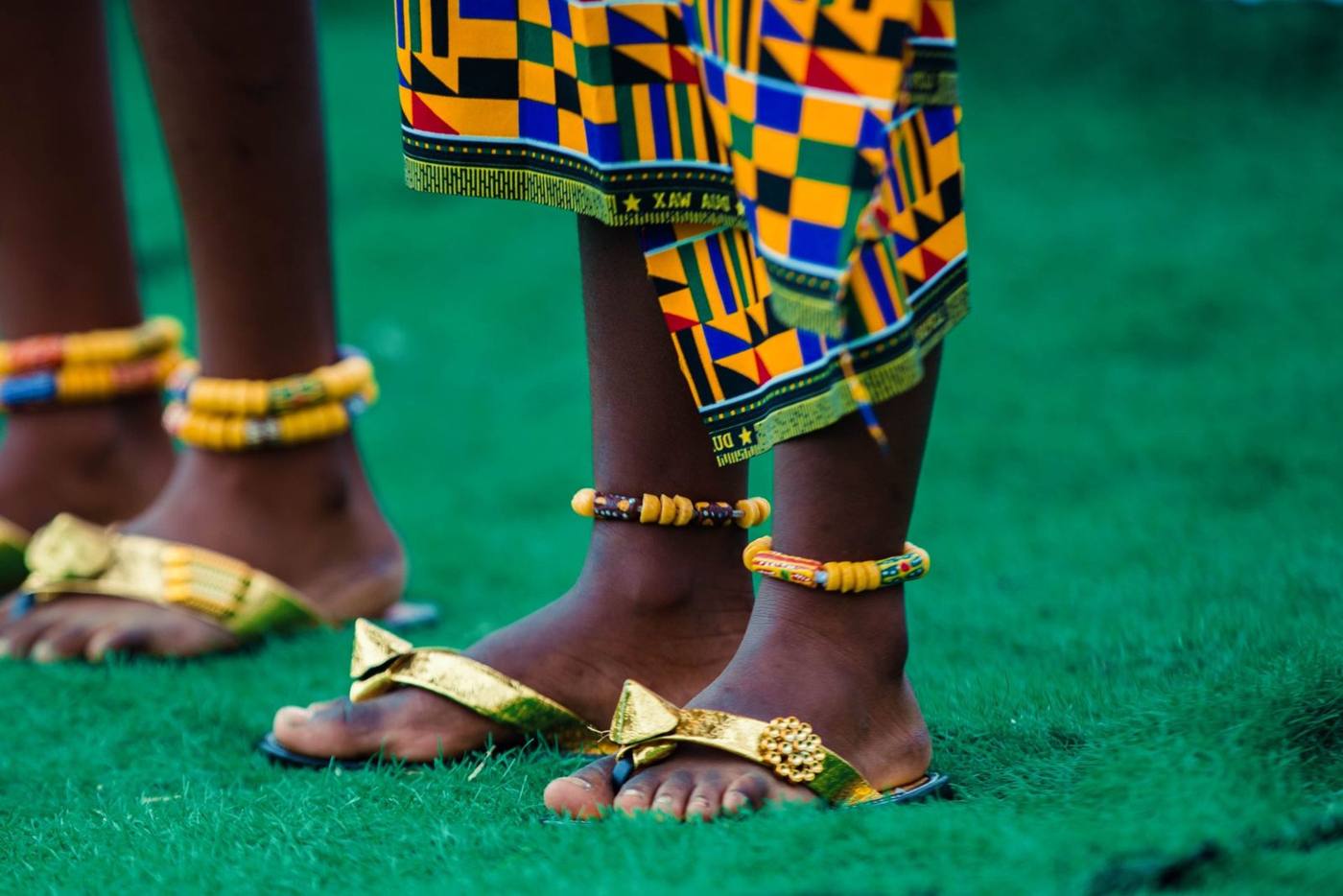 5 daysEasy
Kumasi and the Ashanti kingdom
Manhyia Palace, the huge Kejetia market, the craft villages of kente and adinkra cloth and the sacred Lake Bosumtwi.
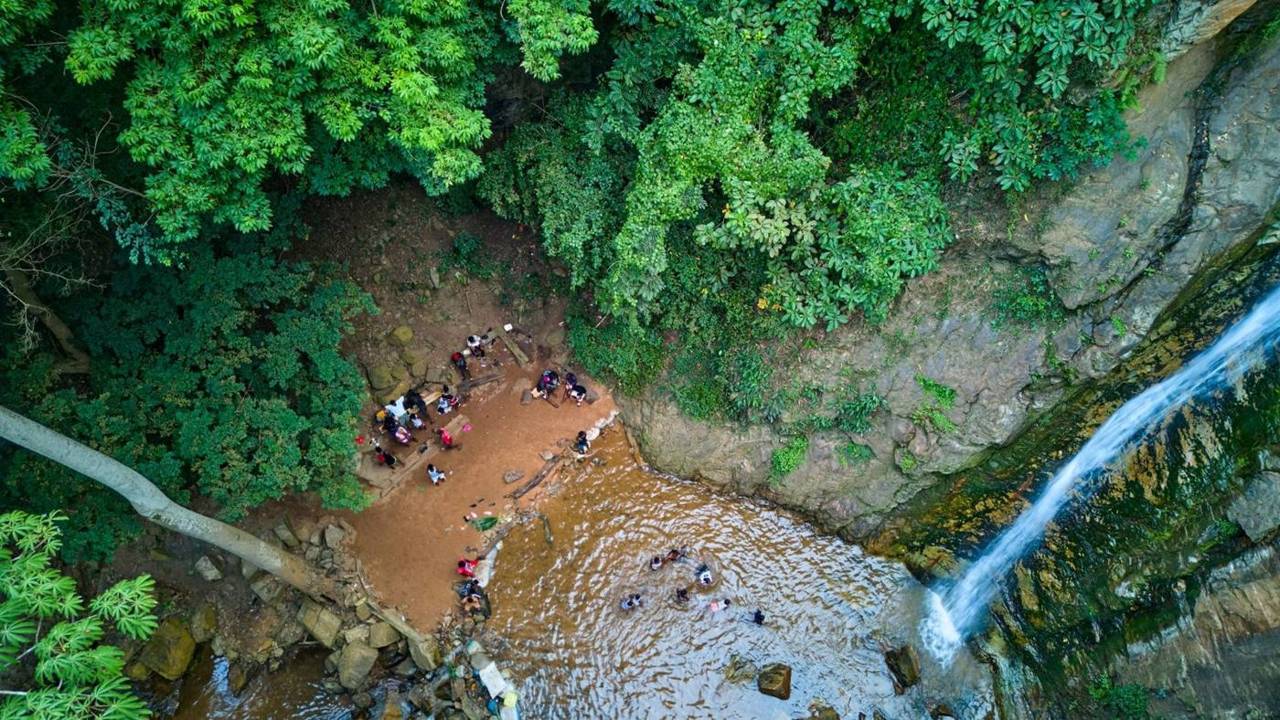 5 daysModerate
The Volta region
Wli waterfall, the highest in West Africa, Mount Afadjato, the Tafi Atome monkey sanctuary and Lake Volta.
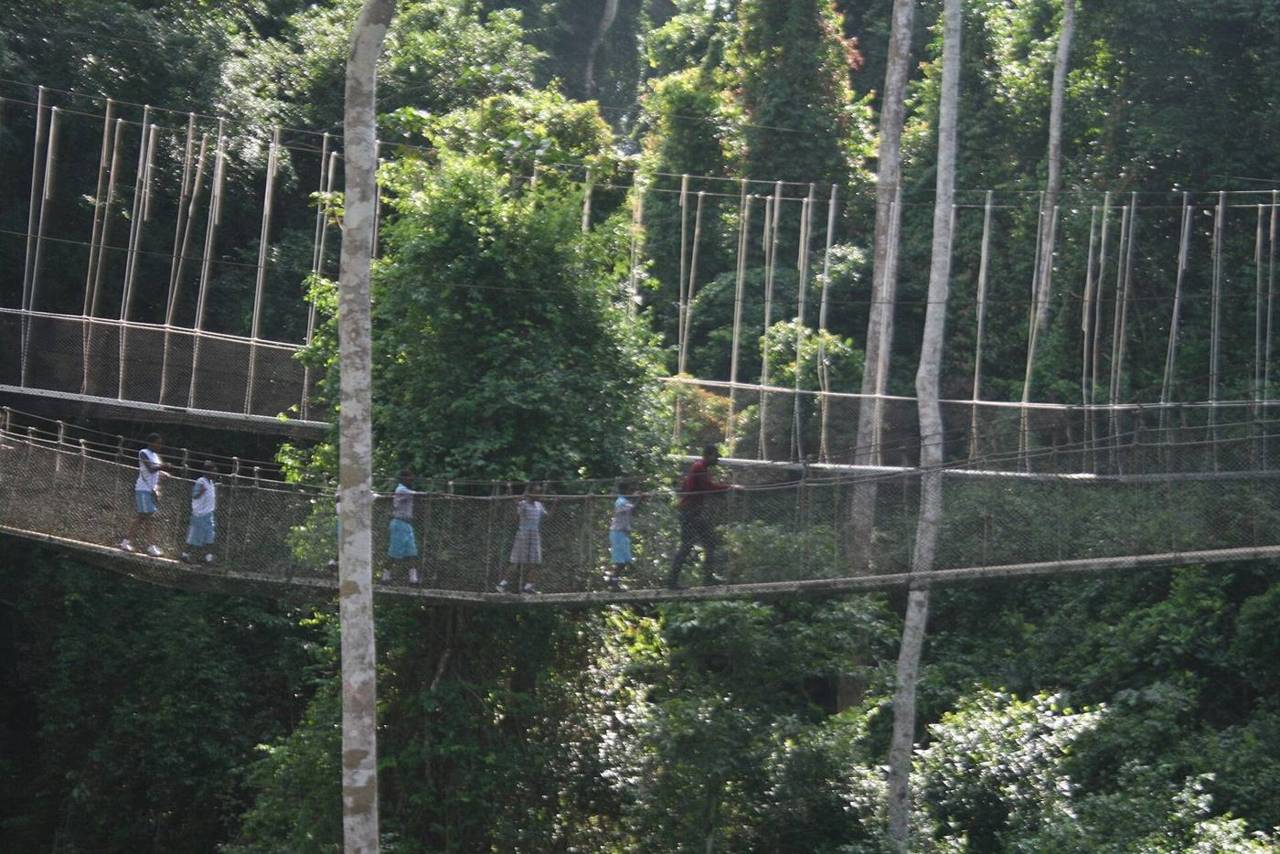 2 daysEasy
Kakum and the canopy walkway
Kakum rainforest from above, with suspension bridges 40 metres up, and a night on stilts at Hans Cottage next to the crocodiles.