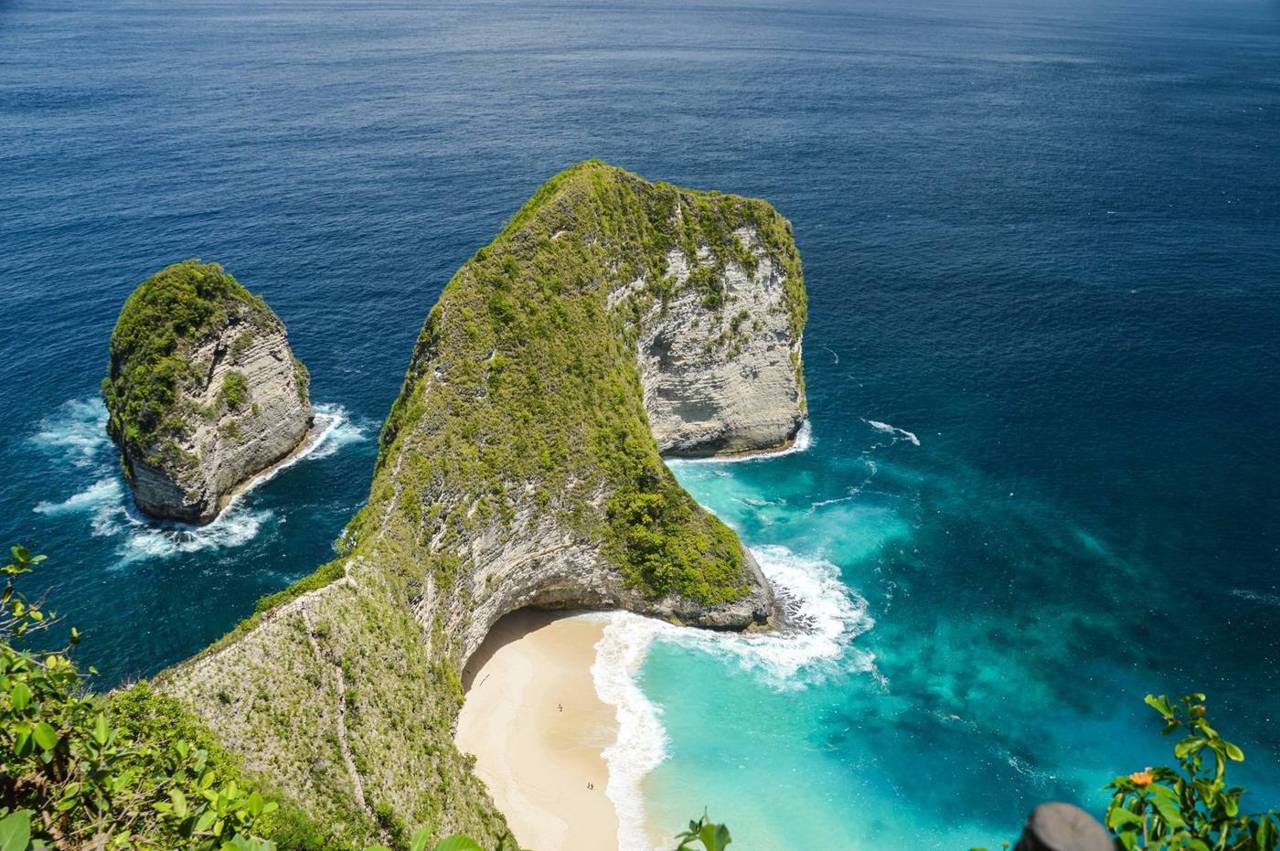
Bali, Nusa Penida and the Gili Islands
A few days in Ubud, the cliffs of Nusa Penida with its manta rays, and the Gili closed to cars Islands with turtles close to shore.
- Denpasar
- Ubud
- Nusa Penida
- Nusa Lembongan
- Gili Air
- Gili Meno
- Lombok
Day by day
- Day 1
Arrival in Bali and the road to Ubud
This trip combines the Bali of rice fields and temples with the islands around it: Nusa Penida with its cliffs and manta rays, Nusa Lembongan with its mangroves, the three car no-cost Gili islands, and finally the beaches of southern Lombok. You travel by car with driver in Bali and by fast boat between the islands.
Before you leave: Italian citizens need a valid passport and the visa on arrival, which costs 500,000 rupiah and can also be paid online before departure; in August 2026 an increase to 750,000 rupiah was proposed, check the amount before leaving. Anyone entering Bali also pays the provincial tourist levy, 150,000 rupiah per person. Other nationalities should check their own rules.
You arrive at Denpasar airport after a long flight with a stop in Asia or the Gulf. From here to Ubud, in the centre of the island, it takes about an hour and a half by car, longer with traffic.
Ubud is the cultural heart of Bali, among rice fields, forests and river valleys, with many temples, art galleries and craft workshops.
In the evening walk the main street and watch a Balinese dance performance at the Ubud palace or a village temple: the legong dance or the kecak, the chorus of men chanting seated in a circle around a fire.
Sleep in Ubud.
Practical tip: in Bali you drive on the left and traffic is chaotic. For long journeys book a car with driver for the day.
- Day 2
Rice fields and water temples
Today you discover the landscapes and temples around Ubud.
Early in the morning go to the Tegallalang rice terraces, north of Ubud. The terraces run down the sides of a valley, divided by channels and palms. Arrive before eight, when the light is soft and tourists are few. Along the paths people sometimes ask for a small donation to pass: it is normal.
Bali's rice fields are irrigated by the subak, a system of channels managed jointly by farmers and water temples, born more than a thousand years ago and recognised as a UNESCO World Heritage site.
Then go to Tirta Empul, the temple of the holy springs. Balinese people come here to purify themselves under the fountains, one after another, in stone pools. Visitors can take part respectfully: you wear a sarong and follow the order of the fountains.
In the afternoon visit Gunung Kawi, a complex of eleventh century royal tombs carved into the rock, at the bottom of a valley with rice fields. You go down a long stairway.
In the evening dine on babi guling, spiced roast suckling pig, or nasi campur, rice with many small tastings.
Sleep in Ubud.
Practical tip: in temples shoulders and legs must be covered. Always carry a sarong in your bag.
- Day 3
Ubud: the monkey forest and a cooking class
Today you stay in Ubud to get to know it better.
Early in the morning walk the Campuhan ridge, a crest between two valleys covered in tall grass, with views over palms and forest. You start near a temple by the river and walk for about an hour among the fields.
Then visit the monkey forest sanctuary, a sacred wood with moss covered temples, giant trees and hundreds of macaques. The monkeys are used to people but they are wild: they steal glasses, hats and food, and they can bite. Do not bring food, do not look them in the eye and do not touch them. The ticket is paid.
In the afternoon take a Balinese cooking class. Many classes begin with a visit to the morning market, then you cook in a family home: you prepare the spice paste, base genep, and dishes such as chicken in coconut, fish satay, vegetables with grated coconut and rice sweets. At the end you eat together.
In the evening stop at an art gallery or a woodcarving workshop in the surrounding villages: Mas for wood, Celuk for silver, Batuan for painting.
Sleep in Ubud.
Practical tip: outside the monkey forest keep your bags closed and your glasses in your pocket. Macaques are very fast.
- Day 4
By boat to Nusa Penida: Kelingking and Broken Beach
Today you leave Bali and go to Nusa Penida, the wild island off the south east coast.
Early in the morning go to Sanur harbour, about an hour from Ubud. Fast boats leave from the beach and reach Nusa Penida in about forty minutes. You get on and off the boats by walking in the water: wear water shoes and keep your bag high. Choose a company with life jackets for everyone and check the sea conditions.
Nusa Penida is poorer and less built up than Bali, with narrow potholed roads, dry hills and very high cliffs over the sea. You get around by car with driver: scooters are dangerous on the island's roads.
Go to the west side. Kelingking is the most famous cliff, a point of rock running into the sea that from above looks like a dinosaur, above a white beach. The path down to the beach is extremely steep, almost a ladder on the rock: it is dangerous and there have been accidents. Look at it from above if you are not very fit.
Then go to Broken Beach, a rock arch over a round bay, and to Angel's Billabong, a natural rock pool by the sea: do not swim if there are waves, the sea comes in suddenly.
Sleep on Nusa Penida.
Practical tip: at Kelingking and Angel's Billabong always follow the danger signs. Waves and slippery rocks have caused deaths.
- Day 5
The mantas of Manta Point and Crystal Bay
Today is the day of the sea around Nusa Penida.
In the morning leave on a snorkelling boat trip. The main stop is Manta Point, on the south coast of the island, below the cliffs. Here reef manta rays come to be cleaned by small fish: they are large flat fish up to four metres across, swimming slowly beneath the boat. Swimming above them is one of the finest moments of the trip. The water is cold and the sea often rough: it is not suitable for weak swimmers.
Keep your distance, do not touch them and do not chase them. Manta rays are protected species in Indonesia.
Trips also stop at Crystal Bay, a bay with clear water and corals, at Gamat Bay and at Toyapakeh, with coral gardens and colourful fish. Between July and October, in the same waters, the sunfish is sometimes seen, an enormous fish rising from the depths.
In the afternoon rest or go to Crystal Bay for sunset.
In the evening dine on grilled fish with sambal sauce.
Sleep on Nusa Penida.
Practical tip: before the trip take seasickness medicine. The ride to Manta Point can be very rough. Sit at the back of the boat, where it moves less.
- Day 6
Nusa Lembongan and the mangroves by canoe
Today you move to Nusa Lembongan, the small island next to Nusa Penida.
A short boat links the two islands. Lembongan is smaller, quieter and easier to get around: by scooter, bicycle or on foot.
In the morning go to the mangroves, in the north east of the island. You board a paddled canoe, steered by a boatman, which enters the narrow channels between the tree roots. The water is shallow and green, and below you see fish and crabs. It is a calm and silent place.
Then cross the yellow bridge linking Lembongan to the small island of Ceningan. From Ceningan you see a blue lagoon where seaweed is farmed: residents spread it in the sun and sell it to the food industry.
In the afternoon go to Devil's Tear, a rocky shore where waves crash and throw up very high spray. At sunset the sun creates rainbows in the spray. Do not go near the edge: the waves come without warning.
In the evening dine on Jungutbatu beach, with a view of Bali's Agung volcano across the sea.
Sleep on Nusa Lembongan.
Practical tip: on Lembongan and Penida there are few cash machines. Bring cash from the mainland.
- Day 7
By fast boat to the Gili Islands
Today you cross the Lombok Strait and reach the Gili Islands.
From Nusa Lembongan or Padang Bai, on the coast of Bali, fast boats leave for the Gilis. The trip takes one to three hours, depending on the port and the stops. The Lombok Strait has strong currents and the sea is often rough, especially in the afternoon. Choose a reliable company, with life jackets and radio, and do not board if the sea is too rough: there have been accidents in the past. Check the times, which change with the season.
The Gilis are three small islands of sand and coral off the north west coast of Lombok: Gili Trawangan, the largest and liveliest, Gili Meno, the quietest, and Gili Air, in between. There are no cars or scooters on the islands: you get around on foot, by bicycle or by cidomo, horse drawn carts. Prefer the bicycle: the horses work hard, in the heat.
On arrival at Gili Trawangan a visitor fee is sometimes charged: check the amount.
In the afternoon walk on the beach and take your first swim. The water is clear and warm all year.
Sleep on Gili Trawangan.
Practical tip: on the Gilis luggage is carried by hand or by cart from the port to your lodging. Travel light.
- Day 8
Gili Trawangan: turtles and bicycles
Today you discover Gili Trawangan from the sea and from the land.
In the morning go snorkelling. The waters around the Gilis are famous for sea turtles: green and hawksbill turtles eating algae on the shallow seabed, often a few metres from shore. From the north east coast of Gili Trawangan you enter the water and swim with the current, which pushes north: get out further along and walk back. The currents between the islands are strong: do not swim towards the neighbouring islands.
You can also take glass bottom or snorkelling boat trips, which pass the three islands and stop at the best spots, including a group of underwater statues off Gili Meno. Certified divers can dive with an authorised dive centre.
In the afternoon rent a bicycle and ride round the island, about seven kilometres. On the west side the beach is quieter and the swings over the water are the place for sunset. The sun goes down behind Agung volcano, on the island of Bali.
In the evening there is the night market near the port, with stalls of grilled fish, satay and sweets.
Sleep on Gili Trawangan.
Practical tip: do not touch the turtles and do not chase them. Always leave them a way to the surface to breathe.
- Day 9
Gili Meno, the quiet island
Today you move to Gili Meno for a few quieter days.
A small public boat links the islands several times a day, in a few minutes. Check the times at the port.
Gili Meno is the smallest and quietest of the three. There are few places to stay, almost empty beaches and a salt lake in the interior. You walk round it in about an hour and a half. At night, without lights, the sky is full of stars.
In the morning snorkel on the west coast, where offshore lies the group of submerged human statues, an artwork in shallow water that has become a reef for corals. Turtles are often around. At low tide the water is shallow: mind the corals.
In the afternoon rest in the shade of a palm, read, swim. On the north east coast the sea is shallow and calm, suitable even for children.
In the evening look for a simple dinner on the beach, with the fish of the day, and watch the sunset from the west coast, with the outlines of Agung and Batur in the background.
Sleep on Gili Meno.
Practical tip: on the Gilis, especially Meno, shower water is often brackish and the power can go off. Be patient and bring a torch.
- Day 10
Gili Air and the last day on the islands
Today is the last day on the Gilis, with a visit to Gili Air.
In the morning take the public boat from Gili Meno to Gili Air. Gili Air is halfway between the other two: livelier than Meno, quieter than Trawangan. The village of the Sasak, the people of Lombok, is still inhabited in the interior of the island, with its mosque and houses among the palms.
Walk along the coast or rent a bicycle to go round the island. Stop for snorkelling on the east coast, where the corals are close to shore.
At midday try a Lombok lunch: ayam taliwang, very spicy grilled chicken, and plecing kangkung, water spinach with tomato and chilli sauce. Lombok is famous for spicy dishes: the name of the island, according to tradition, recalls the chilli.
In the afternoon return to Gili Meno or stay on Gili Air for the night. At sunset watch the sun go down behind Bali again.
The population of the Gilis is largely Muslim: during Ramadan and at midday on Fridays respect prayer times and dress modestly away from the beaches.
Sleep on Gili Air or Gili Meno.
Practical tip: away from the beach cover your shoulders and legs. In the island villages swimwear is not worn.
- Day 11
Lombok and the southern beaches
Today you leave the islands and cross Lombok to the south coast.
From Gili Air a short boat takes you to Bangsal, the port on the Lombok coast. From here a car with driver crosses the island southwards, in about two and a half hours. The road passes rice fields, villages and hills, with the outline of Rinjani volcano to the north.
Along the way you can stop at a traditional Sasak village, such as Sade, with straw and bamboo houses and granaries with curved roofs. Women weave fabrics by hand on wooden looms. It is a very touristy village, but it shows traditional architecture well.
In the afternoon you reach Kuta Lombok, a seaside village surrounded by green hills and white sand bays. It is the base for the southern beaches: Tanjung Aan, with turquoise water and a panoramic hill, Mawun, a quiet enclosed bay, Selong Belanak, a long beach with easy waves for learning to surf.
The Mandalika area, around Kuta, is changing fast, with new hotels and a motorcycle racing circuit.
At sunset climb Merese hill, above Tanjung Aan, to see the bays from above.
Sleep in Kuta Lombok.
Practical tip: on the southern beaches there are very insistent vendors, including children. A polite and firm no is enough.
- Day 12
Departure from Lombok
On the last day you leave from Lombok international airport, about half an hour from Kuta Lombok.
If your flight is in the afternoon, in the morning take a last swim at Tanjung Aan or a surf lesson at Selong Belanak, with the soft morning waves.
From Lombok airport there are flights to Bali, Jakarta and some Asian cities, such as Singapore and Kuala Lumpur, from where you take the flight to Europe. Check the times and leave a margin between flights.
What to take home: hand woven Lombok fabrics, terracotta pottery from the village of Banyumulek, Lombok cultured pearls bought in reputable shops, Bali coffee, sarongs, carved wooden objects from Ubud.
This trip shows an Indonesia ranging from Balinese culture, with its temples and daily ceremonies, to the nature of the islands, with the cliffs of Penida, the mantas, the Gili turtles and the beaches of Lombok.
If you have more time, you can add three days to climb Rinjani volcano, only with an authorised agency and in good physical shape, or the Sendang Gile and Tiu Kelep waterfalls, in northern Lombok.
Practical tip: keep some rupiah for a last coffee. At the airport prices are much higher. Check the departure tax rules with your airline.
Indonesia's easiest beach trip, for those who want to rest after some culture. Fast boats between the islands can be rough: choose reliable companies and do not travel in heavy seas. Gili Trawangan is the party island, while Gili Air and Meno are more relaxed.
Before you go
- Documents and visa
- Passport with at least six months' validity. Visa on arrival 500,000 rupiah for 30 days, extendable once, or online on the official immigration website. In Bali you also pay the 150,000 rupiah tourist levy.
- Health and vaccines
- No compulsory vaccines arriving from Europe. Protect yourself against mosquitoes because of dengue; Bali has rabies, so keep away from dogs and monkeys. The eastern regions carry malaria risk: ask your doctor. Emergencies: 110 police, 112 general number.
- Money and payments
- Indonesian rupiah. Cards work in hotels and shops in tourist areas; QR payments are widespread; markets and villages need cash.
- Power sockets
- Types C and F, 230 volts: the same round-pin sockets as much of Europe.
- Time zone
- The country has three time zones. Java is UTC+7, Bali UTC+8, with no daylight saving time.
- Safety
- Tourist areas are generally calm. The United States rates Indonesia level 2 and the Papua regions level 4. Active volcanoes may close on alert. Very severe drug penalties. Official advice: GOV.UK.
Information checked in November 2026 for Italian and EU citizens. Rules change: always check before you travel.
Variations
In 8 days: Ubud, Nusa Penida and the Gilis, returning to Bali by boat without Lombok.
In 16 days: add Bali's north coast with Munduk and Menjangan, or the Rinjani climb from Lombok.
Frequently asked questions
What documents do I need?
A valid passport and the 500,000 rupiah visa on arrival, with an increase proposed in August 2026: check the amount. In Bali you also pay the 150,000 rupiah tourist levy. Other nationalities should check their own rules.
Are the fast boats safe?
The Lombok Strait has strong currents and there have been accidents. Choose companies with life jackets for everyone, check the weather and do not leave when the sea is very rough.
When can you see the mantas?
At Manta Point the mantas are seen almost all year, but the sea is calmer from April to October, in the dry season.
Indicative itinerary written by World Atlas. Before booking, check timetables, seasonal openings, documents and safety.
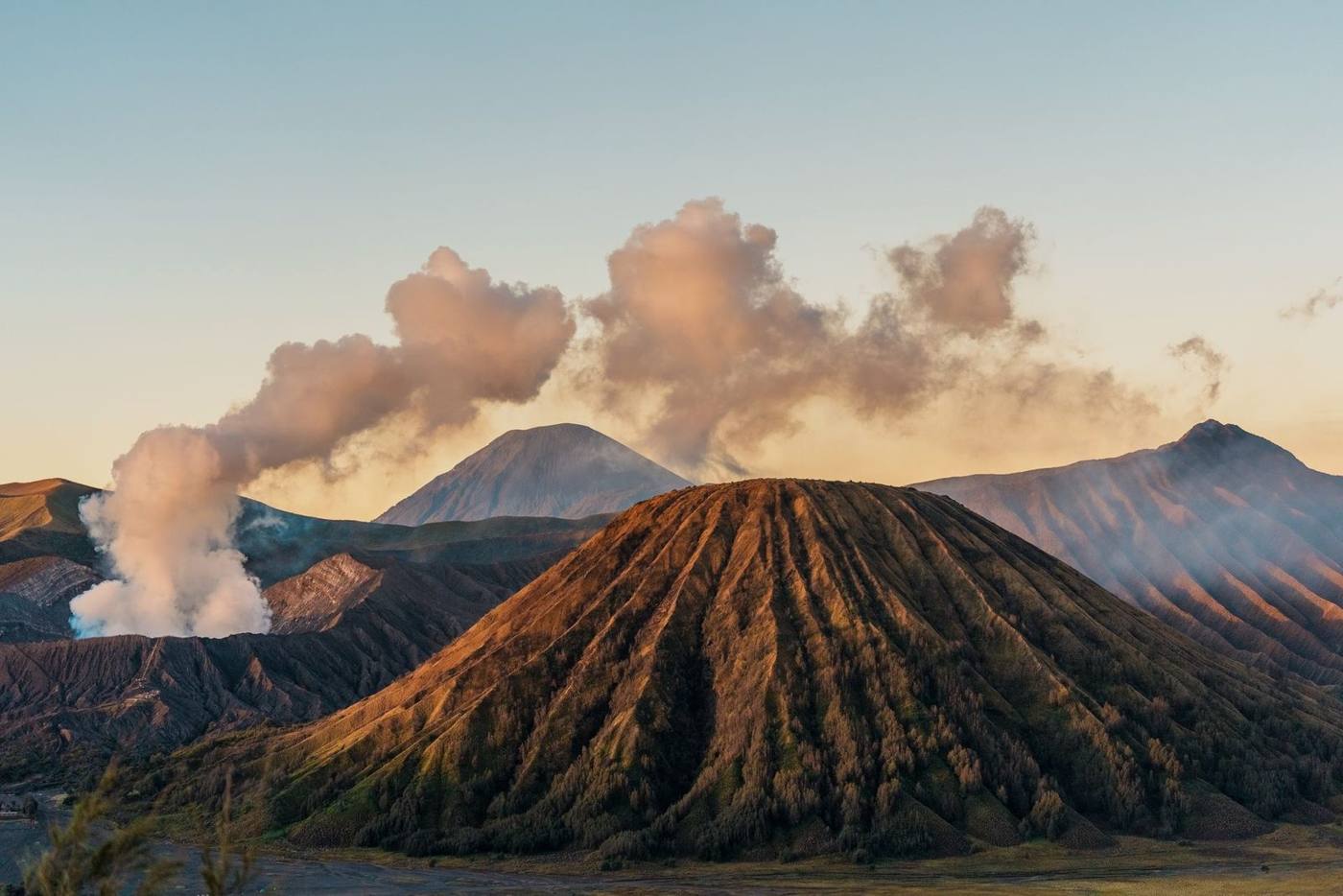 10 daysModerate
Java: Borobudur, Bromo and Ijen
The temples of Borobudur and Prambanan, sunrise over Mount Bromo and the acid lake of Ijen, ending with the ferry to Bali.
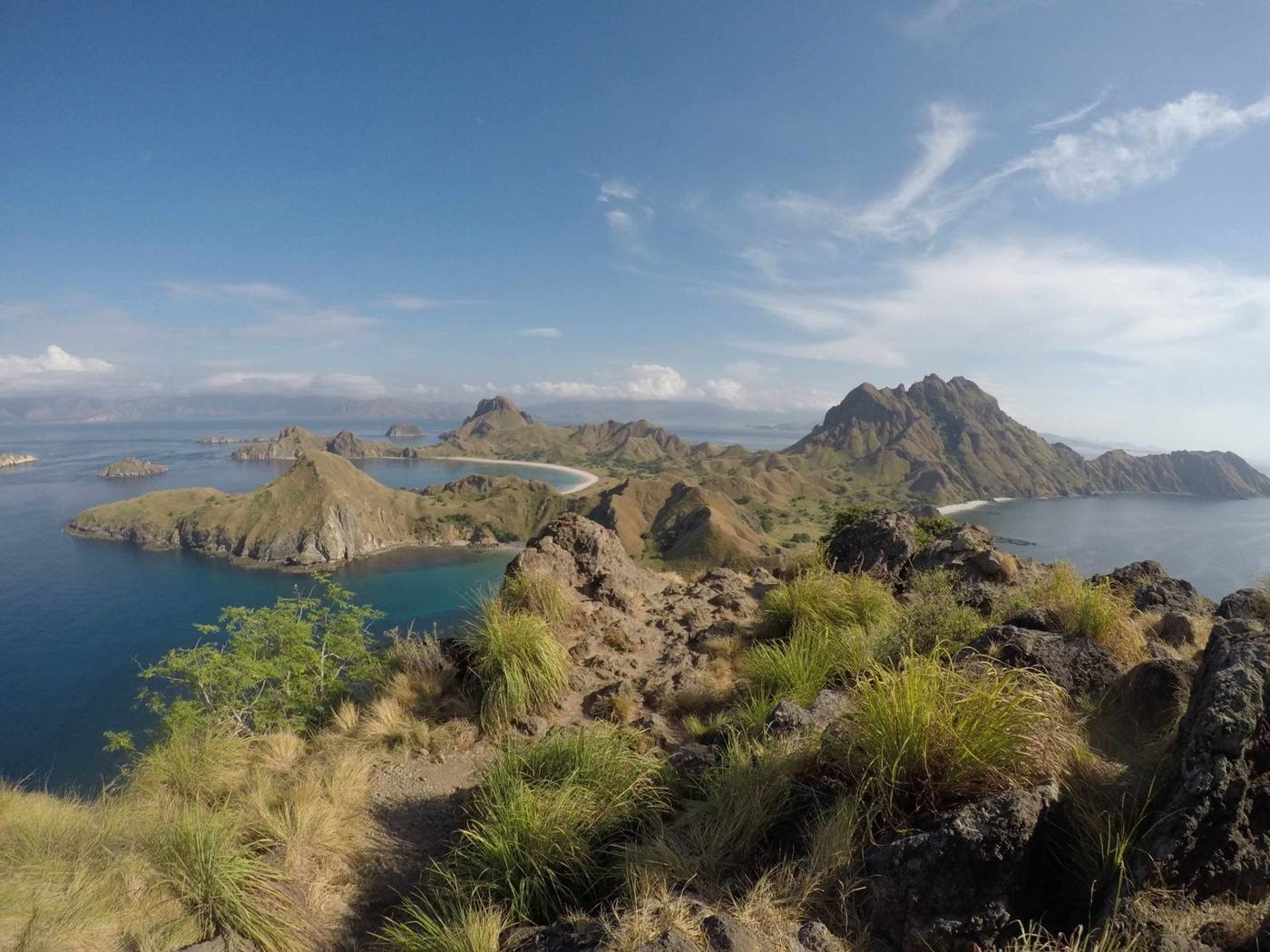 8 daysModerate
Komodo and Flores by boat
Two nights aboard among the Komodo dragons, the view from Padar and the manta rays, then the coloured lakes of Kelimutu.
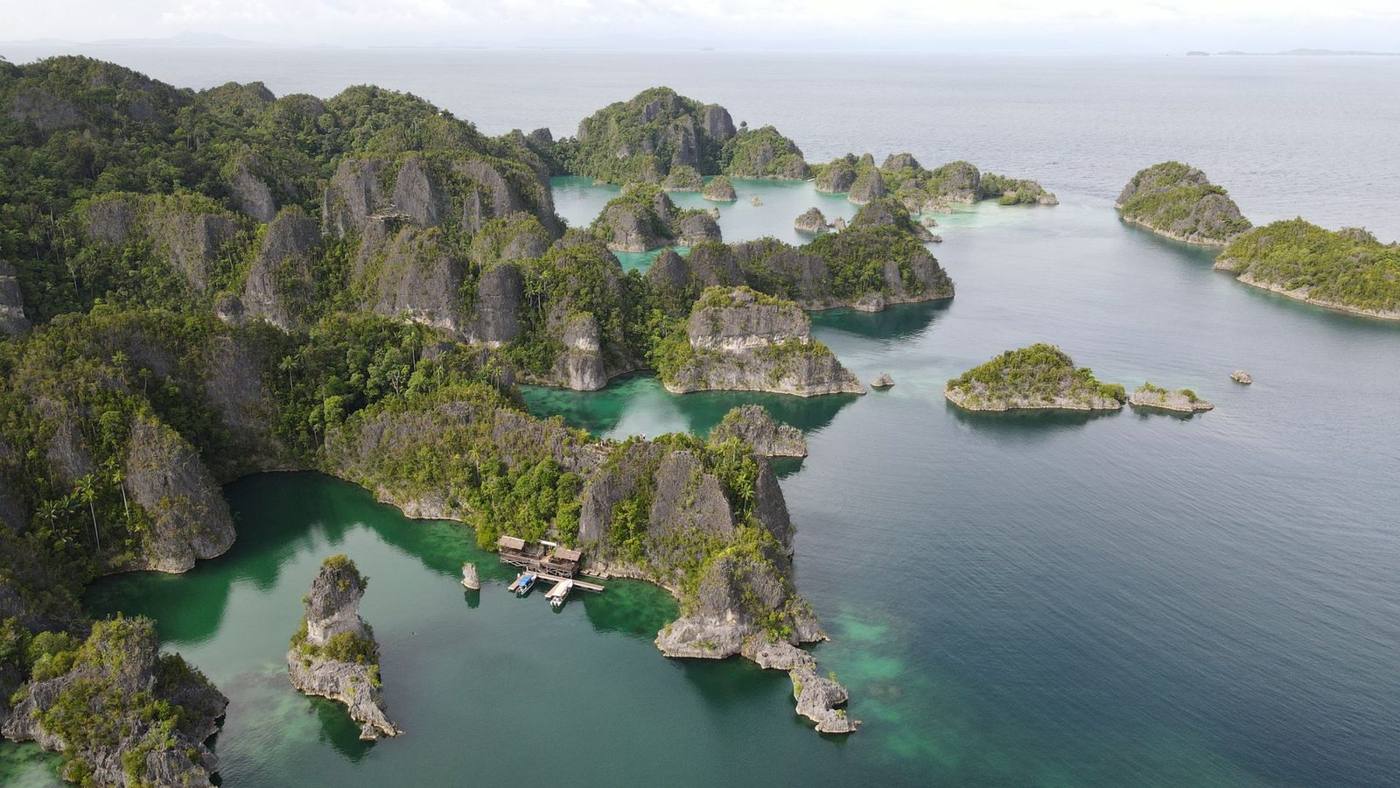 10 daysModerate
Raja Ampat, the richest sea on earth
Karst islands, the reef with the greatest variety of species on the planet and birds of paradise at dawn.