Belitung
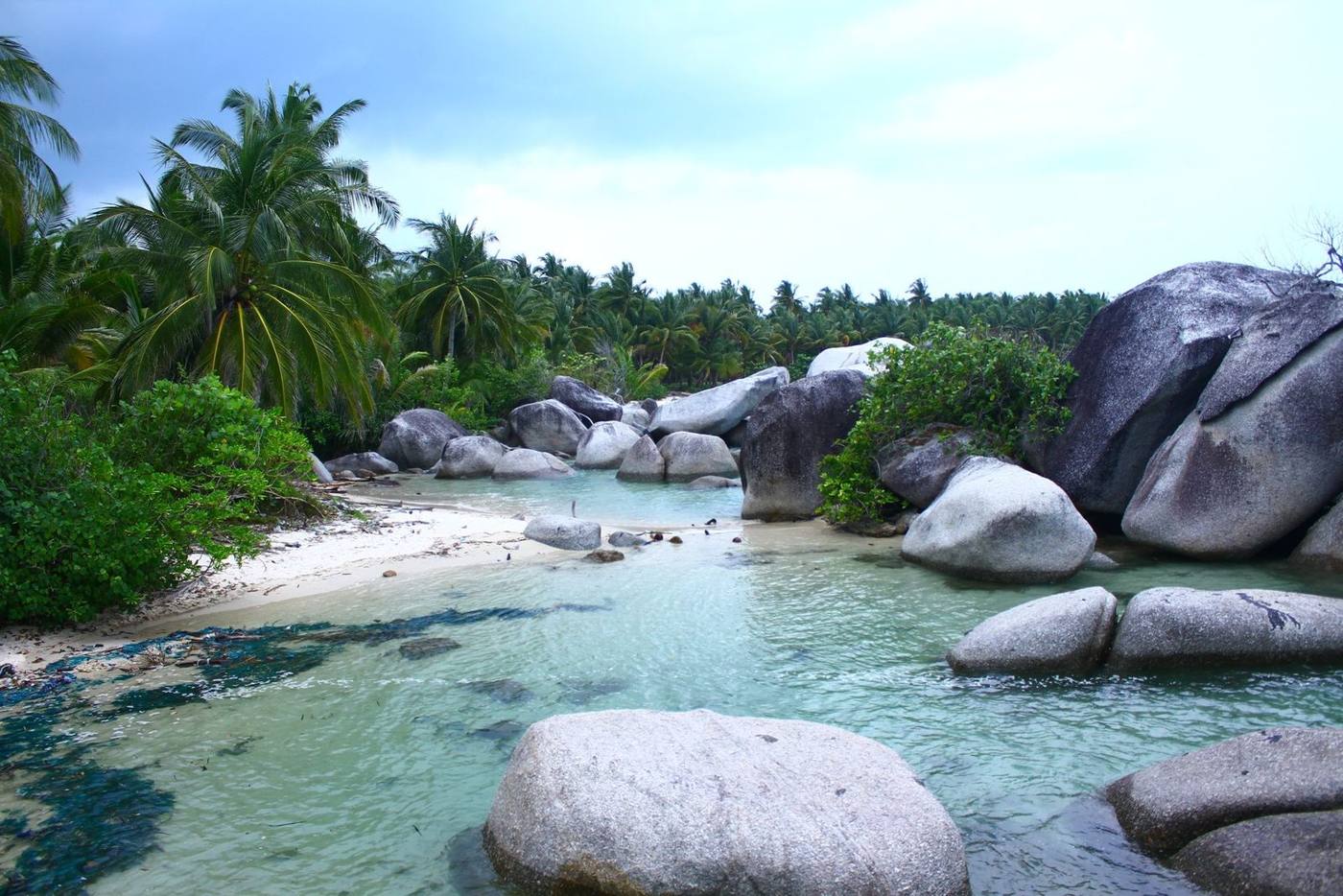
An island between Sumatra and Borneo, an hour's flight from Jakarta, famous for white beaches with huge polished granite boulders, calm clear water, islets reached by boat and the Dutch lighthouse of Lengkuas.
- Jakarta
- Tanjung Pandan
- Tanjung Tinggi
- Pulau Lengkuas
- Tanjung Kelayang
Day by day
- Day 1
The flight from Jakarta and Tanjung Pandan
Belitung is an island between Sumatra and Borneo, in the Java Sea, still little known to foreign travellers and much loved by Indonesians. It is famous for its white-sand beaches and turquoise water dotted with huge rounded granite boulders, some as big as houses, which look as if giants had placed them there. For more than a century the island lived on tin mining, begun by the Dutch in the nineteenth century; then, when the mines declined, it turned to tourism, helped by the success of an Indonesian novel and film set here, Laskar Pelangi, which tells the story of a poor school in a mining village.
From Jakarta airport the flight to Tanjung Pandan, the island's main town, takes about an hour. On the island it is best to hire a car with driver or a scooter, because public transport is almost non-existent.
In the afternoon look around Tanjung Pandan, a quiet town with a fishing harbour, a market and a few colonial buildings. Visit the small Belitung museum, which tells the story of the tin mines and the ships wrecked off the island, including a ninth-century Arab ship found with thousands of Chinese ceramics.
At sunset go to Tanjung Pendam beach, near the centre, where local people gather in the evening.
In the evening try local food: gangan, a spicy, sour fish soup with pineapple, and mie Belitung, noodles in prawn broth. Practical tip: to enter Indonesia, Italian citizens can get a visa on arrival, which costs 500,000 rupiah.
- Day 2
Tanjung Tinggi and Tanjung Kelayang, the granite boulder beaches
Today is for the beaches of the island's north-west, about half an hour to three quarters of an hour by car from Tanjung Pandan.
In the morning go to Tanjung Tinggi, Belitung's most famous beach, where the film Laskar Pelangi was shot. It is a bay of fine white sand enclosed by huge grey and pinkish granite boulders, smoothed into round shapes by sea and wind. Between the boulders small natural pools of clear, calm water form, perfect for a swim. Climb carefully onto the boulders for the view over the bay and walk through the narrow passages between the rocks, which create hidden corners. Early in the morning the beach is almost empty and the light is perfect.
In the afternoon continue to Tanjung Kelayang, a few kilometres away, a long beach with colourful fishing boats and, offshore, an islet of granite boulders shaped like a bird's head. From here boats leave for the next day's island-hopping trip, which you can arrange directly on the beach with the boatmen.
Towards sunset return to Tanjung Tinggi or stop at Tanjung Binga, a fishing village with houses on stilts, where the boats come home at dusk.
In the evening eat grilled fish at one of the small beach restaurants, with sambal, the chilli sauce.
Practical tip: at weekends and during Indonesian holidays the main beaches are busier; if you can, plan your trip for weekdays.
- Day 3
By boat: Lengkuas lighthouse, Batu Berlayar and snorkelling
Early in the morning set off by boat from Tanjung Kelayang for the island-hopping trip, the finest outing on Belitung. Traditional wooden boats take small groups or families; the trip usually lasts from half a day to a full day.
The first stop is Pulau Batu Berlayar, the island of the sailing rock: a tiny islet of white sand with large granite boulders, one of which, seen from afar, looks like a boat's sail. Then the boat stops at Pulau Pasir, a sandbank that emerges only at low tide in the middle of the sea, where you often see starfish.
The main stop is Pulau Lengkuas, with its white lighthouse about fifty metres tall, built by the Dutch in 1882 and still working. When it is open, you can climb the spiral staircase to the top for an extraordinary view over the islets, the granite boulders and the sea in every shade from green to blue. Around the island there is a coral reef for snorkelling among colourful fish: boats usually provide mask and fins.
In the afternoon stop at Pulau Burung, bird island, with more granite boulders and a quiet beach, and return to Tanjung Kelayang.
Practical tip: the sea is calmer and the water clearer between April and October; between November and February, with the monsoon, the sea can be rough and boat trips cancelled. Bring reef-safe sunscreen, a hat and water.
- Day 4
East Belitung and the kaolin lake
In the morning drive east. On the way, not far from Tanjung Pandan, stop at the kaolin lake, an abandoned quarry turned into a lake of intense blue water surrounded by hills of brilliant white clay. The contrast between the white kaolin and the turquoise water is striking and recalls the island's mining past. Do not swim: the water and ground are not suitable.
Continue to East Belitung, about two hours from Tanjung Pandan, through oil palm and pepper plantations, woods and villages.
In Gantong visit the replica of the wooden school from the film Laskar Pelangi, rebuilt on a hill, and the museum of literature created by the writer Andrea Hirata, who was born here and told of his own childhood in a tin-mining village in his novel. The small, colourful museum tells the story of the school and the books, and of the miners' families.
In the afternoon go to Manggar, the main town in the east, known as the city of a thousand and one coffee shops: coffee is a habit rooted in the mining days, when miners met to drink coffee before and after work. Sit in one of the small traditional coffee shops and try kopi, the local coffee, served with sugar or condensed milk.
Towards evening return to Tanjung Pandan or stop at Serdang beach on the east coast. Practical tip: the roads are good but poorly lit at night; plan to drive back in daylight.
- Day 5
Back to Jakarta
On the last morning enjoy Belitung at an easy pace. If your flight is in the afternoon, go early to one of the beaches near Tanjung Pandan for a last swim, or return to Tanjung Tinggi, which is almost deserted early in the morning.
Alternatively visit the Tanjung Pandan market, where women sell dried fish, prawns, tropical fruit and local sweets, and buy a few specialities to take home, such as kerupuk, crispy fish or prawn crackers, or Belitung white pepper, which is very fragrant.
If you are interested in history, stop in the old Chinese quarter, with its temple and merchants' houses: many islanders descend from Chinese miners who came in the nineteenth century to work in the tin mines, and their culture can still be felt in the food and the festivals.
Then go to Tanjung Pandan airport for the flight back to Jakarta, about an hour. From Jakarta you can catch your international flight or continue travelling in Indonesia, for example to central Java with Yogyakarta and Borobudur, or to Bali.
Practical tip: there are several flights a day between Jakarta and Belitung, but during Indonesian holidays, such as the end of Ramadan, tickets sell out quickly and prices rise: book ahead. The parts of Indonesia the United States advises against are in Papua, very far from Belitung.
A simple and beautiful seaside, chosen mostly by Indonesian tourists: crowded at weekends and on local holidays. Ideal as a break after Jakarta or Java. The sea is clearest in the dry season. Italian citizens need a visa on arrival (500,000 rupiah, best requested online beforehand as an e-VOA); an increase has been proposed: check the amount before leaving.
Before you go
- Documents and visa
- Passport with at least six months' validity. Visa on arrival 500,000 rupiah for 30 days, extendable once, or online on the official immigration website. In Bali you also pay the 150,000 rupiah tourist levy.
- Health and vaccines
- No compulsory vaccines arriving from Europe. Protect yourself against mosquitoes because of dengue; Bali has rabies, so keep away from dogs and monkeys. The eastern regions carry malaria risk: ask your doctor. Emergencies: 110 police, 112 general number.
- Money and payments
- Indonesian rupiah. Cards work in hotels and shops in tourist areas; QR payments are widespread; markets and villages need cash.
- Power sockets
- Types C and F, 230 volts: the same round-pin sockets as much of Europe.
- Time zone
- The country has three time zones. Java is UTC+7, Bali UTC+8, with no daylight saving time.
- Safety
- Tourist areas are generally calm. The United States rates Indonesia level 2 and the Papua regions level 4. Active volcanoes may close on alert. Very severe drug penalties. Official advice: GOV.UK.
Information checked in November 2026 for Italian and EU citizens. Rules change: always check before you travel.
Variations
In 3 days: the north-west beaches on day one and the island-hopping boat trip on day two, returning on day three.
In 8 days: combine Belitung with Jakarta and central Java, with Yogyakarta, Borobudur and Prambanan.
Frequently asked questions
When is the best time to go?
From April to October, in the drier season, with calm, clear sea. From November to February it rains more and boat trips may be cancelled.
Do I need to hire transport?
Yes, public transport is almost non-existent on the island: a car with driver or a scooter is the best way to get around.
Can I swim everywhere?
On the main beaches yes, with calm sea in the dry season. Do not swim in the kaolin lakes or old quarries.
Indicative itinerary written by World Atlas. Before booking, check timetables, seasonal openings, documents and safety.
 8 daysEasy
Bali beyond the beaches
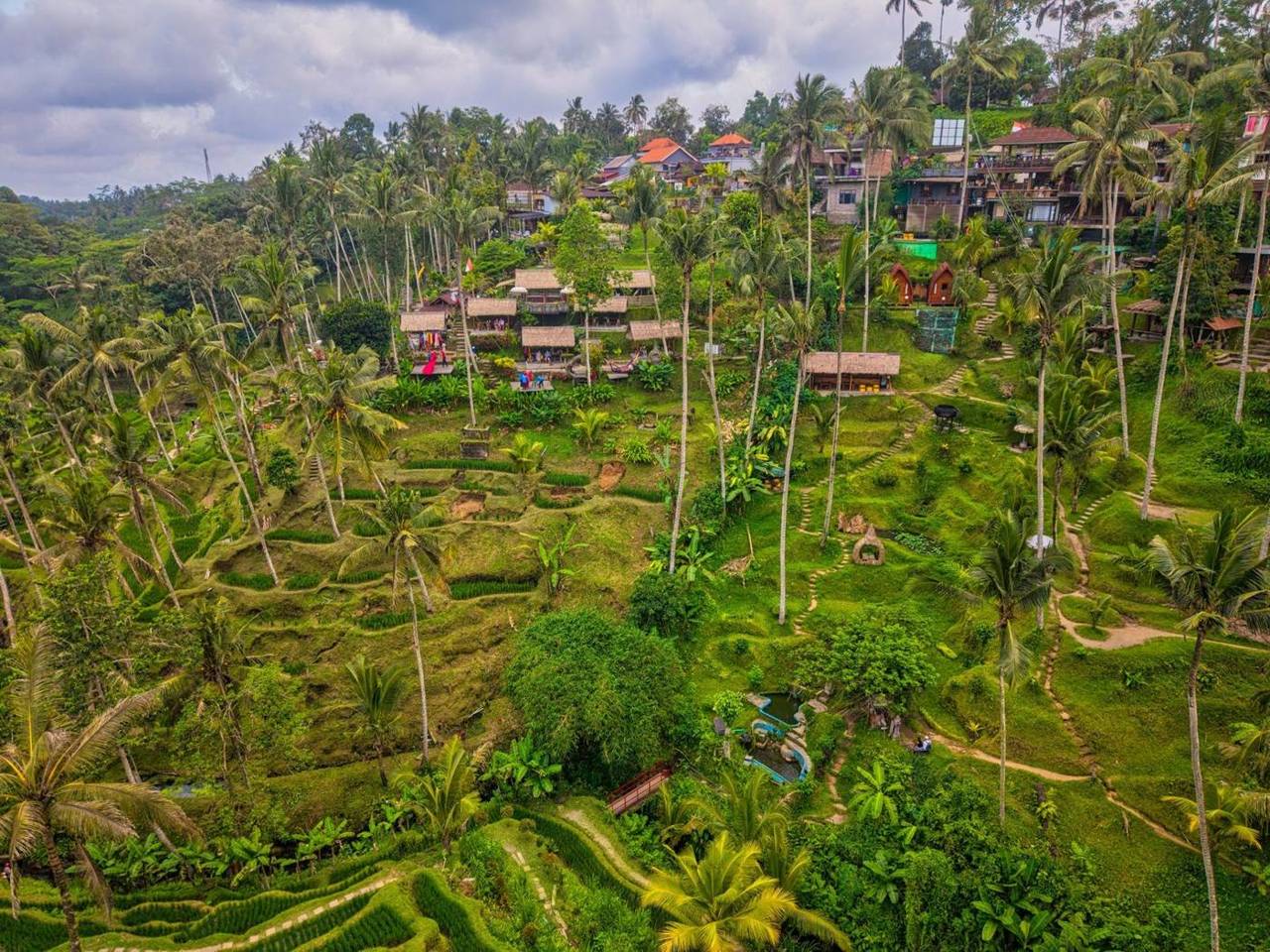
The rice terraces of Ubud and Sidemen, water temples, the lakes of Munduk and the quiet coast of Amed.
 12 daysEasy
Bali, Nusa Penida and the Gili Islands
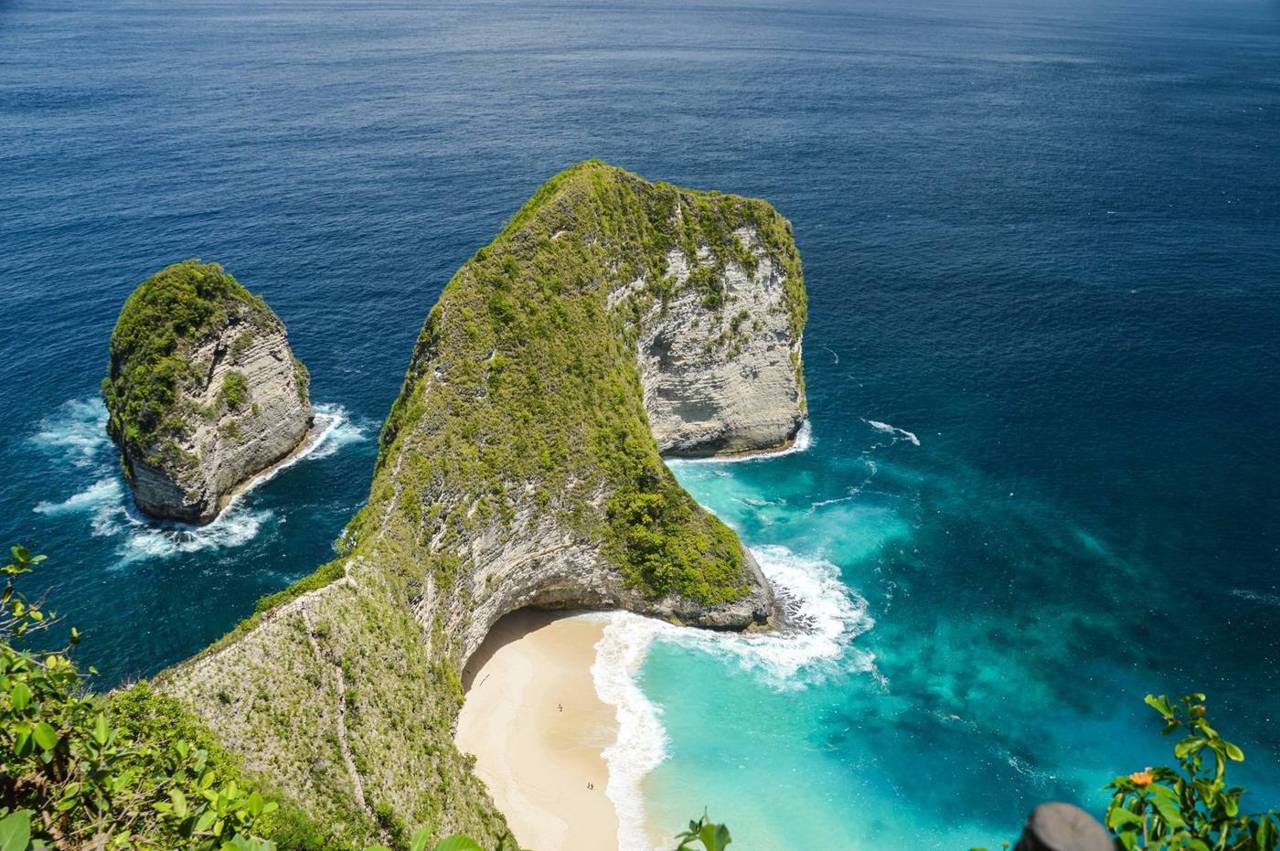
A few days in Ubud, the cliffs of Nusa Penida with its manta rays, and the Gili closed to cars Islands with turtles close to shore.
 10 daysModerate
Java: Borobudur, Bromo and Ijen
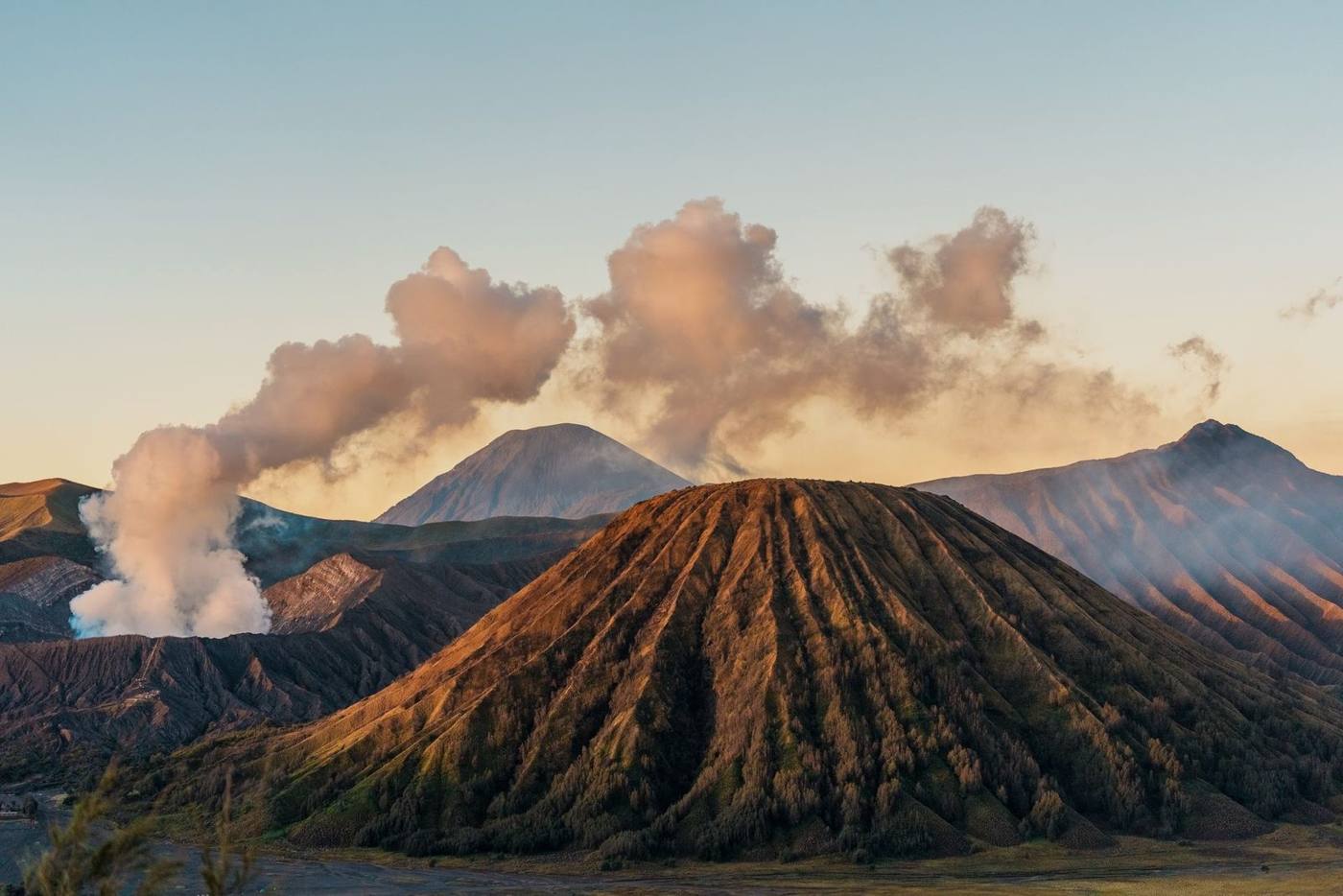
The temples of Borobudur and Prambanan, sunrise over Mount Bromo and the acid lake of Ijen, ending with the ferry to Bali.