The complete Yucatán: Maya sites, cenotes and Calakmul
The whole peninsula without rushing: Cobá and Ek Balam, where you can still climb the pyramids, Uxmal, the flamingos of Celestún, Calakmul in the forest and the Bacalar lagoon.
- Cancún
- Valladolid
- Ek Balam
- Chichén Itzá
- Mérida
- Celestún
- Uxmal
- Calakmul
- Bacalar
- Tulum
Day by day
- Day 1
Arrival in Cancún and the road to Valladolid
This trip goes all the way round the Yucatán Peninsula by car: the great Maya cities of Chichén Itzá, Uxmal and Calakmul, the cenotes, the freshwater wells hidden in the rock, the colonial city of Mérida, the flamingos of Celestún, the Bacalar lagoon and the sea at Tulum. You drive on good and almost always straight roads, with one long leg towards the southern forest.
Before you leave: Italian citizens need a valid passport; check Mexico's entry requirements beforehand, as they can change. Other nationalities should check their own rules. The United States rates the states of Yucatán and Campeche at level 1, the lowest, and Quintana Roo, where Cancún, Bacalar and Tulum are, at level 2, meaning increased caution.
You arrive at Cancún airport, almost always with a stop. Pick up the rental car with full insurance and check the car carefully before leaving.
Leave the coast straight away and drive west to Valladolid, about two hours on the motorway. Valladolid is a quiet colonial town, with low coloured houses, the square with its cathedral and the convent of San Bernardino.
In the evening walk along the Calzada de los Frailes, the most beautiful street in town, and dine on cochinita pibil, pork marinated in achiote and slow cooked.
Sleep in Valladolid.
Practical tip: Yucatán motorways have high tolls. Keep cash in pesos for the toll booths.
- Day 2
Ek Balam and the cenotes
Today you see a little known Maya city and swim in the cenotes.
Early in the morning go to Ek Balam, about half an hour north of Valladolid. It is a Maya city surrounded by forest, with walls, plazas and a great acropolis. On the main pyramid, under a roof, a very well carved stucco facade is preserved, with winged figures and a great monster mouth representing the entrance to the underworld. Check whether climbing the pyramid is still allowed and how much the ticket costs.
Near the site there is a cenote in the forest, where you go down a wooden staircase and swim in clear fresh water.
Cenotes are natural wells formed when limestone collapses over an underground river. For the Maya they were the water source and the gateway to the world of the gods. There are thousands in the Yucatán. Some are open to the sky, others are caves with a hole in the roof through which light enters.
In the afternoon, around Valladolid, visit one or two cenotes: some are in caves, with tree roots reaching down to the water. Entry is paid: check prices.
Sleep in Valladolid.
Practical tip: before entering a cenote take a shower and do not use creams. Many cenotes ask this to protect the water.
- Day 3
Chichén Itzá at opening time and Izamal, the yellow city
Today you visit the most famous Maya city and the yellowest city in Mexico.
Arrive at Chichén Itzá before opening: it is about forty minutes from Valladolid. In 2026 the single ticket costs 697 pesos for foreign visitors. In the first hours the site is almost empty and the light is beautiful; from ten the coaches arrive from the coast.
Chichén Itzá is a UNESCO World Heritage site and one of the new seven wonders of the world. In the centre is the pyramid of Kukulkán, El Castillo, with 365 steps in all, like the days of the year. At the spring and autumn equinoxes, in the afternoon, the shadow of the steps draws a serpent descending the staircase. Climbing is not allowed.
Around it are the great ball court, the temple of the warriors with its thousand columns, the platform of skulls and the sacred cenote, where the Maya threw offerings. It takes three or four hours.
In the afternoon drive to Izamal, about an hour west. It is the yellow city: almost all the houses and the great sixteenth century Franciscan convent are painted yellow. The convent is built on top of a Maya pyramid. In town there are other pyramids, such as Kinich Kak Moo, which you can climb.
Sleep in Izamal or continue to Mérida.
Practical tip: bring a hat, water and sunscreen. At Chichén Itzá there is little shade and at midday it is very hot.
- Day 4
Mérida, the white city
Today you discover Mérida, the capital of Yucatán and one of the most beautiful cities in Mexico.
Mérida is called the white city. It was founded by the Spanish in the sixteenth century on top of the Maya city of T'hó, with its stones. Today it is a lively and safe city, full of coloured colonial houses, squares and markets.
In the morning walk in the Plaza Grande, with the cathedral, one of the oldest in the Americas, and the government palace, with large paintings by Fernando Castro Pacheco on the history of Yucatán. Opposite is the house of Montejo, the conquistador, with its carved facade.
Then go to the Lucas de Gálvez market, the city's great market: tropical fruit, habanero chillies, spices, hammocks, straw hats. Try a fresh juice or a marquesita, the rolled wafer with cheese.
In the afternoon walk along the Paseo de Montejo, the great avenue with the villas of the wealthy nineteenth century agave plantation owners. Visit the Gran Museo del Mundo Maya, a modern museum of Maya culture. Check times and tickets.
In the evening, at weekends, the squares of the centre fill with music and traditional dancing.
Sleep in Mérida.
Practical tip: Mérida is hot, especially in April and May. Visit the city early in the morning and in the evening.
- Day 5
Celestún and the flamingos
Today you go to the Gulf of Mexico coast to see pink flamingos.
Celestún is a fishing village about an hour and a half west of Mérida, inside a biosphere reserve. The reserve protects a long brackish lagoon, mangroves and beaches.
From the beach or from the lagoon bridge, boats leave with a local boatman. You sail on the lagoon to the groups of pink flamingos feeding in the shallow water. Their colour comes from the small crustaceans they eat. They are most numerous in winter, usually between November and March. Boats should not get too close: ask the boatman to keep the distance.
The trip also passes through the mangroves, inside a tunnel of trees, and to a small freshwater spring where you swim. You see pelicans, herons, cormorants and sometimes crocodiles.
The price is per boat: ask at the official pier and share the boat with other travellers if you are alone.
At midday lunch on Celestún beach with fresh fish, ceviche and coconut prawns.
In the afternoon return to Mérida.
Sleep in Mérida.
Practical tip: go in the morning, when the wind is light and the light is better. In the afternoon the lagoon is choppier. Bring a hat and water on the boat.
- Day 6
Uxmal and the Ruta Puuc
Today you visit the most elegant Maya city in Yucatán and the ruins of the Ruta Puuc.
From Mérida drive south for about an hour and a quarter to Uxmal, a UNESCO World Heritage site. Uxmal is in the Puuc style, with facades decorated by stone mosaics, masks of the rain god Chaac with his hooked nose, serpents and geometric lattices.
At the entrance you immediately see the Pyramid of the Magician, with rounded corners, about thirty metres high. Behind it are the Nunnery Quadrangle, with four palaces around a courtyard, the ball court and the Governor's Palace, considered one of the finest buildings of pre-Columbian America. Check ticket times and prices.
In the afternoon follow the Ruta Puuc, a country road passing small Maya sites in the forest: Kabah, with its facade covered by hundreds of Chaac masks and a freestanding arch, Sayil, with its great three storey palace, and Labná, with its decorated arch. They are almost empty.
Along the road are the Loltún caves, with paintings and formations, if they are open.
Sleep near Uxmal, in Santa Elena, or return to Mérida.
Practical tip: in the evening at Uxmal there is sometimes a light show on the ruins. Check whether it is scheduled.
- Day 7
To the south: the Calakmul forest
Today is the longest road day: from the north of Yucatán to the southern forest, almost on the border with Guatemala.
From Uxmal the road heads south through Hopelchén, in the state of Campeche, past fields, Mennonite villages and low forest. It takes five or six hours to Xpujil, the base town for Calakmul. Petrol stations are few: fill up when you can.
Towards Xpujil the forest becomes taller and denser. It is the Calakmul biosphere reserve, one of the largest tropical forests in Mexico, a UNESCO World Heritage site for both its nature and its ruins.
In the afternoon visit the ruins of Becán, near Xpujil: a Maya city surrounded by a great moat, with towers and plazas. You are often almost alone. The small site of Xpujil, with its pyramid shaped towers, is also a few minutes away.
In the evening sleep in lodging in the forest around Xpujil or along the Calakmul road. At night you hear howler monkeys, whose roar sounds like a jaguar.
Sleep near Xpujil or Calakmul.
Practical tip: in southern Campeche phone signal is poor. Download offline maps and carry cash. Do not drive in the forest after dark: animals cross the road.
- Day 8
Calakmul, the pyramid above a sea of forest
Today you visit Calakmul, one of the largest and most powerful Maya cities, in the heart of the forest.
From the main road you enter the reserve and drive about sixty kilometres on a narrow road through the forest to the site. It takes more than an hour. Along the road you pay entry to the reserve and the archaeological site: check prices and opening times, because the road closes in the afternoon. Leave at dawn.
Along the road you see ocellated turkeys, with their coloured feathers, toucans, coatis and, with great luck, jaguar tracks.
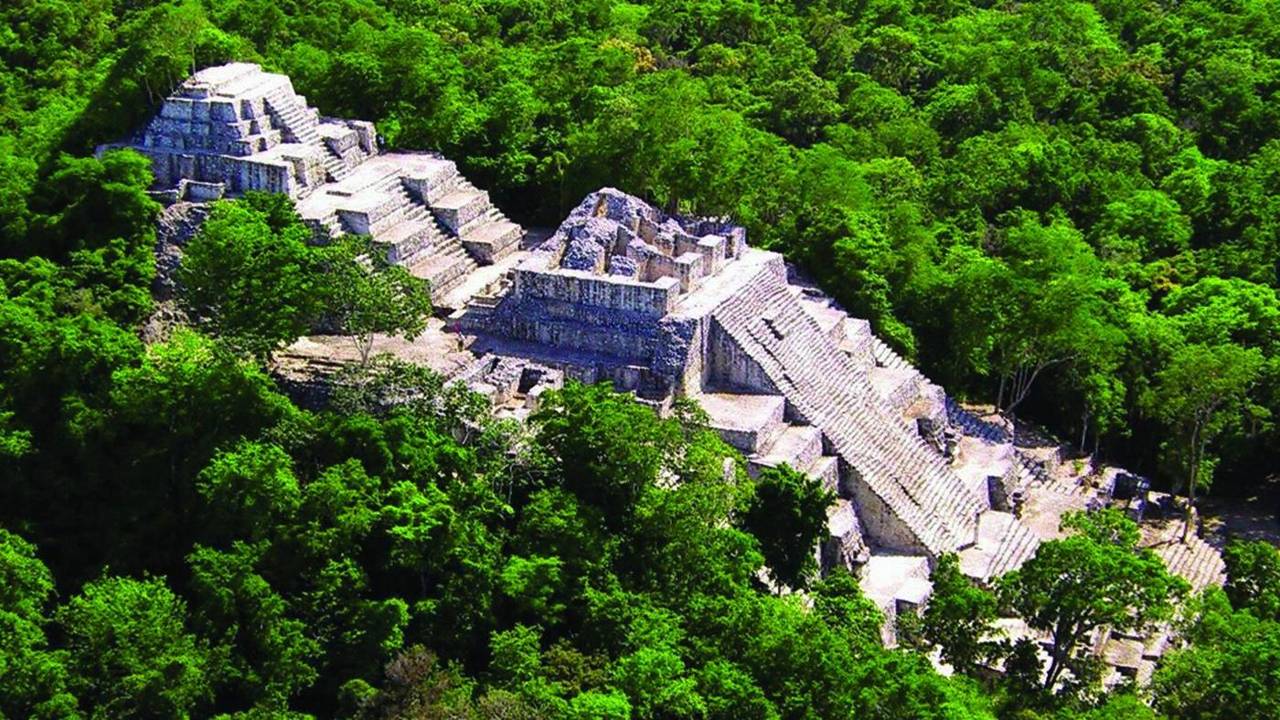
Calakmul was the capital of the Snake kingdom, rival of Tikal, with tens of thousands of inhabitants. Today the ruins are wrapped in forest. You walk on paths between pyramids and carved stelae.
The great Structure II is one of the tallest pyramids in the Maya world, over forty metres. You climb the steps to the top: from up there you see only forest in every direction, as far as Guatemala, with the tops of other pyramids emerging from the trees. It is one of the strongest moments of the trip.
In the woods around live spider monkeys and howler monkeys.
In the afternoon return towards Xpujil.
Sleep near Xpujil.
Practical tip: bring water, food and insect repellent. There are no shops at the site.
- Day 9
The Bacalar lagoon by kayak
Today you head east to the Bacalar lagoon, the lagoon of seven colours.
From Xpujil to Bacalar takes about two hours by road. Bacalar is a town on the edge of a long freshwater lagoon with a white sandy bottom. The water changes colour from turquoise to dark blue according to depth: that is why it is called the lagoon of seven colours.
In town is the fort of San Felipe, built by the Spanish in the eighteenth century to defend against pirates coming up from the sea. Today it houses a small museum.
In the afternoon rent a kayak or a paddleboard and paddle on the lagoon. The water is calm, shallow near the shore and warm. You can see stromatolites, living rock formations, among the oldest forms of life on Earth, slowly growing in the shallow water. They are fragile: do not step on them or touch them.
At sunset go to Cenote Azul, a very deep cenote near the lagoon, where you swim over dark blue water. Check the entry price.
In the evening dine in town on tacos and fish.
Sleep in Bacalar.
Practical tip: in Bacalar use only biodegradable sunscreen or none at all. The stromatolites suffer from chemicals.
- Day 10
Cobá by bicycle
Today you head north and visit Cobá, a Maya city in the forest that you explore by bicycle.
From Bacalar to Cobá takes about three hours. Along the way you pass Felipe Carrillo Puerto, a town that for many years in the nineteenth century was the centre of Maya resistance against the Mexican government.
Cobá is a large site spread through the forest, between lakes, with white Maya roads, the sacbé, that linked the groups of buildings. You walk or rent a bicycle at the entrance: the paths are long and the bicycle makes the visit more pleasant. There are also bicycle taxis with a driver. Check prices and times.
The main pyramid, Nohoch Mul, is about forty metres high. For many years you could climb to the top; today the climb is closed to protect it, check on site. Around it are the ball court and the carved stelae.
In the afternoon, near Cobá, swim in one of the area's cave cenotes.
Then continue to Tulum, about forty minutes away.
Sleep in Tulum.
Practical tip: there are many mosquitoes at Cobá. Use repellent and wear light coloured long sleeves. Carry water: distances on the site are long and it is hot.
- Day 11
Tulum and the beach
Today is the last full day, between ruins by the sea and the beach.
Early in the morning visit the archaeological site of Tulum, the only Maya city built on a cliff above the Caribbean Sea. In 2026 entry to the site costs 210 pesos. The Castillo temple stands on the cliff, with turquoise water below, and is one of the most famous images of Mexico. The city was a walled trading port. Iguanas bask on the rocks. The site lies inside a national park: the park may also charge a ticket, check.
Arrive at opening time: the site is small, but it fills quickly.
After the visit go down to the beach below the ruins, if it is open, or go to the public beaches along the coast. The sea is warm and clear. At some times of year, especially from April to September, sargassum, a brown seaweed, washes up on the coast: ask about conditions.
In the afternoon rest or visit a cenote near Tulum for a last freshwater swim.
In the evening a last dinner in Tulum town: tacos al pastor, guacamole, ceviche and a fresh fruit drink.
Sleep in Tulum.
Practical tip: in Tulum the hotel zone on the beach is expensive. The town, further from the sea, costs less.
- Day 12
Departure from Cancún
On the last day you return to Cancún airport, about an hour and a half from Tulum.
If your flight is in the afternoon, in the morning take a last swim in the sea or stop along the road at Playa del Carmen or Puerto Morelos, a quieter fishing village with its pier and leaning lighthouse.
There is also a new airport at Tulum, with some flights: check which airport your flight leaves from. Return the car with a full tank and check for damage together with the agent.
What to take home: a Yucatán hammock, a Becal straw hat, habanero sauce, melipona honey from the stingless bees of the Maya, vanilla and chocolate, fabrics hand embroidered by Maya women, the huipil.
This trip shows the Yucatán in its entirety: the Maya cities of the north and those hidden in the southern forest, the colonial towns, the cenotes, the lagoons and the Caribbean Sea.
If you have more time, you can add a few days on Holbox island, in the north, or in Campeche, the walled colonial city on the gulf.
Practical tip: arrive at Cancún airport at least three hours early. Checks are often slow. Keep your passport ready and any exit form, if you are asked for it.
The Yucatán is easy to tour by hire car: good, safe roads. Calakmul is remote but it's the peninsula's most thrilling Maya site. Avoid the coast in late summer and early autumn, the season of hurricanes and sargassum seaweed.
Before you go
- Documents and visa
- Passport valid for the whole stay; no visa is needed for tourism. On arrival the officer sets the number of days granted. Quintana Roo state charges foreign visitors a tax, the Visitax, payable online.
- Health and vaccines
- No compulsory vaccines. Drink only bottled water and use mosquito repellent against dengue and other diseases. Emergencies: 911.
- Money and payments
- Mexican peso. Cards are accepted in cities and tourist areas; in markets, villages and on local transport you need cash.
- Power sockets
- Types A and B, 127 volts: you need a flat-pin adapter.
- Time zone
- Mexico City is UTC-6; Quintana Roo is UTC-5. Mexico no longer uses daylight saving time, except in some border areas.
- Safety
- The situation varies greatly between states: the United States rates some, such as Guerrero, Michoacán and Sinaloa, at level 4, while Yucatán and Campeche are at level 1. Official advice: GOV.UK.
Information checked in November 2026 for Italian and EU citizens. Rules change: always check before you travel.
Variations
In 8 days: Valladolid, Chichén Itzá, Mérida, Uxmal and Tulum, without Calakmul and Bacalar.
In 15 days: add Campeche after Uxmal and Holbox island at the end of the trip.
Frequently asked questions
What documents do I need?
Italian citizens need a valid passport. Check Mexico's entry requirements beforehand, as they can change. Other nationalities should check their own rules.
Is it safe to drive in the Yucatán?
The United States rates Yucatán and Campeche at level 1 and Quintana Roo at level 2. Drive by day, fill up often and watch out for speed bumps, the topes, in villages.
How much do Chichén Itzá and Tulum cost?
In 2026 the single ticket for Chichén Itzá costs 697 pesos for foreigners; Tulum costs 210 pesos. Other sites have different prices: check.
Indicative itinerary written by World Atlas. Before booking, check timetables, seasonal openings, documents and safety.
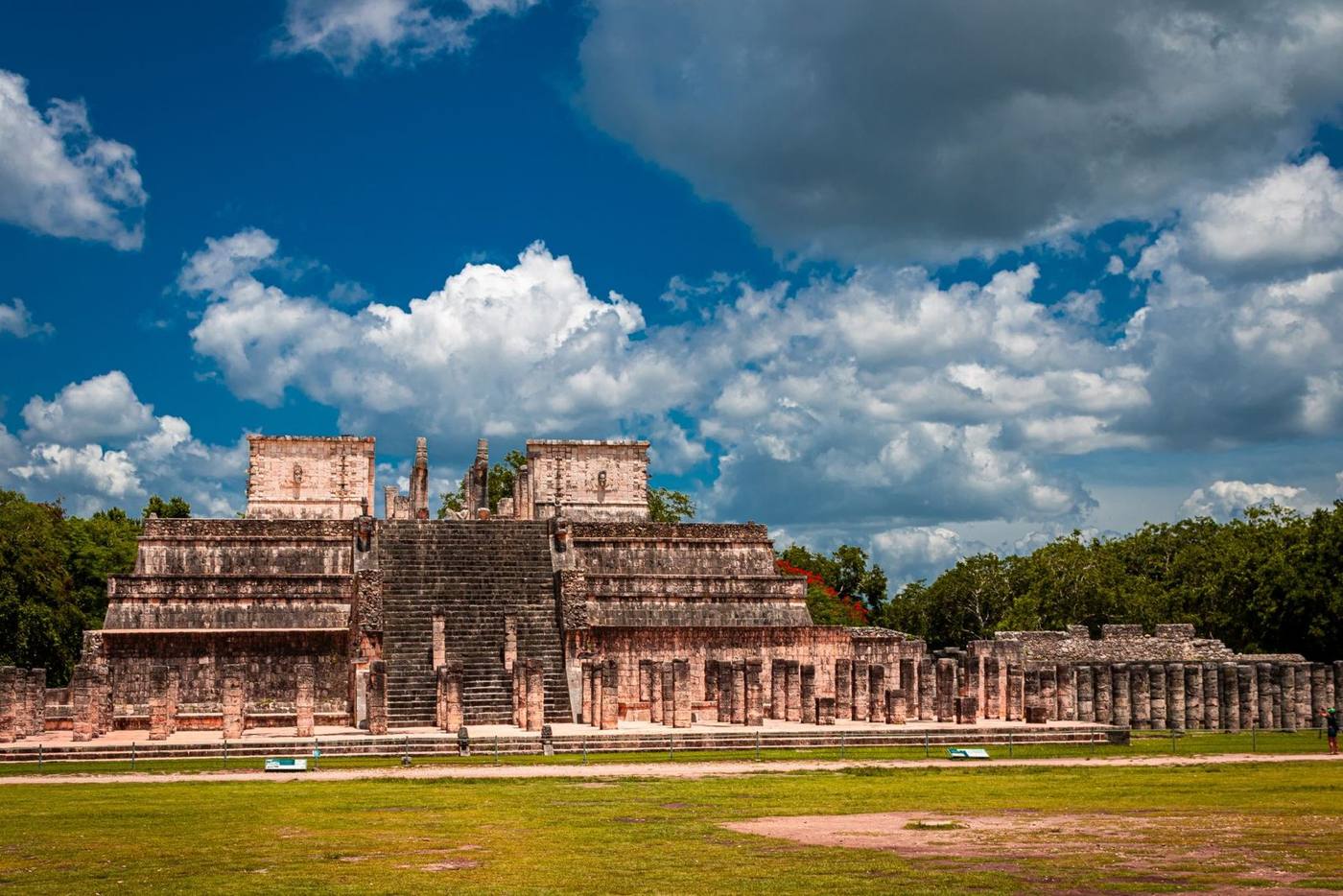 7 daysEasy
Yucatán: Maya pyramids and cenotes
Chichén Itzá, Valladolid, the cenotes and the sea at Tulum: the easiest Mexico for a first week.
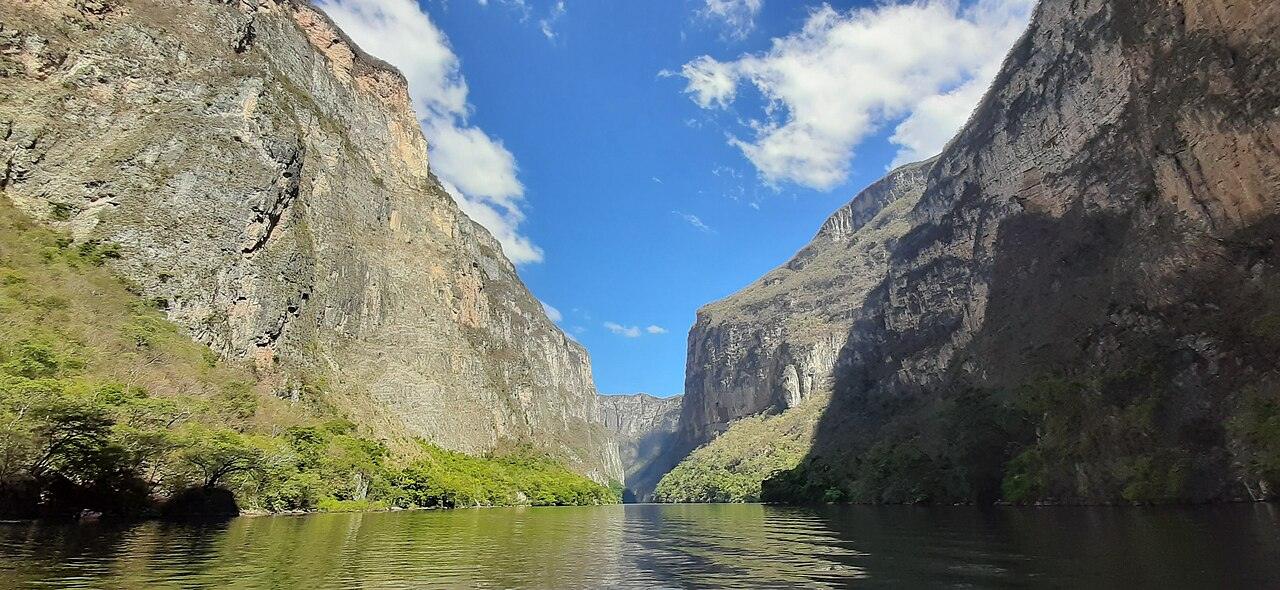 15 daysModerate
Chiapas, Yucatán and the Caribbean
From the capital to the colonial towns of Chiapas, then Palenque in the jungle, the Maya cities of Yucatán and the sea.
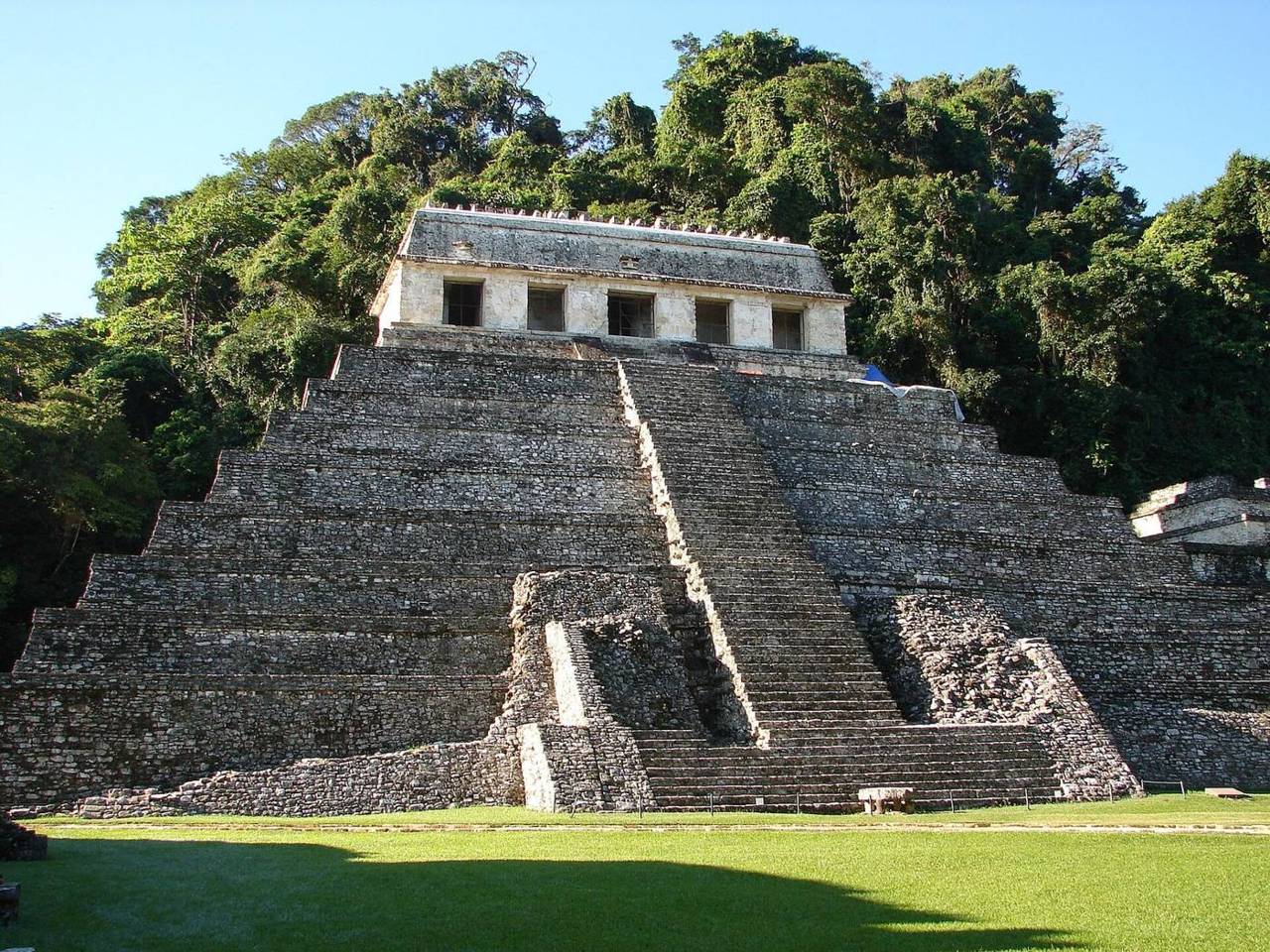 12 daysEasy
Maya triptych: Mexico City, Palenque and the Yucatán
The capital with Teotihuacán, the jungle pyramids of Palenque and the great Maya cities of the Yucatán, with cenotes to cool off.