Madeira: Levadas, Porto Santo and the Desertas
Ten days on a vertical island, walking the old irrigation channels through laurel forest, with a ferry to Porto Santo and a boat out to the monk seal islands.
- Funchal
- Monte
- Câmara de Lobos
- Cabo Girão
- Pico do Arieiro
- Santana
- Porto Moniz
- Rabaçal
- Porto Santo
- Ilhas Desertas
Day by day
- Day 1
Arrival in Funchal and the Zona Velha
Madeira is an autonomous region of Portugal in the Atlantic, about a thousand kilometres from Lisbon and closer to Africa than to Europe: EU citizens need only a valid identity card. It is a volcanic island of steep mountains, covered with forest, terraced fields and irrigation channels called levadas, with a mild climate all year.
Madeira airport at Santa Cruz has a runway built partly on huge pillars over the sea; in strong wind flights can be diverted or delayed. In about twenty minutes you reach Funchal, the capital, on a bay in the south of the island.
For this trip it is best to rent a car, choosing a model with a good engine: the island's roads are very steep and narrow, with hairpins and tunnels.
In the evening stroll through the Zona Velha, Funchal's old town by the sea. On rua de Santa Maria, the oldest street, house doors are painted by local artists in bright colours with different scenes, an open-air art museum. The area has many restaurants and bars.
Try espetada, beef skewers grilled over embers and hung from a hook above the table, bolo do caco, round bread with garlic butter, and black scabbard fish, often served with banana.
Practical tip: Madeira's weather varies a lot between the coast and the mountains, and between the north and south of the island; always carry warm layers and a waterproof jacket.
- Day 2
Funchal on foot, the cable car to Monte and the toboggans
Early in the morning visit the Mercado dos Lavradores, the art deco covered market, with flower sellers in traditional costume, stalls of tropical fruit such as passion fruit, custard apple and mini bananas, and the fish market, where you see the black scabbard fish, a deep-sea fish with huge eyes and sharp teeth.
Then visit the cathedral, the Sé, from the sixteenth century, with its carved cedarwood ceiling, and the Quinta das Cruzes museum, in an old villa with a garden where, according to tradition, João Gonçalves Zarco, the island's discoverer, lived.
In the afternoon take the cable car from the Zona Velha up to Monte on the hill, about fifteen minutes over the roofs and banana terraces. In Monte visit the church of Our Lady of Monte, where Charles I, the last Emperor of Austria, who died in exile on the island, is buried, and the tropical garden.
To come down, try the carros de cesto, wicker toboggans on wooden runners steered by two men dressed in white with straw hats, the carreiros, who push and brake them with rubber-soled boots along downhill streets for about two kilometres. This was how residents came down into town in the nineteenth century.
In the evening taste Madeira wine, a fortified wine aged in casks.
Practical tip: the streets of central Funchal are very steep; wear comfortable shoes.
- Day 3
The south coast: Câmara de Lobos and Cabo Girão
In the morning drive west along the south coast to Câmara de Lobos, about twenty minutes from Funchal, a fishing village with colourful wooden boats pulled up on the pebble beach and houses climbing the rocks. Winston Churchill came here in 1950 to paint the bay. In the village bars people drink poncha, a traditional drink made with sugarcane spirit, honey and lemon juice.
Continue to Cabo Girão, a few kilometres away, one of the highest sea cliffs in Europe, about 580 metres above the sea. At the top a glass-floored platform juts out over the void, and beneath your feet you see the small cultivated terraces at the foot of the cliff, called fajãs, reachable only by cable car.
In the afternoon continue west to Ribeira Brava, a town whose church has a tiled bell tower, and Ponta do Sol, considered the sunniest spot on the island, with a promenade and pebble beach.
In the evening return to Funchal or stay on the south coast. If the sky is clear, watch the sunset over the sea from the west coast.
Practical tip: almost all Madeira's beaches are pebbles or rocks, with the sea quickly becoming deep; for swimming, natural pools and equipped lidos are more convenient.
- Day 4
From Pico do Arieiro to Pico Ruivo
Today is Madeira's most famous walk, the PR1, the Vereda do Areeiro, from Pico do Arieiro at 1,818 metres to Pico Ruivo, the island's highest summit at 1,862 metres. The trail was closed after the 2024 wildfires and reopened in April 2026 after safety works.
Since 2026 all of Madeira's classified trails, called PR, must be booked online on the official Simplifica portal, with an access time. For non-residents the fee is 4.50 euros per trail; for the full PR1 the fee is higher, 10.50 euros. Hikers without a booking can be fined.
Early in the morning, at dawn, drive up to Pico do Arieiro, about forty minutes from Funchal: the sun often rises over a sea of clouds. The trail, about seven kilometres one way, runs along a narrow ridge with steps cut into the rock, tunnels and exposed passages protected by handrails. There is a lot of up and down, for about three hours one way. From Pico Ruivo you see the whole island.
To return you either retrace the same trail or descend to Achada do Teixeira, arranging a taxi.
Practical tip: always check the trail status on the official website before setting off; in strong wind or fog it is dangerous. You need hiking shoes, a torch for the tunnels, water and warm layers.
- Day 5
Santana and the Caldeirão Verde levada
In the morning drive to the north coast to Santana, about an hour from Funchal, famous for its triangular cottages with thatched roofs reaching the ground, painted white, red and blue. They were farmers' houses; some can be visited today.
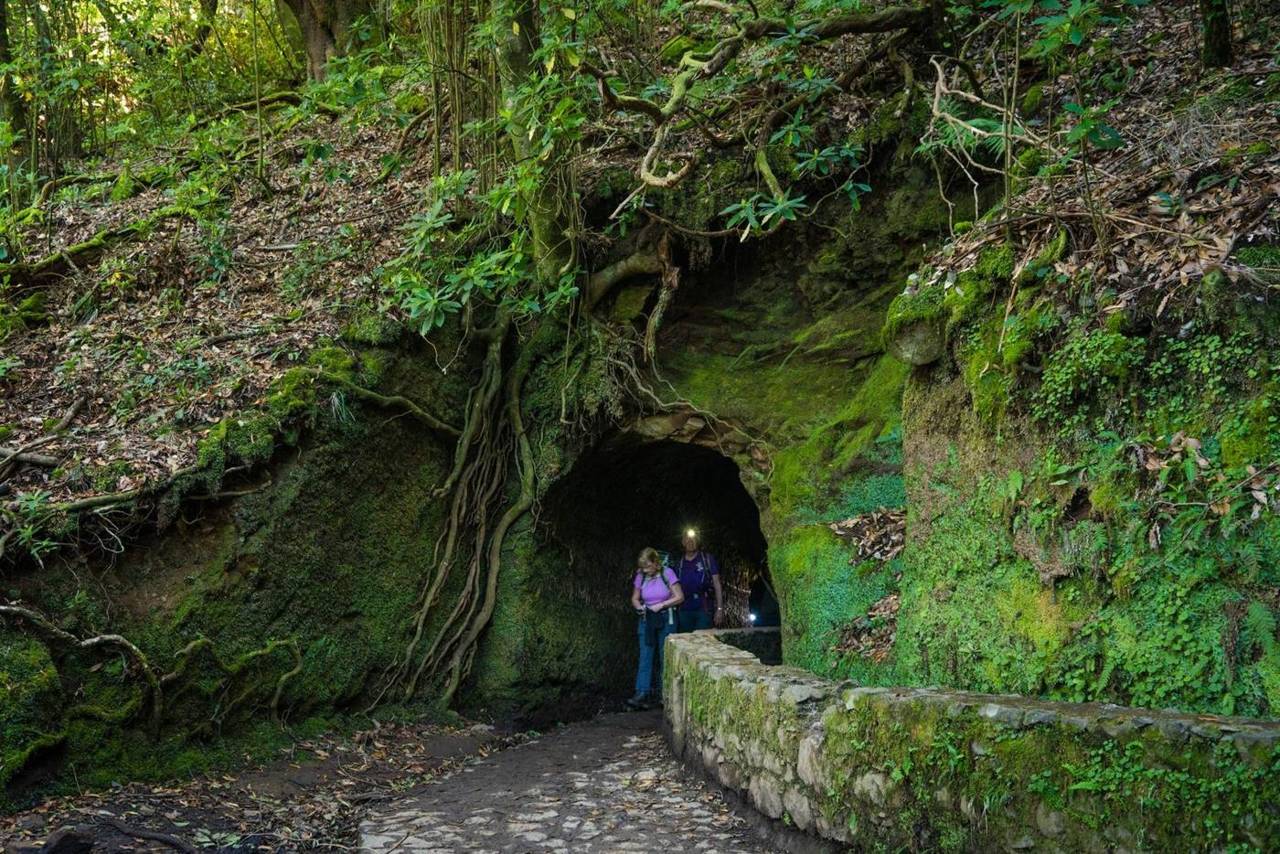
Then reach Queimadas forest park, a few kilometres away, with its thatched mountain house, the starting point of the Caldeirão Verde levada, PR9. The path follows the irrigation channel for about 6.5 kilometres each way, almost level, through the laurisilva, the laurel forest, an ancient forest that covered Europe millions of years ago and now survives almost only here and in the Canaries, a UNESCO World Heritage site. You pass through four tunnels cut into the rock and reach the Caldeirão Verde, a rocky bowl with a waterfall about a hundred metres high dropping into a pool. The round trip takes about five hours.
The trail must be booked on the official portal, like all PR routes.
In the evening, on the north coast, try fresh fish in Porto da Cruz or São Vicente.
Practical tip: in the levada tunnels water drips from the roof and the floor is wet; bring a head torch and a waterproof jacket. The path is narrow, with a drop on one side in places: take care with children.
- Day 6
Rabaçal, the 25 Fontes and Porto Moniz
In the morning drive up to the Paul da Serra plateau and down into the Rabaçal valley in the west of the island, about an hour and a quarter from Funchal. From here starts the 25 Fontes levada, PR6, one of the island's most famous walks, about four and a half kilometres each way, to a green bowl where twenty-five small waterfalls run down moss-covered rock walls into a pool. Along the way a detour leads to the Risco waterfall, about a hundred metres high.
The trail is very busy and must be booked on the official portal. The paved road from Paul da Serra to Rabaçal is narrow; at some times a shuttle runs: check beforehand.
In the afternoon descend to the north-west coast to Seixal, a village among vineyards with a small black sand beach, and then Porto Moniz at the island's north-western tip, famous for its natural lava pools, rock basins filled with ocean water where you swim sheltered from the waves.
In the evening return to Funchal over the mountains or stay on the north coast.
Practical tip: the northern coast road has many tunnels; some old roads along the cliffs are closed because of rockfalls. Do not stop beneath rock walls after rain.
- Day 7
Ponta de São Lourenço and Machico
Today is Ponta de São Lourenço, the peninsula at the island's eastern tip, about forty minutes from Funchal, a landscape completely different from the rest of Madeira: dry, windy and treeless, with cliffs of red, black and yellow volcanic rock dropping to the ocean on both sides.
The walk, PR8, about four kilometres each way, follows the ridge of the peninsula with ups and downs to the Pico do Furado viewpoint, with Porto Santo island on the horizon. Along the trail, the Casa do Sardinha has a small information centre and a bar. This trail must also be booked on the official portal. There is no shade: set off early in the morning.
In the afternoon visit Machico, a town on the bay where, according to tradition, the first Portuguese navigators landed in 1419. Machico has one of the island's few golden sand beaches, brought from Morocco, and the small Milagres chapel.
Nearby, the Portela viewpoint looks over the north of the island and the Penha de Águia, a great eagle-shaped rock by the sea.
In the evening return to Funchal and get ready for the trip to Porto Santo.
Practical tip: at Ponta de São Lourenço the wind is very strong; hold on to your hat and keep away from the cliff edges.
- Day 8
The ferry to Porto Santo
In the morning take the ferry from Funchal to Porto Santo, the archipelago's other inhabited island, in about two and a half hours. The sea can be rough: if you suffer from seasickness, take something beforehand. There is also a short flight.
Porto Santo is the opposite of Madeira: a flat, dry island with a golden sand beach about nine kilometres long on its south side and calm, clear water. The sand has a reputation for healing properties, and many Portuguese come for sand treatments.
On arrival take a tour of the island by 4x4 with a local guide, or by car, to the Pico das Flores and Pico do Castelo viewpoints, overlooking the beach and the ocean. In the north, Fonte da Areia is a spring among sandstone rocks shaped by the wind.
In the centre of Vila Baleira, the main town, visit the Christopher Columbus house museum: the navigator lived on the island, where he married the daughter of Porto Santo's first captain, before sailing to the Americas.
In the afternoon relax on the beach and swim in the calm water.
In the evening stay on Porto Santo or return to Madeira on the evening ferry, if the timetable allows.
Practical tip: check ferry times, which change with the season, and book ahead in summer.
- Day 9
The Desertas Islands or a day in Funchal
In the morning return to Madeira by ferry if you stayed on Porto Santo.
If the sea is calm, take a boat trip to the Desertas Islands, three uninhabited islands south-east of Madeira, about two and a half hours' sailing from Funchal, a nature reserve protecting one of the last colonies of Mediterranean monk seals, one of the world's most endangered seals. Trips leave Funchal with licensed operators and take the whole day, with a landing on Deserta Grande accompanied by the reserve wardens. On the way you often see dolphins and sometimes whales. Trips run only in calm seas and can be cancelled at the last moment.
If the sea does not allow it, stay in Funchal: visit the botanical garden above the city, with tropical plants and views over the bay, or the Monte Palace garden, with Portuguese tiles, ponds and mineral collections. Walk along the harbour and the seafront to the yellow São Tiago fortress in the Zona Velha.
In the evening have a last dinner in Funchal.
Practical tip: the monk seal is protected and very shy; boats must keep their distance from the animals, and swimming in the reserve is not allowed without authorisation. Bring a hat, sun cream and a light jacket on the boat.
- Day 10
A last coffee at the market and the flight home
The last day is for departure. In the morning return to the Mercado dos Lavradores for a last coffee and to buy tropical fruit and flowers: the sellers pack flowers in boxes suitable for air travel, such as strelitzias, called birds of paradise.
If your flight leaves in the afternoon, visit the CR7 Museum, dedicated to Cristiano Ronaldo, born in Funchal, or take a last walk in the municipal garden with its tropical trees.
The airport is about twenty minutes from the centre. Return the car with a full tank.
Things to take home: Madeira wine, Madeira hand embroidery, famous worldwide, bought in shops with a guarantee seal, bolo de mel, the dark cake made with sugarcane molasses and spices that keeps for months, and bottled poncha.
Practical tip: at Madeira airport strong wind sometimes diverts flights to Porto Santo or Lisbon; allow a margin for connections and check your flight status before leaving. Madeira is considered very safe: the main risks are mountain trails, rockfalls after rain and the sea. Check your government's travel advice before leaving, and keep some time for the airport security checks. Before leaving, make sure your return ticket and documents are at hand. Have a safe trip home.
For people who want to walk every day without real climbing: the levadas run almost flat and lead where no road goes. The drawback is the north's weather, often cloudy even in summer, and the fact that the Desertas and Pico Ruivo depend on the sea and on rockfalls. Keep a spare day and bring shoes with good grip and a head torch for the tunnels.
Before you go
- Documents and visa
- EU citizens need a valid identity card or passport. Other nationalities should check the Schengen rules.
- Health and vaccines
- No vaccines required. EU citizens should bring their EHIC. Emergencies: 112.
- Money and payments
- Euro. Cards are accepted almost everywhere. Lisbon, Porto and several municipalities, including in the Algarve, charge a tourist tax per person per night.
- Power sockets
- Types C and F, 230 volts.
- Time zone
- Western European Time (UTC+0, summer UTC+1); the Azores are one hour behind the mainland.
- Safety
- A very safe country. In Lisbon watch for pickpockets on tram 28 and in the busiest areas; in summer, wildfire risk inland. Official advice: GOV.UK.
Information checked in November 2026 for Italian and EU citizens. Rules change: always check before you travel.
Variations
In 6 days: Funchal and Monte, Cabo Girão, Pico do Arieiro, Santana with Caldeirão Verde and Porto Moniz, skipping Porto Santo and the Desertas.
In 14 days: add more days on Porto Santo and other levadas, such as the Levada do Rei and the Balcões, or a week in the Azores.
Frequently asked questions
Do you have to pay to hike in Madeira?
Yes: since 2026 all classified trails must be booked online on the official Simplifica portal. For non-residents the fee is 4.50 euros per trail, and 10.50 euros for the full PR1 from Pico do Arieiro to Pico Ruivo.
Is the Pico do Arieiro to Pico Ruivo trail open?
It reopened in April 2026 after works following the 2024 wildfires. Always check its status on the official website, because it can close after rockfalls or in bad weather.
When is the best time for Madeira?
All year: the climate is mild. From April to October the weather is more settled for walking; in winter it rains more in the north and the mountains.
Indicative itinerary written by World Atlas. Before booking, check timetables, seasonal openings, documents and safety.
 11 daysModerate
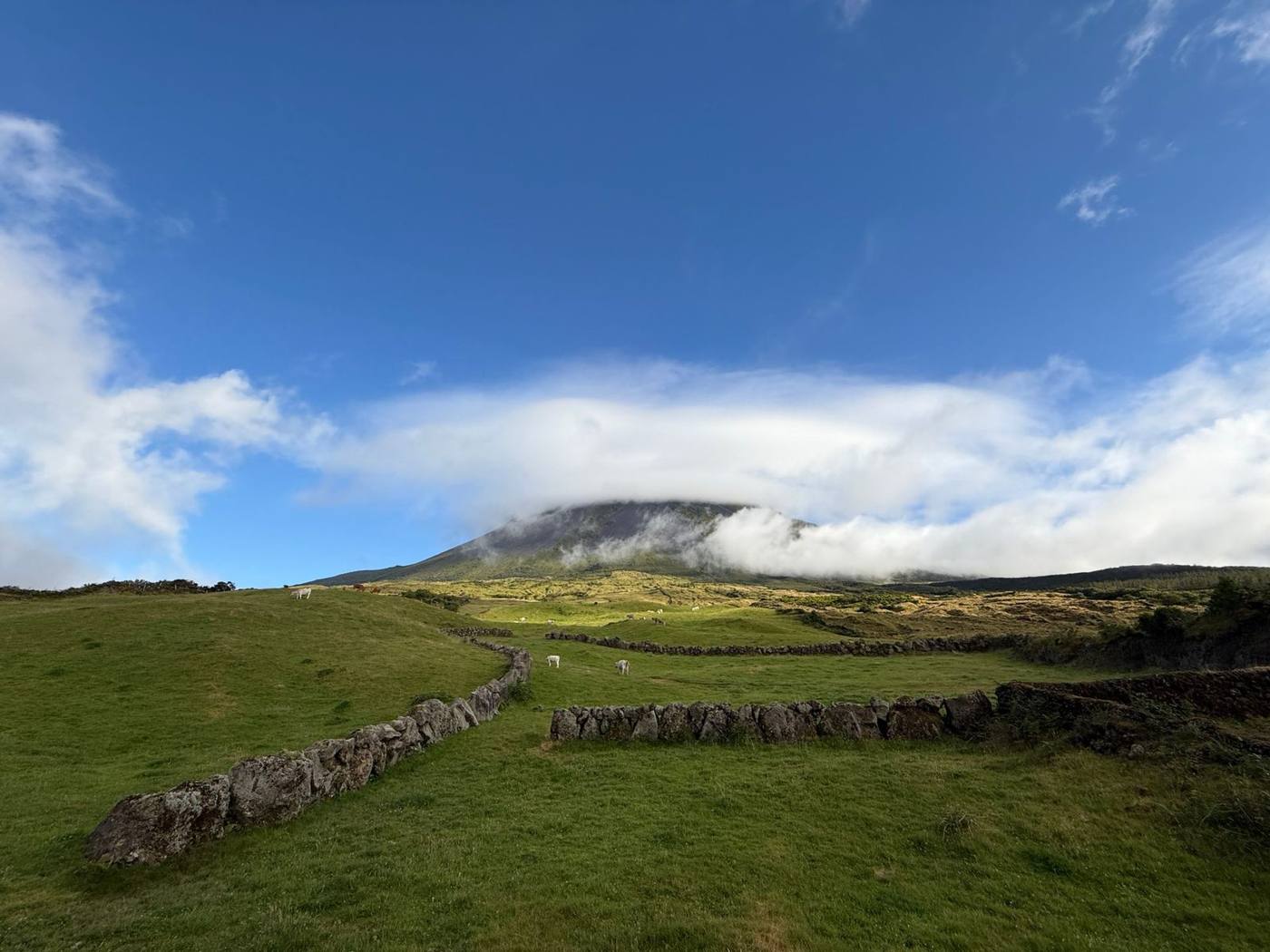
The Central Azores: Faial, Pico, São Jorge and Terceira
Four islands linked by ferry, from the young Capelinhos volcano to Portugal's highest peak, on to the fajãs of São Jorge and the Renaissance town of Angra.
 9 daysEasy
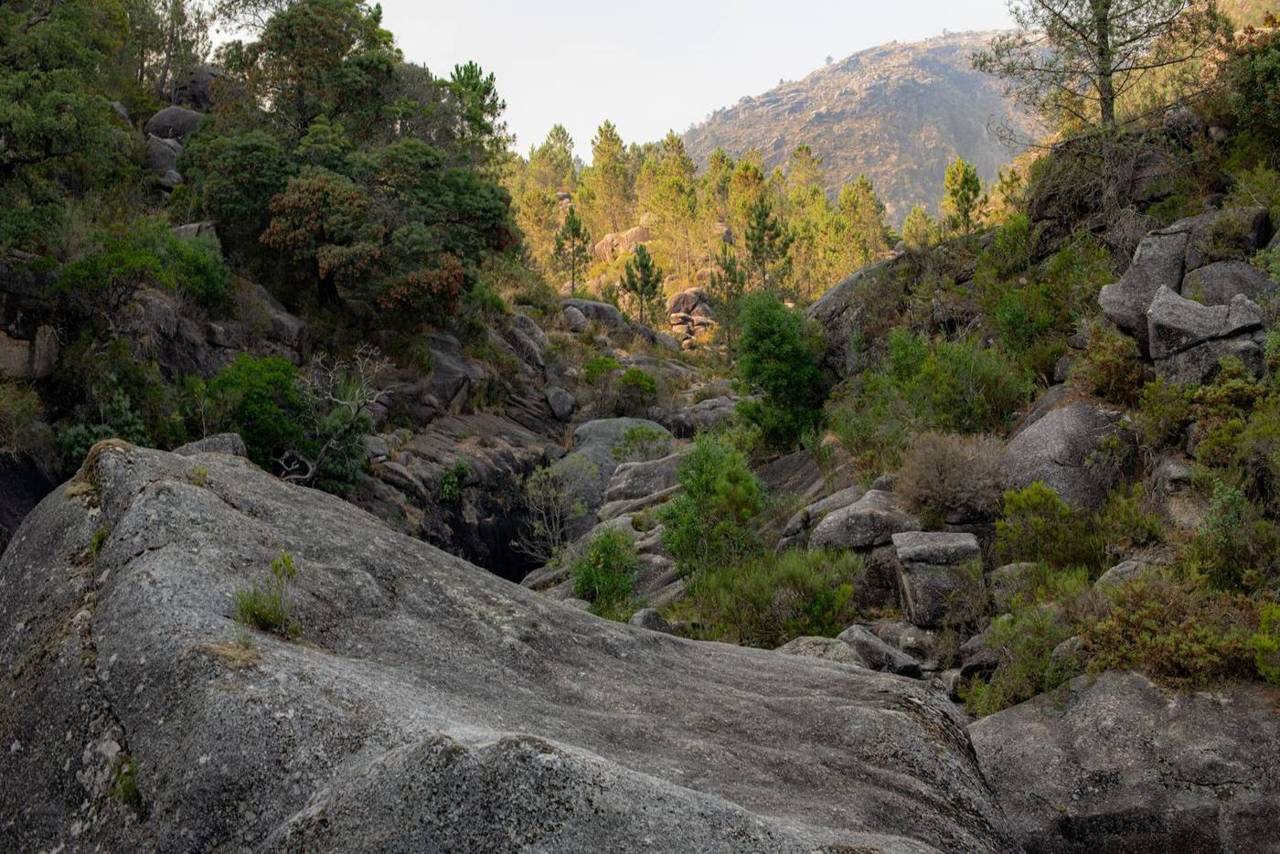
Minho, Peneda-Gerês and Galicia
A loop by car from Porto: the towns where Portugal began, the Bom Jesus sanctuary, Santiago, the Sil canyons and the country's only national park.
 16 daysChallenging
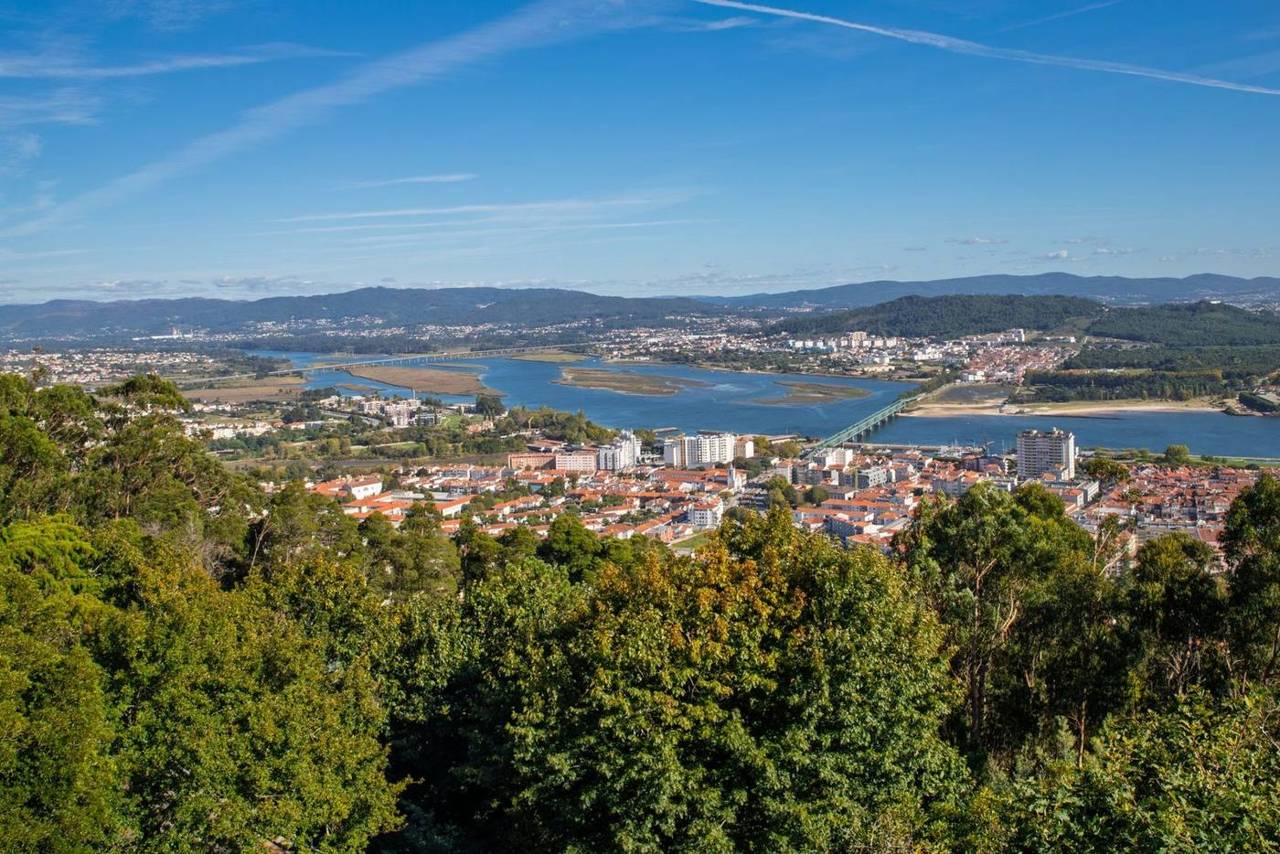
The Portuguese Coastal Way, Porto to Santiago
About 280 kilometres on foot in thirteen stages, along the Atlantic to the border and then inland through Galicia, ending in the Obradoiro square.