The Portuguese Coastal Way, Porto to Santiago
About 280 kilometres on foot in thirteen stages, along the Atlantic to the border and then inland through Galicia, ending in the Obradoiro square.
- Porto
- Póvoa de Varzim
- Viana do Castelo
- Caminha
- Baiona
- Vigo
- Pontevedra
- Caldas de Reis
- Padrón
- Santiago de Compostela
Day by day
- Day 1
Arrival in Porto and an evening in the Ribeira
This trip is a real walk: about 280 kilometres in thirteen stages from Porto to Santiago de Compostela, first along the Portuguese Atlantic to the mouth of the Minho, then on the Galician rías and finally through the woods inland. You walk on average more than twenty kilometres a day, with a light pack and well broken-in shoes.
Before you go: Portugal and Spain are part of the Schengen area and the European Union. For Italian citizens an electronic identity card valid for travel abroad or a passport is enough; the paper identity card is no longer valid for travel abroad since 3 August 2026. Other nationalities should check their own rules. The emergency number is 112 in both countries. In summer northern Portugal and Galicia are at risk of forest fires: follow civil protection warnings and never light fires. On Atlantic beaches the currents are strong, so swim only where there is a lifeguard.
From the airport the centre is reached on the purple metro line, line E, in about half an hour. For two nights stay near the cathedral or São Bento station: tomorrow morning you will set off from right there.
In the evening go down to the Ribeira, the district on the Douro, a UNESCO site, with its narrow coloured houses. Walk across the Dom Luís I bridge and look at the city lit up from Vila Nova de Gaia, where the port wine cellars are.
Practical tip: many towns on the coast charge a nightly tourist tax; check the amount when you book and ask whether it is already included in the price.
- Day 2
Porto: the credential and the city's hills
Today is for getting ready and warming up your legs. Start at the cathedral, the Sé, a fortified granite church on a hill in the centre, with a cloister covered in azulejos. Here you can pick up the pilgrim credential, the booklet that is stamped along the way and that you need to sleep in pilgrim hostels and to receive the Compostela in Santiago. In front of the cathedral you will see the first yellow arrows and the scallop shell, the signs that will guide you to the end.
Then walk down to São Bento station, whose hall is decorated with large panels of blue azulejos showing scenes from Portuguese history. Climb the Clérigos tower for the view over the rooftops, check prices and times, and walk along rua das Flores to the Ribeira.
Porto is built on hills: today's steps and slopes are good training for your legs. Walk in the shoes you will use on the Camino and with a full pack, for a few hours at least, to find out straight away if anything rubs.
In the afternoon do your last shopping: blister plasters, foot cream, a rain poncho. For dinner try the francesinha, the sandwich with meat, melted cheese and sauce, or bacalhau, prepared here in dozens of ways.
Practical tip: register today on the official website of the Pilgrim's Office in Santiago; online registration is compulsory to collect the Compostela and gives you a code to show at the entrance. Keep it on your phone and write it inside your credential.
- Day 3
From Porto to Labruge, along the river and the ocean
The first stage is about 24 kilometres. Leave early from the cathedral and head down to the Douro: the route follows the river to Foz, where the Douro meets the Atlantic, passing under the bridges and along the old quays. From here you walk along the seafront to Matosinhos, the fishermen's town, famous for grilled fish.
Cross the port of Leixões on the movable bridge and continue to Leça da Palmeira. On the shore are the tidal pools designed by Álvaro Siza in the 1960s, set among the rocks, and further on the chapel of Boa Nova, small and white on the rock, with the lighthouse behind it.
From here begins the most typical part of the coastal route: long wooden boardwalks over the dunes, with the sea a few metres away, sand, sea grasses and fishing villages. The surface is comfortable, but the wood reflects the sun and in summer it is hot. The wind often blows from the north, so in your face.
You reach Labruge in the afternoon, a small village on the dunes. Have a shower, take off your shoes and check your feet straight away: blisters are best treated on the first day. For dinner ask for caldo verde, the soup with kale and potatoes, and the fish of the day.
Practical tip: the boardwalks have no shade for hours; set off with at least a litre and a half of water, because between the dunes you will not always find a fountain or an open café.
- Day 4
From Labruge to Póvoa de Varzim, by way of Vila do Conde
Today's stage is shorter, about 15 kilometres, and lets you recover after the first day. The boardwalks continue through the dunes to Vila Chã, a fishing village with boats pulled up on the beach, then you walk along the sea to Vila do Conde.
Vila do Conde is a small town at the mouth of the river Ave, with a quiet historic centre. High on the hill stands the large convent of Santa Clara, and from the hill runs the long stone aqueduct that carried water to the convent. On the river is moored the reconstruction of a sixteenth-century Portuguese ship, a reminder of the town's shipyards: check prices and times if you want to go on board.
From Vila do Conde the seafront continues without a break to Póvoa de Varzim, a resort town with a very long beach. The writer Eça de Queirós was born here. Póvoa is famous for its siglas poveiras, the marks that fishermen carved on boats and tools as a family signature: you still see them on some walls and in small displays in the centre.
In the afternoon rest on the beach or walk around the fishing harbour. For dinner try pescada, hake, or caldeirada, the fish stew of the northern ports.
Practical tip: make the most of the short stage to wash your technical clothing; with the ocean wind it dries in a few hours even hung on the balcony. Wash your socks every evening as well, since clean, dry socks help prevent blisters.
- Day 5
From Póvoa de Varzim to Marinhas, among windmills and fields on the sand
Today's stage is about 24 kilometres, almost all flat. Leave Póvoa along the sea and pass through A Ver-o-Mar and Aguçadoura, where farmers grow vegetables in fields dug into the sand of the dunes, protected from the wind by banks of earth and reeds. It is a strange and beautiful landscape, between sea and vegetable plots.
Further on you reach Apúlia, with old stone windmills on the dunes, some still with their sails. Here the sargaceiros once gathered seaweed on the beach to fertilise the fields, wearing traditional woollen clothes. Then the route crosses the pine woods of Ofir and arrives at Fão, on the river Cávado.
Cross the iron bridge over the Cávado and enter Esposende, a small town at the river mouth, with a riverside promenade and low houses. From here it is only a few kilometres to Marinhas, a scattered village among fields and woods, where the stage ends.
Today is a good day to check your pace: walk steadily, stop for ten minutes every hour and take your shoes off during long breaks. Eat something every two or three hours, even if you are not hungry, because tiredness builds up over the coming days.
Practical tip: between Aguçadoura and Apúlia the route is marked both on the beach and on inland roads; choose the inland path at high tide or in strong wind, because soft sand doubles the effort.
- Day 6
From Marinhas to Viana do Castelo and the basilica of Santa Luzia
Today's stage is just over twenty kilometres and the landscape changes: the route leaves the sea and goes inland, through eucalyptus and pine woods, maize fields, small villages and cobbled lanes. The climbs are short but they are there, and the cobbles tire your ankles more than tarmac.
You pass through Belinho and Castelo do Neiva, with granite churches and cruzeiros, the stone crosses at crossroads. Stop at the village fountains to fill your bottle, checking that the water is marked as drinkable. In the afternoon go down towards the river Lima and cross the long nineteenth-century iron bridge into Viana do Castelo.
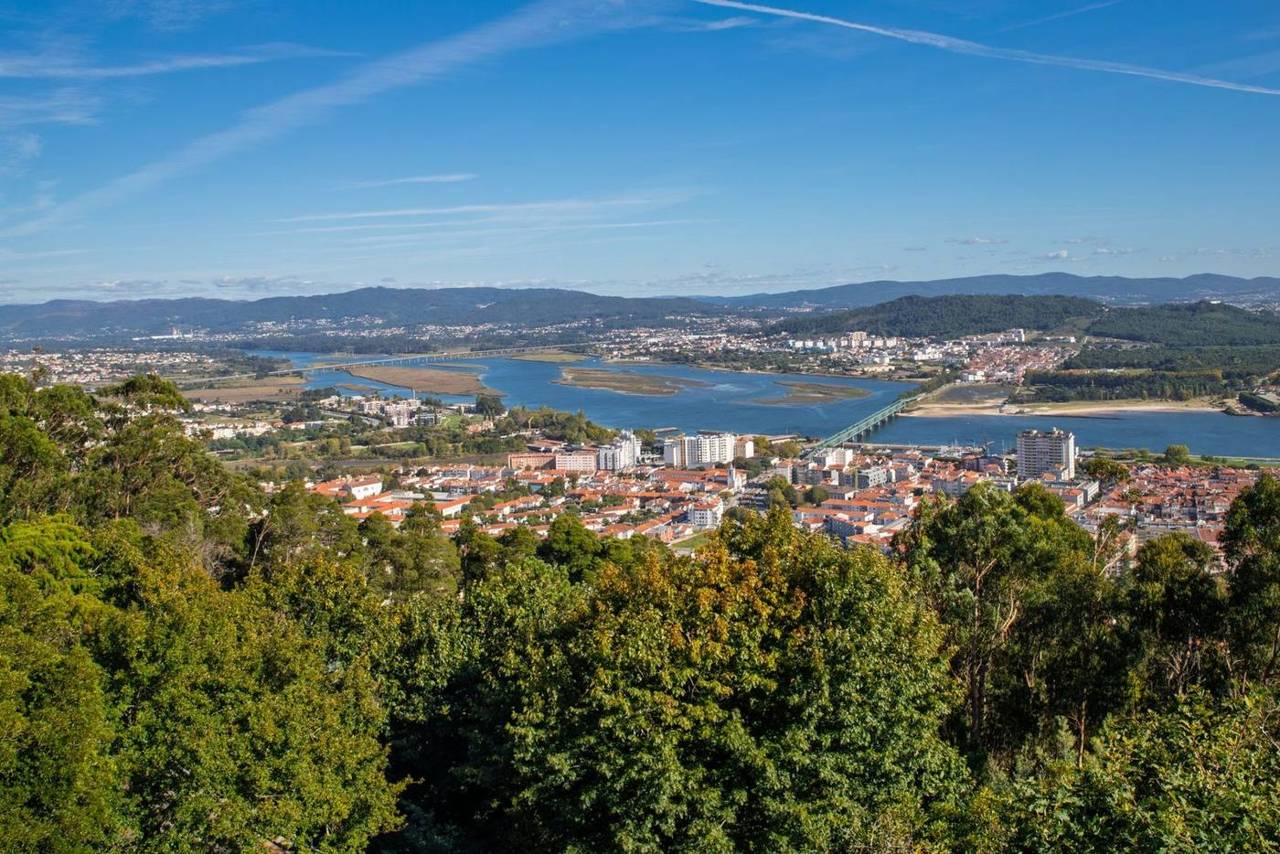
Viana is one of the most elegant towns in the north, with its Renaissance centre around praça da República, the fountain and the palaces with iron balconies. On the river is moored the Gil Eannes, an old hospital ship that cared for the cod fishermen in the North Atlantic, now a museum: check prices and times.
Towards evening take the funicular or walk up to the basilica of Santa Luzia, on the hill above the town. The view from the terrace over the mouth of the Lima, the town and the ocean is among the finest in Portugal. For dinner try polvo, grilled octopus with potatoes, and the region's vinho verde.
Practical tip: Viana is famous for gold filigree and traditional costumes; if you want a souvenir, buy it here rather than tomorrow, because the stage to Caminha is long.
- Day 7
From Viana do Castelo to Caminha, at the mouth of the Minho
Today is one of the longest stages, about 27 kilometres, so leave early. Head out of Viana and back towards the coast: the route passes through Carreço and Afife, with churches and mills on the stream, and alternates paths above the sea, country lanes and stretches of boardwalk.
Around midday you reach Vila Praia de Âncora, a seaside town with a small fishing harbour and a seventeenth-century fort on the beach. It is the ideal place for lunch and a long break. Then continue along the coast to Moledo, with its wide beach and pine woods, as far as the mouth of the Minho, the river that marks the border with Spain.
Opposite the river mouth you see the islet of Ínsua, with its fort and convent, and on the other side of the river Mount Santa Tecla, in Galicia, which you will climb tomorrow. Enter Caminha, a quiet medieval town, with its clock tower, one of the gates of the old walls, and the granite mother church, with gargoyles carved on its walls.
In the evening sit in the main square, the largo do Terreiro, and celebrate your last evening in Portugal with a fish dinner and a glass of vinho verde.
Practical tip: the old ferry on the Minho was out of service for years and its return has been announced several times; ask at your lodging today how to cross the river tomorrow, by ferry or by pilgrim water taxi, and at what time, because times depend on the tide.
- Day 8
The Minho by boat, A Guarda and the coast to Mougás
Today you enter Spain. You cross the mouth of the Minho by boat, a short crossing, and land near A Guarda, the first town in Galicia. Remember to put your watch forward an hour: Spain is one hour ahead of Portugal. From here on the signs are in Galician and Spanish, and along the route stone markers appear with the scallop shell and the kilometres left to Santiago.
If you have energy, climb Mount Santa Tecla above A Guarda, where there are the remains of a large castro, an Iron Age fortified village of round houses, and views over the mouth of the Minho and the Atlantic. The climb is steep, so think it over, because the stage is long, about 27 kilometres in all.
After A Guarda the route follows a wild coast of rocks and reefs, without big beaches, with the open sea, often rough. Halfway along you pass the monastery of Santa María de Oia, a large Cistercian building set right on the sea, with its baroque facade facing the waves.
You reach Mougás in the afternoon, a small harbour among the rocks. Dinner in Galicia starts later than in Portugal: try pulpo á feira, octopus with paprika and olive oil, and a glass of albariño.
Practical tip: today cafés and fountains are few between A Guarda and Mougás; stock up on water and something to eat before you leave A Guarda. The coast path also has little shade, so put on sun cream before you start.
- Day 9
From Mougás to Baiona and A Ramallosa
Today's stage is about 18 kilometres. The route continues along the coast, then climbs the mountainside above the sea on paths and old roads, with views of the Cíes Islands on the horizon, at the mouth of the ría of Vigo.
Around midday you reach Baiona, one of the most beautiful towns on the Galician coast, in a sheltered bay. The peninsula of Monterreal, enclosed by long walls from the Middle Ages and the seventeenth century, can be walked around on the rampart path, with the sea all around. In the harbour is moored the replica of the caravel Pinta, one of Christopher Columbus's three ships, which in 1493 arrived right here in Baiona bringing Europe the news of the discovery of America: check prices and times to go aboard.
On the hill above the town stands the large stone statue of the Virgen de la Roca, with an inner staircase leading up to the boat the statue holds in her hand, used as a viewpoint. If your legs feel fine, it is a short climb worth the effort.
From Baiona the route follows the bay to A Ramallosa, where you cross the river on a medieval stone bridge with a small statue of San Telmo, patron saint of sailors. The stage ends here.
For dinner try mussels and clams from the rías, steamed or a la marinera. Practical tip: today's stage is short, so take a long stop in Baiona; it is the best place to have a leisurely lunch and rest your feet.
- Day 10
From A Ramallosa to Vigo, the most urban stage
Today's stage is about 21 kilometres and is the least attractive of the route, but it is worth tackling in the right spirit. After the first kilometres along the beach of Playa América and the coastal villages, the route enters the long suburbs of Vigo, with pavements, junctions, houses and warehouses.
Tarmac weighs on your feet more than distance. Walk calmly, take regular breaks and, if you have your first blisters, change your socks halfway. Many pilgrims choose the variant that runs closer to the sea, along the beaches of Vigo, longer but more pleasant: the arrows show both ways.
Vigo is the largest city in Galicia and one of the main fishing ports in Europe. Once in the centre, drop your pack and walk through the Casco Vello, the old town, with its steep lanes and co-cathedral. In rúa da Pedra, near the port, the oyster sellers open fresh oysters in front of you, to eat with a glass of white wine at the tables nearby.
If you still have strength, climb to the Castro park, on the hill above the centre, with the remains of the fortress and views over the ría and the Cíes Islands.
Practical tip: from Vigo it is about 100 kilometres to Santiago, the minimum distance on foot to obtain the Compostela; from here on get at least two stamps a day in your credential, in churches, cafés or lodgings. Check your credential each evening to make sure the dates are clear.
- Day 11
From Vigo to Redondela, the path above the ría
Today's stage is short, about 16 kilometres, and very beautiful. Leave Vigo by climbing the hill and take a long path along the hillside, almost level, through woods and gardens, with views over the ría of Vigo, the ships and the great Rande bridge, suspended above the ría.
The path is quiet, with little traffic, and lets you recover after yesterday's tarmac. Along the way there are fountains, benches and a few viewpoints. Towards the end you drop down between houses and woods to Redondela.
Redondela is a small town crossed by two large nineteenth-century railway viaducts that pass over the rooftops of the centre. Here the coastal route joins the central Portuguese route, which comes from Tui. From now on the number of pilgrims rises sharply: in hostels and cafés you hear many different languages and find walking companions for the last days.
In the afternoon rest, wash your clothes and check your feet. Redondela is famous for cuttlefish and for the festival of the Coca, a legendary dragon, celebrated in June with processions and dances.
For dinner try empanada gallega, the savoury pie filled with tuna, meat or seafood, and tarta de Santiago, the almond cake with the apostle's cross drawn in sugar.
Practical tip: with more pilgrims, accommodation on the next stages fills up earlier; book your beds all the way to Santiago today, especially in May, June and September. Keep the confirmations on your phone.
- Day 12
From Redondela to Pontevedra, the bridge of Sampaio and the Peregrina
Today's stage is about 20 kilometres. Leave Redondela through woods and small villages and go down to Arcade, on the ría of Vigo, famous for its oysters. Here you cross the bridge of Sampaio, an old stone bridge over the river Verdugo, where in 1809 Galician troops stopped Napoleon's army.
After the bridge the route climbs an old paved road through the woods, one of the finest stretches of the day, with moss, chestnuts, oaks and small streams. Then it alternates paths and country lanes between villages, with hórreos, the stone granaries raised off the ground on pillars, typical of Galicia.
In the afternoon you enter Pontevedra, a city with one of the best-kept historic centres in Galicia, almost entirely pedestrian. As soon as you arrive you see the church of the Peregrina, the Pilgrim Virgin, patron of the province: an eighteenth-century baroque church with a floor plan shaped like a scallop shell, the symbol of the Camino.
Then walk through the stone squares, such as praza da Leña and praza da Ferrería, full of outdoor tables, to the basilica of Santa María, with its great carved facade. In the evening Pontevedra comes alive and the bars serve tapas at the counter.
Practical tip: today the woodland stretches are damp and the stone is slippery even without rain; walk carefully on the descents and use trekking poles if you have them. Take smaller steps on wet stone and keep your weight over your feet.
- Day 13
From Pontevedra to Caldas de Reis, through woods and vineyards
Today's stage is about 21 kilometres and is one of the most rural on the route. Leave Pontevedra by crossing the river Lérez and continue through eucalyptus and pine woods, small fields, stone houses and albariño vineyards, grown on high pergolas above granite pillars.
Inland Galicia is green and rainy: even in spring and September there can be showers. Keep your poncho to hand and the rain cover on your pack. In the rain the paths get muddy, but the woods are more beautiful, with mist among the trees.
Along the way you pass small villages with chapels and cruceiros, where pilgrim cafés offer coffee and a slice of cake. The route is well marked and you often meet other pilgrims to share a stretch of the way with.
You reach Caldas de Reis, a spa town on the river Umia, known since Roman times for the hot water that springs from the ground. In the centre there is a public fountain of thermal water, where pilgrims sit and soak their feet after the stage: a small ritual that brings great relief. Then walk along the river, between the old bridge and the botanical garden.
Practical tip: the water in the thermal fountain is very hot; test it with your hand first and keep your feet in for only a few minutes, then dry them well to avoid blisters. Put on clean socks straight away and let your shoes air out until tomorrow.
- Day 14
From Caldas de Reis to Padrón, where the apostle's boat arrived
Today's stage is about 18 kilometres, through dense woods, streams and villages. The stretch after Caldas, towards Valga, is among the greenest and quietest on the route, with the trees closing over the path like a tunnel.
Towards the end you reach Pontecesures and cross the river Ulla, then enter Padrón. According to tradition, this is where the stone boat carrying the body of the apostle James from Palestine came ashore, guided by his disciples. In the church of Santiago, under the altar, is kept the pedrón, the stone to which, according to legend, the boat was tied: it gives the town its name. Check the church's opening times.
On the hill above Padrón is the Santiaguiño do Monte, a place of prayer among the rocks where, according to tradition, the apostle preached. Just outside the centre is the house museum of Rosalía de Castro, the great poet of Galicia, who spent her last years here: check prices and times.
For dinner order pimientos de Padrón, small green peppers fried with coarse salt. The Galician saying goes that some are hot and some are not: it is a little game with every plate. Have them with octopus and a glass of local wine.
Practical tip: tomorrow is the last and most moving stage; pack your bag tonight and leave early, so you reach Santiago in time for the Pilgrim's Office in the afternoon. Set your alarm and lay out your clothes tonight.
- Day 15
From Padrón to Santiago de Compostela, arrival at the Obradoiro
The last stage is between 23 and 25 kilometres, depending on where you start. Leave Padrón while it is still dark or at dawn and walk through small villages and woods to the sanctuary of the Escravitude, a baroque church by the roadside, with a fountain where pilgrims stop to drink.
After halfway the route crosses the town of Milladoiro and from a hill you see for the first time, in the distance, the towers of Santiago cathedral. The last kilometres are suburban, between houses and roads, but the excitement grows with every step.
You enter the old town, a UNESCO site, along stone streets, pass under the arch of the archbishop's palace, where a bagpiper often plays, and come out into the praza do Obradoiro, the great square in front of the cathedral's baroque facade. Many pilgrims sit or lie on the paving, look at the facade and stay a long time in silence.
In the afternoon, after a shower, go to the Pilgrim's Office, a few minutes from the cathedral, with your stamped credential and the online registration code. Take a queue number and receive the Compostela, the Latin document that certifies your pilgrimage.
In the evening have dinner in the old town with the friends you met along the way. Practical tip: at the Pilgrim's Office the queue ticket has a QR code showing the waiting time; you can go and eat something and come back when your turn is near.
- Day 16
Santiago cathedral and the flight home
In the morning, if you did not do it yesterday, collect the Compostela at the Pilgrim's Office. Then go into the cathedral: behind the Obradoiro facade is the Portico of Glory, the Romanesque doorway carved by Master Mateo in the twelfth century, with the apostle and dozens of painted figures. To see it you need a timed ticket: check prices and times. In the crypt, under the high altar, is the silver urn with the apostle's relics, and behind the altar you climb up to embrace the statue of Santiago.
Every day the cathedral holds the pilgrims' mass; on some occasions the botafumeiro, the great censer hanging from the dome, is swung. Arrive early, because seats fill quickly. Before leaving take a walk through the Abastos market, with stalls of fish, cheese and vegetables, and the Alameda park, with its view of the cathedral.
Santiago airport is about half an hour from the centre by bus or taxi.
In these sixteen days you have walked from Porto to Santiago: the boardwalks on the dunes, the Portuguese fishing villages, Viana and Caminha, the mouth of the Minho, the Galician rías with Baiona and Vigo, then the woods of Pontevedra, Caldas and Padrón all the way to the Obradoiro.
When to go: the best time is May, June and September, with good walking temperatures and long days. July and August are crowded and hot inland, with a risk of fires. From November to March it rains a lot and many lodgings are closed.
Practical tip: if you want to send your boots and poles home, ask at the Santiago post office about boxes for pilgrims.
This is for people who want a real walk, averaging over 21 km a day for thirteen days in a row, with the ocean beside you for half the way. The strength is variety: Portuguese fishing villages, then the Galician rías, then inland woods. The weak points are the asphalt stretches and the outskirts of Vigo and Pontevedra, which hurt the feet more than the distance. Broken-in shoes and good socks matter more than any last-minute training.
Before you go
- Documents and visa
- EU citizens need a valid identity card or passport. Other nationalities should check the Schengen rules.
- Health and vaccines
- No vaccines required. EU citizens should bring their EHIC. Emergencies: 112.
- Money and payments
- Euro. Cards are accepted almost everywhere. Lisbon, Porto and several municipalities, including in the Algarve, charge a tourist tax per person per night.
- Power sockets
- Types C and F, 230 volts.
- Time zone
- Western European Time (UTC+0, summer UTC+1); the Azores are one hour behind the mainland.
- Safety
- A very safe country. In Lisbon watch for pickpockets on tram 28 and in the busiest areas; in summer, wildfire risk inland. Official advice: GOV.UK.
Information checked in November 2026 for Italian and EU citizens. Rules change: always check before you travel.
Variations
In 8 days: start from Baiona or Vigo and walk the last stages to Santiago, with at least 100 kilometres on foot for the Compostela.
In 19 days: add three stages from Santiago to Finisterre, on the cape facing the Atlantic, or a rest day in Viana and one in Pontevedra.
Frequently asked questions
Do you need to train?
You need to be used to walking for a long time more than to running. In the weeks before, do a few outings of 15 or 20 kilometres with your pack and Camino shoes. Shoes must already be broken in and socks technical: blisters stop more pilgrims than fatigue.
How do you get the Compostela?
You must walk at least the last 100 kilometres, with at least two stamps a day in your credential on that stretch. Before arriving you register online on the Pilgrim's Office website, then collect the document in Santiago with your stamped credential.
How do you cross the Minho between Caminha and A Guarda?
The old ferry was out of service for a long time and its return was announced for 2026; meanwhile there are pilgrim water taxis with times linked to the tide. Ask in Caminha the evening before. Otherwise you can follow the river up to Valença and Tui and switch to the central route.
Indicative itinerary written by World Atlas. Before booking, check timetables, seasonal openings, documents and safety.
 15 daysEasy
The Grand Tour of Portugal, Minho to the Algarve
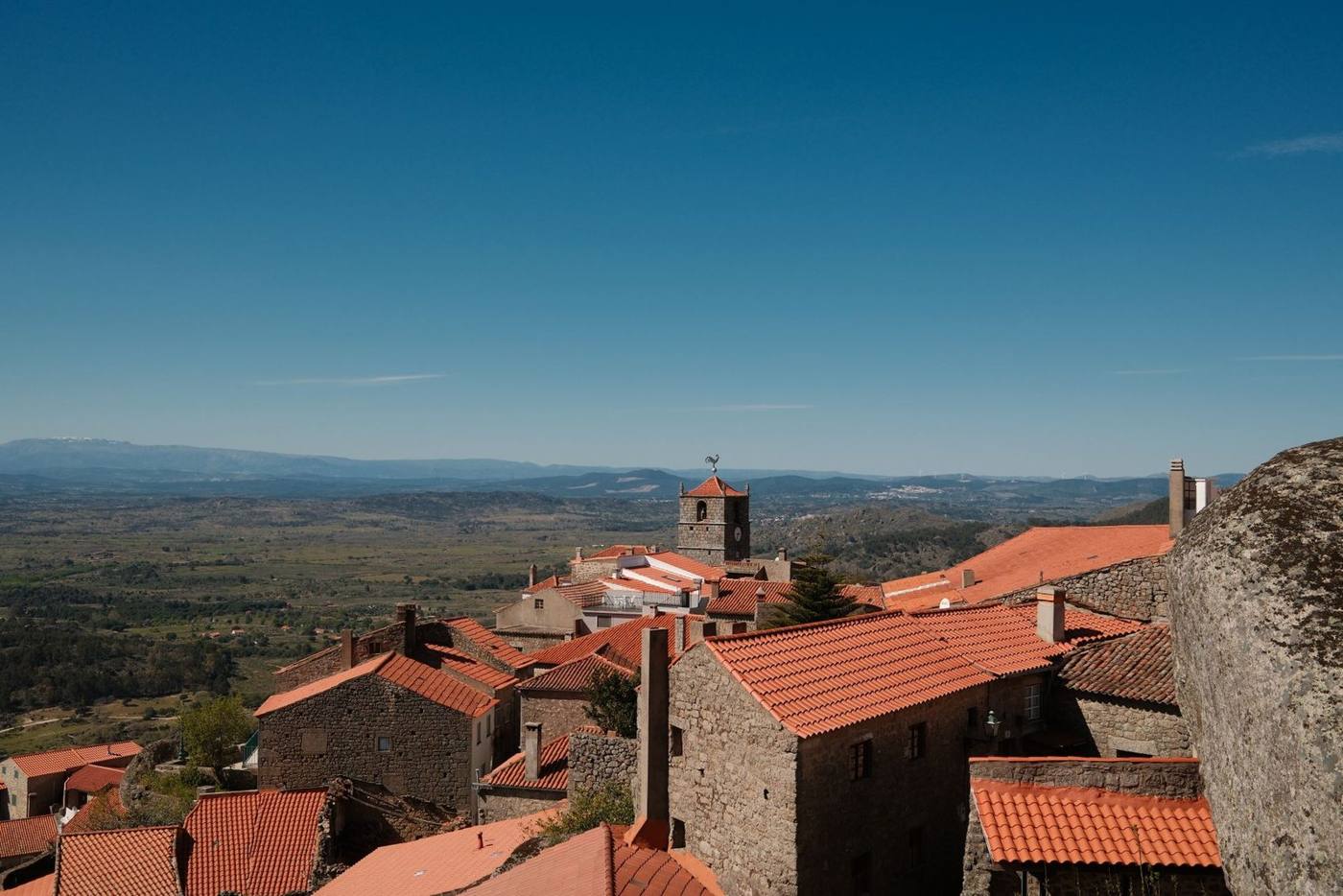
Fifteen days to see the whole country: the central coast, Porto and the Douro, the granite villages of the interior, Évora and the Algarve, finishing in Lisbon.
 8 daysEasy
Alentejo: Évora, Monsaraz and Mértola
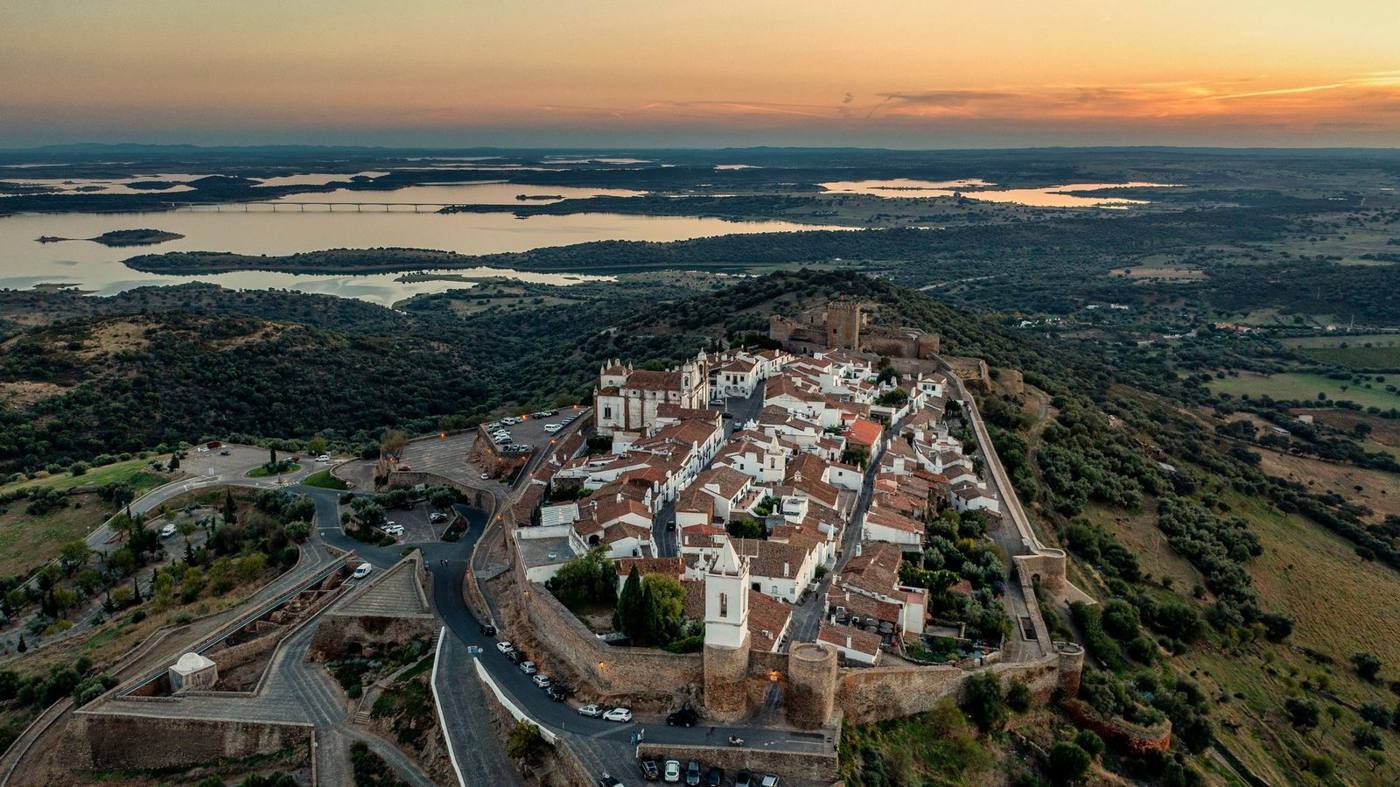
A slow week in Portugal's plains, among white towns, Neolithic stone circles, wineries and a reservoir under one of Europe's darkest night skies.
 9 daysEasy
The Douro Valley and the Historic Villages of the Beiras
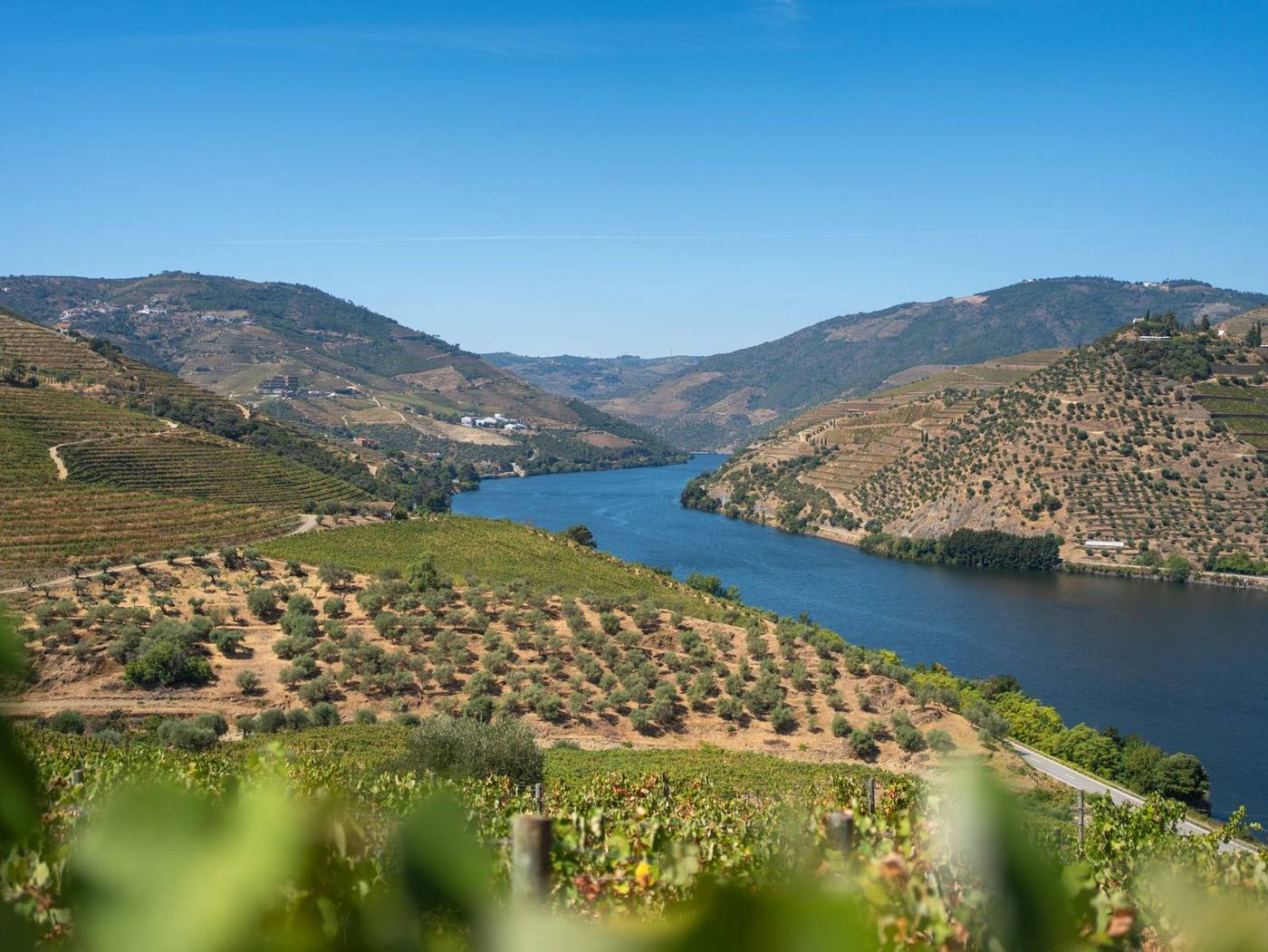
From Porto up the river past the wine quintas, on to the rock engravings of the Côa, and back along the Spanish border from one fortress to the next.