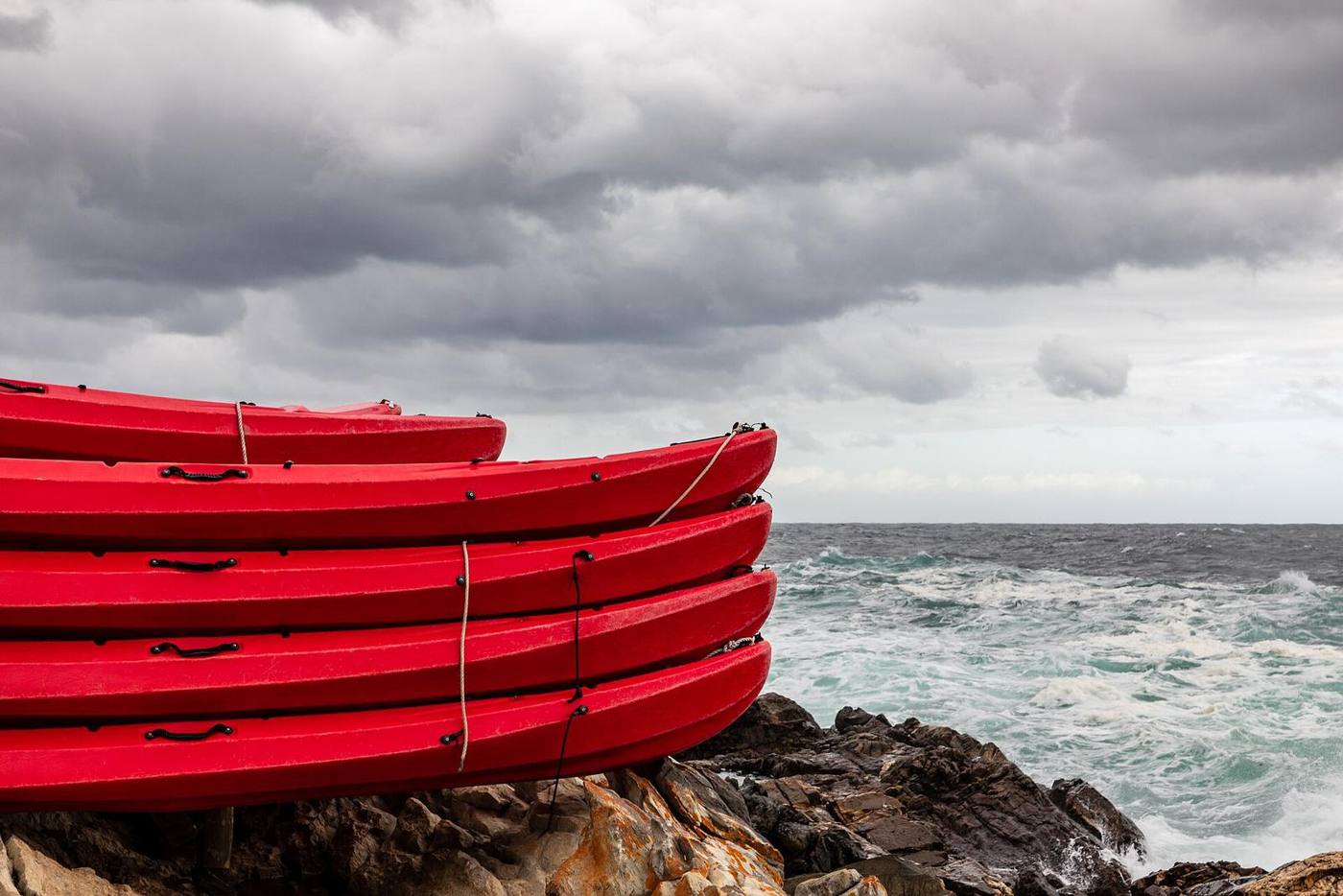
The Garden Route from Port Elizabeth to Cape Town
Africa's most famous coastal road: the elephants of Addo, the waves of Jeffreys Bay, the Tsitsikamma forest, the whales of De Hoop and the Cape winelands.
- Port Elizabeth
- Addo
- Jeffreys Bay
- Tsitsikamma
- Knysna
- Oudtshoorn
- De Hoop
- Betty's Bay
- Stellenbosch
- Cape Town
Day by day
- Day 1
Arrival in Gqeberha, formerly Port Elizabeth
The trip begins in Gqeberha, the city known as Port Elizabeth until 2021, on Algoa Bay. You arrive by plane from Johannesburg or Cape Town. Collect your rental car at the airport: the Garden Route is a road trip, driving on the left, with short stages and many stops. EU citizens need no visa for South Africa for up to 90 days; your passport must have at least two blank pages and be valid for thirty days beyond departure.
Gqeberha is a quiet port city with long beaches and a seafront called Summerstrand, where the Indian Ocean is warmer than on the Atlantic coast. In the afternoon walk along the seafront or visit the Donkin Reserve, a hill in the old centre with a lighthouse and a stone pyramid dedicated to the wife of the city's founder. A walking route marked by coloured tiles crosses the old quarter.
Convenient places to stay are the seaside areas such as Summerstrand, close to the airport and the road to Addo. Dinner can be fresh fish or South African cooking with grilled meat.
Practical tip: shop for the following days, with water and snacks for the safari, and check that the car has a good spare tyre. In the parks distances between services are long and phone coverage may be missing. Fill up with fuel whenever you can.
- Day 2
Safari in Addo Elephant National Park
Addo Elephant National Park is about an hour north of Gqeberha. Created in 1931 to protect the region's last eleven elephants, it now holds hundreds, along with buffalo, lions, hyenas, zebras, antelope and rhinos. It is one of the few parks where you can see the Big Five without malaria, which makes it easy for families with children too.
Arrive when the gates open, when animals are most active. You drive yourself on well-kept tarred and gravel roads; you may leave the car only in the fenced areas indicated. Waterholes are the best places to wait for elephants, which arrive in large groups especially in the heat of the day. One important rule: always give animals right of way, do not get too close to elephants and never switch off near an agitated herd. For conservation fees, from 1 November 2026 foreign adults pay 565 rand per day, according to the official national parks tariff.
In the afternoon, if you wish, the park runs ranger-guided drives in open vehicles, including at sunset or at night, booked at the visitor centre. Flightless dung beetles, protected in the park, often cross the roads: take care not to run them over.
Sleep in the park's main camp or on farms nearby. Practical tip: the speed limit in the park is low, respect it; the best sightings come from driving slowly.
- Day 3
Jeffreys Bay and the Storms River at Tsitsikamma
Today you enter the Garden Route proper. After about an hour west you stop at Jeffreys Bay, considered one of the world's surfing capitals, with the long waves of Supertubes. Even non-surfers can watch from the seafront and hunt for shells on the beaches.
Then continue to the Tsitsikamma section of Garden Route National Park, a wild coast of cliffs, ancient forests and rivers running into the Indian Ocean. The road crosses high bridges over deep gorges, such as the Bloukrans River bridge, home to one of the world's highest bridge bungee jumps, at more than two hundred metres.
At Tsitsikamma the most famous walk leads to the Storms River Mouth: a trail of about a kilometre, along boardwalks and steps in the forest, to a suspension bridge across the river mouth, with waves breaking on the rocks. The trail is easy but has many steps. This is also the start of the Otter Trail, one of South Africa's most celebrated treks, five days along the coast, to be booked far in advance.
In the afternoon you can kayak up the river gorge or walk in the forest of yellowwoods, giant trees that can live for centuries. Sleep in the park, in chalets by the sea, or in nearby villages. Practical tip: even in summer evenings on the coast are cool, and the weather changes quickly; bring a waterproof jacket.
- Day 4
Plettenberg Bay and the Knysna lagoon
In the morning drive to Plettenberg Bay, simply called Plett, a bay of long golden beaches. Robberg Nature Reserve occupies a rocky peninsula reaching into the sea: loop trails of two to nine kilometres pass above a seal colony and over ancient dunes. The long route has demanding rocky sections and should only be done at low tide with suitable shoes. From July to November whales and dolphins are often seen from the bay, and licensed boat trips run.
In the afternoon reach Knysna, about half an hour away, a small town on a large lagoon separated from the ocean by two sandstone headlands called The Heads. The viewpoint on the eastern headland looks over the narrow channel where the ocean enters the lagoon, one of the most dangerous passages for boats on the coast. Sunset cruises run on the lagoon, and Knysna oysters are the local speciality.
The forests around Knysna are the largest in South Africa; wild elephants once lived here, today almost gone. You can walk among the trees or cycle on marked trails.
Sleep in Knysna or Plettenberg Bay. Practical tip: in 2017 and 2018 large fires struck the area; in the dry months always respect fire bans and never throw cigarette ends from the car.
- Day 5
Oudtshoorn, ostriches and the Cango Caves
Today you leave the coast and climb inland over one of the passes of the Outeniqua range towards the Little Karoo, a semi-desert region of arid hills, vineyards and farms. The road goes through George, the main town of the Garden Route, then crosses the mountains on scenic bends.
Oudtshoorn is the world's ostrich capital. In the late nineteenth century ostrich feathers were fashionable in Europe, and farmers grew so rich that they built large houses called feather palaces, some still open to visitors. Ostrich farms offer tours to see the birds up close; choose those that do not offer ostrich riding, which many animal welfare groups advise against.
About half an hour north are the Cango Caves, a series of limestone caverns with large halls full of stalactites and stalagmites. Visits are guided only: the short tour suits everyone, while the adventure tour goes through narrow passages where you have to crawl and is not for anyone with claustrophobia. Book ahead on the official website and check the times.
In the afternoon, keen drivers can take the Swartberg Pass, a historic gravel road with spectacular hairpins, only in good weather. Sleep in Oudtshoorn. Practical tip: in the Karoo summer days are very hot and nights cool; always carry plenty of water in the car.
- Day 6
Towards De Hoop along the southern coast
Today is a long stage west. From the Karoo you descend towards the coast through the valleys and towns of the Overberg, a region of wheat fields and rolling hills. The drive to De Hoop Nature Reserve takes about five hours with stops; leave early.
On the way you can stop at Swellendam, one of South Africa's oldest towns, from the eighteenth century, with white Cape Dutch houses and a museum in the old magistrate's residence. From here a minor road, partly gravel, leads to De Hoop. Before setting off check road conditions on the website of the reserve, run by CapeNature, the Western Cape's parks authority.
De Hoop is one of the country's most beautiful and least known reserves: towering white dunes, a long freshwater lagoon full of waterbirds, grasslands with Cape mountain zebras, bontebok and ostriches, and a coast where from June to November many southern right whales are seen from the shore. The reserve is also part of a large marine protected area, so the coast and surrounding sea are protected.
Arrive in the afternoon and walk by the lagoon at sunset. Sleep inside the reserve, in cottages or the campsite. Practical tip: there are no shops in the reserve; bring everything you need for dinner and breakfast, and fill up with fuel before the gravel road.
- Day 7
Dunes, whales and the trails of De Hoop
A full day inside the reserve. In the morning walk over the dunes to Koppie Alleen beach, with its great white dunes and rock pools full of starfish, anemones and small fish. At low tide you can explore them for hours. From June to November, from the headland above the beach, you often see dozens of southern right whales with their calves, sometimes very close to shore.
The Whale Trail, one of South Africa's most famous coastal treks, crosses the reserve in five days and must be booked well in advance; but you can walk short sections in a day. In the afternoon take a bicycle or walk along the lagoon: it is a rich birding area, with flamingos, pelicans and herons. Cape mountain zebras and bontebok, antelope once nearly extinct, graze peacefully near the cottages.
The reserve also protects lowland fynbos, the Cape's typical vegetation, which fills with flowers in spring, from August to October. At sunset the light on the dunes and the lagoon is splendid.
Practical tip: the nearby military missile test range sometimes closes parts of the reserve for exercises; ask at the entrance. At night the sky is very dark, perfect for seeing the Milky Way and the Southern Cross, so bring a warm layer for stargazing.
- Day 8
Betty's Bay, the Stony Point penguins and Kirstenbosch
In the morning leave De Hoop and drive towards Cape Town along the coast. Pass through Hermanus, the town best known for whales, with its cliff path, then continue on Clarence Drive, the coastal road between the mountains and False Bay, one of the country's most spectacular.
At Betty's Bay stop at the Stony Point African penguin colony. It is less known than Boulders near Cape Town and so quieter: a wooden boardwalk leads among the penguins, which nest among the rocks, and the cormorants. Nearby is the Harold Porter Botanical Garden, with trails through fynbos and a waterfall in a gorge.
In the afternoon reach Cape Town and visit Kirstenbosch Botanical Garden at the foot of Table Mountain, devoted to South Africa's indigenous plants. A canopy walkway, the Boomslang, gives views over the treetops and the mountain. Take time in the protea garden, home of the national flower.
For the night choose the centre, the Waterfront or Green Point, convenient for the evening. Practical tip: in Cape Town never leave anything visible in the car and use ride-hailing apps in the evening, even for short distances between restaurants and your accommodation, and keep your phone out of sight on the street.
- Day 9
Stellenbosch, Paarl and the wine country
Today is a day in the Winelands, the wine region less than an hour from Cape Town. Vines have been grown here since the late seventeenth century, since the arrival of Dutch settlers and then the French Huguenots. The landscape is one of neat vineyards at the foot of rugged mountains and white farmhouses with rounded gables.
In the morning visit Stellenbosch, a university town with oak-lined avenues, historic houses and art galleries, the country's second oldest town. Walk along Dorp Street and visit the village museum, with houses furnished in different periods. Around it dozens of wine estates are open for tastings, many with gardens and kitchens among the vines.
In the afternoon continue to Paarl, a larger town at the foot of huge granite domes that gleam after rain. Here is the Afrikaans Language Monument, on a hill with views over the valley. Near Paarl is also the former prison from which Nelson Mandela walked no-cost in 1990, after twenty-seven years in jail; a statue of him stands at the gate.
Practical tip: South Africa's drink-driving limit is low and checks are frequent. If you go tasting, book a driver or an organised tour, or choose someone who will not drink.
- Day 10
A last morning and departure
The last day depends on your flight time. If you have a no-cost morning, ride the cableway up Table Mountain, leaving early to avoid wind and queues, or visit central Cape Town: the Castle of Good Hope, the country's oldest colonial building, from the seventeenth century; the District Six Museum, which tells how a multi-ethnic neighbourhood was cleared and razed during apartheid; and colourful Bo-Kaap, with painted houses on the slopes of Signal Hill.
Alternatively stroll around the Victoria & Alfred Waterfront, the old harbour with the Zeitz MOCAA museum of contemporary African art and seals on the jetties. Ferries to Robben Island also leave from the Waterfront, the island where Mandela was held for eighteen years; the visit takes about three and a half hours and must be booked days ahead.
Return the car at the international airport, about twenty minutes from the centre. Check for any toll charges for Chapman's Peak or toll roads, which the rental company sometimes bills afterwards.
Things to take home: Winelands wine, well packed; rooibos, South Africa's red tea; beadwork and African textiles. Practical tip: reach the airport at least three hours before international flights, because security checks and check-in can take time, especially in the busy summer season.
South Africa at its easiest and most varied in ten days, perfect by hire car. It doesn't replace Kruger for wildlife, but Addo guarantees elephants. From June to November De Hoop and Hermanus are among the world's best places to see whales from the shore.
Before you go
- Documents and visa
- Passport valid for at least 30 days beyond departure, with at least two completely blank pages; no visa for tourism up to 90 days. A return ticket is required.
- Health and vaccines
- No compulsory vaccines arriving from Europe; a yellow fever certificate is needed only if arriving from a risk country. Kruger and the north-east have seasonal malaria risk: ask your doctor before travelling. Emergencies: 10111 police, 10177 ambulance, 112 from mobiles.
- Money and payments
- South African rand. Cards work almost everywhere; keep some cash for tips and car guards.
- Power sockets
- Type M, plus C and N, 230 volts: you need an adapter for the large three round-pin plugs.
- Time zone
- UTC+2 all year: South Africa does not use daylight saving time.
- Safety
- The United States rates South Africa level 2 for crime. In cities avoid walking alone at night, leave nothing visible in the car and use ride-hailing apps after dark. Official advice: GOV.UK.
Information checked in November 2026 for Italian and EU citizens. Rules change: always check before you travel.
Variations
In 7 days: Addo, Tsitsikamma, Knysna and Plettenberg, then straight to Cape Town along the coast, skipping Oudtshoorn and De Hoop.
In 14 days: add two nights in Cape Town for the Cape Peninsula and Robben Island, and a stop in Hermanus for the whales.
Frequently asked questions
How much does Addo cost?
From 1 November 2026, according to the official national parks tariff, foreign adults pay a conservation fee of 565 rand per day. Ranger drives are paid separately.
Is the Garden Route safe to drive?
Yes, with normal precautions: drive by day, leave nothing visible in the car, refuel often and respect park speed limits. In cities use ride-hailing apps at night.
When is the best time to go?
October to April for warmth and the sea; June to November for whales at De Hoop and Hermanus. The Garden Route coast has rain spread throughout the year.
Indicative itinerary written by World Atlas. Before booking, check timetables, seasonal openings, documents and safety.
 7 daysEasy
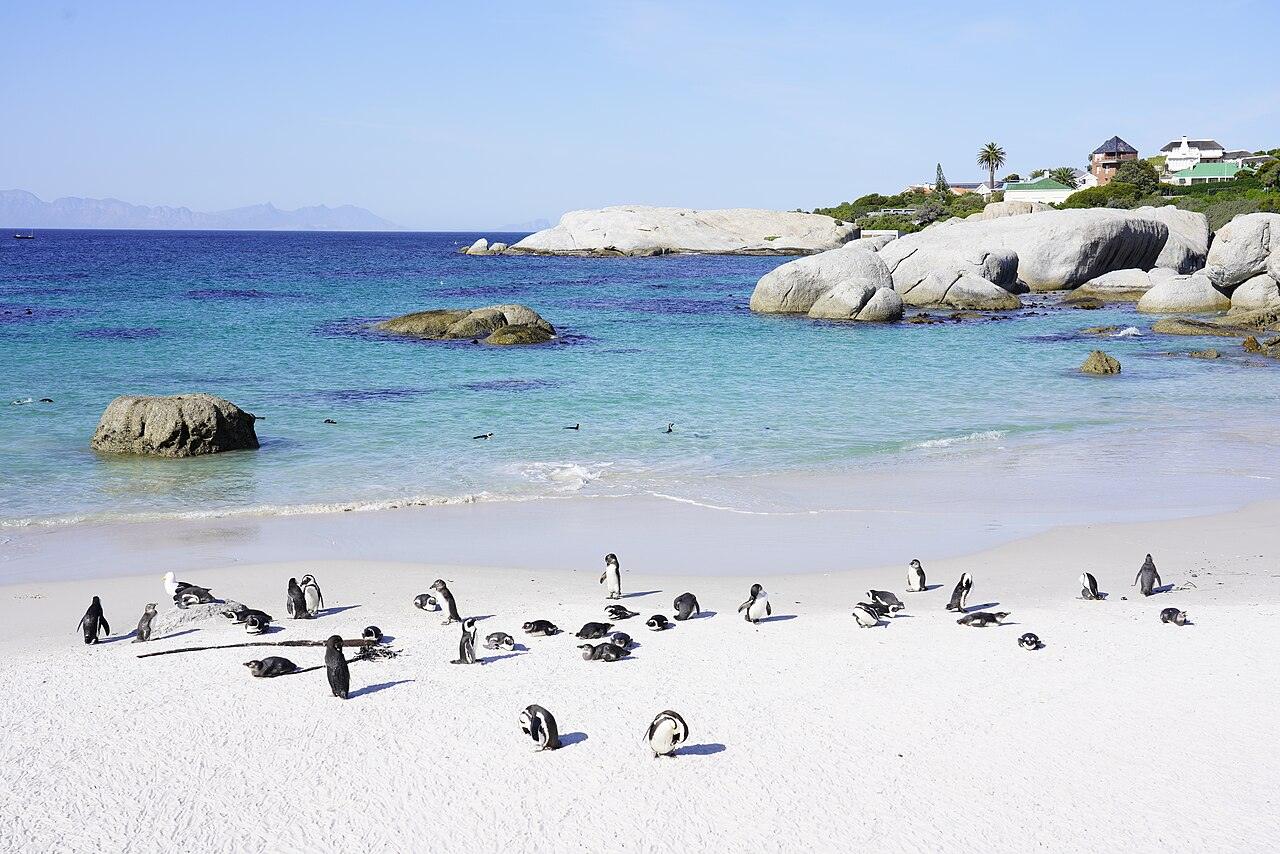
Cape Town and the Cape Peninsula
A week of Table Mountain, the penguins of Boulders Beach, the Cape of Good Hope and the Stellenbosch vineyards.
 15 daysModerate
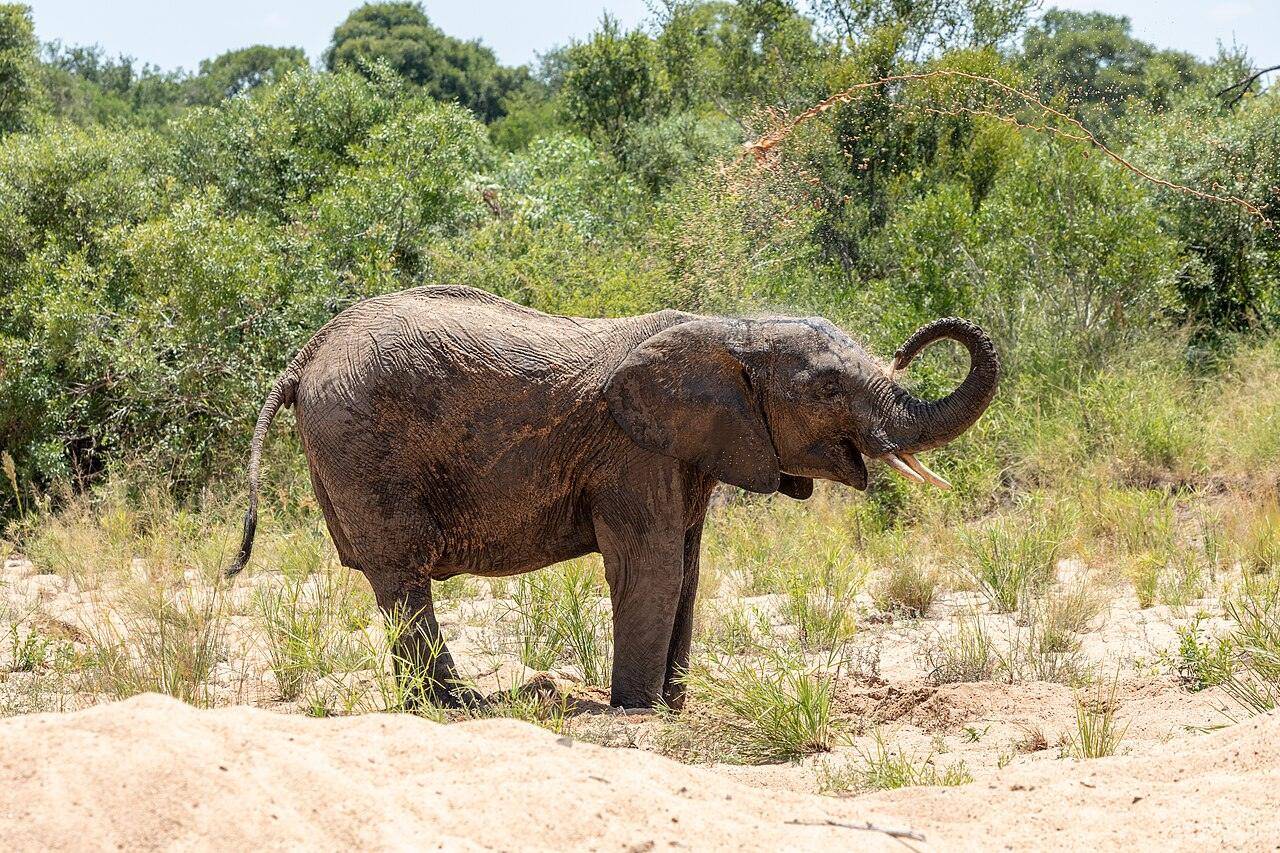
Kruger, the Garden Route and Cape Town
The great classic: a Kruger safari, the scenic Garden Route and a finale in Cape Town.
 13 daysEasy
Kruger, Eswatini and the Zululand parks
Almost two weeks of pure wildlife: Kruger, the small kingdom of Eswatini, the rhinos of Hluhluwe-iMfolozi and the hippos of the St Lucia estuary.