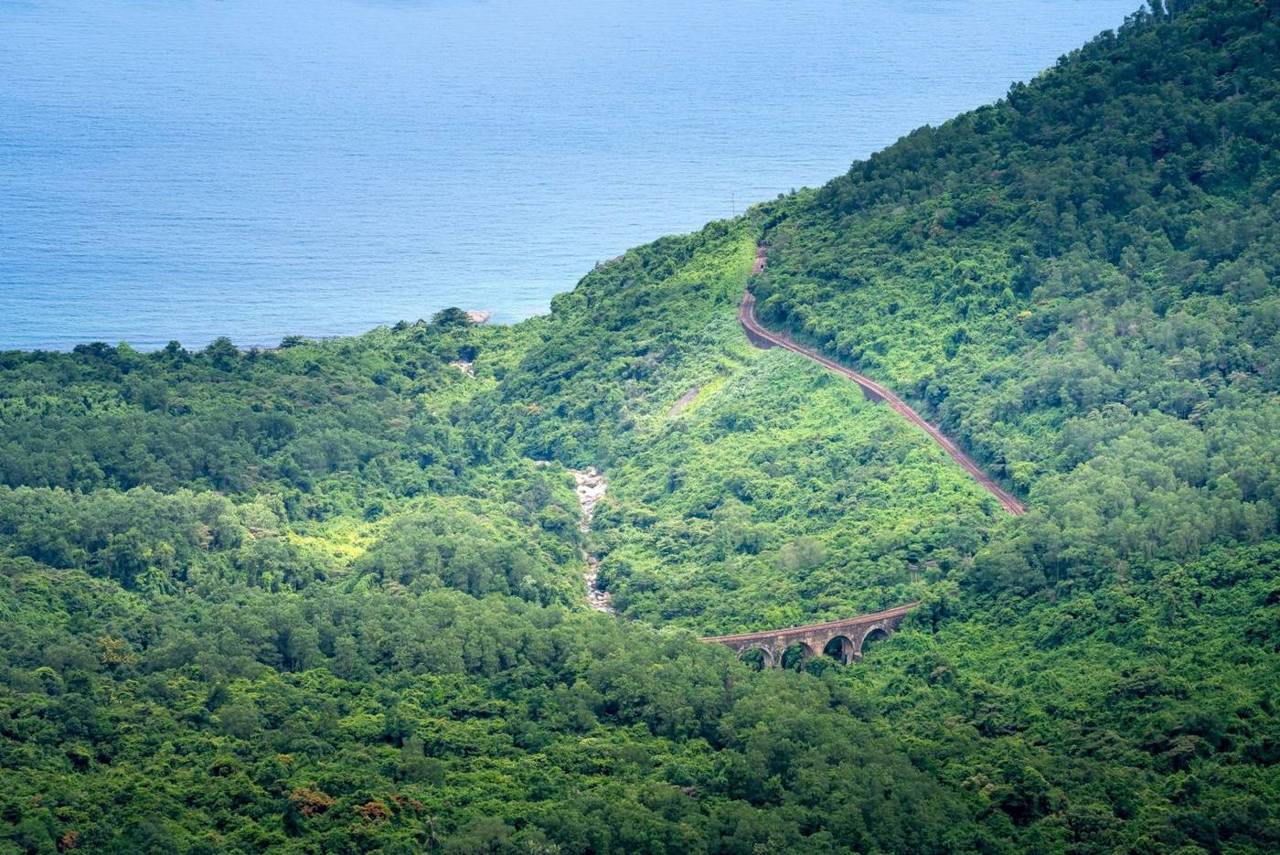
By motorbike on the Ho Chi Minh Trail
Hanoi to Saigon in the saddle, through the interior: Phong Nha, Khe Sanh, the Kon Tum highlands, Dalat and the Cat Tien forest.
- Hanoi
- Mai Chau
- Phong Nha
- Khe Sanh
- Hue
- Hoi An
- Kon Tum
- Nha Trang
- Dalat
- Cat Tien National Park
Day by day
- Day 1
Departure for Hanoi
This trip crosses Vietnam from north to south by motorbike, through the interior, along the Ho Chi Minh Road, which largely follows the Truong Son mountains and the route of the trail used during the war to bring men and supplies to the south. You ride through the Mai Chau valley, the caves of Phong Nha, Khe Sanh, Hue, Hoi An, the highlands of Kon Tum and Buon Ma Thuot, Lak lake, Nha Trang, Dalat and Cat Tien national park, all the way to Saigon.
Before you go: Italian citizens can enter without a visa for stays of up to 45 days, an exemption valid until 14 March 2028; for longer stays there is the 90 day electronic visa. Other nationalities should check their own rules. The passport must be valid.
The licence: Vietnamese road traffic law recognises the international driving permit of countries in the 1968 Vienna Convention, such as Italy, only if you carry it together with your valid national licence. So you need your Italian motorcycle licence, category A1, A2 or A depending on engine size, and the 1968 model international permit showing the same category. A car licence alone, category B, is not enough to ride a motorbike in Vietnam. Without a valid licence you ride illegally and, after an accident, many travel insurers will not pay for treatment: read the policy and ask in writing whether it covers a motorbike of the size you will use. Third party insurance is also compulsory in Vietnam, and helmets are compulsory for rider and passenger.
Today you take the flight to Hanoi, usually with one stop, and spend the night on the plane.
Practical tip: bring your own gloves, a jacket with armour and, if you can, your own full face helmet.
- Day 2
Hanoi and collecting the bikes
Today you arrive in Vietnam and get the bike ready.
You land at Noi Bai international airport, about forty minutes from the centre of Hanoi, the capital, a city of lakes, trees and millions of scooters on the Red River.
In the late morning collect the bikes. Calmly check brakes, tyres, lights, horn, chain and mirrors, and photograph any existing scratches. Make sure the bike's registration papers and insurance certificate are there, to be kept with you at all times together with your passport, licence and international permit. Take a first ride in the traffic to get a feel for it: here you ride on the right, the horn is used as a warning and larger vehicles in practice have priority.
In the afternoon, if you still have energy, walk through the Old Quarter, where each street was devoted to a trade, to Hoan Kiem Lake, with the red bridge of Ngoc Son temple. Then visit the Temple of Literature, built in 1070 in honour of Confucius. Check prices and times.
In the evening sit on a plastic stool on the pavement and eat bun cha, grilled pork with noodles and herbs, or pho, the beef noodle soup.
Pack your luggage for the coming days: waterproof bags, a puncture kit, a rain poncho and a small first aid kit.
Sleep in Hanoi.
Practical tip: buy a Vietnamese SIM card with plenty of data and download offline maps. Outside the cities the signal can disappear for long stretches.
- Day 3
From Hanoi to the Mai Chau valley
Today you leave the capital and climb into the first mountains.
Set off early to avoid the traffic leaving Hanoi and head south-west. After the plain, the road starts to climb through hills covered in forest and fields of sugar cane. The stage is short, about 140 kilometres, and it helps you get used to the bike, the load and the way Vietnamese people drive.
Before dropping into the valley, stop at a viewpoint on the Thung Khe pass, with views over the mountains and the rice fields below.
You reach Mai Chau at the end of the morning. It is a green, flat valley enclosed by limestone mountains, inhabited mainly by the White Thai, who live in wooden houses on stilts, with the space under the house used for tools and animals.
In the afternoon leave the bike and walk or cycle through the rice fields to the villages, such as Lac and Poom Coong, where women weave on looms beneath the houses. The paths are flat and run between canals, buffalo and rice fields.
In the evening have dinner with the Thai dishes of the valley: mountain chicken, grilled river fish, sticky rice cooked in bamboo and rice spirit, often offered as a welcome.
Sleep in Mai Chau, in a stilt house.
Practical tip: in stilt houses you leave your shoes downstairs, before the steps. Bring a pair of flip flops and a torch for the night.
- Day 4
Along the Ho Chi Minh Road to Tan Ky
Today you join the Ho Chi Minh Road, the thread you follow for almost the whole trip.
It is a long stage, taking almost the whole day, so set off early. From Mai Chau the road descends south through valleys and hills until it reaches the Ho Chi Minh Road, built from the 2000s to link the north and south of the country through the interior, west of coastal Highway 1. Here traffic is much lighter, there are few lorries and the landscape changes constantly.
You cross fields of sugar cane, tea plantations, acacia woods and small market towns where you can stop for coffee. Vietnamese coffee is strong, dripped slowly through a small metal filter called a phin, and is often drunk with condensed milk and ice.
At lunchtime eat in one of the roadside canteens called com binh dan: choose rice, vegetables, eggs, fish or meat of the day from the counter.
In the afternoon continue to Tan Ky, a small town in the Nghe An region, the home region of Ho Chi Minh. You arrive tired, but with almost 420 kilometres behind you since leaving Hanoi.
In the evening fill up with fuel, check the chain and the oil and have dinner with simple local dishes.
Sleep in Tan Ky.
Practical tip: fill up every time the tank reaches half. On some stretches of the interior fuel stations are far apart and can close early in the evening.
- Day 5
Towards Phong Nha and the great caves
Today you enter the most famous karst region in Vietnam.
From Tan Ky the Ho Chi Minh Road continues south, through farmed hills and villages. Further on the mountains draw closer and the first limestone walls appear, covered in forest. Ride carefully: in this section the road is narrow in places, with blind bends, buffalo and children cycling home from school.
In the early afternoon you reach Phong Nha, a village on the Son river, the gateway to Phong Nha-Ke Bang national park, on the UNESCO list. Beneath these mountains lie hundreds of caves, including Son Doong, one of the largest in the world, which can only be visited on expeditions of several days booked well in advance.
In the afternoon do the classic visit: Phong Nha cave, reached by boat up the river. The boat enters the mountain, among lit stalactites and stalagmites, and then you continue on foot along walkways. Check prices and times.
Alternatively, visit Paradise Cave, in the forest, with a long wooden walkway descending into very high chambers full of white formations. Check prices and times.
In the evening, in the village, eat river fish and grilled pork dishes, and rest: tomorrow the road becomes wilder.
Sleep in Phong Nha.
Practical tip: inside the caves it is cooler and very humid. Wear shoes with a good sole and leave only things of no value on the bike.
- Day 6
Dong Hoi, the Truong Son and Khe Sanh
Today you follow the wartime supply road to Khe Sanh.
In the morning ride down to Dong Hoi, on the coast, for a coffee by the river and a refuel, then head back inland along the Ho Chi Minh Road, on the eastern side of the Truong Son mountains. During the war the Ho Chi Minh Trail ran along these mountains and above all across the border in Laos: a network of paths and roads used by North Vietnam to bring soldiers and weapons south, bombed for years.
Along the way stop at the Truong Son national martyrs' cemetery, a large cemetery with thousands of white graves of soldiers who died on the trail, arranged by region of origin among pines and trees. It is a silent and deeply respected place.
In the afternoon take the road that climbs west along the river to Khe Sanh, a small highland town near the border with Laos, among coffee and pepper plantations. Here in 1968 the US Marines held out through a long siege. On the site of the old base, at Ta Con, a small museum displays photographs, helicopters and military vehicles. Check prices and times.
Sleep in Khe Sanh.
Practical tip: in the areas of the old demarcation line and along the border with Laos unexploded ordnance still remains. Do not leave roads and beaten paths, and do not touch metal objects found in fields.
- Day 7
Ta Rut, the A Luoi valley and Hue
Today you cross one of the most beautiful and remote parts of the trip.
From Khe Sanh head back towards the Dakrong river and take the Ho Chi Minh Road heading south, through forested mountains, villages of the Van Kieu and Pa Ko minorities and suspension bridges over the rivers. The road climbs and drops constantly, with tight bends and long stretches without villages. Ride calmly and always keep right on bends.
You pass Ta Rut and reach the A Luoi valley, wide and green, near the border with Laos. During the war it saw very hard fighting, such as the battle of 1969 on Ap Bia hill, which American soldiers called Hamburger Hill. Today it is a quiet valley of rice fields, rubber plantations and markets.
At lunchtime stop in town for a noodle soup and a coffee. Then leave the Ho Chi Minh Road and ride east through the hills, down to the plain and Hue.
Hue was the capital of Vietnam under the Nguyen dynasty, from 1802 to 1945. In the evening walk along the river and try bun bo Hue, the spicy beef noodle soup with lemongrass, and the small steamed rice cakes of imperial cooking.
Sleep in Hue.
Practical tip: between September and December this area gets the heaviest rain in Vietnam and landslides can close the road. Check the weather before leaving Khe Sanh.
- Day 8
The imperial city and the Hai Van Pass
Today you visit Hue and reach Hoi An along the most scenic road on the coast.
Early in the morning enter the Hue Citadel, on the UNESCO list, surrounded by walls and a moat. Inside is the Imperial City, with the Ngo Mon gate, the Palace of Supreme Harmony, where the emperors received the court, pavilions and gardens. The innermost part was the Forbidden City, largely destroyed in the wars of the twentieth century and now being restored. Check prices and times.
If you have time, reach Thien Mu pagoda, on the river bank, with its seven storey octagonal tower.
At the end of the morning ride south again along the coast. You pass the Lang Co lagoon, with the fishermen's nets, and climb the Hai Van Pass, the pass of the clouds, a winding road above the sea. Cars and lorries use the tunnel under the mountain, so the pass road belongs almost entirely to motorbikes. At the top stand the ruins of an old fort and the view over Da Nang bay.
Descend to Da Nang, cross the city along the beach and continue to Hoi An, an old port on the UNESCO list, with the yellow houses of its merchants.
Sleep in Hoi An, for two nights.
Practical tip: on the Hai Van Pass the weather changes quickly, with mist and wind. Keep your rain poncho within reach and always ride with your lights on.
- Day 9
Rest day in Hoi An
Today you leave the bike parked and enjoy the town.
Hoi An was a busy trading port between the sixteenth and nineteenth centuries, where Chinese, Japanese and European merchants stopped. Then the Thu Bon river silted up, trade moved to Da Nang and the town survived almost intact, with its wooden houses, dark tiles and yellow facades.
Early in the morning walk through the old town before the groups. With the old town ticket you enter some merchant houses, with carved wooden beams, the halls of the Chinese congregations, decorated with dragons and spirals of incense, and the area by the covered Japanese bridge, the symbol of the town. Check prices and times.
Then visit the central market, by the river, with stalls of fish, herbs, fruit and ready food.
In the afternoon take a bicycle and ride through the rice fields to An Bang beach, for a swim and some rest. Alternatively, have clothes made to measure by one of the town's tailors: they are ready in one or two days.
At sunset the streets fill with silk lanterns. Board a small boat on the river and float a paper candle.
In the evening try cao lau, the thick Hoi An noodles, banh mi and chicken rice, com ga.
Use the rest day to have the bike checked: chain, brakes and tyres.
Practical tip: tomorrow brings one of the longest stages. Go to bed early and pack your bags the night before.
- Day 10
My Son, Kham Duc and Kon Tum
Today you leave the coast and climb towards the central highlands.
At dawn make a detour to the My Son sanctuary, about an hour from Hoi An, in a green valley. Between the fourth and thirteenth centuries the kings of the Champa kingdom built red brick temples here dedicated to the god Shiva. During the war many were destroyed by bombing. The site is on the UNESCO list. Arrive at opening time, before the heat. Check prices and times.
Then return to the Ho Chi Minh Road heading south-west. The road climbs through forested mountains, deep valleys and green rivers, with few villages. You pass Kham Duc, a small mountain town where you can refuel and eat, and continue south through the mountains on the border with Laos.
In the afternoon the road comes down onto the highlands. You pass Dak To, where one of the great battles of the war was fought in 1967, and reach Kon Tum, a quiet town on the Dak Bla river.
Kon Tum is the land of the Bahnar and other highland minorities. Before dinner, if there is still light, see the wooden church built by French missionaries, with decoration inspired by minority houses, and a rong communal house, with a very tall, pointed thatched roof, where the village meets.
Sleep in Kon Tum.
Practical tip: this is a long mountain stage. Leave with a full tank, water and something to eat, and plan to arrive before dark.
- Day 11
The coffee highlands to Buon Ma Thuot
Today you cross the heart of the central highlands.
In the morning visit a Bahnar village near Kon Tum, with wooden houses on stilts and the rong house in the centre. Then set off south. The road crosses a region of red volcanic soil, planted with coffee, pepper, rubber and cashews. Vietnam is one of the largest coffee producers in the world, above all of the robusta variety, which grows right here on these highlands.
You pass Pleiku, a market town. Nearby is Bien Ho lake, an old volcanic crater surrounded by pines and tea plantations: stop for a break and a coffee with a view of the water.
In the afternoon continue south to Buon Ma Thuot, the coffee capital of Vietnam, a large modern city on the highlands. Here you can visit a museum devoted to coffee, with tools, machines and the history of the plant, or an Ede village, with long houses on stilts where a whole family once lived. Check prices and times.
In the evening try highland coffee made with the phin filter, grilled meat and rice cooked in bamboo.
Sleep in Buon Ma Thuot.
Practical tip: on the highlands lorries loaded with coffee and timber drive fast. When you hear a horn behind you, keep to the right edge and let them pass.
- Day 12
Lak lake and the descent to Nha Trang
Today you leave the highlands and ride down to the sea.
In the morning ride south to Lak lake, a large freshwater lake surrounded by rice fields and hills. The M'nong people live on its shores, in villages of long wooden houses. Board a dugout canoe for a trip on the calm morning water, among water lilies and fishermen. Avoid elephant rides: the animals suffer from this use.
Then set off east. The road leaves the highlands and drops in a long descent through the mountains, with bends and views over the coastal plain. The heat rises with every kilometre and the landscape changes: rice fields, palms and salt pans appear.
In the afternoon you reach Nha Trang, a large seaside city with a long beach and a bay full of islands. Before sunset visit the Cham towers of Po Nagar, a red brick sanctuary on a hill near the river mouth, still used for prayer. Cover shoulders and knees. Check prices and times.
In the evening walk along the seafront and have dinner with fish and seafood, for example bun cha ca, noodle soup with fish cakes, a speciality of the city.
Sleep in Nha Trang.
Practical tip: on descents use mainly engine braking and do not hold the brakes on for long. With the heat and the load they overheat quickly.
- Day 13
The climb to Dalat
Today you return to the mountains, on one of the finest roads of the trip.
The stage is short, about 140 kilometres, but almost all uphill. From Nha Trang ride inland through the rice fields, then the road starts to climb the Khanh Le pass, a long series of bends through dense forest, with waterfalls, hairpins and views over the valleys. At the top the air turns cool and pines appear.
You reach Dalat at lunchtime. The town lies at about 1,500 metres and was founded by the French at the end of the nineteenth century as a retreat from the heat. It has a cool climate all year, colonial villas, lakes, pine woods and large greenhouses of flowers, strawberries and vegetables.
In the afternoon walk around Xuan Huong lake, in the centre, and visit the old railway station, in art deco style, with a short stretch of track still used by tourists. Then reach the summer palace of the last emperor, Bao Dai, a villa from the 1930s with its original furnishings. Check prices and times.
In the evening go to the night market in the centre and try Vietnamese pizza, banh trang nuong, a rice sheet grilled over charcoal with egg and spring onion, and hot soya milk.
Sleep in Dalat.
Practical tip: in Dalat it gets cold in the evening, especially in winter. Keep a warm jacket and gloves ready for tomorrow morning's departure.
- Day 14
Towards Cat Tien national park
Today you come down from the highlands towards the lowland forest.
In the morning leave Dalat and ride south-west, through tea and coffee plantations and vegetable fields. Then the road drops from the highlands towards the plain of the Dong Nai river, with long bends and heavier traffic of lorries and buses. Ride carefully and take regular breaks.
In the early afternoon you reach Cat Tien national park, on the Dong Nai river, one of the last great lowland forests in southern Vietnam. You leave the bike at the park entrance and cross the river by ferry to the park headquarters. Check prices and times.
The park is home to gibbons, monkeys, deer, tropical birds and, in some areas, the rare gaur, a wild ox. In the afternoon walk with a guide on one of the forest trails, among huge trees with buttress roots, lianas and butterflies. You can also hire a bicycle to ride the park's internal roads.
At sunset, if possible, join a night drive in an open vehicle with a guide and a spotlight, looking for deer and small nocturnal carnivores.
In the evening have a simple dinner near the park and go to bed early.
Sleep at Cat Tien.
Practical tip: there are leeches in the forest, especially in the rainy season. Bring long socks to pull over your trousers and insect repellent.
- Day 15
Gibbons at dawn and the last stage to Saigon
Today you listen to the forest at dawn and finish the journey by bike.
Get up before dawn and go into the forest with a guide to hear the song of the gibbons, which echoes through the trees in the first hours of the day. With a little luck you see them moving through the high branches. Then walk along the river or a walkway, where at dawn you see many birds, such as hornbills and kingfishers.
After breakfast return to the bike and set off on the last stage to Saigon. The road crosses the plain, through rubber plantations, orchards and ever larger towns. Traffic increases sharply as you approach Ho Chi Minh City, the largest city in Vietnam, with millions of scooters: this is the most demanding part of the whole trip. Keep right, ride slowly and leave plenty of distance.
In the afternoon you reach the city and return the bike. Check scratches and the condition of the bike with the rental company, using your photos from the first day, and collect your documents.
In the evening celebrate your arrival in District 1, near Notre-Dame cathedral and the central post office, built by the French at the end of the nineteenth century. Eat com tam, broken rice with grilled pork, typical of Saigon.
Sleep in Ho Chi Minh City.
Practical tip: if riding into Saigon traffic worries you, you can arrange with the rental company to hand the bikes over on the outskirts and reach the centre by taxi.
- Day 16
Saigon and the flight home
Today is your last day in Vietnam.
In the morning visit the War Remnants Museum, with the photographs of war reporters, American tanks and aircraft and the rooms on the effects of Agent Orange. After days spent along the old trail, at the places of the battles, the images in the museum carry a different weight. Check prices and times.
Then visit the Independence Palace, also called the Reunification Palace, seat of the president of South Vietnam. On 30 April 1975 a North Vietnamese tank broke through the gate and the war ended. Inside, the rooms have been left as they were, with the bunkers and the communications room. Check prices and times.
At midday have lunch at Ben Thanh market or in one of the canteens in the centre, and buy the highland coffee you saw growing, a phin filter to make it at home and some pepper.
In the afternoon rest, have a shower and pack your bags, with the motorbike panniers and the riding gear.
In the evening go to Tan Son Nhat international airport, which lies inside the city, about half an hour from the centre in normal traffic, and take the flight to Italy, usually with one stop.
Sleep on the plane.
Practical tip: rush hour traffic towards the airport can double journey times. Leave at least three and a half hours before your flight.
- Day 17
Arrival in Italy
Today you land in Italy.
After the stopover you reach home during the day, with jet lag to recover from: Vietnam is six hours ahead of Italy in winter, five in summer. In the first few days go to bed early and spend time in daylight.
In these seventeen days you have crossed Vietnam by motorbike through the interior, along almost its whole length: the Mai Chau valley and the stilt houses of the Thai, the Ho Chi Minh Road among sugar cane and mountains, the caves of Phong Nha, the Truong Son cemetery and the Khe Sanh base, the A Luoi valley, the imperial city of Hue, the Hai Van Pass, Hoi An and the temples of My Son, the highlands of Kon Tum and Buon Ma Thuot, Lak lake, Nha Trang, the climb to Dalat, the Cat Tien forest and finally Saigon.
When to go: the best period is from February to April, when the cold has passed in the north, the centre is dry and the highlands do not yet have their rains. From May to October it rains a lot on the highlands and in the south. Between September and December central Vietnam gets very heavy rain, with typhoons, floods and landslides on mountain roads: it is the worst period for this route. In December and January the north can be cold and grey.
Practical tip: when you get home, check the statement of the credit card used for the bike deposit and ask for a written receipt for the return of the deposit.
Only for riders with real experience of mixed roads and Asian traffic, not for those who ride once a year on holiday. The value lies in the interior that classic tours skip: the Truong Son road between Phong Nha and Khe Sanh and the Kon Tum highlands are the finest part. The drawback is the mileage, often over 250 km a day, which leaves little time to stop. Check your international licence and motorbike insurance cover before booking.
Before you go
- Documents and visa
- Passport with at least six months' validity remaining. Italian, French and several other European citizens need no visa for tourism up to 45 days, an exemption valid until 14 March 2028; otherwise use the e-visa from the official portal.
- Health and vaccines
- No compulsory vaccines. Protect yourself against mosquitoes because of dengue; drink only bottled water. Emergencies: 113 police, 114 fire, 115 ambulance.
- Money and payments
- Vietnamese dong. Cards and QR code payments are widespread in cities; in markets, villages and for small purchases you need cash.
- Power sockets
- Types A and C, among others, 220 volts: a universal adapter is useful.
- Time zone
- UTC+7 all year: Vietnam does not use daylight saving time.
- Safety
- A safe country for travellers. In big cities beware of snatch thefts from scooters; from July to December typhoons and floods hit the centre and north. Official advice: GOV.UK.
Information checked in November 2026 for Italian and EU citizens. Rules change: always check before you travel.
Variations
In 12 days: from Hanoi to Hoi An by motorbike along the Ho Chi Minh Road, with Phong Nha, Khe Sanh and Hue, then the flight home from Da Nang.
In 21 days: add the Ha Giang loop, in the north, before heading south, or a few days of rest by the sea near Nha Trang.
Frequently asked questions
What licence do I need to ride a motorbike in Vietnam?
An Italian licence valid for motorcycles, category A1, A2 or A depending on engine size, together with the international driving permit in the 1968 Vienna Convention model, showing the same category. Vietnamese law accepts the international permit only if you carry it with your national licence. A car licence alone, category B, is not enough. Other nationalities should check their own rules.
What happens if I ride without a valid licence?
You ride illegally, you risk fines and the bike being impounded and, above all, after an accident many travel insurers will not pay for medical treatment or repatriation. Before leaving, ask your insurer in writing whether it covers riding the bike you will use.
Is this trip suitable for occasional riders?
No. Stages often exceed 250 kilometres, with mountain roads, rain, potholes, animals on the road and heavy city traffic. It is designed for riders with real experience on mixed roads. Less experienced travellers can follow the same route as a passenger with a local rider or by car.
Indicative itinerary written by World Atlas. Before booking, check timetables, seasonal openings, documents and safety.
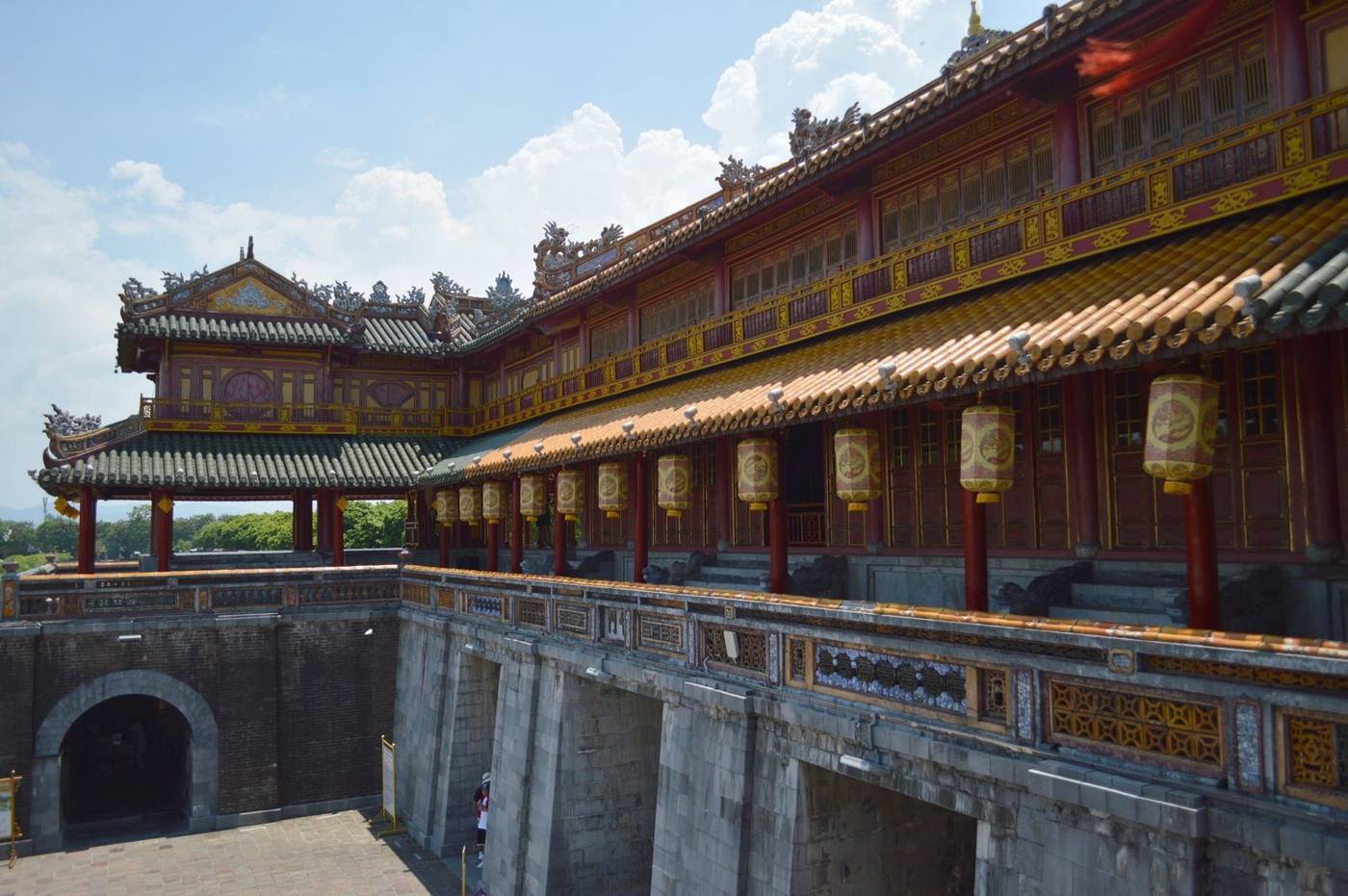 23 daysModerate
Indochina: Cambodia, Vietnam and Laos
Three countries in just over three weeks: Angkor's temples as far as Koh Ker, Vietnam from Saigon to Ha Long, Laos from Vientiane to Luang Prabang.
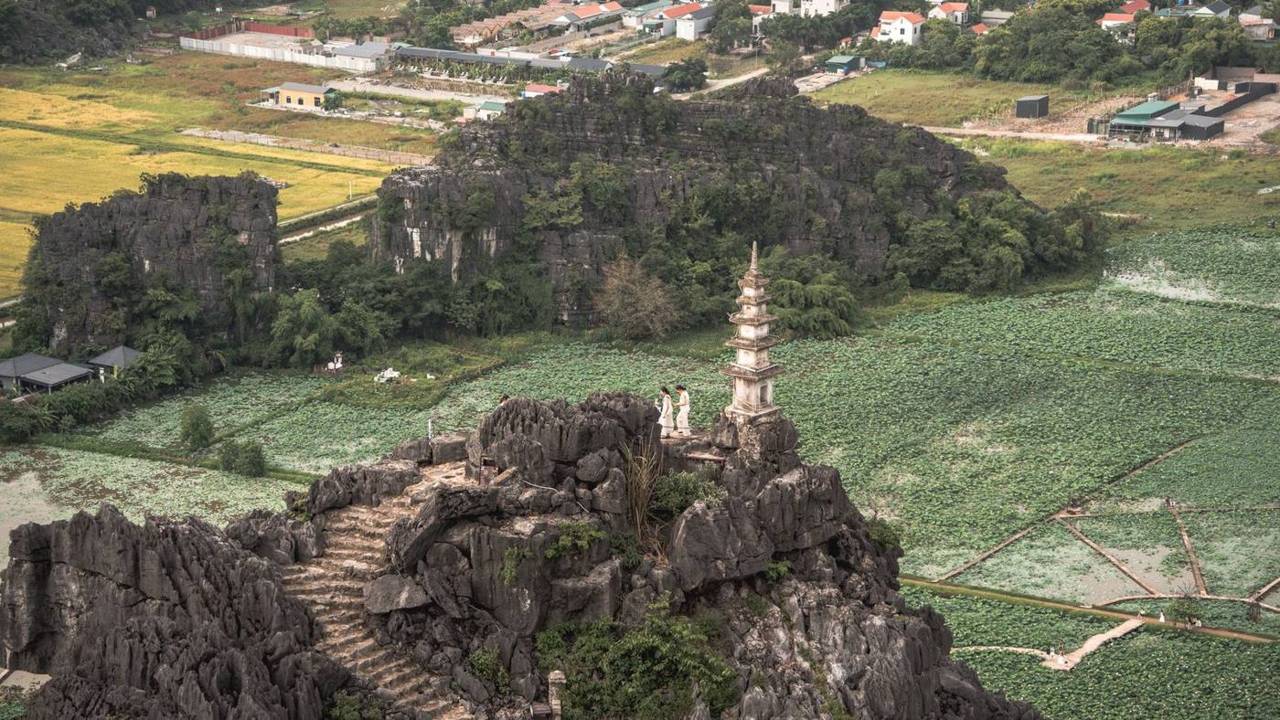 12 daysModerate
Karst and caves: Ninh Binh, Phong Nha and Lan Ha
Limestone Vietnam in twelve days: paddies among the pinnacles, the Pu Luong reserve, the caves of Phong Nha and kayaking in Lan Ha Bay.
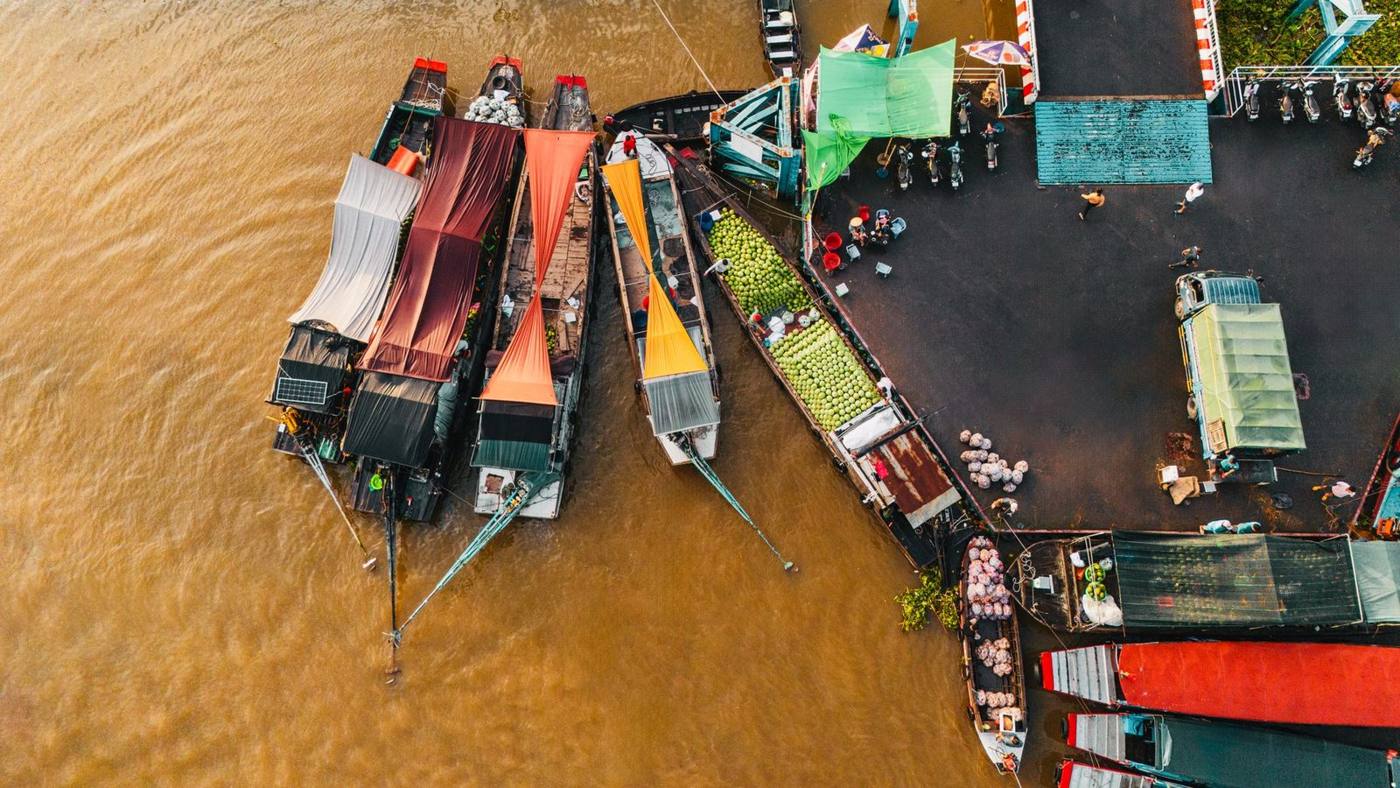 10 daysEasy
The Mekong Delta and Phu Quoc
A week on the water among canals, dawn markets and flooded forests up to the Cambodian border, then a few days by the sea on Phu Quoc.